

G Adventures, Planeterra unveil new community tourism projects in India
G Adventures and Planeterra will co-host the upcoming GX World Community Tourism Summit from September 24 to 28, with Incredible India (Ministry of Tourism) coming onboard as the headline sponsor for the event.
Attendees will have the opportunity to experience the project first-hand, or to sample it during a Planeterra Marketplace, which will showcase the projects and people running them.
Four new initiatives will be available to travellers. The first is Anoothi India, which offers a deep dive into the local culture through a textile workshop led by women from marginalized communities in the Jaipur region. Travellers will interact with the women and learn about their experiences, observe the intricate techniques and browse through and purchase some of the products created.
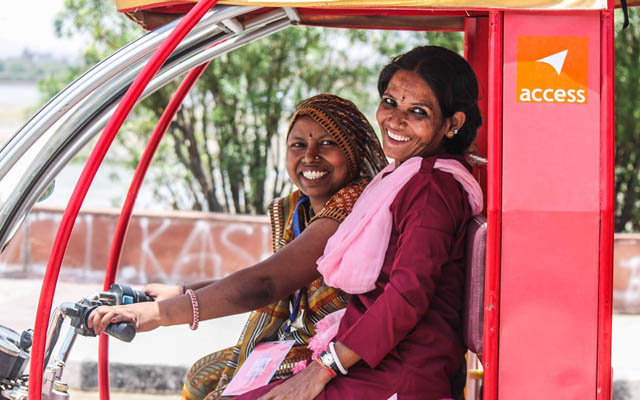
Next, Pink City Rickshaw in Jaipur offers women from low-income households in Jaipur sustainable livelihoods as they drive designer e-rickshaws, taking tourists to iconic landmarks like the Hawa Mahal, providing a unique and personal experience beyond traditional tours on eco-friendly transportation.
Sheroes’ Hangout in Agra is a café that aids acid attack survivors in their medical recovery and pursuit of justice, while arts and crafts centre Sunder Rang in Chandelao, Rajasthan, provides training and a platform for rural women to showcase their traditional handicrafts.
These enterprises join G Adventures’ and Planeterra’s long-standing community tourism experiences that have been delivered to travellers for many years, including Women With Wheels’ airport transfer service, and Salaam Baalak Trust’s Delhi City Walk, which trains and empowers youth to enter the tourism and hospitality space – both also available during the summit for attendees to experience.
Bruce Poon Tip, founder of G Adventures and Planeterra, shared: “We are delighted to be able to collaborate with Incredible India as we showcase our newest community tourism experiences. These are all designed to give back through travel and help change the lives of local people through the economic support of tourism, as well as delivering memorable and life-changing activities to our travellers.”
Moxy Hotels celebrates 10 years with expansion in Asia-Pacific

This September marks the 10th anniversary for Moxy Hotels, a brand that has become synonymous with fun and innovation in the hospitality industry, and designed for those who are young at heart and on the hunt for new experiences.
Since the launch of the first Moxy Hotel in Asia-Pacific, Moxy Bandung, in 2017, the lifestyle brand has expanded its presence in the region over the past 12 months, entering key markets including Australia, India, Thailand, and Malaysia, with five new hotels having been added to the portfolio through 2024. These comprise Moxy Sydney Airport (Australia), Moxy Bengaluru Airport Prestige Tech Cloud (India), Moxy Bangkok Ratchaprasong (Thailand), Moxy Putrajaya (Malaysia), Moxy Solo (Indonesia), and Moxy Mumbai Andheri West (India).

Having made its debut in 2014, with the first Moxy Hotel opening in Milan, the brand now has over 135 properties in 29 countries.
Highlights of the Moxy experience includes innovative check-in experience; Moxy Hookups – creative, social perks gifted randomly to guests daily; Moxy Pickups – grab-and-go style pick-ups station; social spaces in lobbies; smart and stylish rooms; as well as the digital interactive guestbook that provides recommendations for travellers by fellow travellers and locals.
“Moxy offers a playful and engaging environment at an approachable price point without sacrificing style. With plans for further expansion and exciting new initiatives on the horizon, Moxy is set to continue its journey as a disruptor in the select service space,” said John Toomey, chief sales & marketing officer, Marriott International, Asia Pacific excluding China.
Traveloka rolls out stay discounts in Thailand
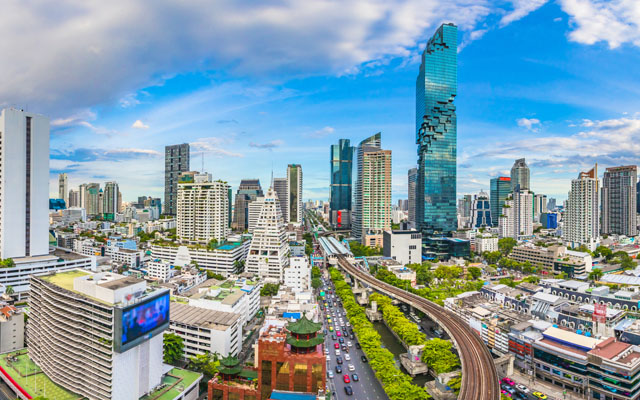
Traveloka has teamed up with the Tourism Authority of Thailand to launch the Amazing Thailand Deals campaign, offering customers from Indonesia, Malaysia, Vietnam, and Singapore up to 20 per cent off on thousands of accommodation across the Kingdom.
The offer is available until September 30, with a stay period valid through October 31.
Aiming to promote the country’s destinations, experiences, and hidden gems, the campaign also offers exclusive deals and provides travellers with more opportunities to explore the wonders of Thailand.
For more information, visit Traveloka.
Macau lights up the skies
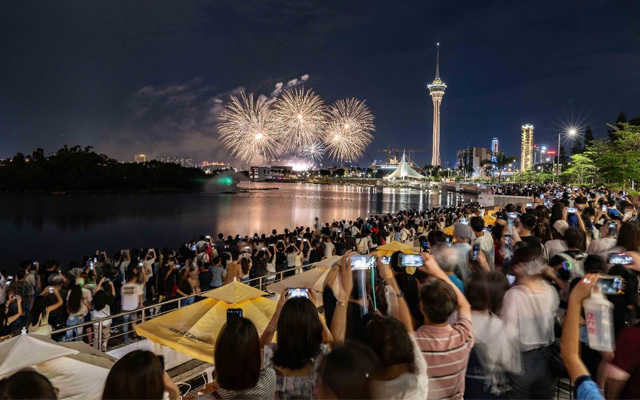
A series of enchanting fireworks are lighting up the skies over Macau as part of the 32nd Macao International Fireworks Display Contest, organised by the Macao Government Tourism Office.
The event kicked off on September 14 by competing companies from Canada and Thailand. More excitement is set to follow, as Macau has planned an elaborate fireworks journey over five weeks.
This year, 10 spectacular shows will be staged from mid-September, with firework displays presented by Russia, France, Spain, the Philippines, Italy, Japan, Portugal and China.
The fireworks displays are accompanied by various events, such as the Fireworks Carnival, which engages visitors with food stalls, experience booths, game booths and stage performances, as well as the 7th Macau Lantern Festival.
Tourism in Japan still seen in a positive light despite overcrowding
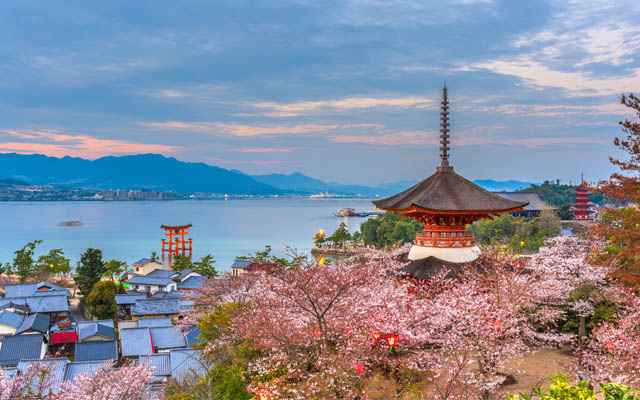
Almost one third of people living in Japan’s most popular tourist destinations are feeling overtourism to some extent, but most remain positive about tourism’s overall impact, according to a recent study by EY Japan.
The report Leading the Japanese economy towards growth in the tourism industry explores perceptions of tourism based on a survey carried out in 10 of the country’s top spots, including Kyoto, Nara, Asakusa (Tokyo), Shizuoka, Miyajima (Hiroshima), and Asahikawa (Hokkaido). It also considers how Japan can continue to promote tourism as a foundation for economic growth.
Around 40 per cent of respondents reported a positive view of the number of tourists in their area, and 60 per cent said tourism plays an important role in enriching their lives and boosting the economy in their region. Only 15 per cent said tourism plays a negative role.
Respondents also noted that their area’s popularity had sparked their own interest in local attractions including nature, history, culture and food, while giving them a sense of hometown pride.
The highest proportion of those witnessing overtourism were in Kyoto, followed by Asakusa, Nara and Miyajima, citing problems such as bad manners, traffic congestion and difficulty riding public transport due to overcrowding.
While opinions on tourism remain largely positive, the report noted that disruptions to daily life caused by visitors “highlight the challenge of tourism becoming the growth engine of the Japanese economy” in the longer term.
It recommends proper management of tourism destinations, such as by a destination management organisation, to ensure local communities receive sufficient economic benefit, thereby helping to counteract any negative impacts that residents may experience.
Bhutan launches new portal to enhance tourist experience
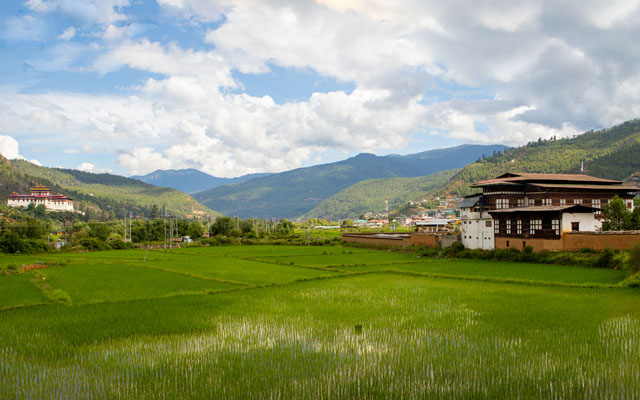
Bhutan’s Department of Tourism has introduced its new Tourism Services Portal, enhancing the experience for visitors to the Kingdom by offering streamlined access to the wide range of services available to guests.
This innovative portal aims to simplify and centralise access to essential tourism services, ensuring that visitors can easily connect with accredited service providers, book accommodations, and plan their itineraries with confidence.
The launch represents a milestone in the Kingdom’s journey to modernise and sustain its unique approach to tourism, and is being promoted to guests through the Department of Tourism’s website, marketing collateral and social media.
As of August 23, 404 Bhutanese Tour Operators, 948 certified guides, 100 hotels, 14 homestays, and several other service providers have successfully registered on the portal. The registration process is ongoing, and even more businesses and professionals are expected to join the platform in the coming weeks.
The Department of Tourism is also holding webinars with Economic Development Marketing Officers from each Dzongkhag and asking for their support to help onboard the various service providers, homestays, and establishments in each Dzongkhag onto the new portal.
Newport World Resorts reaps benefits from sustainable practices
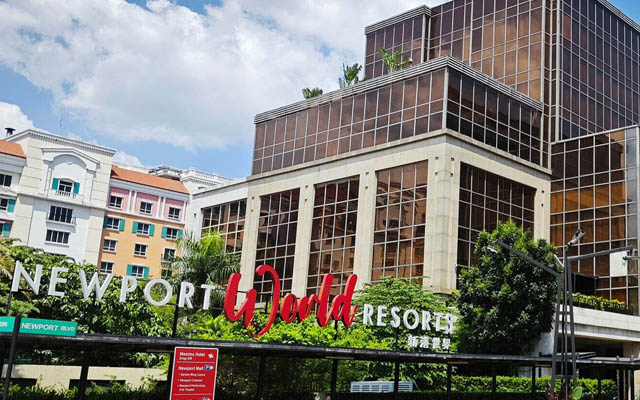
Money, time, and effort invested in adopting sustainable practices not only protect the planet but also positively impact the companies’ financial bottom-line, as proven by Newport World Resorts.
The operators of Newport World Resorts – the Philippines’ biggest integrated resort (IR) with 3,580 keys in eight hotels; 100 restaurants; 18,000m² retail space; 8,000m² event spaces; 1,788 theatre seats; and 30,000m² gaming space manned by 6,500 employees – got together in 2021 and launched I Love Earth (ILE) with a holistic and concrete sustainability programme.
Today, the IR is reaping huge benefits from its efficiency measures in reducing electricity and water consumption, said Bruce Winton, Marriott International’s multi-property vice president in the Philippines.
Yearly savings on electricity are estimated at 29 million pesos (US$521,467) or 34,000 million kilowatt hour in the boiler system; 21 million pesos or 3,000 million KWh in the descaling system; 14 million pesos or 1,700 million KWh from occupancy sensing rooms; and a 15 per cent cost reduction from low temperature laundry.
This is a far cry from the IR’s previous 250 million KWh yearly consumption of electricity equivalent to 59,000 homes, Winton said in a presentation to the Hotel Sales and Marketing Association.
There’s also huge savings from reduced water consumption which used to be four million cubic metres each year. Winton noted that water is expensive in the Philippines, about six and a half times more expensive than in Thailand, and supply problems arise during the dry season, El Nino and La Nina phenomena.
Each hotel in the IR has its own sustainability programme; for Marriott Manila, the goal is to lessen its water consumption by 15 per cent next year.
Marriott Manila’s reform, reduce, recycle, and repurpose programme for its water bottling translates to a 1.7 million pesos savings for one year and a 2.1 years of return on investments on a 3.6 million peso capital.
The ILE Urban Farm within the IR, while promoting healthy living and livelihood, has other benefits: 37 per cent lower price of produce per kilo; 95 per cent less land use; 95 per cent less water used; 95 per cent less fuel; and 95 per cent less waste – all pesticide free. About 37 per cent of selected items from the urban farm are now being sold to the local marketplace.
In addition, active benchmarking and certification (set metrics, measure, global certification, among others) make Newport World Resorts the only IR in the country to receive a silver certification from EarthCheck.
Silver Nova to debut in Asia-Pacific
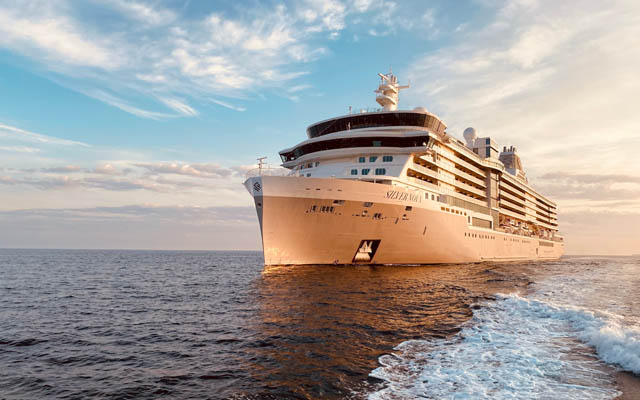
Silversea’s Nova-class ship Silver Nova is set to debut in Asia-Pacific from the end of September 2024 until April 2025.
The ship’s inaugural season in Asia will start off in in Kushiro (Hokkaido), Japan, on September 27, undertaking two voyages in the region before crossing over to Australia and New Zealand in November for seven sailings – ranging from 16 to 18 days – between November 18, 2024 and February 24, 2025.
Silver Nova’s inaugural season in Asia-Pacific will mark the introduction of Silversea’s culinary programme, S.A.L.T. (Sea and Land Taste) in Australia and New Zealand, while also delivering S.A.L.T. shore excursions in Japan for the first time.
In iconic destinations throughout Asia-Pacific, local experts will showcase the diversity of regional produce and demonstrate the creativity and innovation of their cuisines.
Some stand-out experiences ashore at Japan and Australia/New Zealand include participating in a culinary workshop and lunch with a Japanese master in Osaka, Japan (October 3, 2024; March 22 and 28, 2025; April 11, 2025); learning how Australian chefs and home cooks incorporate native ingredients in their menus in Melbourne, Australia (November 27, 2024; January 7 and 8, 2025; February 5, 2025); garden foraging and lunch at Adelaide Botanical Gardens (November 29, 2024; February 8 and 9, 2025); attending a cooking masterclass with chef Analiese Gregory in Hobart, Australia (December 6 and 7, 2024; January 10, 2025; February 2 and 3, 2025); and going on a guided wine experience and lunch at family-run winery Craggy Range in Napier, New Zealand (December 17, 2024; January 19, 25 and 26, 2025).
Other experiences in countries including Singapore, Malaysia, Thailand, Vietnam, and more will provide a rounded insight into Asia’s diverse cultures.
Silversea president Bert Hernandez commented: “S.A.L.T. is all about discovering the soul of a place through its food and culture — and where better to taste and explore than these countries so rich in heritage and celebrated for their diverse cuisines? There are so many great food stories to tell in this part of the region, we can’t wait to share them with our guests.”
Global Hotel Alliance welcomes four hotel brands to its portfolio
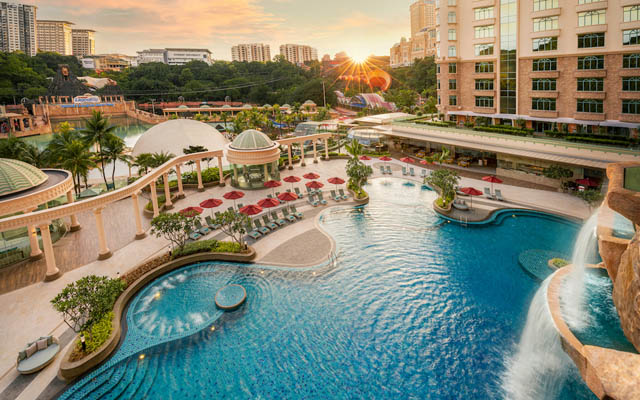
Global Hotel Alliance (GHA) is expanding its presence globally, with the addition of four new regional hotel brands in some of the world’s most popular tourism destinations.
The expansion punctuates a landmark year for GHA as it celebrates its 20th anniversary.
Unike Hotels in Norway, Sunway Hotels & Resorts in Malaysia, Andronis in Greece, and Paramount Hotels in the UAE add 32 properties to the alliance of independent hotel brands, enriching GHA’s portfolio with a mix of city and resort hotels that cater to the preferences of a wide range of travellers.
Unike Hotels brings a distinctive Scandinavian touch where each hotel in the Unike group is a unique reflection of its local environment. Its collection of 17 hotels across the country comprise Leikanger Hotel, Rømskog Spa, Utsikten Hotel in southern Norway, and more.
Sunway Hotels & Resorts, the hospitality division of Malaysian conglomerate Sunway Group, manages 11 hotels and resorts in Malaysia as well as the cities of Phnom Penh, Cambodia, and Hanoi in Vietnam. Sunway’s Malaysia properties include three iconic hotels in Sunway City Kuala Lumpur, such as the luxury five-star Sunway Resort Hotel, which is a favourite among family vacationers and business travellers; a Penang property located in the heart of UNESCO-listed George Town, as well as The Banjaran Hotsprings Retreat in Ipoh.
Andronis brings to GHA a collection of boutique hotels on two popular islands in the Aegean Sea – Santorini and Paros, all offering unique wellness and dining experiences and overlooking the Aegean Sea. Properties range from the flagship Andronis Luxury Suites on Santorini featuring 33 villas and suites, to the Andronis Minois on Paros.
Paramount Hotels introduces Hollywood glamour and cinematic experiences to GHA Discovery members with two signature properties in Dubai. Both Paramount Hotel Dubai and Paramount Hotel Midtown are located in the city’s vibrant Business Bay.
“The addition of these four regional independent hotel brands provides our 28 million GHA Discovery members with an even greater choice of unique destination experiences,” said GHA CEO Chris Hartley. “The integration of Unike Hotels, Sunway Hotels & Resorts, Andronis and Paramount Hotels into GHA Discovery will also generate significant growth opportunities through the platform, enhancing cross-brand activity and revenue for all GHA hotel brands.”
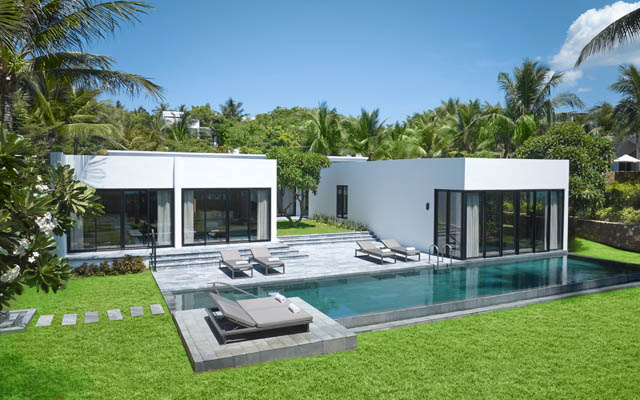






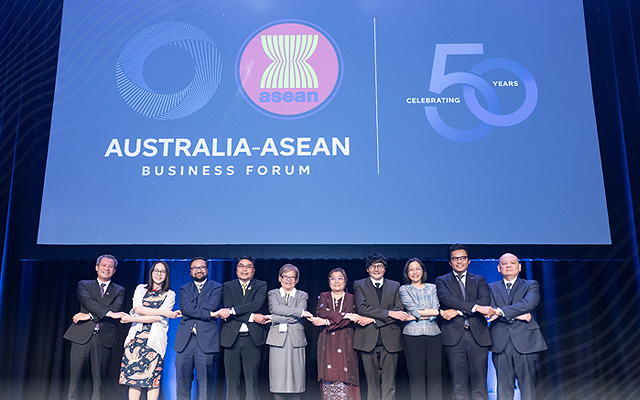
Canopy Sands Development unveiled its US$16 billion Bay of Lights township project at two distinguished industry events – the Australia-ASEAN Business Forum, and the Hotel Investment Conference Asia Pacific Australia New Zealand – highlighting its pivotal role in fostering regional collaboration and elevating Cambodia’s profile as the next financial and tourism destination on the global stage.
These forums provided a prime opportunity to introduce Bay of Lights, a pioneering development reshaping the skyline of Sihanoukville, Cambodia. Bay of Lights is poised to drive Cambodia’s urban evolution while serving as a conduit for deeper economic partnerships between Cambodia, Australia, and the broader South-east Asia bloc.
Spanning 934 hectares, the Bay of Lights project has already secured key international partnerships, making headlines with high-profile collaborations. Among them is a partnership with Australia’s Greg Norman Golf Course Design, which is set to bring Cambodia’s first USGA-standard 18+1-hole waterfront golf course to life.
Major global hospitality leaders, such as The Ascott, IHG, and Radisson, have also signed on, with the aim of transforming the region’s tourism landscape and delivering substantial cultural and economic benefits to both Cambodia and South-east Asia.
The project is primed to benefit from regional trade dynamics with its strategic location. Australia’s trade with South-east Asian nations reached US$183.4 billion in 2023, surpassing trade with key economies like Japan and the US. Buoyed by trade agreements including the ASEAN-Australia-New Zealand Free Trade Agreement and the Regional Comprehensive Economic Partnership, Bay of Lights is positioned to become a premier financial and investment hub, drawing global investors seeking to tap into South-east Asia’s flourishing markets.
With this strategic vision and robust partnerships, Bay of Lights is set to become a flagship destination for cultural tourism and international investment in Southeast Asia and beyond.
“Australia and ASEAN’s longstanding partnership, based on mutual respect and shared goals, has led to significant growth in bilateral trade across various sectors,” said Michael Truong, head of business development at Canopy Sands Development.
“With Cambodia serving as a gateway that connects both regions, the Bay of Lights is envisioned not just as city’s transformation but as a community that will sustain this economic growth and collaborative efforts in our region.”