

Location
The 48-room 21 Carpenter is Singapore’s latest Design Hotels member, affiliated with Marriott Bonvoy. The boutique property stands just across from The Central shopping mall, which is directly linked to the Clarke Quay MRT Station.
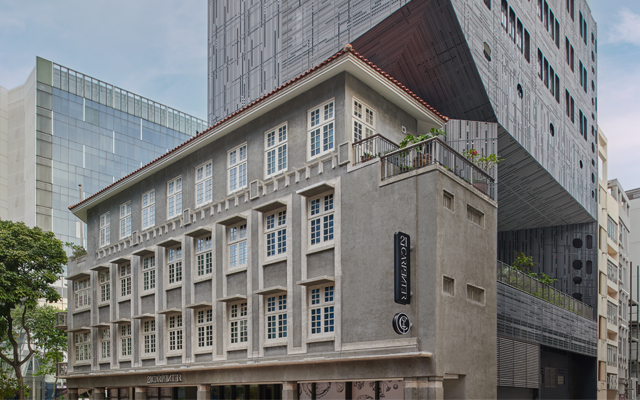
Calligraphic writing of Chinese cities to where remittances were made, as well as a CHS crest on an iron-wrought balcony remain on the hotel’s front, a nod to the property’s storied past. The 1930s shophouses once served as the Chye Hua Seng Wee Kee remittance office of Lee Wee Nam, who went on to become one of the founders of Overseas Chinese Banking Corporation.
Accommodation
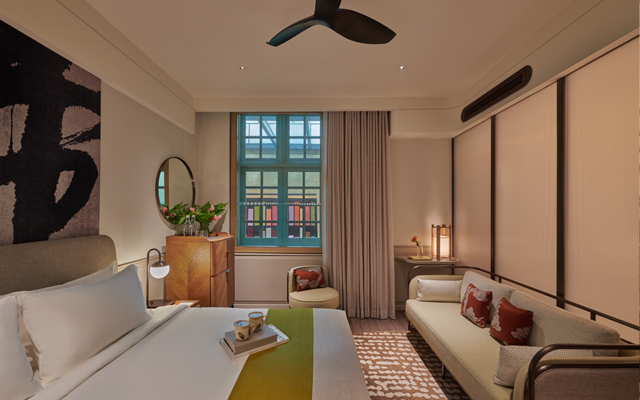
Reimagined by WOHA Architects – known for their green masterpieces like Parkroyal Collection Pickering and Pan Pacific Orchard – the hotel comprises two wings: the conserved Heritage Wing features 26 rooms, while the five-storey extension has an additional 22 rooms. Room sizes range from 30m² to 56m².
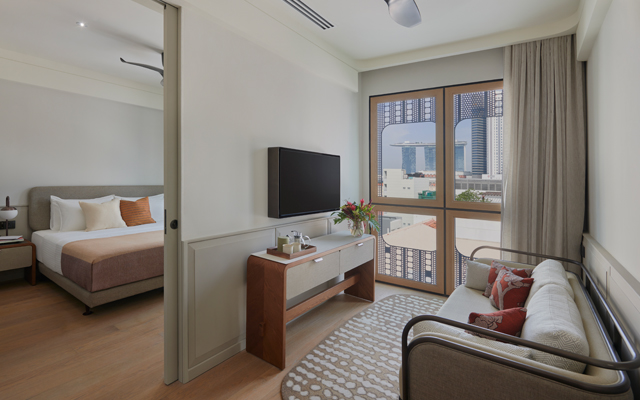
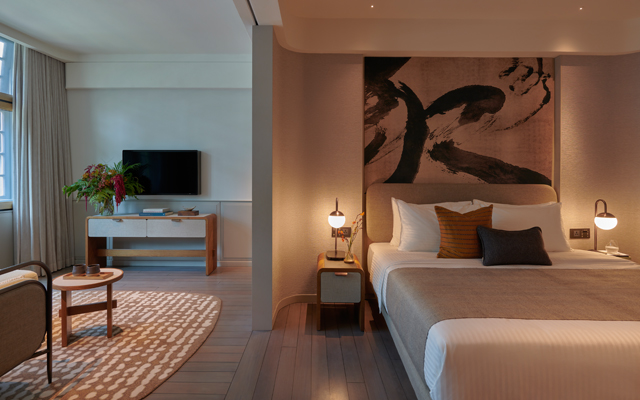
I was put up in a gorgeous Heritage Suite, comprising a living/work space with a flat-screen TV, which led to a separate bedroom with a king-size bed. Walking down the walkway into the living room immediately put me at ease with its homely feel.
Meanwhile, the pink-tiled bathroom came complete with a bathtub, rain shower, Dyson hairdryer, and Smith and Co amenities. Although there was a vanity cabinet, I thought it was not necessary and would have preferred more hooks for clothes or towel racks.
I was told that sturdy Chengal timber boards from the 1930s were restored and used as the flooring. I have no complaints about the bed or pillows, and even though my room faced a brightly-lit entertainment centre, the blackout curtains and quiet space helped ease me into a deep slumber.
Also in the living space was a “wardrobe” that was actually a mini bar and sink, snacks, beverages from Bacha Coffee, TWG, and Oatbedient, and two carafes of water. I particularly enjoyed the sea salt gula melaka cookies, customised specially for 21 Carpenter by the local Fat Kid Bakery.
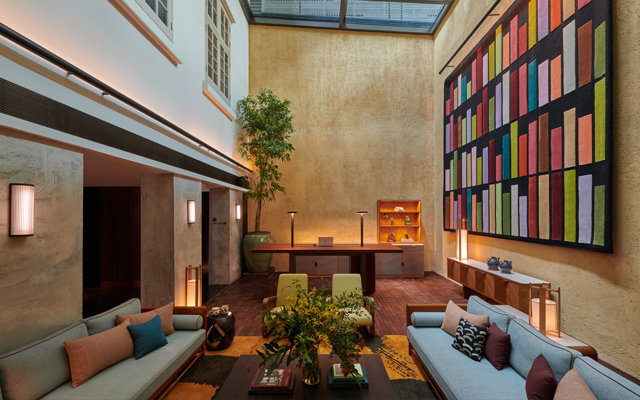
Aside from local F&B partnerships , local artists such as Heman Chong, and Dawn Ang of Aeropalmics, were also commissioned for art pieces adorning the lobby and rooftop lounge respectively. Other local brands that enrich 21 Carpenter’s interior tapestry were bathrobes by In Good Company, bed throws by artist Liu Liling, and tea cups by Un Studio.
Sustainability is expected of every hotel these days, where refillable water bottles, and large pump shower bottles are now the norm. What stood out for me in 21 Carpenter’s sustainability ethos were the 22 photovoltaic panels on the roof, the installation of ceiling fans in every room (both my bedroom and living room had one), and perforated aluminium on the facade. The ceiling fans, employed in lieu of air conditioning when the room is sufficiently cool, aid in reducing electricity consumption, while the aluminium front effectively shields against the sun and disperses the tropical heat.
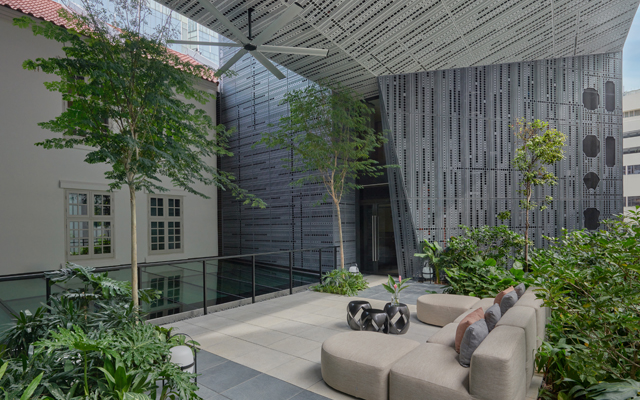
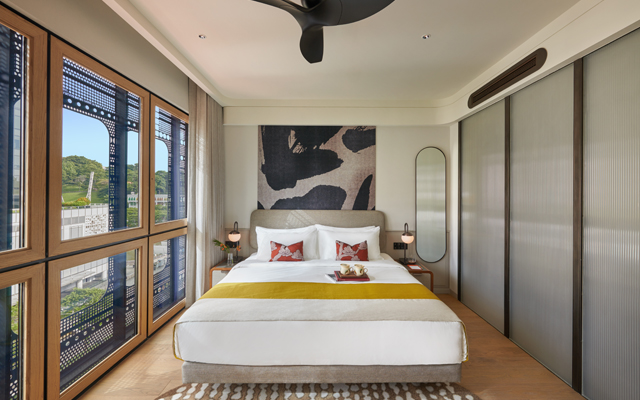
Etched in the aluminium architecture are poetic phrases, horizontally in English and vertically in Mandarin, extracted from letters in the remittance documents early immigrants sent home. My favourite phrase? “Day and night, when will we reunite”, which I thought was a poignant reflection of an immigrant’s love for one’s family, and longing of a home faraway.
Apparently, there are 22 of these phrases, look carefully and you might just spot all of them; I only managed five.
F&B
Kee’s is the boutique property’s only F&B venue. The breakfast menu features made-to-order dishes such as a spinach & mushroom quiche, and avocado toast, as well as a small buffet area with cold cuts, cheeses, salad, and bread.
Open to public, the 71-seater bistro on the first floor also serves a lunch and dinner menu. Conceptualised by Michelin-star Irish chef Andrew Walsh, diners can expect European classics with Asian influences such as Pepper-Crusted Ribeye Steak Frites, and Mediterranean Sea Bream served with a green curry sauce and coconut-infused rice.
The tipple list is way longer than the menu, and offers cocktails infused with heritage spices, craft beers, and an extensive range of spirits and wines.
Facilities
There is an open-air garden terrace on the third floor. Though you would never find me there in Singapore’s humid weather, guests should try and spot poignant phrases inscribed onto the aluminium facade.
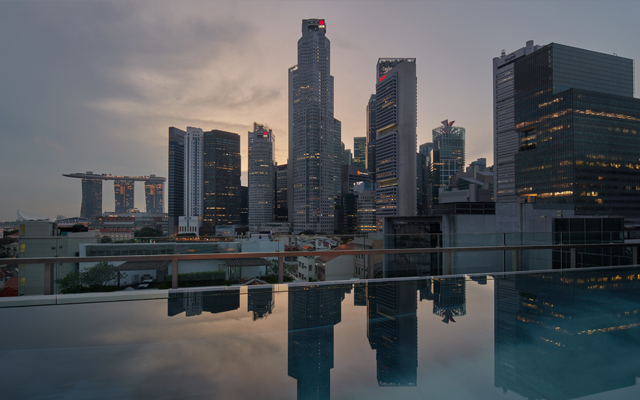
On the rooftop (level nine), there is a second, air-conditioned lounge – my type of relaxing space – that looks out over a stainless-steel lap pool infinity pool with a view of Marina Bay Sands and the CBD.
Service
Check in and check out was swift and efficient, and service staff at Kee’s were polite.
Verdict
Standing proudly in an unbeatable central location, this beautifully-restored urban sanctuary provided a delightful and restful weekend getaway. It is a fantastic place to stay, ideal for both business travellers and leisure guests.
Contact details
Website: https://www.21carpenter.com.sg/












Popular Asia-Pacific destinations negatively impacted by climate change can restore their reputations if they face up to the challenges and take action to implement sustainable tourism practices, according to research conducted by MMGY TCI Research, PATA’s data and intelligence partner.
Managing director and partner Olivier Henry-Biabaud, in sharing the findings on Climate Change and Tourism in Europe, noted that Vietnam’s nature-based solution – the creation of eight new festivals and new travel seasons – earned it a reputation score of 79.4 per cent, placing it in pole position among 19 destinations.
While Vietnam faces a massive climate challenge, he said its positive reputation is due to a combination of ‘facing up to it’ and seeking international cooperation to “concretely combat the situation”, which Sri Lanka – in the 13th spot – is also doing.
While Australia reputation is “positive in general, the climate change impact is so visible”, Henry-Biabaud shared during the recent PATA webinar on Climate Change Impact on Destination Reputation.
Australia is ranked 16th and traveller posts, for example, on things to know before going to Sydney, list “weather change”, “weather is a concern” and “a trip in and around the city could be impacted by the direct danger of fires or by smoke particles”.
Elsewhere, there are comments like “Paradise at risk: the Maldives in danger of disappearing due to climate change” and “Why did so many climbers die on Mount Everest this year?” with the Nepal Tourism Board claiming it was due to “climate change and the weather”.
Henry-Biabaud said a destination’s reputation can change every month; that travellers are looking for destinations they trust – naming China and Australia as two of the most travel sensitive markets – and destinations should want to better plan tourism sustainability; and younger travellers, while more aware of the impact of climate change and try to pay attention to being more responsible, are bothered by guilt as they still want to travel.
“The key is to be transparent, educate the traveller, be part of the solution and to maximise the social and economic benefits to local communities,” he noted, adding that trip planners are now risk managers of storms, landslides, fires, avalanches, air pollution and potential health issues when helping travellers choose destinations with the least risk.
For Sri Lanka Tourism Development Authority deputy director general and head of Sustainable Tourism Unit, Upali Rathnayake, the destination is trying to catch up by implementing industry sustainability certification, with nine destinations in nine provinces having been identified for sustainable tourism for the future.
Fabrizio Orlando, global director, industry affairs, Tripadvisor, said the platform clearly displays certified sustainable providers, makes them “easily accessible”, and even created a list of sustainable destinations for its Traveler’s Choice Awards this year.
According to Henry-Biabaud, Bhutan is the only carbon-neutral destination in the world; all arriving visitors to the Pacific Ocean island of Palau have to sign a pledge to be good environmental stewards; and Japan is looking at a safety plan to reduce potential risk.
On a positive note, he pointed out that Asia-Pacific is embracing sustainability as part of the industry’s DNA and responsibility.
“There is room for education and destinations most proactive on sustainability are the most positive about their reputation,” he opined.
PATA’s Issues and Trends (1Q 2024): Climate Change Impact on Destination Reputation report is now available on its website.