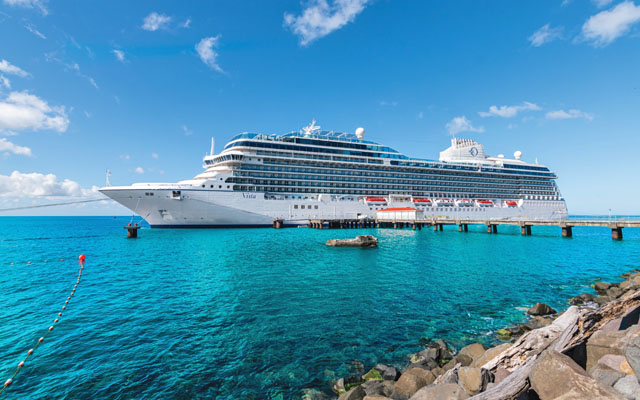
Oceania Cruises has opened bookings for its 2028 and 2029 cruise programme, featuring more than 230 itineraries worldwide.
The collection includes sailings ranging from seven to 180 days, with more than 60 overnight stays in destinations such as Copenhagen, Lisbon, Bangkok, Bali, Seville and Malé.
Oceania Cruises’ 2028 and 2029 programme features more than 230 itineraries, including world cruises, Asia sailings and extended stays in key destinations
Among the highlights is the debut of inaugural world cruises aboard Oceania Aurelia, which will operate 180-day voyages in 2028 and 2029. Oceania Riviera will return to Alaska before operating Asia itineraries with calls at smaller Japanese ports including Kagoshima, Ishigaki and Miyazaki, while Oceania Allura will continue its Mediterranean winter season through Greece, Turkey, Italy and Spain.
The programme spans Europe, Asia, the Caribbean, Australia, New Zealand, Canada and New England, alongside a series of transoceanic repositioning voyages.
In Asia, Oceania Marina and Oceania Riviera will operate itineraries featuring destinations across Japan, South-east Asia and Indonesia, with overnight stays in Bangkok and Singapore.
The collection also includes sailings through Australia and New Zealand, Panama Canal crossings, Caribbean voyages and autumn cruises through Canada and New England.
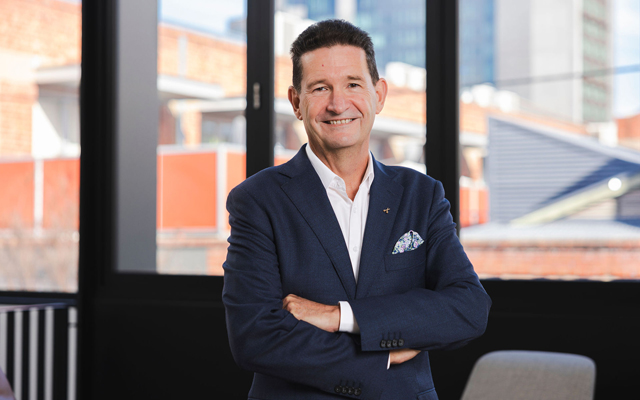
Kelvin Dodt has been appointed general manager of Crystalbrook Sam ahead of the hotel’s opening in Adelaide later this year.
He joins from The Star Entertainment Group, where he most recently served as chief operating officer of The Star Brisbane and led the pre-opening of the Queen’s Wharf development.
He previously held senior leadership roles with The Star Entertainment Group, Accor and Mirvac Hotels & Resorts.
A region where the past sits comfortably in the present, where sun-bleached ancient ruins overlook azure waters, and where life slows to a beautiful, rhythmic crawl – the Mediterranean is one that has long enchanted travellers.
Taking travellers there in exclusive luxury is Silversea, through immersive, sensory voyages.
Aboard its ultra-luxury Nova-class ships – Silver Nova and Silver Ray – the traditional Mediterranean cruise is entirely reimagined to focus on the true soul of the region: its centuries-old culinary heritage, brought to life through exclusive partnerships with Michelin-starred culinary masters.
The architecture of light and sea
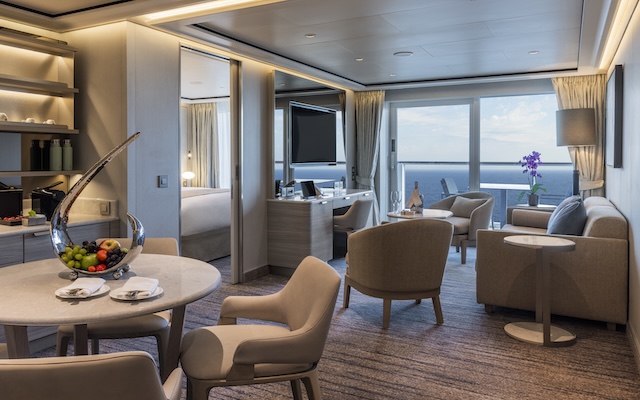
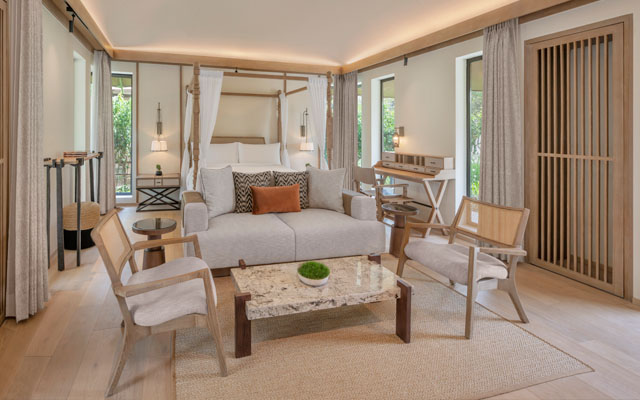
Take in the river from the comfort of your suite’s living room
Moving away from traditional enclosed cruise ship designs, these vessels feature a pioneering asymmetrical layout and sweeping, floor-to-ceiling glass facades designed to flood the interiors with natural light and maximise coastal views.
Operating with an intimate capacity of 728 guests, the suite-only ships maintain a near one-to-one staff-to-guest ratio, delivering premium hospitality supported by intuitive butler service across all suite categories.
Whether it’s sipping a morning espresso in your expansive suite or lounging on the multi-tiered pool deck, guests will feel one with the world outside.
S.A.L.T.: Journeying through flavour
The S.A.L.T. programme lets you delve into the cuisine of where you’re visiting with a hands-on cooking session using local ingredients
A central pillar of the Mediterranean experience is Silversea’s signature S.A.L.T. (Sea and Land Taste) programme, which is designed to be a holistic exploration of regional culture with an immersion into the gastronomic heritage of each destination.
Onboard, S.A.L.T. Lab offers a state-of-the-art culinary workshop where guests participate in and learn traditional techniques using local ingredients in hands-on masterclasses led by guest Michelin-starred chefs and regional food historians.
For dining, the menu at the S.A.L.T. Kitchen changes daily to reflect the ship’s specific port of call that day. For a truly elevated evening, the intimate S.A.L.T. Chef’s Table offers a curated multi-course tasting menu paired with rare regional wines and interactive culinary storytelling.
Immersion beyond the horizon
Visit vineyards and try local wines on shore excursions
The culinary narrative extends seamlessly to land operations through Silversea’s bespoke S.A.L.T. shore excursions.
These curated itineraries bypass conventional tourist routes, granting guests private access to the local artisans and producers who preserve the region’s heritage food traditions.
By weaving together regional history, modern naval design, and exclusive culinary access, the product allows Silversea guests to thoroughly engage with the destinations.
It is a journey designed for those who know that the ultimate luxury is not just about seeing a destination, but about bringing its flavours, stories, and soul home with you.
Your Mediterranean awakening awaits
Take advantage of this exclusive limited-time offer and secure your suite aboard a Silversea culinary voyage now. For a limited time, enjoy exceptional savings of up to 40 per cent on select suite categories* alongside a reduced deposit starting at just 15 per cent. *Terms and conditions apply.
Experience an all-inclusive ultra-luxury travel where fine wines, gourmet dining, and butler service are always included.
Visit Silversea.com or contact your trusted travel advisor.
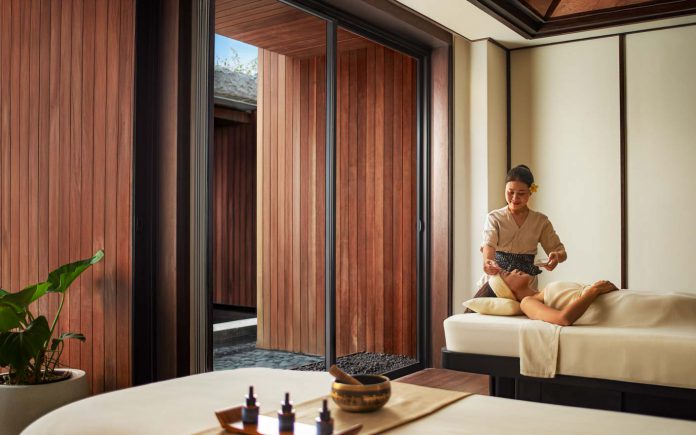
The Meru Sanur in Bali (pictured) is one of the four founding members of the new Preferred Wellbeing designation in Asia-Pacific
Preferred Hotels & Resorts has launched a new global designation programme that brings together more than 50 member hotels and resorts offering holistic and transformative wellness experiences, four of which are in Asia-Pacific.
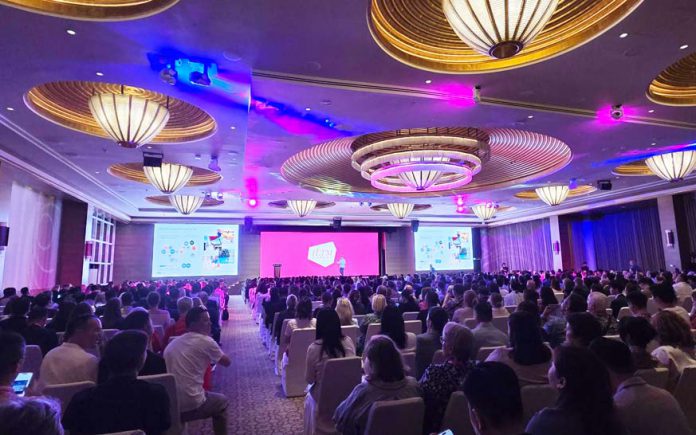
Introducing the new Preferred Wellbeing programme at ILTM Asia Pacific 2025, president Michelle Woodley said the initiative was borne from the group’s desire to “anticipate what’s next and guide the conversation in luxury travel”.
The Meru Sanur in Bali, pictured, is one of four Asia-Pacific properties included in Preferred Hotels & Resorts’ new Preferred Wellbeing programme
“Wellness is definitely becoming a defining force in travel decisions,” said Woodley, adding that it is also becoming a core reason why travellers choose a hotel or resort.
The launch of Preferred Wellbeing was informed by insights from the company’s recently released Luxury Travel Report, which identifies wellness as a defining force in travel decisions. The report found that more than a third of luxury travellers are actively seeking transformational wellness journeys, while 77 per cent agree that true luxury today means escaping the pressure to post and impress online. Today’s luxury traveller is increasingly motivated by experiences that support genuine disconnection and reset.
Together, these shifts point to a new era of wellness travel – one that blends science, tradition, personalisation and design into deeply transformative experiences that extend far beyond the spa.
To help luxury travellers discover and book hotels and resorts that would satisfy their wellness needs, Preferred Hotels & Resorts have carefully curated the collection to feature “properties that go beyond the traditional spa offerings, creating immersive journeys through things like hydrothermal circuits, nature-based retreats, and nutritionally-driven culinary programming”, shared Woodley.
Selection abides by a 12-point criteria, and qualified hotels and resorts must check off at least 10 requirements. These include Environmental and Sustainability; Purpose-built Wellbeing Spaces; Nourishing Culinary Philosophy; Nature Immersion & Outdoor Renewal; Welcoming & Adaptive Guest Experience; Mental Presence & Inner Practices; Local Connection & Cultural Exchange; Personalised Wellbeing Journeys; Learning, Discovery & Self-Development; Advanced Wellness Technologies; Human Centred Hospitality; and Ethical Operations & Culture.
In Asia-Pacific, the four highlighted properties are: The Meru Sanur; The Leela Palace Udaipur; The RuMa Hotel & Residences; and Hotel Chinzanso Tokyo.
In her media address, Woodley also discussed top trends in wellness tourism.
She identified longevity in wellness, where travellers are drawn to “intentional, results-driven experiences centred on long-term health”; the convergence of ancient rituals and modern science; the growing importance of hydrotherapy as the “centrepiece of the wellness journey”; a shift away from one-off treatments towards personalised, multi-day wellness journeys; and growing momentum behind nature as part of the healing experience.
Tourism Malaysia is strengthening its focus on resilient source markets and expanding air connectivity as part of a broader strategy to diversify visitor arrivals under the extended Visit Malaysia campaign, which now runs through 2027, amid geopolitical tensions and aviation disruptions affecting travel from parts of the Middle East.
Tourism Malaysia director-general Mohd Amirul Rizal Abdul Rahim said the impact of ongoing conflict in West Asia has been felt mainly through reduced air connectivity, route adjustments and operational challenges rather than weakening demand for Malaysia as a destination.
Mohd Amirul says expanding air connectivity and diversifying source markets are key to sustaining Malaysia’s tourism growth
While the Middle East remains one of Malaysia’s highest-yield source markets, particularly for premium leisure travel, family holidays, medical tourism and long-stay visitors, arrivals from West Asia fell 27.2 per cent year on year in the first quarter of 2026, largely due to airspace restrictions, flight rerouting and reduced airline capacity.
“Middle Eastern travellers continue to show strong interest in Malaysia, but with evolving travel patterns,” said Mohd Amirul.
He noted that travellers from the region are increasingly booking closer to departure, seeking greater flexibility and prioritising destinations that offer safety, value, wellness experiences and family-friendly attractions.
Geopolitical uncertainty is also affecting longhaul travel demand. According to Tourism Malaysia, bookings for travel to Malaysia between July and October 2026 are down by at least 10 per cent compared with the same period last year, while airline seat capacity in April 2026 was around five per cent lower than originally scheduled following adjustments by carriers affected by the Middle East conflict.
Despite these challenges, several longhaul markets continued to record growth. In 1Q2026, arrivals from Europe increased 9.2 per cent year on year, while Oceania and the Americas grew 10.9 per cent and 8.2 per cent respectively. Central Asian markets, including Kazakhstan and Uzbekistan, also posted strong gains, supported by improved air connectivity.
To build on this momentum, Tourism Malaysia is expanding joint campaigns with airlines, online travel platforms and trade partners across South-east Asia, while strengthening cross-border tourism initiatives with neighbouring countries.
In India, efforts are focused on MICE, destination weddings and experiential travel. The tourism board is also targeting secondary cities through roadshows, trade partnerships and joint marketing initiatives.
“With rising disposable incomes, improved air connectivity and growing international travel aspirations, secondary cities represent significant untapped potential for Malaysia,” stated Mohd Amirul.
Air connectivity remains central to Tourism Malaysia’s growth strategy. While Malaysia currently has more than 200 weekly flights from India, the tourism board believes additional services from Tier 2 and Tier 3 cities will be needed to sustain growth and improve access to emerging outbound markets.
New international routes are also expected to support these efforts.
Mohd Amirul described Lufthansa’s Frankfurt-Kuala Lumpur service, due to launch in October, as significant because it restores direct air links between Germany and Malaysia while improving access to Lufthansa’s wider European and transatlantic network.
Meanwhile, Air Algérie’s new service is expected to improve Malaysia’s accessibility and visibility across North Africa, an emerging source market where visitor arrivals are already increasing.
“Expanding direct connectivity through new gateways is essential to sustain arrivals and strengthen Malaysia’s competitiveness,” concluded Mohd Amirul.
Onyx Hospitality Group is strengthening its focus on the Taiwan market as outbound travel demand to Thailand and Malaysia continues to grow.
The hospitality company, which manages hotels, resorts, serviced apartments and residences across Asia-Pacific, said its regional network and 60 years of operating experience position it to serve both leisure and business travellers from Taiwan.
Onyx Hospitality Group is highlighting properties in Thailand and Malaysia as it seeks to attract more Taiwanese travellers
According to the company, Thailand and Malaysia offer a complementary multi-destination proposition for Taiwanese visitors. Thailand welcomed more than 1.2 million Taiwanese travellers in 2024, representing a 64 per cent increase year-on-year, while Malaysia continues to attract visitors with its cultural attractions and accessibility.
Onyx Hospitality Group operates four core brands – Amari, Ozo, Shama and Oriental Residence – across markets including Thailand, Malaysia, China, Hong Kong, Bangladesh, Sri Lanka and Laos. The group also manages hospitality concepts in the wellness and dining sectors.
The company said its properties in Bangkok, Don Mueang and Kuala Lumpur are positioned to cater to business travellers through convenient access to airports and commercial districts. Leisure travellers can also combine city stays with resort destinations such as Pattaya and Hua Hin.
Among the properties being promoted to the Taiwan market are Amari Hua Hin, Amari Pattaya, Amari Johor Bahru, Amari Kuala Lumpur, Ozo North Pattaya and Amari Don Muang Bangkok.
Yuthachai Charanachitta, CEO of Onyx Hospitality Group, said: “Thailand and Malaysia together represent one of the strongest multi-destination propositions for the Taiwanese outbound market.
“With over 1.2 million Taiwanese visitors to Thailand in 2024, which is up 64 per cent year-on-year, and Malaysia offering complementary appeal as a culturally rich and accessible add-on, a combined itinerary delivers exceptional value and variety for Taiwanese travellers.”
Singapore GP has added Janet Jackson, JJ Lin, Zara Larsson and James Arthur to the entertainment programme for the Formula 1 Singapore Airlines Singapore Grand Prix 2026.
The new additions join a line-up of international and regional performers scheduled to appear across the three-day event, which takes place at the Marina Bay Street Circuit from October 9-11.
The 2026 Singapore Grand Prix will combine Formula 1 racing with live entertainment across 10 stages and themed precincts
At the Padang Stage in Zone 4, Singapore singer-songwriter JJ Lin and K-pop group Cortis will perform on Friday, October 9. Swedish pop artist Zara Larsson will take the stage on Saturday, October 10, while British singer-songwriter James Arthur will perform on Sunday, October 11.
Janet Jackson will headline the Wharf Stage in Zone 1 on Sunday, completing the stage’s line-up. Previously announced acts for Zone 1 include Mark Ronson, DJ Snake, Major Lazer Soundsystem, Goo Goo Dolls, Rev Run and Split Enz.
According to organisers, the event will feature more than 170 hours of entertainment across 10 stages and themed precincts around the circuit. Additional performers include HYO, Spacey Jane, Ocean Alley, Ape Drums, Ezra Collective, Shingo Nakamura and Tinzo + Jojo of Book Club Radio.
Singapore GP said more acts will be announced in the coming weeks.
Tickets remain available, although organisers noted that some grandstand categories are close to capacity and selected ticket types have already sold out.
All ticket holders will have access to performances at the Padang Stage in Zone 4, while entry to the Wharf Stage in Zone 1 requires a valid Zone 1 ticket for the day of the performance.
Aahaasa Collection has introduced Aahaasa Island Concierge, a new travel concept that connects its three properties in Sri Lanka through a single itinerary spanning the island’s coast, tea country and central highlands.
The programme links Aavya Cove Villas on the southern coast, Aadya Tea Bungalows in tea country and Aarunya Nature Resort near Kandy, allowing guests to move between the properties through a coordinated journey focused on landscape, culture, wellness and cuisine.
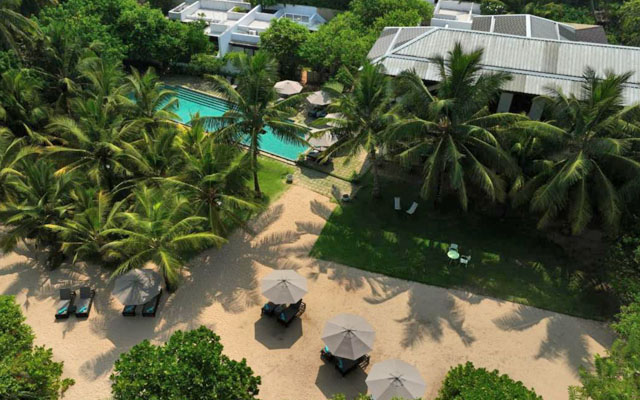
Aahaasa Island Concierge links the collection’s three properties through customised journeys across Sri Lanka; Aavya Cove Villas, pictured
According to the company, the experience is designed for travellers seeking longer, multi-destination stays that combine different regions of Sri Lanka within a single itinerary. Guests are supported by a dedicated concierge team, with arrangements including accommodation, transfers, dining experiences, wellness programmes and cultural activities.
Transport options can include helicopter and seaplane transfers, luxury ground transportation and customised excursions tailored to individual interests.
The collection has introduced a range of itineraries, including a seven-day Signature Journey and a 10-day Three Worlds Journey, both of which can be adapted to guest preferences.
Experiences across the three properties include tea estate visits, wellness programmes, spice garden activities, nature experiences and encounters with local communities. The company said the programme is intended to provide a more connected way of exploring Sri Lanka through a combination of hospitality, culture and nature-based experiences.
The initiative forms part of Aahaasa Collection’s broader expansion plans, which include the future launch of Aamudra, a luxury yachting division that will extend the company’s offerings beyond its land-based properties.
Nath Rankothge, founder of Aahaasa Collection, said: “Today’s luxury traveller seeks more than exceptional destinations; they seek continuity, meaning and a deeper connection to place.
“Aahaasa Island Concierge was created to reveal Sri Lanka as an unfolding journey through diverse landscapes, shaped by nature, culture and emotion, where each destination enriches the next.”
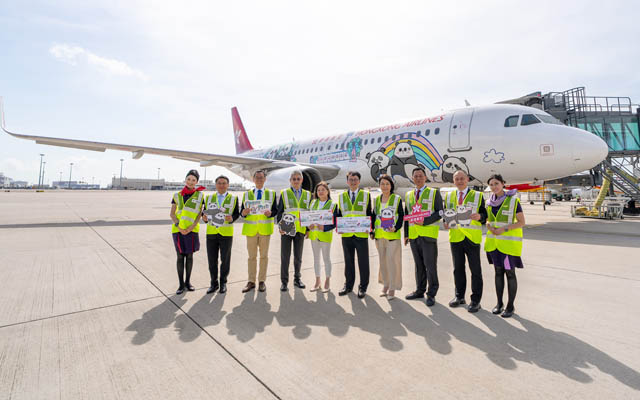
Hong Kong Airlines is giving passengers a closer encounter with Hong Kong’s giant pandas through an expanded Panda Friends experience that now extends from the aircraft exterior into the cabin.
First unveiled in March, the Panda Friends livery aircraft was created in partnership with Ocean Park Hong Kong and features six giant pandas: An An, Ke Ke, Ying Ying and Le Le, together with Hong Kong-born twins Jia Jia and De De. Designed as globe-trotting ambassadors, the pandas are depicted travelling the world with passports and cameras in hand.
The Panda Friends livery aircraft transforms a Hong Kong Airlines jet into a flying showcase of the city’s giant panda ambassadors
The latest phase of the initiative introduces themed cabin interiors and exclusive collectibles, which made their debut on a flight to Chengdu, the home of China’s giant pandas.
The colourful livery has become one of the airline’s most recognisable aircraft, combining tourism promotion with conservation messaging. Through the partnership, Hong Kong Airlines and Ocean Park aim to showcase Hong Kong’s unique panda story to travellers across the region.
The programme also forms part of Hong Kong Airlines’ 20th anniversary celebrations. The carrier said the initiative reflects its commitment to promoting Hong Kong’s culture, tourism and conservation efforts through its network.
By bringing the Panda Friends experience on board, the airline hopes to create a more engaging journey for passengers while highlighting one of Hong Kong’s most popular wildlife attractions.
Luxury travel trade show ILTM Asia Pacific 2026 is opening to good news: affluent consumer segments are seeing significant spending increases, and travel is among the top spend item that is attracting incremental new spend from moneyed cardholders between 2023 and 2025.
Sharing data from Visa’ intelligence at ILTM Asia Pacific 2026 Opening Forum on June 29’s evening, Simon Baptist, principal Asia-Pacific economist, noted that Asia’s new luxury consumers are emerging from technology-led wealth hubs.
Visa’s Simon Baptist details the profile of affluent Asian travellers at the ILTM Asia Pacific 2026 Opening Forum on June 29; photo by Karen Yue
Spending on affluent cards issued across Asian markets show the highest growth rate in the Philippines, Taiwan and Vietnam: 49 per cent, 41 per cent and 36 per cent respectively, as of April 2026.
Baptist said that while Asian wealth was largely generated by finance, real estate and government-connected conglomerates in the past, the new wealth is coming from technology, semiconductors, and AI or data centre development.
Money in Asia came from finance, it came from real estate, it came from, you know, government-connected conglomerates.
The region’s affluent consumers are spending on a host of things, from travel to entertainment, with ultra-luxury/exotic cars, apparel & accessories, and retail being among the top three categories that are generating the strongest incremental affluent card spend.
Affluent consumers also continue to travel a lot more than their non-affluent peers – most are travelling every two to three months.
In terms of travel motivations, time with family and friends top the list, followed by relaxation, and shopping.
However, Baptist noted that the affluent Gen Z and Millennials are more interested in experiences, sports, and culture when compared to the older Gen X and Boomers. The younger generation is also “more interested in travelling somewhere for social media reasons. They want their luxury experience to look good on TikTok or Instagram”.
Different source markets have different priorities when they travel, added Baptist. Visa observes that affluent Thais, Chinese and Indians splurge the most on retail, while Australians are drawn mostly to recreational offerings. Australians and Singaporeans are also keen on hotel spend.
While travel intentions remain strong among the high-net-worth, the war in Iran and fuel challenge has an impact on travel habit.
“Capacity between Europe, the Middle East, and Asia-Pacific has fallen while jet fuel prices have doubled. Jet fuel accounts for about 30 per cent of the operating costs of a typical airline because it’s a variable cost. It feeds through into the ticket prices very quickly. As such, ticket prices rose by 30 per cent – and more in Asia and Europe where there had also been a reduction in (seat) capacity, resulting in people chasing fewer and fewer seats.”
“So, people cancelled trips and did something else instead,” said Baptist, adding that affluent consumers have also chosen to reconsider their destinations in favour of regional travel within Asia.
Visa intelligence observed that wealthy Chinese are travelling out of China for Japan, Australia, Hong Kong, South Korea, but also farther to Europe and North America. Affluent Taiwanese are heading to Japan, Singapore and South Korea, but also Europe; those from Singapore are preferring Malaysia, Japan and Europe, while Australians are making a beeline for Europe.
And with a bigger portion of travel budget going into airfares, affluent travellers are choosing to cut back on hotels and retail.
In conclusion, Baptist maintains confidence in the spending power of affluent Asians, and urged luxury travel and tourism professionals to identify new wealth hubs in the region, understand where the high growth travel corridors are taking form, and pay attention to how airfares and geopolitics are changing travel destinations.


 He previously held senior leadership roles with The Star Entertainment Group, Accor and Mirvac Hotels & Resorts.