Regent Seven Seas Cruises has introduced 56 new shore excursions and five pre- and post-cruise land programmes for the 2026 festive season, giving guests more ways to experience Christmas traditions, markets and seasonal cuisine across the Mediterranean.
Available on selected voyages aboard Seven Seas Navigator, Seven Seas Voyager and the maiden voyage of Seven Seas Prestige, the new excursions range from Christmas markets and festive light displays to regional food experiences and local holiday customs. Several are included in Regent’s all-inclusive fare, while Regent Choice excursions start from US$119.
Regent Seven Seas Cruises will offer new festive experiences across Europe during its 2026 holiday season
The new land programmes are available on Seven Seas Navigator‘s first full winter Mediterranean season, with three-night itineraries in Barcelona, Rome, Tuscany and Viterbo. Prices start from US$2,399 per guest.
Highlights include Holiday Magic in Catalonia, which combines Barcelona’s Christmas markets with Girona’s festive fairs; Holiday Magic in Rome and Viterbo, featuring the Vatican, Rome’s landmarks and Viterbo’s Christmas markets; and Tuscany’s Winter Magic, with visits to Florence, Pienza and Montepulciano, alongside regional food and wine experiences.
Among the new included shore excursions, guests can explore Málaga’s Christmas lights, cathedral nativity display and festive markets during the Felices Fiestas voyage aboard Seven Seas Prestige. In Cyprus, a walking tour of Limassol visits illuminated landmarks, the marina and Old Port during the Turkish Treasures itinerary on Seven Seas Voyager. In Marseille, guests can experience Provence’s Christmas traditions, including the famous 13 Desserts of Christmas, artisan markets and seasonal sweet tastings during the Southern Mediterranean Sojourn aboard Seven Seas Navigator.
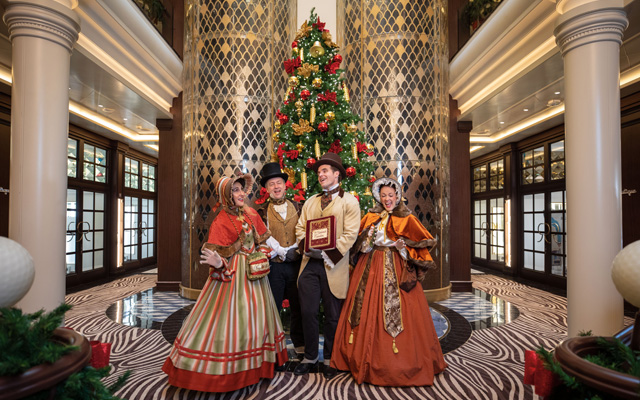
On board, ships will also feature seasonal decorations, festive dining menus and holiday entertainment throughout the Christmas period.
The trending indoor fitness competition, Hyrox, will return to Bangkok with another race this August, making this the second edition for the year in the same city.
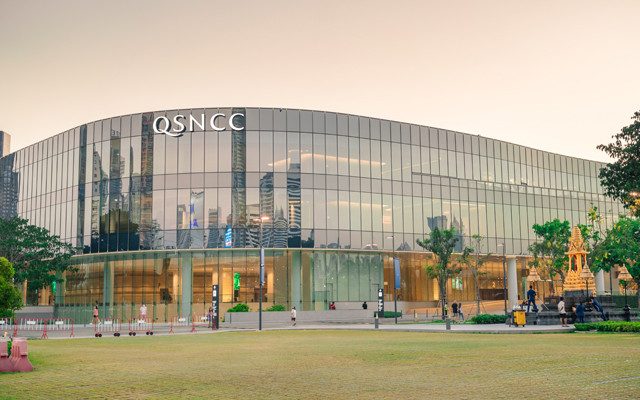
BYD Hyrox Bangkok will run from August 13 to 16 at the Queen Sirikit National Convention Center, with more than 22,000 participants from Thailand and overseas expected in attendance.
BYD Hyrox Bangkok returns to the Queen Sirikit National Convention Center this August, with more than 22,000 participants expected for what is set to be the largest Hyrox race in Asia to date
It is expected to be the biggest Hyrox race in Asia to date.
It is also significant that the second race in Bangkok will stretch for four days, up from three days in March – an indicator of strong and growing demand from both participants and the local fitness community.
Hyrox has built a strong local ecosystem in Thailand, partnering with more than 170 gyms nationwide, including 100 in Bangkok alone. Through structured training programmes and shared resources, the company supports local operators in delivering official Hyrox training and helps transform gyms into community-driven fitness hubs.
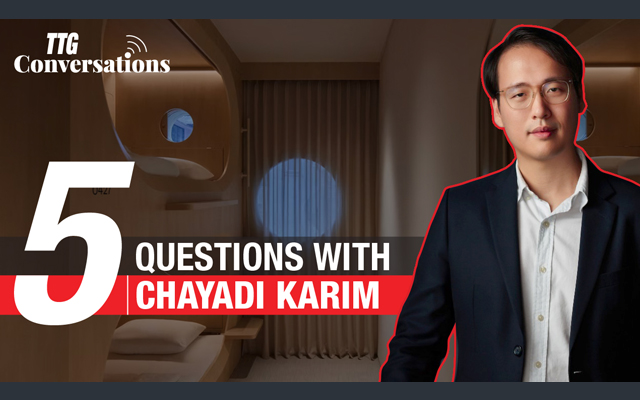
Inspired by the community spirit of European hostels and the self-service convenience of Japanese capsule hotels, Singapore-based Kinn Hospitality Concept founder Chayadi Karim launched his own line of modern capsule hotels that capture the best of both worlds.
In this episode of TTG Conversations: Five Questions, Karim discusses his vision for the capsule hotel of the future, how this accommodation type can help value-seeking travellers explore a destination without breaking the bank, how younger generations of travellers are driving demand for experiences worth paying for, and more.
South-east Asia welcomed 144 million international visitors in 2025, yet development capital is concentrating in premium and luxury products while the region’s growing middle class drives the largest volume of future demand
Owners are diversifying into secondary destinations, using branded residences to bring cashflow forward and lifestyle concepts to lift returns without the capital burden of traditional luxury builds
Developers say the winning formula now sits where consumer demand meets real estate returns, with localised design replacing one-size-fits-all brand standards across the region
From left: Andrew Shaw and Xavier Grange explore whether what owners are prioritising is aligned with the region’s development needs
The guest South-east Asia’s hotel owners are building for is not necessarily the one most likely to walk through the door. Development pipelines across the region are skewing towards wellness, luxury and lifestyle products, even as the fastest-growing demand pool, the regional middle-class holidaymaker, remains underserved in the midscale segment.
The macro picture explains the confidence. The region welcomed 144 million international visitors in 2025, a 19 per cent increase from 2024, with Malaysia, Thailand and Vietnam leading the numbers, according to Bryan Chan, vice president, development, South East Asia and Korea, IHG Hotels & Resorts.
“Despite ongoing global geopolitical tensions, travel to the region continues to be highly resilient, supported by expanding GDP, a growing middle class, and the fundamental desire to travel for leisure, business and to stay connected with family and friends,” Chan said. “Demand is also consistently outpacing supply in key segments, particularly in premium and luxury, which creates attractive opportunities for owners and sustained development momentum across the region.”
Selective optimism
Andrew Shaw, chief development officer, Centara Hotels & Resorts, described his outlook as “selectively optimistic”, noting that growth is not uniform. “The strongest opportunities are in frontier and emerging destinations, while mature markets are becoming more competitive and, in some cases, oversupplied,” he said.
Thailand remains a regional heavyweight, but Shaw pointed to rate pressure in Bangkok and Phuket caused by high levels of supply, forcing developers to think harder about value creation, product differentiation and secondary destinations. Vietnam, he said, is “the clearest high-growth story”, with coastal corridors such as Cam Ranh and Ho Tram drawing significant attention on the back of improving infrastructure and rising leisure demand. The Philippines interests him for its strong domestic base and the depth of employment tied to tourism, while in Indonesia the conversation is shifting from chasing volume to capturing higher-spending luxury and experience-led travellers in Jakarta and Bali.
Owner priorities have hardened accordingly. “Margin protection is the first priority. Even where average daily rate and occupancy have recovered, operating costs remain a pressure point. Owners are therefore looking closely at gross operating profit, not just revenue,” Shaw explained. Labour shortages are pushing operators towards automation, upskilling and cross-training to improve staff retention.
Asked whether owners’ ideal hotel types match what the market actually needs, Shaw was blunt: “Only partly. Owners are broadly aligned with demand at the premium end of the market, particularly in wellness, lifestyle, and experiential hospitality. But there is still a noticeable gap in the midscale segment, where South-east Asia’s growing domestic middle-class is likely to drive much of the volume growth.”
He added: “Owners are understandably building for the most profitable guest: the luxury wellness traveller. But the most common guest may be the regional middle-class holidaymaker. That creates a strategic tension. The premium strategy protects margins today, but it may underserve the largest long-term demand pool.”
Branded residences and secondary destinations
Where owners are diversifying, branded residences are doing much of the financial engineering.
Xavier Grange, global chief development officer for Sofitel, Emblems, MGallery & All Luxury Brands Europe-North Africa at Accor, said the model continues to gain momentum across the region.
“This model allows owners to diversify revenue streams by combining hospitality operations with residential sales. It can also help accelerate project financing and enhance the overall positioning of the asset, particularly in emerging destinations where brand recognition plays an important role,” Grange noted.
Shaw shared the enthusiasm on capital grounds.
“Branded residences allow developers to sell units off-plan, bring cash-flow forward, reduce project risk, and help fund the hotel component. In today’s capital environment, that structure is highly attractive,” he said.
Localised concepts for regional demand
The other structural shift is away from standardised brand templates. Grange stated that the ideal hotel type is no longer a one-size-fits-all concept. “Japan requires a very different approach from Thailand, and Indonesia does not operate in the same way as Vietnam,” he said. “The market is less about identifying a single ideal format and more about adapting each project to its local context, with brands providing structure and clarity rather than a uniform model.”
Shaw connected localisation directly to shifting source markets, with owners reducing reliance on longhaul Western travellers in favour of intra-ASEAN, Chinese and Indian demand. “Localised design, distinctive F&B concepts, and culturally grounded experiences are becoming more important for experience-led guests,” he said, highlighting Vietnam’s rising appeal among younger, self-booked Chinese leisure travellers, alongside growing demand across Indonesia and the Philippines.
Armand Steinmeyer, vice president, development, South-east Asia at Radisson Hotel Group, explained: “We see South-east Asia as an integrated region. It is a nexus for tourists coming from outside, but intra-regional travel will become the key driver. The region sits between India and China, and that will continue to drive new destinations.”
Chan pointed to brands being used to transform “micro-locations”, citing the recent opening of Kimpton Naluria Kuala Lumpur in Tun Razak Exchange, the Malaysian capital’s new downtown district. “Owners today are increasingly focused on driving stronger returns through differentiated, efficient and future-ready assets,” he said, adding that distinctive concepts with F&B and social components appeal to both travellers and local communities.
The lifestyle bet
Lifestyle and collection brands are where owner economics and traveller preferences most visibly converge. Chan cited IHG’s Vignette Collection, which has opened Reve Ho Chi Minh City and will soon welcome Mangala Estate Kuantan and Vaagali Maldives. “It offers one-of-a-kind stays that weave responsibility, community and locality together,” he said.
Shaw argued the segment can bridge the gap between owner objectives and the volume market. “Lifestyle hotels avoid some of the space-heavy requirements of traditional luxury hotels, while creating high-margin social spaces, local food concepts and curated experiences,” he noted. “Done well, they can lower capital cost per key and still command upscale rates.”
Steinmeyer, meanwhile, cautions that fashionable segments carry their own risk. “One thing that all hotels and operators have to take into consideration is that there are cycles. Trends and lifestyle have a shelf life,” he said. “Not every location needs a lifestyle brand. When a market is more complex, there is a need to differentiate segments, and ask questions such as whether it resonates with ownership and brings value.”
Shaw also warned that strong hotel performance does not automatically translate into an active transaction market, with sellers pricing assets based on strong cashflow while institutional buyers stay cautious on persistently high interest rates, producing more recapitalisations, restructuring and creative joint ventures instead of outright sales.
For Chan, the resolution of the region’s strategic tension is ultimately straightforward.
“The market will dictate what gets built. What is built by hotel developers is what sits at the intersection point between consumer needs and strong real estate investment returns,” he concluded.
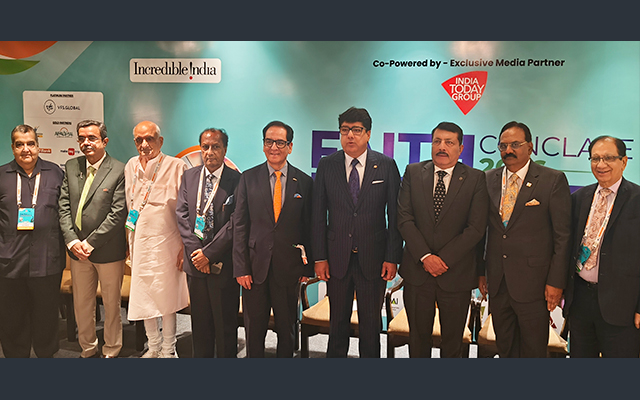
As India aims to increase the travel and tourism sector’s contribution to GDP to 10 per cent and boost foreign tourist arrivals from the current approximately 10 million to 100 million by 2047, the Federation of Associations in Indian Tourism & Hospitality (FAITH), the umbrella body representing the country’s leading travel trade associations, has presented a Tourism Growth Charter.
The charter outlines a set of key priorities that the industry believes will unlock the sector’s economic potential and strengthen India’s position as one of the world’s leading tourism destinations.
FAITH has outlined a series of recommendations aimed at strengthening India’s tourism sector and increasing international visitor arrivals; photo by Rohit Kaul
The charter was unveiled on the opening day of FAITH’s two-day conclave, held under the theme Incredible India: Invaluable Economics at Hotel Taj Palace, New Delhi, from July 16 to 17. The document includes recommendations for the central and state governments, including granting infrastructure status to the tourism industry, launching a dedicated global tourism promotion campaign under the Incredible India brand, expanding e-visa access and simplifying entry procedures for international travellers.
“Post-pandemic, the growth of domestic tourism has been phenomenal. However, the challenge is that we are still far from realising India’s full potential in the inbound tourism segment. The nearly 10 million foreign visitors we currently receive do not reflect our potential. In comparison, Paris alone attracts around 25 million international tourists annually. Measures such as granting infrastructure status to the tourism industry will enable businesses to access credit at more competitive rates, supporting faster growth and investment,” said Puneet Chhatwal, chairman, FAITH.
According to the India Tourism Data Compendium 2025 by the Ministry of Tourism, the tourism sector contributes 5.22 per cent to India’s GDP (total impact), with a direct contribution of 2.72 per cent.
In its recommendations, FAITH has urged the government to fast-track the development of the 50 tourism destinations announced earlier. It has also called for increased investment in tourism infrastructure, including last-mile connectivity, convention centres, wayside amenities, cruise terminals and digital infrastructure. Additionally, the industry body has recommended rationalising the tax regime to align with global benchmarks.
“The member associations of FAITH along with the central and state governments are working collaboratively to identify and implement measures required to position India as a leading global tourism destination. We are optimistic that these collective efforts will begin delivering tangible results over the next two to three years. India now needs an aggressive marketing strategy to showcase the diversity of its tourism offerings while also attracting greater foreign investment into the sector,” shared KB Kachru, president, Hotel Association of India.
Addressing delegates at the conclave, India’s minister of tourism and culture, Gajendra Singh Shekhawat, said the government’s vision is to position India among the world’s leading experiential tourism destinations. He added that, for the first time, the government is working towards establishing Destination Management Authorities across the country to develop well-managed, safe and sustainable tourist destinations.
Hotel developers are scaling back expansion plans and delaying projects in Indonesia to minimise risks as the rupiah continues to weaken and interest rates remain high.
Current market conditions are making investors more selective and changing the way they approach new opportunities.
High financing costs and a weaker rupiah are prompting some hotel developers in Indonesia to delay projects and reassess expansion plans
Eduard Pangkerego, COO of Artotel Group, said the impact is already being felt in the company’s pipeline, with some owners adopting a wait-and-see approach. Artotel currently has 39 hotel projects under development, with some taking longer than planned.
“Some projects that were expected to be completed within the next six to eight months are now taking longer as owners try to reduce risk,” Eduard said.
Maulana Yusran, secretary general of the Indonesian Hotel and Restaurant Association, said higher financing costs are putting greater pressure on investment decisions, making new hotel developments and expansion plans among the hardest-hit areas.
“Under the current condition, the risks are higher. Many investor are being more careful before expanding because develop a new hotel requires a large amount of capital,” he said.
Monica Koesnovagril, head of advisory services at Colliers Indonesia, said investors are increasingly favouring assets with stable returns.
“Hotels with stable cash flow are becoming more attractive as investors look for opportunities to improve existing assets. We are seeing more interest in hotel acquisitions, brownfield projects and asset repositioning, including rebranding, as owners look to increase the value of their properties,” she said.
According to Colliers Indonesia, at least five hotels in Jakarta have undergone rebranding over the past year, while several rebranded properties also opened in Bali in 1Q2026.
Mora Group has also seen growing interest from hotel owners seeking management partners for rebranding projects.
“Most of the owners coming to us are those whose contracts are about to expire, while some others are looking to maximise the value of their existing assets,” noted Andhy Irawan, CEO and founder of Mora Group.
Despite the cautious sentiment, Monica believes interest in Indonesia’s hospitality market remains strong, particularly among investors from China and Thailand.
“Indonesia’s advantage over other regional markets lies in its large domestic market, which generally serves as the end user base, as well as the relatively diverse investment opportunities still available,” she said.
She added that several investment discussions that began last year have entered the due diligence stage, although investors are taking more time before making final decisions.
Desaru Coast will host the World Amateur Golfers Championship (WAGC) World Final 2026, further strengthening Johor’s position as a golf and sports tourism destination.
The tournament will take place from October 23 to 31, 2026, and is expected to attract around 650 amateur golfers and delegates from more than 50 countries.
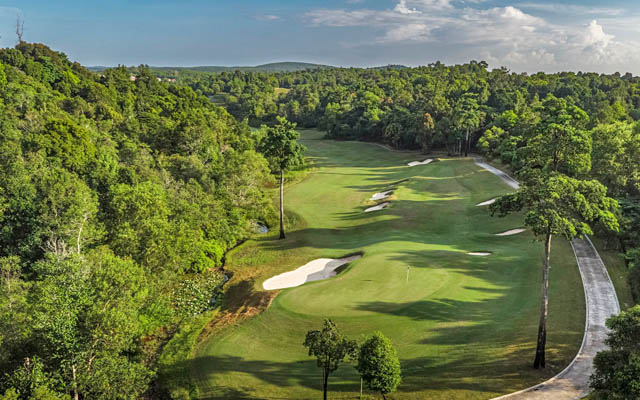
Desaru Coast will host the World Amateur Golfers Championship World Final in October 2026, bringing participants from more than 50 countries to Johor; photo by Els Malaysia
The event adds to Desaru Coast’s portfolio of international sporting events, which includes Ironman 70.3 Desaru Coast, L’Étape Malaysia by Tour de France and the upcoming Desaru Coast Multisports Festival presented by Ironman. The latter is expected to draw more than 1,000 participants and supporters from across the region this July.
Participants in the WAGC World Final will compete at The Els Club Desaru Coast, whose Ridge Course recently reopened following upgrades to its fairways, bunkers, drainage system and landscaping.
Beyond the tournament, visitors will have access to Desaru Coast’s accommodation, dining and leisure offerings, as well as a Festival Village featuring local markets, cultural performances, workshops and food and beverage experiences throughout the championship.
The event also supports Visit Johor Year 2026 by bringing international visitors to the state and showcasing its tourism attractions.
Izrin Hashim, CEO, Desaru Development Holdings One, said: “We are delighted to welcome the WAGC World Final 2026 to Desaru Coast. It is a privilege to host a championship of this calibre and showcase the best of what Johor has to offer to a global audience.”
He added: “The WAGC World Final provides an important platform to showcase Johor’s tourism assets while creating tangible economic benefits for local businesses and communities.”
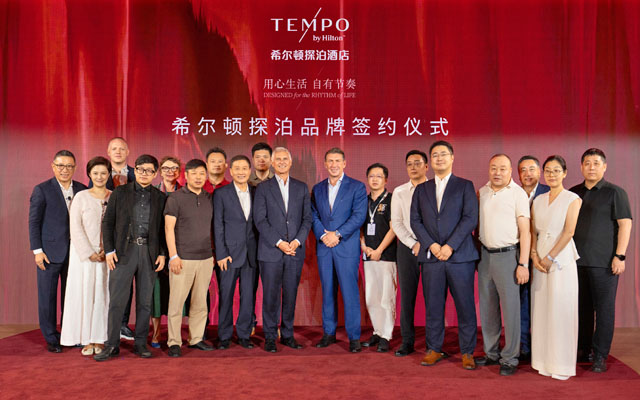
Hilton will debut its Tempo by Hilton lifestyle brand in Asia-Pacific, with the first properties planned across several destinations in China as the company expands its lifestyle portfolio in the region.
Development agreements have been signed for hotels in Xiamen, Beijing, Chengdu and Jiaxing, joining nearly 90 Tempo properties operating or in the global pipeline. The expansion targets growing demand from business and leisure travellers seeking lifestyle-focused accommodation.
Hilton will introduce its Tempo by Hilton lifestyle brand to Asia-Pacific, beginning with new hotels across several destinations in China
Launched in 2020, Tempo by Hilton is an upscale lifestyle brand with flexible public spaces, a Moonsong CAFÉ + BAR, and guestrooms designed for work and relaxation.
Hilton said the brand will support its strategy to grow its lifestyle portfolio in China. The company currently operates five lifestyle brands in the market: Canopy by Hilton, Curio Collection by Hilton, Tapestry Collection by Hilton, Motto by Hilton and Tempo by Hilton. It plans to double the number of lifestyle hotels in the country as part of its wider growth strategy in Asia-Pacific.
The Tempo expansion follows a series of recent lifestyle hotel signings in China, including The Mountain The Sea Hotel Dali, Curio Collection by Hilton, a Curio Collection property in Nanjing and a Tapestry Collection hotel in Wuxi. Xi Zhe Wuxi, Curio Collection by Hilton, is scheduled to open later this year, while Shanghai Parkview Hotel, Curio Collection by Hilton, will open in Pudong. Motto by Hilton Shanghai Wuliqiao is expected to open in 2027, marking the brand’s debut in China.
Tempo by Hilton debuted in New York’s Times Square and has since expanded to cities including Washington, DC, Savannah, Raleigh, Pigeon Forge and Nashville. The China signings follow the brand’s first European hotel agreement last year.
Alan Watts, president, Asia Pacific, Hilton, said: “As the brand expands in China, we will enable owners to unlock value through clear positioning, strong operational efficiency, superior commercial advantage and a growing network effect.”
Tal Shefer, senior vice president, brand management, Asia Pacific, Hilton, added: “Tempo by Hilton is a brand built for contemporary lifestyles. As Tempo enters China, we will blend our global philosophy with local insights to create experiences that resonate with Chinese travellers.”
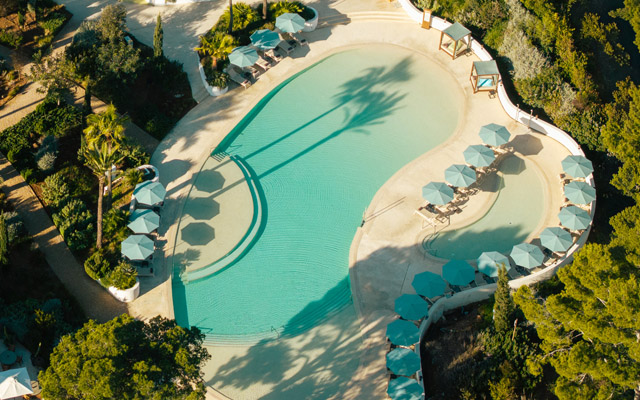
Kimpton Aysla Mallorca will host the inaugural Loop Wellbeing from October 22–26, 2026.
Organised by Lobster Experience, the B2B event will connect luxury hotels, well-being brands and medical wellness experts with specialist buyers, luxury travel agencies and tour operators from across Europe through business meetings, networking and presentations focused on the growing health and well-being travel sector.
Kimpton Aysla Mallorca will host the inaugural Loop Wellbeing from October 22–26, 2026
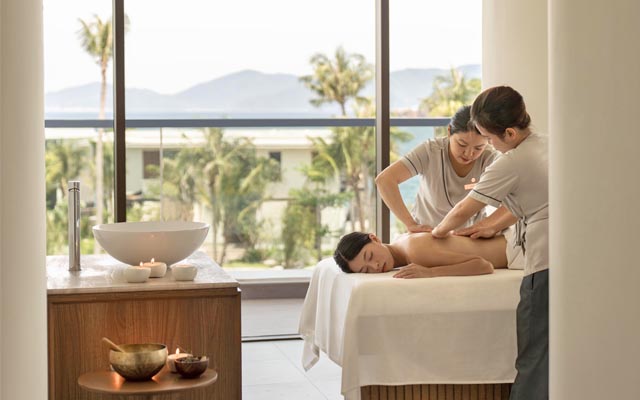
The event will take place at Kimpton Aysla Mallorca, home to Maison Codage wellness centre. Participants will also experience curated well-being programmes and regional dining across Mallorca. Supported by Calvià Tourism, the event aims to strengthen the island’s position as a destination for luxury health and well-being travel.



 Kraemer brings more than 30 years of hospitality experience across Europe and Asia.