


Collinson, WithU joint venture crafts new traveller wellness proposition

The Collinson Group’s venture capital arm, Collinson Investments, and fitness-tech specialist, WithU Global, have embarked on a joint venture to create an industry-first end-to-end digital travel wellness proposition, set to launch later in 2024.
The product, which can be integrated into any existing platform, will offer intelligent health and well-being recommendations specifically tailored to travel. It is designed to enhance customer wellness at every stage of any journey.

This marks The Collinson Group’s entry into the wellness space. The company already has an extensive travel offering, including airport and travel enhancement products, Priority Pass and LoungeKey, as well as loyalty and customer engagement, and insurance and protection arms.
David Evans, CEO of Collinson Investments, said: “At Collinson, we’re extremely passionate about driving innovation that leads to the evolution of the travel industry. Investing in traveller wellness with this partnership allows us to break new ground when it comes to creating exceptional experiences for travellers, as we equip partners and consumers alike with the tools they need to travel more healthily and confidently.”
Steve Clarke, WithU Global’s co-founder and CEO, said: “Overhauling wellness within the travel sector is no mean feat, but working in partnership with the team at Collinson, it’s one we’re hitting the ground running with. With our advanced FitTech capabilities and their decades of knowledge in the sector, we’re confident that the launch of our first travel proposition later this year will be the first step that ultimately leads to a significantly healthier travel experience for all.”
Minor, dnata strengthen partnership to offer greater savings and flexibility

Minor Hotels has forged a strategic partnership with dnata Travel Group that will enhance the travel experience for both leisure and corporate customers through flexible booking options, exclusive packages, and savings, while supporting the global growth plans of both companies.
Minor Hotels plans to expand its portfolio by over 200 hotels by the end of 2026 and dnata will assist in the launch of new hotels and resorts.

The partnership will cover dynamic distribution for leisure and corporate travellers, wholesale distribution for the travel trade, DMC integration to elevate the travel and in-resort experience, and an aligned sustainability programme and initiatives.
For leisure travel, Minor Hotels will offer dynamic rates to dnata brands in all Emirates Group markets. This includes access to rates from all Minor Hotels brands.
Travel agencies under dnata will create preferred travel packages featuring Minor Hotels for select destinations.
For corporate travel, a dedicated agreement will give dnata’s corporate clients access to direct rates across Minor Hotels’ brands, offering flexibility and savings.
In the travel trade sector, Minor Hotels is collaborating with dnata’s brand Yalago on a sustainable distribution agreement, providing significant savings for trade partners and travellers.
Ocean Marina Jomtien readies for seaplane services
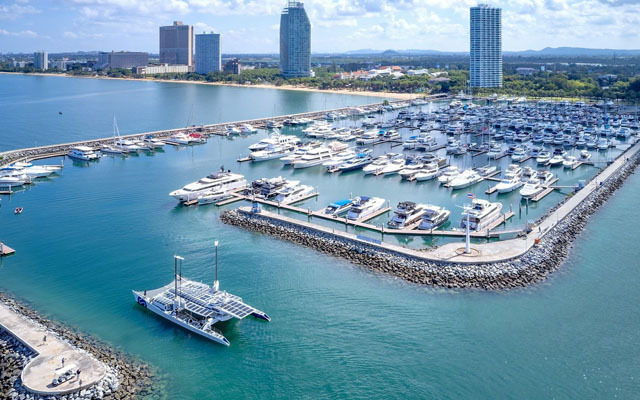
Ocean Property and Siam Seaplane, Thailand’s premier amphibious seaplane service provider, will launch a seaplane facility at Ocean Marina Jomtien, which will offer a luxurious travel experience along Thailand’s vibrant eastern coast.
The facility will allow for water landings and takeoffs, granting travellers swift access to luxury yacht charters, convenient stays at the Ocean Marina Resort, and expedited travel within the Chonburi area and beyond.
Siam Seaplane will offer both local scenic flights and broader connections, linking Jomtien with major Thai destinations such as Bangkok, Hua Hin, Rayong, Koh Chang, Koh Samui, and Phuket.
Professional on-ground teams, trained by Siam Seaplane and in compliance with regulatory standards, will ensure an “impeccable guest experience” promised both parties in their joint press statement.
Ahead of the official launch, Ocean Property, in collaboration with Siam Scenic – a branch of Siam Seaplane – will offer an array of ground-to-ground charter and scenic flights. These flights will connect U-tapao airport with major domestic hubs such as Suvarnabhumi, Don Mueang, Hua Hin, and Samui airports, in addition to private airfields like Best Ocean Airpark and Klong 11.
Adventure enthusiasts can also look forward to reaching Dropzone Thailand in Klaeng Rayong and the private airstrip at Rancho Charnvee Resort and Golf Course in Khao Yai.
Furthermore, this partnership extends to incorporate Ocean Property’s affiliated hotels and resorts in Hua Hin, Koh Samui, Phuket, and Bangkok, enhancing connectivity and enriching the travel experience for all guests.
Napong Pariponpochanapisuti, managing director, Ocean Property said: “Ocean Marina Jomtien has always been at the forefront of redefining the luxury marina experience. Collaborating with Siam Seaplane elevates this to new heights, offering our guests an extraordinary way to discover the beauty of Thailand’s eastern seaboard with the utmost style and convenience.”
Worakanya Siripidej, CEO, Siam Seaplane, said: “This landmark partnership with Ocean Property is testament to Siam Seaplane’s vision of transforming travel in Thailand. Our mission is to offer an unrivalled experience that begins the moment our guests take off from the majestic Ocean Marina Jomtien and extends to every corner of the country’s stunning landscapes.”
Xiaohongshu is most consulted by Chinese travellers, whose travel sentiments are improving

Chinese outbound travellers polled by Dragon Trail International (DTI) six weeks before the May Day holiday reveal emerging trends on preferred information and booking source and type of media, and new attitudes towards spending.
According to Sienna Parulis-Cook, director of marketing and communications, DTI, the key takeaways from the latest survey are as follows: Chinese social media and e-commerce platform Xiaohongshu is the leading source of destination information; video content has the deepest impact; the traveller is price conscious but is willing to spend; outbound travel intent is much higher than in 2023; there are more plans to venture beyond Asia; and the perception is the world is safer than before.

In ranking channels used for destination information, Janice Meng, market research analyst, DTI, said Xiaohongshu was top at 52 per cent, Douyin 43 per cent, Ctrip 37 per cent, and tying with friends, family and acquaintances, and 36 per cent bloggers and key opinion leaders.
Elaborating on booking channels, Meng noted 60 per cent would pick domestic platforms likes Ctrip and Qunar, 38 per cent via travel agents and social platforms like Xiaohongshu and WeChat; 27 per cent directly on official airline and hotel sites; 23 per cent with offline traditional travel agencies; 22 per cent with domestic review-sharing platform like Mafengwo, 21 per cent on international booking platform like Booking.com, and 17 per cent on online traditional travel agencies.
She noted current attitudes on outbound travel spending show 58 per cent “considering carefully to get the best value for money”, and 14 per cent choosing products with the best price.
Parulis-Cook added: “Chinese travellers are definitely price conscious right now, are seeking value for money, and actually see outbound travel as delivering better value for money compared to domestic trips, especially during Chinese national holiday periods.
At the same time, Meng pointed out that 11 per cent of respondents said they would choose the best products and services regardless of cost and, and another 11 pet cent said they were willing to increase their budget for better experiences.
Based on international departure ticketing data as of early-April. Nancy Dai, China market expert, ForwardKeys, who also spoke at the webinar, cited demand from China for European destinations was being driven by affluent travellers
Dai said the percentage difference for premium travel in 2Q2024 vs 2Q2019 was only minus three per cent; and the top-three destinations of Geneva increased 105 per cent, Copenhagen 55 per cent and Madrid 49 per cent.
In summing up which overseas destination marketing initiatives had the biggest impact among those polled, Meng shared the top three destinations were Thailand, Singapore and Japan; Douyin, Xiaohongshu and TV for platforms; cuisine, scenery and culture for content; and video, live streaming and advertisements for delivery preference format.
Popular reality shows also succeeded in familiarising Chinese audiences with overseas destinations, like in the case of Iceland featuring in the TV show Divas Hit the Road, Meng added.
There were 1,015 survey responses and Parulis-Cook pointed out that 56 per cent of respondents were female.
Intense demand, labour pains take Japan hotel rates higher

Hotel rates in Japan are soaring as the number of inbound tourists surges and the hospitality sector’s labour shortage continues to bite.
Attracted by the weak yen and the first cherry blossom season since Japan downgraded Covid-19 to the same level as seasonal influenza, 3.08 million international visitors arrived in March, up 11.6 per cent on the same month in 2019, according to the Japan National Tourism Organization (JNTO).
The average room rate for March was 20,986 yen (US$134), equating to almost a 20 per cent increase year-on-year, and the highest level since August 1997, according to real estate company CoStar Group.
Of 48 countries surveyed in the four weeks ending March 9, 2024 by analytics provider STR, Japan led in year-on-year revenue per available room (RevPAR) growth, along with Greece, Malaysia, the Czech Republic, and Singapore. Japan also enjoyed the highest average daily rate growth of all countries, at 30 per cent.
Analysts attribute rising rates to unprecedented demand from international arrivals, together with average hotel occupancy of 78 per cent and a shortage of hotel staff.
A survey by the Japan Federation of Service & Tourism Industries Workers’ Unions shows 85 per cent of travel and hospitality business operators are limiting their operations due to not having enough workers, with 80 per cent of hotels and ryokan inns employing part-time or temporary staff to fill the gap in regular workers.
The weak yen means international tourists are able to shell out for the higher costs of hotel rooms but travel agents fear this may hinder sustainable travel in Japan.
Ramkey, an independent luxury tour guide, told TTG Asia that his clients were paying roughly 50 per cent of their travel budget on airfares and hotels, which he described as “concerning.”
“Persuading more visitors to go off the Golden Route (to less-visited areas) will continue to be tricky if the clients’ overall travel costs remain high,” he explained.
Rising hotel rates also risk pricing out domestic travellers, who made 36.7 million cumulative overnight stays in February, up 4.2 per cent year-on-year, but mostly in business hotels, which are more affordable, according to JNTO.
Kempinski Jakarta plays up Indonesian history and culture this year
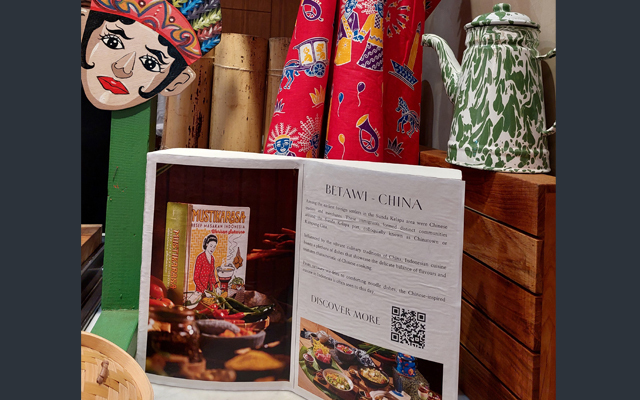
Hotel Indonesia Kempinski Jakarta has launched the Legend Lives On, a year-long campaign to honour Indonesian history and culture, which the hotel hopes would allow guests to appreciate the country through different lenses.
Programmes include Mustikarasa, an F&B offering featuring Indonesian dishes from the legendary cookbook left by Indonesia’s first president, Soekarno; and interactions with The Curator, an “ambassador of cultural conduit” who will share captivating tales of Indonesia’s vibrant history and unravel mysteries of ancient traditions and local customs.
Harald Fitzek, the hotel’s general manager, said at the launch of the campaign: “Indonesia is a very diverse country, and we are always looking for new ways to introduce our guests to different aspects of Indonesia.”
He added: “”Hotel Indonesia Kempinski Jakarta has always been an important part of Indonesia’s history. Here, we always strive to do our part as the guardians of the country’s rich heritage.
Formerly known as Hotel Indonesia, the hotel opened in 1962 as the first five-star property in the country to host Asian Games IV delegates.
As Legend Lives On leads to August, when the hotel celebrates its 62nd anniversary and Indonesia’s independence, a grand party will be hosted to connect the past, present, and future through a blend of music, art, and storytelling.
In the final quarter of 2024, refreshed guestrooms will be unveiled.
Philippines is in the mood for food tourism

Gastronomy can play a pivotal role in tourism development and a catalyst for economic growth and cultural exchange in the Asia-Pacific region, according to Philippine Department of Tourism (DOT) secretary Christina Garcia Frasco.
Speaking at the 3rd World Tourism Industry Conference (WTIC) and Business Luncheon on May 9, she highlighted the diverse gastronomic landscape of the region and the benefits of using gastronomy to drive tourism.

“Gastronomy tourism is not just about indulging in delicious food; it also has immense economic and cultural benefits for the Asia-Pacific region. This form of tourism attracts food enthusiasts from all over the world, creating opportunities for local businesses, farmers, artisans, and the like. It stimulates job creation, promotes sustainable agriculture, and preserves culinary traditions that have been passed down through generations,” she said.
The Philippines’ National Tourism Development Plan (NTDP) 2023-2028 highlights the integration of food and gastronomy within cultural experiences.
“For example, Iloilo, a province in our country, has recently been recognised as a Creative City for Gastronomy by UNESCO. Additionally, regions such as Western Visayas, the Cordillera Administrative Region, Pampanga, and Cebu are actively engaging in the development of Slow Food programs. These initiatives aim to protect our local produce, ingredients, and culinary traditions by boosting demand for them. This increased demand ensures that local farmers and communities are supported and encouraged to continue cultivating these valuable resources,” Frasco said.
The Philippines will host the First UN Tourism Regional Forum on Gastronomy Tourism for Asia and the Pacific, on June 26 to 27 in Cebu.
Dusit Hotels and Resorts expands footprint in the Maldives

Dusit Hotels and Resorts has signed an agreement with Pearl Atoll to manage dusitD2 Feydhoo Maldives, which is expected to open in 4Q2024 with 125 keys.
dusitD2 Feydhoo Maldives resort will be located on a private island near the main island of Malé, accessible with a five-minute speedboat ride from Malé International Airport.
It will be the company’s first all-inclusive property, and Dusit’s second resort in the Maldives.

The resort will comprise spacious overwater villas and family suites ranging from 77m2 to 319m2, a kids club, multiple F&B outlets, a fully equipped gym, and a signature Namm Spa offering a wide range of Thai massage therapies and beauty treatments.
Guests will have access to three main private beaches and a smaller beach.
“We are delighted to be expanding our presence in the Maldives with dusitD2 Feydhoo Maldives, our first all-inclusive resort concept,” said Gilles Cretallaz, chief operating officer, Dusit International.
“The Maldives is a strategic market for us, and this exciting addition complements our existing presence in the luxury segment by offering a distinct lifestyle experience for families and young couples seeking an unforgettable and accessible Maldivian escape. We are committed to exceeding guest expectations with innovative offerings and exceptional service, and dusitD2 Feydhoo Maldives will be a shining example of this unwavering dedication,” he added.
As part of Dusit’s sustainability programme, Tree of Life, the resort will implement processes and systems that minimise environmental impact.
The resort’s developers also plan to open a resort-based entertainment hub and small convention centre, catering to guests beyond the core resort experience. More information will be announced at a later date.
Riu CEO Carmen Riu prepares for retirement

Riu Hotels and Resorts’ chief executive officer (CEO) Carmen Riu has announced that she will retire before the summer this year. She currently shares her position with her brother Luis Riu, who will now continue as the company’s sole CEO.

Riu began her career in 1977 as the manager of the hotel Riu Bali in Playa de Palma, Mallorca. Prior to that, she had worked in various hotel departments during her time as a trainee in the family business. In 1978, she took the reins of the human resources department, a responsibility that expanded to include administration and finance in 1981.
After the death of her father Luis Riu Bertrán, in 1998 she was appointed CEO alongside her brother Luis Riu Güell. Both have been responsible for the RIU Hotels & Resorts chain’s international growth and consolidation over the last 25 years.

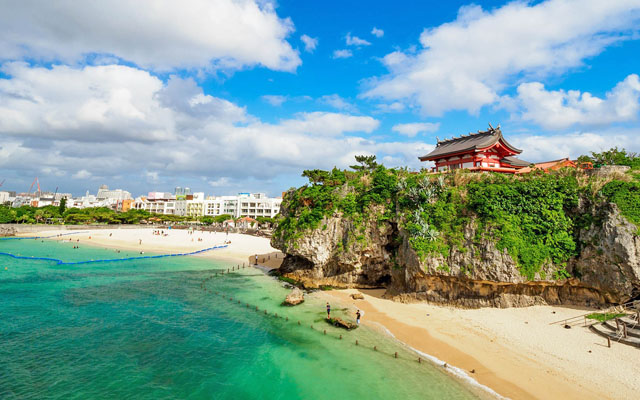






The Taiwan Tourism Administration has unveiled Taiwan Tourism Brand Version 3.0, titled Taiwan – Waves of Wonder, which utilises wave-like designs to illustrate the seasonal highlights the destination and its year-round welcome.
The new identity is supported by innovative brand elements, including an animated short film and a promotional song composed by award-winning musician Chris Hou.
The new logo of the Taiwan tourism brand integrates imagery such as Taiwan’s mountains, oceans, winding roads, and railways, presenting a design with wave-like contours. It adopts the orange tones of sunrise to not only align with the “warmth and vitality of the previous brand”, but also to symbolise the future development of Taiwan’s tourism industry.
The new branding is aimed at bolstering Taiwan’s efforts to attract a greater number of international tourists.
Taiwan – Waves of Wonder replaces the Taiwan – The Heart of Asia branding, which was promoted globally for 13 years.