

TTG Asia
Asia/Singapore Tuesday, 10th February 2026
Page 2835

New MICE valley emerges in Shanghai

0

SONGJIANG District is promoting itself as the new MICE valley of Shanghai.

One of the 18 districts of Shanghai located about 30 minutes by train from the city centre, it is home to three five-star MICE-friendly hotels, Le Meridien She Shan Shanghai, Sofitel Shanghai Sheshan Oriental and Songjiang New Century Grand Hotel Shanghai, providing close to 1,000 rooms.

“We now have a mix of domestic and international meetings, thanks to the presence of many Fortune 500 companies with offices in Shanghai. But we want to have a more focused action plan to convert Songjiang District into a ‘meetings valley’ and attract meeting groups from the city,” said Sun Hong Jian, a senior officer with the Songjiang District Commerce and Tourism Division.

She explained that Songjiang’s close proximity to Shanghai’s city centre would allow event planners to twin both destinations or provide corporate groups a quieter alternative.

Sun’s action plan includes hosted site inspections for meeting planners, and organising table-top meetings and forums that bring together corporate clients and Songjiang’s suppliers.

However, Sun admits that Songjiang’s ambition is faced with two key challenges �?? the lack of experienced destination management companies or travel agencies with experienced meetings operations, and the district government’s limited understanding of MICE.

“The concept of MICE is still very new to us. We have realised that there’s so much more to MICE than just meetings. We have to attend seminars like this (China (Shanghai) International Meetings & Conference Forum) to learn about the business and how else to make Songjiang District more attractive to corporate clients,” she said.

Hangzhou sets up MICE division

0

THE HANGZHOU Tourism Commission has set up a new MICE division, which is rolling out a number of initiatives.

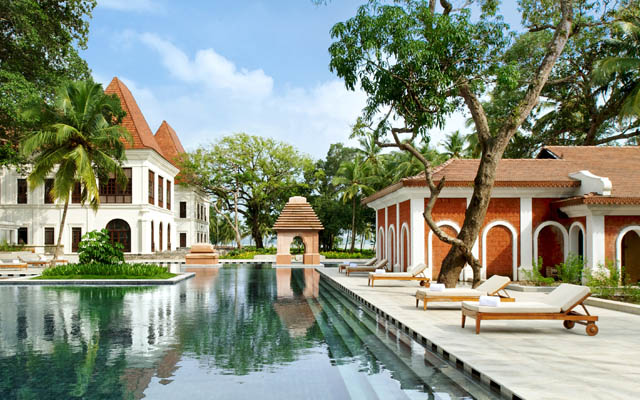
Already a rising star in leisure, with international hotel brands from Amanresorts to Four Seasons making a beeline for Hangzhou, the capital city of Zhejiang wants to be accessible to planners. Roger Shu, manager of the division, said a dedicated website with information on event venues, MICE hotels and other suppliers would be launched in June, first in Mandarin, then English, and eventually in other languages.

The division is also organising forums, training and destination promotion in partnership with industry experts. Just last week, it ran a three-day training led by The International Congress and Convention Association (ICCA) president Arnaldo Nardone and experienced MICE players. It has also enlisted the help of the United Nations World Tourism Organisation (UNWTO) to promote Hangzhou as a MICE destination to overseas markets.

Intercity cooperation is also a key. Shu said: “We are breaking down barriers with the other cities in the Yangtze River Delta (Shanghai, Suzhou, Ningbo and Nanjing) in bidding for major events. An event could have its meeting in, say, Shanghai, then its post-meeting leisure programme in Hangzhou. That is the arrangement we have suggested to ICCA for its congress in Shanghai in 2013.”

Li Hong, director general of the commission, said a “massive convention centre” was being built in Hangzhou and would be completed in 2015. While Li was unable to provide facility specifications of the Hangzhou International Olympic Centre, he said it would be “a very impressive venue for MICE”.

Meanwhile, a Hangzhou MICE association has also been established to facilitate networking among local players. It comprises 100 members across industry sectors including hotels, travel agencies that deal with MICE groups, and planners.

JNTO: Japan can still support business events

0

THE JAPAN National Tourism Organization (JNTO) is participating at IT&CM China in Shanghai and later at IMEX in Frankfurt to show event planners that many areas popular with international business events are operating as normal.

JNTO will also be posting timely updates on the destination on its website.

In a message to travellers and tourism trade partners, JNTO president, Tadatoshi Mamiya, explained that many parts of Japan were “far removed from the affected areas” and “upcoming events can easily go ahead as scheduled and with minimal to no impact”.

However, Mamiya acknowledged the “devastating impact” these disasters and fear of a nuclear fall-out had on Japan’s inbound tourism.

“While many areas in Japan remain unaffected by the disaster, they are suffering from the sudden decrease in international visitors. We are deeply concerned that this will not only affect Japan’s tourism industry directly, but also will (hurt) our industry partners

Gloria to open 13 hotels

0

GLORIA Hotels & Resorts will open 13 new hotels across China within this year and next, bringing its pool of properties in Asia-Pacific and China to 30.

Hainan province, China’s tourism trade darling which is seeing massive tourism development, will receive the bulk of Gloria’s expansion. Three resorts will open by July or August, two of them new-builds and one a rebranding of a hotspring resort on Haitang Bay.

The group will also mark its presence in Changsha and Jishou, Hunan province; Hohhot, Inner Mongolia; Wuxi, Jiangsu province; Shanghai; Lushan, Jiangxi province; Beijing; and Duyun, Guizhou province.

Gloria will debut its economy brand, E-Inn, in Changsha and boutique brand, Merlin, in Shanghai before the year is over.

The group’s vice president sales & marketing, Clarence Wong, said most of the new properties were equipped with meeting facilities.

“The MICE segment contributed approximately 15 per cent to our hotels’ total business in 2010. The contribution is expected to be higher this year,” Wong said.

Wong added that strategies for expansion beyond China, possibly to South-east Asia such as Singapore, Malaysia and Thailand, were being mapped.

The party’s over

0

THE CHINESE central government has issued a warning to provincial governments about misusing government funds to host meetings with foreign delegates in their hometowns.

Local industry players at the China (Shanghai) International Meetings & Conference Forum on Tuesday told IT&CM China Daily that the warning came after some provincial government officials were found to have used government funds to conduct fancy parties on the pretext of hosting such meetings.

As understood by the Daily, officials would attend the parties, but no beneficial trade interactions were made with the foreign guests.

Patrick Chen, international deputy director of the Shanghai Municipal Tourism Administration, explained: “All government and association meetings are required to obtain approval from the central government before funds are disbursed. The central government will now pay greater attention to applications for hosting these ‘international’ meetings.”

Liu Ping, CEO of Beijing-based Star China Professional Program, added: “Such ‘international’ meetings have poor programmes and are a waste of time for the foreign delegates. They reflect badly on the provinces involved.”

But industry sources said these renegade events were not new.

Liu said: “Such problems could appear to be more prominent, as more cities in China are eager to be part of the MICE wave that has hit key cities.

“Every province is eager to hold meetings, but there are no clear standards. That’s why the government has to exert control.”

The industry welcomed the clampdown.

The International Congress and Convention Association (ICCA) Asia-Pacific regional director, Noor Ahmad Hamid, said: “Stricter controls will weed out false events and benefit China’s meetings industry.”

International hotel groups operating in China that were interviewed, such as the Millennium & Copthorne and Sol Melia, said government events held at their hotels were the real thing, with most being trade forums, so they expected little or no impact.

Two years ago, the central government also slapped stricter compliance policies on official business travel expenditure.

Madinah Movenpick makes bid for Indonesia hajj and umrah

0

MADINAH Movenpick Hotel in Saudi Arabia is trying to win the Indonesian market over through travel agents handling umrah and hajj pilgrimage tours.

Representatives from the boutique property, which is located five minutes from the Nabawi Mosque, held a presentation to agents in Jakarta. They offered promotional rates of 410 riyal (US$137) to 630 riyal during umrah season, and 510 riyal to 730 riyal during hajj season, for full board plus free use of meeting rooms for pilgrimage training.

Madinah Movenpick Hotel general manager Hassan Hassanein told the media: “This is the first time we are doing a presentation to travel agents here and offering our property to Indonesian travellers.”

He said Movenpick properties were not new to Indonesians, as its sister hotel Anwar Movenpick Madinah was popular with the market.
To cater to Indonesians, Madinah Movenpick Hotel has 18 Indonesians on staff and serves an Indonesian menu.

Hassanein is expecting to get at least 2,000 room-nights this year.

Paradiso Erabali Holiday managing director Danie Soesilo said: “The package price is reasonable. However, while it is close to Nabawi, the location is north of the mosque, while the favourite hotels for the Indonesian travellers are the ones in the south. This is because there are more female umrah pilgrims than men from here, and the gate for ladies is in the south.

“Having said that, with prices a little lower than others, the hotel has a fair chance to get business, especially when the umrah seasons are busy like this year.”

US business travel at highest levels since recession

0

BUSINESS travel spending and volume grew at healthy rates in the fourth quarter of 2010, with the GBTA Business Travel Index reaching its highest levels since the recession began in 2008, according to a statement released by the Global Business Travel Association (GBTA).

GBTA Foundation research also shows that increasing business travel spending is a leading indicator of future US job growth.

According to the release: “The fourth quarter of 2010 showed the strongest seasonally-adjusted quarter-over-quarter business travel growth since the recession began. For the year, total US spending on business travel grew by 3.2 per cent, up substantially from the 2.3 per cent for the year forecast previously. Business travel spending in 2011 is now expected to be even stronger than estimated last quarter, advancing by 6.9 per cent for the year, up from the five per cent growth forecast previously.”

“These are very heartening signs. Business travel spending is coming back at robust levels, indicating the shape of things to come, namely more travellers on the road, an improving economy, and a positive environment for continued job growth,” said Michael W McCormick, GBTA Executive Director and COO.

“Thanks to increasing corporate confidence, companies are investing more in business travel, which will further stimulate business activity and economic growth.”

The findings were released yesterday in the latest Business Travel Quarterly Outlook – United States from the Global Business Travel Association Foundation, GBTA’s education and research arm, sponsored by Visa.

Sri Lanka eyes vast Chinese market

0

SRI LANKA is aggressively trying to attract more travellers from China, the world’s largest outbound travel market, and plans to work with neighbouring Maldives to achieve this.

“We need to capitalise on the Chinese market, which we have not been doing enough in the past,” said Nalaka Godahewa, chairman of Sri Lanka Tourism (SLT).

Attracting Chinese travellers was part of the recent discussion between Sri Lanka’s Economic Development Minister, Basil Rajapaksa, who handles the country’s tourism portfolio, and Maldives Minister of Tourism, Arts & Culture, Dr Mariyam Zulfa.

Zulfa was in Colombo on March 24 to 26 to attend a high-level meeting organized by the UN World Tourism Organization.

According to Godahewa, Maldives has succeeded in attracting Chinese tourists when there was a drop in European traffic.

In 2010, China topped tourist arrivals to the Maldives, the first time that any Asian country has done so. According to the latest figures released by Maldivian authorities, 104,148 Chinese visited the Maldives by the end of October 2010 versus 49,655 for the same period in 2009. Whole-year figures for 2010 were not immediately available.

Even with little promotion by Sri Lanka, the number of Chinese tourists has increased sharply. According to SLT, in the period January to March 2011, saw 4,709, compared to 2,510 in the same three-month period in 2010, an 87.6 per cent increase.

BHA reacts to critical TIME article

0

THE RECENT TIME magazine article, “Holiday in hell: Bali’s ongoing woes”, which criticised environment-related issues on the island, has struck a chord with the Bali Hotels Association (BHA).

In a statement released after the article’s publication, BHA chairman Jean-Charles Le Coz said: “As one of the world’s top vacation spots, the Indonesian government is forecasting 7.7 million visitors in 2011 in total, up from around seven million in 2010.

“This is great, but we have to be mindful of the impact these huge numbers can have on the environment. Bali has been proactively tackling issues of waste management, sustainability and community support.”

BHA has environment-related initiatives in place, like the Say No to Disposable Plastic campaign launched this year.

BHA director of environment Bipan Kapur said: “This initiative is supported by the 100 BHA member hotels; ‘Green champions’ from each hotel have been enrolled to drive this initiative in their respective resorts.”

More hotels have taken individual initiatives to invest in becoming green hotels, with international certification from global green groups.

Hoteliers mixed on new programme to woo back expert Malaysians

0

THE MALAYSIAN government yesterday announced new incentives to entice its professional citizens working abroad to come home, with its Returning Experts Programme.

Among the perks are a flat income tax rate of 15 per cent for five years under the new transitional income tax incentive, and two tax-free, locally assembled cars.

Some members from the hospitality industry see this move as a good way of helping address the shortage of management-level staff.

However, Malaysia Association of Hotels (MAH) vice president Ivo R Nekvapil and MAH CEO, Reginald T Pereira, both said that the government should not also neglect local talent who have been serving the country faithfully.

“You have to give them something as well,” Nekvapil said.

Pereira added that ignoring local talent would be counterproductive, as it would create jealousy and friction. He said: “The government should also find out why talent is leaving for overseas, and then find ways of improving local conditions to make it more attractive to work locally.”

He estimated that there were 20,000 vacancies in the hospitality industry across the country, from rank-and-file to middle-management positions.

Malaysian Association of Hotel Owners executive director, Shaharuddin M Saaid, said that it was still premature to tell whether the new incentives would effectively serve its purpose. “In order to attract them back, the total remuneration has to be better than what they are getting abroad,” he said.



