

The spending game

 How will spending patterns look this year based on the way South-east Asian consumers spent their money in 2023?
In the first half of 2023, we saw consumers returning to normal shopping habits and spending more after the lockdowns and restrictions were lifted. However, in the second half, this trend slowed down, which affected spending on non-essential items such as apparel and household goods. Spending on food, both dining out and groceries, remained important for consumers, as they adjusted their priorities due to higher food prices.
We see 2024 as a year of recalibration, as consumers adjust their spending habits, prioritising travel and dining out, although data shows varying levels of interest across different markets.
Mass market consumers could also spend a higher portion of their wallet on essentials, which have seen bigger relative price increments in many markets. We anticipate that consumers will continue to prioritise spending on essentials such as food while spending on non-essential items, especially larger purchases like furniture and electronics, may remain subdued.
Consumers continue to prioritise experiences over material goods post-pandemic. This preference for experience-based spending is evident in the strong consumer interest shown in Taylor Swift’s The Eras Tour and Coldplay’s Music Of The Spheres world tour, two of the biggest acts that toured Singapore this year.
Now, where does travel fit into their spending plans this year?
Travel will continue to be a priority for consumers in South-east Asia. However, we see the affordability of destinations and airfares playing a significant role in their choice of destination and the focus of their travel spend.
According to data from the Mastercard Economics Institute, Singaporean travellers are favouring North-east Asian destinations like Japan and South Korea even more than before. This trend is likely due to the strength of the Singapore dollar and improved flight connections to these destinations.
In contrast, Malaysian travellers are opting for closer and more budget-friendly destinations such as Thailand. The weaker Malaysian ringgit prompts travellers to seek a balance between lower airfares and affordable destinations.
For Indonesian consumers, in the first quarter of this year, we saw a rise in the share of wallet allocated to travel. This surge was driven by middle- and high-income individuals who had accumulated significant savings during the pandemic and chose to spend on revenge travel. Outbound travel has now almost fully recovered to 2019 levels, with departures from Indonesia to South Korea, Japan, Hong Kong, Malaysia, Thailand, and Vietnam already higher than pre-pandemic levels, while more costly destinations such as Australia and the US are still lagging.
In the same timeframe, Filipino consumers have reduced their spending on household durable goods, instead preferring out-and-about spend such as dining out and apparel. Spend on travel has been resilient, with a strong growth in hotel and restaurant sales, which suggests many travellers in the Philippines are opting for domestic stays over international destinations. One reason accounting for the weaker appetite for overseas travel is the weak peso, which in US dollar terms reached just 55 per cent of 2019 levels by 3Q2023.
It’s a slightly different picture for the Singaporean consumer for the same period, where household budgets were under pressure from high mortgage servicing costs. In addition, a sharp rise in food prices has led to an increase in spending on groceries and dining out. Although we saw the share of spend on travel fall, this was likely due to the strong Singapore dollar helping to offset increases in holiday expenses overseas, rather than an actual cutback in Singaporean consumers’ appetite for travel.
We see that in terms of outbound travel, Singapore resident departures has almost fully recovered to 2019 levels, with North Asia and South-east Asia as the most popular regions.
There is talk of revenge travel losing steam in 2024 – is Mastercard seeing this happening?
Not from a South-east Asian perspective. Specifically focusing on our data on outbound travel, the number of trips made by residents of any source country has only slightly surpassed 2019 levels in recent months. This suggests that capacity constraints and high airfares over the past two years have hindered consumers from fully satisfying their pent-up demand for travel.
Weak emerging market currencies have also tempered the enthusiasm of middle-income consumers for outbound travel, turning it into more of a privilege for affluent travellers from these markets.
Looking ahead, the expansion of budget-friendly flight connections within the region will help reduce the cost of air travel.
In addition, disposable income is expected to improve as salaries rise and inflation eases across the region. Although affluent travellers may lose some momentum, improved travel affordability should attract relatively less affluent travellers to take their place.
We have no doubt that South-east Asian outbound travel will continue to grow this year and beyond. What will be interesting to watch is how travellers adjust their spending priorities at destinations and among the various available options in response to affordability considerations.
What should travel and tourism players do to maximise business potential?
The travel and tourism market in South-east Asia is poised for substantial growth in the coming years. Projections indicate that by the end of 2024, the market’s revenue will reach an impressive US$31.53 billion.
While Singapore has traditionally been a top contender for tourists, ranking 11th place in Euromonitor International’s annual Top 100 City Destinations Index 2023, other countries in South-east Asia are now emerging as popular tourist destinations for different reasons.
A notable shift is the increasing consumer preference for contactless digital payments, including QR codes, digital or mobile wallets, biometrics, and more. These preferences will be instrumental in sustaining the ongoing recovery and future growth of travel.
For example, the Tourism Authority of Thailand (TAT) is open to collaborate with card networks, wallet players and airlines to boost inbound tourism. Embracing a digital-first mindset is essential for sustained growth within the travel industry, making it crucial for the stakeholders to stay attuned to technological changes to ensure ongoing success and satisfaction. Wellness tourism is a key priority for TAT and Thai travellers – 77 per cent of Thai travellers are seeking to recenter the mind through meditation or mindfulness. Sixty-five per cent Thai travellers are looking for travel that focuses on mental health or that helps with life milestones.
To keep growing, travel and tourism players must adapt to evolving consumer preferences. At Mastercard, based on the key trend of travellers prioritising spending on experiences over things, we have partnered with Singapore Airlines (SIA) to elevate travel experiences for Mastercard cardholders across South-east Asia. Through this collaboration, we extend the Mastercard Priceless platform to offer SIA’s KrisFlyer members special deals, global promotions, and exclusive access to a diverse range of curated experiences. These experiences encompass dining, travel, sports, music, entertainment, and more, available worldwide.
Now is the time for all travel stakeholders to proactively adapt to this trend, or risk being left behind. As new opportunities emerge, we encourage all players in the eco-system to invest and make the necessary changes to ensure they remain relevant for consumers and are able to adapt to and help shape the future of payments in the travel sector.
The outlook you have painted seems rosy. What macro conditions could impact South-east Asia’s projected travel spend in 2024?
The beginning of this year started with a generally optimistic outlook, marked by the complete lifting of travel restrictions and the reopening of destinations across the Asia-Pacific region, such as China. The projected travel spend in South-east Asia for 2024 could be influenced by several macroeconomic conditions, particularly related to disposable incomes and travel affordability.
Positive factors include an increased travel affordability due to more budget-friendly flight options and competitive pricing by full-service carriers as capacity expands. Additionally, a general softening of inflation coupled with rising salaries is expected to bolster travel demand.
On the flipside, we are now seeing emerging challenges that could impact travel spending. The geopolitical tensions in the Middle East have disrupted shipping routes, potentially leading to increased energy commodity prices, which could drive up food and fuel costs in the region. This rise in essential commodity prices, coupled with poor weather affecting food production, has already caused a resurgence in food inflation in certain South-east Asian economies, such as Indonesia and the Philippines.
If these cost pressures persist and essentials become more expensive, consumers might adjust their spending priorities. They could travel less frequently, change their holiday spending behaviour, opt for more budget-friendly destinations, or prioritise domestic travel.
Another concern is the potential for sustained higher interest rates due to persistent inflation. The currency pressure of the strong US dollar against Asian currencies may discourage central banks from cutting interest rates, which could prolong mortgage servicing pressures and continue to weigh on consumer spending.
In summary, while several positive economic factors are expected to support travel spending in South-east Asia in 2024, challenges related to geopolitical risks, inflationary pressures, and interest rate dynamics could potentially dampen travel expenditure by affecting consumer behavior and affordability.
Industry veterans shine bright with PATA recognition

PATA paid recognition to three tourism professionals and industry leaders, whose work has contributed to the overall development of Asia Pacific tourism and beyond, at the recent PATA Annual Summit 2024.
The PATA Life Membership was presented to Darren Ng, managing director, TTG Asia Media. As PATA’s highest individual honour, the award serves to recognise individuals for their leadership and dedication to the association.

Ng served as the chairman of the PATA Singapore Chapter from 2008 to 2016 and is currently an advisor to the chapter. He has also been a council and advisory member of PATA, serving as an Industry council member, proxy member, and board member between 1990 and 2023. Currently, he holds a position on the Supervisory Board of PATA.
The PATA Award of Merit was presented to Elizabeth M Chin, executive director, PATA New York Chapter. This award is reserved for individuals who have consistently contributed to PATA and the PATA chapter network over an extended period of time.
Chin has played a pivotal role in the success of the PATA New York Chapter and supported numerous workings of the association as a whole. She began her professional journey as a corporate auditor, followed by over 25 years of diverse experiences across various industries, ranging from food service to entertainment. In 1986, Chin founded and has since served as the owner of ECI Travel World, providing travel experiences tailored to exploring destinations worldwide.
Mayur Patel, head of Asia, OAG, was presented with the PATA Chairman’s Award, reserved for individuals who have shown support, loyalty and dedication to the association and industry during their tenure.
Prior to joining OAG, Patel was with Amadeus. He also spent over seven years at IATA, in a variety of roles focused on aviation data solutions and services.
Meanwhile, PATA has appointed Soon-Hwa Wong, CEO of AsiaChina, its Ambassador for Greater China. He will work towards achieving the goals of PATA, facilitating collaboration among stakeholders in the travel and tourism industry, and enhancing the presence of PATA in Greater China.
PATA CEO Noor Ahmad Hamid said: “PATA congratulates all four individuals on this sincere acknowledgement of their passion and leadership in ensuring the responsible development of travel and tourism in Asia Pacific and beyond. With their guidance, the association continues to grow and serve its purpose in supporting the industry. Their tireless efforts should inspire all of us as fellow tourism professionals to fulfil our roles in driving tourism forward.”
Aviation experts say fatalities from turbulence “rare”

Aviation experts weighing in on Singapore Airlines’ turbulence-related accident on Tuesday (May 21), where a 73-year-old passenger with a heart condition had died, say such fatalities are rare and that flying remains a safe way to commute over long distances.
The incident on SQ321, travelling from London to Singapore, occurred as the aircraft flew over the Irrawaddy Basin and encountered extreme turbulence.

Thereafter, SQ321 made an emergency landing at Bangkok’s Suvarnabhumi Airport at 16.45 Singapore time.
A situation update from the airline issued early Wednesday morning stated that 79 passengers and six crew members are in Bangkok receiving medical treatment while those fit to fly have returned to Singapore on a relief flight that landed at Changi Airport at 05.05.
Speaking to Channel NewsAsia late on May 21, independent aviation analyst Alvin Lie said the intensity of turbulence experienced by SQ321 was likely “extreme” as it encountered clear-air turbulence (CAT), and that the phenomenon was rarely severe.
Stefan Wood, executive director at Air 7 Asia and pilot, who has flown in the region for the past 20 years, agrees that SQ321’s incident was unfortunate and rare, and stated that flying remains safe for travellers.
“Pilots in flight face turbulence associated with clear-air and convective weather such as thunderstorms. In the case of CAT, the aircraft can drop a couple of thousand-feet all of a sudden. Obviously, this will cause anything not buckled down to go flying,” Wood told TTG Asia in a call on May 22 morning.
Luzi Matzig, founder of Thailand-based VIP Jets, pilot, and chairman of travel and tourism firm Asian Trails Group, said “severe air turbulence can occur without warning” and injure passengers who are “on the way to or from toilets”. Injuries could be sustained when passengers are tossed against the plane’s ceiling and back onto the floor.
He stated that it would be wise for air passengers to “wear seatbelt at all times”.
Wood pointed out that the intensity of turbulence varies by aircraft size and flying altitude. Generally, larger aeroplanes are more stable while higher altitudes offer a more stable environment.
“The worst weather happens between 20,000 and 40,000 feet,” he said.
Larger passenger jets typically fly a maximum altitude of about 41,000 feet, whereas smaller private jets can go farther up to a maximum of 53,000 feet.
“To explain this simply, larger aircraft have to pressurise a larger cabin space, and it gets harder to pressurise at higher altitudes. On the other hand, smaller private jets have less cabin space to pressurise, hence it is easier to pressurise and can fly at higher altitudes,” said Wood.
Are flights more turbulent now?
Social media chatter seems to paint a picture of flights encountering more frequent and intense turbulence.
Anecdotal feedback from conversations this TTG Asia reporter had with air crew during long- and mid-haul flights since the start of this year also indicated more frequent turbulence in the past year, with onboard injuries and minor accidents such as bumps and spills becoming commonplace.
An editorial authored by Yann Cabaret, CEO of SITA for Aircaft, and published in July 2023 on the SITA site, stated that climate change has resulted in a rise in extreme weather events, which have a significant impact on aviation operations, including flight delays and compromised safety of passengers and crew members.
He pointed to research published in June 2023 by the University of Reading showing a significant increase in CAT over the past four decades due to the warming climate, particularly in the US, the North Atlantic, South Atlantic, Eastern Pacific, Europe and the Middle East. CAT increases in northern Brazil and parts of the coast of Antarctica were more modest in comparison.
The study did not provide observations of CAT over Asian airspace.
Wood offered a different view: “You can talk about climate change and global warming, but my observations in flight are that it (intensity and frequency of air turbulence) has not changed. Thunderstorms build up and weather patterns come through – these things happen.”
“Aircraft weather radars are very good and should pick up on thunderstorms, allowing pilots to avoid them. However, not all weather is captured by radar, so pilots need to be situationally aware. Pilots can also spot weather conditions by looking out the front window, provided they are not in cloud, and by listening to other aircraft pilots in the region. Aircraft radar will show where other aircraft are going, and if they are going around something you cannot see yet, then you have to watch out,” Wood added.
In his post, Cabaret said CAT was “invisible and difficult to forecast ahead of a flight”, especially not by traditional onboard radar systems.
He wrote: “As different forecasts excel in specific areas, reliable and accurate weather forecasts and observations from various sources enable pilots and dispatchers to anticipate and avoid hazardous weather (including potential CAT occurrences), thereby reducing risks and improving safety.”
To achieve more accurate weather visualisation, SITA has developed solutions SITA eWAS and SITA Mission Watch to aggregate multiple weather feeds.
TTG Asia’s query to SITA about the accuracy of its weather aggregators and level of adoption of top-of-range weather visualisation technology by passenger airlines was unanswered at press time.
Cost of flying in turbulent weather
Witsanu Attavanich, associate professor of economics at the Faculty of Economics at Kasetsart University in Bangkok, Thailand, told TTG Asia that the aviation industry must prepare for the potential rise in turbulence due to climate change.
He referenced three recent studies – one examining the global impact of climate change on turbulence; another on how climate change speeds up jet streams, a turbulence factor; and a broader 2018 study on turbulence dynamics, forecasting, and climate change’s influence.
Witsanu said: “Particularly in the region where the SQ321 incident occurred, over Myanmar-Thai airspace (Northern to Central Thailand and Upper Myanmar), published studies show this region is prone to weather conditions that lead to turbulence during this season – the months of March to May. During June to August, there will be less.
“Studies show that climate change leads to an increase of all forms of turbulence, and the potential economic impacts of this increase on the travel and aviation sector are manifold.”
He said turbulence could lead to increased fuel consumption, flight delays, cancellations, and even aircraft damage.
“Therefore, there may be increased fuel costs, as planes may need to carry more spare fuel to circumvent turbulence. Disruptions due to turbulence can lead to flight delays, cancellations and lost revenue. It can also damage aircraft, leading to repair costs and downtime, or contribute to passenger reluctance to fly,” he added.
The industry would also likely need to invest more money into technologies such as improved forecast models, advanced detection systems, and sensor development to better identify and circumvent turbulence, particularly CAT, he detailed.
Witsanu cited a US government study that suggested turbulence costs the country between US$150 million and US$500 million annually in economic impact. – Additional reporting by Anne Somanas
Update on May 30: Preliminary investigations showed that SQ321 encountered “rapid” changes in gravitational force – up to three times that of Earth’s – and an altitude drop of around 54m. The flight was “normal” prior to the accident. Investigations, conducted by Singapore’s Transport Safety Investigation Bureau, part of the Ministry of Transport, along with US representatives from the National Transportation Safety Board, Federal Aviation Administration, and Boeing, are ongoing.
Garuda Indonesia deepens collaboration with Singapore Airlines

Garuda Indonesia (GA) and Singapore Airlines (SIA) have strengthened their commercial partnership with the signing of a frequent flyer programme agreement, as well as a revenue sharing agreement, on May 20.
The partnership aims to offer reciprocal benefits for their frequent flyer programme members, and to explore revenue sharing arrangements for flights between Indonesia and Singapore, subject to regulatory approvals.

When launched, both GarudaMiles and KrisFlyer members can earn and redeem miles on codeshare flights operated by both airlines.
The revenue sharing agreement, when implemented, will support joint capacity growth, marking a significant step in the plans for a proposed commercial joint venture arrangement that covers GA and SIA flights between Singapore and Indonesia.
With a strong codeshare partnership that has expanded in recent months, both carriers are also continuing with joint marketing activities to promote tourism, including familiarisation trips for travel trade and media.
Irfan Setiaputra, president and CEO of Garuda Indonesia, said: “Having the same mission in optimising the potential of the aviation business ecosystem in South-east Asia after the pandemic, this initiative is certainly an important manifestation of both airlines’ commitment to continue strengthening our well-established cooperation.”
“By deepening the synergies between our frequent flyer programmes, we can enhance the benefits for our loyal customers, offering them more opportunities to earn and redeem miles when travelling with both airlines,” added Goh Choon Phong, CEO of Singapore Airlines.
Thai AirAsia X celebrates its return to Nagoya

Thai AirAsia X is offering a special airfare promotion in celebration of its service resumption between Bangkok (Suvarnabhumi) and Nagoya, Japan.
The maiden flight is scheduled to take off on August 1 this year, and will start off with four flights weekly on every Monday, Wednesday, Thursday and Sunday.

Starting at only 3,990 baht (US$110) for a one-way trip, travellers can book from now to June 2 via the AirAsia MOVE app and on AirAsia’s website for travel between August 1 , 2024 and March 29, 2025.
For more information, visit AirAsia.
TTG Asia breaks for Vesak Day

TTG Asia online news bulletin will take a break for the Vesak Day public holiday on Wednesday, May 22.
News will resume on May 23.
 Here’s wishing all our Buddhist readers a happy Vesak Day!
Indonesia wants more tourism investment

Indonesia is targeting more than US$5 billion in tourism investment this year and the Ministry of Tourism and Creative Economy (MoTCE) wants investors to inject their money beyond hotel developments.
Investment plans and schemes have been set up and will be presented during The 2024 Indonesia Tourism and Investment Forum (ITIF 2024), set for June 5 and 6 in Jakarta. Investments are targeted for the five Super Priority Development areas – Lake Toba, Borobudur, Mandalika, Labuan Bajo, and Likupang – plus the surroundings of Nusantara, the new capital city.

During ITIF 2024, discussions will be held on hotel and restaurant investments as well as areas seeing growth, such as golf courses, medical tourism, and hospitals, said Rizki Handayani Mustafa, MoTCE’s deputy for industry and investment.
She added that enquiries from local and international hospitals keen on opening branches in Indonesia have spurred a deeper look into medical tourism development.
Apart from the main conference, there will be an Indonesia-India round-table discussion, according to Rizki, in response to the growing investment interest from India, as well as a round-table talk with Russia related to sustainability and other potential projects.
Triawan Munaf, vice chairman of tourism and creative economy at Indonesia Chamber of Commerce, said that while ITIF 2024 was one of the ways to attract investment, regional governments and developers must be clear about their destination’s strengths, needs, business potential, and seasonal waves to lure investors.
“(Investors) will choose places that need tourism infrastructure and facility development. In Lombok, for example, during the MotoGP season, we saw a need for more rooms because hotels were full. However, an investor would consider whether his hotel would be full all year before deciding to build one,” he explained.
Meanwhile, Ridha Wirakusumah, CEO of the Indonesia Investment Authority, pointed out that while Indonesia has a strong investment case, it needed to build a positive image to attract investors.
Tourism Australia projects full recovery by year-end at ATE24

Australia’s tourism economy is expected to make a full recovery to pre-pandemic levels by the end of the year, with international visitation steadily increasing in most markets and some significant aviation gains.
Inbound arrivals in March were at 91 per cent of arrival numbers in 2019, with India and South Korea exceeding pre-pandemic numbers while other countries like China are slowly closing the gap.

These developments were revealed at the Australian Tourism Exchange 2024 (ATE24), which is underway in Melbourne. The event has attracted unprecedented participation, with more than 2,600 delegates registered to attend, including 1,500 Australian sellers and 714 global tourism buyers. There are also 60 first time-sellers and 109 first-time buyers, reflecting a healthy interest in Australia as a tourist destination.
“We are confident this is the year we will return to those 2019 levels so we can stop referring to that benchmark and once again focus on the sustainable growth of our industry which we experienced in the decade leading up to the pandemic,” said Tourism Australia managing director, Phillipa Harrison.
“(Even) China, which is an exceptionally large market for us, is sitting in the 70 per cent mark now,” she noted.
Crucially aiding the recovery are new routes and increased connectivity, which were major points at the ATE24 press conference. Notable among these are 12 new international routes launched between November 2023 and December 2024, including direct flights from Mumbai via Air India and multiple routes from Shanghai, enhancing connections to Brisbane, Sydney, Perth, and Cairns.
Two new flights from Singapore to Broome and Darwin via Jetstar Asia and Qantas respectively are also added this year.
ATE24 also features an aviation hub for the fourth consecutive year, promoting vital networking among 31 airlines and representatives from all 17 international airports.
With a full international visitation recovery on the horizon, Harrison said Tourism Australia is beginning to turn more of its focus on efforts to create more sustainable growth while inspiring tourists to extend their stay and experience more of the country.
Indigenous tourism and epic self-drive adventures are also among key pillars driving its strategy moving forward.
“There’s a whole range of new events and new experiences. So, we have a lot of news to tell you about across Australia,” said Harrison.
Brendan McClements, CEO of Visit Victoria, said hosting ATE24 in Melbourne will play a key role in the sustained growth of Victoria’s visitor economy. He highlighted that the event provides an invaluable platform to globally promote the unique tourism experiences available across the state.
“The event provides a global platform for Visit Victoria’s new tourism campaign, Every bit different, which highlights the inclusivity, diversity and creativity of our State’s experiences and regions,” he said.
ATE24 is delivered by Tourism Australia in partnership with Visit Victoria.
Jewel Changi Airport strengthens lifestyle offerings with Singapore brands

As Jewel Changi Airport celebrates its fifth anniversary, new developments and offerings are underway to increase its attractiveness with a wide range of lifestyle offerings for visitors.
Visitors to the retail and entertainment complex at Singapore’s Changi Airport has been steadily increasing as travel rebounds. From April 2023 to March 2024, the airport saw a 26 per cent increase in footfall compared to the previous year, with 30 per cent comprising overseas travellers.
As one of the first touchpoints for tourists, Jewel serves as an “important platform to showcase the best of Singapore brands to the world” as tourists increasingly seek unique local products, said James Fong, CEO of Jewel Changi Airport Development.
To remain competitive, Fong shared: “We keep pace with the latest consumer trends and developments in order to bring in new-to-market brands, concepts and experiences that excite our different visitor segments, while continuing to enhance our existing offerings to ensure they remain relevant to our guests.”
In December 2023, Jewel collaborated with the Singapore Tourism Board to launch a designated retail cluster on level one that offers a curated selection of Singaporean brands, including snacks, pastries and confectioneries, including exclusive items.
Opening later this year will be new flagship retail stores such as Singapore fashion brand Charles & Keith, and international brands such as Fila, Bimba Y Lola and New Era.
New brands will also make their debut, and include F&B brands Ipoh Town, Nai Xue and Royal Host, as well as fashion brands, Setirom and Satellite Paris.
Attractions are also another way Jewel draws visitors with the top three being the Bouncing Net, Walking Net and Mastercard Canopy Bridge.
There are also events throughout the year to keep visitors entertained, including Jewel Blooms, a multi-sensory experience of florals, a new light and music showcase, and coming in 2H2024, a behind-the-scenes tour of the rain vortex.
“We want our visitors to experience a gamut of emotions each time they visit Jewel, be it a first-time visitor or a repeat customer,” said Fong.
The fifth year celebration is an opportune moment for this as there will be various perks across retail, dining and in-store experiences.
Fong added: “Jewel will continue to play a significant role in strengthening the attractiveness of the Changi air hub with its wide range of lifestyle offerings to both local and foreign visitors. We will focus on building our brand proposition anchored on the concept of ‘where the world meets Singapore, and Singapore meets the world’.”








Super Terminal Expo will take off in Hong Kong this November with a focus on Asia’s rapidly growing airports and aviation landscape. It is supported by several key organisations in the business, including Aviation Week Network, CAPA – Centre for Aviation, Hong Kong International Airport, Hong Kong International Aviation Academy, and International Cooperation and Service Center, CAAC
This coalition marks a significant endorsement from global leaders in aviation, encompassing a broad spectrum of expertise from regulatory guidance and educational excellence to industry insights and future-focused thought leadership.
“As we witness an accelerated revival of airport construction and upgrade projects across Asia post-pandemic, Super Terminal Expo presents an unparalleled opportunity for companies to engage with the transformation shaping next-gen airports,” said Paul Burton, managing director, APAC, Aviation Week Network.
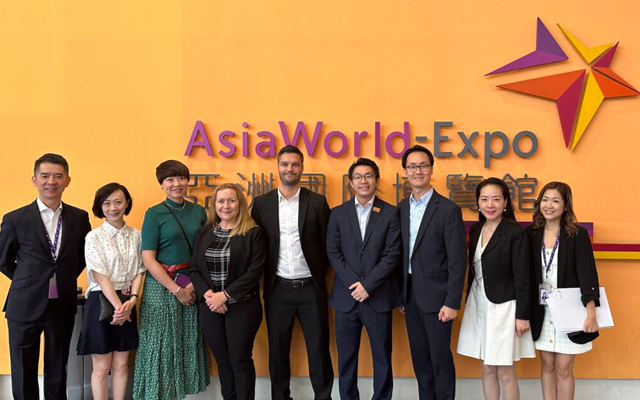
Scheduled from November 5 to 7, Super Terminal Expo is expected to draw over 300 exhibitors. The programme at AsiaWorld-Expo will include a paid conference packed with more than 80 sessions across five themes.
The event will also be co-located with the CAPA Airline Leader Summit Asia & Sustainability Award, and the CTC Corporate Travel Summit. These parallel events will further enrich the discourse around aviation sustainability and the future of corporate travel, showcasing a holistic view of the industry’s evolution.