Wyndham Hotels & Resorts has grown its direct franchising business in China, with nearly 600 hotel signings across the country in just five years.
The achievement is a testament to Wyndham’s owner-first approach to franchising and increased efforts in recent years to reduce its reliance for growth on master licensees – a move underscored in 2019 when the company reacquired direct franchising rights for its Days Inn brand in China.
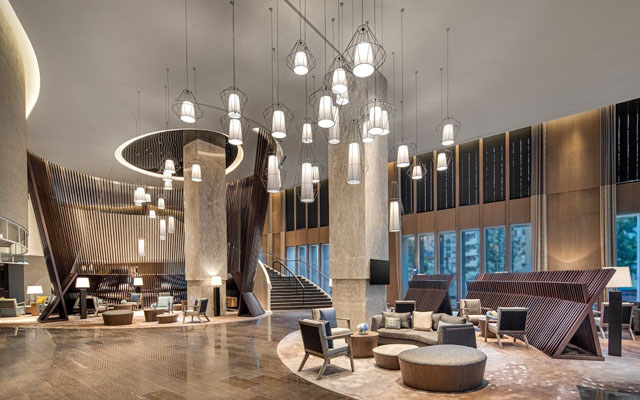
Wyndham has opened nearly 300 direct franchised hotels in China over the last five years; Wyndham Sun Moon Lake, pictured
Presently the largest US-based hotel company in China by number of properties, Wyndham has a footprint spanning more than 1,600 hotels and more than 180,000 rooms across 13 of its 25 brands. In 1H2024 alone, Wyndham signed direct franchise agreements for more than 70 hotels in key markets including Beijing, Jiangsu and Guangdong.
In addition, Wyndham has opened nearly 300 direct franchised hotels in China over the last five years spanning economy to upscale accommodations. The company also continues to broaden its portfolio of brands in the country, introducing both Hawthorn by Wyndham and La Quinta by Wyndham at that same time, the latter of which now has four hotels open and another six in the pipeline.
Standout hotel openings since 2019 include: Hawthorn by Wyndham Dali Erhai Park, La Quinta by Wyndham Weifang South, Wyndham Garden Qionglai Downtown, Wyndham Grand Shanxi Xiaohe Xincheng, Wyndham Shanghai Nanxiang, Wyndham Sun Moon Lake, and Wyndham Tai’an West.
“Through direct franchising, we gain greater control over the consistency and direction of our brands in China while unlocking the benefit of building long-term relationships with franchisees – all of which are key to driving further expansion,” said Joon Aun Ooi, president, Asia Pacific, Wyndham Hotels & Resorts.
KS Hotels and HMD Asia have acquired two iconic La Résidence hotels, located in Siem Reap, Cambodia and Luang Prabang in Laos.
Both properties were previously owned and managed by Belmond.
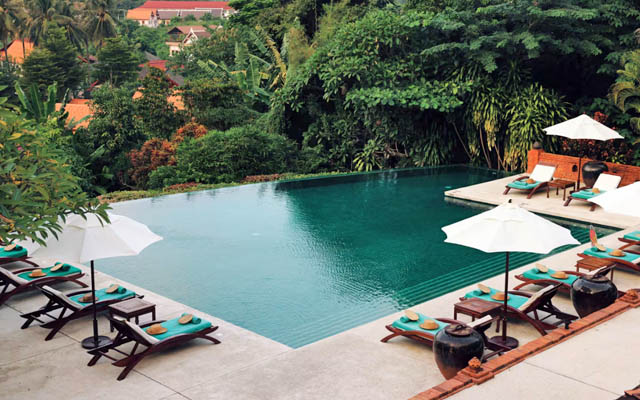
La Résidence Phou Vao is now managed by HMD Asia
La Résidence D’Angkor is currently closed for renovation and will reopen in 4Q2025 under the management of HMD Asia. The hotel is located on the riverside in Siem Reap, the gateway to the storied temples of Angkor Wat. La Résidence D’Angkor guests will be steps away from the boutiques, cafés and tree-lined avenues of Siem Reap, and a short journey to the legendary temples.
Meanwhile, La Résidence Phou Vao, the hilltop sanctuary within the UNESCO Heritage region of Luang Prabang, Laos will continue normal operations but under the new HMD Asia management.
Anthony Lark, executive director, HMD Asia, commented: “We feel a deep sense of honour and responsibility in managing these beautiful small hotels and we are excited to continue their legacy of service and attention to detail, while continuing to develop unique guest experiences in the future.”
The Asia premiere of Harry Potter: Visions Of Magic will soon open in Singapore on November 22 at Resorts World Sentosa, and wizarding fans who joined the waitlist earlier can now get exclusive access to pre-sale tickets via Ticketmaster from now to November 7.
Ticket pricing starts at S$39 (US$29) for children and S$49 for adults.
Visitors can wander through The Hall of Prophecy and use their wand to unlock whispers of the future
Harry Potter: Visions of Magic is a self-guided journey exploring some of the most mysterious corners of the wizarding world. Guests will discover a series of artistic and immersive environments inspired by enigmatic places in the magical community, like the Ministries of Magic, the captivating wonders of Newt’s Menagerie, and the mesmerising Pensieve. The combination of responsive video content, bold architecture and original soundscapes become multi-sensory installations where guests are encouraged to use a wand and illuminate the invisible, revealing visions of magic that bring the entire experience to life.
The experience includes ten environments, two of which are debuting for the first time in Singapore. These include The Knight Bus, Grimmauld Place, Ministries of Magic, The Hall of Prophecy, The Chamber of Secrets (exclusive to Singapore), Newt’s Menagerie, Knockturn Alley, The Room of Requirement, The Trap Door (exclusive to Singapore), and The Pensieve.
Visitors can shop for bespoke gifts and official Harry Potter merchandise at the retail shop located at the heart of the exhibition, as well as enjoy a taste of the iconic wizarding world beverage, Butterbeer.
A series of exclusive events has been planned at Sofitel Singapore Sentosa Resort & Spa to mark the 60th anniversary of the Sofitel brand, where guests, staff and the wider community will be beneficiaries.
Kicking off the year-long celebrations is a dinner on November 16 that features a collaborative eight-hand menu by celebrated chefs. The party continues on November 17 with an Italian brunch at Club Matera at The Cliff.
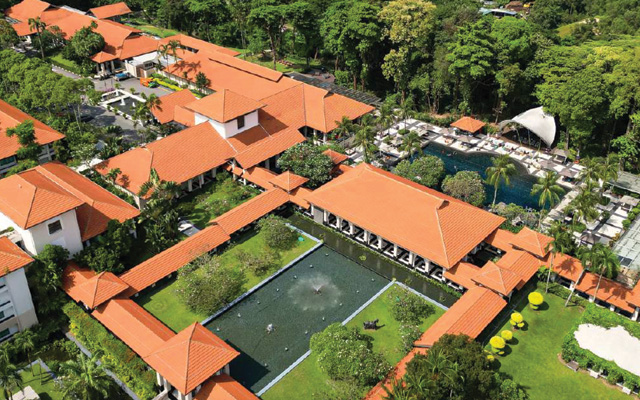
Sofitel celebrates its 60th anniversary with a line-up of exclusive events at Sofitel Singapore Sentosa Resort & Spa
The month of November will also welcome various activities for Sofitel associations and the wider community, such as an employee appreciation night and award ceremony to acknowledge top performers, a photography workshop, and a visit to the Lee Ah Mooi Old Age Home.
Sofitel’s anniversary celebrations was earlier marked by two major announcements – the appointment of actors Gillian Anderson and Dali Benssalah as brand ambassadors along with a new campaign, which features a short film titled The Encounter, set in the flagship hotel Sofitel Mexico City Reforma; and a collaboration with sustainable jeweller Place Vendôme in Paris: Courbet to produce a collection of 18 original creations that embody the Sofitel Cultural Link.
The Sofitel brand first made its debut on June 26, 1964 with the first hotel in Strasbourg, Alsace.
Sofitel Singapore Sentosa Resort & Spa itself was inaugurated in 2015.
Qantas flies direct to Manila
Qantas customers can now fly from Brisbane to the Philippines with the airline’s non-stop flights to Manila.
The service will operate four times per week using Qantas’ Airbus A330 aircraft, and adds to the airline’s existing daily services from Sydney to Manila.
The new flight will also improve connectivity for passengers travelling to the Philippines from New Zealand, with easy connections in both directions from Auckland and Christchurch to Manila via Brisbane.
Emirates
Emirates returns to Adelaide with daily service
Emirates has relaunched its daily service between Adelaide and Dubai, flying a Boeing 777-200LR between both cities.
The Boeing 777-200LR aircraft offers 302 seats across two cabins, with 38 Business Class seats set in a 2-2-2 configuration, alongside 264 seats in Economy Class.
Emirates now operates 70 weekly services from Sydney, Melbourne, Brisbane, Perth, and Adelaide connecting passengers with over 140 destinations.
On December 1, Emirates will reinstate its second daily service to Perth, offering 77 weekly flights from Australia.
Korean Air
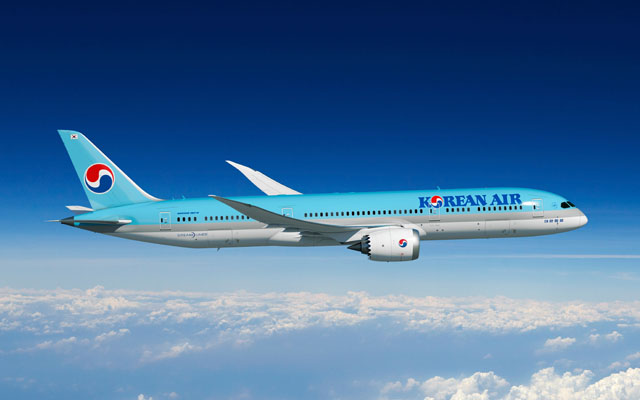
Korean Air adds fourth daily flight to and from Manila
Korean Air will add a fourth daily scheduled service between Seoul Incheon and Manila on November 24, enhancing connectivity between the region and North America through its Seoul Incheon hub.
The new service will be operated by Korean Air’s A321neo aircraft, featuring eight lie-flat business class seats and 174 economy class seats.
As Korean Air’s primary transit corridor between South-east Asia and North America, the Manila route plays a pivotal role in the airline’s global network. The new late-night service is strategically scheduled to align with morning departures to North America, enhancing connectivity options for passengers.
Vietjet and Emirates
Vietjet, Emirates expand international connectivity
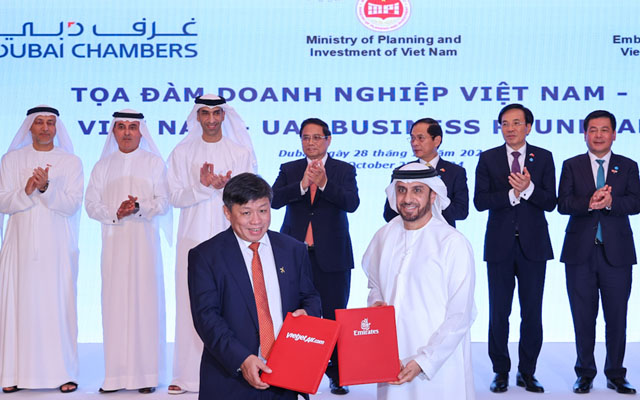
Vietjet and Emirates have joined forces to enhance connectivity and provide greater travel options between key cities in Vietnam, Dubai, the UAE, and beyond.
The agreement will enhance Emirates’ connectivity to popular destinations in Vietjet’s domestic and regional network via Hanoi, Ho Chi Minh City, and Danang, while offering Vietjet customers increased access to Emirates’ global network via its Dubai hub.
Both airlines will also explore new opportunities for technology development and the digital evolution of the aviation industry.
The Indonesia Directorate General of Immigration has partnered with VFS Global to launch a new e-Visa on Arrival (e-VoA) service for 97 eligible nationalities, including the US, Canada, India, Australia, starting in December 2024.
The VFS services will complement the existing e-VoA system that the immigration office has been operating for the past few years.
Visitors from 97 eligible nations will soon be able to apply for the e-VoA online before their departure
Silmy Karim, deputy minister for immigration and corrections of Indonesia, said: “This new service will enable visitors to apply for the e-VoA online before their departure, ensuring a smooth, hassle-free process that reduces delays and enhances the overall traveller experience. Upon arrival, the e-visa can be used to enter Indonesian airports seamlessly via the e-gates.”
“We believe digitalisation can simplify the process, and VFS has the technology to make it easier for visitors,” he added.
The service will also include a group booking option, making it useful for travel agents and event organisers managing large groups and conventions.
Additionally, the new service also offers to Emirates passengers an e-VoA application service.
“If you go to the Emirates website and buy a flight ticket to Jakarta or Bali, you can also apply for an e-VoA (at the same time),” explained Silmy. He also mentioned that his office is in discussions with Garuda Indonesia to provide the same service.
To further support the initiative, VFS Global has established dedicated counters in Dubai, Mumbai, and Shanghai, with plans for additional locations in Australia. This expansion aims to enhance services in key markets, including India, China, Australia, South Korea, Japan, and the Middle East.
In response to the partnership, Jongki Adiyasa, executive director of Ina Leisure, stated that the new service ensures quicker entry into Indonesia. “It provides travellers with a new option for processing their documents. The more options available, the better the chance for travellers to receive the best services.”
As for Monas Tjahjono, managing director of Monas Tours & Travel, he noted that the VFS service would be particularly useful during the peak season, as the immigration website can sometimes face glitches due to high traffic.
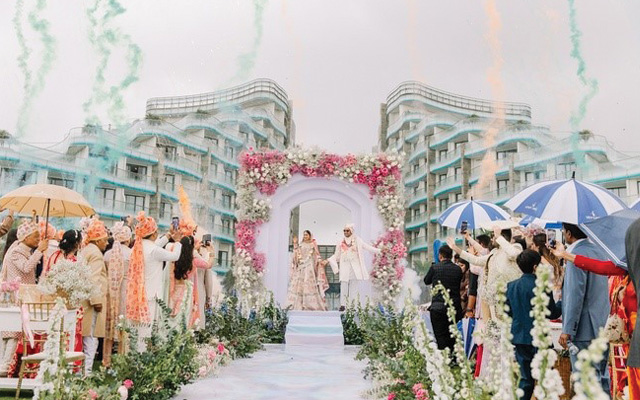
Vietnamese hotel chain Vinpearl has seen success in its positioning among affluent Indian tourists as a top choice for milestone events like weddings and business gatherings, with more than 10 billionaire weddings hosted along with several venue accolades achieved this year.
“This year alone, Vinpearl has hosted over 10 billionaire weddings from India, and this number is projected to double by 2025,” said Ngo Thi Huong, deputy CEO of Vinpearl.
Vinpearl’s properties are equipped for events of all scales, from weddings to business events
“Vietnam is fast becoming a prime destination for weddings, MICE, and golf tourism on the global stage,” she added.
According to Vietnam’s National Tourism Administration, there is a striking increase in interest from India, with Indian arrivals rising significantly over the last decade. In 2023 alone, Vietnam welcomed over 392,000 Indian tourists – a number expected to keep climbing as global travel rebounds.
Vinpearl, subsidiary of the giant Vingroup, is meeting this demand by creating custom, high-quality experiences. Recent high-profile events, such as the four-day wedding celebration of businessman Pranay Karnawat and Sakshi Sanghvi, demonstrate this commitment. Hosted at Vinpearl Resort & Golf Nam Hoi An, the wedding blended Indian and Vietnamese cultural elements. The hotel team took note of cultural nuances, ensuring that details like cuisine and decor are tailored to Indian preferences.
Meanwhile, properties like Vinpearl Nha Trang and Vinpearl Resort & Golf Nam Hoi An have earned prestigious venue accolades issued in South-east Asia, marking their reputation as premier locations for international business events.
In a press release, Vinpearl said its properties are equipped for events of all scales, from meetings and client conferences to team-building exercises. Venue selection includes expansive auditoriums, serene beachfronts and secluded gardens.
With global business events revenue projected to exceed US$1.4 trillion by 2025, the World Tourism Organization has highlighted this sector as a promising one. In response,, Vietnam has made business events development a strategic priority.
Low-cost airline retailer Atlas has introduced its AI-solution, Athena, which helps tackle one of the industry’s most pressing issues: inconsistent quality of airline data and content.
With its monitoring capabilities and the ability to learn and evolve, Athena is designed to enhance data quality and air content performance, as well as to streamline the distribution of flights. The tool helps Atlas manage air content more effectively by monitoring airline performance across 150 carriers integrated with Atlas’s Air Travel Retailing and Information Platform (ATRIP) and resolving issues automatically in real time.
Atlas’s Athena offers immediate solutions to complex content issues while equipping the industry to handle the fast-evolving tech demands of the future
Athena is one way to apply machine learning and automation to address inconsistent content and data quality, avoid failed or inaccurate bookings, and improve traveller experience while the industry gradually develops and adopts cohesive and better aligned standards.
There are many issues impacting content performance – from scheduled maintenance and outdated technology to coding errors and payment complexities. Athena automates critical processes like monitoring airline API and HTML performance, ticketing quality checks, and data verification.
When content and data quality drops below the threshold, Athena automatically disables affected airlines, reactivating them once performance criteria are met. This proactive quality management helps Atlas’s partners deliver seamless booking experiences and avoid costly disruptions.
Atlas CEO and founder Mary Li said: “In a highly competitive industry where every booking counts, Athena is an example of how AI can provide a ‘here and now’ solution to one of the biggest industry’s pain points and enable sellers to focus on travellers, not troubleshooting.
“Airline retailing remains a hugely complex industry, constrained by legacy tech and uneven speed of technological advancement, with some airlines being quite behind on their tech journey. The scale of data quality and performance challenges in the industry is massive. It is a mammoth task to monitor and manage content from multiple channels – and AI can provide much-anticipated relief for everyone involved in the distribution of flights.”
Resorts World One has arrived in Dubai and commenced her first sailing from November 1 – the 1800-passenger cruise ship will depart from the Port Rashid Cruise Terminal 2 in Dubai three times a week to the Gulf destinations.
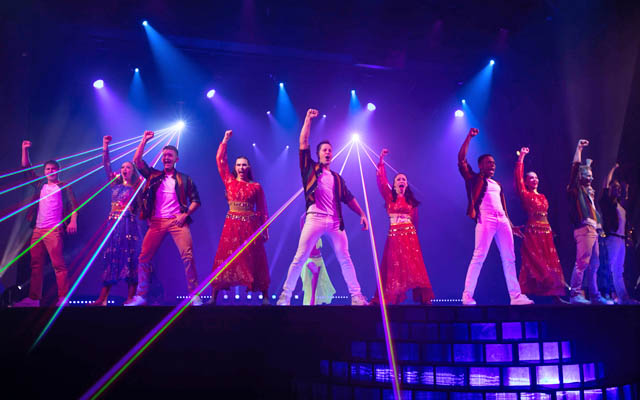
This milestone event was celebrated with a special port-stay event that featured a series of presentations for invitees, including live onboard performances, a diverse selection of cuisines, and a guided tour of the ship’s accommodation, facilities, and offerings.
Resorts World One showcased a series of exciting and colourful performances for the port-stay celebration event
Both the three-night Oman Cruise and the two-night Qatar Cruise offer special added-value promotions like complimentary F&B Onboard Credits for sailings in November. Resorts World One will also provide new vacation options from Dubai for the weekend with the two-night Sir Bani Yas Weekend Cruise departing Fridays, the two-night Doha (Qatar) Cruise departing Wednesdays, and the three-night Muscat-Khasab (Oman) Cruise departing Sundays. Guests may combine the itineraries for longer cruises.
The ship serves certified halal cuisines, including vegetarian/Jain cuisine, as well as Muslim-friendly onboard offerings.
Location
Occupying a former colonial building that served as the premises for the Eastern Extension Telegraph Company, QT Singapore retains its neoclassical exterior – a contrasting sight amid the sleek office towers in the heart of Singapore’s CBD.
Location-wise, it is hard to beat, being next door to the famous Lau Pa Sat hawker centre and in between three MRT stations.
The QT brand is known for its quirky and playful design style, and upon arriving, I saw that the interior of the hotel lobby was fun and modern, yet displayed some of the building’s heritage – from the black framing to the intricate scenes of Singapore on sliding panels and on wall photos. My favourite was the 3D-like graphics of the floor tiles, which called to mind Dutch artist Maurits Cornelis Escher’s surrealist style of art.
Accommodation
QT offers 134 rooms and suites that range from 44m² to 90m². We stayed in a deluxe king room. Upon entering, the first feature that demanded attention was the bar, set into the wall, with a beautiful illustration of leaves. It certainly called to the cocktail aficionados with a selection of spirits and even a cocktail shaker for guests to make their own drinks.
Besides the bar, the room itself was spacious, and tastefully decorated with the Escher-style carpet, and touches of bold red and black.
Everything was designed with comfort and convenience in mind. The bathroom was luxurious with a separate bath and rain shower area, while the Kevin Murphy toiletries and Dyson hair dryer made getting clean that much more enjoyable.
A tablet by the bedside lets guests connect their own streaming service to the TV, while music can be streamed via the Bose bluetooth speaker on the table – both of which I made full use of for a restful evening indoors after a tiring week.
QT Singapore
1 of 4
Deluxe King
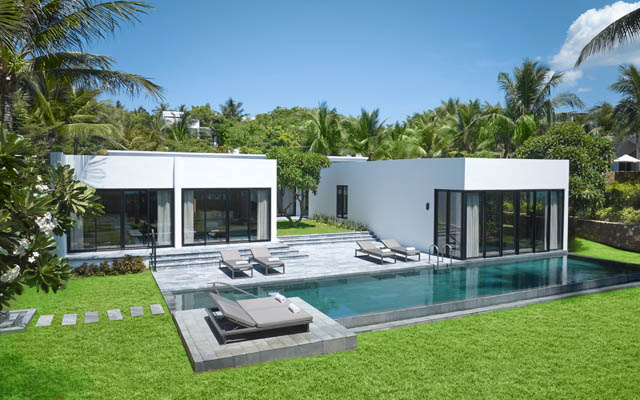
Rooftop pool
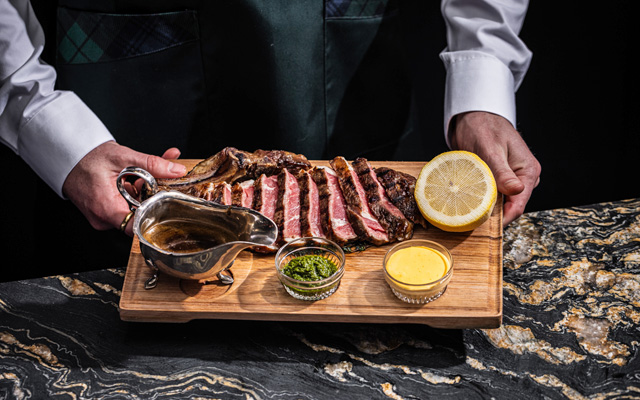
Steak at Cygnet by Sean Connolly
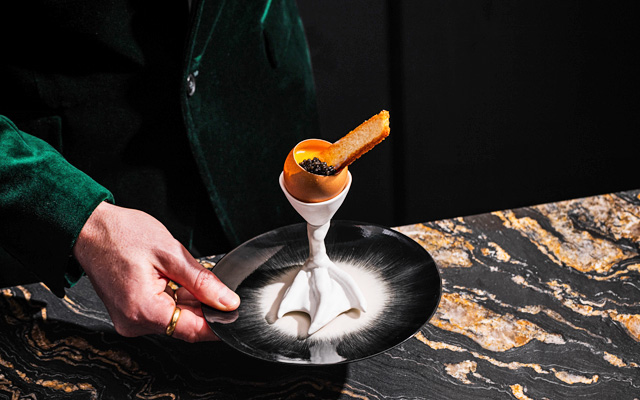
Devilled eggs at Cygnet by Sean Connolly
Facilities The rooftop pool and bar is a welcome sight on a sweltering day. The bold blocks on the floor of the pool, together with the lively house music in the background as guests chatted away, all added to the lively atmosphere.
F&B
I liked that the rooftop bar provides some simple food too, which included a small selection of tacos, oysters and simple bar bites. What stood out were the mezcal and agave choices amid the extensive alcohol selection.
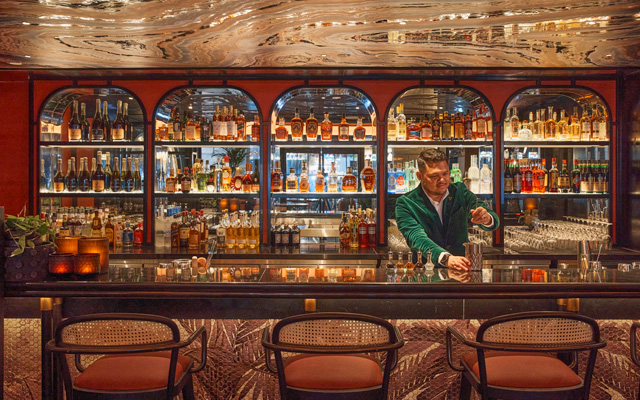
For an afternoon tipple, indulge at the first floor Cygnet bar. Designed in an art deco style, the bar also features rattan-backed chairs and palm leaf motifs that are a nod to its Asian location. Staff were friendly enough to make cocktail recommendations from the Manhattan-inspired menu.
I was looking forward to dinner at Cygnet by Sean Connolly, the hotel’s New York-style steakhouse helmed by the Australian chef that it is named after. Also decorated in the same art deco style with dark tones, the venue was refined, sophisticated and great for enjoying a dinner with friends, family or a partner.
The menu, I felt, had just the right number of items, and featured a variety of appetisers, entrées, mains that included pasta, seafood and meat, and dessert. There is also an extensive wine list.
Naturally, we had to go for the steaks. My eye fillet was cooked to perfection, as were my partner’s steak frites. Special mention goes to the fries which were thinly sliced, crisp and most likely cooked in some oil or fat that made them extra flavourful.
We did not start with the steaks of course. The devilled egg we had, served in a small cup with a webbed foot, was slightly grisly but it was a tongue-in-cheek nod to the restaurant name, as cygnet means baby swan.
We saw that the neighbouring table had ordered what looked like a feast – the waiter had come up with a loaded trolley of food, explained to them the ingredients on display, and went on to prepare the dish in front of them – a nice bit of personal touch.
Service
All the staff were friendly and greeted us with a smile. You could tell that thought went behind their uniforms too, with plush velvet blazers for those in the restaurant and lobby, while the rooftop bar staff had on colourful Hawaiian style shirts to match the vibe of the respective venues.
Verdict
While it may be in the CBD, QT is far from your standard business hotel. It’s playful, quirky, modern and provides a comfortable and convenient stay, with a generous dose of style and personality.