


Asia-Pacific has made a remarkable recovery after the pandemic, as highlighted by ForwardKeys’ director of intelligence & marketing, Olivier Ponti, at the recent PATA Annual Summit 2024 held in Macau.
During his presentation, Ponti unveiled insights into Asia-Pacific travel trends and stressed the pivotal role of increased flight connectivity, innovative marketing strategies, and relaxed visa requirements.

Steady recovery in flight connectivity
Connectivity in the Asia-Pacific region, which has faced significant challenges, is rebounding swiftly. As of the 1Q2024, the region’s seat capacity recovery is just 13% shy of 2019 levels. Notably, the Asia-Pacific outpaced global seat capacity growth, registering a seven-percentage point increase compared to the global average of three percentage points between 4Q2023 and 1Q2024.
Declining airfares amid growing demand
As seat capacity gradually rebounds, airfares have shown a consistent downward trend since 2023, despite remaining higher than 2019 levels due to limited capacity and strong demand. This trend was particularly evident during significant events such as Chinese New Year and major concerts in Singapore. For example, Taylor Swift’s concert in Singapore in early March led to a 17% increase in travel from South-east Asia, contrasting with a 27% decline in the rest of the month.
Visa facilitation draws in Chinese travellers
Chinese outbound travel during the recent Labour Day holiday indicates a mere 16% decrease compared to the levels recorded in 2019. The relaxation of visa policies has notably enhanced Chinese travel to numerous destinations. Data revealed a 212% surge in travel from China to Kazakhstan, with notable increases to Singapore, Azerbaijan, Malaysia, and the Maldives. However, Thailand’s slower recovery is attributed to ongoing safety concerns.
Innovative marketing strategies stimulate demand
Air Macao’s pandemic-era promotions, such as buy-one-get-one-free tickets, successfully attracted mainland Chinese couples and continue to do so post-lockdown. Their new Travel Pass offer for affordable travel from specific cities to Macau has further increased couple bookings by four percentage points compared to 2019 levels.
A positive outlook for summer 2024 travel
The forward-looking travel outlook for the region remains positive, although recovery is still ongoing. As of April 27, summer travel bookings to Asia-Pacific are down by only 12% compared to 2019 levels. In contrast, travel to Europe and the Americas has fully rebounded, and travel to Africa and the Middle East is down by just 5%.
PATA’s CEO, Noor Ahmad Hamid commented: “The travel industry can effectively attract tourism by harnessing the power of visa facilitation, strategic marketing, and leveraging major events. These elements are crucial in driving the recovery and growth of tourism in the Asia-Pacific region.”



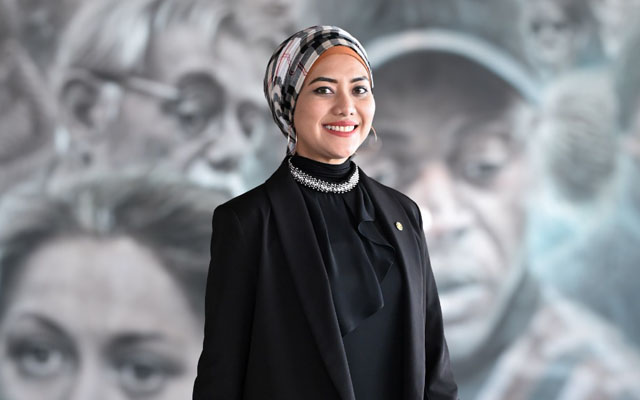
 Based in Kuala Lumpur, she has also been supporting the development of Malaysia’s National Planetary Health Action Plan.




 Kempinski Hotels has appointed Barbara Muckermann as its group CEO.







Millennium Hotels and Resorts Middle East & Africa has joined the World Sustainable Hospitality Alliance (WSHA) as a member, reaffirming the brand’s commitment to fostering sustainability across the region’s vibrant hospitality industry.
As a new affiliate member, Millennium Hotels & Resorts Middle East & Africa aligns with nearly 50 global members, collectively addressing critical challenges affecting the planet, communities, and the hospitality industry. Committed to instigating sustainable change, WSHA offers invaluable resources and programmes, empowering the hospitality sector to create a future that prioritises prosperity and responsibility.
Millennium Hotels & Resorts MEA’s ESG goals are in alignment with the region’s evolving priorities, and through its sustainability programme, Millennium’s Green Path Brand Playbook, the brand has set ambitious targets, including a 27 per cent reduction in greenhouse gas emissions by 2030.
Fahad Abdulrahim Kazim, CEO of Millennium Hotels and Resorts MEA and Lakhraim Group, said: “We are committed to environmental responsibility and believe that WSHA’s collaborative approach and resources will be instrumental in achieving our sustainability goals. Together with like-minded global leaders, we aim to spearhead positive change in the hospitality industry, driving towards a more sustainable future for our planet, people, and businesses.”
Glenn Mandziuk, CEO of WSHA commented: “As a truly global organisation, we are increasing our reach across the Middle East and Africa, and Millennium Hotels is integral to moving the region towards Net Positive Hospitality. Collectively, we will lead the global hospitality industry towards a sustainable, prosperous future that thrives by giving back more than it takes.”