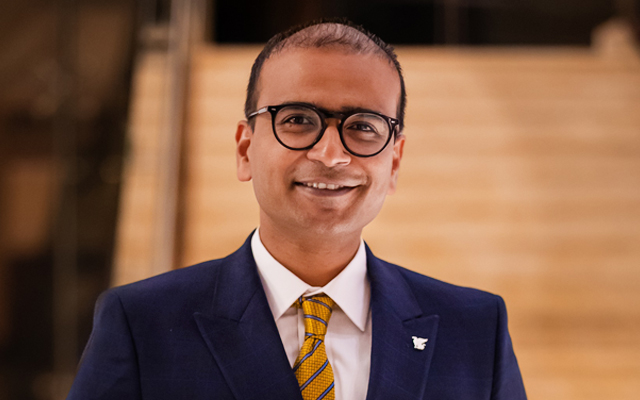
Srikant Kodali has been named the new director of sales & marketing of JW Marriott Hotel Bengaluru. He will be responsible for leading the sales and marketing team to achieve the hotel’s revenue goals, while further enhancing the brand’s presence and reputation.
With over 13 years of diverse experience in the hospitality industry, he brings extensive expertise across sales, marketing, and event operations. Prior to joining JW Marriott Hotel Bengaluru, Kodali held key leadership roles at various properties within Marriott International.
The multiple-entry Individual Visit Scheme (IVS) for Shenzhen permanent residents, suspended in 2015, resumed on December 1. Announced by the Central Government on November 29, the scheme is now extended to Shenzhen residence permit holders for the first time. Government statistics suggest that over 10 million people will benefit from this move.
Attractions like Ngong Ping 360 have been actively promoting to the Greater Bay Area (GBA) since the border reopened, working closely with travel trade partners to attract GBA residents. Its managing director James Tung told TTG Asia: “The reintroduction of multiple entry visa for Shenzhen residents is definitely welcomed by NP360. The travel behaviours and patterns for GBA residents has changed post-pandemic, with a focus on authentic local experiences. NP360 is poised to capture these travellers by offering authentic local flavours.
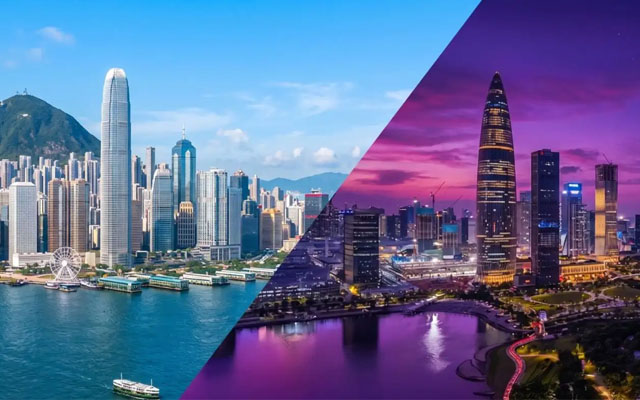
The new multiple-entry scheme aims to attract more Shenzhen residents to visit Hong Kong; photo by Hong Kong Tourism Board
“We are introducing new tenants at Ngong Ping Village, including local tea restaurants and an authentic Hong Kong herbal tea shop, to create a refreshed and nostalgic Hong Kong atmosphere for visitors.”
With over 10 million residents eligible for this visa arrangement, Travel Industry Council executive director Fanny Yeung believes Hong Kong will be able to handle the surge of visitors from Shenzhen.
“They are not first-time visitors and will seek in-depth experiences rather than shopping or typical sightseeing. Their footprint will be scattered around the city, rather than concentrated in traditional attractions. Moreover, the majority of them will be day-trippers, given the close proximity of Hong Kong and the efficient transportation network, such as high-speed rail services. Still, travel agents have a role to play, offering day-long or four- to six-hour immersive tour products that tell the story behind,” she explained.
According to Hong Kong Tourism Board chairman Pang Yiu-kai, the Central Government has expanded the IVS to include 59 cities nationwide, broadening Hong Kong’s visitor base. He added that the new arrangement will provide greater convenience for Shenzhen residents travelling to Hong Kong and facilitate exchanges between the two cities, helping to attract more Shenzhen residents to visit Hong Kong.
Global youth travel experiences provider Contiki has introduced four new trips in Asia, namely Borneo Adventure, Philippines Island Hopping East, China Adventure, and Eternal India Express.
The brand’s inaugural trip to the Malaysian part of Borneo offers wildlife enthusiasts a chance to see rare species, including orangutans, pygmy elephants, sun bears, and proboscis monkeys, all unique to the region. This nine-day journey explores Bako National Park, spends a day on Selingan Turtle Island to witness turtles nesting on the beach, and includes a cruise along the Kinabatangan River for more wildlife encounters.
Contiki’s Eternal India Express lets travellers explore Delhi, Agra, Udaipur, Jaipur, and Ranthambore in just over a week
An increasing number of young travellers are now seeking destinations where they can experience wildlife in its natural habitat while supporting ethical practices. According to a recent Contiki survey, 29 per cent of travellers aged 18-35 actively look for sustainable travel experiences with eco-conscious brands. By visiting sanctuaries for endangered species like orangutans and sun bears, the trip also supports UN Sustainable Development Goal 15: Life on Land.
Following its launch in early 2024, Contiki’s Philippines Island Hopping has already seen an unprecedented surge in bookings. In response to this demand, the brand has introduced a new trip covering four additional islands in the eastern Philippines. For those looking to explore both the eastern and western parts of the country, the 22-day Ultimate Philippines Island Hopping trip offers the complete experience.
Kicking off in Cebu City, travellers will have the opportunity to see dolphins in the wild and experience a rare sardine run – one of the few mass migrations of its kind in the world – during a snorkelling adventure. The journey also features an authentic Filipino eight-course meal in Bohol. The trip includes flights and boat transfers between islands for a seamless experience.
Contiki has reintroduced its popular China Adventure trip, a 12-day journey designed for travellers who find it challenging to navigate China due to language barriers and its vast size, making it ideal for those who prefer a guided group tour. Highlights include a guided tour of Beijing, a visit to Xi’an’s Terracotta Warriors, sampling local street food, exploring a panda sanctuary, and, of course, seeing the Great Wall of China.
Contiki’s new Eternal India Express offers an affordable way for travellers to explore India’s top destinations in just over a week. The trip covers Delhi, Agra, Udaipur, Jaipur, and Ranthambore. Highlights include entry to the Taj Mahal, a tiger safari in Ranthambore, and a tuk-tuk tour through the streets of Old Delhi.
Contiki CEO Adam Armstrong commented: “Keeping in mind the cost-of-living crisis, we’ve focused on making these trips budget-friendly for our young travellers. We’ve also lowered our base prices, and our upcoming Cyber Sale will give young travellers the chance to book their trips for the most affordable price.”
As 2024 draws to a close, the travel fever is sweeping across South-east Asia, with Singaporeans emerging as the most frequent travellers in the region. Since the start of the year, at least 66% of South-east Asians embarked on one to four leisure trips overseas, with a notable 79% of Singaporeans hitting international destinations, according to Milieu Insight.
The study surveyed over 2,000 individuals from Singapore, Malaysia, Vietnam, and Thailand, representing the online population. Asia is projected to have 3.5 billion people in its middle class by 2030, accounting for two-thirds of the global middle class. This also means that South-east Asian travel spending is projected to grow at roughly 7% per year, according to McKinsey & Company.
Digital platforms are the preferred travel booking methods for a majority of the respondents in South-east Asia
Among the regions explored, South-east Asia (49%) and East Asia like China and South Korea (45%) topped the list of preferred destinations for travellers in 2024. Nearly one in three South-east Asians have already secured tickets and accommodation for leisure trips in the next three months.
For many South-east Asians planning year-end getaways, their travel companions will include romantic partners or spouses, who top the list at 42%, followed by friends (30%), parents (27%), children (22%), and siblings (20%).
Sightseeing and outdoor activities (64%) take centre stage as the top motivation for travel in the coming months. Shopping follows at 44%, while art, history, and cultural immersion inspire 32% of travellers seeking a deeper connection to the destinations they visit.
However, when it comes to travel pace, 53% of respondents prefer to explore as much as possible, while 47% opt for a more relaxed itinerary. Regardless of pace, budget-conscious travel dominates, with 77% planning to stick to a budget and 79% intending to join local activities like workshops and cultural experiences.
As for travel planning, digital platforms are the preferred go-to methods. 71% of respondents in South-east Asia used platforms like Klook and Skyscanner to book their arrangements. A majority (60%) feel they get access to discounts and promotions while 53% see it as a convenient way to book multiple bookings in one platform.
However, some are against it. The key barriers include a preference for traditional booking methods (34%), concerns about potential scams (28%), and limited familiarity with these platforms (26%).
The Philippine Department of Tourism (DoT) launched the first Philippine Dive Experience on November 27 to strengthen the country’s standing as a top global destination for diving and marine biodiversity.
Highlighting the Philippines’ recognition as the World’s Leading Dive Destination for the sixth consecutive year at the World Travel Awards, tourism secretary Christina Garcia Frasco led the initiative under the DoT’s Philippine Experience programme. The event brought together diplomats, dive and tourism leaders, heads of tourism associations, dive operators, and certification agencies to celebrate the country’s marine biodiversity and its potential to attract global attention.
The Philippine Dive Experience celebrated the country’s marine biodiversity and its potential to attract global attention
Anilao was the launch point for the Philippine Dive Experience tourism circuit, described by Christina as a “haven for marine life and a dream destination for underwater photographers”.
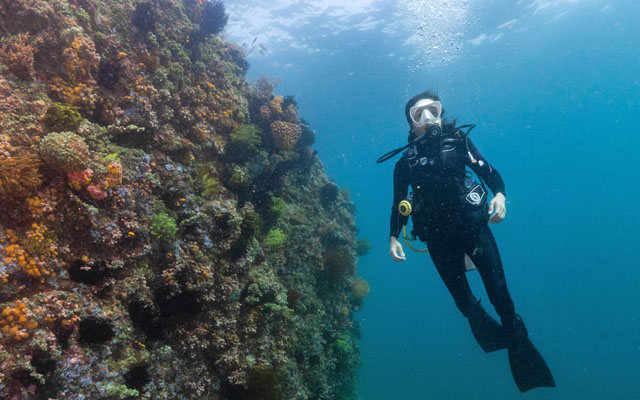
Certified divers explored Anilao’s vibrant underwater landscapes, including the community-driven LOVE Reef, an artificial reef created through conservation efforts. Non-divers also had the opportunity to experience the underwater world through guided scuba tours, offering an immersive glimpse into the Philippines’ marine treasures.
The second day of the Philippine Dive Experience featured a coastal clean-up at Anilao Pier, highlighting the DoT’s commitment to sustainable tourism. This was followed by a cultural immersion via the Taal Heritage Tour, offering visitors a deeper appreciation of the province’s vibrant cultural identity.
During the event, she also highlighted key initiatives to enhance dive tourism, such as the installation of hyperbaric chambers at strategic dive sites to ensure diver safety and comply with international standards.
Christina also shared that they are working with global partners to promote Philippine diving, with an emphasis on marine conservation.
Nilo Villanueva, mayor of Mabini in Batangas, commented: “This event is not just about exploring the depths of our oceans, but also about fostering international cooperation and promoting sustainable tourism.”
The Disney Garden of Wonder has debuted at Singapore’s Gardens by the Bay in the Floral Fantasy exhibit. Organised in collaboration with Disney and supported by the Singapore Tourism Board, this floral spectacle transforms Disney and Pixar characters such as Mickey Mouse, Snow White, Mike and Sulley from Monsters, Inc., and more into eight stunning topiary sets.
The exhibit, which took 17,000 man-hours to create by hand, will run until March 31, 2025.
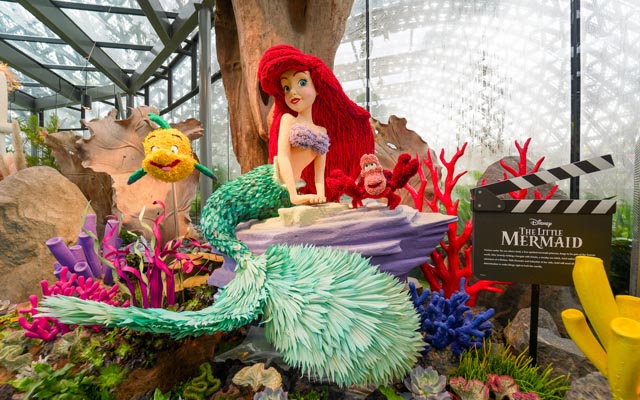
To create Ariel’s iconic look, Amaranthus caudatus formed her flowing red hair, Ruscus hypoglossum shaped her glossy tail, and blue-magenta hydrangeas crafted her seashell top, photo by Gardens by the Bay
Highlights include The Little Mermaid with Flounder, Ariel, and Sebastian; a three-metre-tall Mickey Mouse sculpture; Steamboat Willie; Winnie the Pooh; Snow White; Mike and Sulley from Monsters, Inc.; Carl, Russell, Dug, and Kevin from Up; and Buzz Lightyear, Woody, and the Aliens from Toy Story.
A special Flavours of Singapore zone celebrates the city’s culinary delights with Disney characters reimagined in vibrant floral displays, including Donald Duck with Chilli Crab, Stitch with Durian, as well as Minnie Mouse and Daisy Duck with Ice Kachang.
As an extra treat for Disney fans, Hidden Mickeys will appear on the rain curtains in Floral Fantasy. Visitors can also explore the Floral Fantasy gift shop, now Disney-themed, and discover exclusive merchandise such as Mickey-shaped bak kwa (Chinese BBQ pork), plush toys, bags, keychains, and more, in collaboration with local brands.
Additionally, Mickey and Minnie Mouse have unveiled brand-new outfits inspired by Singapore’s national flower, the Vanda Miss Joaquim. Fans can meet these special Disney characters in their Singapore-inspired designs on select dates in 2025.
Tickets are priced at S$24 ($18) for adults and S$16 for children or senior citizens, and include a round-trip shuttle service between Bayfront Plaza (location of Floral Fantasy) and Flower Dome.
Experience the festive season in style with Marriott Bonvoy’s hotels across China, where holiday magic comes alive through indulgent dining experiences, wellness treatments, and exclusive stay offers.
The Ritz-Carlton, Hong Kong transforms into a magical Arctic kingdom, offering a host of festive delights. Guests can indulge in the Frosted City of Dreamlight Afternoon Tea and savour a six-course Christmas Eve and New Year’s Eve dinner at the hotel’s Michelin-starred restaurants, Tin Lung Heen and Tosca di Angelo. Join in the New Year’s Eve countdown party, or unwind with the Christmas Body Bliss Ritual at the spa for a rejuvenating holiday experience.
Enjoy the Frosted City of Dreamlight Afternoon Tea at The Ritz-Carlton, Hong Kong
At W Macau – Studio City, the all-day dining restaurant Hawker Hawker presents a Christmas-themed buffet featuring seasonal sides, paired with complimentary free-flowing beer, sparkling wines, and more. Meanwhile, W Shanghai – The Bund offers a vibrant holiday atmosphere with a buffet brunch and chef’s special set dinner, paired with free-flowing champagne. Guests are also invited to celebrate New Year’s Eve at its WOOBAR Countdown Party.
Celebrate a Whimsical Scandi-Land Christmas at Renaissance Hong Kong Harbour View Hotel, where the lobby welcomes guests with a 4.5-metre Christmas tree and a festive cabin decked with goodies from Finland. Enjoy Nordic-inspired delights at Café Renaissance’s buffet, afternoon tea at Mirage Bar & Restaurant, and more.
For those seeking a festive getaway, The St. Regis Shanghai Jing’an offers an exclusive stay package featuring a private dining experience at The Manor Lounge, located on the 55th floor, along with access to five daily private dining experiences. Guests can also enjoy a 25 per cent discount on spa treatments to unwind during the holidays.
Air capacity continues to recover season on season, with OAG schedules data showing 33.4 million scheduled flights between January 1 and November 24 this year, or an average of just over 101,000 commercial flights per day. This volume, while significant, represents only a 6.4 per cent improvement over the same period in 2023.
According to Mayur Patel, head of Asia with data specialist OAG Aviation, markets have lost a lot of growth over the last five years – typically, mature markets should be registering at least 12 to 15 per cent of capacity growth during this period.
In this episode of TTG Conversations: Five Questions video news series, Patel details his outlook for air capacity improvements, his confidence in low-cost carriers catalysing Asia-Pacific tourism industry’s recovery and expansion, airfare movements in the new year, growth opportunities for commercial aviation in Asia, and much more.
The long-awaited Three-Runway System (3RS) at Hong Kong International Airport, commissioned on November 28, is set to reinforce the city’s status as a regional aviation hub, providing the capacity to meet the projected air traffic demand of 120 million passengers by 2035.
In fact, the new North Runway officially became operational in November 2022, while the Centre Runway was temporarily closed for reconfiguration. The 3RS encompasses the operation of the existing South and North Runways, the reconfigured Centre Runway, along with the associated taxiways and supporting facilities.
The 3RS will reinforce the Hong Kong’s status as a regional aviation hub; photo by Hong Kong International Airport
Welcoming the development, Tommy Tam, managing director of Arrow Travel Agency, stated: “Additional capacity means more time slots for foreign carriers, and for end users, we hope airfare will become more attractive to stimulate travel demand next year. We also see opportunities for more transit flights in Hong Kong – a high-yield segment for airlines. In short, the 3RS will (strengthen) the city’s role as an aviation hub.”
Emphasising that the 3RS increases air capacity, Larry Lo, CEO of Corporate Travel Management Asia, commented: “It reinforces Hong Kong’s position as an economic powerhouse and a stronger aviation hub in the region, connecting East and West—particularly in the fast-growing Greater Bay Area, where seamless transport links are essential.
“In fact, we foresee (that) this significant infrastructure enhancement will provide additional capacity for both passengers and cargo, (while offering greater) flexibility to airlines to add new destinations or restore routes. It will improve airport efficiency, especially during peak seasons and weather disruptions, and elevate the overall travel experience, enhancing Hong Kong’s competitiveness. As a result, we anticipate it will boost the city’s appeal for foreign investment, business activities, leisure visits, and talent recruitment.”
Lo added: “In the long term, we expect Hong Kong to expand its route network, increase flight options, and enhance the airport experience to cater to global demands. As the airport serves as visitors’ first impression of Hong Kong, we believe the third runway will create new opportunities to showcase the city and deliver memorable experiences.”
Cathay Pacific Airways noted that its group airlines are expected to resume 100 per cent of pre-pandemic flight levels by January 2025.
Nikki Pang, head of business at Lightfoot Travel, pointed out that with increased flight routes – and often lower-cost options – available from nearby airports in Guangzhou and Shenzhen, Hong Kong risks losing passengers unless it quickly increases both flight frequency and routes. She described the 3RS as a welcome addition to the city’s aviation sector, underscoring the energy and resources Hong Kong is investing in building its reputation as a premier aviation hub.
“The third runway, combined with new flight routes (to destinations like Saudi Arabia and Cairns) and intensive pilot training conducted by the various airlines, should speed up Hong Kong’s air capacity recovery, which has lagged behind other Asian cities in the post-Covid phase… these developments (will help meet) our clients’ surging demand for a variety of destinations, flight frequency, and value of flights.”
The Singapore-born travel cashback app in Asia, azgo, has launched azgoXplore, their new AI-powered price comparison website designed to help global travellers find the best deals across more than a thousand cities worldwide.
azgoXplore leverages AI and data-driven insights to offer real-time price comparisons for attractions and activities, creating a comprehensive travel planning tool for consumers. Early adopters and partners of the platform include notable regional travel players such as Trip.com, GlobalTix, Ryde, Museum of Ice Cream Singapore, and Wink+. These partners have integrated their offerings into azgoXplore, allowing users to easily access and compare the best deals on a single platform.
From left: azgo’s Yan Yuan Sng and Oliver Hua, NTUC’s Desmond Tan, azgo’s George Yang, TongCheng Travel’s Frank Wang Qiang, and azgo’s Monica Zhao
In addition, businesses in the travel ecosystem can collaborate with azgoXplore to develop co-branded white-label solutions that integrate seamlessly into their apps. This integration empowers users to access attraction deals alongside their everyday services, enhancing both convenience and user engagement.
azgo launched earlier this year with their travel cashback app, offering a one-stop platform that connects users to top travel brands across multiple segments, including hotels, flights, car rentals, and experiences. With the launch of azgoXplore, the travel technology company aims to empower tech-savvy travellers in search of value-for-money experiences.
azgoXplore also addresses a market gap for a price comparison platform tailored to the attractions and experiences sector. Led by azgo’s team hailing from Booking.com and Skyscanner, azgoXplore will first focus on the growth of its attractions and experiences pipeline. Long-term plans include expanding the platform to cover the entire travel journey, from flights to hotels.
Officially launched in Singapore, Hong Kong, Vietnam, Malaysia, and China, azgo also has its sights set on launching in new markets such as Brazil and the US.
During the launch event, Desmond Tan, senior minister of state at the Prime Minister’s Office, and deputy secretary-general of National Trades Union Congress (NTUC), stated: “AI is redefining the tourism and hospitality industry, from our travel plans to attractions, and physical and digital infrastructures. azgo demonstrates how companies are leveraging AI to enhance their operations and deliver value to consumers. It is also important to recognise that AI is transforming jobs and has an impact on the workforce. We are committed to supporting businesses in advancing their AI capabilities and supporting workers to enhance their AI skills through training.”
Oliver Hua, advisory board member at azgo, shared: “Singapore is a global hub for innovative tourism, always ready for smarter change and optimised experiences, especially in the competitive travel space. By combining azgo’s mobile-first rewards offering with our new price comparison platform, we aim to empower travellers to travel smarter – both within Singapore and beyond.”


 With over 13 years of diverse experience in the hospitality industry, he brings extensive expertise across sales, marketing, and event operations. Prior to joining JW Marriott Hotel Bengaluru, Kodali held key leadership roles at various properties within Marriott International.