With economic uncertainty in the winds, caution is the common song among many of Asia’s MICE players

Meetings and incentives
Tight pockets and short lead times prevail
LAST year’s great expectations in Asia’s MICE industry, fuelled by a strong business rebound after 2008’s financial crisis, have mellowed, thanks to the unresolved Eurozone debt crisis that has caused volatile shifts in the Asian stock markets and currencies, and multinational companies to exercise caution in their spending.
While event houses saw an increase in client’s spending and stronger MICE traffic in 2011, many are expecting a slowdown in 2012. David Goh, regional managing director of MCI Singapore, said: “The outlook for the global economy is uncertain and a slowdown is anticipated. MICE business will continue to grow but not at the recent phenomenal rate.”
Event houses in Asia told TTGmice that the slowdown was most apparent in European markets.
“We’ve observed that the number of Europeans heading to Singapore for MICE has dropped significantly in the last year or so. We envision this trend to flow into 2012, as Europe continues to struggle economically and its currency continues to weaken. Although we’ve received a sizeable number of enquiries from European MICE planners and firms, few have translated into actual events or bookings,” said Mauro Del Vento, general manager of Lotus Asia Tours Singapore.

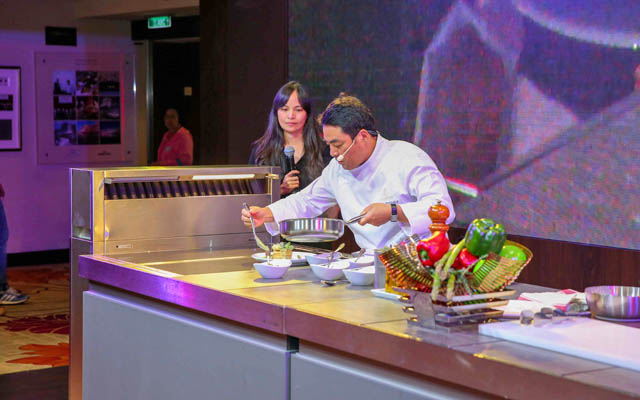
As host of ASEAN Summit and related meetings in 2011, such as the ASEAN Finance Ministers’ Conference pictured here, Indonesia saw a boom in MICE which is expected to flow into 2012
Asian Trails Thailand incentives and inbound manager, Sumlee Anankamanee, said: “European MICE business is on the decline because of the economic downturn in Europe, particularly in Spain, Italy and Greece. Multinational companies in those markets have cut budgets. Some did so because of poor corporate performance, while others did not want to be seen as big spenders in hard times.”
However, Asia’s MICE players are certain that the region itself will keep the industry buoyant.
Robert Guy, managing director, Singapore & Malaysia, Destination Asia, believes that the “slight slackening in requests and demand from the UK and continental Europe” will be soothed by robust business from other markets, particularly Australia.
DMC Bali Plus also expects most meetings business to come from Asia-Pacific, with Australia putting forth a stronger showing. “Overall business will be good for us. What we need to do is be proactive in our marketing and stay ahead of the competition by offering quality service and innovative suggestions,” said the agency’s general manager Marten Habbeling.
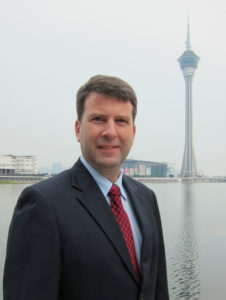
“The actual sit-down time spent during meetings is getting shorter, while the time for surrounding events such as networking and teambuilding is increasing. The trend is a result of organisers looking for more head-turning activities to keep delegates enthusiastic and active. Organisers want more wow factor and glitter, unique and bold activities and venues, and more excitement in proposals. We have to think out of the box.”
Rutger Verchuren
COO
Hospitality Division Shun Tak Holdings, Hong Kong
Asian Trails Thailand’s Sumlee said 2012 would see more incentive movements from Asian source markets such as Singapore, Jakarta, Hong Kong, India and China.
Many other Asian MICE players also see China as a gold mine.
Associated Tours Hong Kong vice president, Ken Chang, said: “China seems to be the only place that is immune to the recent financial crisis so far. Domestic consumption is still growing, and as a result we are handling more MICE business from China. We are waiting for the market to mature, which will allow business to be carried out in a more systematic and organised way.”
Chang expects the winds of change to sweep in soon, as his company is already seeing a growing number of professional Chinese MICE companies and clients.
“China will continue to be an important source market for Hong Kong,” said Julie Yeong, director of marketing, JW Marriott Hotel Hong Kong. “To cope with the demand, the hotel has a dedicated sales team which specialises solely in the China market.”
Stephen Cokkinias, general manager of The Ritz-Carlton, Kuala Lumpur, noted that the Chinese market had been growing every month.
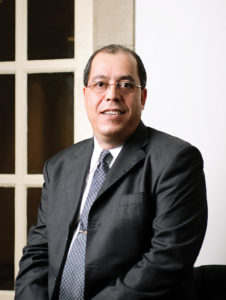
“We are seeing more IT-based MICE business. Many of the IT firms from India see an affinity with Malaysia due to the latter’s sizeable Malaysian-Indian population. Malaysia’s unique selling point is its ethnic diversity. Furthermore, Malaysia has an established IT sector and many international technology companies are opening factories and offices here. Research In Motion’s new Blackberry assembly plant in Penang is one such example.”
Mahmoud Skaf
General manager
JW Marriott Kuala Lumpur
Meanwhile, in destinations where prices have been inflated by new attractions and strong demand, inbound MICE operators are worried. In Singapore, where new tourism infrastructure rang in stronger arrivals and pricier hotel rates – arrivals in 3Q2011 grew 15 per cent year-on-year, while average room rate rose 16 per cent – event organisers expressed concerns that rising prices could dampen potential business growth.
Lotus Asia Tours Singapore’ Del Vento said “a significant number” of clients had chosen to hold their events elsewhere in Asia, “as rates charged by hotels and venues in Singapore put them off”.
Dennis Law, managing director of Star Holiday Mart, said Singapore could enjoy stability or growth in its Asian MICE markets in 2012, “provided Singapore hoteliers do not hike their rates as enthusiastically as they had in the last few years”.
Law added: “It is important for all stakeholders to re-evaluate how they conduct their business given that there is tremendous uncertainty on the horizon and clients’ budgets are tightening.”
The threat of high prices is keeping Michael Ziemer, general manager of The Excelsior Hong Kong, on his toes too.
“Since holding an event in Hong Kong may be more expensive, organisers may take their events to other destinations and this will affect our business. Clients will also bargain for a lower price. We will have to extend competitive packages during specific periods and partner our sister hotels in nearby cities such as Macau and Sanya to offer creative packages.”
Rully Rachman, director of sales and marketing, Hotel Mulia Senayan Jakarta, told TTGmice that his hotel had benefited from corporate groups that were put off by high prices elsewhere and took their events to the Indonesian capital city instead. “Destinations such as Singapore are getting more expensive and it has been hard to secure guestrooms and venues there,” he said.
Rachman added that Jakarta would continue to see growth in regional and international events in 2012 because the city had stepped out of the shadow of security breaches and Thailand’s “political and domestic issues had resulted in business to Indonesia”.
Indonesia’s positive economic outlook has also been credited for brighter expectations among the destination’s MICE players. Rini Stoltz, director of sales and marketing, Grand Hyatt Jakarta, said Indonesia would see a rise in corporate meetings and conferences that are related to economic investments.
Meanwhile, short lead time continues to plague Asian meetings and incentives players.
“We have to pull association meetings together in a couple of months instead of one or two years in the past. It’s tough to organise meetings in less than six months, as it normally takes nine months to a year to organise small meetings and even longer for bigger ones. Given the economic problems in Europe and North America, our clients are taking a cautious stance and are not planning too far ahead. Fortunately, we have our core events that will keep us going,” said Nancy Tan, managing director of Singapore’s Ace-Daytons Direct.
Explaining why events were being booked so close to execution date, Debrah Pascoe, director of sales and marketing, Shangri-La Hotel, Singapore, said companies were unwilling to “commit and then incur penalties if they cancel”.
For Malaysia-based Discovery Overland Holidays product development manager, Kingston Khoo, the dip in lead time is paired with greater demand for competitive pricing by increasingly savvy clients. “These trends have emerged as a result of increased wealth of information and ideas available to clients, coupled with the softer economic outlook for 2012,” Khoo explained.
Events in 2012 are also expected to shrink in attendance and scale, noted some players.
DMC Bali Plus’ Habbeling said short meetings that run for three days would dominate in 2012, and although there would be more corporate event movements this year, most would involve smaller groups or would be half-day teambuilding programmes with small budgets.
He added that such trends were already present in late 2011.
According to Shangri-La Hotel, Singapore’s Pascoe, corporate events at the hotel were being trimmed down to “meetings and perhaps one cocktail party for the welcome”.
Pascoe said: “There has been a noticeable reduction in the number of organised dinner events. Instead of organising F&B whereby the cost is borne by the company or event organiser, there is an increase in delegates dining at leisure, which reduces the registration or delegate fee.”
Based on observations in late 2011, The Excelsior Hong Kong’s Ziemer also expects cautious spending this year.
“We noticed that more incentive groups had booked only guestrooms with specific meals, without offering allowances for participants to spend on their own. The number of lavish activities organised for participants was reduced too. I believe that in 2012, more organisers will look for destinations that offer cheaper rates and where their main businesses are located so as to reduce travelling costs.”

Conventions and exhibitions
Technology and ROI most critical
According to UFI’s Global Exhibition Barometer, conducted among member companies in December 2011, most Asia-Pacific exhibition sector players expect a higher turnover in 2012, compared to the same period last year. Some 73 per cent expect an increase in the first half of 2012, while 18 per cent foresee a dip. For the second half of the year, 66 per cent are optimistic and 19 per cent expect poorer turnover.
Nine per cent of survey participants in Asia-Pacific are unsure of their business outcome in the first half of 2012, compared to 15 per cent in the second half of the year, perhaps a reflection of how uncertain participants are on how the world economy may swing. In the same survey, UFI asked companies for their view on whether the impact of the economic crisis on the business was over or not. The decline in confidence is particularly significant in Asia-Pacific, where the level of positive answers drops from 65 per cent to 27 per cent.
The Global Exhibition Barometer also found that half the pool of participants worldwide expect the impact of the economic woe on their exhibition business will end in 2013, whereas six months before the latest survey 63 per cent considered it would end in 2012. Some 14 per cent of respondents believe the crisis will end in 2014, while eight per cent think it will cross into 2015.
The health of national/regional and international economies are the top two concerns of participants. Local/national competition from within the exhibitions industry follows in third place, and internal management issues fourth.
Interviews TTGmice had with the region’s conventions and exhibitions players revealed similar sentiments.
“It is hard to predict (how business would be), as the exhibitions business highly correlates to the global economy. The European debt issue and the sluggish economy and high unemployment rate in the US have created a volatile environment. These directly affect the export and import industries which our exhibitions business focuses on,” said Daniel Cheung, general manager of Hong Kong Exhibition Services.
Sources also told TTGmice that companies organising or participating in trade events were paying greater attention to returns on investment (ROI).
“Against the backdrop of the global economic situation, a corporation’s every marketing campaign and exhibition are now to an even larger extent subject to financial scrutiny,” said UBM Asia senior vice president, Wolfram Diener.
“A few years ago, systematic ROI studies as part of marketing plans were mainly an affair for larger corporations, whereas this has become common practice even among small- and medium-sized enterprises (SME). More than 80 per cent of booth space at exhibitions worldwide is booked by SMEs, not by large multinationals. Companies may now pull out quickly if their participation in an exhibition has not proven worth the investment,” he added.
The emergence of the ‘convex’ type of events – a combination of convention and exhibition component in a single event – observed by Bangkok International Trade and Exhibition Centre business development director, Sarnit Karunyavanij, appears to resonate with the growing need to achieve much more at one go.
“In the past, conferences were held in hotels for 300 to 800 delegates. Now, events are held in venues with plenary rooms, multiple breakout rooms and a small exhibition hall of 1,000m2 to 2,000m2. PCOs and associations realise that companies don’t want to just sponsor an event. Companies want to be seen and have a chance to engage event delegates, which means more exhibition space is needed alongside a conference,” said Sarnit, who added that the exhibition component would generate more revenue to support the cost of organising the event.
PCO/PEOs have to devise their own mechanisms to cope with the greater need to provide value for money.
“While we cannot reduce our prices, we can offer value-added services to exhibitors, such as extended promotions on peripherals, networking functions and buyer-meet-sellers sessions to generate more business opportunities for them,” said Hong Kong Exhibtion Services’ Cheung.
Diener said: “UBM Asia draws great attention to the continued development of trade buyer data bases and to the professional visitor promotion through all available channels. We believe that this is now even more instrumental in keeping the patronage of our exhibitions and many international business communities.”

“MICE visitors and organisers are becoming more sophisticated. They want a one-stop venue that provides a mix of business and leisure facilities so that event delegates are able to enjoy both the event and leisure activities in a seamless programme.”
Allen Ha
CEO
AsiaWorld-Expo
The need for “effective cost management to generate maximum ROI for business events will continue to be a critical factor”, said Aloysius Arlando, CEO of Singex Exhibition Ventures and Singex Venues. “This will lead to event organisers looking at both objective-driven content and delivery that supports it. It’s no longer a case of technology adoption for example, but technology assimilation into the meetings delivery that will take on an increasingly important role for attendees to maximise their attendance at the show and stay fully connected to the office,” said Arlando.
The growing demand for communications technology at conventions and exhibitions has also been fuelled by the social media generation, noted Vitanart Vathanakul, executive director of Royal Cliff Hotels Group and Pattaya Exhibition and Convention Hall (PEACH).
“We see an increase in demand for web-based conferencing, video conferencing, teleconferencing and virtual meeting. With the influence of social media, people want to stay connected and be able to interact with one another at any time and place,” said Vitanart.
Keeping up with times, Royal Cliff hotels and PEACH have upgraded its communication technology facilities, enabling free Internet connection in all guestrooms this year. PEACH has installed the latest equipment and technology including optical fibre throughout the venue.
Kuala Lumpur Convention Centre has also changed its product offerings to cater to the rise of social media adoption. Peter Brokenshire, general manager of the venue, said: “The centre provides complimentary Wi-Fi access at its Park View Deck and in designated areas, as well as complimentary Internet stations around the facility.”
So did Hong Kong Convention and Exhibition Centre, which completed major enhancements to its Wi-Fi system in early October 2011. Wi-Fi user capacity has been upgraded from 1,000 to 3,000 at a time, and maximum usage time for individual users has been increased from 20 minutes to an hour. With a bandwidth of 100Mbps, download and upload speeds for individual users have also been doubled.
“Quality organisers look for innovative technologies, partnerships and flexibility from venues to strive for even higher standards to differentiate themselves from the rest to stay competitive. There is certainly investment in technology upgrade, as well as staff training on product knowledge, market trends and language competencies,” said Monica Lee-Muller, deputy managing director of Hong Kong Convention and Exhibition Centre (Management).
Additional reporting from Mimi Hudoyo, Sirima Eamtako, Linda Haden, Prudence Lui, N. Nithiyananthan and Patricia Wee
This article was first published in TTG Mice, February/March issue, on page 10. To read more, click here to subscribe.