TTG Asia
Asia/Singapore Thursday, 18th December 2025
Page 271

Dubai Tourism wants more Indonesians

0

Dubai Tourism conducted its Dubai Tourism Roadshow 2024 in Jakarta last week to boost inbound arrivals from Indonesia and meet its 2024 target of 100,000 travellers from the South-east Asian market.

B2B tabletop meetings were held between 10 Dubai travel-related companies and some 100 Indonesia outbound travel companies.

Dubai Tourism organised tabletop meetings during its roadshow (Photo: Tiara Maharani)

Dubai recorded 75,000 arrivals from Indonesia in 2023, which was 36 per cent higher than the previous year.

Shahab Shayan, regional director, Asia Pacific and Turkey at Dubai Economy and Tourism (DET), remarked that tourist arrivals from Indonesia have been rising continuously – Indonesian travellers were still holidaying in Dubai during the pandemic, demonstrating the potential of Indonesia as one of Dubai’s key source markets in South-east Asia.

He added: “Looking ahead, Dubai Tourism will continue to engage industry stakeholders and collaborate more to position Dubai as a preferred tourist destination for Indonesians.”

Christian Sidharta, manager (Indonesia) at Dubai Tourism, shared that the roadshow highlighted new and upcoming attractions, including The Museum of the Future, The View of the Palm, Hatta Mountain, AYA Universe, and Siro Dubai.

“There is misconception that travelling to Dubai is boring because (there is) nothing new. We want to correct this by educating the agents that there is always something new, and (there are) many varieties of products, so they can develop new itineraries,” said Christian.

Another key message was that Dubai is the city for everyone, with more midscale hotels than upscale ones.

Christian pointed out that while “Dubai is historically known as an ultra-luxury destination”, it can be “affordable” and can cater to all types of travellers.

Khairul Sofwan, director of Safa Tours and Travels, told TTG Asia that Dubai’s luxury experiences were highly sought after by his clients, who loved touring in a Rolls Royce or on a helicopter, and would stay for five days and four nights.

The challenge for Khairul, however, is in creating itineraries for repeat high-end clients who are looking for more unique experiences, not just the new attractions that Dubai has showcased.

Trip.com Group teams up with Tourism Malaysia to boost inbound arrivals

0

Trip.com Group has signed a three-year Memorandum of Collaboration with Tourism Malaysia to expand their existing partnership beyond China, and into the wider Asia-Pacific region.

Leveraging Trip.com Group’s global resources, the focus will be on attracting more Chinese and international visitors to Malaysia through cooperation on the marketing front, including key product promotions, especially for hotels and attractions. More areas within Malaysia, such as Johor and Sarawak, will also be promoted to travellers.

Trip.com Group and Tourism Malaysia will focus on attracting more Chinese and international visitors to Malaysia

In conjunction with the 50th anniversary of the establishment of diplomatic relations between China and Malaysia, Harley Travel will work with Trip.com and the Ministry of Tourism to promote tourism between Malaysia and China on the back of the visa-free travel arrangement between both countries.

Based on Trip.com Group’s data, some of the most popular Malaysian cities for travellers globally are Kota Kinabalu, Penang, Langkawi and Semporna.

Edison Chen, vice president of destination marketing & strategic alliances, Trip.com Group, said: “Tourism to Malaysia has picked up since the start of visa-free travel arrangements with China, but we believe there is still more we can do to enhance Malaysia’s profile as a key tourist destination. Trip.com Group is committed to helping Malaysia’s tourism industry grow not just in absolute numbers, but also in attracting quality tourists.”

Manoharan Periasamy, director general of Tourism Malaysia, said: “This expansion of our agreement to cover the whole of Asia-Pacific shows how successful it has been, and we are excited to work together to enhance our tourism promotion efforts to other regional markets and show travellers what Malaysia has to offer.”

In addition, Tourism Malaysia recently unveiled its strategic roadmap for Visit Malaysia 2026, which aims to attract 35.6 million international tourist arrivals and 147.1 billion ringgit (US$31.3 billion) in tourist expenditure.

Cathay, Singapore Airlines to advocate sustainability

0

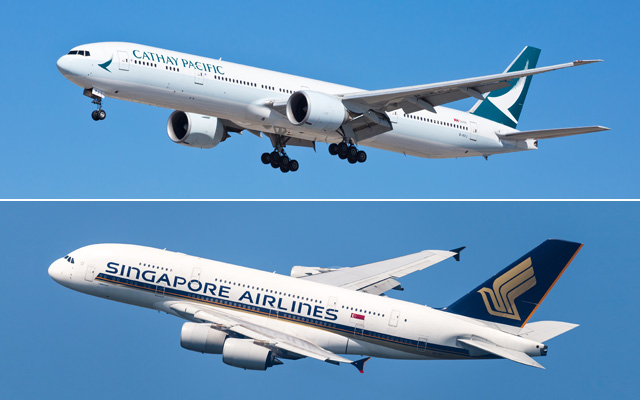
Cathay and Singapore Airlines (SIA) have signed a Memorandum of Understanding (MoU) to collaborate on a broad range of sustainability initiatives, including the development and use of sustainable aviation fuel (SAF) in the Asia-Pacific region, and sharing best practices to boost sustainability performance.

The MoU was signed on the sidelines of the 80th IATA Annual General Meeting and World Air Transport Summit.

Both airlines will work together to advocate the development and use of sustainable aviation fuel

The agreement, which focuses on two key areas, underscores both carriers’ commitment to achieving net zero carbon emissions by 2050, and affirms their aspiration to help drive sustainability changes in the airline industry.

Firstly, Cathay and SIA will jointly push for the greater use of SAF in the Asia-Pacific region. Initiatives in this area will include raising public awareness about SAF’s critical role in decarbonising aviation, advocating for supportive policies in the region, and promoting the creation of a standard global accounting and reporting framework to ensure the transparency and verifiability of emission reductions from the use of the fuel.

Both airlines will also explore potential opportunities for joint procurement of SAF at selected locations to boost SAF production and support its wider adoption in the airline industry.

The second area of focus will be the exchange of best practices to reduce single-use plastics, minimise waste, and improve energy efficiency in operations.

Ronald Lam, CEO, Cathay Group, said: “Our collaboration with Singapore Airlines aims to accelerate and support the development of the SAF supply chain in the region, fostering a reliable SAF ecosystem to enable the industry to achieve its long-term decarbonisation goals.”

“Our partnership with Cathay signifies our mutual ambition to enhance collaboration in sustainability initiatives in the Asia-Pacific region. Together we are helping to set the foundation for a more sustainable aviation industry, and ensure that future generations continue to reap the benefits of air travel,” added Goh Choon Phong, CEO, Singapore Airlines.

Plaza Premium Group, InJourney Aviation Services to enhance airport hospitality services in Indonesia

0

Plaza Premium Group (PPG) and InJourney Aviation Services (IAS) have joined hands to elevate airport hospitality services in Indonesia.

The agreement capitalises on the significant opportunities arising from Indonesian aviation and tourism sectors, and will see the integration of global standards and innovations from PPG through their premier lounge brand, Plaza Premium Lounge, into lounge service operations at Indonesia’s airports. The initial stage will potentially include five airport lounges managed by IAS, including airports in Jakarta, Bali, Balikpapan, Makassar, and Medan, with the plan to extend to at least 30 airports managed by IAS in Indonesia.

The partnership aims to elevate airport hospitality services in Indonesia

The three main PPG innovations – OneTECO, Lounge Management System, and Smart Traveller – will be adopted by IAS. OneTECO supports electronic markets and service delivery solutions that enable businesses and consumers to connect and transact securely in the digital economy; the Lounge Management System which aims to help lounge operators better manage and operate their facilities to create a better experience for guests in the lounges; as well as the Smart Traveller mobile-app is a global membership programme powered by PPG.

Song Hoi-see, CEO and founder of PPG, commented: “We are incredibly excited to extend to external partners the technology innovations that we have created to improve our operations in our mission of Making Travel Better.”

“This collaboration will also make it easier for customers to access all services in the lounge and provide comfort and an unforgettable lounge experience,” said IAS’ president director Dendi Danianto.

Banyan Tree debuts in Japan with Kyoto property

0

Take That to tour Singapore this October

0

British pop group Take That is set to take its This Life On Tour to Singapore this year, playing at The Star Theatre on October 28.

The trio of Gary Barlow, Mark Owen and Howard Donald will first tour across Australia and New Zealand before heading to Singapore.

Take That will perform a one-night only show in Singapore on October 28

Formed as a five-piece in 1989, Take That has released its ninth studio album, This Life, last year, which became the UK’s biggest-selling album of 2023.

Tickets for Take That’s This Life On Tour are now on sale.

For more information, visit SISTIC.

What lies ahead for the giants?

0

Experts are certain that China will continue to be the world’s top source market while recognising that the country’s inbound tourism is getting more official attention for the role it can play to boost the national economy.

Their outlook is based on factors such as unilateral and bilateral visa-free travel in 2024 announced since China exited its pandemic lockdown; a China Council for the Promotion of International Trade (CCPIT) report stating that at least 15 cities are providing incentives to boost business events; and the upgrading of travel infrastructure, and in lower-tier cities during the pandemic, fuelled by domestic demand.

According to Alexander Glos, CEO, China i2i Group, China’s rapid economic growth is the result of China’s emerging middle-class.

He said: “Less than 14 per cent of Chinese citizens have passports and even with this relatively low penetration rate, more than 150 million Chinese travelled globally in 2000.

“Envision the potential if 30 per cent of Chinese citizens possess passports in the next decade. This could result in 300 million people travelling worldwide annually.”

For Glos, one of the most significant milestones of the past decade has been the open skies between Europe and China, facilitating affordable flights between these two major economic and cultural hubs, and catalysing international travel for both Chinese and European travellers. This continues to be the primary driver behind the sustained economic growth and ongoing travel between these regions.

Wolfgang Arlt CEO of China Outbound Tourism Research Institute (COTRI) and CEO of Meaningful Tourism Center, observed: “In China, everything happens later, but faster. Tourism is no exception.”

He recalled the absence of outbound travel, missionaries or adventurers in Imperial China and tourism development delays in the 20th century due to revolution, wars and politics.

“Only after the start of reform and opening policies did China start to develop domestic tourism slowly, followed by inbound tourism and finally (after in 1997 when new regulations were issued) outbound tourism,” he said.

“Within 15 years, China (became the top) outbound tourism source market as well as the biggest domestic tourism market by far.”

To boost inbound tourism, Arlt said new efforts and policies are needed.

“China is still concentrating on first-time visitors, marketing the Forbidden City, the Great Wall and pandas. It has much more to offer and needs to develop sustainable tourism for different interest groups, including visits to national parks and other nature-based activities, cooking classes, and special interest trips,” remarked Arlt.

Confident in the lasting appeal of China’s “diverse natural features and historical landmarks, alongside modern cities and vibrant cultural landmarks”, Wong Hong, Delta’s president of China, said crucial steps toward boosting inbound and outbound tourism must include simplifying the visa application process and reducing processing times.

He said: “While China leads the way in mobile payment, it must fully address the barriers foreign tourists face in using popular platforms to make it a more attractive destination.”

On the business front, Julien Delerue, founding and managing partner, 1000meetings, said the rapid development of the Greater Bay Area (GBA) – encompassing China, Hong Kong and Macau – bodes well. Enhanced access in this region has created a host of opportunities for business travellers and economic activities.

Waikin Wong, regional director, ICCA Asia Pacific, added that China has stayed strong in the annual ICCA Country – and City – Rankings for Association Meetings even though it was the last country to lift all pandemic barriers in 2023. China has hosted more than 100 association meetings, indicating business activities are active and organisers are confident with local services and solutions.

“ICCA Asia Pacific believes China is recognising that events and business travel can play a significant role to drive the multi-disciplinary/cross-sector synergy approach to connect international business opportunities and diversification of its economy base.

“Moreover, many cities in China are welcoming international collaboration, and the establishment of the ICCA China office in Beijing is a great example.” – Caroline Boey

Tourism stakeholders in India are confident that the country will continue to rise as a major contributor to global tourism as well as a tourism destination in the years to come. The tourism landscape has witnessed great transformation, from a time in the early 70s when obtaining a passport and foreign exchange was a challenge for locals to last year, when Indian carriers, Air India and IndiGo, set a record for the most aircraft placed in a single order – 470 and 500 aircraft respectively.

Subhash Goyal, chairman – STIC Travel & Air Charter Group, recalled how travel was heavily regulated in the beginning, with people made to go through a complex web of bureaucracy and fill “never-ending forms”.

The growth of India’s outbound industry has been immense over the last decades, turning the country into a desirable market for many NTOs.

Harish Mathur, president, Concord Travels & Tours, recalled how the presence of these NTO offices and their activities since the early 2000s had played a part in raising the awareness of destinations overseas, ultimately triggering demand for outbound travel.

The international student segment was also instrumental in growing India’s outbound travel potential.

Madhavan Menon – executive chairman, Thomas Cook (India), said: “The segment has been witnessing an approximately 25 per cent growth year-on-year, with almost 1.5 million students studying overseas this year.”

On the other hand, India’s inbound potential sparked off with the liberalisation of the Indian economy in the 1990s, which led to an influx of foreign investment, benefitting business and leisure travellers.

“With the decade seeing the opening up of the Indian market, states like Kerala took an active interest in supporting tourism related businesses and entrepreneurs, as well as marketing/promotions,” said Menon.

Arun Anand, managing director, Midtown Travels, recalled the privatisation of airports and infrastructure improvements that followed.

A real gamechanger for the sector was the introduction of an e-tourist visa facility for international tourists in 2014.

“At the time I was the president of the Indian Association of Tour Operators (IATO), and the association worked relentlessly with the government to introduce an e-tourist visa facility in India which turned out to be a very positive decision for the industry,” said Goyal.

Menon also highlighted the launch of the Incredible India campaign in 2002 playing a critical role in showcasing the rich cultural heritage and diverse attractions of India to the world. Goyal beamed with pride when asked to project India’s tourism industry in the next 50 years.

He said: “By 2047, India is expected to be a US$35 trillion economy and a fully transformed developed nation. Indian carriers will have more than 2,500 planes, and India will have more than 250 airports, out of which 50 to 60 will (serve) international (flights). In the next 50 years, about 100 million people will be travelling overseas from India annually.”

Anand sees many more tourism development opportunities across India – particularly in the country’s 7,500km-long coastline that the government is eyeing for cruise tourism development.

“India will emerge as a leading player in the cruise segment,” he stated, adding that smaller cities will get their own international airports in the next 50 years, facilitating both inbound and outbound travel.

However, industry players urge the government to be more proactive in tourism development.

“India needs tourism marketing representatives in all the major source markets of the world,” noted Goyal, adding that the Indian Ministry of Tourism had closed down all of its offices abroad.

“We also need an open skies policy to become an aviation hub, just like Dubai and Singapore,” he added. – Rohit Kaul


The impact of bad weather on tourism

0
  • Rising extreme weather events are disrupting travel patterns, impacting operators, destinations, and travellers globally
  • While regions like Europe and Australia are already experiencing significant effects, Asia is starting to catch up
  • Operators are adapting tours and schedules, highlighting the need for education and innovation in sustainable tourism
Some of Asia’s most popular attractions are prone to the effects of climate change, such as these late-blooming cherry blossoms at the Canal Cafe in Tokyo in mid-April 2024 (Photo: Anne Somanas)

At the beginning of 2024, the UN published research that climate change may affect tourism and agricultural output. The world is predicted to experience increasing climate disasters, high food prices and more extreme weather. This, coupled with the effects of El Niño – even more emphasised this year from climate change – is predicted to lower the global GDP.

Indeed, the tourism industry in Asia is increasingly feeling the heat as climate change and extreme weather conditions disrupt traditional travel patterns and operations. While the effects are more pronounced in regions like Europe, the US, and Australia, Asia is catching up, with significant implications for travel operators, destinations, and travellers.

Bruce Poon Tip, founder of global small adventure tours operator G Adventures, highlighted the unpredictability of seasons, which is causing widespread disruption. “We’re seeing more unpredictability around the seasons which is causing disruption everywhere from the southern hemisphere where wet and dry seasons are becoming more extreme – we are constantly monitoring where we can and cannot run,” he commented, adding that the critical incident management side of the business is challenging.

He further explained: “Along with political instability, climate and environmental change is becoming the biggest influence on where we can safely visit. Although G Adventures has the resources to adapt to this more than others, for smaller operators, the negative impact of climate change and natural disasters will unfortunately cause many more problems.”

Impact on operators
Earth marked World Environment Day this year by recording the 12th consecutive month of record-breaking temperatures. The Copernicus Climate Change report, released on June 5, noted that May’s global temperatures were 1.52 degrees Celsius above historical averages, making it the hottest May on record.

In Thailand, scorching temperatures are impacting tourist behaviour and operations. Ewan Cluckie of Tripseed noted they’ve seen travellers struggling, especially during the peak heat of March and April: “We have seen some travellers arrive in Thailand and decide it is too hot for them (to go on the tour or to continue part way into the tour), especially during March and April when the dryness and heat can be at its worst.”

Cluckie said the Tripseed team is trained to advise on these factors during the booking process to ensure clients have the right expectations prior to travel – however, the level of heat can come as a nasty surprise once travellers are actually exposed to it. 

“Some travellers can (overestimate their heat tolerance). While we haven’t seen a decline in bookings – even the hottest months of March and April saw 5-7x growth respectively year on year for Tripseed when compared with 2023 – what has been impacted is where our team is recommending people to travel, and the activities people are choosing to embark on. This is moving more bookings towards the southern provinces of Thailand and towards less strenuous or active itineraries,” he explained, adding that in the worst cases, for those who struggle with planned tours – such as having second thoughts an hour or two into a cycling or trekking tour – Tripseed helps adjust itineraries, recommending clients to enjoy a less vigorous activity outdoors, or something indoors away from the heat altogether.

Thiam Wei Toh of Indie Singapore Tours echoed this, with erratic weather affecting its walking tours and leading to frequent no-shows.

Travel companies are adapting. Local Alike in Thailand is developing night tours to cater to tourists overwhelmed by the heat. Its founder Somsak Boonkam said: “Our customers, Thai and foreign alike, are very sensitive to heat – we’ve noticed they can’t take more than one to two hours in the sun. We’re developing night tours that will be launched later this month as an alternative option.”

Poon Tip: climate change impacts the critical incident management side of the business (Photo: G Adventures)

In Malaysia, Universal Holidays Travel & Tourism has adjusted its tour schedules to avoid the intense afternoon heat. Founder and CEO Zahira Tahir explained: “Malaysia is experiencing hotter weather this year compared to previous years. We now start our half-day city tours of Kuala Lumpur around 8.00 or 9.00, finishing by lunchtime to avoid the intense midday heat – in previous years, these tours started at 10.00.”

Extreme weather in Thailand this April also disrupted the Tourism Authority of Thailand’s (TAT) plans to host a 21-day Songkran festival in celebration of the holiday’s declaration as an intangible cultural heritage of humanity by UNESCO.

The extended festival, aimed at stimulating longer trips during Thai New Year, faced challenges as travellers were adverse to the extreme temperatures. In response, TAT campaigned to promote morning and evening tourism activities during that period instead.

Looking to the future
Kevin Phun, director of The Centre for Responsible Tourism in Singapore, suggested that these changes faced due to a shifting climate are not all doom and gloom, but rather an opportunity for travel companies to package this as education and shift their messaging.

“Quite soon we may see some of these travel experiences becoming what the tourism industry calls ‘last chance tourism’ – but it is not necessarily a negative thing. It just places the onus more on travel companies to think more about education, the messaging (that needs to) change,” he commented, adding that the travel companies may need to “rethink how they have been doing things” and that it “has to be different from how they have done so in the last few decades”.

Phun also highlighted the changing demographics in travel, with millennials and Gen Z increasingly becoming the main consumer segments. “These are people who were born in the generation where in their conversations, they are often talking about such things – sustainability, responsibility, and the SDGs. So, it’s a different ball game now for tour companies, but it’s also a little bit easier because the audience that you’re going to serve in the next few years are people who are familiar and conversant with this topic.”

Witsanu Attavanich, an environmental economist and climate researcher at Kasetsart University in Bangkok, noted that as climate change effects become more pronounced, costs will rise for the industry, necessitating investment and innovation to counteract global warming.

Poon Tip commented: “Adventure travellers are resilient and will continue to travel regardless of the conditions as it’s so important to their being. We’ll see changes in which destinations they can visit, however, and the time of year they travel.”

“I think we are still a little way from seeing a change of trends due to weather, but it will inevitably come to that if global temperatures continue to rise,” Cluckie stated. – Additional reporting by Karen Yue and S Puvaneswary

Thailand turns focus to sustainability, plans to host Tourism Cares Summit in 2025

0

The Tourism Authority of Thailand (TAT) has unveiled plans to enhance sustainable and meaningful tourism in the country during the Thailand Travel Mart Plus (TTM+) 2024, held from June 5 to 7 in Phang Nga, Thailand.

Key to these plans is hosting Asia’s second Tourism Cares summit in 2025, partnering with the US-based NGO to bolster regenerative tourism in Thailand – the summit will be accompanied by a “meaningful travel” mart showcasing high-yield tourism products.

This year’s side events at TTM+ 2024 featured numerous trash sorting stations manned by staff to ensure any trash generated would be sorted correctly for recycling purposes

Siripakorn Cheawsamoot, TAT’s deputy governor for international marketing (Europe, Africa, Middle East, Americas), highlighted Thailand’s existing efforts in responsible tourism.

These include established domestic programmes like the Thailand Tourism Awards, the STAR-rated Sustainable Tourism Goals certification, and the CF-Hotels (carbon-friendly hotels) initiative.

However, he also emphasised the importance of international collaboration to further elevate Thailand’s sustainability measures.

“We need international standards, and more international bodies to stand with us. So that’s why, from our side, and in the local market, we’re going to work with more and more international standards,” he quantified.

In March 2024, Tourism Cares, an organisation dedicated to advancing sustainability in travel, hosted its first Meaningful Familiarization Tour in partnership with TAT. The nine-day Tourism Cares Meaningful Travel FAM with Thailand tour introduced 14 Thai industry representatives to meaningful experiences with local businesses and communities in Bangkok and Krabi.

The two organisations have also created a Meaningful Travel Map of Thailand, highlighting their first 15 impact partners, with plans for expansion, available on the Tourism Cares website.

At this year’s travel mart, TAT laid the foundation for meaningful travel alongside its new marketing campaign, Amazing Thailand: Your Stories Never End. This campaign emphasises delivering experiences that create lasting memories, along with the 2024 product update which showcased a range of meaningful travel options, inspiring visitors to create and share lasting memories – from luxury and wellness retreats to soft adventure and sustainable tourism initiatives.

In line with TAT’s zero-waste-to-landfills initiative, TTM+ 2024 prioritised sustainability by minimising single-use plastics and implementing a zero-waste programme. Sorting stations at side events ensured proper waste disposal, and TTM+ collaborated with the JW Marriott Khao Lak Resort to divert surplus food to local students at Racha Prachanukroh 35 School.

Cheawsamoot emphasised that many foreign visitors come from countries where sustainability is a daily practice today. He noted: “For Europeans or Americans, sustainability is no longer a trend; it’s a way of life. To appeal to these markets, we must adopt and promote sustainable practices.”

Chattan Kunjara Na Ayudhya, TAT’s deputy governor for international marketing Asia and South Pacific, also commented: “My understanding is that there is a gap between the two. How do you evolve from being a mass traveller to a high yield one? That’s why we need a high yield travel mart.”

Malaysia steps up promotional efforts in Taiwan

0