Sentosa Development Corporation welcomed its travel and tourism partners to an evening filled with joy and grandeur – all in a bid to head boldly into the new Year of the Snake.
The Lunar New Year celebrations were hosted on January 21 at W Singapore – Sentosa Cove.
The Indian hospitality sector is poised for growth this year and beyond, with a promising trajectory projected for revenues, occupancy rates and average room rates (ARRs), say industry stakeholders and recent research.
According to India’s credit rating agency ICRA, the sector’s revenues are projected to grow by seven to nine per cent year-on-year in FY2025 and six to eight per cent year-on-year in FY2026, building on the strong base of FY2024. Further, ICRA estimates pan-India premium hotel occupancy to improve to 72 to 74 per cent in FY2026 from 70 to 72 per cent in FY2025.
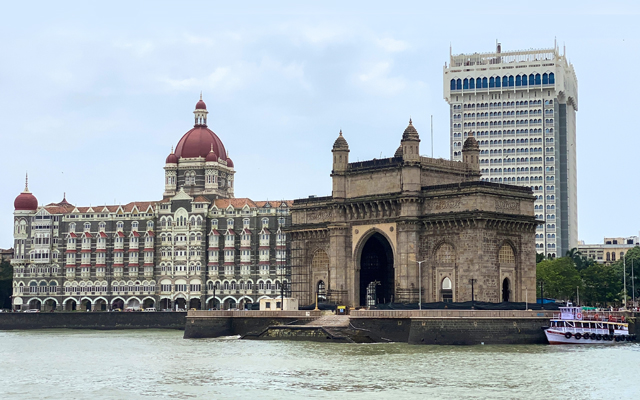
Hotels in Mumbai and the National Capital Region (NCR) are forecasted to lead with occupancy rates; Gateway Of India Mumbai pictured
“Gateway cities like Mumbai and the National Capital Region (NCR) are forecasted to lead with occupancy rates exceeding 75 per cent, driven by transient passengers, business travellers, and business events,” said Vinutaa S, vice president and sector head – corporate ratings, ICRA.
Shikhar Kumar, managing director of Stonewood Hotels believes that segments such as leisure, weddings and business events will play a pivotal role in driving demand for his hospitality company.
“Spiritual tourism is also expected to witness further growth in 2025, contributing to improved average occupancies and ARRs in destinations like Rishikesh and Prayagraj. We project revenue growth in the range of seven to 10 per cent over the next nine to 12 months. While inbound tourism for key destinations like Goa is likely to show improvement in the coming months, the domestic market will continue to dominate the demand landscape for the Indian hospitality sector in 2025,” added Kumar.
As per ICRA’s research, non-metro Indian cities will generate a meaningful share of demand for Indian hotels in 2025.
Gaurav Shetty, managing director of MRG Group (Hospitality & Infrastructure) said: “As global travel continues to rebound, India will benefit from both domestic and international travel. The government’s focus on promoting the country as a tourist destination with campaigns like Dekho Apna Desh will only bolster the industry growth. With a strategic focus on tier-two cities, we aim to complement the country’s rich cultural heritage while expanding our footprint. Overall, we expect to see a significant growth in RevPAR and occupancy in 2025.”
Agoda has launched its fourth Eco Deals programme in partnership with the World Wide Fund for Nature (WWF), where it targets to donate US$1 towards WWF’s conservation efforts for every programme booking made at a participating hotel.
The initiative supports the protection of wildlife and the conservation of critical habitats across 10 markets in Asia.
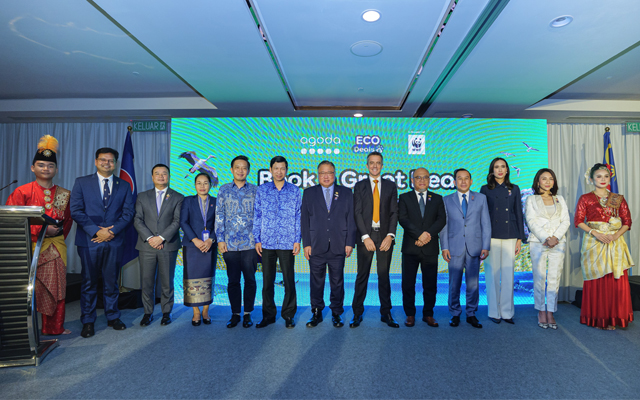
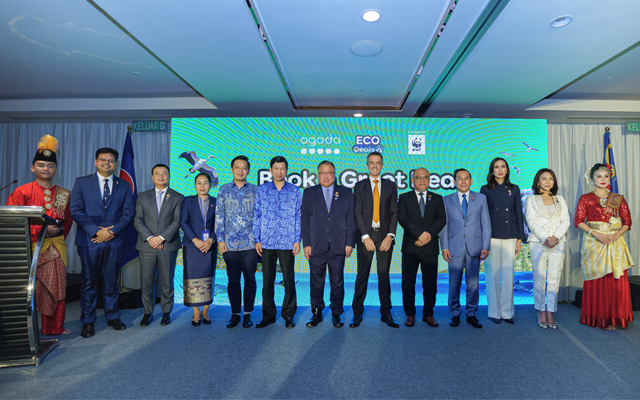
Agoda confirms its fourth Eco Deals programme in partnership with the World Wide Fund for Nature in a signing ceremony on the sidelines of ATF 2025
It will fund a wide array of conservation activities, including restoring wetlands in Japan, protecting spoonbills in South Korea, and ongoing projects such as advancing tiger conservation in Malaysia, protecting whale sharks in the Philippines, conserving elephants in Thailand, safeguarding saolas in Vietnam, restoring ecosystems in Indonesia, developing urban wetlands in Laos, and supporting rangers in Cambodia.
The Eco Deals programme will be open to consumers for bookings from January 20 to December 19, 2025.
Agoda is also introducing the Sustainable Tourism Impact Fund in collaboration with WWF-Singapore and UnTours Foundation. The fund provides low-interest loans from US$10,000 to US$25,000 to support businesses addressing sustainability challenges in the tourism sector.
Agoda is designating US$100,000 to the fund, with the potential to increase to US$150,000 upon reaching the $1.5 million donation target.
Damien Pfirsch, chief commercial officer at Agoda, said: “In partnership with WWF, our goal is to ensure that future generations can explore the world affordably while preserving its natural beauty. The Eco Deals programme has been an important initiative for our hotel partners since its inception in 2022, offering them an accessible way to support wildlife protection and habitat conservation projects. Additionally, the launch of the Sustainable Tourism Impact Fund will provide crucial support to Micro, Small and Medium Enterprises (MSMEs), empowering them to adopt sustainable practices and contribute meaningfully to the tourism industry’s future.”
Through the Eco Deals programme, hotel partners can offer customers discounted rates of up to 15 per cent. In exchange, participating partners receive the Eco Deals badge and are featured prominently across various Agoda platforms, including social media, banner promotions, customer emails, and in-app notifications, enhancing their visibility. Customers can easily find Eco Deals through Agoda’s dedicated landing pages.
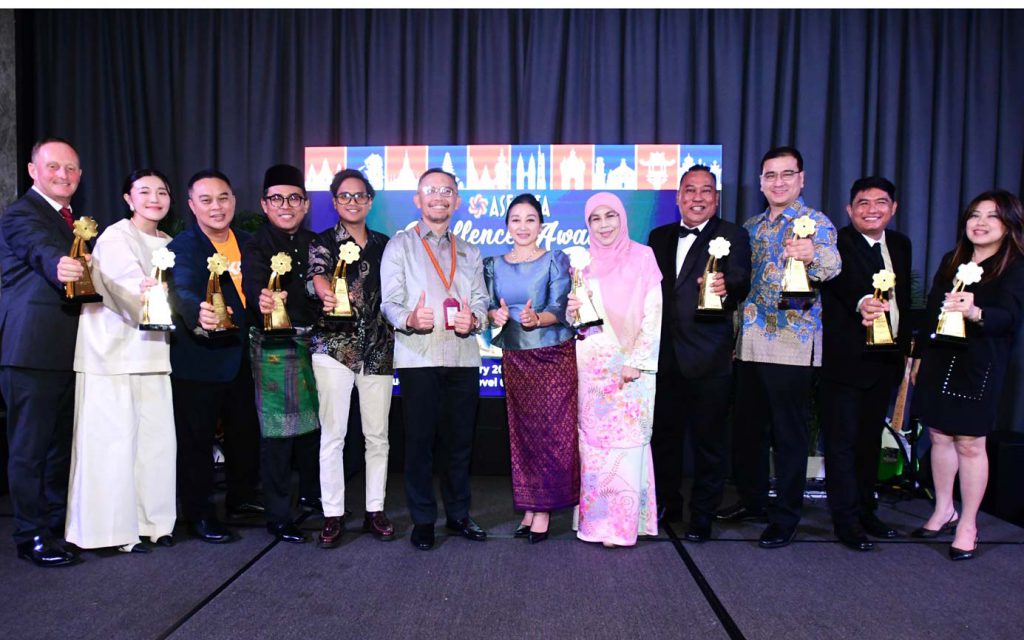
The ASEANTA Excellence Awards was dished out on Monday, honouring 12 outstanding organisations for their contribution to South-east Asia’s travel and tourism industry.
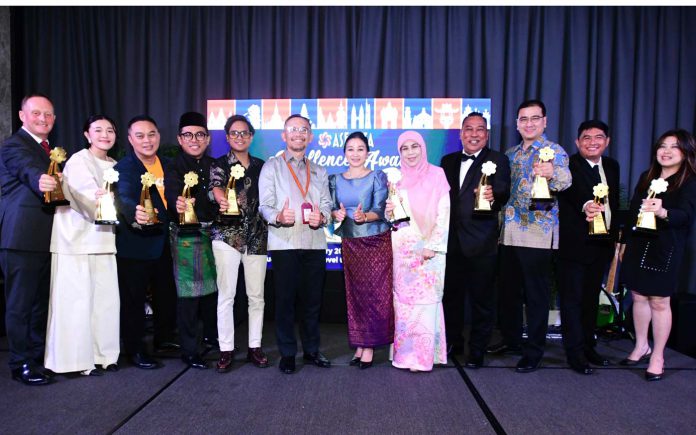
Winners all around; photo by Caleb Richard Lai
Winners included Parkroyal Collection Pickering hotel in Singapore, which took home the Best ASEAN Sustainability Program award; Resorts World Genting in Malaysia, which was awarded Best ASEAN New Tourism Attraction; Sunlight Air domestic boutique airline in the Philippines, which won Best ASEAN Airline Program; Suka Travel & Tours, which was named Best ASEAN Cruise Program, and more.
The celebratory event, held at Amari Johor Bahru, was graced by Chhay Sivlin, chairman of the ASEANTA Excellence Awards and Eddy Krismeidi, president of ASEANTA.
Resorts World Cruises will soon debut in India with the deployment of the Resorts World One cruise ship in Mumbai from March 5 until June 1, 2025.
The 1,800-passenger ship will offer three weekly round-trip itineraries including the Two Night Weekend High Seas Cruise departing on Fridays; the Three Night Lakshadweep Cruise to Agatti Island departing on Sundays; and the Two Night Goa Cruise departing on Wednesdays. All cruises depart from Mumbai International Cruise Terminal.
Resorts World One cruise ship will sail from Mumbai International Cruise Terminal to top Indian coastal destinations, such as Agatti Island, pictured
Destinations include some of India’s top coastal destinations such as the popular beachside city of Goa and the pristine coral atoll of Agatti Island, as well as join a variety of activities including glass bottom boat tours, snorkelling, scuba diving and other water sports.
“In support of the recently announced Cruise Bharat Mission by the Indian government and the new world-class Mumbai International Cruise Terminal, we are excited to further boost India’s cruise tourism sector and bring the Resorts World One cruise ship to homeport in Mumbai,” said Michael Goh, president of Resorts World Cruises.
“Mumbai is the main gateway to cruising in India and Indians will have the convenience of departing from their ‘doorsteps’, without the need to fly to another country”, he added.
Resorts World One will offer certified Indian vegetarian, Jain and halal cuisine.
The next ASEAN Tourism Forum will be hosted in the Philippine province of Cebu in January 2026, while preparatory meetings will be bound for Manila and Boracay.
Secretary of tourism Christina Garcia Frasco said: “As the Philippines takes on the Chairmanship of ASEAN 2026, I invite you to join us in the Philippines for the 29th ASEAN Tourism Ministers’ Meeting in Cebu on January 2026. It will be an opportunity not just to discuss policies, but to witness firsthand the immense potential for sustainable tourism growth in the region.”
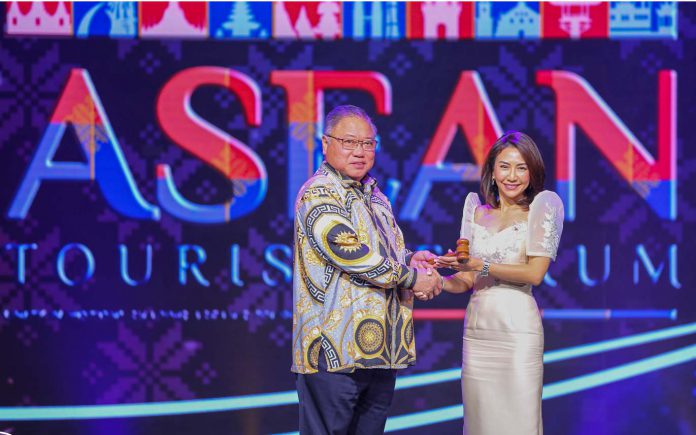
Malaysian minister of tourism, arts and culture Tiong King Sing hands over the symbolic gavel to Philippine tourism secretary Christina Garcia Frasco for the chairmanship and hosting of the ASEAN Tourism Forum in 2026
She highlighted the warmth and hospitality of the Filipino people, along with the rich culture and stunning natural beauty that Cebu has to offer.
Frasco emphasised that “Cebu is a hallmark of unity – evincing what can happen when communities, businesses, and governments come together to create a tourism model that is both profitable and responsible”.
“The Philippines, with its spirit of hospitality and deep sense of community, stands ready to open its pristine shores to all of you, where we will write a new chapter of the ASEAN story: a legacy of unity, sustainability, and prosperity for all,” she added.
Aside from the ASEAN meetings, a TRAVEX tradeshow, and various conferences will also be hosted by the Philippines as part of the complete programme.
Minor Hotels will bring Anantara Hotels & Resorts to China’s Sichuan province this October, with the opening of Anantara Xiling Snow Mountain Chengdu Resort in a location about an hour’s drive from Chengdu city. The project is a result of an agreement with Sichuan Dexinhousheng Enterprise Management Co.
The property will provide guests access to a host of nature-based experiences in the heart of Western Sichuan’s Golden Tourist Route.
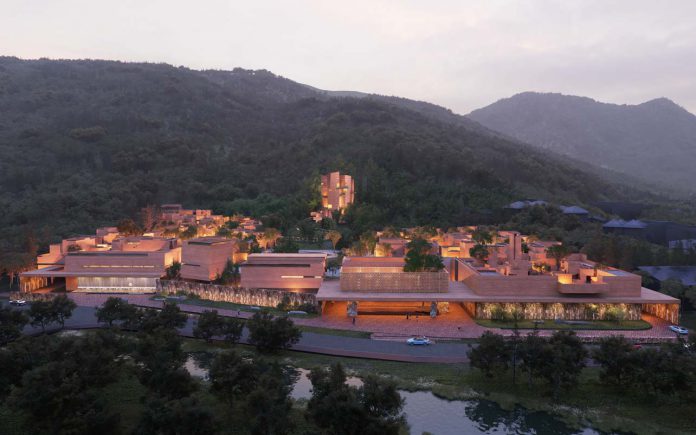
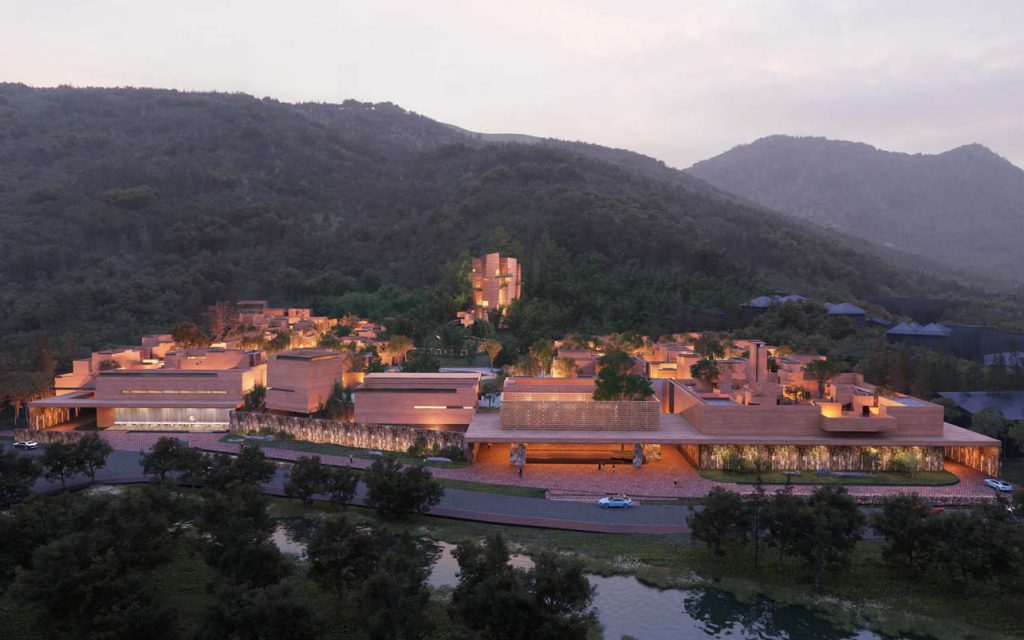
Anantara Xiling Snow Mountain Chengdu Resort will add to Sichuan’s high-end tourism market potential
The 111-key luxury resort will leverage the unique national and cultural assets of the National 5A Tourist Attraction-designated area, the highest distinction awarded by China’s Ministry of Culture and Tourism. Surrounded by pristine nature, guests can enjoy world-class skiing at Xiling Snow Mountain and the therapeutic benefits of the ancient Huashuiwan Hot Springs. The popular Chengdu Research Base of Giant Panda Breeding centre is just 20 minutes away.
Anantara Xiling Snow Mountain Chengdu Resort will offer facilities for both leisure and business events guests.
“We are honoured to collaborate with Sichuan Dexinhousheng Enterprise Management to bring the first Anantara to Sichuan, a destination where innovation and traditional charms coexist harmoniously,” said Eddy Tiftik, vice president of operations and development for Greater China at Minor Hotels and a board member of Funyard Minor Hotels China, a strategic partnership established in 2021 to bring Minor Hotels to China.
“Anantara guests expect a blend of local heritage and modern luxury wherever they are in the world, making this prestigious project the perfect fit. Together, we look forward to bringing new opportunities for sustainable tourism development in the region.”
Zhou Jinguang, chairman of Sichuan Dexinhousheng Enterprise Management Co., said: “Joining hands with Minor Hotels will inject new vigour into China’s regional tourism and bring more possibilities to Sichuan’s high-end tourism market. Chengdu is one of the country’s natural and cultural gems, and Anantara’s expertise will help us showcase the region’s beauty in a way that celebrates local culture, respects the environment, and immerses guests in unforgettable experiences.”
Rising tourism arrivals between South-East Asia and South Korea are presenting numerous opportunities for economic growth, cultural exchange, and strengthened regional cooperation, finds report, ASEAN–Republic of Korea Tourism Cooperation: Fostering People-to-People.
From 2015 to 2019, international tourist arrivals from South-east Asia to South Korea increased 14.7 per cent a year while people from South-east Asia accounted for 15 per cent of the total tourist flow in 2019. This was behind only China and Japan.
Asian Development Bank’s Jong Woo Kang presents outcomes of an ongoing ASEAN-South Korea tourism collaboration at ASEAN Tourism Conference 2025; photo by Rachel AJ Lee
Generally, South-east Asian visitors are drawn to the soft power of Korean culture (hallyu), beautiful destinations, and favourable visa policies.
Meanwhile, South Korean tourists make up 7.3 per cent of the region’s incoming foreign tourists. They seek value-for-money experiences, gastronomy, and sun and beach.
These findings were presented by Jong Woo Kang, director for regional cooperation and integration, economic research and development impact department at the Asian Development Bank, during the ASEAN Tourism Conference last week.
Despite the positive outlook, the report acknowledges several challenges – ranging from overtourism and uneven development in certain destinations to visa restrictions and limited air connectivity – that need to be addressed.
“For example, (most of the arrival traffic) is concentrated in Incheon International Airport. We need to look at improving the connectivity between primary cities and secondary cities in both South Korea and South-east Asia. The cost of airfare also affects the outbound travel decisions by travellers (from both sides),” Kang pointed out.
The report also identifies opportunities for growth. By collaborating on areas like sustainable tourism practices, digital marketing, and film production, both regions can create a more resilient and inclusive tourism sector. Additionally, developing special interest tours, promoting digital nomad visas, and enhancing infrastructure in secondary destinations can attract new traveller segments and ensure a more balanced distribution of tourism benefits.
To facilitate smoother travel, Kang recommended “candid discussions with policymakers” in South Korea to explore “visa exemptions”, and expanding the coverage of existing measures like e-visas for South-east Asian travellers.
The ongoing visa-free entry for Chinese tourists to Malaysia, introduced in December 2023, combined with a gradual improvement in air connectivity between Chinese cities and the Malaysian state of Penang, has led to a remarkable surge in Chinese arrivals.
Last year, Penang International Airport (PIA) recorded 120,245 Chinese tourist arrivals, the highest annual figure to date. This far surpassed the pre-pandemic total of 66,854 arrivals from China in 2019, showcasing Penang’s strong recovery and growing appeal.
New and rejuvenated attractions, such as Biofluorescent Odyssey in Entopia Penang, pictured, are keeping Penang fresh for repeat visitors
With 50 weekly flights between Chinese cities and Penang, China leads as Penang’s top medium-haul source market. Arrivals are expected to continue to grow through 2025 and 2026, bolstered by federal and state government efforts to promote the Visit Malaysia 2026 campaign in China as well as to other main source markets.
According to Mint Leong, president of the Malaysian Inbound Tourism Association, Penang’s diverse offerings, coupled with the convenience of direct flights, make it an irresistible destination.
“The capital, George Town, a UNESCO World Heritage Site, is complemented by a vibrant arts and culture scene, stunning beaches, and natural attractions. Penang is also renowned for its street food and Michelin-starred restaurants,” she said.
Leong added that Penang continually rejuvenates itself with new attractions, thus ensuring something fresh for repeat visitors to discover.
She said: “Recent additions include Ferringhi Bay and the world’s first biofluorescent garden, Biofluorescent Odyssey in Entopia Penang. March will see two new attractions, Penang History Museum and Penang River Cruise. These new experiences make it easy to promote Penang as a standalone four- or five-day holiday destination for the Chinese leisure and bleisure segments.”
To further capitalise on the strength of the destination, Penang Global Tourism (PGT) is working to promote medical tourism and education tourism niches to the Chinese market.
PGT CEO, Ooi Chok Yan, highlighted Penang’s edge in attracting Chinese medical tourists.
“Medical treatments in Penang are significantly more affordable compared to similar treatments in China.
“Since 2023, we’ve actively promoted medical tourism in China, emphasising the cost advantages of cosmetic surgery, dental care, and health screenings. Our internationally accredited hospitals are equipped with state-of-the-art facilities and staffed by professionals fluent in Mandarin, Cantonese, and other Chinese dialects. This ensures smooth communication and provides cultural familiarity, easing patients’ anxieties.”
Education tourism is another niche that has gained traction among the Chinese. Ooi elaborated: “Chinese students often visit Penang for short English courses or school trips, while corporations send employees for basic English training. The combination of high-quality education, affordable living costs, and rich cultural experiences makes Penang an attractive choice for these programmes.”
In a bid to carve out career opportunities for women in a male-dominated hospitality industry, a resort staffed entirely by women has opened in central Sri Lanka.
Amba Yaalu at Kandalama is a 33-room resort led by 80 staff – all women in various positions, from resort manager to gardener. It offers panoramic views of the Kandalama Lake and the surrounding mango garden with 457 trees, while its interiors celebrate Sri Lanka’s rich cultural heritage.
Amba Yaalu at Kandalama is staffed by an all-women team
Owned by Thema Collection, which has several resorts across Sri Lanka, the property was built at a cost of 800 million rupees (US$2.7 million).
Company chairman Chandra Wickremesinghe said the resort’s opening last week: “We envisage a radical change with more women joining the hospitality industry; our women need not seek employment in other countries, leaving their families, if they can be gainfully employed here.”
While women make up nearly 70 per cent of the global tourism workforce, in Sri Lanka, female participation in the formal hospitality sector is low at 10 per cent. This is despite women comprising 52.8 per cent of the population and achieving high literacy rates, the company said in a statement.
Thema Collection added that due to cultural and social norms, traditional gender roles and societal expectations can limit women’s career choices and their mobility while concerns about safety and security, especially in jobs that require travel or late hours, can deter women from pursuing careers in hospitality.



 Sentosa Development Corporation welcomed its travel and tourism partners to an evening filled with joy and grandeur – all in a bid to head boldly into the new Year of the Snake.