TTG Asia
Asia/Singapore Wednesday, 29th April 2026
Page 2685

Sri Lankan hotel group eyes projects in the Maldives, Thailand

0

SRI Lanka’s Laugfs Holdings, a new entrant in the hospitality sector, is keen to add the Maldives to its overseas portfolio.

W K H Wegapitiya, chairman of Laugfs Holdings, told TTG Asia e-Daily that the company was now scouting for a prime location in the Maldives to set up a resort under its new brand, Ananthaya.

The group joins other established Sri Lankan brands in the Maldives, including Chaaya Resorts by the John Keells Hotels Group, Adaaran Resorts by Aitken Spence, and Malwatte Hotels & Resorts, which is joining hands with Hilton International to manage a four-star resort currently under construction.

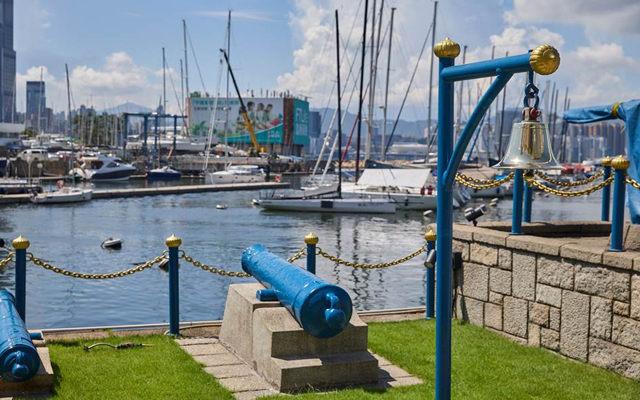
Wegapitiya said: “We have six leisure projects (in Sri Lanka), three of which are nearing completion. One includes a marina – a first for any resort here.” He added that a 150-room property at Passikudah would be ready by September, an 88-room hotel at Chilaw was due to open in December, and a 200-room resort with 50 villas and a marina was coming up at Waskaduwa.

Laugfs Holdings is also in talks with a Thai company to set up a resort in Thailand. At press time, no details were available.

Started 15 years ago in the LPG industry, Laugfs Holdings has since diversified into other businesses such as supermarkets and restaurants. The group began investing in the leisure sector when Sri Lanka’s ethnic conflicts ended in 2009.

Tiger Airways posts US$82 million full-year loss

0

TIGER Airways registered a S$104.3 million (US$81.9 million) loss for the financial year ended March 31, 2012, wiping out S$39.9 million in profit generated the year before.

Total revenue generated by Tiger Airways in FY11-12 dropped to S$618.2 million, down from S$622.3 million in FY10-11, while Cost per Available Seat Kilometre grew by 12.0 per cent year-on-year.

For the quarter ended March 31, 2012, the airline registered a loss after tax of S$16.4 million, versus profit after tax of S$1.4 million for the same quarter the year before.

Tiger Airways attributed the dismal financial performance to its six-week suspension by Australia’s Civil Aviation Safety Authority, in tandem with heightened fuel prices.

Chin Yau Seng, Tiger Airways group CEO, said: “The six-week suspension (in Australia) contributed significantly to the poor financial result, and led to the under-utilisation of our fleet, which resulted in significant and adverse variances in our financial unit metrics in FY11-12.”

On a positive note, Tiger Airways concluded its 33 per cent equity investment in PT Mandala Airlines in January 2012, allowing the Indonesian carrier to resume operations in April 2012.

“Further, and in line with our joint-venture strategy across South-east Asia, we recently signed a revised term sheet to purchase a 40 per cent equity stake (for US$7 million) in Philippines-based South-east Asian Airlines. We are aiming to conclude this deal by the second quarter of FY12-13,” Chin added.

Swire Travel’s Shanghai debut heightens contest for China market

0

HONG Kong-based Swire Travel will open a wholly-owned office in Shanghai this July, marking its second foray into China after Beijing.

According to industry sources, Swire Travel’s new Shanghai office will focus on the corporate travel segment, catering to its existing customer base with business dealings in the city. MICE capabilities will be developed at a later stage.

Jonathan Kao, general manager, Four Seas Travel Shanghai, played down the impact of Swire Travel’s entry, and highlighted the importance of providing China-centric solutions rather than adapting practices used in Hong Kong.

“(Swire Travel) are too small to make any difference. However, we welcome the competition, as it would increase the service quality of the overall industry (in Shanghai),” he said.

Meanwhile, Alcuin Li, general manager, Travel Expert Business Services Hong Kong, which opened its first Chinese office in Shenzhen two months ago, noted that the latest enhancement of the Closer Economic Partnership Arrangement (CEPA) between Hong Kong and China had been a boon for cross-border tourism development.

“I believe more and more (Hong Kong) travel consultants will penetrate into China, and hope to see an ultimate (CEPA) relaxation for the whole Chinese outbound travel market. It would be an advantage to get in first and be ready when the good news is announced,” he said.

Centara poised to open second Bali resort in Nusa Dua

0

CENTARA Hotels & Resorts will soft open its second Bali resort property, Centara Grand Nusa Dua Resort & Villas, in 3Q2012.

Originally scheduled to soft open in December 2011, the five–star resort’s design concept is based on a blending of Chinese and Indonesian-Malay cultural styles.

The property will offer 68 suites with the option of a private pool, lagoon access or private Jacuzzi, and 14 private pool villas with one, two or three bedrooms and butler service.

Facilities include a Spa Cenvaree with nine treatment rooms, two large pools, a fitness centre, a club lounge, a library, five meeting rooms, and a 37.5m² boardroom. F&B options include a fine-dining Asian restaurant, an all-day outlet, and two bars.

“Our main market for Centara Grand Nusa Dua Resort & Villas will be the leisure and honeymoon sectors, but due to the location of the resort next to the Bali Convention Centre, a large part of our business will also be from the meetings and events sector,” said Martin Heiniger, cluster general manager, Centara Hotels & Resorts Bali.

“The market mix for MICE is forecast at 60 per cent domestic and 40 per cent international,” he added.

Centara’s inaugural resort in Bali is the Centra Taum Seminyak Bali, located in the centre of Krobokan, at Seminyak.

“The opening of Centara Grand Nusa Dua Resort & Villas provides Centara guests with the option of the new five-star Grand brand resort, or the Centra value brand, at two very popular destinations on the island,” said Heiniger.

AirAsia X’s Beijing flights to precipitate China-Malaysia FIT boom

0

AIRASIA X’s Kuala Lumpur-Beijing flights, due to launch on June 22, will serve to boost overall traffic between Malaysia and China, but will probably be less of a boon to travel consultants dealing in group tours.

Tan Lu Cheng, marketing representative, Yangtze Cruise & Tours Kuala Lumpur, said: “This new route will definitely help move greater traffic between both destinations. The cheap airfares will be the biggest attraction. However, we do not use AirAsia. We will continue to work with Malaysia Airlines on the route.”

Geff Hoo, sales manager, Apple Vacations & Conventions Kuala Lumpur, said: “We have no plans at the moment to use AirAsia X for group travel to and from Beijing. We will continue to work with full service carriers with scheduled flights on the route.”

Hoo, however, is anticipating a substantial increase in FIT traffic between China and Malaysia once AirAsia X’s new connection takes off.

“We have Apple Flexi where we sell ground packages in China. There would be (increased) opportunities to sell these packages to independent travellers (from Malaysia) (with the introduction of AirAsia X’s flights),” he explained.

Central Java gears up for busy 2013

0

CENTRAL Java is busy upgrading its infrastructure in anticipation of an influx of travellers during Visit Central Java Year 2013.

Central Java Culture and Tourism Office head, Prasetyo Aribowo, said: “The new airport terminal (at Achmad Yani International Airport in Semarang) is being built to the north of the current terminal, at an investment of 800 billion rupiah (US$80 million), and is expected to be completed next year.”

Construction of a new toll road linking Semarang and Solo is also expected to finish in 2014, and will halve the journey time between the two cities to about an hour each way.

Meanwhile, the regional government and Central Java Tourism Promotion Board will jointly organise the Indonesia Corporate Meeting & Incentive Travel Mart 2013 in Semarang to showcase the various destinations in Central Java for meetings and incentives.

“Places like Semarang and Solo have good facilities for meetings, and there are different themes to offer incentive groups,” said Aribowo, adding that the target for 2013 was to hit 25 million arrivals, compared to 21.8 million last year.

PAL drops Hong Kong-Kalibo

0

PHILIPPINE Airlines (PAL) has axed its Hong Kong-Kalibo flights less than a month after launch, indicating that China’s travel advisory against the Philippines is starting to impact the latter’s already estranged Greater China market.

Introduced on April 27 to lure more Hong Kong travellers to Boracay, PAL scrapped the twice-weekly service on May 15, following the release of the travel advisory and Chinese travel firms’ suspension of tours to the Philippines.

A Manila-based travel consultant specialising in inbound from Hong Kong confirmed the flagging demand for PAL’s Hong Kong-Kalibo flights, explaining that China’s travel advisory, together with Hong Kong’s ongoing travel ban to the Philippines, contrived to make Hong Kong tourists avoid the destination altogether.

Sef Lam, director, Via Vai Travel Hong Kong, said: “Some of our (Hong Kong-based) clients do not feel comfortable going to the Philippines for holidays, saying that since we look (like mainland) Chinese, the Filipinos may treat us badly.”

“Emotions may run high, especially if there are demonstrations in the streets, and it would not be a good idea to be caught in a traffic jam with demonstrators nearby,” he added.

PAL is not the first carrier to suspend flights in the wake of the territorial standoff between Beijing and Manila. China Southern Airlines will halve its twice-daily Guangzhou-Manila services from May 26 – June 30, in anticipation of an expected drop in cross-straits traffic.

A-Zs of Successful Agencies: Databases

0

In this regular column, Adrian Caruso, founder and CEO of TA Fastrack Australia, dishes out advice to travel experts. A former travel agency and hotel owner/operator, Caruso now coaches travel, tourism and hospitality businesses throughout the region.

13apr2012_a-z

Do you remember the good old days when airline commissions generated the bulk of your travel agency revenues?

Well times have changed with the agency community now changing its focus to increasingly complex, high-margin products such as cruises and holiday packages. This type of travel holds far more financial opportunity than air ever did back in the seemingly untroubled days of airline commissions and overrides.

This is an area in which travel consultants have a big advantage over online travel agents (OTAs). Travel experts know their clients. They see them at football games, churches and grocery stores, and have personal relationships with them that many online players don’t have.

But OTAs do have one advantage: A single database that aggregates the purchasing and travel history of all their clients. All their automation is in place. They automatically have every client’s e-mail address. They can easily go back and pull up travellers who have booked a trip but who may not have purchased travel insurance, car hire or day tours.

Now that’s what I call the ‘one database benefit’. Being able to look at a single database, analyse its purchasing power, segment that database to see what kind of products will appeal to the various types of customers in that database and design customised campaigns that will appeal to those clients.

Why do travel consultants fail in marketing? The first reason is that they simply don’t communicate with their previous clients. Our research shows that one in five travel consultants make no contact with their clients during the year and a further 45 per cent contact them only once over a 12-month period.

Even travel consultants that market don’t know enough about their customers to sell them a product that would appeal to them. They just market anything to everyone on the database – mass. Your customer database is your most valuable asset for it has no stock. It is not just a list of clients. Which brings me to the second reason why agencies are failing in marketing.

I feel it is at times the fault of the major GDSs and the back and mid-office systems they have been selling agencies for years as a bolt-on. These systems simply do not do enough with the client data that is captured by travel consultants. If they do, they have not shown travel consultants how to extract the information and what to do with it.

You as a travel agency have total ownership over databases because it’s your programme and you choose the suppliers, you choose which clients get what and you are in control. You are just outsourcing.

This is the future of marketing in the travel industry – targeted and niche marketing based on a client’s interests.

But for this to happen travel consultants have to take a good hard look at their existing mid-office system and see if it is giving them all the information they want about their customers, including purchasing history, preferences and interests.

This usually involves having a customer relationship management (CRM) programme within their mid-office system or as a bolt-on. Travel experts must then learn how to use this valuable CRM programme and decide to embark on more targeted marketing to their database of customers on a more frequent basis.

Otherwise others will, and they will profit – not you.

This article was first published in TTG Asia, May 18 issue, on page 13. To read more, please view our digital edition or click here to subscribe.

 

Myanmar is too hot

0

Without doubt, Myanmar is the ‘hottest’ word in the GMS right now. But new-found fame always comes with challenges. John Watson, CEO of Diethelm Travel Group, discusses a current hot-button topic with Raini Hamdi

john-watson1
John Watson
CEO, Diethelm Travel Group

Tell me about Diethelm’s history in Myanmar.
We commenced operations in Myanmar in early 1996. We have offices in Yangon, Mandalay, Bagan and Inle, and employ over 50 multilingual staff.

Is business practically ‘booming’?
Yes, it’s fair to say that. We are experiencing serious accommodation congestion in Yangon and Mandalay. As these two cities form a major part of many tour programmes, (the room shortage) limits the ability to confirm full itineraries.

I am concerned that things are moving so fast; there are problems right now and I expect more in the future.

For example, given the high level of demand for Myanmar, from both the corporate and the leisure sectors, we are finding that some hotels are tearing up their contracts and re-negotiating each booking – upwards, of course. Some hotels are taking a very short-term view which will certainly damage Myanmar’s reputation as a tourist destination.

Our customers, mainly from Europe and America, just cannot understand how hotels can change the rules of the game – we have to spend a lot of time explaining to them that certain owners are simply saying ‘take it or leave it’.

Supply and demand is now out of kilter and will remain so for at least the high season.

What are you doing about it?
There is little we can do with properties that are determined to maximise profits at this time. We point out to them that the current situation will not last forever and that overseas tour operators will remember when hotel stock increases over the next few years who played fair with them.

The management of the more enlightened hotels understand the point, but some will not listen. This is really sad, because it damages the country’s reputation. Perhaps media, such as yours, can help convince properties to honour commitments already made and in place?

Also, we are advising overseas operators to try to fill shoulder and low-season where availability is easier to obtain.
The Myanmar government is actively involved in trying to ensure there is a fair distribution of rooms for the various hospitality segments. We see some results in the FIT area, but the group and series business is proving harder.

I would also encourage the Myanmar government to ensure that Foreign Direct Investment hotels and local hotels follow the same rules in ensuring sustainable development of tourism to Myanmar.

Are you absorbing these unforeseen rate increases?
No, we are an agent already working on thin margins and cannot afford to work for nothing. Our costs are increasing rapidly due to fuel increases, general inflation and staff being offered increasingly-generous packages to move to the many new companies outside the travel sector establishing themselves in Myanmar.

How are the overseas operators reacting?
The operators who have supported Myanmar through the ‘difficult’ years are not reacting well to the current difficulties. They feel they should not be treated unfairly and their loyalty should be rewarded.

I am not sure how the ‘new’ overseas operators now trying to establish a presence in Myanmar are faring, as we are concentrating on our existing long-standing customers.

One obstacle facing operators is the increasing trend of hotels asking for pre-payment of rooms for high season, which means significant changes to the current arrangement which is basically open credit. In-country tour operators will be hard pressed to fund this investment from free cashflow and will need to make back-to-back arrangements with overseas tour operators who send them business.

All this leads to additional administration and cost burdens.

Your conclusion?
Myanmar tourism and the trade in general should learn from similar situations we have seen in the region in years gone by. Service providers should take a long-term view and bear in mind that supply and demand will, in the end, even out.

This article was first published in TTG Asia, May 18 issue, on page 10. To read more, please view our digital edition or click here to subscribe.

View from the top: Dillip Rajakarier

0

The man Bill Heinecke promoted as the very first CEO of his hotel division is a mirror of Heinecke in drive and passion to grow the business. A difference is he has boyish, impish looks – but don’t be fooled. Raini Hamdi finds out why Rajakarier is the real deal

dillip-rajakarier2
Dillip Rajakarier
CEO, Minor Hotel Group
Thailand

So what made you join Bill Heinecke (chairman, Minor International) five years ago?
I did a deal for my previous company, Orient-Express Hotels, Trains & Cruises (where he was deputy CFO). We acquired an Asian portfolio involving seven hotels in the region. Minor was also interested in that deal, but we were able to move fast, structured the deal and completed it before anyone got wind of it.

I got approached by Bill. I never contemplated moving, as I was happy where I was. But when you sit with Bill and talk to him, you end up changing your mind. He’s persuasive and passionate. I thought, this company is small and just about to take off. I would love to come in and help expand it. I’ve always liked to create value.

You rose from chief finance & investment officer to COO in just a year, then CEO in September last year. What strengths do you have that Bill does not have?
(Laughs, long pause). We both have a good grasp of numbers. What do I have that he doesn’t? Well, I’m much younger (laughs).

I do balance Bill in a lot of ways. A true entrepreneur will throw 100 different ideas at any one time and it’s up to you to pick up what’s best for the company and formulate something which people can focus on for the benefit of the company. So he might say, ‘we need to do this, and this, and this’, but you don’t want people running in 50 different directions and end up with a total mess.

I really admire Bill’s passion and drive in growing the company, not just hotels but retail and food, and at his age, that’s huge. If you don’t have the passion and drive, you’ll fall off to the wayside. If you have, you’ll be running much faster, as his passion and drive carries you through like a tsunami – well it feels like it (laughs).

I do have the passion and drive. That’s why we’ve worked well together and I’ve learnt a lot from Bill.

Say he suggests something that you see is detrimental. Can you say no?
Yes, and he listens. With Bill, I realise he does not want to be surrounded with yes men. He wants someone who can challenge him, but for the right reasons. As long as you can have a proper discussion about it, he will listen. It’s one of my success factors in surviving this company for five years.

Was the Oaks Hotels & Resorts your biggest acquisition (TTG Asia e-Daily, March 22, 2011) at Minor?
Yes. And it was well worth it. In this company, we always talk about unlocking the impossible. Oaks was a good example. It was a public company and a public war. There was complete madness in the board of Oaks and we got pushed back all the time but we didn’t give up. We were able to angle ourselves as the strongest contender to unlock the value which has actually created value for Minor today.

Why was Oaks strategic?
It’s a new brand in a niche market in Australia and one which is highly profitable. We believe there is big demand for serviced apartments from families with kids in that market, especially in areas where we want to expand, and in Asia-Pacific.

Not only the Australians know the brand well, as it is the third largest in Australia (38 serviced apartments across Australia, New Zealand and the Middle East currently), but markets such as Japan, Bali, Vietnam and the Middle East also recognise the brand.

We figure if we can tap that brand value, the loyalty factor will help us grow it.

Right now, we’re focusing on Australia, especially the mining sectors, where it’s tough to get accommodation.

Is buying and selling your first love?
We don’t sell (laughs). Yes, I love it. What I really love is adding value, ie, growing a company in numbers and profit, because at the end of the day, we are in business to make money and we’re a public company as well.

In the five years I’ve been with Minor, our profit grew 150 per cent. That’s a huge jump in spite of the floods last year. This year, we will grow another 60 to 70 per cent in profit. We say to our shareholders, based on our history, we’re growing 20-25 per cent on a compounded basis. Our targets are much higher.

Is that because of Oaks?
Oaks, Anantara Vacation Club, which we launched, performance within the hotels and the residences – those were the major contributing factors.

Our company is diversified and opportunistic when we look at deals. When I joined, we had three Anantara’s. Now we have 17 opened and four coming on board by end of this year. The Anantara product also grew, with trophy assets such as the properties in Abu Dhabi. When it started, Anantara was seen as a Thai and resort brand. It is now seen as an international brand with both resorts and city properties.

Our portfolio doubled to 80 hotels last year because of Oaks and we also launched Avani Hotels & Resorts in August last year, with the first Avani in Sri Lanka in December.

So we’re the biggest Asian hospitality company now, in terms of number of hotels.

And you’re tasked to grow it further to 150 hotels within five years. Is Bill reasonable?
In my view, the target is reasonable and easily achievable. We have three main pillars of growth: through Anantara and Avani, acquisitions, and mixed-use developments and vacation club.

We’re different from an investment fund. They always look for an exit while we always look to add value and sweat the asset. If we have a hotel, we may add residences, mixed-use retail or Anantara Vacation Club.

Hence, we can offer owners the whole infrastructure under mixed-use – Anantara, which is five star; Avani, slight lower; Oaks and residences. It’s much more efficient and cost-effective.

Owners today want to release value through mixed-use (developments).

The hotel investment climate is great right now.
Yes. And we look at which economies are growing and which ones are shrinking. For those that are shrinking, we might be able to buy assets below book sometimes and take a longterm view. For those that are growing, we want to be there. Asia and the BRICS – now they’ve added South Africa – are where the growth is and it’s also because of their domestic markets.

What is it about doing deals that you like the most?
It’s a hobby. When I was in the UK, the way I relaxed during weekends was to buy and sell houses. I would buy something no one would buy, then refurbish it as I could straightaway ‘see’ (the deal) and it would get sold before the refurbishment was completed. I really enjoyed the buzz. Through that, I was also able to create a portfolio of assets. It was not about the money; it was the satisfaction of getting the deal done.

Bill wrote the book, The Entrepreneur. If you were to write one, what would it be – The Deal?
I would say, Kill the Enemy. That’s what the book will be about. I thrive in a competitive environment. I never get stressed. People say I’m killing myself, working weekdays, weekends, travelling too much, but that’s me.

You sound just like Bill!
Yes. That’s why I enjoy Minor. The day someone pulls a stop on its growth track, that’s the day I will leave.

This article was first published in TTG Asia, May 18 issue, on page 6. To read more, please view our digital edition or click here to subscribe.