TTG Asia
Asia/Singapore Friday, 2nd January 2026
Page 2685

Clark readies plans for budget terminal, further expansion

0

PLANS are underway for a new PHP12-billion (US$282 million) budget terminal at Diosdado Macapagal International Airport (DMIA), also known as Clark International Airport.

According to DMIA general manager, Jose Victor Luciano, the new terminal, which will be located adjacent to the existing one, is being built to capitalise on strong growth in the budget travel segment.

“Flight growth is coming from these (low-cost) carriers. We (at Clark) and the government have to prepare the proper infrastructure,” he said.

In addition, the PHP 360 million-expansion of Clark’s existing terminal, scheduled for completion by 2013, will allow it to accommodate up to 2.5 million passengers annually, up from the current one million.

Clark’s expansion could not come sooner, given the entry of AirAsia Philippines and Airphil Express flights next month.

AirAsia Philippines will be launching its maiden route (Clark-Davao) on March 15, and is also working to secure flight permits to Kalibo, Puerto Princesa, Singapore, Hong Kong and Macau (TTG Asia e-Daily, February 8, 2012).

AirPhil Express will be starting four new routes from March 29: Davao (six-weekly), Cebu (six-weekly), Kalibo (sixteen per week) and Puerto Princesa (twelve per week).

Two other low-cost carriers, Cebu Pacific and SEAir, are already operating at Clark.

Luciano revealed that Clark was looking to build an additional facility, which “will be able to accommodate about thirty planes at any one time…and we are looking at models in Singapore and Kuala Lumpur”. The project may take up to 2015 to be completed, he added.

Meanwhile, travel consultants are waiting to hear about developments on a fast rail/intermodal transport system connecting Clark to Manila, which could potentially reduce the two-hour journey to thirty minutes. This would enhance Clark’s viability as the country’s main airport once government plans to shift operations out of Manila are finalised.

A very healthy prognosis

0

Medical tourists are flocking to India as it offers quality care at little cost

Syringe with medicine. Bubbles in the liquid. Isolated on White. Close-Up

MEDICAL tourism in India is flourishing. According to the Federation of Indian Chambers of Commerce and Industry (FICCI), some 600,000 medical tourists arrived in India in 2010 (up from 150,000 in 2005). This is estimated to have grown to 720,000 by end-2011.

FICCI expects the medical tourism industry to earn US$2 billion in 2012 and the healthcare industry in the country to generate US$69 billion or 8.5 per cent of GDP. The Indian medical tourism industry is growing at the incredible rate of 30 per cent annually and is expected to generate US$3 billion by 2015.

India’s attractiveness as a medical hub can be attributed chiefly to its ability to offer overseas patients exceptional value for money. Treatments in India cost half, and sometimes even a third, of what other medical tourism hubs in Asia such as Singapore, Malaysia and Thailand charge, and about a tenth of that in the US. Generally, bigger hospitals in major Indian cities are equipped with state-of-the-art facilities helmed by highly trained and experienced doctors.

The principal source markets of medical tourists to India are East African nations, the Middle East, the UK, Canada, Afghanistan, Bangladesh, Pakistan, Sri Lanka, Myanmar, Nepal and the US. Arrivals from the CIS countries are also increasing.

Africans, including those from Nigeria, Zimbabwe, Uganda, Tanzania and Kenya, come to India seeking treatment as medical facilities in these countries are often woefully inadequate and there tends to be a shortage of medical expertise.

Individuals from developed nations such as Canada, the UK and the US on the other hand, head to India not only to alleviate costs but to also save time.  For instance, in the UK, a patient might have to wait for around six months for a knee-replacement before the publicly funded National Health Service can offer a slot. Indian  hospitals conversely, can carry out the procedure immediately at a fraction of the cost – US$9,500 versus US$24,000 at a private hospital in the UK.

In the case of war-ravaged Afghanistan, Congo or Burundi, no facilities for even the most basic medical procedures exist.

Surgeon Dr Naresh Trehan of Delhi National Capital Region (NCR)-based Medanta Medicity said: “Afghan hospitals can no longer provide basic treatments and in the Gulf no specialised procedures can take place so we have Iraqis and Iranians coming to India for specialised treatments.”

Major hospital groups in India include Fortis Escorts, Apollo, Medanta-The Medicity, Max and Manipal.

Apollo, the largest healthcare provider in Asia, treated an estimated 60,000 foreign patients in 2010, generating US$77 million. They have also opened clinics in Oman, Kenya, Tanzania, Ethiopia and Nigeria.

Pills macro

Max Hospital, has seen the number of foreign patients grow by 500 per cent over the last three years and, according to a spokesman, some 20,000 foreigners were treated in its hospitals in 2010, accounting for about 20 per cent of patients treated by the group each year.

Fortis Escorts, the third biggest player in India, has a 20-member international marketing team that travels to the depths of Africa and the Middle East to set up local doctor referrals and sourcing centres. It treated about 6,000 foreigners in 2010.

The escalating demand for medical tourism in India has spawned a new breed of entrepreneurs hoping to cash in on this lucrative segment.

Medical facilitators, who are essentially medical tourism experts, work in tandem with Indian hospitals and foreign patients.

Sourav Mukherjee, CEO of New Delhi-based Longfield Management, a medical tourism facilitator, explained: “We have our own team of medical professionals who conduct risk assessments on patients before we commit them to any hospital.

“We assess quality vis-a-vis costs, and offer packages for all budgets so the patient is not solely dependent on the prices quoted by the hospitals. The whole gamut of ancillary services like airport transfers, hotel check-ins, services of translators, choice of cuisines, healthcare escorts, currency exchange and local sightseeing are also provided.”

However, the surge in foreign patients has brought its own unique set of challenges.

“Understanding  foreign patients’ requirements and problems is the overriding challenge Indian medical staff face while cultural differences and dietary habits also have a bearing on the speed of recovery of patients,” said Dr Atul Bhatnagar, general surgeon, Sant Parmanand Hospital, New Delhi.

Despite the immense potential of medical tourism, there has been little government steering  or intervention to bolster the sector.  Developments in the industry have been led primarily by the private sector.

Even though the Indian government has introduced fast-track “M” visas to attract foreign medical tourists, this has proven to be more of a hassle than a boon. Holders have to register within a few days of arrival at the local police station personally.

This is especially difficult for critical care patients who are often transferred to hospitals by ambulances from the airport. So, many opt for tourist visas instead. Industry experts agree that to compete with Thailand and Singapore, India must introduce visas-on-arrival and revise its restrictive re-entry rules (not allowing re-entry within 60 days of exit) to ensure repeat visits for post-operative care.

Nonetheless, the government has had a hand in ensuring that medical tourists are guaranteed high-quality medical services. It currently runs an accreditation system for hospitals and provides a list of recommended prices. The Indian Ministry of Tourism publishes brochures highlighting various treatments provided by 45 hospitals that have been designated as ‘Centres of Excellence’, most of which are based in Delhi NCR.

The Confederation of Indian Industry (CII) introduced a certification system in 2008 and so far, has approved 30 of its 120 member hospitals. Under this regime, hospitals must agree to limit charges made to foreign patients under the dual pricing system now in practice.

To attract patients from the US and Canada, hospitals must be sanctioned by the Joint Commission International (JCI), a healthcare accreditation agency with stringent quality parameters. Some 19 hospitals in India now have JCI accreditation.

Key facts on medical tourism in India

• Unlike mainstream leisure tourism, medical tourism is sold on a needs basis. Consequently, packages can only be bought when patients need it. The final cost of a medical package can never be fully determined until some diagnostic tests are done on arrival at the hospital and the patients’ condition has been accurately assessed

• The average price for common medical procedures in India according to corporate hospitals are: US$13,000 for an angioplasty; US$11,000 for a heart bypass; US$10,000 for a single heart-valve replacement; US$10,000 for a hip replacement; US$9,500 for a knee replacement; US$12,000 for a gastric bypass; US$7,500 for a spinal fusion and US$17,000 for a mastectomy. These fees are about 20 per cent to 30 per cent more than those charged to Indian patients as they inculde priority admission, surgical consumables and service charges.

• Routine procedures carried out by Indian hospitals on  foreigners include cardiac care, joint replacements, cancer care, kidney and liver transplants, neurological ailments, minimal access surgery, dental implants and cosmetic surgery. Patients also visit India for naturopathy and ayurvedic cures, stress-busting treatments, detoxification and rehabilitation therapies.

This article was first published in TTG India, February/March issue, on page 18. To read more, click here to subscribe.

Enhance conferences with apps

0

Smartphone apps can be a boon for event planners looking to boost attendees’ experience and information access. Crowdcomms Asia’s Jeremy Ducklin shows you how

smart-phone

THE WORLD of smart phones can be a maze, but it does not mean your convention or event has to be. Any smartphone with access to an Internet browser can give your attendees a chance to navigate around an event and to comment and interact in real time.

Event apps typically include interactive maps, updateable schedules, exhibit guides, session notes, sponsor banners, exhibitor lead tracking, social media and much more. But perhaps more importantly the best apps offer the chance to start and continue conversations between you and your attendees, and between attendees themselves.

Imagine getting instant feedback to whether a speaker has made an impact on the audience, or running live audience response questions as the conference unfolds – all of which appears on every attendees smartphone, making interaction easy, fun and immediate.

Apps can be cost effective and green, allowing you to reach your audience without having to print reams of costly programmes. Plus, you can increase ROI via lead generation and direct marketing that have concrete analytics and metrics behind them – all collected on the spot.

Even without benefits such as reducing cost, increasing brand awareness and facilitating networking, one of the main impacts of event apps is giving your attendees a great experience and easy access to your content on their own phones long after the event is over.

Here are some tips on making sure you get the most out of the technology: 

 Promote the app: Attendees need to know an app is available and how to access it. Promote your app on the conference website, in marketing and registration communications and with signage at the event. Have a dedicated hotspot area so attendees can go there and download it.

 Know your venue: Make sure your venue has adequate Wi-Fi and/or 3G coverage. Although some apps will work offline, most include some components that require connectivity.

 Understand the updates: Make sure that updates to the app take place in the background. If they don’t and there is congestion on the network, attendees may not be able to open the app to access information they may need at a moment’s notice, such as room details for their next session.

 Is it compatible?: Find out how easy it will be for attendees to access the app. Many corporates issue Blackberrys to their employees, but don’t allow external apps to be downloaded on them. A mobile web application will be the app of choice for most corporate Blackberry users.

 Check your timelines: If you are building a native app, which is downloadable from an app store, do note that app store approval process times can vary. You usually need to build a separate app for each mobile platform (e.g. android), which can add eight weeks or more to development time.

 How do you make last minute changes?: Access to a content management system (CMS) to make last minute amendments in real time is vital, especially when event schedules can keep changing.

 What level of security do you need?: Is your app available to everyone or do you need to password protect your content?

Having bought Congress Rental from Philips in Australia in 2000, Ducklin launched Congress Rental in Singapore in 2006, providing Simultaneous Interpretation Equipment and Audience Response throughout Asia.

Recognising the opportunity for event organisers to benefit from the uptake and capabilities of smartphones and web enabled technology, he set up Crowdcomms, which offers EVAPP, a smartphone event app for conference and exhibition delegates, and EXAPP for exhibitor lead tracking and traditional audience response.

This article was first published in TTG Mice, February/March issue, on page 42. To read more, click here to subscribe.  

By Jeremy Ducklin, owner of Crowdcomms Asia.

The year forward

0

With economic uncertainty in the winds, caution is the common song among many of Asia’s MICE players

cover-feb

Meetings and incentives
Tight pockets and short lead times prevail

LAST year’s great expectations in Asia’s MICE industry, fuelled by a strong business rebound after 2008’s financial crisis, have mellowed, thanks to the unresolved Eurozone debt crisis that has caused volatile shifts in the Asian stock markets and currencies, and multinational companies to exercise caution in their spending.

While event houses saw an increase in client’s spending and stronger MICE traffic in 2011, many are expecting a slowdown in 2012. David Goh, regional managing director of MCI Singapore, said: “The outlook for the global economy is uncertain and a slowdown is anticipated. MICE business will continue to grow but not at the recent phenomenal rate.”

Event houses in Asia told TTGmice that the slowdown was most apparent in European markets.

“We’ve observed that the number of Europeans heading to Singapore for MICE has dropped significantly in the last year or so. We envision this trend to flow into 2012, as Europe continues to struggle economically and its currency continues to weaken. Although we’ve received a sizeable number of enquiries from European MICE planners and firms, few have translated into actual events or bookings,” said Mauro Del Vento, general manager of Lotus Asia Tours Singapore.

win_5493
As host of ASEAN Summit and related meetings in 2011, such as the ASEAN Finance Ministers’ Conference pictured here, Indonesia saw a boom in MICE which is expected to flow into 2012

Asian Trails Thailand incentives and inbound manager, Sumlee Anankamanee, said: “European MICE business is on the decline because of the economic downturn in Europe, particularly in Spain, Italy and Greece. Multinational companies in those markets have cut budgets. Some did so because of poor corporate performance, while others did not want to be seen as big spenders in hard times.”

However, Asia’s MICE players are certain that the region itself will keep the industry buoyant.

Robert Guy, managing director, Singapore & Malaysia, Destination Asia, believes that the “slight slackening in requests and demand from the UK and continental Europe” will be soothed by robust business from other markets, particularly Australia.

DMC Bali Plus also expects most meetings business to come from Asia-Pacific, with Australia putting forth a stronger showing. “Overall business will be good for us. What we need to do is be proactive in our marketing and stay ahead of the competition by offering quality service and innovative suggestions,” said the agency’s general manager Marten Habbeling.
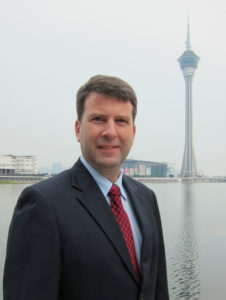
rutger-verschuren-photo-1


“The actual sit-down time spent during meetings is getting shorter, while the time for surrounding events such as networking and teambuilding is increasing. The trend is a result of organisers looking for more head-turning activities to keep delegates enthusiastic and active. Organisers want more wow factor and glitter, unique and bold activities and venues, and more excitement in proposals. We have to think out of the box.”

Rutger Verchuren
COO
Hospitality Division Shun Tak Holdings, Hong Kong


Asian Trails Thailand’s Sumlee said 2012 would see more incentive movements from Asian source markets such as Singapore, Jakarta, Hong Kong, India and China.

Many other Asian MICE players also see China as a gold mine.

Associated Tours Hong Kong vice president, Ken Chang, said: “China seems to be the only place that is immune to the recent financial crisis so far. Domestic consumption is still growing, and as a result we are handling more MICE business from China. We are waiting for the market to mature, which will allow business to be carried out in a more systematic and organised way.”

Chang expects the winds of change to sweep in soon, as his company is already seeing a growing number of professional Chinese MICE companies and clients.

“China will continue to be an important source market for Hong Kong,” said Julie Yeong, director of marketing, JW Marriott Hotel Hong Kong. “To cope with the demand, the hotel has a dedicated sales team which specialises solely in the China market.”

Stephen Cokkinias, general manager of The Ritz-Carlton, Kuala Lumpur, noted that the Chinese market had been growing every month.
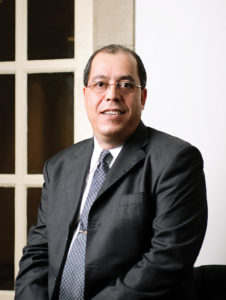
mr__mahmoud_skaf_-_jw_marriott_kuala_lumpurgm


“We are seeing more IT-based MICE business. Many of the IT firms from India see an affinity with Malaysia due to the latter’s sizeable Malaysian-Indian population. Malaysia’s unique selling point is its ethnic diversity. Furthermore, Malaysia has an established IT sector and many international technology companies are opening factories and offices here. Research In Motion’s new Blackberry assembly plant in Penang is one such example.”

Mahmoud Skaf
General manager
JW Marriott Kuala Lumpur


Meanwhile, in destinations where prices have been inflated by new attractions and strong demand, inbound MICE operators are worried. In Singapore, where new tourism infrastructure rang in stronger arrivals and pricier hotel rates – arrivals in 3Q2011 grew 15 per cent year-on-year, while average room rate rose 16 per cent – event organisers expressed concerns that rising prices could dampen potential business growth.

Lotus Asia Tours Singapore’ Del Vento said “a significant number” of clients had chosen to hold their events elsewhere in Asia, “as rates charged by hotels and venues in Singapore put them off”.

Dennis Law, managing director of Star Holiday Mart, said Singapore could enjoy stability or growth in its Asian MICE markets in 2012, “provided Singapore hoteliers do not hike their rates as enthusiastically as they had in the last few years”.

Law added: “It is important for all stakeholders to re-evaluate how they conduct their business given that there is tremendous uncertainty on the horizon and clients’ budgets are tightening.”

The threat of high prices is keeping Michael Ziemer, general manager of The Excelsior Hong Kong, on his toes too.

“Since holding an event in Hong Kong may be more expensive, organisers may take their events to other destinations and this will affect our business. Clients will also bargain for a lower price. We will have to extend competitive packages during specific periods and partner our sister hotels in nearby cities such as Macau and Sanya to offer creative packages.”

Rully Rachman, director of sales and marketing, Hotel Mulia Senayan Jakarta, told TTGmice that his hotel had benefited from corporate groups that were put off by high prices elsewhere and took their events to the Indonesian capital city instead. “Destinations such as Singapore are getting more expensive and it has been hard to secure guestrooms and venues there,” he said.

Rachman added that Jakarta would continue to see growth in regional and international events in 2012 because the city had stepped out of the shadow of security breaches and Thailand’s “political and domestic issues had resulted in business to Indonesia”.

Indonesia’s positive economic outlook has also been credited for brighter expectations among the destination’s MICE players. Rini Stoltz, director of sales and marketing, Grand Hyatt Jakarta, said Indonesia would see a rise in corporate meetings and conferences that are related to economic investments.

Meanwhile, short lead time continues to plague Asian meetings and incentives players.

“We have to pull association meetings together in a couple of months instead of one or two years in the past. It’s tough to organise meetings in less than six months, as it normally takes nine months to a year to organise small meetings and even longer for bigger ones. Given the economic problems in Europe and North America, our clients are taking a cautious stance and are not planning too far ahead. Fortunately, we have our core events that will keep us going,” said Nancy Tan, managing director of Singapore’s Ace-Daytons Direct.

Explaining why events were being booked so close to execution date, Debrah Pascoe, director of sales and marketing, Shangri-La Hotel, Singapore, said companies were unwilling to “commit and then incur penalties if they cancel”.

For Malaysia-based Discovery Overland Holidays product development manager, Kingston Khoo, the dip in lead time is paired with greater demand for competitive pricing by increasingly savvy clients. “These trends have emerged as a result of increased wealth of information and ideas available to clients, coupled with the softer economic outlook for 2012,” Khoo explained.

Events in 2012 are also expected to shrink in attendance and scale, noted some players.

DMC Bali Plus’ Habbeling said short meetings that run for three days would dominate in 2012, and although there would be more corporate event movements this year, most would involve smaller groups or would be half-day teambuilding programmes with small budgets.

He added that such trends were already present in late 2011.

According to Shangri-La Hotel, Singapore’s Pascoe, corporate events at the hotel were being trimmed down to “meetings and perhaps one cocktail party for the welcome”.

Pascoe said: “There has been a noticeable reduction in the number of organised dinner events. Instead of organising F&B whereby the cost is borne by the company or event organiser, there is an increase in delegates dining at leisure, which reduces the registration or delegate fee.”

Based on observations in late 2011, The Excelsior Hong Kong’s Ziemer also expects cautious spending this year.

“We noticed that more incentive groups had booked only guestrooms with specific meals, without offering allowances for participants to spend on their own. The number of lavish activities organised for participants was reduced too. I believe that in 2012, more organisers will look for destinations that offer cheaper rates and where their main businesses are located so as to reduce travelling costs.”

_mg_5020

Conventions and exhibitions
Technology and ROI most critical

According to UFI’s Global Exhibition Barometer, conducted among member companies in December 2011, most Asia-Pacific exhibition sector players expect a higher turnover in 2012, compared to the same period last year. Some 73 per cent expect an increase in the first half of 2012, while 18 per cent foresee a dip. For the second half of the year, 66 per cent are optimistic and 19 per cent expect poorer turnover.

Nine per cent of survey participants in Asia-Pacific are unsure of their business outcome in the first half of 2012, compared to 15 per cent in the second half of the year, perhaps a reflection of how uncertain participants are on how the world economy may swing. In the same survey, UFI asked companies for their view on whether the impact of the economic crisis on the business was over or not. The decline in confidence is particularly significant in Asia-Pacific, where the level of positive answers drops from 65 per cent to 27 per cent.

The Global Exhibition Barometer also found that half the pool of participants worldwide expect the impact of the economic woe on their exhibition business will end in 2013, whereas six months before the latest survey 63 per cent considered it would end in 2012. Some 14 per cent of respondents believe the crisis will end in 2014, while eight per cent think it will cross into 2015.

The health of national/regional and international economies are the top two concerns of participants. Local/national competition from within the exhibitions industry follows in third place, and internal management issues fourth.

Interviews TTGmice had with the region’s conventions and exhibitions players revealed similar sentiments.

“It is hard to predict (how business would be), as the exhibitions business highly correlates to the global economy. The European debt issue and the sluggish economy and high unemployment rate in the US have created a volatile environment. These directly affect the export and import industries which our exhibitions business focuses on,” said Daniel Cheung, general manager of Hong Kong Exhibition Services.

Sources also told TTGmice that companies organising or participating in trade events were paying greater attention to returns on investment (ROI).

“Against the backdrop of the global economic situation, a corporation’s every marketing campaign and exhibition are now to an even larger extent subject to financial scrutiny,” said UBM Asia senior vice president, Wolfram Diener.

“A few years ago, systematic ROI studies as part of marketing plans were mainly an affair for larger corporations, whereas this has become common practice even among small- and medium-sized enterprises (SME). More than 80 per cent of booth space at exhibitions worldwide is booked by SMEs, not by large multinationals. Companies may now pull out quickly if their participation in an exhibition has not proven worth the investment,” he added.

The emergence of the ‘convex’ type of events – a combination of convention and exhibition component in a single event – observed by Bangkok International Trade and Exhibition Centre business development director, Sarnit Karunyavanij, appears to resonate with the growing need to achieve much more at one go.

“In the past, conferences were held in hotels for 300 to 800 delegates. Now, events are held in venues with plenary rooms, multiple breakout rooms and a small exhibition hall of 1,000m2 to 2,000m2. PCOs and associations realise that companies don’t want to just sponsor an event. Companies want to be seen and have a chance to engage event delegates, which means more exhibition space is needed alongside a conference,” said Sarnit, who added that the exhibition component would generate more revenue to support the cost of organising the event.

PCO/PEOs have to devise their own mechanisms to cope with the greater need to provide value for money.

“While we cannot reduce our prices, we can offer value-added services to exhibitors, such as extended promotions on peripherals, networking functions and buyer-meet-sellers sessions to generate more business opportunities for them,” said Hong Kong Exhibtion Services’ Cheung.

Diener said: “UBM Asia draws great attention to the continued development of trade buyer data bases and to the professional visitor promotion through all available channels. We believe that this is now even more instrumental in keeping the patronage of our exhibitions and many international business communities.”

allen-ha


“MICE visitors and organisers are becoming more sophisticated. They want a one-stop venue that provides a mix of business and leisure facilities so that event delegates are able to enjoy both the event and leisure activities in a seamless programme.”

Allen Ha
CEO
AsiaWorld-Expo


The need for “effective cost management to generate maximum ROI for business events will continue to be a critical factor”, said Aloysius Arlando, CEO of Singex Exhibition Ventures and Singex Venues. “This will lead to event organisers looking at both objective-driven content and delivery that supports it. It’s no longer a case of technology adoption for example, but technology assimilation into the meetings delivery that will take on an increasingly important role for attendees to maximise their attendance at the show and stay fully connected to the office,” said Arlando.

The growing demand for communications technology at conventions and exhibitions has also been fuelled by the social media generation, noted Vitanart Vathanakul, executive director of Royal Cliff Hotels Group and Pattaya Exhibition and Convention Hall (PEACH).

“We see an increase in demand for web-based conferencing, video conferencing, teleconferencing and virtual meeting. With the influence of social media, people want to stay connected and be able to interact with one another at any time and place,” said Vitanart.

Keeping up with times, Royal Cliff hotels and PEACH have upgraded its communication technology facilities, enabling free Internet connection in all guestrooms this year. PEACH has installed the latest equipment and technology including optical fibre throughout the venue.

Kuala Lumpur Convention Centre has also changed its product offerings to cater to the rise of social media adoption. Peter Brokenshire, general manager of the venue, said: “The centre provides complimentary Wi-Fi access at its Park View Deck and in designated areas, as well as complimentary Internet stations around the facility.”

So did Hong Kong Convention and Exhibition Centre, which completed major enhancements to its Wi-Fi system in early October 2011. Wi-Fi user capacity has been upgraded from 1,000 to 3,000 at a time, and maximum usage time for individual users has been increased from 20 minutes to an hour. With a bandwidth of 100Mbps, download and upload speeds for individual users have also been doubled.

“Quality organisers look for innovative technologies, partnerships and flexibility from venues to strive for even higher standards to differentiate themselves from the rest to stay competitive. There is certainly investment in technology upgrade, as well as staff training on product knowledge, market trends and language competencies,” said Monica Lee-Muller, deputy managing director of Hong Kong Convention and Exhibition Centre (Management).

Additional reporting from Mimi Hudoyo, Sirima Eamtako, Linda Haden, Prudence Lui, N. Nithiyananthan and Patricia Wee

This article was first published in TTG Mice, February/March issue, on page 10. To read more, click here to subscribe

Legoland Malaysia appoints DOSM

0

thila-munusamy-legoland-malaysia-appoints-dosm
Thila Munusamy

LEGOLAND Malaysia, the first Legoland theme park to open in Asia-Pacific, has appointed Thila Munusamy as director of sales & marketing.

Munusamy was most recently director of marketing of Sunway Lagoon theme park in Petaling Jaya.

Before that, she worked in various marketing & communications roles at the InterContinental Kuala Lumpur Hotel, Pan Pacific Kuala Lumpur International Airport Hotel, and The Saujana Hotel Kuala Lumpur.

Travel Corp appoints country manager for India

0

darshan-maheshwari-travel-corp-appoints-country-manager-for-india
Darshan Maheshwari

THE TRAVEL Corporation has appointed Darshan Maheshwari as its country manager for India.

Based in Mumbai, Maheshwari will be responsible for the company’s outbound sales from India, and will service the general and preferred sales agents of Insight Vacations, Trafalgar Tours, Contiki Holidays and Uniworld Boutique River Cruises.

Prior to joining The Travel Corporation, Maheshwari was senior general manager of Kuoni Travel India – SOTC.

Minor appoints Michael Marshall as SVP Commercial Operations

0

minor-appoints-michael-marshall-as-svp-commercial-operations
Michael Marshall

MINOR Hotel Group (MHG) has appointed Michael Marshall as senior vice president Commercial Operations, based in the group’s corporate office in Bangkok.

Marshall will lead the sales, marketing and revenue & distribution functions for MHG, whose portfolio includes the Anantara and recently launched AVANI brands.

He joins MHG from Millennium Hotels & Resorts, where he was vice president Sales & Marketing for the Middle East and Africa, based in Abu Dhabi.

Travel consultant wins Royal Pacific Hotel stay in Hong Kong

0

TTG ASIA’s ongoing Facebook competition has found its January 2012 winner in Sidney Chua, a travel consultant with Mines Global Holidays in Malaysia.

Chua won a three-night stay in a deluxe harbour view room in the Tower Wing of The Royal Pacific Hotel & Towers in Hong Kong, after ‘liking’ the TTG Asia Facebook page and subscribing to the travel trade magazine.

The prize up for grabs this month is a four-day three-night stay at Fairmont Singapore.

Members of the travel trade industry stand to win prizes every month by ‘liking’ the TTG Asia Facebook page, and increase their chances by subscribing to the magazine.

For more details, visit www.facebook.com/ttgasia

Carlson Rezidor partnership catapults it to hotels’ top 10

0

THE NEWLY-established Carlson Rezidor Hotel Group brings together a consolidated footprint it will jointly market, clinching it the ninth position among the largest hotel companies worldwide. It will also see global alignment and management of its brands, and collaboration on revenue generation engines, purchasing opportunities and staff development.

According to 2010 room count ranking results published by Hotels Magazine last September, Rezidor was 13th while Carlson was 19th. With its latest move, Carlson Rezidor leapfrogs over companies such as Hyatt Hotels Corp and Westmont Hospitality Group.

However, there is no change in the legal status or ownership structure of both companies, and Carlson continues to be the majority shareholder in Rezidor with a 50.03 per cent ownership on a fully-diluted basis.

Carlson Rezidor has 1,319 hotels operating and contracted pipeline hotels worldwide, with 154 in Asia-Pacific. Rezidor oversees the bulk of the group’s portfolio in Europe, the Middle East and Africa.

In an e-mail interview with TTG Asia e-Daily, Carlson’s president and CEO, Hubert Joly, said the group saw a “strong growth momentum” in Asia-Pacific last year, with 20 openings and a record 29 signings.

Joly added that 18 hotels were scheduled to open in the region in 2012, even as it planned for “some big news around the Park Inn by Radisson brand”.

“The partnership facilitates developing global relationships with key travel intermediaries…The main change for travel (consultants) is that we will be better able to represent the entire brand portfolio globally,” he explained.

Joly reiterated that the Carlson Rezidor’s development priorities continue to be those laid out in its Ambition 2015 strategy.

“On a global basis, this means the growth of Radisson Blu and Radisson as global first-class brands, the roll-out of Park Inn by Radisson in key markets around the world, the continued growth of Country Inns & Suites primarily in the US and India, and generally speaking, an increasing focus on key emerging markets where we have 70 per cent of our contracted pipeline,” he said.

VietJet Air pondering international foray

0

VIETJET Air, which made its debut last December with four-daily flights from Ho Chi Minh City to Hanoi  (TTG Asia e-Daily, December 16), is thinking of spreading its wings beyond Vietnam.

“Response on the inaugural domestic Hanoi-Ho Chi Minh City route has been quite incredible so far,” said VietJet Air’s managing director, Luu Duc Khanh.

“We’ve had load factors of over 90 per cent, and we hope to be able to repeat this performance on international routes.”

Luu told TTG Asia e-Daily that a feasibility study was currently underway, with regional destinations in China, Taiwan, Japan, South Korea, Thailand and Malaysia under consideration.

The airline intends to start international flights by the end of the year, he added.