Centara Hotels & Resorts is offering an introductory offer for its upcoming Centara Life Lamai Resort Samui, set to welcome guests from August 15 this year.
To celebrate its opening, Centara Life Lamai Resort Samui is offering celebratory room rates, including daily complimentary F&B credit, daily breakfast for two, early check-in and late check-out, as well as an additional 15 per cent discount for CentaraThe1 members.
Centara Life Lamai Resort Samui celebrates its opening with special room rates
The introductory promotion runs from now to September 30 for stays between August 15 and December 20 this year.
Conveniently located just 6.5km from Samui International Airport and steps from Lamai Beach, this 61-key resort features an outdoor pool, fitness centre, complimentary onsite parking, a tuk-tuk service to the beach, and an all-day dining restaurant.
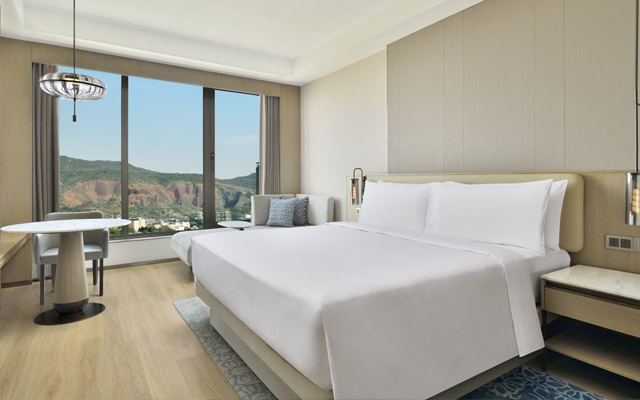
Guests can choose from Deluxe, Premier Loft, or Family Suite accommodation, with select rooms boasting separate living and dining areas, along with balconies.
The recent release of the World Economic Forum’s (WEF) latest Travel and Tourism Development Index saw Thailand tumble from 36th place to 47th, a significant blow to the government, which grew a meagre 1.5 per cent in 1Q2024.
The news has seen many within the travel and hospitality sector call for greater investment, financially and conceptually, in the industry.
Khao Yai is a destination that is relatively new to the international traveller; Haew Narok Waterfall in Khao Yai National Park, pictured
The WEF index is an analytical overview of a nation’s travel and tourism industry. Using sustainability, socioeconomic, and environmental factors, alongside stakeholder consultations, to inform its conclusions.
The index has five pillars. The first is the Business Environment, which looks at the extent to which a country’s policy environment is conducive to investment and enterprise. The next pillar, Safety and Security, considers security risks to locals, tourists and businesses. Health and Hygiene looks at this healthcare infrastructure and accessibility to treatments.
The Human Resources and Labour Market pillar monitors workforce skill levels, worker health and safety, pay rates, and equality in the workplace. The final pillar is ICT Readiness, which analyses the access and utility of information and communication technology infrastructure and digital services.
The WEF index’s findings pose a challenge to the Thai government’s tourism initiatives. Despite their efforts to streamline visa processes and promote the country’s travel product, the index’s results underscore the need for more substantial improvements.
Sandy Liw, general manager of InterContinental Khao Yai Resort, believes that improved infrastructure across the country, especially in less well-known locations, is key.
“The government may want to consider upgrading and expanding transportation infrastructure, including airports, roads, and public transit systems, to improve accessibility and convenience for tourists. This is especially important for remote areas like Khao Yai, which is such a beautiful destination and relatively new to the international traveller,” noted Liw.
“Completing the new highway early or introducing a high-speed train could significantly enhance access to such locations. Additionally, providing investment incentives in tourism infrastructure and services, particularly in underdeveloped areas, could be beneficial.”
For Sukamal Mondal, area general manager for Amari Bangkok and Shama Properties Bangkok at Onyx Hospitality Group, the index’s less-than-favourable results are an opportunity to improve.
He said: “The drop in Thailand’s ranking is certainly a matter of concern. But, we see this (report) as a call to action to enhance our collective efforts in improving the country’s tourism appeal. While it’s a setback, it also presents an opportunity for stakeholders to collaborate and innovate to regain our standing.”
However, Mondal cited the need for more funding at the ground level to address fundamental issues, stating that investment in upgrading transportation networks and modernising accommodation facilities is “essential”.
Mondal also called for more effective public/private partnerships to solve ongoing problems. Collaboration between the government and private sector can foster innovative solutions and ensure better resource utilisation. Additionally, focusing on sustainability and safety in tourism practices will not only draw more tourists but also enhance their overall experience. He added: “By addressing these areas collectively, we can work towards improving Thailand’s position in global tourism rankings.”
Anne Arrowsmith, general manager at 137 Pillars House Chiang Mai, also suggests looking past the obvious tourist centres to help reverse the issues raised in the WEF index.
“Regional tourism requires a bigger spotlight and a broader strategic approach, especially with respect to increased and more geographically diverse international flight arrivals. Chiang Mai is a prime example. Here, we have a surge in hotel supply while inbound flights have yet to attain pre-Covid levels. Initiatives are needed to attract key airline partners from the Middle East, India and beyond.”
Arrowsmith also explained how big international events will raise Thailand’s profile: “It would be good for the country to secure key sporting events to gain broader appeal. Look what F1 did for Singapore and how Saudi Arabia is investing heavily in elevating its appeal through golf and tennis events.”
Indonesian tourism stakeholders should take steps to diversify products and markets, improve connectivity, develop customer experiences, and embrace digital technology to ensure tourism development and the attainment of sustainable development goals, said Pahala Mansury, vice minister of foreign affairs in his keynote at the opening of the 10th Bali and Beyond Travel Fair (BBTF) 2024).
Pahala said “tourism is a sector that requires constant innovation” and explained that diversification should occur in both destination and target market development.
Pahala: travel is an opportunity for people to connect with the destination on an emotional level and to focus on cultural understanding and nature
“Diversification is key to achieving greater competitiveness as well as enhancing adaptability and resilience,” he added.
While the country is developing five super-priority destinations – Lake Toba, Borobudur Temple Mandalika Labuan Bajo, and Likupang, there remain many more regions in Indonesia with tourism potential but have yet been fully explored, according to Pahala.
In terms of diversifying the customer base, he found it crucial for Indonesian tourism players to look beyond traditional top markets like Malaysia, Australia, Singapore, and China; they should start tapping others like South and Central Asia, Eastern Europe, and Central and South America.
“To this end, travel fairs and promotions such as BBTF are particularly important,” he remarked.
Indonesia’s tourism progress is supported by ambitious efforts to improve connectivity. The country has developed 50 airports in the last decade, and is in the process of building the Bali Maritime Tourism Hub that will begin operations in 2025.
“The Bali Maritime Tourism Hub will be an anchor to develop tourism connectivity in Indonesia, both for domestic and international routes,” he said.
He also noted that for the majority of tourists, travel was an opportunity to connect with the destination “on an emotional level” and to focus on “cultural understanding and nature”.
“They are more sustainably inclined now. (As such), developing tourism to cater to these needs is key,” he said. A good example of such efforts is the development of Desa Wisata (tourism villages), which offer life-enriching experiences for visitors.
Attention to digital transformation is another important focus, so as to enhance customer experiences, improve operational efficiencies, and support sustainable practices.
He noted that Indonesia is focusing on the development of a digital ecosystem to support the tourism industry. The ecosystem comprises a 5G network and fibre optics, social media platforms, digital payment systems, workers familiar with technology, and more. Such initiatives call for multi-sector collaboration and “significant investment from domestic and international private sectors”.
During this ongoing super peak summer season, the travel trade in Malaysia has observed that not only is the Indian traveller demographic generally skewing younger, but demand is also evolving.
Inbound agents reported that travellers this summer are in their 30s, 40s and 50s, with some are travelling to Malaysia with their young children. This contrasts with pre-pandemic times, when travellers were predominantly middle-aged and seniors.
More Indian travellers are looking for adventurous itineraries, such as visiting Taman Negara National Park, pictured
Arokia Das Anthony, executive director of Essence of Asia, commented that many leisure Indian travellers are demanding for more activities in their programmes, and that they do not want more free and easy time.
“We are getting more requests for soft adventure programmes such as visiting Taman Negara National Park or experiencing Mossy Forest at Cameron Highlands,” he said, adding that Indian travellers are seeking more in-depth experiences, such as if they were travelling with young children, they would request for educational experiences like mangrove tours, or even a stop at the Geopark Discovery Centre when visiting Langkawi.
Zahira Tahir, founder and CEO of Universal Holidays, observed that the younger set of Indian travellers were more willing to spend on quality experiences.
“They book four- and five-star hotels, opt for private tours and are willing to try the local food and non-Indian cuisine as compared to the older generation who would stick to Indian cuisine, even while on holiday. I recently had guests who booked Marini’s on 57 (an Italian restaurant known for its panoramic city views) and Nobu Kuala Lumpur (a celebrity chef restaurant),” she shared.
Zulkifli Rahman, director of sales and marketing at The Ritz-Carlton, Langkawi, noted that younger Indian travellers were willing to splurge on luxury accommodation throughout their trip.
He elaborated: “In the past, travellers from India were generally older and they used to split their stay between two accommodation of different star categories, reserving the last night or two in a luxury hotel such as ours. Now, we are seeing them spend their entire stay in Langkawi at our hotel.”
Asia is both a vital source market, and an increasingly popular destination among Norwegian Cruise Line’s (NCL) global clientele, and is making waves in the region with its strategic focus on the fly-cruise market.
During a recent visit to Singapore, Ben Angell, NCL’s vice president and managing director, shared with TTG Asia: “We are primarily focused on attracting guests from Asia who wish to travel overseas to cruise with us in destinations like Europe, Alaska, or Hawaii. We’re different compared to our competitors in this part of the world who are focused on deploying a ship in Asia with itineraries built for Asians.”
From left: NCL’s Ben Angell and Damian Borg; photo by Rachel AJ Lee
Typically, most Asian guests fly to Europe, sail for seven to 10 nights with NCL, before returning to Asia, but there is much room for this sector to grow. As such, during his visit to Singapore, Angell made it a point to meet with the travel trade, to share with them the benefits of NCL’s fly-cruise model.
“We believe we’ve got the best value proposition, and are confident in the quality of our product experience. This value (of how cruises can measure up to a land tour) can be measured very clearly when broken down, but not every travel agency has the time to do that,” said Angell.
To facilitate this, NCL has developed tools for their travel agent partners, and urges them to use those tools to help them win more business.
Damian Borg, director of sales strategy and operations – Asia Pacific, NCL, added: “We want our travel agents to also bring cruising into their conversations with their customers. For example, if their customer is thinking of, say four nights in Venice, and four nights in Rome, the agent can share with them the benefits of cruising so that they can enjoy both countries conveniently and comfortably.”
Aside from wanting to “be famous” for its fly-cruise offering, Angell also stressed the company’s “interest in Asia as a destination”.
In May 2024, NCL announced that it will be deploying 24 new port-intensive cruises across Asia, which amounts to a total of 85 Asia-Pacific voyages across Norwegian Spirit, Norwegian Sun, and Norwegian Sky. The itineraries from September 2024 through to March 2026, have been “selling very well” both among its global clientele, and “Asian travellers who prefer to cruise closer to home”, Angell pointed out.
During the Asia season, NCL will ensure an average of 10 hours in every port and 40 overnight stays, offering guests a deeper immersion in local cultures, added Borg. When planning itineraries, NCL also ensures there is a mix of lesser-known boutique ports, alongside landmark and bucket list destinations.
According to Angell, cruising only represents one per cent of international holidays globally, meaning that all cruise lines have a “huge opportunity to tap on”.
Looking ahead, NCL will have eight new ships joining the fleet by 2036, which comprises four premium class ships, and the introduction of a new, not-yet-disclosed class.
Angell shared: “This is going to lead to some really exciting developments for NCL as we decide where we want to deploy those ships, and till then, we’ll continue to work with our partners to watch this recovery continue to gain momentum.”
Novotel has entered an international partnership with World Wide Fund for Nature (WWF) to champion the protection and restoration of the ocean through science-based action and conservation projects.
Under the three-year agreement, from 2024 to 2027, WWF France will provide technical expertise to Novotel, helping its 580 hotels worldwide to have a positive impact on the ocean.
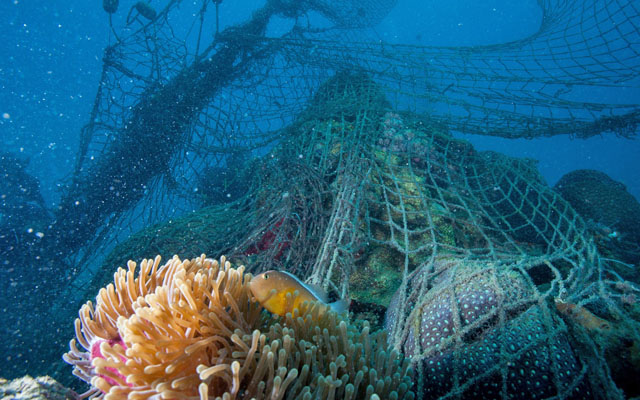
The removal of lost/discarded fishing gear, known as ghost gear, is one of the WWF ocean-related conservation projects that Novotel will sponsor
Novotel will build a three-year science-based action plan, rooted in three of the United Nations’ priority ocean-related actions, namely reducing marine pollution and ocean acidification, particularly from land-based activities; fighting overfishing and promoting sustainable fishing models; and increasing scientific knowledge and research for ocean health.
The WWF partnership comprises four main objectives – work on sustainable seafood policies and supply chains for Novotel hotels and restaurants; raise guests’ and employees’ awareness of the importance of the world’s oceans; advocate for ocean preservation to inspire industry and policy makers; and preserve and restore marine biodiversity through support of five WWF flagship projects around the world.
The partnership will also see Novotel sponsoring several critical WWF ocean-related conservation projects across the world, including the protection of Posidonia, an endemic flowering plant of the Mediterranean; the identification and removal of ghost gear, which are lost, abandoned and otherwise discarded fishing gear; supporting the WWF France’s Blue Panda boat, which sails across the Mediterranean carrying out work including scientific dives, protecting endangered species of rays and sharks, and more; as well as tracking and tracing marine turtles in Asia-Pacific, and protecting the sea turtles of the Western Atlantic.
“There is a deep imbalance in the way the ocean is treated. Globally, over-exploitation and pollution are depleting the ocean’s resources, while only a tiny fraction of climate finance is allocated to its preservation. The ocean’s health affects us all and our collective actions have a profound impact. We will rebalance how we engage with it, consume its resources, and invest in its protection and restoration,” commented Karelle Lamouche, chief commercial officer, premium, midscale & economy division, Accor, Novotel’s parent group.
Yann Laurans, conservation director, WWF France, said: “WWF aims to restore ocean health for the benefit of people and nature. The oceans are an essential resource of biodiversity that must be protected. We are confident our world-renowned technical and scientific expertise will help Novotel drive operational change for the greater good of their business and the ocean”.
Accor also has an established track record of developing sustainable solutions and innovations in the maritime sector, such as supporting Energy Observer since 2017 and its recent partnership with the Fondation de la Mer in 2022 to adopt the Ocean Framework.
Choice Hotels Asia-Pacific, in conjunction with Choice Hotels Japan, has welcomed 22 new properties under the group’s flagship Comfort brand. The new additions, signed under a management agreement with Hoshino Resorts, extends Choice Hotels Japan’s portfolio to 96 in key destinations and are strategically situated to complement the locations of existing hotels.
These new properties include Comfort Inn Shiojiri Kita Inter, Comfort Inn Sana Fujioka Inter, Comfort Inn Suwa Inter, Comfort Inn Toyokawa Inter, Comfort Inn Tosu, Comfort Inn Chiba Hamano, Comfort Inn Kumamoto Miyukifueda, Comfort Inn Utsunomiya Kanuma, Comfort Inn Fukui, Comfort Inn Fukushima Nishi Inter, Comfort Inn Niigata Chuo Inter, Comfort Inn Nagasaki Airport, Comfort Inn Hitachinaka, Comfort Inn Tsuchiura Ami, Comfort Inn Kofu Isawa, Comfort Inn Zentsuji Inter, Comfort Inn Munakata, Comfort Inn Ichinoseki Inter, Comfort Inn Karuizawa, Comfort Inn Himeji Yumesakibashi, Comfort Inn Kurashiki Mizushima, and Comfort Inn Kagoshima Taniyama.
Choice Hotels has added 22 new properties under its Comfort brand; Comfort Inn Kagoshima Taniyama, pictured
With domestic and inbound demand at all-time highs, president and director of Choice Hotels Japan Takeya Muraki is pleased to extend the group’s presence in key locations for business and leisure guests.
He said: “We have more guests than ever seeking accommodation options across Japan and we’re confident these new additions establish us as the brand of choice for travellers seeking reliable, value for money accommodation.”
La Quinta by Wyndham Parnell Auckland, New Zealand
The 116-key La Quinta by Wyndham Parnell Auckland is nestled in the city’s heart with access to some of Auckland’s top attractions, including the Auckland Domain, Auckland Museum, Auckland Art Gallery, Spark Arena, and Commercial Bay.
Facilities include a fitness centre, restaurant, lounge area, and event venues.
Pan Pacific Jakarta
Pan Pacific Jakarta, Indonesia
Pan Pacific Jakarta has launched as the tallest luxury hotel in Jakarta. Located in Thamrin Nine’s iconic Luminary Tower, the hotel’s 158 rooms and suites are spread across levels 71 to 90. The hotel features a Japanese restaurant, rooftop bar, indoor pool, gym and club lounge.
For easy access throughout the city, guests can enjoy seamless connectivity to the city’s modern MRT, LRT, and Commuter Lines, including a nearby Airport Train service that offers a fuss-free route to and from Soekarno-Hatta International Airport.
The Royal Park Hotel Ginza 6-chome
The Royal Park Hotel Ginza 6-chome, Japan
The Royal Park Hotel Ginza 6-chome is located in the centre of Tokyo, and offers accommodation, a restaurant, bar, communal bath area, and luggage storage space.
Nearby the hotel are attractions such as Ichibabashi Park, Tsukiji Outer Market, Nihon Tenji Seitei no Chi, local temples and shrines like Tsukiji Honganji, and traditional performances of Kabuki.
There are two metro stations within easy access – Ginza Station and Higashi-Ginza Station – and the nearest airport is Tokyo Haneda Airport, just 15 km from the hotel.
Navi Mumbai Marriott Hotel
Navi Mumbai Marriott Hotel, India
Situated on the bustling Thane Belapur Road, the Navi Mumbai Marriott Hotel is 26 km from the Chhatrapati Shivaji Maharaj International Airport, and 12 km from the upcoming DB Patil International Airport.
The hotel features two restaurants, bar, club lounge, rooftop pool, spa, fitness centre and meeting spaces.
TFE Hotels has announced several key hotel general manager appointments across its Adina, Vibe and Travelodge network in Australia and New Zealand.
Having been with TFE Hotels for 15 years, Shaarn Letele is the new hotel general manager of the soon-to-be-refurbished Adina Apartment Hotel Sydney Darling Harbour.
From left: Annabell Javinez, Shaarn Letele, and Frances Ryall
Frances Ryall joins TFE Hotels fresh from a stint with IHG, where she was operations manager of Crowne Plaza Coogee. She will head as hotel general manager at Vibe North Sydney.
Meanwhile, Arthur Rojas, who started his career with TFE in 2011, has been named cluster general manager of Travelodge Melbourne Docklands and Adina Apartment Hotel Melbourne Southbank.
In Auckland, New Zealand, Annabell Javinez takes on the role as general manager of Travelodge Hotel Auckland Wynyard Quarter, while Suzanne Pentecost has been appointed general manager of the 164-key Adina Apartment Hotel Auckland Britomart.
PATA’s Navigating the Path to Tourism Recovery webinar on June 6 revealed that new consumer preferences and habits have emerged in 1H2024 in Asia-Pacific, a tourism sector recovering from the pandemic years in an uneven manner.
The post-Covid tourism surge from 2022 was initially powered by more affluent tourists seeking relaxation amid nature, user convenience, sustainable and authentic local tourism experiences, all enabled by heightened digitisation of travel.
Younger travellers seek out personalised, authentic local experiences
Travel experts convened at the webinar said those trends have since evolved and that megatrends such as value for money, seamless booking and payments, and travel that aligns more to consumer values are now the hallmarks of post-lockdown tourism in the region.
Caroline Bremner, senior head of travel research at Euromonitor International, stated destinations that deliver safety, relaxation, value, good quality food and drink and access to natural attractions would continue to do well. She noted that younger (Gen Z) travellers preferred personalised, authentic local experiences, with price not so much of a consideration, whereas the older baby boomers seek value in their travels.
Free cancellations, easy digital payments, reliable user reviews, free upgrades and personalised recommendations (especially from family or friends), turn lookers to bookers, said Bremner.
However, tourism experts addressing the webinar said that Chinese outbound tourism was still lagging, dampening tourism performance in destinations across Asia-Pacific. Indeed, China’s neighbouring destinations such as Japan, South Korea, Hong Kong, Vietnam and Macau may not fully recover until the end of 2026 due to Chinese travellers opting to stay home or travel domestically instead of abroad.
Destinations such as India and Thailand which have all but recovered – or in Singapore’s case, exceeded – their high point 2019 tourism arrival levels did so by attracting tourists from markets such as Australia, Europe and the US to compensate for stay-away Chinese and Japanese.
China as a destination has its challenges too. Anyu Liu of Hong Kong Polytechnic University, revealed that international tourist arrivals into China are currently only around 80 per cent of 2019 levels, and may only return to around 96 per cent by the end of 2026. Liu added that inflation, labour supply challenges and regional conflicts were dampening recovery.
Addressing the issues raised by the webinar around the region as a whole, PATA CEO Noor Ahmad Hamid remarked that tourism in Asia-Pacific could be enhanced by air capacity improvements, better land-based regional connectivity, improved training to attract and retain skilled personnel, and an easing of visa restrictions.
Artificial intelligence in travel
Looking at a quickly-arriving travel tech future, the webinar speakers noted that artificial intelligence (AI) was a big concern as it could be manipulated to perpetuate bias and misinformation, especially in travel marketing. AI needs to be used responsibly and carefully as a travel enabler, said Bremner.
Therefore, it is necessary to keep destination information honest and up to date as AI bots perpetually scrape the internet for publicly available data.
The speakers also noted that AI was already being used to suggest travel itineraries and to train hospitality staff in educational settings.
As for whether AI bots could replace tourism forecasters in universities, Liu shared that they conducted internal tests to see if ChatGPT could generate more accurate forecasts. “So far we’re safe,” he quipped.
PATA will release its mid-year tourism forecast reports on 39 Asia-Pacific destinations on June 25.
















Indonesian tourism stakeholders should take steps to diversify products and markets, improve connectivity, develop customer experiences, and embrace digital technology to ensure tourism development and the attainment of sustainable development goals, said Pahala Mansury, vice minister of foreign affairs in his keynote at the opening of the 10th Bali and Beyond Travel Fair (BBTF) 2024).
Pahala said “tourism is a sector that requires constant innovation” and explained that diversification should occur in both destination and target market development.
“Diversification is key to achieving greater competitiveness as well as enhancing adaptability and resilience,” he added.
While the country is developing five super-priority destinations – Lake Toba, Borobudur Temple Mandalika Labuan Bajo, and Likupang, there remain many more regions in Indonesia with tourism potential but have yet been fully explored, according to Pahala.
In terms of diversifying the customer base, he found it crucial for Indonesian tourism players to look beyond traditional top markets like Malaysia, Australia, Singapore, and China; they should start tapping others like South and Central Asia, Eastern Europe, and Central and South America.
“To this end, travel fairs and promotions such as BBTF are particularly important,” he remarked.
Indonesia’s tourism progress is supported by ambitious efforts to improve connectivity. The country has developed 50 airports in the last decade, and is in the process of building the Bali Maritime Tourism Hub that will begin operations in 2025.
“The Bali Maritime Tourism Hub will be an anchor to develop tourism connectivity in Indonesia, both for domestic and international routes,” he said.
He also noted that for the majority of tourists, travel was an opportunity to connect with the destination “on an emotional level” and to focus on “cultural understanding and nature”.
“They are more sustainably inclined now. (As such), developing tourism to cater to these needs is key,” he said. A good example of such efforts is the development of Desa Wisata (tourism villages), which offer life-enriching experiences for visitors.
Attention to digital transformation is another important focus, so as to enhance customer experiences, improve operational efficiencies, and support sustainable practices.
He noted that Indonesia is focusing on the development of a digital ecosystem to support the tourism industry. The ecosystem comprises a 5G network and fibre optics, social media platforms, digital payment systems, workers familiar with technology, and more. Such initiatives call for multi-sector collaboration and “significant investment from domestic and international private sectors”.