TTG Asia
Asia/Singapore Wednesday, 14th January 2026
Page 2666

JIA Hong Kong rebranded as J Plus Boutique Hotel

0

CSI Properties, the parent company of luxury lifestyle residential developer Couture Homes, has taken over the reins and re-launched JIA Hong Kong as J Plus Boutique Hotel, effective this May.

Located in Hong Kong’s Causeway Bay, the 56-key property, which marked French design guru Philippe Starck’s hospitality design debut in Asia, will maintain its focus as a chic ‘home away from home’ for fashionable travellers.

Vivian Chau, general manager of CSI Properties, said: “Our vision is to embrace the concept on which (JIA Hong Kong) was founded, and build a new brand that recognises the integrity with which the hotel holds.”

Among minor changes to the hotel: the top-floor penthouse has been converted into conference and fitness facilities.

Imberty to head Exotissimo Cambodia

0

gregoire-imberty-imberty-to-head-exotissimo-cambodia
Grégoire Imberty

GREGOIRE Imberty has been appointed general manager of Exotissimo Travel Cambodia, effective today.

Imberty, who has 11 years of professional experience in the travel industry, joins Exotissimo after a two-year personal sojourn through 35 countries, and following a three-year stint as managing director of Diethelm Travel Vietnam.

In his new role based in Phnom Penh, Imberty will be responsible for the strategic development and management of Exotissimo’s operations in Cambodia.

Hamish Keith, Exotissimo Travel Group COO said: “We are delighted to have Grégoire on board with Exotissimo Cambodia. His experience, passion for travel, industry knowledge and familiarity with working in South-east Asia will be invaluable, as we continue to grow and develop our operations in the region.”

Tiger Airways to launch Singapore-Colombo flights

0

IGER Airways will introduce thrice-weekly services between Singapore and Colombo starting May 31.

The Sri Lankan capital will be the low-cost carrier’s first destination in the country, and its seventh within South Asia.

Stewart Adams, managing director of Tiger Airways Singapore said: “Colombo is an international gateway to many charming tourist spots in Sri Lanka such as its pristine beaches Beruwala and Unawatuna, and UNESCO World Heritage Sites Polonnaruwa and Kandy.”

“The direct service to Colombo will not only enhance connectivity between the two island nations, but will also provide Sri Lankans residing in South-east Asia an added incentive to visit their family and friends in Sri Lanka more often.”

Promotional fares to Colombo are available from March 23 on a first-come-first served basis, with prices starting from S$138 (US$109) one-way (Singapore to Colombo), all-inclusive.

The promotional fares are valid for travel from May 31 to September 24, 2012.

Industry partnerships to headline STB’s new five-year plan

0

SINGAPORE travel trade stakeholders will have a greater say in shaping the country’s tourism future, as the Singapore Tourism Board (STB) deliberates how to distribute its S$905 million (US$716 million) industry development war chest over the next five years.

The hefty budget forms the second tranche of the Tourism Development Fund, which was established in 2005 with S$2 billion to support targets set for 2015.

Two-thirds of the fund injection, or S$640 million, will be pumped into seeding new tourism ventures and projects, while the rest will be channeled towards supporting tourism-related education and skill-upgrading initiatives.

Key segments earmarked by STB for advancement include cruise tourism, the arts and entertainment sector, and the cultivation of the travel consultant industry as a key enabler for overall tourism development.

Addressing the city-state’s tourism practitioners during this morning’s Tourism Industry Conference, second minister for trade and industry, S Iswaran, said: “STB’s strategy is to help local travel (experts) with established outbound businesses to grow inbound traffic, (and) attract global companies to set up innovative inbound operations here that draw traffic into Singapore and the region.”

Your partnership in this next phase of development is crucial. So even as we firm up the individual funding schemes, we want to hear from you on how we can make even better use of these monies.”

When asked how STB would attempt to establish closer ties with local inbound operators, considering the latter’s concern over the NTO’s perceived lack of support, the bureau’s chief executive, Aw Kah Peng, insisted that consultative meetings with different segments of the trade were already taking place on a daily basis.

“We have been doing this (partnering the trade) all this while. We have been using this same message (over) the last four years,” she said. “It is just that the industry has gotten bigger, (so) there are more players and we have to reach out more.”

“If they (trade players) want to reach us, just call us. We are contactable. We are accessible. If they don’t call us, we will find them,” she added.

Reactions to STB’s renewed focus on engaging local industry stakeholders were varied, with some industry members dismissing the NTO’s efforts to work hand-in-hand as lip service.

“Although they do communicate with us from time to time, there has been no real inclusion in the broader scheme of things. In our view, they might have elaborate plans, but it might all just be rhetoric,” said Dennis Law, managing director, Star Holiday Mart.

CTC Travel’s vice president of channel distribution, Sylvia Tan, was less scathing about the NTO’s efforts. “Over the past year, we’ve had several meetings with STB. They have been working heavily on the ground, feeding us marketing insights that we’ve assimilated into our business strategy,” she said.

“STB is making a step in the right direction, and now it is up to the industry, and how receptive we are to new ideas to develop innovative products.”

Additional reporting by Linda Haden

Singapore’s compass points toward quality tourism

0

THE SINGAPORE Tourism Board (STB) has unveiled its new vision and strategy to seal Singapore’s position as a quality, world-class destination.

The brainchild of STB’s assistant chief executive Tony Lai, Tourism Compass 2020 was conceptualised over a period of two years, taking into account input from the Tourism Consultative Council, which comprises of representatives from the country’s business, lifestyle, entertainment, marketing, travel and hospitality industries.

The strategy is based on four key tenets – sustaining a pipeline of original tourism experiences; renewing and rejuvenating the tourism landscape; harnessing the collective energies of Asia; and strengthening industry competitiveness through capabilities upgrading.

The scheme also calls for closer collaboration and increased innovation among travel industry stakeholders, to transform Singapore into “a city that inspires”.

Oliver Chong, director of communications, STB said: “Ultimately, we want to encourage industry members to evolve from within, and to develop unique products that will drive sustainable tourism growth. It’s not about volume; it’s about creating a quality tourism product to draw quality tourists.”

“At the heart of this new direction are collaborative partnerships, with players both in and out of Singapore,” he added.

“STB wants to inspire the industry, and not just dole out ideas. We aim to encourage co-operation at all levels and across sectors, with STB acting as a facilitator of ideas.”

Sylvia Tan, vice president, channel distribution, CTC Travel was supportive of STB’s new tourism roadmap.

“This will preserve Singapore’s competitiveness for the long term against our regional rivals, who have more natural resources to tap into. There is no longer any point in just attracting vast numbers – I believe that it is more important to look at how to grow receipts,” she said.

Singapore tourism talent development gets much-needed boost

0

A TOTAL of S$265 million (US$210 million) will be invested by the Singapore Tourism Board (STB) to help the country’s tourism industry stakeholders build up their manpower capabilities.

The funds are part of STB’s S$905 million budget for industry development over the next five years, and will go towards supporting various tourism-related education and skill-upgrading initiatives.

According to S Iswaran, second minister of trade and industry, STB will build on basic tourism-related courses already offered by the Singapore Workforce Development Agency and Employment and Employability Institute, and ramp up advanced specialist training in key areas such as conference management and attractions operation.

“These are timely interventions that complement what we are doing on the hardware side with business travel and MICE infrastructure, such as the new MAX Atria (Singapore Expo Convention and Exhibition Centre’s new conference centre) and our pipeline of new attractions,” he said.

Neeta Lachmandas-Sakellariou, assistant chief executive, STB confirmed that the training programmes would “spread across all spectrums” of the industry. Tourism-related scholarships will also be rolled out to groom the next generation of industry leaders.

MICE practitioners whom TTG Asia e-Daily spoke to were of the opinion that much more effort was needed to boost talent development and retention, especially in light of increasing regional competition.

“We need new blood to replace the old guard,” said a local MICE educator. “We (Singapore) can build the best infrastructure, but so can other destinations. Where will we stand without soft skills? Malaysia is investing a lot into raising MICE knowledge and improving skills of professionals, not just providing entry-level certification courses.”

According to Andy Nazarechuk, president, Asia-Pacific Council of Hotel, Restaurant and Institutional Education, managerial-level tourism-related training programmes, as well as MICE-specific courses were lacking in Singapore.

“There are MICE training courses for professionals, but these are not easily accessible. MICE professionals are faced with time constraints – they have to work – and cannot afford to take two or three years to complete a course,” he said.

“They want courses that allow them to learn and interact with others from the trade, so they can network and share ideas.”

Royal Caribbean sails into the Philippines

0

THE 694-guest Azamara Quest, part of the Royal Caribbean International fleet, will make its maiden call in Manila on March 28 as part of a 17-day itinerary covering the Philippines, Borneo, Komodo Island and Bali.

Baron Travel Corporation, the official shore excursion agent for Azamara Club Cruises in the Philippines, will undertake shore excursions in Manila for the 550 passengers who boarded the ship in Hong Kong.

“We will offer them tour packages of Tagaytay and Pagsanjan, taking care of them for about one and half days,” said Baron Travel general manager inbound leisure, Aurora Tadeo.

Azamara Quest is scheduled to depart Manila at 13:00 on March 29, and will sail onward to Balikpapan (Borneo), Palopo (Sulawesi), Komodo Island, Benoa (Bali) and Semarang (Java), before ending in Singapore on April 12.

The ship will then embark the same day on a 12-day Spice Route programme to Phuket, the Andaman Islands, Cochin, Goa and finally, Mumbai.

Royal Caribbean’s 2,074-guest Legend of the Seas, operating from its homeport in Hong Kong, will also make its inaugural call in Boracay this October as part of an eight-day South-east Asian cruise. The ship will make a day’s stop in Manila en route to Boracay.

The Philippines Department of Tourism had earlier stated that cruise tourism development would be one of the priorities within the National Tourism Development Plan.

Marriott makes multiple appointments across China properties

0

edmund-ko-marriott-makes-multiple-appointments-across-china-propertiesallan-hao-marriott-makes-multiple-appointments-across-china-propertiesjessica-dong-marriott-makes-multiple-appointments-across-china-properties
Edmund Ko (left), Allan Hao and Jessica Dong

MARRIOTT International has made several appointments across its properties in Sanya, Beijing and Shanghai.

Edmund Ko has been appointed general manager of Sanya Marriott Resort & Spa. He joined the property as director of sales & marketing in 2007, and was subsequently promoted to resident manger in 2010. Ko has more than 26 years of experience in the hospitality industry, including 14 years with Marriott International.

Allan Hao has joined Beijing Marriott Hotel City Wall as director of sales & marketing. He was most recently director of marketing of Courtyard by Marriott Beijing Northeast. Hao started his career with Marriott International in 2007, joining the pre-opening team at JW Marriott Beijing Hotel.

Courtyard by Marriott Shanghai Puxi has appointed Jessica Dong as director of marketing. With more than 12 years of experience in the hospitality industry, Dong previously worked at JW Marriott Hotel Shanghai at Tomorrow Square and Suzhou Marriott Hotel.

WTTC appoints TUI’s Michael Frenzel as chairman

0

RZ_Imageteil_101105_Digitaldruck.indd
Michael Frenzel

MICHAEL Frenzel, chairman of the executive board at TUI AG, will take over as WTTC chairman from April 20, 2012.

Frenzel, who has been a member of the WTTC executive committee since 2000, will serve as chairman for a two-year term.

He replaces Geoffrey Kent, founder, chairman & CEO, Abercrombie & Kent, who was appointed WTTC chairman in 2007, and will continue to hold a role as a member of the executive committee.

Frenzel joined Preussag AG in 1988 and was appointed executive chairman in 1994. Under his leadership, the company was repositioned into Europe’s leading tourism group, TUI AG, which now comprises three main businesses – London-listed TUI Travel, TUI Hotels & Resorts, and TUI Cruises.

Have a peach and scoot off

0

WHEN low-cost carriers (LCCs) burst onto Asia’s aviation landscape about a decade ago, they were initially greeted with scepticism due to restrictive bilateral air service agreements, lack of secondary airports and low Internet and credit card penetration.

However, with creative collaboration (e.g. working with convenience stores and post offices to distribute tickets), liberalised air service agreements and improved infrastructure, budget air travel swiftly took hold in the region, with South-east Asia seeing the fiercest competition.

Kuala Lumpur’s Low Cost Carrier Terminal quickly reached its designated capacity and a huge replacement in Sepang – dubbed KLIA2 – with a handling capacity of 45 million passengers per annum (mppa), is due for completion in April 2013.

In Singapore, budget travellers accounted for 25.8 per cent of Changi Airport’s total passenger throughput in 2011; the existing Budget Terminal will soon make way for the 16-mppa Terminal 4, which is expected to be completed in 2017.

South-east Asia may be the most fertile LCC playing field but North Asia is fast making up for the lost ground. South Korea’s handful of budget carriers has ventured beyond its shores and Japan is the next place to watch with three LCCs – Peach Aviation, Air
Asia Japan and Jetstar Japan – making their debut services in 2012.

But questioning the growth potential of LCCs in high-cost Japan, Standard & Poor’s Asia-Pacific aviation editorial director, Shukor Yusof, said: “Rail travel remains a profitable and viable alternative because it’s point-to-point as compared to air travel, plus there are few secondary airports in Japan.”

The failed attempts of two longhaul LCC pioneers – Oasis Hong Kong Airlines and Viva Macau – have not dampened the enthusiasm or ambition of new players. Asia’s longhaul LCC forerunners, Jetstar Airways and AirAsia X, are now getting imminent competition from Scoot Airways, Cebu Pacific Air and Tokyo-based Skymark Airlines, which is entering the fray with its Airbus A380s and A330s.
 

23mar12_story2_1

Peach Aviation

Flightcode MM / APJ
Primary base Osaka Kansai Airport
Current fleet 3 A320s (leased)
On order 7 A320s (leased)
Current destinations Osaka, Fukuoka, Sapporo, Nagasaki and Kagoshima
Planned destinations Seoul-Incheon (starting May 8), Hong Kong (starting July 1), Taipei (starting September 30), Okinawa (second half of 2012)
Website www.flypeach.com

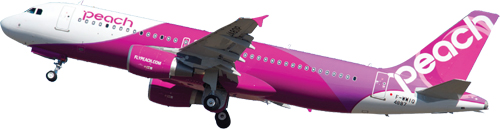
A joint venture between All Nippon Airways (ANA), Japan’s Innovation Network Corp and Hong Kong’s Far Eastern Aviation, Peach Aviation is Japan’s first homegrown LCC with a capitalisation of 15 billion yen (US$179 million).

The first of three Japan-based LCCs starting operation in 2012, Peach will be competing with 10 foreign LCCs already present in the Japanese market. Its fleet of A320s will operate on an 180-seat all-economy configuration, with 18 emergency-exit seats offering bigger legroom at a premium.

Standing for “Pan-Asia, Energetic, Affordable, Cute&Cool and Happy”, Peach promises to deliver a Japanese standard of service; cabin crew sports casual uniforms and planes are outfitted in white, pink and fuchsia. Aspiring to “bridge Japan and other Asian economies”, Peach will fly to regional destinations such as Seoul, Hong Kong and Taipei.

For the Osaka-Fukuoka route, Peach’s fares in early March were priced between 3,780 yen and 11,780 yen, considerably lower than tickets offered by Japan Airlines and ANA (between 20,000 yen and 21,900 yen).

A ticket on the Shinkansen high-speed train – whose highly-convenient city-to-city connections pose the greatest competition to Peach on the domestic front – costs about 14,000 yen between both cities.


Scoot Airways

Flightcode Yet to be announced
Primary base Singapore Changi Airport (T2)
Planned fleet 4 B777-200s for the initial phase but up to 14 aircraft by 2016
Confirmed destinations Sydney, Gold Coast (starting mid-2012)
Planned destinations China, North Asia, more Australian cities, India, the Middle East, Africa and Europe. North America is not of immediate priority but has not been discounted
Website www.flyscoot.com

Singapore Airlines (SIA) surprised the industry when it announced the launch of a new 3budget arm, Scoot Airways, in May 2011.

With a startup capital of S$280 million (US$221 million), Scoot will operate services of up to 10 hours from Singapore, beginning with daily flights to Sydney and the Gold Coast in Australia in June. Destinations in China and Japan are likely to be announced soon, while India, the Middle East, Africa and Europe are also on the radar.

Using B777-200s phased out of SIA’s fleet, Scoot planes will have denser configuration, with a business-class cabin offering 38-inch pitch and 22-inch wide seats. The economy-class layout has not been revealed but each row is expected to have 10 seats, an arrangement found even on such full-service carriers as Air France, Emirates and KLM.

Describing the airline as “quirky and memorable”, Scoot’s CEO, Campbell Wilson said that the carrier would not be solely dependent on Singapore’s small market size, and its target segment was different from that of the parent company.

Services such as baggage, meals, preferred seating, extra legroom, priority boarding and carriage of sports equipment have been unbundled but some of these will be packaged with a seat booking. Bookings are expected to open by end-March.

“Scoot is SIA’s answer to declining profits and an attempt to exploit the low-cost, mid-haul markets that are currently underserved,” said Shukor Yusof, Standard & Poor’s Asia-Pacific aviation editorial director. “Scoot is also a move to steal some of the thunder from Jetstar.”

Scoot’s main rivals, Jetstar Airways and Jetstar Asia Airways, will base a combined A300-200s and B787 Dreamliners fleet in Singapore for their growing Asia-Pacific network. Ironically, Scoot’s launch of Sydney as its first destination finally prodded the Malaysian authorities to grant AirAsia X the rights to fly to Sydney – a route the Malaysia-based LCC has unsuccessfully lobbied for in the past several years.
 

23mar12_story2_2

Cebu Pacific Air

Flightcode 5J / CEB
Primary bases Manila and Cebu
Current fleet 20 A320s, 10 A319s, 8 ATR72s
On order 7 A320s, 30 A321NEOs, 8 A330-300s (to be leased)
Current regional destinations 19 cities including Bangkok, Singapore, Taipei, Ho Chi Minh City, Hong Kong, Macau and Shanghai
Planned long-haul destinations Australia, India, Middle East, parts of Europe and the US
Website www.cebupacificair.com

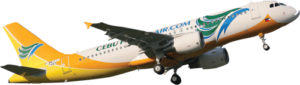
To replicate its dominant domestic position in the long-haul market, Cebu Pacific Air (CEB) recently signed a lease for four Airbus A330-300s, which will be configured with more than 400 seats in a single-class layout. These planes will commence operation in the third quarter of 2013 on flights to cities with a high concentration of migrant Filipino workers, such as Hawaii, Saudi Arabia and the United Arab Emirates.

CEB’s CEO, Lance Gokongwei, said: “CEB plans to charge fares that are 35 per cent lower than our rivals, which would particularly appeal to the estimated 11 million Filipinos working abroad.”

Europe, where over one million Filipino expats reside, is not a priority on CEB’s expansion plans due to the wide geographical spread of Filipinos, high fuel costs and an EU ban on Filipino airlines. The range of the A330s also meant that any destination beyond Istanbul and Moscow needs to be served with an intermediate stop, a similar situation affecting the US west coast cities such as San Francisco and Los Angeles.

With its extensive local network, CEB is the leading budget carrier in the Philippines, where LCC penetration is one of Asia-Pacific’s highest at 80 per cent. Other local budget carriers include AirPhil Express, Zest Air, AirAsia Philippines and SEAir, most of which also compete in the regional markets.
 

23mar12_story2_3

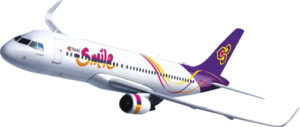
Thai Smile Air

Flightcode TG
Primary base Bangkok Suvarnabhumi Airport
Planned fleet 11 Airbus A320s by 2015
Planned domestic destinations Ubon Ratchathani, Udon Thani, Khon Kaen, Chiang Rai and Surat Thani
Planned international destinations Kaohsiung, Shenzhen, Macau, Surabaya, Singapore and Kuala Lumpur
Planned routes Phuket-Singapore, Phuket- Kuala Lumpur, Phuket-Chiang Mai

For a brief period, Thai Airways International (THAI) flirted with Singapore-based Tiger Airways to establish a joint-venture LCC, tentatively named Thai Tiger Airways. (THAI also owns Nok Air, a domestic LCC.) By end-2011, all talks of Thai Tiger fell through, and in its place emerged Thai Smile – renamed from Thai Wings – the new LCC entity of THAI.

Positioned as a hybrid LCC between the no-frills Nok Air and the premium THAI, Thai Smile offers a two-class service with a cost base similar to a budget airline.

With Suvarnabhumi Airport as its base, Thai Smile will fly to popular domestic destinations such as Chiang Rai and Surat Thani, and intends to compete with Thai AirAsia to erode the latter’s stronghold on the domestic LCC market.

The new carrier will commence operation on July 1 with a fleet of new 174-seat Airbus A320s, flying to regional cities such as Kaohsiung, Shenzhen, Macau and Surabaya. Other planned routes include flying from Phuket to Singapore, Kuala Lumpur and Chiang Mai. Thai Smile expects to have a fleet of 11 A320s by 2015.


Mandala Airlines

Flightcode RI
Primary bases Jakarta and Denpasar
Planned fleet 10 Airbus A320s\
Confirmed destinations Yet to be announced
Website Yet to be announced but potentially via www.tigerairways.com

A private LCC that suspended operations in January 2011 after falling on hard times, Mandala Airlines was revitalised when Tiger Airways paid a token one US dollar for a 33 per cent share.

With its Aircraft Operator’s Certificate now re-activated, the restructured airline will resume flights on April 4 on Airbus A320s provided by Tiger Airways, in addition to loans injected by Tiger and other Mandala stakeholders.

Mandala will compete with other Indonesian LCCs such as Lion Air, Citilink and Indonesia AirAsia in the domestic and regional markets. It also has to contend with second-tier carriers such as Sriwijaya Air and Batavia Air.

As of early-March, Mandala has not announced its destinations but they are likely to be located within a five-hour flight time from Jakarta and Denpasar.

This article was first published in TTG Asia, March 23 issue, on page 8. To read more, please view our digital edition or click here to subscribe.