

TTG Asia
Asia/Singapore Thursday, 15th January 2026
Page 2643

Jet Airways adds flights to Bangkok, Dubai

0

JET Airways will introduce a second daily service from Kolkata to Bangkok on May 10, and a fourth daily flight from Mumbai to Dubai on May 18.

Mamta Panjani, general manager-east, Mercury Travels Kolkata said: “The demand for Bangkok, particularly in the summer holiday season, is very high, and the additional flight does bring relief to the heavily overbooked flight capacity to Thailand.”

“We hope the flight addition will be permanent as there is sufficient demand to justify it.”

Meanwhile, the airline has ended its inventory impasse with MakeMyTrip, restoring bookings of its flights via the OTA.

Sudheer Raghavan, CCO, Jet Airways said: “We are pleased to announce the resumption of our full inventory on MakeMyTrip, and we look forward to a mutually beneficial association between the two companies.”

Gulf Air hikes services to South India

0

GULF Air has boosted its services between Chennai and Bahrain from nine to 12 flights per week.

Samer Majali, CEO, Gulf Air said: “India is one of our key markets, and a large number of (Indians) are employed or doing business in Bahrain, the Gulf and Middle East countries. Our Chennai route has seen a high load factor throughout the past year, which has encouraged us to introduce the extra flights.”

Majali added: “We have introduced split timings (on the Chennai-Bahrain route), with morning and night departures to provide connectivity for people travelling from South India (via Bahrain) to Europe, Africa, and Egypt, and to the US via our codeshare partner American Airlines.”

Padmini Narayanan, director, Akshaya India Chennai said: “Passenger demand to the Gulf and Europe has increased substantially over the past one year, and Gulf Air has (aided) tour operators by providing more flight options. Increased flight capacity (also) keeps increasing ticket costs in check.”

Qataris top Arab travel spending ladder

0

QATARIS are the highest overseas spenders among Arab travellers, according to a study on the outbound travel habits of Gulf Cooperation Council (GCC) nationals unveiled during Arabian Travel Market 2012.

The study, entitled ‘The Outbound GCC Travel Market – Unique Trends and Characteristics of GCC Nationals’, was based on interviews with 2,500 GCC nationals from Bahrain, Kuwait, Oman, Qatar, Saudi Arabia and the UAE.

Conducted over a one-year period from January to December 2011, the study revealed that Qataris spend the most on travel with an average expenditure of US$4,100 per day, followed by travellers from Saudi Arabia at US$3,360 and the UAE at US$3,280.

The breakdown of spend across all GCC nationalities includes 54 per cent allocated to airfares (across all classes of travel), 18 per cent on accommodation, nine per cent on dining, and five per cent on car rental. Compared to the rest of the world, GCC nationals spend 260 per cent more on airfare and 430 per cent more on accommodation, but 13 per cent less on car rental.

The class of travel is also important, with 40 per cent of Qataris interviewed opting for first class, and between 40 and 60 per cent of all GCC nationals booking business class.

Decision makers differ across the region, with the wife usually picking the destination in Bahrain, Kuwait and the UAE, and the male head of household having the final say in Oman, Qatar and Saudi Arabia.

According to the report, 53 per cent of survey respondents plan to embark on leisure trips to between two and five countries over the next 12 months, with Saudi nationals the most frequent travellers, followed by the UAE.

Cultural experiences and family focus are the two most important factors when planning travel, with 40 per cent of respondents looking at taking an extended three to four-week trip over the next 12 months.

View from the Top: Brett Tollman

0

Envisioning Japanese-language Insight Vacations departures, Chinese chartering his Uniworld cruises, Red Carnation hotels in Asia – Brett Tollman is taking a 40-year-old family-owned business centred on the Western market on a trip to Asia

may4_story2-brett-2
Brett Tollman
President & chief executive
The Travel Corporation, US

When was that moment when you said, okay, we’re going to seriously expand in Asia?
About two years ago. My father, who started the company, has always been a great visionary and ever since Jim O’Neill (chairman, Goldman Sachs Asset Management) coined the term BRIC, we have appreciated the growth coming out of these markets.

I took over as CEO two years ago and the timing kind of matched the after-effects of the global financial crisis and the coming together of a whole bunch of issues, trends and opportunities: a huge loss of capital in the US and Europe that we don’t believe is going to come back soon, coupled with a shift from Western-focused control and domination of the global economy to one that’s more East-focused today.

We do live in a globally connected market where no region is in the centre. We want to be a global player so I’ve made a personal commitment as CEO to help drive this. My father and cousin Gavin, who runs Trafalgar, came to Asia last September, having worked on this plan the prior year, and we went to Hong Kong, Singapore, Shanghai, Beijing and Tokyo.

What strengths will work for you on this Asian journey?
We’re very good listeners and learners. It’s important we’re not perceived the wrong way: We approach this market with great humility as Westerners coming in. We have to look, listen and learn what the market wants and we need to adapt. It’s not about being Asian-centric; it’s about being customer centric.

We’re in a niche business. Collectively, while we move quite a few people globally, our brands (individually) don’t move that many people, so we have the opportunity to understand what our niche is looking for and therefore customise our product.

What are your observations so far  on customising the product for Asians?
There are so many issues,  starting with local guides, getting hotels to work with us so they have breakfasts, TV programmes, collateral materials in those languages, understanding what each of the Asian markets looks for, adapting to their travel duration, which is seven to eight days, as opposed to, say, three to four weeks for Australians.

Visas are a real issue: getting 40 individuals ready to go on a scheduled set of dates then having half cancel because they can’t get a visa is a great financial exposure to the agency who’s booked them and to us.

Booking conditions are a big issue as well. Traditionally in Europe, we take a deposit at the time of booking, not refundable after seven days so we lock in our inventory, which is always very precious, then you have to pay in full before you travel. I understand that we probably have to adjust our deposit policies in some cases, but we are certainly going to hold the line on paying full before travel.

It’s not in reflection to any culture or any country but, as a business principle, if we are going to provide an outstanding set of services to someone, they have to pay us in advance, we’re not going to chase them and collect payment afterwards. That’s a core business philosophy and that’s why we’ve grown and we’re financially strong today.

I imagine getting consumer recognition for a brand like Trafalgar, which is difficult to pronounce in some markets, is also an issue?
Absolutely, but I’m hoping that by providing the marketing support and investment to our partners, and providing the training support to their frontline agents, it can be communicated to their customers.

You have 22 brands. Do you see a consolidation?
No, we’ve always been decentralised. Our founder, my father, has always believed you must keep the brands separate because if you homogenise them, you lose brand integrity, service and customers who are loyal to the clearly defined brands.

It’s fantastic leading a company that has great brands and great executives managing each one.

What about launching an Asian brand?
We have a history of doing start-ups, and if it is appropriate and we see growth out of these markets, we’d love to. At the moment, we’ll see if the Chinese will embrace our brands if we make them more Asian.

I know what we think we’re going to do today is probably very different from what we end up doing in a year and two from now – it’s a first step in a very long journey.

You took over as CEO two years ago – what would you like to be remembered for?
I’m passionate about sustainable tourism. I want to make sure we are giving back in all aspects: help protect the places and cultures we take tourists to on a yearly basis, develop a culture of great employees who together feel proud of the business, develop great brands that are driven by service, and to be known as a company of integrity with regards to the partners and suppliers we work with.

There’s incredible transparency in the world we live in today. As Google once said, if you lie, you die, so you’ve got to say what you mean and mean what you say.

So the legacy remains though the world has changed?
Yes, my father’s shoes are big ones to fill. I hope I can live up to his expectations and what he’s done in the last 40 years.

What’s it like growing up in a family in travel and tourism, and did you want to be in business?
I have always wanted it, ever since I was three or four years old and my parents built a hotel group in South Africa. I have always been passionate about serving people, about giving the opportunity to people to experience cultures, see new things. I’m a third-generation hotelier so that’s in my blood more than anything.

People in this business work 20 hours a day, six  to seven days a week, because they love it.

Do you put in those hours?
No, but some days it seems like it. I also know I have to balance it because I have a fantastic wife and three children, and I’m away from them a lot.

When on holiday, do you travel with your brands only?
Absolutely, though we don’t have our hotels in some places but we certainly will use one of our local guides. In June we’re gong on one of our Trafalgar family experiences and last August, we cruised on one of our ships in the south of France. I love our brands and I live our brands, so we do it when we can.

Do you get special treatment?
It’d be silly to say I don’t, but I always want to experience the product through the eyes of our customers and that’s not always possible. I always ask to stay in our smallest rooms, or our oldest, when I’m staying in one of our hotels because I want to see the quality, cleanliness and experience the size, facilities, etc.

Also, when you travel on a product such as Trafalgar or Insight, 80 per cent of what we deliver is not ours, it’s just our service, so you get to experience as a customer would – the coaches, the dining, excursions and so forth, which is so valuable on top of the mystery shopping we do through third parties.

Who inspires you?
My parents, our customers, my peers. My mum runs Red Carnation (Hotel Collection). Every year, she handpicks 4,000 Christmas gifts that she gives to every one of our employees and each year she keeps track of what she did the year before.

People inspire me all the time. We can be open to learning every day.

This article was first published in TTG Asia, May 4 issue, on page 7. To read more, please view our digital edition or click here to subscribe.
Saying ‘I do’ to destination weddings

0

It’s an auspicious year for Chinese nuptials, and tying the knot overseas is now in vogue 

may4_story1

may4_story1-singapore

WEDDINGS Holding a destination wedding is a rather new phenomenon for Singaporeans, but the trend is gaining traction as more couples eschew traditional large-scale weddings in favour of more intimate, personalised affairs, said local planners.

“With more couples striving to hold their weddings in unique and different settings (instead of) the standard ones proffered by hotels and restaurants in Singapore, there is certainly room for growth,” said Kim Tay, managing director, Wedding Concierge.

While the number of Singaporeans celebrating their weddings abroad is still relatively small, with wedding planners handling no more than five to 10 nuptials each year, various planners that TTG Asia spoke to observed that interest is markedly higher this year compared to 2010 and 2011.

“Enquiries about destination weddings have doubled for us so far this year as more couples, especially experienced travellers, are more willing to spend big to make their dream weddings a reality,” said Gordon Ang, owner and director of Wedding Matters. He added that the global economic slowdown had not dented demand in any way.

Olga Jastrebkova, owner of Guinone Weddings, remarked that the spike in demand for destination weddings could also be partly credited to the fact that more Singaporean couples now paid for their own weddings, and hence, were less obliged to “plan weddings dictated by their parents’ whims and desires, and were now free to have a wedding that they really want”.

However, Ang pointed out that only a fifth of destination wedding enquiries his firm received would translate into actual weddings, as some couples were put off by the huge outlay, which could range from S$30,000 (US$23,775) to S$50,000, depending on the venue, entertainment, catering and number of guests.

“There’s a misconception that weddings held abroad are less expensive than hosting one in Singapore. In fact, it can end up costing the same, but the prime difference is that the wedding will be organised to a couple’s exact requirements, and wedding parties are usually much smaller, comprising about 30 people or so versus 1,000 at traditional weddings in Singapore,” said Jastrebkova.

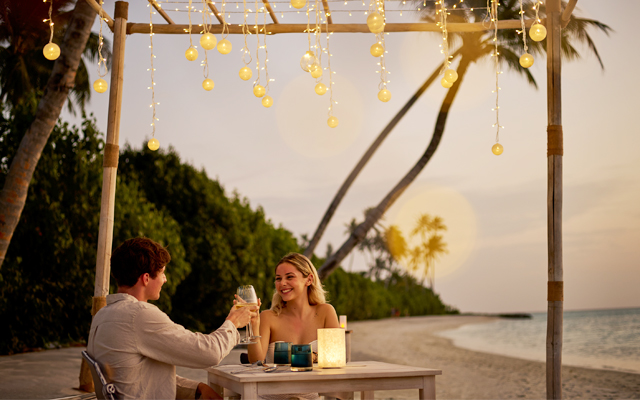
Bali, Phuket and the Maldives are the top destinations for tying the knot abroad for Singaporeans, while Taiwan, Malaysia and Sri Lanka are climbing the popularity stakes. Most couples tend to avoid international chains when holding a wedding abroad, instead opting for independent properties, particularly villas. Couples typically make accommodation and flight bookings themselves, with the wedding planner taking care of all other details.

It used to be more common for a Singaporean-foreigner couple to engage Singapore-based planners to organise a wedding overseas, but this profile is evolving. “A decade ago, couples consisting of two Singaporeans were wary (about marrying abroad), but now, with photo shoots taking place in far-flung destinations such as Australia and Greece, more are opening up to the idea of a destination wedding,” said Jastrebkova.

HONEYMOONS Europe still ranks top for Singaporean honeymooners. Steven Lee, managing director, Just Travel, which customises honeymoons for around 600 couples a year, said France, Italy and Switzerland were primary destinations Singaporean lovebirds usually visited as part of a multi-destination itinerary. Turkey, Sri Lanka and India are emerging honeymoon destinations. Packages generally cost around S$2,800 per person, and couples prefer three- to five-star properties, depending on the destination.

“The prime difference is that the (destination) wedding will be organised to a couple’s exact requirements, and wedding parties are usually much smaller.”

may4_story1-china

WEDDINGS Destination weddings are still a novel concept to the Chinese, who prefer to hold their weddings locally and seldom go overseas.

“The whole idea of holding a wedding outside of one’s hometown or city and flying guests overseas is not popular,” said Rick Xie, office manager, Country Holidays.

Overseas weddings, however, are not uncommon for wealthy Chinese families. Charles Wang, director of Royal Light Travel, said: “Guam has lots of white churches and the Pacific Islands Club is popular among young Chinese who want a themed wedding.” Last year, he organised four weddings in Guam.

Such wedding packages cost about RMB100,000 (US$15,863) each couple, who travel with an entourage of relatives and friends and book between 20 and 25 hotel rooms.

Another popular destination for weddings is Boracay, made famous by Mandarin singer Fish Leong who held her wedding there. “The young generation likes to follow such stars,” said Wang. It costs about RMB80,000 a couple to hold a wedding in Boracay.

HONEYMOONS Travelling abroad for honeymoons, likewise, has not taken off among Chinese newlyweds.

Xie said: “For Shanghainese, Sanya is still the number one honeymoon destination as it’s nearer to home, followed by Hangzhou for its beautiful environment and the lower cost. Yunnan is also popular, besides Phuket and Bali.”

VariArts Travel Group, CEO and founder, Lin Xu, lamented the lack of product variation for honeymoon packages in the Chinese market, which favours Europe as a honeymoon destination due to its romantic associations.

On the other hand, the growing availability of cheap flights and Chinese-speaking groundhandlers has upped the appeal of Asian destinations such as the Philippines, Cambodia and Malaysia. Beach resorts and urban luxury hotels are top choices in these countries.

Xu said: “People are spending more as their demands grow more sophisticated.” Prices vary greatly depending on destinations, but could reach six figures if extra services are requested, he added.

High-end consumers prefer a private tour with out-of-the-ordinary experiences, such as a castle stay in southern France, a candlelight dinner in a wild safari camp and a private yacht cruise. Such trips are often accompanied by local photographers.

“For Shanghainese, Sanya is still the number one honeymoon destination as it’s nearer to home.”

may4_story1-taiwan

WEDDINGS  The number of weddings held by Taiwanese is expected to dip in 2012, following a boom in marriages in 2011.

Last year was deemed doubly auspicious to get hitched in Taiwan: not only did it precede the ‘dragon year’, it also marked the Republic of China’s 100th founding anniversary, which, in Chinese belief, connotes enduring love. Some 165,327 Taiwanese couples tied the knot last year, a 19.1 per cent increase from 138,819 in 2010, based on Ministry of Interior statistics.

“The centennial (anniversary) was the real reason for the jump in marriages last year,” said Jackie Shen, executive vice president, Hsihung Travel. He downplayed the allure of a ‘dragon baby’ might have had in last year’s surge in marriages, as fertility rates have been plummeting in Taiwan, which has among the world’s lowest at 0.89.

And while travelling overseas for honeymoons may be the norm for Taiwanese, destination weddings remain a rarity. “Only celebrities can afford it,” said Antonio Liao, president, Phoenix Tours.

However, Guam tourism promoters are wooing Taiwanese couples with affordable hotel packages that include the (wedding) ceremony in a local chapel, said Vincent Lin, CEO, Star Travel. His company has booked Guam wedding parties of up to 10 pax.

HONEYMOONS With Taiwanese marrying later, couples have plenty of cash to blow on honeymoons. Europe is an easy sale, said Liao, as newlyweds “see honeymoons as a once-in-a-lifetime event and Europe is heavily promoted (in Taiwan)”.

Pauline Lu, head of Phoenix Tours’ European division, added that Italy (Rome, Florence and Venice) and France (Paris) were preferred by her clients last year.

In Asia, Bali and Boracay are the most popular, but this also depends on the personalities of couples, said Lin. “Hotels with spas are a big attraction, but in winter, that could be a hot spring resort in snowy Hokkaido or a South-east Asian island resort,” he added.

That said, Bali remains a perennial favourite for Taiwanese honeymooners, said Andy Yu, director of special interest tour department, Lion Travel Service. “Alila Villas Uluwatu, which opened in 2010, has been asked for most frequently since well-known Taiwanese celebrity (Aimee Sun) held her wedding ceremony there.”

may4_story1-hk

WEDDINGS More Hong Kong couples are expected to tie the knot in the ‘dragon year’, with wedding and event planners seeing a twofold increase in enquiries and confirmed bookings.

Sonya Yeung, creative director, Bliss Creations, said couples were starting wedding preparations much earlier, from a year to 18 months in advance, to secure venues and services on auspicious dates.

Most weddings of Hong Kongers are still held locally due to the sheer guest volume, as “many couples have large-scale weddings and a wedding abroad is logistically challenging,” she explained.

Kim Williams-Waaijer, chief wedding planner, FETE Hong Kong, pointed out that local couples were more open to having destination weddings though, especially for those who grew up in the West, and they were seeking out unconventional venues. She said: “Couples prefer uniqueness. One thing that’s important is the memory; the more unique, the better remembered.”

There is a growing interest in destination weddings, and couples are opting for exotic, tropical destinations such as Bali, Phuket and the Maldives, noted Yeung.

She said choices vary year to year, but Bali was a current favourite due to recent movies.

HONEYMOONS Katemagg Chau, director, Katemagg Event and Wedding, noticed that couples were increasingly planning their weddings in conjunction with their honeymoons.

She said: “Emerging locations such as Vietnam and Sanya are proving to be a draw among Hong Kong couples because of their proximity and value. With the massive resort development underway, especially in Sanya, couples are spoiled for choice.”

She observed that although honeymoon budgets were usually much bigger than holiday ones, in light of economic uncertainty, couples were budgeting and spending wisely.

This article was first published in TTG Asia, May 4 issue, on page 8. To read more, please view our digital edition or click here to subscribe.
Onyx promotes Kurdthip to group director of marketing comms

0

harris-kurdthip-onyx-promotes-kurdthip-to-group-director-of-marketing-comms
Harris Kurdthip

ONYX Hospitality Group has promoted Harris Kurdthip to group director of marketing communications.

In his new role, Harris is responsible for driving marketing and public relations activities for ONYX, its brands and properties.

He also assumes overall management of the group marketing service and Thailand communications teams at the company’s headquarters in Bangkok.

Harris worked with ONYX as director of public relations for over two years.

Before joining ONYX, he worked as an assistant PR manager with Sofitel Luxury Hotels & Resorts, as a marketing communications manager with Raffles International, and as a public relations manager with Minor International.

TUI China expands senior management team

0

rose-zhang-tui-china-expands-senior-management-teameva-ye-tui-china-expands-senior-management-team
Rose Zhang (left) and Eva Ye

TUI China has appointed Rose Zhang as COO and Eva Ye as commercial director, to help service new business opportunities that have arisen in connection with the company being awarded an outbound tour operators license.

In her new role, Zhang will oversee TUI China’s MICE business and government affairs, as well as formulate and execute overall strategy alongside company CEO, Marcel Schneider.

Zhang has previously held key management positions at China Youth Travel Service and China Travel Service.

Ye, who previously held senior management positions at GTA, Caissa and FCm Beijing, will be in charge of the outbound leisure department at TUI China.

Thongchai rejoins Plaza Athenee Bangkok

0

thongchai-rangsivuthisak-thongchai-rejoins-plaza-athenee-bangkok
Thongchai Rangsivuthisak

PLAZA Athénée, A Royal Méridien Hotel has appointed Thongchai Rangsivuthisak as assistant director of sales.

Thongchai rejoins the hotel after a year as senior sales manager – corporate at The Peninsula Bangkok, where he handled mainly banking, consultancy and government clients.

He previously held a similar position at Plaza Athénée Bangkok, A Royal Méridien Hotel, during which he focused on the pharmaceutical, manufacturing and F&B sectors.

Diethelm lashes out at ‘shortsighted’ Myanmar hotels

0

DIETHELM Travel Group, a pioneer tour operator in rising destination Myanmar, has lashed out at “shortsighted” hotels in the country which are reneging on contracts as supply and demand goes out of the kilter.

Diethelm CEO, John Watson, said some hotels were “tearing up their contracts and re-negotiating each booking – upwards”, given the current high level of demand for Myanmar from both the corporate and leisure sectors.

Inbound operators are unable to absorb the rate increases as they work on thin margins and rising costs, while overseas operators who supported Myanmar through the difficult years feel their loyalty is not being rewarded, he said.

Increasingly, hotels in Myanmar are also insisting on pre-payment of rooms for high season, which means significant changes to the current arrangement which is basically open credit, according to Watson.

“Inbound tour operators are hard-pressed to fund this investment from free cash flow, and will need to make back-to-back arrangements with overseas tour operators who send them business. All this leads to additional administration and cost burdens,” he explained.

Diethelm started operations in Myanmar in early 1996 and has offices in Yangon, Mandalay, Bagan and Inle with over 50 multilingual staff.

– Read the full interview in TTG Asia, May 18, 2012 issue

Panghegar grows condotel presence in West Java, Bali

0

PANGHEGAR Group, which owns the Grand Royal Panghegar Bandung, is expanding its portfolio with new condominium and apartment projects in Bandung, Garut and Bali.

Hilwan Saleh, director, Grand Royal Panghegar, said: “We successfully introduced the condotel concept in Bandung by launching a 300-unit condotel and 200-unit apartment at our (flagship property) Grand Royal Panghegar, and (are) now moving to develop the model in other areas.”

The 156-unit Panghegar Dago Resort & Spa within the Dago Golf Course in Bandung is currently under construction. The resort is scheduled to open in 2013.

Hilwan said: “The development of the resort, with spa and meeting facilities, is expected to revive the popularity of the golf course, which has been there for many years.”

Panghegar is also building a 150-unit property with a mini water park and spa in Cipanas, Garut, in West Java. In Bali, it is developing a 600-unit condotel and 100 villas in Pecatu, and a villa estate in Purnama, Sanur.



