Capella Hotel Group has made key executive appointments to strengthen its leadership across its properties in Asia and the Maldives.
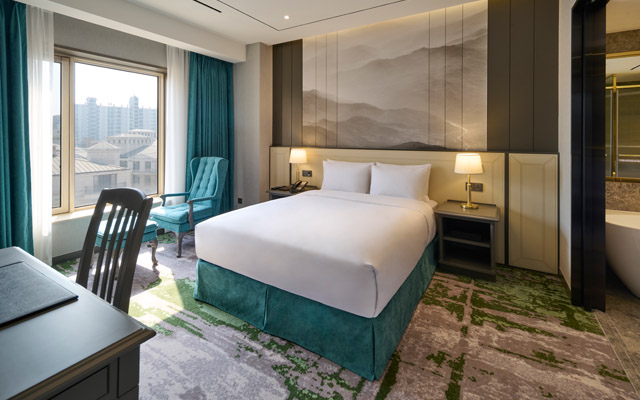
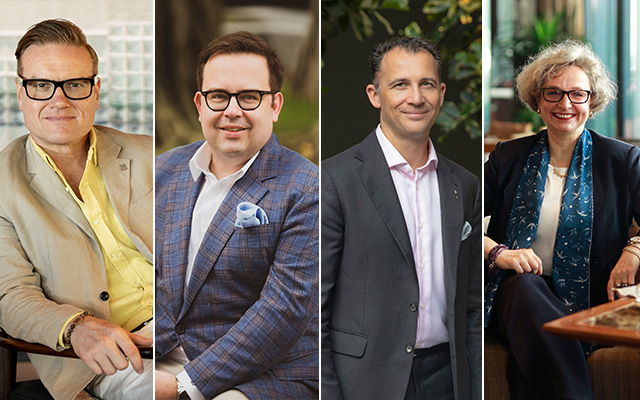
Anthony Gill, with over 20 years of experience, takes on the role of general manager at Patina Maldives, where he will lead the resort into a new era of transformative luxury.
From left: Anthony Gill, Dennis Laubenstein, Antonio Saponara and Hildegard Anzenberger
Dennis Laubenstein, a veteran of Capella, moves to Capella Taipei, set to open in 1Q2025, after successfully leading Capella Hanoi, including securing its first Michelin-starred restaurant.
Antonio Saponara will now oversee Capella Bangkok, following his term at Patina Maldives, while Hildegard Anzenberger joins Capella Hanoi from The Langham Hefei, bringing extensive international experience and a strong focus on staff development and sustainability.
The annual ASEAN Tourism Conference (ATC), to be held later this month in conjunction with the ASEAN Tourism Forum and ASEAN Travel Exchange (TRAVEX) in Johor, Malaysia, has lined up several influential travel and tourism industry leaders who will lead discussions on issues core to the business today and tomorrow. Sessions will focus on sustainability, the role of online travel agencies, video platforms, cross-regional tourism exchanges, AI, and more.
ATC 2025 will open on January 15 with the session, Charting Tourism for ASEAN: Trends Defining the Next Decade. It will be presented by Randy Durban, CEO, Global Sustainable Tourism Council.
From left: Global Sustainable Tourism Council’s Randy Durban, Asian Development Bank’s Jong Woo Kang, Malaysia Budget & Business Hotel Association’s Sri Ganesh Michiel, and Batu Batu’s Cher Chua-Lassalvy
This will be followed by Sustainability Pioneers: Malaysian SMEs Driving Change, with speakers Justine Vaz, executive director, The Habitat Foundation; Cher Chua-Lassalvy, co-founder and managing director, Batu Batu; and Wong Siew Te, CEO and founder, Bornean Sun Bear Conservation Centre.
Other prolific speakers and moderators include Jong Woo Kang, director for regional cooperation and integration, economic research and development impact department, Asian Development Bank; Sri Ganesh Michiel, national president, Malaysia Budget & Business Hotel Association; Amelia Peng I-Mei, head of brand partnerships Malaysia, TikTok; and Kingston Khoo, president, Eco-STEPS.
Commenting on ATC’s line-up, Eddy Krismeidi Soemawilaga, president of the ASEAN Tourism Association, more commonly known as ASEANTA, said: “After much thought, we’ve focused on topics that we believe are the most relevant to the ASEAN tourism industry – not only right now, in 2025, but also for the next decade. Technology and sustainability are going to be the two forces dominating the shape of the industry.”
He also told TTG Asia: “We’ve doubled down on those two topics in particular for ATC 2025, ensuring that there is not only a high-level discussion on them with inspirational content, but also practical workshops, with a session focusing on AI, as well as actionable steps to embark on sustainability – all the while, with a view to how SMEs, who are the backbone of our industry, can apply these.
“We hope that when the audience goes home, they are inspired to start taking steps on their sustainability journey, as well as feel more confident in trying out new techniques that they can use to harness the power of technologies.”
ATC 2025 will stretch across January 15 and 16, and will be held at Persada Johor International Convention Centre.
Programming for this year’s ATC is coordinated by Hannah Pearson, director of Pear Anderson, a research and sales representation tourism consultancy.
Sri Lanka is aiming to substantially increase tourist arrivals to three million in 2025, up from a target of 2.1 million in 2024, as the country emerges from a foreign debt crisis that began in 2022, an official has said.
Buddhika Hewawasam, chairman of the state-owned national tourism organisation Sri Lanka Tourism Development Authority, also announced the formation of a new National Tourism Commission. This commission will serve as the primary governing body for tourism and will bring together four state agencies currently responsible for tourism, including a hotel school.
Sri Lanka is targeting three million tourist arrivals in 2025 as the country emerges from its financial challenges; the Nine Arch Bridge in Sri Lanka, pictured
In addition to these changes, a Tourism Policy Formulation Council will be established, consisting of experts from both within and outside the industry. This council will focus on policy development and provide ongoing support for the sector.
Hewawasam, a newly appointed official following the government change after last month’s parliamentary elections, was speaking at the Sri Lanka Tourism Awards ceremony, which was revived after a five-year absence, in Colombo on December 27. Several awards were presented, including those for the best resort and best tourism services provider.
The government is targeting US$5 billion in tourism revenue, which will provide much-needed foreign exchange, by 2025. In 2023, revenue surged to US$2.1 billion, up from US$1.1 billion the previous year. From January to November 2024, revenue reached US$2.8 billion, compared to US$1.8 billion during the same period in 2023. Meanwhile, tourist arrivals from January to November 2024 totalled 1.8 million, up from 1.3 million during the same months in 2023. Sri Lanka is now targeting over 2 million arrivals for the year. The country’s key source markets are India, Russia, the UK, Germany, and China.
PATA CEO Noor Ahmad, chief guest at the awards ceremony, said Sri Lanka’s identity as a tourism destination is ingrained in its compelling legends and enduring legacy, adding that the country is home to epic tales, historical kingdoms, and colourful Buddhist festivals.
Sri Lanka’s economy was crippled by the double blows of the Covid-19 pandemic and an economic crisis, which severely impacted tourism, among other sectors. Forcing the country to seek financial assistance from the International Monetary Fund, the authorities have rescheduled foreign loans and international bond payments and Sri Lanka is now on the road to recovery.
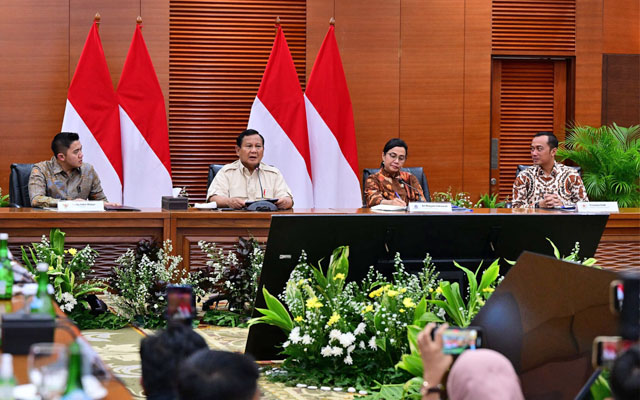
Indonesian president Prabowo Subianto has confirmed that the increased value-added tax (VAT) from 11 per cent to 12 per cent, effective from January 1, applies only to luxury goods and services.
Speaking at a press conference in Jakarta on New Year’s Eve, Prabowo explained that the VAT increment would only be be imposed on luxury goods (classified under the Sales Tax on Luxury Goods or StoLG category) and services, such as private jets, cruise ships, yachts, and luxurious houses.
Prabowo Subianto clarifies impact of VAT increment; photo by the Indonesian Cabinet Secretariat
He further clarified that VAT on non-StoLG goods and services would remain unchanged. Items that have been subject to 11 per cent VAT since 2022 will not be affected, while basic goods and services, which have been exempt from VAT, will continue to benefit from these tax exemptions.
Sri Mulyani Indrawati, Indonesia’s minister of finance, also explained: “Goods and services that have so far received VAT exemptions, such as staple foods, public transportation services, train tickets, ferry services, travel agency services, government and private medical health services, financial services, pension funds, and credit cards, will still receive zero per cent VAT.”
The government’s plan to raise the VAT from 11 per cent, which has been in place since 2022, to 12 per cent had previously raised concerns across various sectors, including the hospitality industry.
For example, the Indonesian Hotel and Restaurant Association (IHRA) had requested a review of the plan, arguing that a higher VAT would result in weaker earnings, particularly among hotels catering to lower- and middle-class consumer segments.
IHRA secretary general Maulana Yusran said: “Purchases of necessities are subject to VAT, and the VAT hike will increase operational costs. The impact could still be significant.”
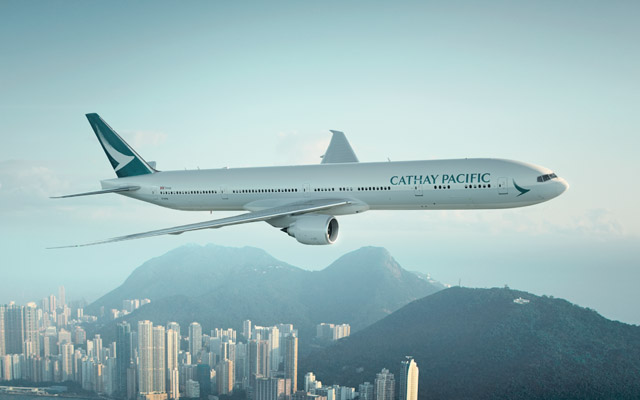
Travelport and Cathay Pacific have renewed their multi-source content distribution agreement and are collaborating on the integration of Cathay Pacific’s New Distribution Capability (NDC) content into Travelport+, with the launch expected in the coming months.
The multi-year agreement extends the partnership between the two companies, ensuring that travel agencies using Travelport+ have streamlined access to a wide range of content from Cathay Pacific. As the airline’s NDC content and servicing capabilities are gradually integrated into Travelport+, agents will be able to easily compare and book both NDC and non-NDC offers in one unified view.
Travelport and Cathay Pacific have renewed their multi-source content agreement to enhance distribution of airline content
Damian Hickey, global head of air partners at Travelport, said: “This extended multi-source content agreement reflects our commitment to providing travel agencies and their customers with a modern, effortless retailing experience when booking Cathay Pacific with Travelport+.”
“We look forward to taking this productive relationship to the next level enabling our business partners access to an even more comprehensive range of Cathay products in Travelport+ with unique NDC-sourced offers which they can use to curate products that best answer to their customers’ individual needs,” added Kinto Chan, general manager sales and distribution at Cathay Pacific.
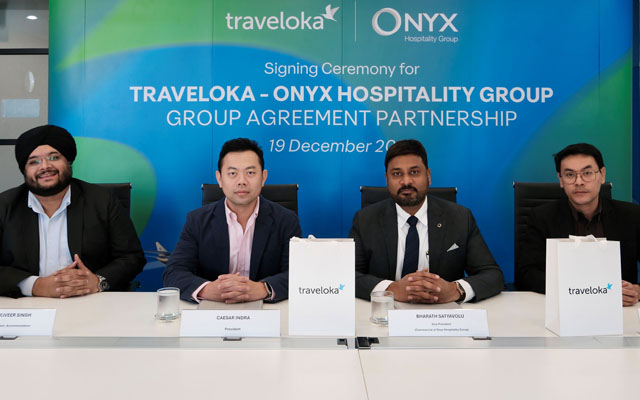
Traveloka has teamed up with Onyx Hospitality Group to strengthen collaboration, drive growth, enhance visibility for Onyx properties, and contribute to the continued success of the travel industry across the region.
This partnership also aligns with Onyx Hospitality Group’s growth objectives, targeting the management of over 50 hotels and residences by 2025 and 70 by 2028.
Traveloka has partnered with Onyx Hospitality Group to drive growth and expand its property portfolio in the region
Caesar Indra, president of Traveloka, commented that the collaboration “will enable us to enhance the travel journey for millions of users on our platform and create meaningful value for the region’s travel ecosystem”.
Bharath Satyavolu, vice president of commercial at Onyx Hospitality Group, said: “Traveloka’s extensive reach, innovative platform, and market leadership make it an ideal collaborator for Onyx Hospitality Group. This partnership allows us to connect with the growing online consumer base, delivering exceptional stays and seamless travel experiences. By combining Onyx’s tailored approach with Traveloka’s expertise, we are confident that this collaboration will drive significant results and serve as a powerful catalyst for growth, benefiting both parties and supporting the region’s tourism recovery.”
Location
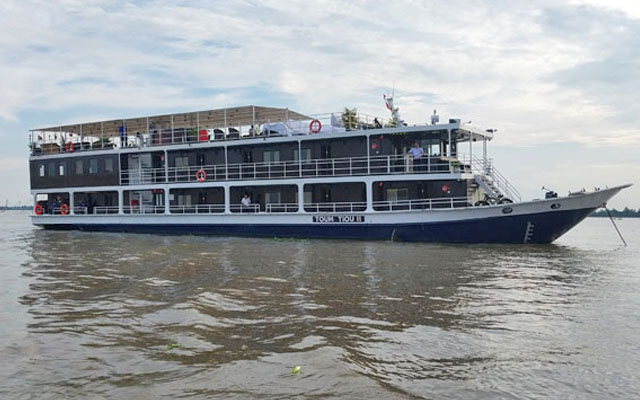
The six-day-five-night discovery tour on the 38-metre Toum Tiou II, operated by CF Mekong River Cruises by CroisiEurope, starts in the Cambodian capital of Phnom Penh and traverses the mighty River Mekong to Ho Chi Minh City in Vietnam, docking at riverine villages along the way.
Accommodation
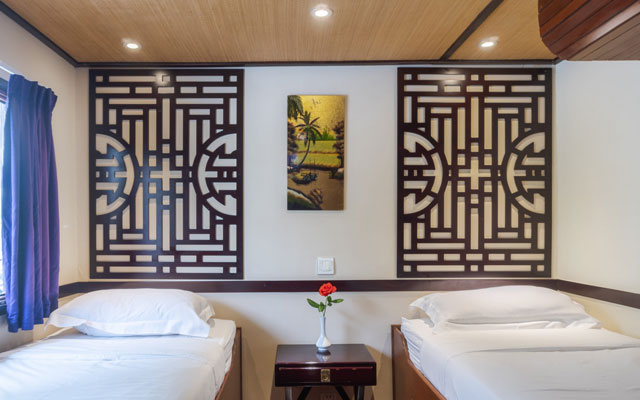
Each of the boats feature 14 cabins – with a maximum capacity of 28 pax – are fitted out with two single beds and a separate bathroom with a hot shower. The cabins are decked with Cambodian teak, hard wood and palm, giving it an Olde World vibe.
My cabin was on the lower deck, with a large window allowing me to relax on my bed and watch life on the banks of the Mekong pass by. Cleverly thought-out storage space, such as a drawer under the beds large enough to stash a suitcase, meant that the cosiness of the cabin was not a problem.
Amenities
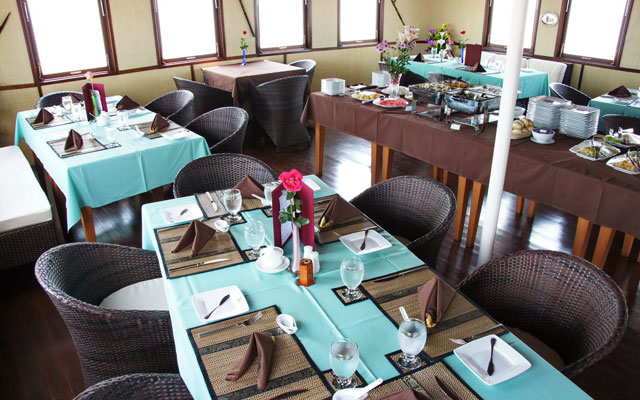
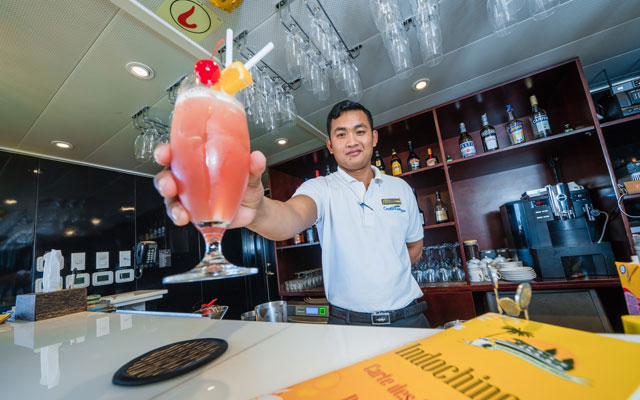
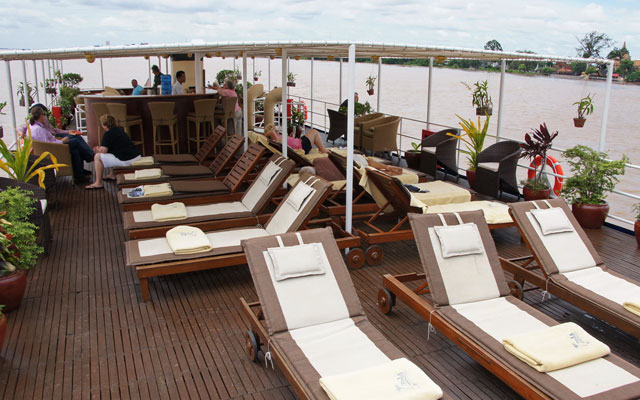
On the top deck sits a sun deck complete with sun beds, perfect for soaking up the scenery. An adjacent bar lounge serves a range of cocktails, wine, beers and soft drinks, so we were able to enjoy the striking sunsets with a cocktail in hand. Complimentary snacks, tea and coffee are available. The spacious upper deck also houses a covered lounge area, complete with comfortable tables and chairs. This space was cleared one evening when a karaoke night was hosted. An air-conditioned restaurant sits on the second deck.
Toum Tiou II
1 of 7
Dining area
Sun deck
Cabin
Bar lounge
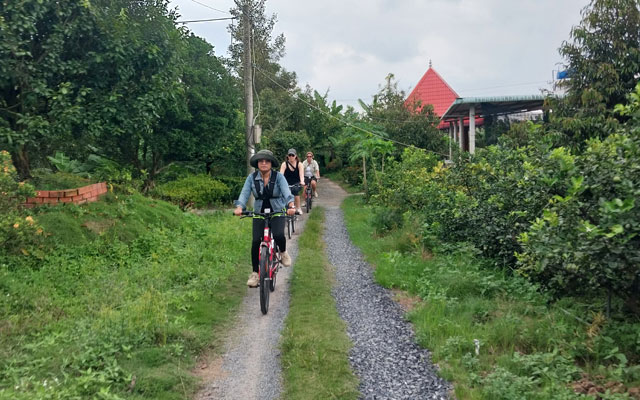
Cycling
Kayaking
Mekong Delta
F&B
The meals predominantly comprised Cambodian food, with lavish buffet dinners offering a range of meat and seafood dishes, rice and noodles, soup and Khmer desserts. Set menus were also served on some evenings. Breakfast came in the form of a buffet with a mixture of European and Asian options. Lunch was either served on board as we continued on our journey, or at a village we visited as part of the daily excursions.
Excursions
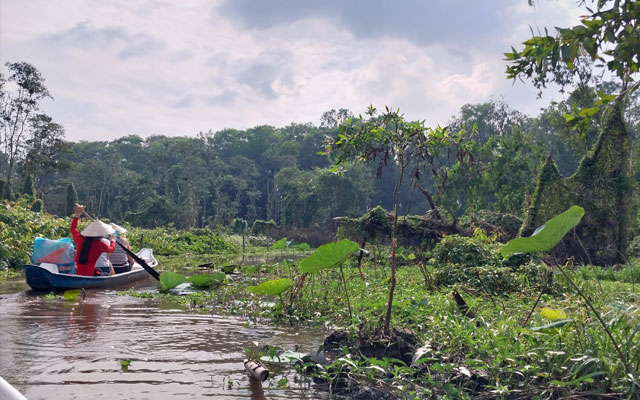
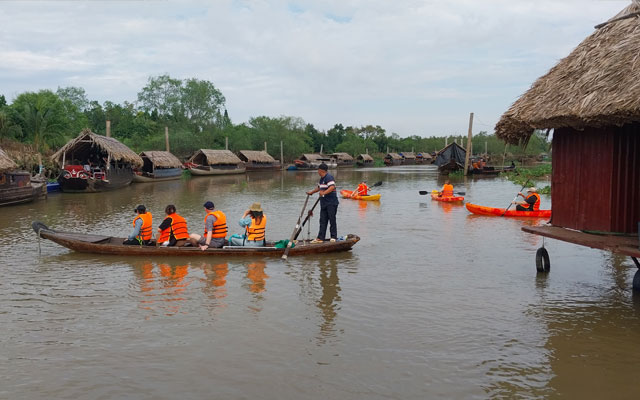
The beauty of this cruise lies in its journey through the Mekong Delta, home to diverse communities, nature, and sacred sites. Along the way, we visited Chau Doc, Sa Dec, Cai Be, and My Tho, cycling through rural roads, taking cookery classes, kayaking along tributaries, rowing through wildlife-rich mangroves, and visiting weaving workshops to experience local life. On day four, we docked near the city centre, spending 1.5 days exploring the vibrant Vietnamese city to round off the adventure.
Verdict
This is an excellent way to get an insight into life on the Mekong Delta, delivered by a small team of talented staff, who were firm friends by the time we disembarked.
Namia River Retreat, Vietnam
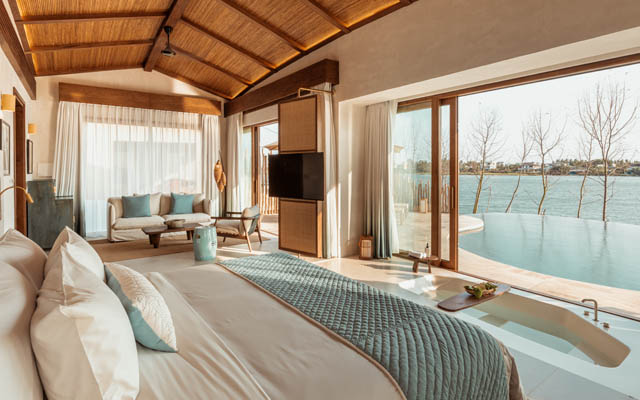
Namia River Retreat features 60 pool villas, each with views of either the Nipa Palm Forest or the Thu Bon River. The resort is just a short bike ride from Hoi An’s UNESCO Heritage Town.
The resort focuses on wellness with a 90-minute daily wellness journey per person, per night, which includes a herbal remedy, a 30-minute herbalhammam (a herbal steam room), and a 60-minute treatment. Signature wellness offerings include Dien Chan reflexology, Vietnamese massage, cupping, and acupressure. Guests can choose from two wellness pathways: Deep Rest for stress relief and Body Balance for improved circulation and tension relief.
Mindfulness experiences such as Vietnamese Duong Sinh breathing exercises and Silent Walking Meditation are also available to help guests reconnect with nature and achieve inner peace.
Facilities include F&B options, a sauna, and outdoor swimming pools.
Rosewood Miyakojima
Rosewood Miyakojima, Japan
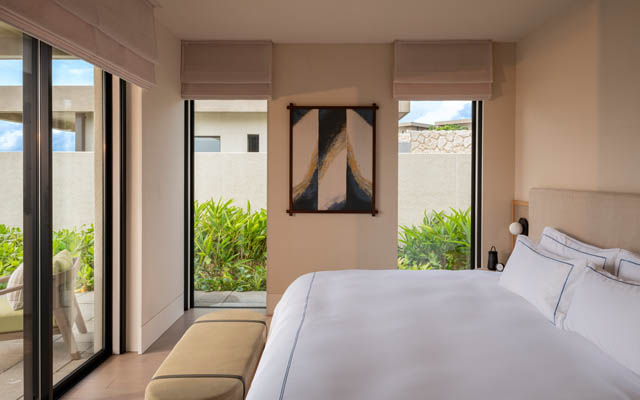
Rosewood Miyakojima, located on a remote island paradise in Okinawa, will be Rosewood Hotels & Resorts’ first property in Japan. Nestled amid sugarcane fields in the north of the island and overlooking Oura Bay with direct beach access, the 55-key resort offers four restaurants and bars, an infinity pool by the beach, spa, yoga studio and fitness centre.
A private pavilion overlooking the ocean will house weddings and special occasions, while families will find enriching experiences at the Rosewood Explorers Club.
Grand Mercure Imperial Palace Seoul Gangnam
Grand Mercure Imperial Palace Seoul Gangnam, South Korea
Located in the heart of Gangnam, Seoul, the dual-wing Grand Mercure Imperial Palace Seoul Gangnam, formerly the Imperial Palace Seoul, features 224 rooms in the Hotel Wing, including the Royal Suite, and 90 serviced apartments in the Residence Wing.
The hotel offers four dining venues, the Club Imperial Lounge, a fitness centre with pools and sauna, and a business centre.
Twinpalms Bangtao Phuket Tented Resort
Twinpalms Bangtao Phuket Tented Resort, Thailand
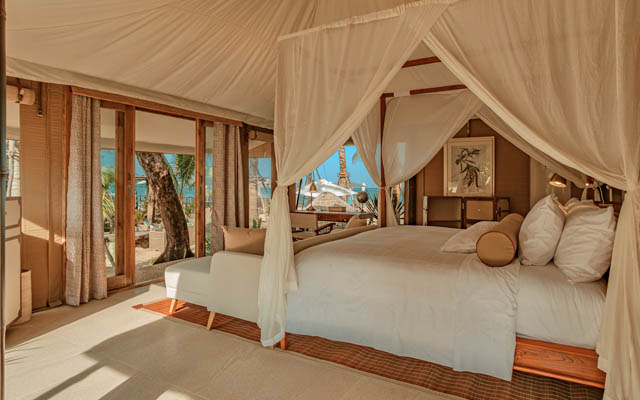
Twinpalms Bangtao Phuket Tented Resort offers a unique luxury glamping experience on Phuket’s West Coast. Located just 30 minutes from Phuket International Airport, the resort features 28 adults-only luxury tents, where guests can choose from Beach Tents with sea views and Lagoon Tents set amid tropical gardens, with private plunge pools in some.
Amenities include a communal Tented Lounge, a Spa Tent offering Thai therapies, a fitness centre at Twinpalms Surin Phuket Resort, and access to nearby dining destinations like Catch Beach Club and The Lazy Coconut.
Guests can enjoy daily wellness activities, including meditation and yoga, as well as yachting excursions to nearby islands.
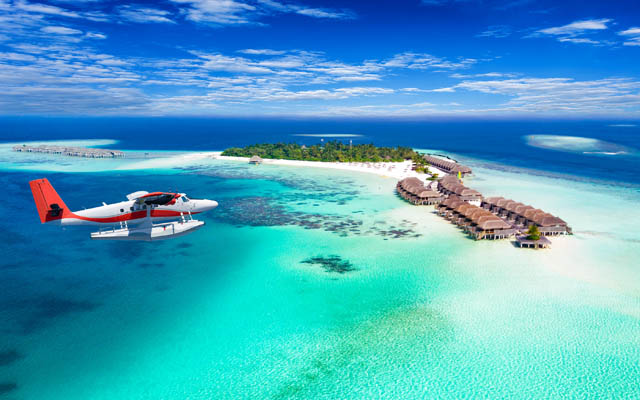
The Maldives Marketing and Public Relations Corporation (MMPRC/Visit Maldives) has announced an ambitious target of US$5 billion in tourism receipts for 2025, building on the success of 2024.
The Maldives welcomed two million tourists in 2024, setting new records for daily and monthly arrivals, particularly in February. MMPRC highlighted that extensive marketing efforts contributed significantly to this success, including 23 fairs and roadshows, 15 social media campaigns, and 23 virtual events. Notably, the Discover Maldives Webinar Series played a key role in showcasing the destination’s unique experiences to key markets.
MMPRC targets US$5 billion in tourism receipts for 2025 with new initiatives and expanded global marketing efforts
The Maldives also achieved its largest-ever representation at ITB Berlin 2024 and ATM Dubai 2024, and for the first time, served as the Host Country sponsor at ITB China in Shanghai, expanding its reach in these key markets. Additionally, The World’s Biggest Giveaway 2025 campaign was launched at WTM London, one of the most highly anticipated global initiatives for the upcoming year.
Increased connectivity, with new airline routes and more frequent flights, also played a key role in making the Maldives more accessible and driving the success of its tourism sector.
MMPRC hosted the inaugural Data Forum 2024 and Tourism Symposium 2024 to drive industry growth, signing key agreements with partners like Fliggy, Weixin Pay, and Maldivian Airlines.
Tourism receipts grew by 15 per cent in 2024, and government tax revenues from tourism increased by eight per cent. The Maldives also won several awards, including World’s Leading Green Destination and World’s Leading Destination for the fifth consecutive year. 2024 also marks the 11th anniversary of reaching one million annual tourist arrivals.
MMPRC’s plans for the year ahead include Visit Maldives shifting from trade shows to conversion-driven marketing, focusing on video-based campaigns and strengthening partnerships with airlines, tour operators, and retail brands to expand reach.
Key initiatives to support this direction include the launch of the Visit Maldives Shop for branded merchandise, the Visit Maldives Calendar for event planning, and the Visit Maldives Academy offering Destination Specialist certification. The Visit Maldives Content Portal will showcase curated content and provide a platform for local creatives to sell digital assets, while the Visit Maldives Data Dashboard will centralise industry insights in partnership with global data leaders.
To boost its global presence, Visit Maldives will launch Visit Maldives Week in key markets, featuring media events, seminars, networking evenings, food trucks, and outdoor marketing initiatives. Targeted campaigns will focus on markets such as Germany, Dubai, India, and Russia. While the annual highlight moves from ITB Berlin to ATM Dubai, major activities will still take place in Berlin.
Building on the success of Winter is Blue, which reached 22 million unique users, Visit Maldives will strengthen collaborations with Meta and other platforms. New campaigns will target segments like MICE, solo travellers, and “bestie” getaways. The Visit Maldives Club will also launch Burunu Boma, the world’s largest sustainable fishing competition, in April-May 2025, attracting a global audience.
Visit Maldives aims to sustain consistent quarterly engagement in the top 25 markets throughout 2025, supported by major summer campaigns and a strong public relations strategy. The organisation is focused on building solid industry partnerships to drive success across all initiatives.
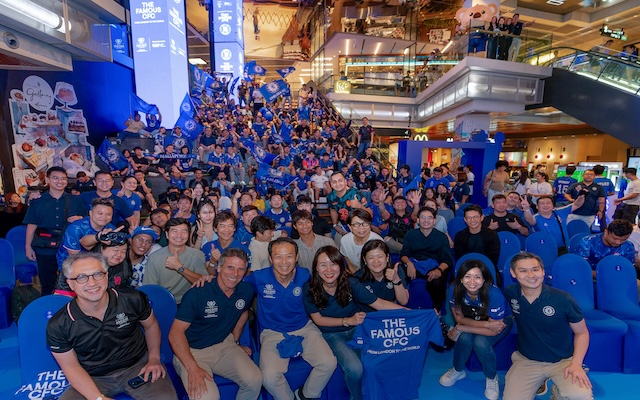
Fans of Chelsea Football Club – also Ascott Star Rewards members – with Chelsea legend Gianfranco Zola (front row, second from left)
Last year, the wildest dreams of Chelsea Football Club (Chelsea) fans came true. They spent an unforgettable weekend with Chelsea legend Gianfranco Zola: witnessing his football skills up close, receiving personal tips during coaching clinics, and gaining insights into his journey during an intimate fireside chat. To cap it all off, they watched the Blues in action against Aston Villa alongside Zola in an exclusive watch party.
This was part of The Famous CFC, Chelsea’s flagship international fan engagement event, brought to the region for the first time following Ascott’s recent appointment as the club’s Official Global Hotels Partner in July 2024. This partnership brings exclusive Chelsea experiences, including access to matches at Stamford Bridge stadium and VIP visits to The Blues Cobham Training Ground, to all members of Ascott Star Rewards (ASR) – Ascott’s loyalty programme that offers a host of elevated member experiences and hospitality packages with exceptional value, ensuring its customers “Stay Rewarded”.
Top-tier global events As part of the ASR programme, members gain access to exclusive global events including major sporting highlights, top-class entertainment, gastronomy greats, lifestyle events and more, through the introduction of the new Ascott Privilege Signatures.
These elevated member experiences were introduced in April 2024 to celebrate the fifth-year milestone of the ASR programme. This was alongside other enhancements such as full 24-hour stays from the time of check-in, and a 48-hour room guarantee. The expanded suite of benefits also includes late check-out, milestone rewards, and airport lounge access.
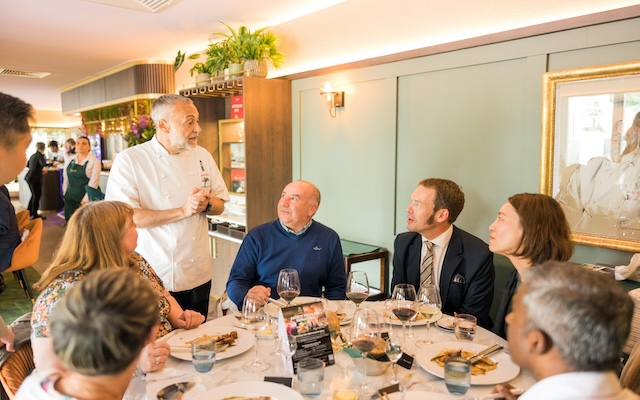
Ascott Star Rewards members indulged in an afternoon of fine dining at Le Gavroche in London with renowned chef Michel Roux Jr. (standing)
At the inaugural Ascott Privilege Signatures event in London, ASR members indulged in an afternoon of fine dining at Le Gavroche with renowned chef Michel Roux Jr, alongside VIP access to the Wimbledon finals, and a prime city-centre stay at The Cavendish London.
Another Ascott Privilege Signatures event saw loyalty members invited to the exhilarating Singapore Night Race, where they had a bird’s eye view of the action, complemented by a gourmet selection of food and beverages at the Ascott Privilege Signatures Lounge at the Singapore Flyer.
Curated local experiences In tandem with the global events offered to platinum tier members under its Ascott Privilege Signatures programme, Ascott has also launched a series of by-invite-only ASR Local Signatures to also engage and reward members through local experiences planned in key cities around the world.
In foodie paradise Penang in Malaysia, ASR members stayed at the vibrant lyf Georgetown Penang and embarked on a gastronomic journey, uncovering hidden local gems and relishing culinary delights across three other Ascott properties. They joined MICHELIN Guide Kuala Lumpur and Penang 2024 Young Chef Award recipient Chef Johnson Wong on a local food trail, enjoyed a quick stop for local coffee, and indulged in a specially curated menu at Chef Wong’s restaurant. The adventure concluded with dinner at the stylish Citadines Connect Georgetown Penang
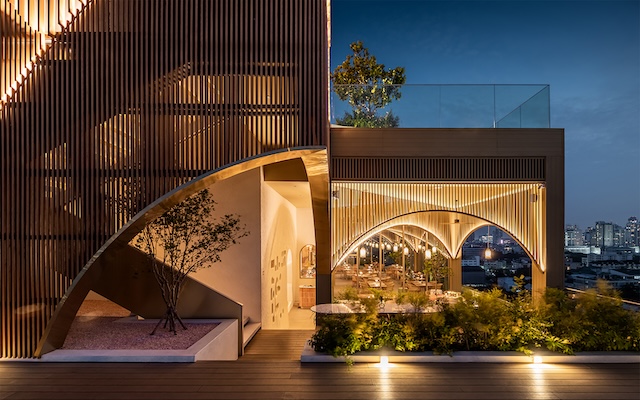
Members were treated to a five-course dinner and wine pairing at Sol & Luna, the rooftop restaurant and bar at Somerset Sukhumvit 71 Bangkok
Over in Bangkok, Thailand, another South-east Asian city known to be a powerhouse of local cuisine, ASR members enjoyed an exclusive culinary-focused Local Signatures event at its newly opened Somerset Sukhumvit 71 Bangkok. They had an unforgettable evening at the hotel’s Sol & Luna rooftop restaurant and bar, where they relished an exquisite five-course dinner and wine pairing. Complementing this gastronomic experience was a live violin recital and the unbeatable views from the well-located property in the vibrant yet tranquil Ekamai district. They also had the privilege of being among the first guests to stay at the property.
Singapore, too, played host to the first-ever ASR Local Signatures event, held at The Robertson House by The Crest Collection in November. Diners were treated to an interactive dining experience, with each course accompanied by a unique dance performance that drew inspiration from corporate life. Apart from gourmet experiences, ASR members based in the romantic city of Paris, France, were immersed in the fine arts. They were invited to a private concert by award-winning violinist Pilar Winter Hill at the elegant La Clef Louvre Paris by The Crest Collection.
More star-studded experiences to come In the pipeline for the Ascott Star Rewards loyalty programme are a host of global events spanning sports, entertainment, gourmet, arts as well as lifestyle themes for its loyalty members, says Ascott. These incoming ASR perks include more exclusive experiences with Chelsea Football Club, as well as invites to first-class tennis tournaments, The French Open, Roland Garros Paris in May, and The Championships, Wimbledon in June.
ASR members can enjoy these privileges and more at Ascott properties across 14 brands in more than 30 countries. Find out more about the global loyalty programme.





 Location