India is seeing a rise in health conscious travellers seeking wellness holidays and medical treatment
As the world becomes increasingly health conscious amid mounting air pollution and congested urban hubs, India is noting an uptick in wellness tourists seeking to rebalance their body, soul and mind.
Baby Mathew, chairman and managing director of Somatheeram Ayurveda Group, noted an increase in interest from Asia, especially Singapore, Thailand, Malaysia, Japan and South Korea, and notably among the young.
India is seeing a rise in health conscious travellers seeking wellness holidays and medical treatment
“India is famous for Ayurveda, yoga and natural remedies, and we’re seeing more people looking for spirituality and healing, while wanting to escape the pollution and cities,” said Mathew.
Aman Amola, inbound manager at Explore Bharat, also noted an uptick in increasingly younger people investing in medical tourism.
“Young people are now seeking healthier lifestyles, they are health conscious, and this health trend is increasingly bringing them to India,” he told TTG Asia.
He said that in addition to wellness tourism, Delhi – India’s capital territory – is luring both domestic medical travellers as well as a rising number of young people from Bangladesh, Afghanistan and other countries in South Asia seeking fertility treatment.
“Delhi has some of the best hospitals in the region for this, and this is becoming a big sector,” Amola noted, adding that India’s affordable healthcare is also luring international visitors needing other forms of treatment.
In 2024, the nation’s medical tourism market was valued at US$7.69 billion, with an estimated 7.3 million foreigners visiting for treatment. This is expected to hit US$8.71 billion this year.
Mathew said the government’s announcement of visa relaxations will help drive business to India’s medical tourism industry, making it easier and cheaper for many nationals to enter the country.
Western Hokkaido is one of the destinations that offer sports and culture
The Japan Tourism Agency, Japan Sports Agency and Agency for Cultural Affairs have pledged to strengthen the brand of Japan and its regions through collaboration in a newly signed comprehensive partnership agreement.
Building on a cooperation agreement inked in 2016, the partnership will see the three agencies promote emerging destinations that combine sporting, cultural and artistic resources to offer attractions unique to Japan that will enthuse visitors at home and abroad.
“We aim to further increase the number of foreign visitors to Japan and revitalise domestic tourism, thereby realising a virtuous cycle of the economy, with the keywords of ‘sustainable tourism,’ ‘increased consumption’ and ‘promotion of tourism to regional areas,” the Japan Tourism Agency and the Agency for Cultural Affairs said in a joint statement.
Western Hokkaido is one of the destinations that offer sports and culture
Western Hokkaido, for example, offers top-quality skiing and snowboarding as well as an introduction to the culture of the island’s indigenous people through attractions such as the Ainu Culture Promotion Center in Sapporo and the Ainu Culture Museum in Nibutani.
Meanwhile, around the Seto Inland Sea, there are dedicated cycling routes, to and around the many islands including Naoshima, which is renowned for its contemporary art and the Benesse House Museum, and Ikuchi island, home to the culturally rich Kosanji Temple complex.
The agreement also aims to support the creation of opportunities to visit and tour Japan, including through hosting international sporting, cultural and artistic events.
Sheraton Nai Harn Beach will be a new-build resort with an expected 600 keys
Marriott International recently signed an agreement with Jee Teng Hospitality to open Sheraton Nai Harn Beach in Phuket, a new-build resort that marks the brand’s debut on the Thai island.
Nestled within a 4.3-hectare beachfront site, majority of the resort’s 600 rooms, suites and villas is expected to offer uninterrupted views of the Andaman Sea, with a dedicated beach sports center for kayaking, paddle-boarding and more.
“With the upcoming launch of Sheraton Nai Harn Beach, Marriott International and Jee Teng Hospitality will operate two outstanding properties in Phuket, totalling over 1,000 keys with three additional projects in the pipeline. This follows the successful debut of Four Points by Sheraton Phuket Patong Beach Resort in 2020,” said Rajeev Menon, president, Asia Pacific excluding China, Marriott International. “Phuket, Phang Nga, and Krabi now form Marriott’s second-largest destination in Thailand, with 17 hotels and resorts, this milestone also highlights the incredible potential of the region”.
Sheraton Nai Harn Beach will be a new-build resort with an expected 600 keys
Guests can look forward to discovering Sheraton’s new design and inviting spaces that foster a sense of belonging, connection and collaboration. The hotel will house two swimming pools, a large fitness centre, spa, Kid’s Club, and 763m2 of function space to host events including weddings.
The surrounding Nai Harn area is known for its peaceful charm, with local restaurants, boutique shops, and lively a beachside night market. Phuket Town is over 30 minutes away, and Phuket International Airport an hour’s drive away.
Sheraton Nai Harn Beach becomes the fifth Sheraton branded property in Thailand.
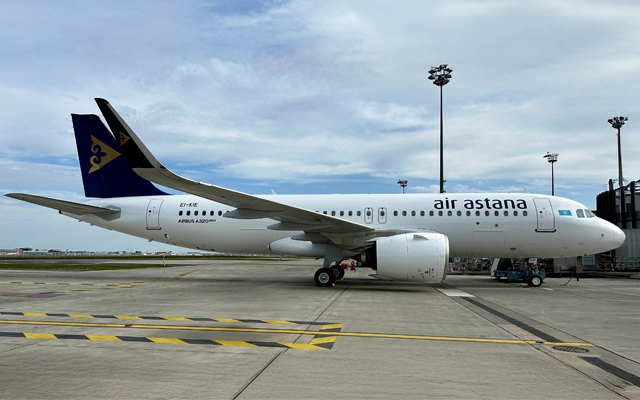
Air Astana's Airbus A320neo adds to its growing fleet
The Air Astana Group fleet has grown to sixty aircraft following the arrival of a new Airbus A320neo in Almaty. Its full-service carrier Air Astana now has a fleet of 35 aircraft, while low-cost carrier FlyArystan operates 25.
Both carriers in the Group have grown rapidly with an increasing number of the newest Airbus A321LR and Airbus A320neo aircraft as part of Air Astana’s network expansion to destinations across Asia, Europe and the Middle East.
Air Astana’s Airbus A320neo adds to its growing fleet
FlyArystan continues to boost low-cost services throughout Kazakhstan and Central Asia, together with an increasing number of longer-range flights to Georgia, China and the Middle East.
“Expanding our fleet to 60 aircraft is a significant milestone for Air Astana Group and an important step towards accomplishing our strategic plans,” said Peter Foster, CEO of Air Astana Group. “We will continue to invest in modern aircraft and expand our route network, offering passengers even more opportunities for convenient and affordable travel both within the region and beyond”.
The Group aims to increase its fleet to 80 aircraft by 2028.
New Dida brand reflects the company's move towards greater innovation
China based B2B travel distribution company DidaTravel has rebranded to Dida to reflect the company’s vision of delivering ‘smarter solutions to power the strongest partnerships’.
The decision to simplify the name to Dida marks the next chapter in the company’s journey, as it plans to take innovation to the next level by harnessing the power of data, machine learning and generative AI to drive exceptional efficiency and remove many of the key pain-points currently experienced across the industry.
New Dida brand reflects the company’s move towards greater innovation
Rikin Wu, founder and CEO at Dida said: “Our new identity is more than just a change of logo or branding – it’s a reflection of who we are and what we stand for. Over the years, our partners have consistently praised our tech-driven solutions and the adaptability of our teams.”
“The new Dida brand embodies these strengths and reinforces our commitment to delivering smarter, more flexible solutions that will help our partners thrive in an increasingly competitive market. In the future, we look forward to collaborating with leading enterprises in and beyond the travel industry, leveraging our strengths and AI technology to explore even more innovative business models.”
Events include Celebrating Female Founders Event on April 28 and the Global Tourism Investment Forum
UN Tourism will hold two special events and a diverse range of activities at Expo 2025, which will open its doors at Yumeshima Island, Osaka on April 13.
UN Tourism said it is “proud to participate in Japan Expo 2025, bringing together global leaders, innovators and changemakers through two flagship events that highlight our commitment to inclusive growth and sustainable development in tourism”.
These events are the Celebrating Female Founders Event on April 28 and the Global Tourism Investment Forum on April 29.
Featuring a pitching session, panel discussion and fireside chat, the Celebrating Female Founders Event is designed to celebrating female entrepreneurship and introduce female founders from UN Tourism Global Startup Competitions.
Events include Celebrating Female Founders Event on April 28 and the Global Tourism Investment Forum; Myaku Myaku mascot pictured
The Global Tourism Investment Forum “will focus on the exchange of good practices and cultural collaboration to leverage investments, with a special emphasis on cross-cultural collaboration and impact investment,” continued the UN, adding that the “gathering of global leaders, investors and innovators aims to foster innovative financing mechanisms and strategies that enhance investment opportunities and maximise sector-wide impact”.
UN Tourism will also have a presence at the onsite UN Pavilion, which will welcome visitors for the duration of the Expo 2025 under the theme, United for a Better Future. UN Tourism will be among the 35 UN entities displaying exhibits and running programming that showcase efforts to address global challenges and align with Expo 2025’s Theme Weeks.
The Co-creating Cultures for the Future Week, held April 25 to May 6, will explore tourism, the arts, culture, music, heritage and local community revitalisation.
From left: Speakers Wolfram Höpken, Kershing Goh, and Barry Rogers; photo by Karen Yue
Despite AI’s limitations in terms of certainty of information and lack of semantics, the technology continues to demonstrate good use in the space of travel and tourism, opines Wolfram Höpken, professor and director at the Institute for Digital Transformation at University of Applied Sciences Ravensburg-Weingarten.
In his opening for the March 5 conference session, The Future of Destination Marketing: Is AI taking over?, at ITB Berlin 2025, Höpken identified various AI applications in travel and tourism – specifically offer generation, marketings, information and search, reservation and booking, consumption, and feedback.
He noted that these functions “are not new and have been done for centuries”, and the work process is being improved with statistical approaches and machine learning, “which are the core of AI”.
From left: Speakers Wolfram Höpken, Kershing Goh, and Barry Rogers; photo by Karen Yue
He expects greater use of big data analytics in travel and tourism as technology continues to evolve. Citing examples of what big data analytics can already do, Höpken said a project with the Lake Constance region (which overlaps parts of Germany, Switzerland and Austria) tracks how travellers are moving through the destination and patterns of tours by collecting and analysing 1.5 million photos posted on Instagram.
Another trend to come is the rise of AI agents that use large language models or chat services in the background to speed up the design of travel and tourism products and services.
According to Sojern’s newly published State of Destination Marketing 2025 report, AI is reshaping destination marketing, with 63 per cent of DMOs using it for content creation. Only 28 per cent use AI for data analysis, highlighting a massive opportunity to use AI for deeper insights and more effective decision-making.
Addressing resource limitations and training gaps will be critical to unlocking AI’s full potential, according to Sojern.
Following up on Höpken’s presentation, representatives from the Singapore Tourism Board (STB) and Dublin City Tourism Unit shared real example of how technology is being woven into destination marketing efforts.
Kershing Goh, regional director Europe at STB, spoke of the NTO’s partnership with Google to bring AR experience directly to Google Maps in 2024.
This partnership builds upon the success of Merli’s Immersive Adventure – an innovative AR tour to six points of interest around Singapore through STB’s Visit Singapore Travel Guide app launched in January 2024. Powered by Google’s ARCore and Geospatial Creator, the tour follows Singapore’s tourism mascot, Merli, as he guides visitors to iconic spots such as the Victoria Theatre & Concert Hall, Fullerton Hotel and Maxwell Food Centre.
In the expanded partnership, new AR experiences are available on the Google Maps mobile app, not just on the Visit Singapore Travel Guide app. Furthermore, participating tourism stakeholders in Singapore have developed location-based AR experiences for travellers.
Goh explained that the technology approach to enhancing the Singapore destination experience was necessitated by the city-state’s limited land space that restricted tourism product development, manpower crunch, and the constant need to refresh the tourism narrative and tourism experiences for visitors.
STB also worked on fitting live weather data into experience recommendations, “as Singapore is in the tropics and it rains a lot”, which can impact travellers’ decision on what to do in the destination.
“Another interesting thing that we were looking into was how to (connect) points of interest with emotions. A traveller arriving from New York on a long flight may be jet-lagged, so what can we serve as a destination that’s going to feed his current state of mind?” explained Goh.
Barry Rogers, head of Dublin City Tourism Unit, shared the city’s high-tech approach to destination management, which earned it the title, European Capital of Smart Tourism, in 2024. Dublin City Tourism Unit launched three large corporate collaborations: one with Google on Google Maps, one with MasterCard on analytics and innovation, and one with openAI on modeling for tourism.
He spoke about the A Day in Dublin platform that is able to build “individual, hyper-personalised itineraries for Dublin City” just by asking the traveller/user a series of questions to understand their travel preferences and profile.
“This means that the prompt engineering of the platform is really important,” said Rogers.
In a trial by TTG Show Daily, the A Day in Dublin platform posed seven questions about the region of interest, desired pace of travel, who would be travelling with the user, when the trip would be made, desired activities, and willingness to explore beyond the region of interest. Within minutes, a five-point itinerary for a single day was generated.
Promoting promote South-east Asia as a single destination will benefit countries across the region
ASEAN collaboration is enabling member countries to combine their strengths to collectively promote South-east Asia as a single destination and share tourism benefits across the region.
The Singapore Tourism Board (STB) said it ”remains committed to continue deepening tourism cooperation with ASEAN and our dialogue partners, including enhancing regional connectivity and supporting sustainability efforts”.
Juliana Kua, STB assistant chief executive, International Group, told TTG Asia that ongoing collaborations include development of the ASEAN Economic Community Strategic Plan 2026-2030, the Post-2025 ASEAN Tourism Sectoral Plan, and ASEAN Tourism Marketing Strategy.
Kua said: “Singapore is working closely with other ASEAN Member States to develop the respective strategic and sectoral plans to attain ASEAN’s regional integration goals and objectives and ensure the successful implementation of the ASEAN Community Vision 2045.”
On the development and promotion of ASEAN Cruise Tourism, Singapore as the Lead ASEAN Country Coordinator has been partnering ASEAN member states to continue efforts in promoting South-east Asia as an attractive cruising destination through key global trade events such as Seatrade Cruise Global and catalysing cruise developments within the region, including new cruise sailing itineraries.
Steven Ler, National Association of Travel Agents Singapore (NATAS) president and UOB Travel Planners executive director, said: “Singapore continues to be a key cruise hub for Asia and attracts US and European travellers. It is an ideal stopover.
“The entry of more cruises lines like Disney Cruise Line and Disney Cruise Singapore setting sail in 2025 will also attract a lot of travellers from South-east and North Asia.”
Promoting promote South-east Asia as a single destination will benefit countries across the region
Singapore, also the chair of the ASEAN Tourism Marketing Partnership Working Group, worked closely with the ASEAN Marketing Agency and other ASEAN member states to launch the immersive ImaginASEAN’s Great Metaverse Hunt game on the Roblox platform on World Tourism Day last year, marking ASEAN’s first foray into the metaverse.
STB’s Kua said players have the opportunity to explore iconic landmarks and cultural aspects of the 10 South-east Asia countries within the Roblox platform, experiencing the region’s vibrant cultural heritage and diverse tourist attractions, embark on a thrilling postcard hunt unlocking exclusive in-game rewards and virtual items, and stand the chance to win a trip for two to any two South-east Asian countries.
She continued: “This Roblox game seamlessly integrates tourism promotion with digital gaming in line with ASEAN’s overarching strategy to leverage digital innovation for enhancing tourism activities, while positioning South-east Asia as an attractive single tourism destination.”
Jesper Palmqvist, senior director Asia Pacific, STR, commenting on South-east Asia’s tourism outlook in 2025, said “it’s more about capacity and source markets”, where airfares are not expected to drop, “rather the opposite is likely”.
While business and leisure arrivals are expected to increase in 2025, a large percentage growth number is unlikely with uncertainty about consumer spending and the overall economic situation as Singapore gets more expensive to foreign currency holders, alongside the US dollar.
The partnership lets Expedia customers access Emirates' portfolio of fare products and services
Emirates Airline and Expedia Group have expanded their long-standing partnership through the former’s full integration of its NDC API with the latter’s brands, establishing a direct connection that delivers the airline’s complete portfolio of fare products and services to Expedia Group’s global customer base.
This latest enhancement will empower millions of travellers to unlock a wider range of options and benefit from streamlined booking capabilities on Expedia Group’s brands when planning their journeys to any point on the airline’s global network.
The partnership lets Expedia customers access Emirates’ portfolio of fare products and services
In addition to customer personalisation, both parties will explore deeper collaboration on loyalty programmes and leverage data to drive business growth and inform joint marketing initiatives.
The partnership will also focus on creating end-to-end booking experiences for full package solutions.
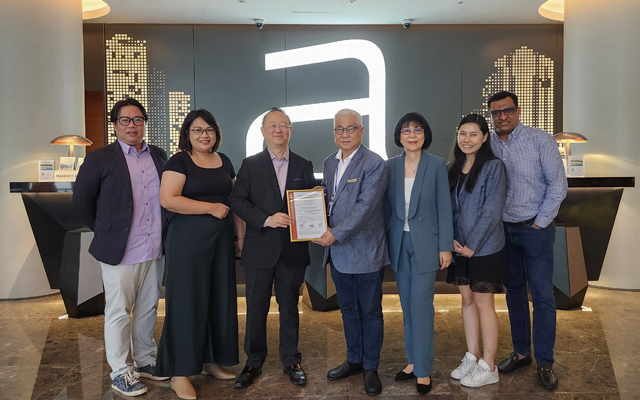
Presentation of the GSTC certificate by the Bureau Veritas Quality Assurance team to Aloft Singapore Novena; Aloft's Tan Kim Seng (third from left)
Aloft Singapore Novena has become the first Aloft hotel in Asia to achieve Global Sustainable Tourism Council (GSTC) certification, underscoring its commitment to sustainable hospitality.
Presentation of the GSTC certificate by the Bureau Veritas Quality Assurance team to Aloft Singapore Novena; Aloft’s Tan Kim Seng (centre)
“Achieving the GSTC certification is a proud milestone for Aloft and a testament to our unwavering commitment to sustainability and responsible tourism. This recognition reflects the collective efforts of our team to implement meaningful practices that not only protect the environment but also celebrate the rich culture and heritage of our vibrant Balestier neighbourhood, creating lasting, positive impacts for both residents and visitors alike. This certification inspires us to continue leading by example in shaping a more sustainable future for hospitality,” said Tan Kim Seng, general manager at Aloft Singapore Novena.
The hotel has implemented a variety of sustainable practices to minimise its environmental impact in its operations. These include food waste segregation that achieved a 94 per cent decrease in waste in the last quarter of 2024 compared to 2023, with plans to reduce waste by an additional 5 per cent annually.
It has moved away from single-use plastic toiletries, opting for refillable shampoo and soap dispensers in guest rooms. To reduce waste further, recycling bins have been placed in guest rooms and public areas.
The introduction of linen-saving display cards and water-saving aerators has helped reduce water consumption by up to 53 per cent.
Aloft Singapore Novena has also cultivated an urban farm to grow fresh produce such as eggplants, cucumbers, basil, peppermint, chili, caixin and lady’s finger. These are used in the hotel’s drinks menu, reducing reliance on transported goods and lowering carbon emissions.
In line with GSTC’s criteria for engaging and enhancing local community and cultural heritage, Aloft has taken an active role in the Balestier community.
Before the temporary closure of Sun Yat Sen Memorial Hall, the hotel partnered with the heritage venue for the Dragon Boat Festival, hosting a pop-up booth featuring curated snacks.
Beyond this, Aloft has pledged to contribute a minimum of 100 hours of volunteer service per year, reinforcing its engagement with the local community.
The hotel promotes neighbourhood vendors through its concierge map and encourages guests to explore the Balestier Heritage Trail, which traces the area’s architectural and historical evolution.
Aloft will continue to implement additional initiatives as part of its sustainability action plan that include eliminating single-use plastics, improving energy efficiency, and sustainable procurement.