The Skål International Thailand Annual Forum 2024, held in Chiang Mai in December, brought together tourism leaders from Thailand, Asia, and the US.
A key moment was the ceremonial exchange of presidential chains, with Skål Thailand acting national president Shana Kongnum handing over the chain to incoming president Eddy Brosse. Brosse then passed his chain to Bas van Straten, the new president of Skål Phuket, and Sittipong Wongsomboon took over as president of Skål Chiang Mai from Vorapot Chutima.
From left: Kevin Rautenbach, Eddy Brosse, Bas van Straten, Shana Kongnum, Sittipong Wongsomboon, Vorapot Chutima, and Andres O. Hayes
The event included workshops on Skål’s revised statutes, membership benefits, and its mission in a changing world. Members also explored marketing strategies for the tourism industry, sustainable practices, and professional development.
Skål International provides members with networking opportunities, global events, and resources for growth, including new training videos and podcasts on leadership and empowerment available through their website and app.
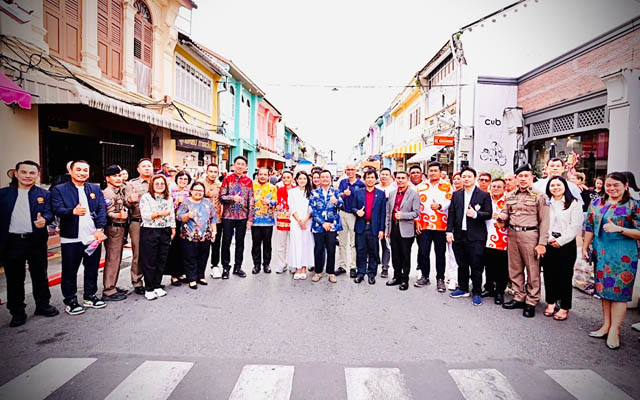
On November 24, 2024, the Sustainable Tourism Development Foundation (STDF), in collaboration with public and private sectors, officially launched the Phuket Old Town Carbon Neutrality 2030 project, an initiative that positions Phuket’s historical district as Thailand’s first area to commit to achieving carbon neutrality.
Endorsed by Thailand’s Ministry of Tourism and Sports, the project aims to transform the Old Town into an international model for sustainable tourism while serving as a pilot for reducing carbon emissions across the province.
Sorawong Thienthong (centre) with leaders of local administrative organisations and private sector leaders during the Phuket Old Town Carbon Neutrality 2030 project launch ceremony; photo by STDF
Bhummikitti Ruktaengam, president of the STDF and advisor to the Phuket Tourism Association (PTA), explained the rationale behind the initiative.
“Thailand has set ambitious KPIs: achieving carbon neutrality by 2050 and net-zero greenhouse gas emissions by 2065. However, Phuket currently lacks a concrete action plan to meet these goals. Recognising this gap, we decided to pilot a prototype on a smaller scale in the Old Town. If successful, it could serve as a model for broader implementation,” he shared.
Phuket’s Old Town was chosen due to its unique blend of tourism and local community life, as well as the willingness of its residents to participate in the project.
“Our goal is to significantly reduce carbon emissions in this area and achieve neutrality by 2030,” Bhummikitti added.
The project, spearheaded by the STDF, is jointly driven by Phuket City Municipality, the Big Data Institute (BDI), and the Old Town community. Its primary objective is to reduce carbon emissions by 30 per cent within three years and by 50 per cent by 2030.
Key strategies include introducing electric public transport, such as a new EV bus line around the area in collaboration with Phuket Smart Bus, improving public waste management systems and segregating home waste for recycling, and utilising AI to monitor emissions.
AI-integrated CCTVs, installed by the BDI, are already operational in Old Town, providing real-time data on traffic and pedestrian activity to track carbon emissions more accurately, particularly at the Thalang walking street.
“We collaborated with the BDI to classify numbers of vehicles passing through and their models, monitor foot traffic – because people bring waste into the environment – and estimate emissions. This data helps us paint a clearer picture of the area’s carbon footprint,” Bhummikitti explained.
Supporting institutions such as the Phuket Provincial Electricity Authority, the local fishers association, and the Pollution Control Department also supply data, which is fed into BDI’s centralised dashboard for analysis.
Additionally, a new organic waste composter, funded by the STDF, has been installed at the Golden Dragon Monument to reduce landfill dependency.
“This composter will handle organic waste from Old Town, reducing landfill contributions at Saphan Hin by at least 400kg daily,” Bhummikitti noted.
Looking ahead, STDF is collaborating with the Global Sustainable Tourism Council (GSTC) to position Phuket as a certified sustainable tourism destination. A sustainability audit is underway, with results expected by January 2025.
Phuket will also host the Global Sustainable Tourism Conference (GSTC2026) in May 2026, drawing over 700 participants and showcasing projects like the Old Town initiative.
“Achieving carbon neutrality involves two steps: reducing emissions as much as possible, then compensating through activities like tree planting,” Bhummikitti shared.
“At the end of January, when the GSTC audit results come in, we will see our current potential and what gaps we have to fill in order to achieve a sustainable destination label such as Green Destinations or EarthCheck, which will be another important step in accrediting Phuket as a sustainable tourism destination,” he concluded.
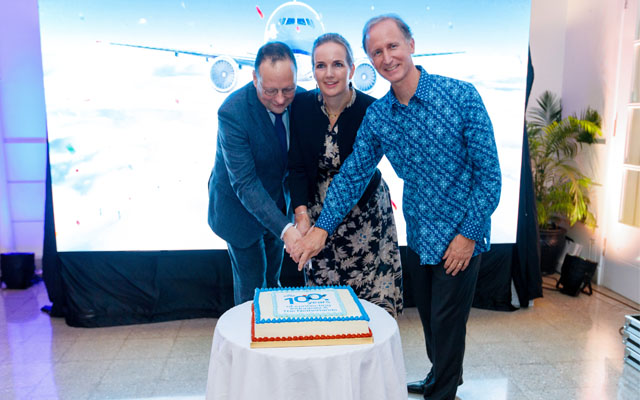
KLM Royal Dutch Airlines celebrated 100 years of connections between the Netherlands and Indonesia last November, marking the airline’s enduring presence and ongoing innovations.
From a pioneering 55-day journey between the two countries in 1924 to today’s 15-hour flights, the airline has witnessed and played a significant role in the advancements of the aviation industry.
From left: KLM’s Maarten Stienen and Femke Kroese, and Dutch ambassador to Indonesia Marc Gerritsen
While the first flight took several days and required 26 stops between the two continents, it is now possible to fly to Amsterdam in just 15 hours.
In a written interview with TTG Asia in conjunction with the celebration, KLM COO Maarten Stienen stated: “KLM Royal Dutch Airlines has always been present in Indonesia and innovated along the way.
“After the first flight to Jakarta 100 years ago, we have had continuous scheduled flights since 1930, with a disruption during World War II. KLM (has been flying) to Bali since 1988,” he pointed out, adding that the fact that KLM has been continuously serving these destinations for such a long period highlights their importance.
Stienen continued: “In summer 2024, over 250,000 passengers flew with KLM to and from Indonesia, showing how big the demand is for this route. (It is) not a surprise, given that business is booming in Indonesia and the country has a lot of beauty to offer to visitors.”
Now part of the Air France-KLM Group, which includes Air France and Transavia, KLM’s extensive network covers over 300 destinations in 125 countries, with primary hubs at Amsterdam Schiphol Airport and Paris Charles de Gaulle.
While the airline was a pioneer in longhaul service a century ago, its current focus on innovation is centred on sustainability.
Stienen said: “KLM is the oldest airline still operating under its original name (but) we are no longer pioneering distances in aviation – however, we aim to be a responsible airline group (and) continue to connect people with destinations all over the world, (believing) that through innovation, we can reduce the long-term impact of flying on our planet.”
The airline aims to have over 80 new-generation aircraft in its fleet by 2030, which are more fuel-efficient and produce fewer emissions per passenger kilometre than their predecessors. Additionally, the new aircraft are quieter than the previous models.
“Sustainable aviation fuel (SAF) is also one of the most promising levers that will help us reduce CO2 emissions. We plan to use more than 10 per cent SAF on board our aircraft by 2030, exceeding the obligations by the European Commission,” he shared.
When asked about his vision for the future of the airline industry over the next century, Stienen said: “Our aim is to be in business for the next 100 years and give future generations the opportunity to travel, to connect people and cultures from all over the world.
“Flying is vital to our economies and brings wealth to communities worldwide. We need to reduce our impact on the planet and grow in a way that is balanced with our environment, among other innovations with cleaner and quieter aircraft.”
He explained that, as an industry, the first step taken by the airline was to increase the use of SAF: “At KLM, we mix 1.2 per cent SAF into our fuel, and the Air France-KLM group purchases the most SAF worldwide, accounting for 16 per cent of the global supply in 2023. We are working on projects to radically improve the fuel efficiency of flying in the longer term, such as our cooperation with Delft Technical University on the Flying V and our collaboration with ZeroAvia to fit hydrogen-powered engines to an existing plane.”
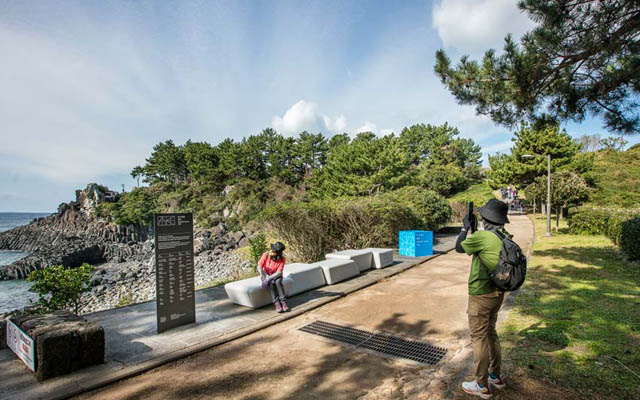
A section of the Jeju Olle Trail, a scenic and popular foot path that lies on the perimeter of South Korea’s Jeju Province, has been named Jeju Olle Trail 8 Route: ASEAN-Korea Olle in honour of the 35th anniversary of ASEAN-Korea dialogue relations and its elevation to Comprehensive Strategic Partnership.
The ceremony, led by the ASEAN-Korea Centre in cooperation with the Jeju Special Self-Governing Province and the Jeju Olle Foundation, was held on November 8 in Seogwipo. It saw the presence of key figures including ASEAN-Korea Centre’s secretary general, Kim Jae-shin; Jeju governor Oh Young-hun; Jeju Olle Foundation’s founding CEO and chairperson, Suh Myung Sook; deputy minister of foreign affairs, Chung Byung-won; and ambassadors of the 10 ASEAN countries in South Korea.
A section of the Jeju Olle Trail has been renamed ASEAN-Korea Olle to mark the 35th anniversary of ASEAN-Korea relations
Jeju Olle Trail 8 now bears a commemorative signage and bench introducing ASEAN and South Korea.
The initiative aims to promote South Korea’s beautiful natural landscapes, such as the Jeju Olle, to visitors from South-east Asia while fostering understanding of the ASEAN grouping among South Koreans.
The ASEAN-Korea Centre plans to expand this friendship trail to the 10 ASEAN member states to foster deeper connection between the region and South Korea.
Another ceremony was held for the ASEAN Culture & Tourism Book Corner within the Jeju International Peace Centre, where the ASEAN-Korea Centre’s Jeju ASEAN Hall is also located. The book corner features a collection of literature showcasing the cultural and tourism resources of South-east Asia, donated by the ASEAN-Korea Centre and the 10 ASEAN Embassies in South Korea. It also displays a collection of personal favourites selected and autographed by these ambassadors.
Kim shared: “The ASEAN-Korea Centre has been pursuing various projects to invigorate culture and tourism between (South) Korea and ASEAN, introducing the rich culture and tourism offerings of both regions. This meaningful project endeavours to promote (South) Korea’s natural tourism assets such as the Jeju Olle to ASEAN, and vice versa.
“The permanent commemorative milestone is a testament to the enduring relations between (South) Korea and ASEAN, and the ongoing journey both regions will continue to pursue.”
Banyan Group is set to welcome its 100th resort for its debut in Singapore in April this year, along with the opening of new properties in destinations beyond Asia, including Tanzania and the Dominican Republic.
Growth momentum is set to continue this year, with 15 new hotel and resort openings and five new branded residence developments expanding the group’s portfolio.
Banyan Tree made its debut in Japan with the opening of Banyan Tree Higashiyama Kyoto in 2024, pictured
These include the debut of the Mandai Rainforest Resort, a nature-inspired property within the Mandai Wildlife Reserve in Singapore; Ubuyu, a Banyan Tree Escape in Tanzania, offering an immersive experience in Ruaha National Park; and the group’s first standalone development in Bangkok, which combines hotels, dining, a spa, and nightlife. In Asia, new properties will open in Zhuhai, Busan, Jeju, Bangkok, and Cebu, while the Caribbean will see the opening of Cassia Punta Cana in the Dominican Republic.
Additionally, Banyan Tree Gallery products will be available on Emirates and EVA Air from 2025, expanding the group’s retail reach.
Over the past year, Banyan Group expanded its portfolio with 18 new hotel and resort openings, including six in Japan and South Korea, and eight in China. A highlight was Banyan Tree’s debut in Japan with the opening of Banyan Tree Higashiyama Kyoto. The Group also hosted several anniversary events and initiatives globally.
Banyan Group’s ethos of Embracing the Environment, Empowering People continues to drive its sustainability and well-being initiatives. Marine conservation efforts will be boosted with the Coral Reef Restoration Project on Hainan Island and a new coral larval restoration method in the Maldives.
Through the Rewilding Banyan Fund, the group will expand habitat restoration efforts, including a bee-friendly forest on Bintan Island, Indonesia, while the 8 Pillars of Wellbeing will be further integrated into guest experiences with new retreats, visiting practitioners, and spa brand developments in 2025.
Eddy See, president and CEO, Banyan Group, said: “2025 will continue to be a meaningful evolution of our dynamic portfolio as we plant flags in new locations in Asia and beyond. With new destinations, products, experiences and partnerships, we also look forward to the deepening of our sustainability promise and commitment to well-being.”
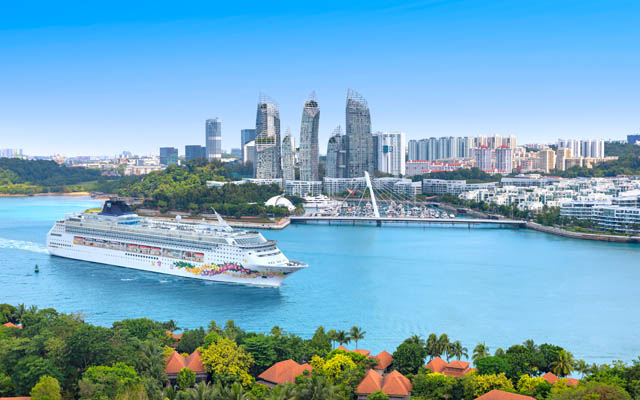
Norwegian Cruise Line (NCL) celebrates the arrival of Norwegian Spirit in Singapore, the first of three ships offering travellers even more opportunities to explore the cultural, culinary, and historical gems across the region until March 2026.
Norwegian Spirit will offer itineraries ranging from eight to 15 days, featuring fewer sea days and extended time in port, allowing travellers to make the most of their time in iconic destinations such as Osaka, Tokyo, Incheon, Singapore, and Bangkok.
Singapore welcomes the arrival of Norwegian Spirit
As part of NCL’s largest-ever Asia Pacific presence, Norwegian Spirit will be joined by Norwegian Sun and Norwegian Sky this year, offering travellers more choices across eight departure ports.
From November 2025 to March 2026, Norwegian Sun will offer 11- to 15-day itineraries in South-east Asia, visiting Japan, Thailand, Vietnam, Indonesia, Malaysia, South Korea, and more. Norwegian Sky will debut in Singapore with 11- to 14-day cruises from Singapore and Tokyo, including the Philippines, Japan, and India. Travellers can also combine cruises with NCL’s Cruisetours in Incheon, Singapore, Tokyo, and Taipei.
Beyond Asia, the ships will visit Northern Europe, the Baltic, the Mediterranean, Greek Isles, Australia, New Zealand, Hawaii, the South Pacific, and Alaska. Norwegian Sky will offer a nine-day European cruise from Lisbon and a Baltic voyage from Copenhagen, while Norwegian Spirit and Norwegian Sun will explore rugged coastlines, volcanic landscapes, and glaciers.
Indonesia has lost a prominent figure in its tourism industry with the passing of Augustine Constantine Robot-Lewerissa, known as Meity Robot, at the age of 87 on January 4.
Meity, the owner of Iwata Nusantara Tours & Travel, made significant contributions to the development of Indonesian tourism. She founded Indonesia Women in Travel (WIPI) in 1990 and co-founded ASTINDO in 1999.
She served as president of the Central Board of ASITA from 1999 to 2003, as well as president of the ASITA Jakarta Chapter from 1990 to 1999. She also chaired the PATA Indonesia Chapter from 1995 to 1997 and led the Tourism Council of the Indonesia Chamber of Commerce from 1995 to 2009, receiving numerous awards and accolades for her services.
Meity’s influence extended beyond Indonesia, having served as a board member of ASEANTA and FATA (1999-2003), PATA (1995-1997), and the PATA Industry Council (1997-1999).
She is mourned by her husband Robby Robot, their four children, and nine grandchildren. Meity’s funeral was held in Jakarta on January 5.
Capella Hotel Group has made key executive appointments to strengthen its leadership across its properties in Asia and the Maldives.
Anthony Gill, with over 20 years of experience, takes on the role of general manager at Patina Maldives, where he will lead the resort into a new era of transformative luxury.
From left: Anthony Gill, Dennis Laubenstein, Antonio Saponara and Hildegard Anzenberger
Dennis Laubenstein, a veteran of Capella, moves to Capella Taipei, set to open in 1Q2025, after successfully leading Capella Hanoi, including securing its first Michelin-starred restaurant.
Antonio Saponara will now oversee Capella Bangkok, following his term at Patina Maldives, while Hildegard Anzenberger joins Capella Hanoi from The Langham Hefei, bringing extensive international experience and a strong focus on staff development and sustainability.
The annual ASEAN Tourism Conference (ATC), to be held later this month in conjunction with the ASEAN Tourism Forum and ASEAN Travel Exchange (TRAVEX) in Johor, Malaysia, has lined up several influential travel and tourism industry leaders who will lead discussions on issues core to the business today and tomorrow. Sessions will focus on sustainability, the role of online travel agencies, video platforms, cross-regional tourism exchanges, AI, and more.
ATC 2025 will open on January 15 with the session, Charting Tourism for ASEAN: Trends Defining the Next Decade. It will be presented by Randy Durban, CEO, Global Sustainable Tourism Council.
From left: Global Sustainable Tourism Council’s Randy Durban, Asian Development Bank’s Jong Woo Kang, Malaysia Budget & Business Hotel Association’s Sri Ganesh Michiel, and Batu Batu’s Cher Chua-Lassalvy
This will be followed by Sustainability Pioneers: Malaysian SMEs Driving Change, with speakers Justine Vaz, executive director, The Habitat Foundation; Cher Chua-Lassalvy, co-founder and managing director, Batu Batu; and Wong Siew Te, CEO and founder, Bornean Sun Bear Conservation Centre.
Other prolific speakers and moderators include Jong Woo Kang, director for regional cooperation and integration, economic research and development impact department, Asian Development Bank; Sri Ganesh Michiel, national president, Malaysia Budget & Business Hotel Association; Amelia Peng I-Mei, head of brand partnerships Malaysia, TikTok; and Kingston Khoo, president, Eco-STEPS.
Commenting on ATC’s line-up, Eddy Krismeidi Soemawilaga, president of the ASEAN Tourism Association, more commonly known as ASEANTA, said: “After much thought, we’ve focused on topics that we believe are the most relevant to the ASEAN tourism industry – not only right now, in 2025, but also for the next decade. Technology and sustainability are going to be the two forces dominating the shape of the industry.”
He also told TTG Asia: “We’ve doubled down on those two topics in particular for ATC 2025, ensuring that there is not only a high-level discussion on them with inspirational content, but also practical workshops, with a session focusing on AI, as well as actionable steps to embark on sustainability – all the while, with a view to how SMEs, who are the backbone of our industry, can apply these.
“We hope that when the audience goes home, they are inspired to start taking steps on their sustainability journey, as well as feel more confident in trying out new techniques that they can use to harness the power of technologies.”
ATC 2025 will stretch across January 15 and 16, and will be held at Persada Johor International Convention Centre.
Programming for this year’s ATC is coordinated by Hannah Pearson, director of Pear Anderson, a research and sales representation tourism consultancy.
Sri Lanka is aiming to substantially increase tourist arrivals to three million in 2025, up from a target of 2.1 million in 2024, as the country emerges from a foreign debt crisis that began in 2022, an official has said.
Buddhika Hewawasam, chairman of the state-owned national tourism organisation Sri Lanka Tourism Development Authority, also announced the formation of a new National Tourism Commission. This commission will serve as the primary governing body for tourism and will bring together four state agencies currently responsible for tourism, including a hotel school.
Sri Lanka is targeting three million tourist arrivals in 2025 as the country emerges from its financial challenges; the Nine Arch Bridge in Sri Lanka, pictured
In addition to these changes, a Tourism Policy Formulation Council will be established, consisting of experts from both within and outside the industry. This council will focus on policy development and provide ongoing support for the sector.
Hewawasam, a newly appointed official following the government change after last month’s parliamentary elections, was speaking at the Sri Lanka Tourism Awards ceremony, which was revived after a five-year absence, in Colombo on December 27. Several awards were presented, including those for the best resort and best tourism services provider.
The government is targeting US$5 billion in tourism revenue, which will provide much-needed foreign exchange, by 2025. In 2023, revenue surged to US$2.1 billion, up from US$1.1 billion the previous year. From January to November 2024, revenue reached US$2.8 billion, compared to US$1.8 billion during the same period in 2023. Meanwhile, tourist arrivals from January to November 2024 totalled 1.8 million, up from 1.3 million during the same months in 2023. Sri Lanka is now targeting over 2 million arrivals for the year. The country’s key source markets are India, Russia, the UK, Germany, and China.
PATA CEO Noor Ahmad, chief guest at the awards ceremony, said Sri Lanka’s identity as a tourism destination is ingrained in its compelling legends and enduring legacy, adding that the country is home to epic tales, historical kingdoms, and colourful Buddhist festivals.
Sri Lanka’s economy was crippled by the double blows of the Covid-19 pandemic and an economic crisis, which severely impacted tourism, among other sectors. Forcing the country to seek financial assistance from the International Monetary Fund, the authorities have rescheduled foreign loans and international bond payments and Sri Lanka is now on the road to recovery.







 She served as president of the Central Board of ASITA from 1999 to 2003, as well as president of the ASITA Jakarta Chapter from 1990 to 1999. She also chaired the PATA Indonesia Chapter from 1995 to 1997 and led the Tourism Council of the Indonesia Chamber of Commerce from 1995 to 2009, receiving numerous awards and accolades for her services.