Brought to you by PARKROYAL COLLECTION Pickering, Singapore
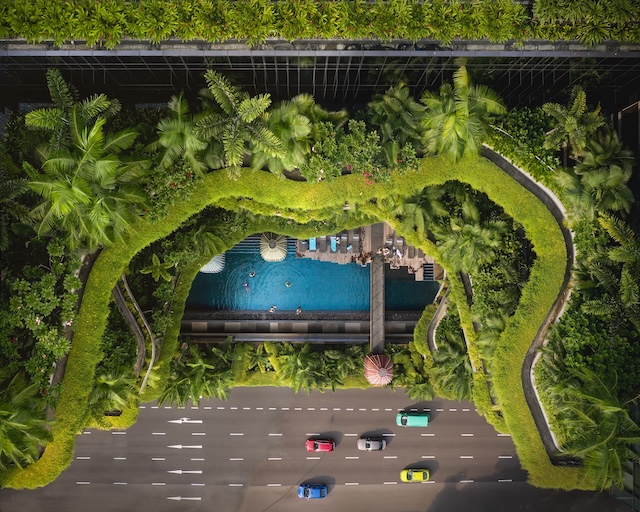
Nestled in the heart of Chinatown and at the gateway to Singapore’s Central Business District stands the 367-key PARKROYAL COLLECTION Pickering, Singapore, known not just for its eye-catching design of abundant greenery, but for leading the way in sustainable hospitality.
Since its opening in 2013, PARKROYAL COLLECTION Pickering, Singapore has championed sustainability through its design, operations, building management, and in-room amenities. Not to mention, the hotel’s green design makes up over 15,000m² contributing to more than twice its total land area.
Certified by the Global Sustainable Tourism Council, where it achieved the global standard for sustainable travel and tourism, the property has implemented systems to reduce and reuse wherever possible in its operations.
For instance, the rainwater harvesting and auto-irrigation systems conserve six million litres of water annually, while 262 solar panels generate 65,000 kWh of renewable energy per year. The hotel even converts food waste into greywater, which is discharged into sewage instead of landfills.
Innovative methods for greater efficiency and impact
Central to PARKROYAL COLLECTION Pickering, Singapore’s sustainability efforts are its innovative measures that leverage technology to reduce environmental impact and improve operational efficiency.
For one, check-in has been streamlined and made more efficient with the hotel’s E-Visitor Authentication, which uses facial recognition technology to automate parts of the process. Guests can go online to input their details ahead of their stay or via an iPad at the reception for a paperless experience. For guests driving to the hotel, they can easily scan a QR code to fill in a form for parking coupons.
As for in-room convenience, guests will soon get to experience a more integrated and seamless smart room with the introduction of a tablet featuring an AI-powered voice assistant. This allows them to control room settings, request amenities and housekeeping, order in-room dining, and make reservations at Lime Restaurant and Bar.
Behind the scenes, various processes have also been enhanced with the help of technology.
An all-in-one cloud-based service management mobile platform utilises AI to prioritise tasks based on factors like room occupancy, check-out times, and guest requests, ensuring efficient resource allocation and timely room cleaning.
Bluetooth Low Energy beacons track movable objects such as in-room dining trays, improving the tray retrieval process. Additionally, items like uniforms, linens, and banquet chairs are tagged with Ultra High Frequency RFID technology for accurate asset tracking, eliminating the need for manual counting.
Guests get to play their part
All sustainability measures by the hotel enable guests to minimise their environmental impact as well, from thoughtfully planned in-room amenities to dining options.
Rooms no longer provide single-use plastic water bottles – instead, premium filtered water dispensers are available in all rooms, saving around 230,000 plastic bottles each year. Recycling bins are also found in guestrooms and public areas throughout the hotel.
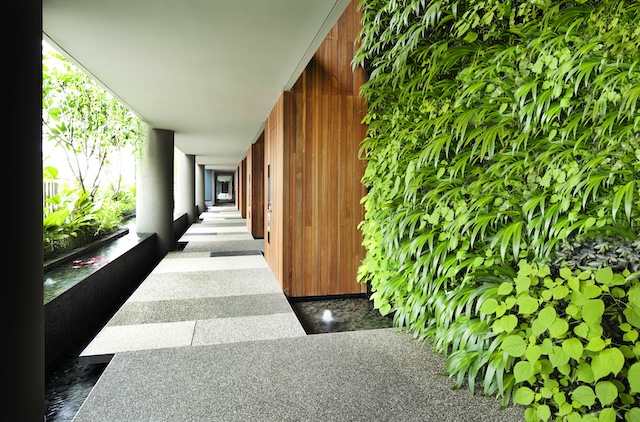
In a tropical country like Singapore, the hotel conserves energy through naturally ventilated corridors, water features and green walls, which also ensure a cool and comfortable indoor climate for guests.
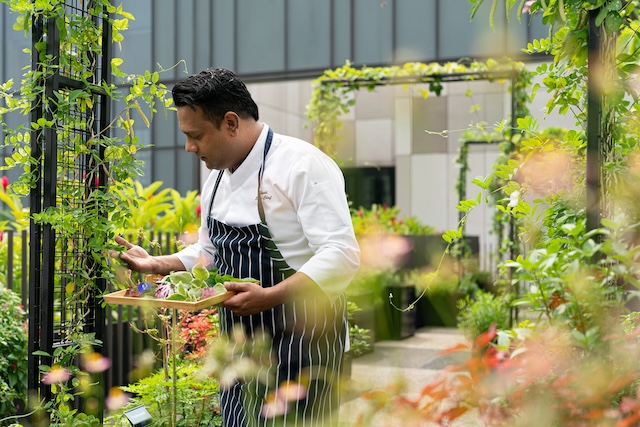
When it comes to food, guests will appreciate the hotel’s Urban Farm on the top floor – home to more than 50 varieties of vegetables, fruits, herbs, and edible flowers – which supplies ingredients to Lime Restaurant and Bar, embodying the farm-to-table concept.
Plus, the restaurant embraces conscious dining, showcasing nutritious dishes made from locally sourced ingredients, a commitment that has earned it the highest tier recognition in the Singapore Food Agency’s Farm-To-Table Recognition Programme.
This dedication to sustainability extends beyond the plate. Lime Bar exemplifies this sustainability ethos with its zero-waste cocktails where bartenders use every part of the fruit – from seeds and leaves to skin and roots – while displaying their creativity in crafting innovative and delicious drinks.
As for what lies ahead, PARKROYAL COLLECTION Pickering, Singapore is certainly not one to rest on its laurels. The hotel remains fully committed to reducing its impact and continues to set the benchmark for sustainable hospitality through the integration of advanced technology and the implementation of innovative practices.
Want your favourite travel brand to win at TTG Travel Awards 2024, Asia-Pacific’s Most Prestigious Travel Industry Accolade? Vote for PARKROYAL COLLECTION Pickering for Best Hotel – Singapore and Best Business Hotel – Singapore now.



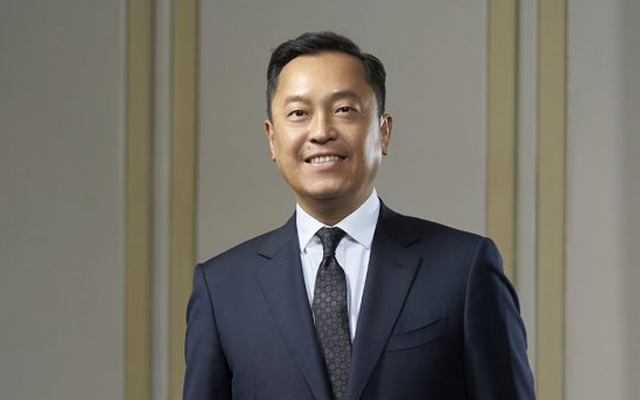
 Prior to this appointment, he was the chief operating officer of Meritus Hotels & Resorts and the Asia-Pacific managing director for IFH Worldwide.














The opportunity for inbound tourism to China is often overlooked, a sentiment echoed by industry leaders during the high-level industry leaders dialogue session at the China-Thailand Cultural Tourism Industry Summit, held in Bangkok on July 1.
“We shouldn’t lose sight of inbound tourism while strategising to attract Chinese tourists abroad,” stated Xu Jing, vice-chairman of the Global Tourism Economy Research Centre (GTERC), who was the panel moderator at the summit.
Highlighting China’s cultural richness, PATA chairman Peter Semone pointed to the country’s ranking within the top five for cultural resources globally on the World Economic Forum’s Travel and Tourism Development Index.
“China has 57 UNESCO World Heritage Sites and 43 intangible cultural heritage offerings. This is a massive opportunity for China, and it’s one that remains largely untapped,” remarked Semone.
He further emphasised the recent merging of China’s Ministry of Culture and Tourism as a strategic move and highlighted tourism’s role in fostering global understanding and peace.
He stated: “People travel to immerse themselves in different cultures and connect with others. If destinations offer homogenous experiences, why travel? One might as well stay home and use virtual reality. Those cultural experiences (are the ones) that promote empathy, respect, and cross-cultural communication, ultimately contributing to social harmony and global interconnectedness.”
William Heinecke, founder and chairman of Minor International, underscored the significance of both inbound and outbound tourism for China.
“We have hotels in China and we have restaurants in China so the domestic market and even the foreign market that goes to China is very important to us for our hotels. But equally important to us is, of course, the outbound market from China,” he said.
Heinecke remarked that his strategic acquisition of Spanish chain NH Hotel Group pre-Covid, which added 350 hotels to Minor’s portfolio, reflects what he foresees as a growing trend – Chinese tourists will increasingly seek diverse experiences beyond Asia.
He elaborated: “We made a very big bet that the travellers of China will not only be going to Asia and be heavy users of Asia, but they’ll also be going to Europe. They’re going to go around the world, because they are seeking richer, more experiential journeys.”
Additionally, Heinecke observed Chinese outbound travel today is less shopping-driven than in the past, saying that the Parisian shopping landscape has already been transposed to major cities like Shanghai or Beijing, and shopping is “less critical” today – having been replaced with the outbound hunger for experiences, food and culture.
Minor is also equally keen on the inbound travel market to China, with Heinecke predicting it will become “one of the largest markets”.
He shared that Minor is working with its partner in China for a pipeline of hotels that will cater to experiential travel, leveraging the country’s plethora of untapped cultural heritage and natural attractions.
The summit, which kicked off a cultural and tourism industry exchange visit by over 200 delegates comprising various industry leaders from Mainland China, Hong Kong SAR and Macau SAR over two days on July 1 and 2, convened key industry figures to discuss bilateral cooperation and unlock new promotional avenues in the Sino-Thai cultural tourism sector ahead of the 50th anniversary of Thailand-China diplomatic relations in 2025.