Airport Dimensions, specialists in airport lounges and experiences and part of the Collinson Group, has expanded into Indonesia with a strategic investment in Blue Sky Group, the owner of the Blue Sky Lounge network.
The move sees Airport Dimensions acquire a 45 per cent stake in Bumi Liputan Angkasa, a subsidiary of Blue Sky Group, giving them a significant foothold in the world’s second-fastest-growing aviation market.
From left: Airport Dimensions’ Errol McGlothen and Blue Sky Group’s Linan Kurniahu at the signing ceremony
This partnership marks a key milestone in Airport Dimensions’ expansion across the Asia-Pacific region. Blue Sky Lounge currently operates premium lounges at major hubs, including Soekarno-Hatta International Airport in Jakarta, Ngurah Rai International Airport in Bali, and Juanda International Airport in Surabaya.
The collaboration will immediately expand Airport Dimensions’ network by adding 11 existing Blue Sky Lounges across Indonesia, located in airports in Jakarta (Terminals 1, 2, and 3), Balikpapan, Samarinda, Batam, Bali, Pontianak, Palembang, Pekanbaru, and Surabaya.
The partnership has also led to its first joint project: the upcoming launch of a brand-new airport lounge at Makassar Sultan Hasanuddin International Airport later this year.
This strategic investment aligns with Airport Dimensions’ broader plan to expand its lounge network across Asia-Pacific, building on recent successes such as its venture into Hong Kong with Kyra Lounge and Chase Sapphire Lounge by The Club, and a flagship partnership with SASCO in Vietnam.
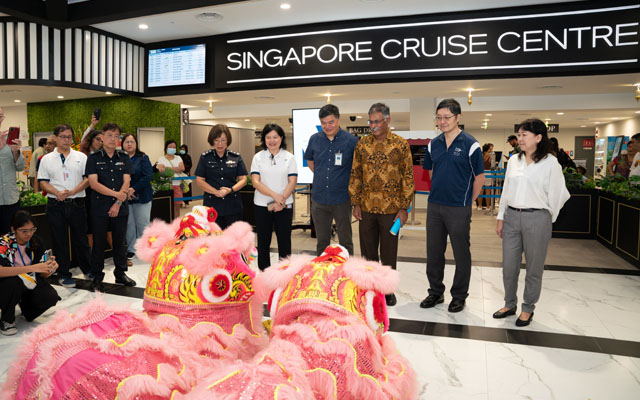
After a year-long renovation, the upgraded Tanah Merah Ferry Terminal (TMFT) at Singapore Cruise Centre (SCC) is set to support increased travel between Singapore, the Riau Islands, Indonesia, and Johor, Malaysia, with self-service kiosks and automated lanes that speed up passenger processing.
Tanah Merah is one of three ferry terminals and one cruise terminal operated by SCC, alongside its international cruise and regional ferry terminal at HarbourFront Centre, and its domestic ferry terminal at Pasir Panjang.
Tanah Merah Ferry Terminal reopens after a year-long renovation, featuring self-service kiosks and automated lanes for faster passenger processing
SCC expects up to 70 per cent of ferry passengers to use self-check-ins at TMFT’s 15 new kiosks, which will be fully deployed by the end of the year. Travellers will no longer need to queue at ferry operator counters for boarding passes; instead, they can scan their passports at the kiosks to print both boarding passes and luggage tags. Bags can then be dropped at six counters, an increase from the previous four.
The traveller experience is further enhanced in the immigration halls with the introduction of the Immigration & Checkpoints Authority (ICA)’s passport-less clearance initiative. Singapore residents arriving and departing, as well as all departing foreign travellers, can now clear immigration using facial and iris biometrics, eliminating the need to present their passports. With this new system, travellers can clear immigration in about 10 seconds, making the process 60 per cent faster than before.
Additionally, ICA has increased the overall clearance capacity in the immigration halls by about 50 per cent, expanding from 12 to 26 lanes for arriving passengers and from 12 to 20 lanes for departing passengers.
The upgrade at TMFT introduces new amenities, including F&B outlets like Woon’s Kopi by Killiney, Subway, Luckin Coffee, and Lepak Corner, an outdoor children’s playground, and ‘flexi’ rooms that can be converted for meetings, catering to business travellers heading to Batam or Bintan. Other additions include a prayer room and more. Inside the departure area, a new lounge will complement the existing Bintan Resorts Ferries Emerald Lounge.
SCC CEO Jacqueline Tan said: “We are pleased that the upgrade of Tanah Merah Ferry Terminal has been completed according to plan and within the projected timeline. With the seamless, contactless systems, optimised space, and new amenities, we are able to offer ferry passengers elevated user experiences. This enhances our role as a regional gateway from Singapore to Riau Islands and Malaysia, as economic growth generates higher passenger volumes in the coming years.”
The Hari Hong Kong has introduced a retox experience, offering a one-night Retox But Not Detox room package that includes a room or suite, breakfast for two, and options like a late-night cigar, gin, dessert platter, or sweet bubbles.
The package also features the Late-Night Retox, which offers a choice of either the Cigar Combo or Sweet Duo for two.
The Hari Hong Kong launches retox experience with exclusive one-night package featuring cigar, gin, and dessert options
The Cigar Combo pairs a Confidenciaal cigar with a glass of The Hari London Dry Gin, featuring citrus, peppercorn, and floral notes, served on the rocks. The Sweet Duo offers a dessert platter of home-made Amalfi lemon sponge, berries panna cotta, and pistachio cannoli, accompanied by a glass of Moscato d’Asti Scagliola Primo Bacio from Piedmont, Italy.
Priced from HK$2,360 (US$301), the room package will be available from April 1 to September 30 this year. Retox But Not Detox includes early check-in at 14.00 and late check-out until 14.00 (subject to availability).
Late-Night Retox is available at Zoku & The Terrace after 20.00.
For guests not booking the Retox But Not Detox package, Zoku & The Terrace offer the Cigar Combo for HK$298 per person and the Sweet Duo for HK$228 per person.
Speakers on the Reshaping Global Airport Operations fireside chat emphasise the collective efforts needed to bring airport operations into the future
The three-day inter airport Southeast Asia 2025, which kicked off on March 25 at Marina Bay Sands, Singapore, is seeing hot discussions about the future of airport operations and passenger experience. These conversations, which are built on the event theme, Airport Operations for Tomorrow, are said to be critical, as the aviation industry is witnessing rapid transformation and has projected global passenger traffic to reach 19.5 billion by 2042.
The event opened with a fireside chat on Reshaping Global Airport Operations, which delved into the fundamental shift airport operations will face and how airports must evolve to balance the imperatives of efficiency, resilience, and sustainability.
Speakers on the Reshaping Global Airport Operations fireside chat emphasise the collective efforts needed to bring airport operations into the future
When asked to share one game-changing technology that would redefine the industry, Patrick Ky, CEO, International Centre for Aviation Innovation, said “innovation that drives data sharing will be key”, but that would require many regulatory aspects and willingness from airports to share with each other.
Glory Wee, senior director, aviation development group, Civil Aviation Authority Singapore, added: “It is clear from our discussion that in order to reshape airport operations, it is not just about technological advancements but also about setting standards, data integrity, collaborations, and sharing best practices. Above all, the industry needs to work towards building trust with partners and ecosystem players.”
Leading airports also presented case studies highlighting their technological integrations, regional growth strategies, and efforts to meet rising demand while enhancing passenger experience.
Shinichiro Motomiya, general manager, Narita International Airport Corporation, detailed the airport’s expansion project for the 2030s, which includes extending an existing runway, constructing a new runway, improving connectivity into the city, and consolidating this into a single terminal to accommodate the expected increase of passenger capacity from 57 to 75 million.
Nguyen Dang Minh, director of airport operations department, Airports Corporation of Vietnam (ACV), also shared the organisation’s master plan to develop a robust and resilient airport network by 2050. By 2030, ACV will equip 30 airports across the country with a combined capacity to handle 275.9 million passengers annually. By 2050, the network will expand to 33 airports (14 international and 19 domestic), ensuring that 97 per cent of the population has access to an airport within 100km.
At the heart of this transformation is the Long Thanh International Airport project, positioned as a key national aviation hub and one of the most ambitious infrastructure projects in the region.
Delegates attending inter airport Southeast Asia 2025 today and tomorrow will have access to groundbreaking discussions and innovations that address efficiency, sustainability, and automation in ground handling and airport logistics.
Tourism New Zealand (TNZ) is working to make it easier for Indian travellers to visit and experience New Zealand’s landscapes and culture through initiatives that remove traditional barriers, simplify booking processes, and offer new reasons to choose New Zealand as a year-round holiday destination.
A potential direct flight route between India and New Zealand could remove travel barriers and simplify longhaul journeys. At a tourism reception hosted by TNZ, prime minister Christopher Luxon witnessed the signing of a memorandum of understanding (MoU) between Air India and Air New Zealand to explore direct connectivity, making New Zealand more accessible to Indian travellers.
Tourism New Zealand aims to increase Indian visitation through direct flights, partnerships, and targeted marketing campaigns; Auckland in New Zealand, pictured
TNZ is also reinforcing its commitment to increase Indian arrivals through strategic alliances and seasonal travel initiatives. It recently signed an MoU with Auckland Airport and Air New Zealand committing investment to a joint seasonal marketing campaign to build demand and drive off-peak visitation to New Zealand.
Additionally, joint venture agreements were signed with nine Indian travel partners to drive visitation through curated travel experiences tailored to Indian traveller preferences, with a focus on promoting New Zealand’s winter and spring seasons.
An integrated winter campaign was also launched, combining media content with promotional travel packages. The initiative aims to target Indian visitors through digital media placements and provide conversion opportunities via travel partners, showcasing New Zealand’s winter destinations, adventure sports, and luxury stays.
René de Monchy, chief executive of TNZ, said: “We are focused on enhancing these commercial partnerships and through improved connectivity and strategically targeted high-impact marketing campaigns, we are keen to convert this interest into bookings and visitation.
“With Indians typically travelling outbound during their key holiday periods that align perfectly with New Zealand’s traditionally quieter seasons, we see a significant opportunity for medium and long-term growth as a preferred, premier holiday destination for Indian visitors all-year round.”
Ponant is embarking on a new chapter with a refreshed identity as Ponant Explorations Group, following its recent acquisition of a majority stake in Aqua Expeditions.
This evolution aligns with the Group’s international growth strategy to build a portfolio of leading exploration voyage brands, while reinforcing its ambition to accelerate development and strengthen its position in a dynamic and evolving market.
Ponant Explorations Group’s three commercial brands are Ponant Explorations, Paul Gauguin Cruises, and Aqua Expeditions; photo by StudioPonant-SofiaSteeg
CEO Hervé Gastinel confirmed that as Ponant Explorations Group, the company remains focused on providing unique travel experiences to key destinations, offering access to exclusive locations, and maintaining high service standards.
Additionally, Ponant Explorations Group is also developing a portfolio of brands recognised for their expertise and destination-driven exploration cruises.
Staying true to its heritage, Ponant Explorations Group maintains continuity in its brand identity, keeping the iconic three-sail logo. At the same time, each of the group’s three commercial brands features its own unique visual identity.
Ponant Explorations, its historic brand, is renowned for its exploration voyages, offering guests close encounters with nature and culture beyond traditional maritime routes for over 35 years. The brand provides expert-led expeditions, including shore excursions and cultural, scientific, and historical conferences on board. Paul Gauguin Cruises, a specialist in French Polynesia since 1998, offers a unique exploration experience aboard the m/s Paul Gauguin, with 165 cabins. Aqua Expeditions, a pioneer in luxury small-ship expeditions, explores biodiverse and culturally rich destinations with bespoke five-star itineraries, a 1:1 crew-to-guest ratio, and expert-led excursions.
“The Asia-Pacific team is excited and proud to be part of this phase of strong expansion,” said Deb Corbett, CEO Asia Pacific for Ponant Explorations Group. “We all look forward to implementing our diverse and dynamic go-to-market action plans to support the vision and growth of this portfolio.”
Cunard’s new ship, Queen Anne, made her debut in Singapore on March 24, docking at Marina Bay Cruise Centre for an overnight stay as part of her 107-night maiden world cruise, which will visit over 30 destinations across more than 20 countries.
Singapore and Hong Kong are the only destinations in Asia where the ship will stay overnight, which includes New York, San Francisco, Auckland (New Zealand), Cape Town (South Africa) and Sydney (Australia).
Queen Anne docks at Singapore’s Marina Bay Cruise Centre for the first time
A plaque exchange ceremony was held to mark the ship’s maiden call to Singapore, during which commemorative plaques were exchanged between captain David Hudson and representatives from SATS-Creuers Cruise Services, which operates the Marina Bay Cruise Centre Singapore; the Singapore Tourism Board; and Wallem Shipping.
On March 24, over 40 local travel advisors were invited onboard for a familiarisation tour of the ship’s facilities and hosted to lunch at the Britannia Restaurant. The advisors got a first-hand look at signature offerings onboard, such as the Royal Court Theatre, a two-deck venue with 825 seats, and the ship’s grand atrium, which spans three storeys and features a mural sculpture that changes throughout the day.
The staterooms offered onboard include Cunard’s Grills Suites, which are paired with two of the ship’s main restaurants, the Queens Grill and the Princess Grill. These suites vary in size, ranging from approximately 28m² to 134m².
On March 26, Queen Anne will continue with her world voyage and set sail for Kuala Lumpur and Penang, followed by Mauritius, South Africa, Namibia, Senegal, Tenerife (Spain) before completing her journey back in Southampton on April 27.
In February 2026, Queen Anne will offer a five-night sailing from Singapore to Hong Kong as part of her 2026 world voyage.
Online B2B platform RateHawk has introduced a new sustainability certification filter in its accommodation search – this tool helps travel professionals find properties with lower carbon footprints, eco-friendly practices, and thoughtful sustainability initiatives.
Users can select this filter to browse a list of greener options. Relevant accommodation will also display a sustainability certification badge on their hotel card for easy identification.
RateHawk has launched a sustainability certification filter to help travel professionals find eco-friendly accommodation
The new filter is available on the RateHawk website and mobile web.
Ilya Kravtsov, chief commercial officer of Emerging Travel Group, RateHawk’s parent company, commented: “By rolling out a sustainability certification filter, we aim to help travel professionals and their clients quickly and easily find eco-certified options. This update is particularly crucial for users in the travel management company sector, as sustainability policies are increasingly prioritised by their corporate clients. This initiative reflects our commitment to creating a user-friendly platform that meets all our customers’ needs and supports the sustainable development of the tourism industry.”
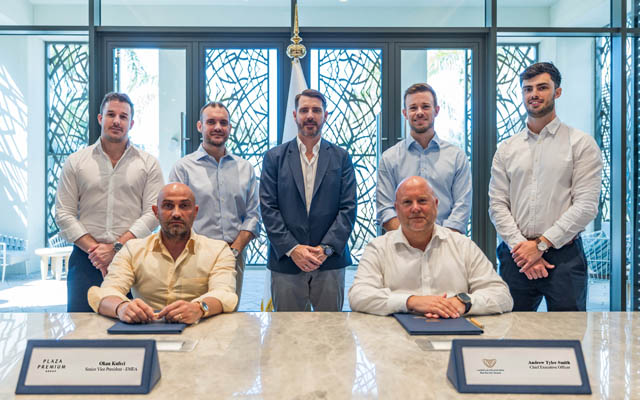
daa International has partnered with Plaza Premium Group (PPG) to manage premium hospitality services at Red Sea International Airport (RSI), a collaboration that will see PPG implement its Plaza Premium First standards in Saudi Arabia for the first time.
PPG will manage a range of premium services, including four premium lounges for passengers, five F&B outlets, and seven dining rooms catering to airport staff. In a first for Saudi Arabia, the premium departure lounges will also offer a fully à la carte dining experience for all passengers.
The collaboration will see Plaza Premium Group implement its Plaza Premium First standards in Saudi Arabia
The new RSI airport is designed to reduce travel stresses and provide passengers with a seamless experience from the moment they arrive. The terminal’s architecture creates a private aircraft terminal feel, offering a personalised experience through smaller, intimate spaces. The lounges and F&B outlets aim to provide a relaxing environment, aligning with the sustainable ethos of The Red Sea destination.
RSI CEO Andrew Tyler-Smith shared: “By combining our expertise in airport management with Plaza Premium Group’s global excellence in hospitality, we are setting a new standard for comfort, service, and innovation. We look forward to welcoming travellers to our premium lounges and dining spaces, where every detail is designed to enhance their journey.”
Okan Kufeci, senior vice president, EMEA of Plaza Premium Group, added: “By introducing Plaza Premium First standards to Saudi Arabia, we are not only enhancing the travel experience but also reinforcing our commitment to delivering exceptional hospitality solutions globally. This collaboration is a testament to our ongoing efforts to innovate and elevate airport services, setting new benchmarks for comfort and luxury”.
Amara Sanctuary Sentosa has launched the Family Adventure Escapade, designed for families with children aged 11 and below, offering the chance to create memories with a 450-metre ride across South-east Asia’s steepest zip line at Mega Adventure Park.
The package includes complimentary daily breakfast buffet for two adults and two children, 20 per cent savings when dining at Sanctuary Tearoom, two tandem tickets at MegaZip Adventure, as well as a complimentary Vanilla Milkshake at Sanctuary Tearoom daily for children aged 11 and below.
Families can enjoy a zip line tandem ride at Mega Adventure Park
The Family Adventure Escapade package is available for all room types except Amara Sanctuary’s Courtyard Suite and Couple Suite.