TTG Asia
Asia/Singapore Tuesday, 20th January 2026
Page 2525

OUE confirms grab for Fraser and Neave’s property portfolio

0

A CONSORTIUM led by Overseas Union Enterprise (OUE), whose assets include Crowne Plaza Changi Airport, Mandarin Orchard Singapore and Marina Mandarin Singapore, put down a S$13.1 billion (US$10.7 billion) bid for Fraser and Neave (F&N) on Thursday night, eyeing the company’s property portfolio.

OUE Baytown is offering S$9.08 per share, topping Thai tycoon Charoen Sirivadhanabhakdi’s S$8.88.

F&N’s second-largest stakeholder Kirin Holdings has agreed to accept the offer subject to certain conditions. Should OUE’s bid be successful, Kirin will also make an offer to purchase F&N’s food and beverage business.

The move could split up the 129-year-old F&N, leaving OUE to take over its property business, which includes hospitality and serviced residence arm Frasers Hospitality.

F&N had earlier received an offer for Frasers Hospitality at S$1.4 billion, which it did not respond to (TTG Asia e-Daily, October 10, 2012), saying that the latter formed an integral part of its property business and that it was constrained from selling while it remained the subject of a takeover bid.

OUE executive chairman, Stephen Riady, said: “(F&N’s) property portfolio would be highly complementary to OUE’s existing property portfolio. Combining both will further strengthen OUE as a leading property player in Singapore and expand our footprint in Singapore and regionally.”

Local broadsheet The Straits Times also reported that OUE may sell off Mandarin Orchard Singapore and Mandarin Gallery to finance the bid. In September, OUE revealed that a buyer had expressed interest in the two properties, collectively valued at S$1.7 billion in the company’s annual report last year TTG Asia e-Daily, September 20, 2012.
Philippines readies for Middle East boom

0

TRAFFIC from the Middle East is set to soar with direct flights to the Philippines commencing end-2012 and early 2013, as well as increased trade cooperation in the wake of the first-ever Philippine-Middle East Travel Exchange.

New aviation deals were sealed at the 18th World Routes Development Forum in Abu Dhabi, where the Philippines was a participant. Emirates and Etihad Airways will begin daily direct flights from Dubai to Manila in December 2012 and January 2013 respectively. Cebu Pacific and Philippine Airlines are also likely to start similar services.

On Tuesday, nine travel players from Saudi Arabia, seven from the United Arab Emirates (UAE) and 60 Philippine travel operators met in the Philippines for an inaugural exchange, giving the local travel trade an opportunity to explore opportunities with their counterparts from the Middle East.

In addition, the Department of Tourism (DoT) is also organising an upcoming fam trip. The Middle East Broadcasting Company, along with Emirates’ and Etihad Airways’ in-flight magazines, will be participating.

DOT undersecretary Maria Victoria Jasmin said her department had specifically identified Saudi Arabia and the UAE as opportunity markets. “Halal food is generally available in five-star hotels, and the DOT is undertaking a programme that will make certified halal food easily available outside Manila.

“We are also expanding air connectivity between the region and the Philippines, as well as air connectivity into various destinations in the country.”

Ascott debuts Citadines brand in Chengdu

0

CAPITALAND’S The Ascott will deepen its presence in China with the opening of Citadines South Chengdu, which it has secured a contract to manage.

The 177-unit residence is scheduled to welcome guests in 2014, joining the other 43 Ascott properties across 17 cities in China and making Chengdu the third city in the country with all three Ascott brands represented.

Ascott currently operates one Somerset serviced residence in Chengdu and will open two more premier Ascott-branded properties there in the next two years.

Lee Chee Koon, Ascott deputy CEO and managing director for North Asia, said: “Chengdu has strong growth opportunities for serviced residences. Its economy grew by more than 13 per cent for the first half of 2012 over the same period last year. In Central and Western China, Chengdu has been ranked the top city with the most Fortune 500 companies. Chengdu is also a popular tourist destination and venue for exhibitions and conferences.”

Citadines South Chengdu is situated at the junction of Tianfu Street and Tianfu South Road within the Chengdu Icon Genesis plaza, a mixed-use development that includes offices, restaurants and shops.

The property offers studio to two-bedroom apartments with fully-equipped kitchens, and houses facilities such as a gym, sauna, roof garden, breakfast lounge, children’s play area and meeting rooms.


Fiji targets Asian travellers

0

The island nation embarks on a rebranding spree to spruce up its image

2012-nov16-tipsheet1-1
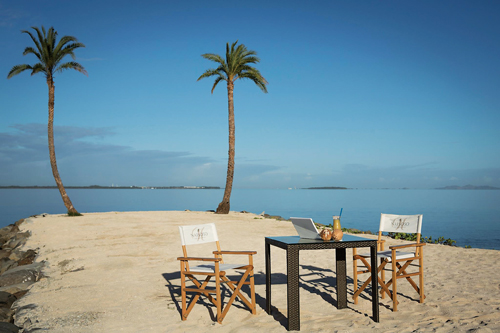
Naisoso Island

Having been allocated US$23.5 million from the government, Tourism Fiji is currently undergoing a major rebranding campaign, with the Chinese market being among its primary targets.

The NTO’s rebranding exercise comes on the heels of national carrier Air Pacific’s decision to revert to its 1951 name of Fiji Airways from 2013. Its revitalising efforts include the addition of three new aircraft and a revamped fleet, as well as fresh furnishings and enhanced in-flight offerings.

Earlier this year, Air Pacific set up a new office in Hong Kong while a Shanghai marketing and PR office was recently established to support the existing Hong Kong office.

According to Dave Pflieger, managing director and CEO of Air Pacific and chairman of Tourism Fiji, the Hong Kong and Shanghai offices will be used to boost outbound traffic from China – currently Fiji’s fifth biggest source market – as well as the wider middle-class Asian market through offering destination and product information.

Samu Savou, the Beijing-based trade commissioner of The Pacific Islands Forum, said Fiji’s natural assets would appeal to Chinese travellers. “They won’t come here for shopping or for luxurious living and cuisine. Chinese will come to the islands because of our pristine environment and our unique cultures.”

Besides targeting frequent Chinese travellers, Tourism Fiji also seeks to establish the archipelago as an alternative to popular Asian islands such as Bali and Phuket by offering improved flight facilities, more competitive travel packages and a broader range of accommodation options, according to Dixon Seeto, president of the Fiji Islands Hotel & Tourism Association.

Meanwhile, Jetstar is also luring Asian visitors to the Pacific nation with multi-country holiday packages that include Australia, New Zealand and Fiji from its Asian bases. The launch of Jetstar Japan earlier this year is also expected to encourage travel to Fiji via New Zealand or Australia, marking a welcome return of Japanese tourists after Air Pacific’s service to Tokyo ceased in 2009.

While Fiji is better known for its exclusive island resorts, a number of four- and five-star properties are under development on the main island of Viti Levu.

Two new casinos have broken ground, one on Denarau and one in Suva, while the historic Grand Pacific Hotel will open next year after a multi-million dollar refurbishment. Naisoso Island, connected to Nadi by a bridge, will soon be home to a Peppers resort as well as a four-star property, alongside restaurants and leisure facilities.

Reporting by Natasha Dragun

GDS players roll out mobile-ready tools

0

Travelport and Amadeus have unveiled new web-based solutions to offer Asia-Pacific travel consultants access to their respective GDSs via the Internet, allowing them to serve clients after office hours or on the go.

Amadeus’ new Mobile Access is the smartphone and tablet version of Amadeus Selling Platform, enabling access to travel content such as fare quotes, bookings, PNR creation, modification and cancellation, ticketing and sales reports across air, cars and hotels. It will be available in India, Hong Kong, Indonesia, Singapore, Vietnam and Taiwan.

Travelport’s mobile solution, GalileoTerminal, can be used to book flights, quote fares, issue tickets and perform other business-critical functions. It will be launched in Hong Kong, Singapore and Australia from next month, before being rolled out progressively to the rest of the region in 2013. Currently in its first version, Travelport will enhance GalileoTerminal to a point-and-click system eventually.

Said Chua Hui-Wan, Travelport senior regional director for Asia-Pacific: “Regardless of whether they are corporate or leisure travel agencies, they are telling us again and again that mobile is the way they want to access, whether for convenience or to be able to be there 24/7 for their customers.”

Chua hoped such a solution will be a catalyst to new ways of doing business. “The first step is to get agencies into this mode of technology then expand beyond that…It’s not just using mobile to access, but how to make themselves a lot more visible to the consumer who is viewing and booking travel on mobile.”

Bruno des Fontaines, vice president, business solutions, Amadeus Asia-Pacific, said: “As consumers increasingly look to travel comparison sites and even direct bookings to arrange their travel, Mobile Access helps travel agencies maximise sales, efficiency and customer service in a highly competitive environment.

“Not only does the tool support new sales, but it allows (consultants) to provide a premium service to existing customers, ensuring customer loyalty with no additional cost involved.”

Uluru Meeting Place to open November 16

0

LOCATED at Australia’s largest attraction Ayers Rock, Uluru Meeting Place (UMP) opens tomorrow, giving event planners a reason to dream big.

The owners, Voyages Indigenous Tourism Australia, spent some A$30 million (US$31.3 million) on the new conference centre as well as the makeover of the adjacent Sails in the Desert Hotel, both part of the larger Ayers Rock Resort.

The result is a series of striking modern spaces designed with indigenous flair, from the three meeting rooms in Sails to the two main conference rooms in UMP, namely the Tjungu Ballroom and Wanari Conference Room with seating capacity for 420 and 300 people respectively. All 231 guestrooms at Sails have also been given a facelift.

Coinciding with the launch, a range of teambuilding activities has been introduced, including hosted talks and cultural performances. A new, premium under-the-stars dining experience, Tali Wiru, has commenced, offering guests the opportunity to dine outdoors with views of The Rock, as have the Outback Sky Journeys, a series of stargazing tours.

Voyages’ executive general manager sales, marketing and distribution, Ray Stone, said: “We see great potential here for the Asian market – it’s an emerging market that has real scope for growth in the near future, especially in the area of incentives and meetings.”

Stone told TTGmice e-Weekly that Voyages was working closely with a number of business, tourism, trade and events groups to actively promote UMP throughout the region.

By Natasha Dragun

Qatar National Convention Centre to deliver COP18/CMP8’s green message

0

THE Qatar National Convention Centre (QNCC) will set an example of how ‘green’ MICE events can be when the eco-friendly venue, built to be 32 per cent more energy efficient than buildings of similar size, scope and usage, hosts the UN Climate Change Conference (COP18/CMP8).

COP18/CMP8 is scheduled to run from November 26 to December 7 and draw an estimated 17,000 participants.

QNCC, which is fitted with 3,500m2 of solar panelling, will provide up to 12.5 per cent of the centre’s energy needs or 40.8MWh in total, during the conference.

The centre has also prepared environmentally-friendly food packaging for 21 ‘grab and go’ food outlets for delegates and visitors during the event, with bowls made from sugar cane residue, salad bowls and drinking cups for cold drinks from natural starch, as well as cutlery and coffee cups from natural cellulose.

Adam Mather-Brown, general manager, QNCC, said: “Energy efficiency was a specific consideration during the design and build phase of the project. Qatar has a desert climate and cooling systems are of paramount importance. The centre was designed and built to the highest environmental standards and conceived with a focus on sustainability, a feature that complements the objectives of COP18/CMP8.

“Its use of solar power is an innovative way to reduce the building’s impact on the planet, a benefit that is very relevant for this event.”

Cox & Kings India ties up with Berlin Tourism for MICE

0

COX & KINGS India has tied up with Berlin Tourism to promote the historic city to major Indian companies, in a bid to tap the burgeoning Indian outbound MICE market.

Road shows were held in New Delhi and Mumbai to showcase attractions and MICE venues such as Brandenburg Gate, Olympic Stadium, State Opera House and East Side Gallery.

Lately, Indian leisure and MICE travellers have shown interest in exploring off-the-beaten-track destinations in Germany.

Ajay Seth, vice president outbound MICE, Cox & Kings India, said: “Berlin has state-of-the-art conference facilities as well as renowned museums and art galleries, and these make it an attractive MICE destination. Moreover, (the city) is very well-connected by flights operated by many airlines.”

Romit Theophilus, director of marketing and sales, German National Tourist Office India, said: “Germany is more economical than other European countries and this is one of the reasons why it is the second-most important destination in (this region) after the UK.”

Theophilus also compared Berlin to New York, saying that hotel rates in the German capital city were lower, thanks to a larger supply of rooms.

In 2011, 547,000 Indians travelled to Germany while 600,000 are expected to do so in 2012.

Zanadu opens doors to China luxury market

0

FORMER YTL Hotels president James McBride has become an entrepreneur, staking equity in several ventures, one of which is Zanadu.cn, China’s first by-invitation-only luxury travel website and online travel agency.

Since it went live six months ago, Zanadu, which has a 24/7 booking engine, claims a membership of 10,000 affluent Chinese customers and promotes lifestyle experiences to them. Membership is free, comprising urban, educated and upwardly-mobile 25-40-year-old Chinese individuals.

To date, Zanadu has curated about 200 luxury and boutique hotels around the world for its members.

Keen interest among luxury hotels and resorts worldwide to crack the affluent Chinese market will see the launch of Zanadu 360, a marketing, e-commerce and representation service, in January, said McBride. An executive director will come on board next month to oversee Zanadu 360.

“It’s a natural evolution. General managers (of luxury properties) used to make a beeline for New York and London (US and Europe are the largest luxury markets), and it’s a matter of time when they will go to Beijing and Shanghai,” McBride said.

Separately, McBride and partner Christopher Burch of Burch Creative Capital and founder of Tory Burch, have taken a stake in a small, exclusive resort hideaway on the Indonesian island of Sumba, 400 miles south of Bali.

Built in 1989 by Claude Graves, who remains a partner, Nihiwatu operates in conjunction with the Sumba Foundation, appealing to an increasing number of luxury travellers who want purpose-driven travel.

The property encompasses 175 hectares of tropical forest, rice terraces and grasslands, while its 2.5km of beachfront are protected by headlands that ensure total exclusivity for guests.

“It has one of the best surf waves in the world,” Mc Bride said, envisioning more Nihiwatu-type resorts – luxury with an element of adventure, be it surfing or mountain-climbing, with a foundation associated with it – in destinations like Fiji and the Maldives.

McBride is also involved in Burch’s latest retail concept, C Wonder, which offers “astonishing value” luxury clothing, accessories and home decor in an exciting setting and with an inspiring customer service concept.

China-Iran agreement paves way for Chinese influx

0

A PARTNERSHIP established between the Iranian and Chinese governments in August 2011 to facilitate travel between the two countries has created stronger Chinese interest in Iran.

The partnership contract includes the appointment of official travel agencies to handle visa applications and letters of invitation for Chinese travellers. This development has helped to pave the way for more Chinese leisure travel to Iran, which previously drew mostly corporate and government travellers from the Middle Kingdom.

Available air access between China and Iran has also helped. Iranian carrier Mahan Air flies thrice weekly between Tehran and Shanghai, while China Southern Airlines has Tehran-Urumqi services.

As such, Iranian tour operators are now keen to grow their volume of Chinese travellers.

Hadi Shirazi, managing director of Arfa Tour & Travel Agency in Tehran, whose company is one of Iran’s official Chinese tour handlers, told TTG Asia e-Daily: “We have seen three times more Chinese business since August 2011.

“Chinese tourists visiting Iran tend to be keen on historical sites. Iranian destinations popular with the Chinese include Tehran, Isfahan, Yazd and Shiraz. They usually stay a week in Iran, and average spend per person is US$800.”

Dina Cheraghvand, marketing manager of Dorna Tour Agency, has also raked in more Chinese business. She said: “We are seeing more Chinese FITs and backpackers but not many groups yet when compared to other countries. This is probably because Chinese travellers still regard Iran as an exotic, lesser-known destination.

“It is clear that Iran’s tourism players are shifting their focus to the East. The Western market tends not to view Iran very well, so we hope the Chinese will regard our country better,” said Cheraghvand, who added that her company is courting travellers from China and Malaysia in particular.

To reduce language barriers, the Iranian Cultural Tourism and Heritage Organisation is training more tour guides to be conversant in Mandarin, according to Shakib.