SATS-Creuers Cruise Services (SCCS), the terminal operator of Marina Bay Cruise Centre Singapore (MBCCS), has appointed Gregory Tan as its new CEO. He will oversee the company’s direction, growth, and the daily operations of MBCCS.
Tan was previously SCCS’ chief operating officer and has 15 years of experience in tourism management. With extensive knowledge in aviation ground handling, he has a proven track record of strengthening relationships with key airline clients such as Singapore Airlines, Qantas, and Lufthansa.
A pilot project aimed at developing sustainable tourism, with a focus on empowering women, youth, and rural communities, has been launched in Cambodia and Vietnam under the Organisation Internationale de la Francophonie (OIF) Destination Eco-Talents (DET) initiative.
From March 26 to 28, the OIF organised a workshop for the DET project in Siem Reap, Cambodia, a pilot country for the initiative designed to promote sustainable and inclusive tourism.
The DET project empowers women, youth, and rural communities while boosting tourism competitiveness
Adjara Diouf, project coordinator at REPAP/OIF, said the project is the result of studies – led by Millennium Destination – conducted in Cambodia, Vietnam, the Comoros in the Indian Ocean and Cabo Verde in West Africa.
“The results have shown a strong potential to develop sustainable and inclusive tourism. DET aims to strengthen competitiveness in the tourism sector, including women, young people and local communities,” she said, adding that the pilot project will run until 2027.
“The objective is to have more solidarity and a better tourism space. We want to develop more sustainable tourism for local, rural and suburban communities, as they’re often excluded from decision-making in tourism value chains. Nobody is left behind in this project.”
Education, training, and enhancing the professionalism of tourism stakeholders are key priorities, alongside developing and promoting sustainable tourism offerings to boost the attractiveness and competitiveness of local initiatives. Another objective is to foster strong networks among relevant players to strengthen regional efforts, with the goal of improving cross-border tourism coordination.
As part of the project, DET Centres will be set up in the pilot countries, including Siem Reap. These centres will feature spaces for training and raising awareness about sustainable tourism, as well as areas to promote locally-produced products.
“We will also do a lot of awareness outreach about sustainable tourism. This is a long-term process,” Diouf shared, adding that the DET centres will serve as information centres for sustainable tourism, providing details about ongoing initiatives in the area, with the aim of improving the skills of youth to match local needs and strengthen competitiveness in the tourism sector.
Dee Suvimol Thanasarakij, executive director of Mekong Tourism Coordinating Office (MTCO), noted that the tourism sector contributes a major chunk to the region’s gross domestic product (GDP), with developing sustainable and inclusive tourism key to ensuring the sector’s future.
Commenting on why sustainable tourism matters, Thanasarakij said: “We want to make sure that what we have today is left for the next generation. We want to make sure our children live in a better world.”
She added that MTCO has been developing the GMS Tourism Strategy 2030, which will launch in June to provide a comprehensive roadmap to develop the Greater Mekong Subregion (GMS) into a premier global destination, recognised for “high-quality sustainable tourism experience that fosters inclusive, resilient and sustainable development”.
“Tourism contributes a large percentage of GDP in this region. At the same time, while we enjoy the economic benefits, we want to make sure it doesn’t harm our environment, local culture or where we’re living. We need to keep a balance,” she stated.
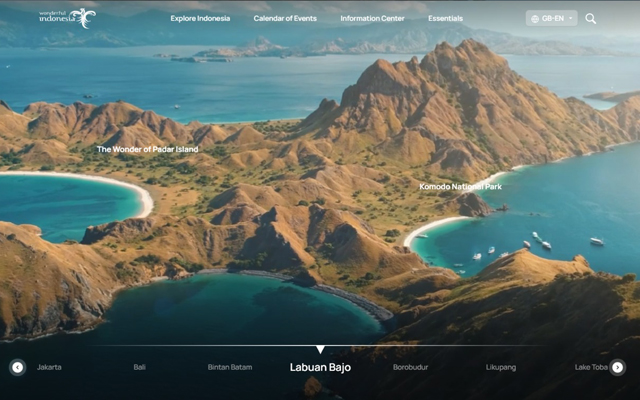
Indonesia’s Ministry of Tourism (MoT) is transforming Indonesia.travel website into a smart travel companion, with the aim of making trip planning seamless, intuitive, and personalised.
The first phase introduced 360-degree virtual experiences, allowing travellers to explore destinations before they arrive. In May, the next stage will integrate AI to personalise itineraries, provide real-time recommendations, and enable businesses to anticipate demand, tailor their services, and enhance the overall travel experience for visitors.
The website will feature AI-powered tools for personalised itineraries and real-time recommendations
Speaking at a press briefing in Jakarta, minister of tourism Widiyanti Putri Wardhana stated that the platform is evolving towards a more interactive experience, noting that Indonesia.travel is no longer a source of information but also a smart companion that “guides, inspires, and adapts to each traveller’s needs”.
Three AI-driven tools power this transformation: Travel Planner, Travel Companion, and the Command Centre. The Travel Planner creates customised itineraries based on preferences, budget, and schedule. Once in Indonesia, the Travel Companion suggests activities, dining options, and local events in real time. Meanwhile, the Command Centre works behind the scenes, analysing travel patterns and visitor behaviour to help businesses and regional tourism authorities make data-driven decisions.
MoT’s assistant deputy for marketing strategy and communications, Firnandi Gufron, said: “We’re not just enhancing the traveller experience, but also strengthening the entire tourism ecosystem,”
To simplify trip planning, the website will serve as an aggregator, connecting travellers with airlines, hotels, and tour operators. A built-in Application Programming Interface will synchronise with booking platforms, ensuring prices and availability remain up to date.
While major OTAs are already integrated, the ministry is open to working with any partner that meets the technical requirements.
“At the end of the day, it’s about making travel planning simple and stress-free. As long as a partner’s system integrates smoothly, we’re happy to collaborate,” Firnandi said.
Sri Lanka has launched a new campaign, Sri Lanka, A Story for Every Season to promote the country as a year-round destination rather than one for the winter season, with content spotlighting wildlife safaris, cultural heritage, spiritual pilgrimage sites, scenic landscapes, and adventure tourism.
The campaign relies on digital storytelling and influencer collaboration, where influencers will produce high-impact content for platforms like Instagram, YouTube, and Facebook, reaching over 2.2 million travel enthusiasts globally.
An Indian influencer speaking at the event
The campaign kicked off on March 27 in Colombo, with 12 travel influencers from India, the UK, Hong Kong, Australia, and Portugal, along with their families, in attendance. They were hosted by tourism authorities.
Sri Lanka Tourism Promotion Bureau chairman Buddhika Hewawasam, speaking at the event, pointed out the challenges facing the tourism sector, particularly the seasonal dip in arrivals during the summer months.
“The next few years will be the most challenging period for all of us,” he said, emphasising the need for international collaboration and strategic development. He also mentioned the critical role of international travel influencers in raising awareness of Sri Lanka’s hospitality and inspiring tourists worldwide to visit.
During the event, the travel influencers shared their thoughts on Sri Lanka’s uniqueness as a destination. They noted that Sri Lanka is a country where travellers need not worry about finding incredible experiences, as nature has already done the hard work.
The campaign aims to secure an equivalent of US$110,000 in media coverage and engage with a wide range of travel segments.
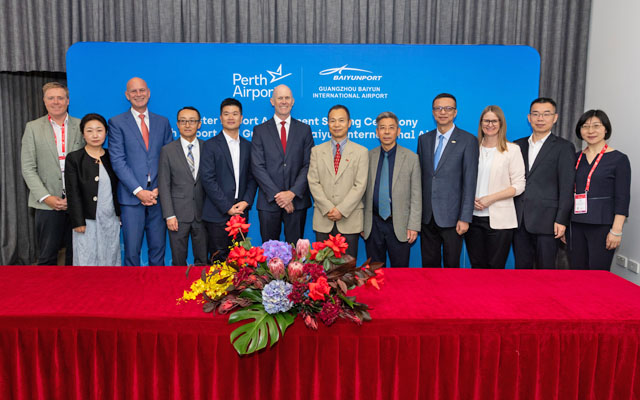
Perth Airport and Guangzhou Baiyun International Airport have solidified their partnership with the signing of a Sister Airport Agreement at the Routes Asia Conference 2025, marking a commitment to enhanced collaboration and a shared vision for the future.
Perth Airport CEO Jason Waters stated that the Sister Airport Agreement marks a milestone in strengthening the ties between the two airports, cities, and the broader relationship between Australia and China. He noted that with Guangzhou Baiyun International Airport serving as a major aviation gateway in China and Perth Airport as the western gateway to Australia, their collaboration holds potential for growth and innovation in the aviation sector.
The partnership focuses on expanding aviation links and fostering economic development between both countries
Guangzhou, as a key gateway in China’s opening-up, plays a central role in driving socioeconomic development. Baiyun Airport, an international aviation hub, and Perth Airport, the economic gateway to Australia’s western coast, are united by a shared commitment, recognising that each flight and cargo movement enhances connectivity and promotes industry integration, shared Guangzhou Baiyun International Airport’s vice president (director) Yaoming Qi.
“We’re particularly excited about the opportunities this partnership will bring in facilitating increased air connectivity, boosting tourism and trade, and supporting both of our regions’ economic development. By working together, we can build stronger networks that benefit airlines, passengers, and our respective communities,” added Waters.
Frasers Hospitality is marking its 27th anniversary this month with a pipeline of five new openings and a newly signed management agreement across China, Japan, and Malaysia.
These additions to its portfolio aim to strengthen Frasers Hospitality’s foothold in the extended stay lodging sector and reinforce its commitment to delivering enriching stay experiences to modern travellers around the world.
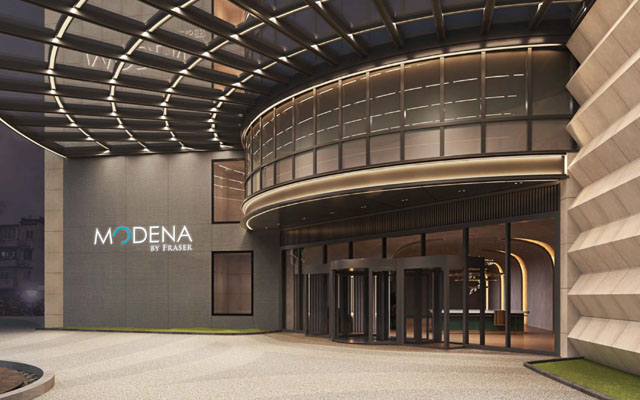
Frasers Hospitality is expanding with five new openings across China, Japan, and Malaysia; Modena by Fraser Wujiaochang Shanghai opening in 2Q2025, pictured
This year, Frasers Hospitality will expand its portfolio in China with openings in Dalian, Shanghai, and Shenzhen, including the launch of Modena by Fraser Shenzhen and Modena by Fraser Wujiaochang Shanghai. In Malaysia, Fraser Residence Putrajaya and Capri by Fraser Penang are set to open in 2025, bringing its presence to four properties across the country. Additionally, the signing of Fraser Place Roppongi Tokyo will increase Frasers Hospitality’s footprint in Japan to two properties by 2026.
The new developments set to open include Modena by Fraser Shenzhen, opening in 2Q2025, with 325 rental apartments and facilities like a pickleball court, gym, and lobby café. Modena by Fraser Wujiaochang Shanghai, also opening in 2Q2025, will offer 307 units in the Wujiaochang area, each equipped with kitchenettes and amenities like a gym, yoga room, and residents’ lounge. Modena by Fraser Dalian, opening in 4Q2025, will provide 120 apartments in Dalian’s Economic and Technological Development Zone, designed for both short and long-term stays with kitchens and Wi-Fi.
In Japan, Fraser Place Roppongi Tokyo, opening in 1Q2026, will offer 170 units in the Roppongi district, with amenities including a residence lounge and gym. In Malaysia, Fraser Residence Putrajaya, opening in 3Q2025, will have 283 serviced apartments with full facilities. Capri by Fraser, Penang, opening in end-2025, will feature 248 rooms with spaces for business and leisure.
“2025 marks our 27th year of establishment and a transformative chapter for Frasers Hospitality, as we expand our portfolio to meet the evolving needs of global travellers. With six new properties in high-growth destinations, we are well-positioned to deliver our renowned world-class hospitality experiences, while strengthening our brand presence in key markets,” said Eu Chin Fen, CEO of Frasers Hospitality.
Banyan Tree Spa Krabi in Thailand is introducing a new experience for guests with complimentary weightless therapy classes, a holistic technique that involves floating in water, using buoyancy to help alleviate pain and stress.
Also known as flotation therapy, this sensory deprivation treatment is renowned for inducing deep relaxation. The wellness team at Banyan Tree Spa Krabi will guide guests gently upon the water in one-on-one sessions lasting one hour. Floating in the water helps to relax and exercise muscles, joints, and bones, creating a meditative state.
Weightless therapy is a holistic technique that involves floating in water, whereby the buoyancy helps alleviate pain and stress
Guests can choose between a Wave Stretch session, which combines a rhythmic flow of water with gentle tension-point massage, or a One Weightless treatment, offering a fully immersive experience in a zero-gravity environment. Both private and complimentary group classes are available. Banyan Tree Spa Krabi also provides a variety of other wellness experiences to suit guests’ needs.
Laos’ popularity as a travel destination has been steadily growing in recent years. 2024 saw over four million tourists, an increase of almost one million from 2023, according to data from the Lao Ministry of Information, Culture and Tourism.
On top of the encouraging numbers, the ministry has unveiled a tourism development plan for 2026 to 2030 that aims to expand tourism across Laos’ northern, central and southern regions and improve infrastructure and services at key tourist destinations, according to various news sources online.
Poised to be in the midst of this tourism boom are Onyx Hospitality’s two hotels in Laos, Amari Vientiane and Amari Vang Vieng.
Yuthachai Charanachitta, CEO of Onyx Hospitality Group, said: “Amari Vientiane is the second Amari hotel in Laos, following the successful launch of Amari Vang Vieng in 2018. This milestone underscores Onyx Hospitality Group’s operational success in Laos and reinforces our ongoing commitment to expanding our presence in Laos and throughout South-east Asia.”
Amari Vientiane: A serene stay by the Mekong
1 of 5
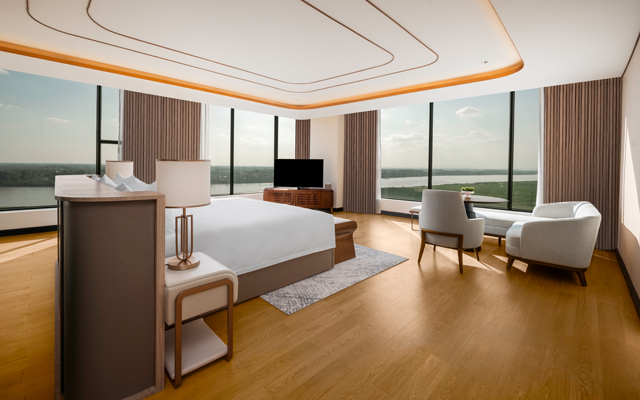
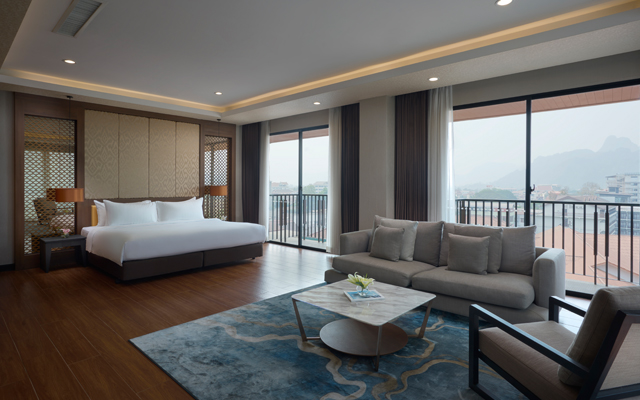
The master bedroom of Amari Vientiane's Presidential Suite boasts unparalleled views of the city
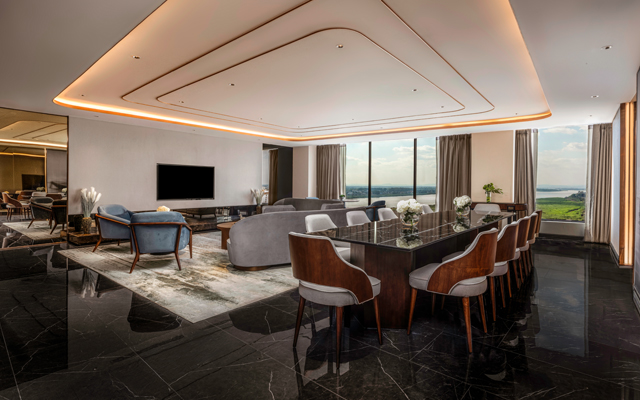
The living room in the Presidential Suites offers an expansive space to relax
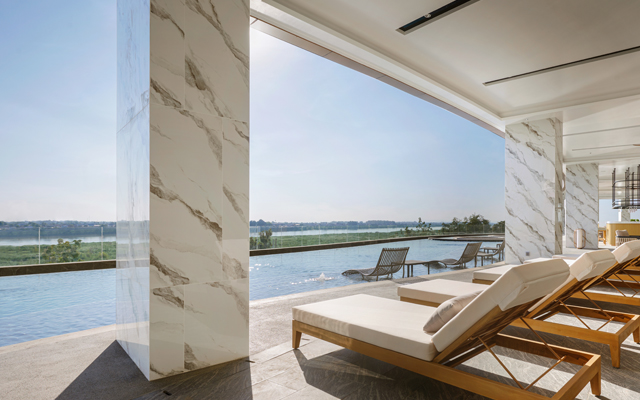
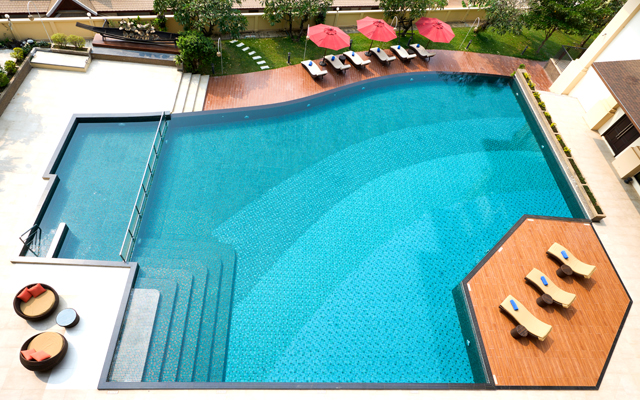
Take a dip in the infinity pool at Amari Vientiane
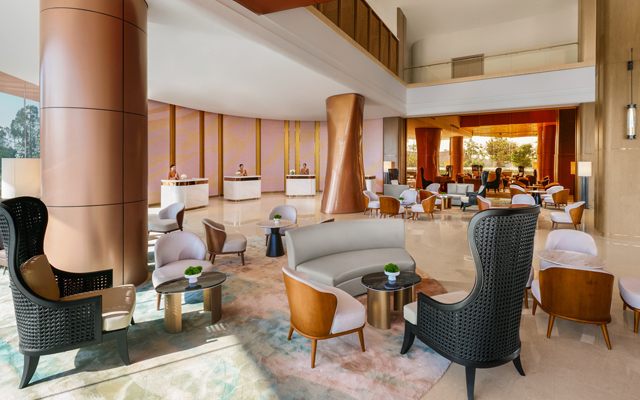
Amari Vientiane's lobby is a welcoming space
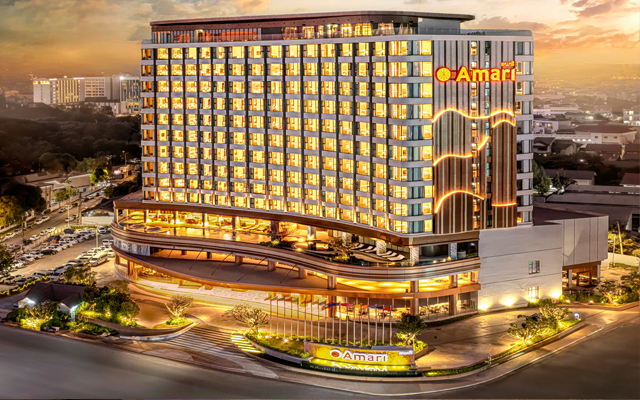
The 248-room Amari Vientiane marks the brand’s second hotel in Laos
Newly opened on March 1, Amari Vientiane offers accommodation for travellers in the heart of the culturally rich capital.
Located along the scenic Mekong river bank, the 248-room hotel blends contemporary elegance with local charm.
For extra special moments, the hotel’s rooftop bar offers unparalleled views to catch the sunset over the Mekong River as well as the city, thanks to its central location, or have an exclusive dining session at the executive private dining area with a view of the Mekong in the background.
Guests can also immerse themselves in Laos’ rich heritage by exploring nearby landmarks such as Wat Sisaket and the Patuxai Monument, have breakfast at the nearby morning market and participate in the traditional morning almsgiving ritual.
Charanachitta added that: “In line with our vision of becoming The Best Medium-Sized Hospitality Management Company in Southeast Asia, and as experts with a deep understanding of the region’s tourism industry, we are confident that Amari Vientiane will swiftly establish itself as a successful hotel, earning the trust of travellers both in Laos and internationally.”
Amari Vang Vieng: A riverside retreat amidst nature
1 of 3
Amari Vang Vieng's spacious executive suite allows for a relaxing rest
Amari Vang Vieng offers 160 rooms
Amari Vang Vieng pool
Often regarded as the second gem of Laos, Vang Viengis the spot for travellers looking to experience the country’s stunning natural landscapes and adventure activities, and Amari Vang Vieng offers the perfect retreat for nature lovers and outdoor enthusiasts alike.
Similarly located along the river, Amari Vang Vieng flanks the Song River. It offers 160 rooms and suites, each decorated in an elegant contemporary style that blends Lao craftsmanship with the Amari brand. Tall windows in each room let guests take in the surrounding scenery, while modern amenities such as high-speed Wi-Fi and 40-inch interactive TVs help them stay connected.
Its strategic location puts it in close proximity to popular tourist attractions. Guests can explore Vang Vieng’s renowned Blue Lagoon, a natural emerald pool, and join the various outdoor activities such as swings and ziplines, take a hot air balloon ride for panoramic views, go kayaking, or get up close to stalactites and stalagmites in Pu Kham Cave and other similar caves.
After a day of exploration, the hotel’s Essence restaurant serves an array of Laotian, Thai, and international dishes, while the outdoor pool offers a serene escape with breathtaking riverside views.
As Amari continues to strengthen its footprint in Laos, these hotels offer their own appeal for travellers looking to experience Laos’ culture and nature at their convenience.
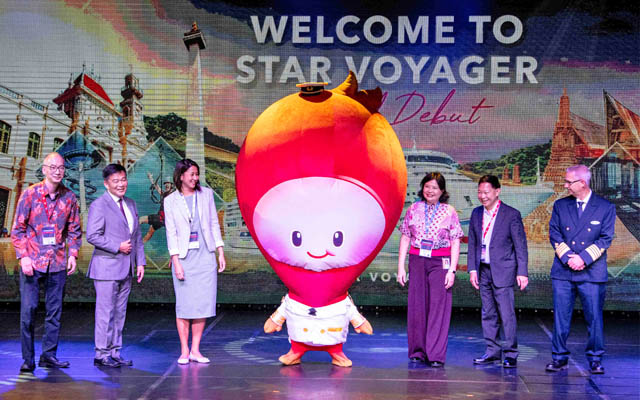
Star Voyager, the latest ship to homeport in Singapore, embarked on its maiden voyage on March 26, heralding the revival of the StarCruises and Dream Cruises brands, and a new chapter for the former Star Cruises, a brand with over 30 years of history in the region.
The vessel, with a capacity of 1,940 passengers, will offer a new cruising experience tailored for the Asian market, travelling to Malacca and Jakarta before returning to Singapore.
Star Voyager’s maiden voyage on March 26 marks the return of StarCruises and Dream Cruises to Singapore
Positioned as an affordable, lifestyle-driven cruise experience, StarCruises will operate mid-sized ships, including the Star Voyager and Star Navigator, catering to travellers seeking comfort, entertainment, and adventure at sea.
Dream Cruises offers a more luxurious experience with exclusive privileges and premium amenities on larger ships, including its flagship, Genting Dream, which accommodates over 3,000 guests.
“By clearly differentiating between StarCruises and Dream Cruises, we are able to cater to distinct segments while reinforcing our leadership in the Asian cruise industry and beyond,” said Michael Goh, president, StarCruises and Dream Cruises. “This is an exciting milestone for StarCruises and we are honoured to play a key role in supporting and contributing towards the growth of Singapore’s inbound and outbound cruise travel.”
The Star Voyager will offer three-, four- and five-night cruises connecting Singapore to dual homeport cities of Jakarta, Malacca, Bangkok and Ho Chi Minh City – further increasing inbound tourists to these destinations – as well as to other destinations such as Medan, Koh Samui, and Redang island.
A total of US$50 million was invested in refurbishing areas such as the lobby, restaurants, and Palace class suites. The entertainment programme and activities were also carefully planned to cater to multigenerational travellers, including a teens club with activities designed by the ship’s youngest crew to appeal to teenagers.
“We are strong believers in providing good experiences,” said Goh, adding that happy customers make for the strongest ambassadors of the brand.
Colin Kerr, senior vice-president of Cruise Entertainment, echoed this sentiment, noting that some guests are so invested in the product that their feedback has been taken into consideration.
The MICE segment, which contributes to 30 per cent of the business, is also another segment the company plans to continue growing.
StarCruises has plans to offer fly-cruise options to Australia and is exploring the Indian market as well.
Star Voyager will homeport at the Singapore Cruise Centre until July 21.
The Hyatt Centric brand saw growth in 2024 with openings in destinations such as Cairo, Shanghai, San José, and Santo Domingo. Building on this success, the brand plans to add over 35 new hotels by 2028, expanding its portfolio by 50 per cent and reaching over 100 hotels globally by 2029. This expansion is expected to include significant growth in Asia-Pacific, with a 75 per cent increase in the region’s footprint, alongside new openings across the Americas, Europe, and the Middle East.
Hyatt Centric hotels are tailored to their destinations, incorporating elements that reflect the local vibe through interpretations of culture, art, and attractions. Planned openings following the 2024 debut in new markets will drive further growth, including Hyatt Centric San José Escazú (the first in Costa Rica), Hyatt Centric Malta (the first in Malta), Hyatt Centric Santo Domingo (the first in the Caribbean), and Hyatt Centric Zhongshan Park Shanghai (the first in Shanghai).
Hyatt Centric is set to introduce new hotels in key regions, offering culturally rich experiences for guests; Hyatt Centric Victoria Harbour Hong Kong, pictured
In 2026, the brand will expand further in Asia-Pacific with openings including Hyatt Centric East Taipei (the first in Taiwan), Hyatt Centric Shanghai Jinqiao and Hyatt Centric Todtown Shanghai, Hyatt Centric Tianxin Changsha in Hunan province, Hyatt Centric Vrindavan in northern India, and Hyatt Centric Sapporo (the first in Hokkaido, Japan). This year will also see the brand’s first hotel in southwest China, Hyatt Centric The Ring Chengdu.
Hyatt Centric hotels offer curated programming, such as locally inspired art, pop-up events, social spaces, and dining options. Each hotel reflects its location, with Egyptian statues at Hyatt Centric Cairo West and textiles at Hyatt Centric Guatemala City. Social spaces like the recording studio at Hyatt Centric Gran Via Madrid and the House of Music at Hyatt Centric Ocean Front Xiamen encourage guest interaction. Dining options range from modern Asian cuisine at Hyatt Centric Victoria Harbour Hong Kong to rooftop views at Spaceman in Atlanta.
Emily Wright, vice president, global brand leader for Hyatt’s Classics & Essentials Portfolios, said: “The brand’s recent growth, including openings and planned developments, meets the rising demand from guests and members, especially millennial and Gen Z travellers, for more contemporary accommodation with playful details, sophisticated furnishings and socially connected spaces.”



 Tan was previously SCCS’ chief operating officer and has 15 years of experience in tourism management. With extensive knowledge in aviation ground handling, he has a proven track record of strengthening relationships with key airline clients such as Singapore Airlines, Qantas, and Lufthansa.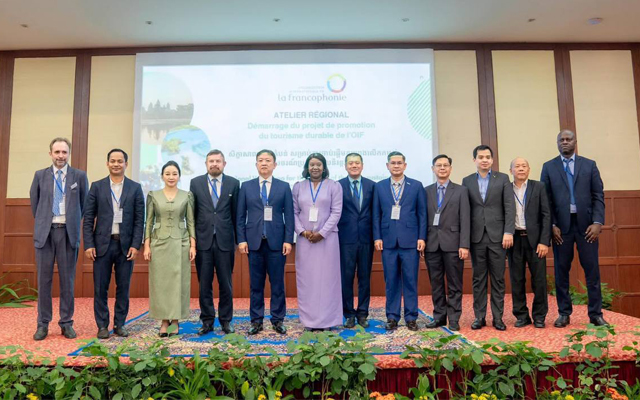




 To book your next stay, visit