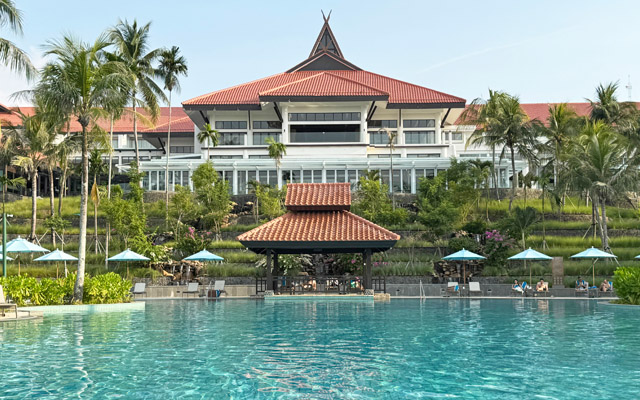
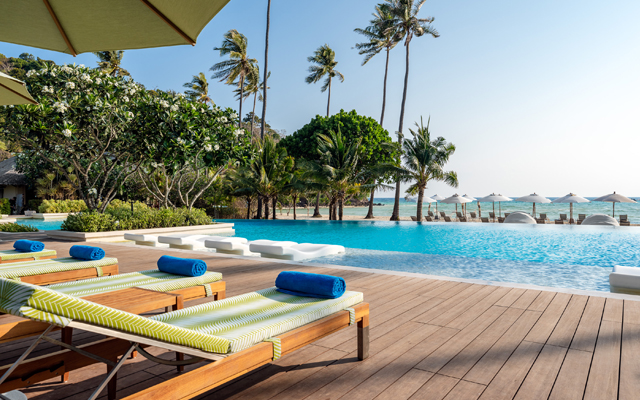
IHG Hotels & Resorts (IHG) is partnering with Peninsula Bay Investment Co. to bring InterContinental Hotels & Resorts back to Cambodia. Set to open in 2028, the 300-room InterContinental Sihanoukville will offer dining venues, bars, a spa, and coastal views.
Spanning approximately 160,000m², the property will be part of the Peninsula Bay Integrated Resort development, which includes hotels, retail outlets, and entertainment options.
InterContinental Sihanoukville will form part of the Peninsula Bay Integrated Resort development, pictured
It will be located 30 minutes from Sihanoukville International Airport, close to Otres Beach, Ream National Park, and Wat Leu Pagoda, offering a range of activities for all types of travellers.
Bryan Chan, vice president, development, South East Asia & Korea, IHG said: “As we venture further into the coast, we could not think of a better partner than Peninsula Bay Investment Co., with whom we’re collaborating to create a bespoke integrated offering that matches its stunning coastal location, paving the way for the InterContinental brand to once again lead the way in Luxury & Lifestyle in Cambodia.”
Eddie Chua, general manager of Peninsula Bay added: “This development is a testament to our vision of blending luxury, innovation, and Cambodia’s natural beauty to create a destination like no other.”
IHG is expanding in Indochina with 22 open hotels and 26 more in the pipeline, aiming to double its size. InterContinental Sihanoukville will join Six Senses Krabey Island and the upcoming Vignette Collection Phnom Penh Odom, set to open in 2027.
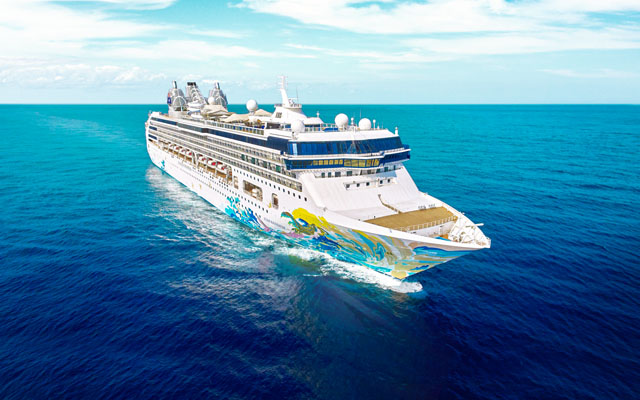
This summer, embark on an adventure with the reimagined StarCruises brand aboard the Star Navigator for a three-day, two-night high seas weekend cruise from Keelung to destinations in Japan and South Korea.
Themed Global Celebrations at Sea, this three-day, two-night high seas weekend cruise from Keelung offers an opportunity to explore global cultures without leaving the ship. The thematic cruises feature seasonal, cultural, and culinary showcases, with performances, workshops, and experiences. Guests can also enjoy BBQ Nights on Saturdays, featuring grilled foods from around the world, perfect for relaxing, socialising, and enjoying the sea.
Experience sailing on Star Navigator with the new two-night High Seas Weekend Cruise from Keelung
The Global Celebrations at Sea sets sail this April with a three-day, two-night cruise aboard the Star Navigator, showcasing Japan. Enjoy a culinary journey with sushi, sashimi, ramen, and tempura, and take part in activities such as Sakura Dances, a wagyu beef cooking demo, cherry blossom tea parties, and arts workshops. With experiences like ikebana, origami, and canvas painting, this voyage offers something for everyone.
In May, the three-day, two-night high seas weekend cruises will offer guests the chance to celebrate Korean culture and cuisine, indulging in dishes like bulgogi, bibimbap, kimchi, and tteokbokki. Guests can experience South Korea’s traditions and K-pop with drum performances, arts workshops, dance sessions, and hanbok fittings.
PATA has released the latest Asia Pacific Visitor Forecasts for 2025-2027, providing in-depth insights into tourism recovery trends across the region.
This comprehensive report, prepared in collaboration with the Hospitality and Tourism Research Centre of the School of Hotel and Tourism Management at The Hong Kong Polytechnic University, presents forecasts for 39 destinations in the Asia-Pacific region across mild, medium, and severe scenarios, offering critical insights for stakeholders in the travel and tourism industry.
The forecast covers 39 Asia-Pacific destinations across mild, medium, and severe scenarios
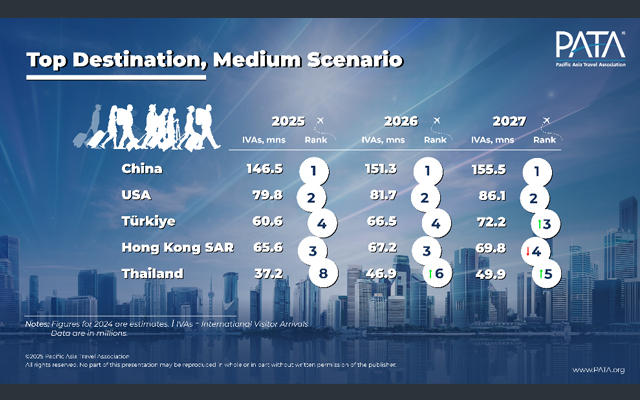
The PATA Asia Pacific Visitor Forecasts 2025-2027 highlights international visitor arrivals (IVAs) are expected to reach 813.7 million by 2027, up from 648.1 million in 2024, indicating steady growth. Recovery is being fuelled by easier visa processes, more airline routes, and improved infrastructure. Initiatives like China’s visa-free transit expansion and Thailand’s Six Countries, One Destination project are helping boost visitor numbers.
China is set to regain its spot as the top inbound destination, with the US, Türkiye, and Hong Kong also performing well. Mongolia, Türkiye, Sri Lanka, and Japan are expected to see the fastest recovery, surpassing pre-pandemic visitor numbers. China will remain the largest source market, followed by the US, Hong Kong, South Korea, and India, with growing middle classes in India and South-east Asia driving more outbound travel.
The region’s tourism will also be shaped by economic shifts, geopolitics, and technological advancements, with digital transformation, sustainable tourism, and new infrastructure enhancing the travel experience.
“As global travel continues its strong recovery, the Asia-Pacific region remains a key driver of growth. This latest forecast highlights the dynamic shifts in visitor flows, policy interventions, and infrastructure improvements that will shape the region’s tourism landscape over the next three years. By understanding these evolving trends, destinations can better position themselves for sustainable growth and resilience,” said PATA CEO Noor Ahmad Hamid.
“As we move forward, the industry must remain agile and adaptive to shifting market dynamics. The insights from the PATA Asia Pacific Visitor Forecasts 2025-2027 will be invaluable for policymakers, businesses, and destination marketers aiming to capitalise on emerging opportunities.”
The PATA Asia Pacific Visitor Forecasts 2025-2027 report is available here.
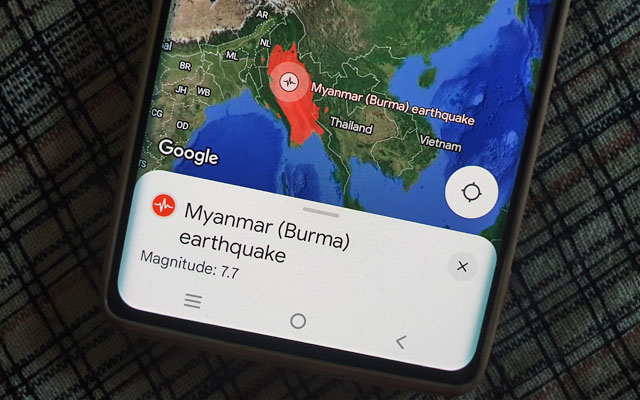
Tourism stakeholders in Myanmar have united to provide aid in support of communities affected by the devastating 7.7-magnitude earthquake, which had its epicentre in Mandalay.
On Monday, Myanmar Tourism Marketing, the Union of Myanmar Travel Association, Myanmar Hotelier Association, and Myanmar Tourism Federation held a meeting, with a team on the ground in Mandalay working to provide basic needs, including medicine, water, food, and shelter.
Tourism industry groups in Myanmar are offering aid to the earthquake victims such as providing basic needs and mental health support; photo by Dugguphotovala
“We also deeply appreciate the global community’s support in times of crisis,” said Sammy Samuels, founder of Myanmar Shalom Travels. “In Yangon, we’re all ok physically, but mentally it’s heart-breaking to see the suffering. Our thoughts are with everyone in Mandalay and the surrounding areas affected by the tragedy.”
Edwin Briels, managing director of Exploration Travel, reported the destruction of homes, hotels and restaurants in Mandalay and Inle Lake, as well as famous tourist landmarks in Mingun, Ava and Mandalay.
“Many people and companies from the tourism industry are immediately helping the victims of the earthquake, and providing food, water and whatever else is needed,” he said.
“The big challenge will be rebuilding Mandalay and Inle Lake and all other places after the earthquake. Financially this is challenging as people are not insured and because the conflict continues.”
Since the Covid-19 pandemic, Exploration Travel Myanmar has converted its office into a mental health centre. Briels shared that Counselling Corner Myanmar is now providing mental health support to those affected by the earthquake.
While there is no earthquake damage in Yangon and tourism infrastructure remains intact, internet restrictions persist, and electricity is limited to two to four hours a day, with most hotels relying on generators.
Both Asian Trails and EXO Travel Myanmar reported that all its guests and staff in the country were safe and not impacted by the deadly earthquake, with the mounting death toll predicted to surpass 3,000.
The Gold Coast has set a new record, with the latest National and International Visitor Survey from Tourism Research Australia showing visitor spending reached A$8.1 billion (US$5.2 billion) for the year ending December 2024.
This represents a 37 per cent increase from 2019 and a 5.2 per cent rise from the year ending September 2024, solidifying the city’s status as a key destination for tourism and business.
The Gold Coast sets new records in visitor spending and numbers for the year ending December 2024
Visitor numbers also saw a significant increase, with 13 million people visiting the Gold Coast in the year ending December 2024, up from 12.2 million the previous year, highlighting the region’s ongoing growth and popularity.
Domestic overnight visitation also increased, with 4.3 million people visiting the Gold Coast in the year ending December 2024, up from 4.1 million in the previous year, driven by record visitation from the Sunshine Coast and New South Wales.
New Zealand set its third consecutive record with 222,000 visitors, while international tourism contributed A$1.2 billion to the economy. The Gold Coast’s other top international markets were China, India, and the UK.
The survey results come as the Gold Coast continues the clean-up from ex-Tropical Cyclone Alfed earlier this month which saw almost half the city’s tourism operators closed for more than seven days.
Experience Gold Coast CEO John Warn commented: “It’s fantastic to see the Gold Coast outperforming both Queensland (+2.8 per cent expenditure) and Australia (+0.9 per cent) in expenditure growth for domestic overnight.
“The Gold Coast is bouncing back, but we still have a massive job ahead, to support our tourism operators, accommodation providers and restaurants and cafés.”
Gold Coast mayor Tom Tate added: “The city’s plans to expand our nature-based tourism offerings will further ignite the passion so many Aussies, and international visitors, have for Gold Coast.’’
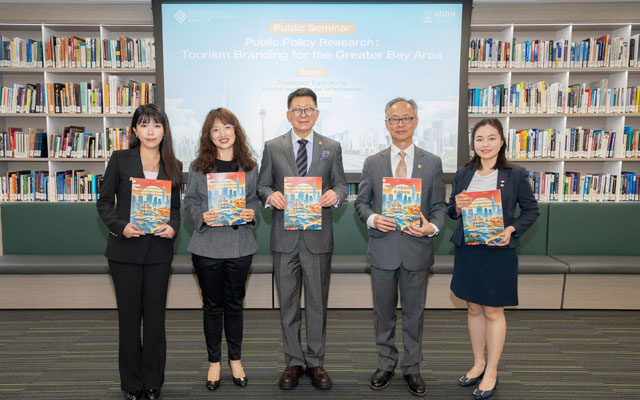
The School of Hotel and Tourism Management (SHTM) at The Hong Kong Polytechnic University (PolyU) has released the findings of its policy study, examining the strategies and potential for developing an integrated tourism brand by capitalising on the strengths of the cities within the Greater Bay Area (GBA) in Hong Kong.
The study was supported by the Public Policy Research Funding Scheme of the HKSAR Government. Entitled Developing A Tourism Cluster in the Greater Bay Area (GBA): A Dual Branding Perspective, the study is led by Kam Hung, principal investigator and SHTM professor, with a team that includes Tony Tse, SHTM professor of practice; Rob Law, chair professor of smart tourism and deputy director of the Asia-Pacific Academy of Economics and Management at the University of Macau; and Shina Li, professor at the School of Tourism Management at Sun Yat-sen University.
PolyU’s study examines the development of a cohesive tourism brand for the Greater Bay Area to enhance regional collaboration and attract more visitors
The team used a mixed-method approach to analyse the tourism attractions, advantages, and experiences in GBA cities. This included site visits to all 11 cities to assess tourism resources, service quality, and key attractions. They also analysed 200,000 reviews from online platforms to understand tourists’ preferences, and conducted in-depth interviews with 182 local residents, officials, and business owners to gather diverse perspectives.
The research found that while cities in the GBA focus on individual branding, the overall regional brand is unclear. A cohesive and distinctive branding approach is needed to differentiate the GBA tourism cluster and attract more visitors.
The study proposed a brand architecture for the GBA tourism cluster, balancing individual cities’ identities with the region’s overall vision. Recommendations include diverse itineraries, such as a heritage tour with landmarks like Hong Kong’s Clock Tower, a nature itinerary featuring Zhaoqing’s karst formations, and a family-friendly tour with attractions like Hong Kong Disneyland and Ocean Park.
The study also recommended forming a cross-regional unit to manage GBA tourism branding. It suggested using a marketing strategy that highlights travel connections and diverse experiences, with digital efforts focusing on social media and influencers. Offline, campaigns could include multi-destination packages and themed events across cities.
The research team further pointed out that a well-defined and cohesive regional tourism brand will bring about transformative impact to the development of GBA in the following aspects.
First, it would sharpen the region’s competitive edge in tourism by showcasing GBA’s unique mix of urban sophistication, natural beauty, and cultural richness, helping it stand out in the global market. Second, it would drive economic growth by attracting more tourists and investment in tourism infrastructure, such as hotels, resorts, and transportation, thereby boosting revenue, creating jobs, and supporting the local economy. Third, regional branding would foster collaboration and integration among GBA cities, encouraging shared marketing campaigns and seamless transport networks. Fourth, it would promote sustainable development by encouraging policies to preserve cultural heritage, historical sites, and the environment. Finally, successful branding would enhance GBA’s global recognition, attracting international events and positioning the region as a key emerging tourism destination.
Hung commented: “By strategically positioning GBA as a unified yet diverse destination, the region can better leverage its collective strength, foster innovation and create new opportunities for sustainable growth in the region. In addition, the study has contributed to the academic literature on destination branding, particularly in the context of tourism clusters, providing valuable insights for other regions looking to develop similar strategies.”
While Cruise Line International Association’s data has shown global passenger numbers in 2023 surpassing that of 2019 – 31.7 million against 29.7 million – and projected numbers to reach 37.1 million in 2025, Crystal Cruises’ sales chief noted that the Asian market has yet to see full recovery.
Tony Archbold, vice president, sales, Asia with Crystal Cruises told TTG Asia: “Asia has not reached its full potential yet, where passengers have greater knowledge of cruising and are driving demand. Singapore and Hong Kong have the greatest potential to grow.”
Archbold: Asia has not reached its full potential yet
Archbold expressed confidence in grooming the region, stating that Crystal Cruises has an advantage from Asian consumers’ recognition of Abercrombie & Kent brands being the leading supplier of luxury experiences and “the best on land and sea”.
Crystal Cruises became part of the Abercrombie & Kent Travel Group in 2022.
Post-lockdown, Crystal Cruises ships have reduced passenger numbers onboard Crystal Symphony and Crystal Serenity by 30 per cent, capped at 606 and 740 respectively, to allow guests more space. There are also more venues for after-dinner entertainment. In addition to the piano bar, night club and show room, the cruise operator unveiled its Monte Carlo Casino, run by the famed Monaco-based establishment, at Christmas last year.
On the health and wellness front, the refurbished Aurora Spa on Crystal Symphony offers 10 treatment rooms and 12 on Crystal Serenity, where the popular, non-surgical Thermage Treatment procedure is conducted. Additionally, a nutritionist oversees the onboard menu and guest speakers conduct wellness talks.
The famed Nobu restaurant concept, specifically Umi Uma by chef Nobu Matsuhisa, is currently available exclusively at sea, on Crystal Cruises ships.
Across the board, Archbold noted that high-net-worth individuals are looking for a sense of adventure and engagement with a destination, combined with culinary experiences, and are travelling farther and sailing for longer.
He shared that the Crystal Symphony which recently departed Sri Lanka for Africa was heading to Cape Town, Mombassa and Mali before retuning to Asia.
“Europe is booming for Asia and is the number one destination. Pre-pandemic, the duration used to be between seven and 10 days. Now it is up to between 14 and 18, 19 days,” he said.
Bookings from Asia have emerged for Crystal Cruises’ 140-day World Cruise and 40- to 60-day Grand Cruise.
“Passengers are also younger, in their late-40s, early-50s, and many can be mobile and continue doing business with Starlink internet offering high-speed, reliable connectivity at sea.”
According to consultants, Asian guests are sticking with Crystal Cruises and taking up repeat journeys. Therefore, Archbold said it was crucial for luxury consultants to match guests with the right product.
Looking ahead, the cruise line will welcome two new ships soon – one to launch in spring 2028 and the other tentatively scheduled for 2030, with an option for a third by 2032.
Dusit International has signed a hotel management agreement with Primex Realty Corporation to manage Dusit Greenhills Manila in San Juan City, Metro Manila, Philippines.
Set to open at the end of 2026, this retreat will feature 200 guestrooms and facilities across the top 10 floors of Primex Tower, a 50-storey mixed-use development in a residential district, 45 minutes by car from Manila International Airport. The tallest building in the area, the tower will also house retail and office spaces.
Dusit Greenhills Manila is set to open at the end of 2026
Dusit Greenhills Manila will offer restaurants, rooftop bar, pool, gym , meeting rooms and a ballroom. The hotel also has a ballroom, meeting rooms, and easy access to Greenhills Mall for shopping and dining.
“We are delighted to partner with Primex Realty Corporation to bring our unique brand of Thai-inspired gracious hospitality to the heart of San Juan City,” said Gilles Cretallaz, chief operating officer, Dusit International. “With nine more properties in the pipeline set to open in the Philippines over the next five years, this signing reinforces the country’s status as Dusit’s second-largest destination outside of Thailand.”
Karlvin Ernest L Ang, executive vice president and director of Primex Realty Corporation, added: “We are pleased to collaborate with Dusit International to bring a world-class hotel experience to Primex Tower. We are confident that this partnership will add significant value to our flagship project, and we look forward to its success.”
Zentis Osaka has introduced its Stay & Savor package, which includes a two-night stay, daily breakfast and an afternoon tea experience at UPSTAIRZ Lounge, Bar & Restaurant.
The afternoon tea, available until May 11, features strawberries, including rare white strawberries (awayuki), and includes a strawberry garden, lychee mousse, strawberry macaron, matcha egg tart, and rice flour carrot cake. Savoury options include strawberry savoury madeleines, Caesar salad with strawberries, prosciutto, pistachios, and a strawberry and wagyu roast beef croissant sandwich. Guests can pair this with free-flow tea, such as pink rose, bergamot peach, or UPSTAIRZ’s special blend, or a glass of champagne (at an extra charge).
The Stay & Savor package includes an afternoon tea experience featuring strawberry-themed treats, with options to pair with tea or champagne
The package also includes breakfast at UPSTAIRZ Restaurant, where guests can choose from American, vegan, or the chef’s signature selection of seven tasting-size Japanese dishes, served with soup and a Japanese omelette.
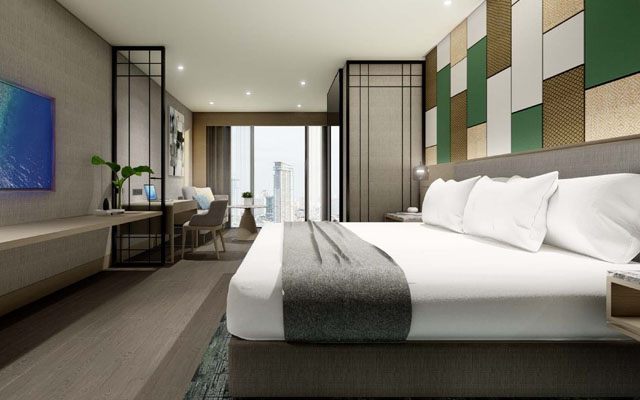
Accommodation include Studios for solo travellers, Corner Studios with tubs, and suites with separate living areas. The design of each room is inspired by the modularity of bento boxes.
The hotel’s Guest Lounge offers space for work and relaxation, featuring a communal table. It leads to a garden area with terrace seating, floor-to-ceiling windows, and a see-through fireplace.
Rates for Zentis Osaka’s Stay & Savor package start at 56,500 yen (US$378) for Studio accommodation (based on single occupancy). Advance reservations required.
Craig Davidson is the new CEO of Tourism and Events Queensland (TEQ).
With a 35-year career in hotels, resorts, attractions, and nature-based experiences, Davidson has worked with Southern Pacific Hotel Corporation, Hamilton Island, Voyages Hotels and Resorts, Ardent Leisure Theme Parks, and Journey Beyond.
He has also led Tourism Australia’s Investment Attraction, Aviation Development, and Industry Development team, including Indigenous tourism products, and served on various boards, including six years as a director at Destination Gold Coast.
He brings deep local tourism knowledge combined with extensive national experience. Above all, as a Queenslander, he is passionate about the success of the tourism industry in his home state.












 He has also led Tourism Australia’s Investment Attraction, Aviation Development, and Industry Development team, including Indigenous tourism products, and served on various boards, including six years as a director at Destination Gold Coast.