TTG Asia is taking a break on Monday, March 31, for the Hari Raya Puasa public holiday.
The online news bulletin will resume on Tuesday, April 1.
 From all of us at TTG Asia Media, here’s wishing all our Muslim readers a Selamat Hari Raya Aidilfitri!

TTG Asia is taking a break on Monday, March 31, for the Hari Raya Puasa public holiday.
The online news bulletin will resume on Tuesday, April 1.
From all of us at TTG Asia Media, here’s wishing all our Muslim readers a Selamat Hari Raya Aidilfitri!

Brought to you by Disney Cruise Line
With new sailing dates until September 2026 now available for booking, get ready for a magical experience on the Disney Adventure, Disney Cruise Line’s first ship to homeport in Asia.
As it gears up towards its maiden voyage that will set sail from Singapore on March 10, 2026, Disney Cruise Line has revealed some new experiences, including several firsts for the fleet, designed to give passengers, both adults and children alike, a more immersive experience on board.
Here are four ways for guests to have a truly memorable Disney experience:

Step into the shoes of your chosen Marvel Super Hero or Disney Princess
For the first time on a Disney Cruise Line ship, guests can suit up as their favourite Marvel Super Hero at the Marvel Style Studio. Offering a range of hair, makeup, and clothing options through different styling packages, the studio caters to both children and adults who want to transform into iconic characters such as Iron Man, Spider-Man, Captain America, Captain Marvel, or Thor, making for fun photo opportunities. At select times, the venue will also transform into an adults-only lounge offering bookable exclusive beverage tasting experiences.
Younger guests aged three to 12 can enjoy an enchanted salon experience at Bibbidi Bobbidi Boutique, where Fairy Godmother’s Apprentices will provide themed makeovers. From elegant royalty to adventurous sea captains, children can don a selection of costumes such as long sleeve Princess dresses to look like their favourite Disney princesses, or dress up as knights or sea captains, complete with hairstyling, makeup, and accessories. A private photo experience will also be available for booking to capture these special moments.

Partake in afternoon tea
A delightful afternoon tea experience awaits younger guests at the Royal Society for Friendship and Tea. Designed for children aged three to 12, this charming tea party will take place at the Hollywood Spotlight Club where the young ones can enjoy a magical gathering with beloved Disney princesses.
Enjoy delicious treats, enchanting stories, and whimsical songs while learning about the society’s values of kindness, bravery, and determination. At the end of the tea party, new society members’ get to take home official society membership keepsakes as tokens of their induction into the society.

Meet with your favourite characters
In Captain Jack Sparrow & The Siren Queen, this action-packed stage show will take guests on an exciting adventure. Held at the Disney Imagination Garden’s open-air Garden Stage, this show invites passengers to dress in their finest pirate attire and join Captain Jack and his crew as they search for rare treasure and face off against the towering Siren Queen, who will be brought to life on LED screens.
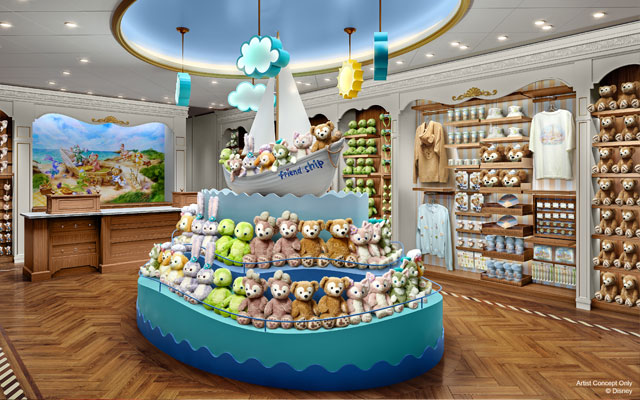
In another first for Disney Cruise Line, Duffy and Friends will appear onboard the Disney Adventure, through a series of character encounters, a retail store, and an original stage show, Duffy and The Friend Ship, which will play at the Disney Imagination Garden. Guests will be able to meet and take photos with Duffy and his friends, and take home memories of their favourite friends at the Duffy and Friends Shop.
Guests can embark on a playful, interactive scavenger hunt with the Duffy and Friends Discovery Quest. Starting at the Duffy and Friends Shop, participants can purchase a discovery guide and follow clues to find missing items from Duffy and his friends that will take them to different locations across the ship. Once you find all the items, return to the shop to claim a commemorative gift and take home the prize.
Apart from these new experiences, there are heaps of ways for guests to make the most out of their three- or four-day Disney Cruise Line experience on-board. From taking the thrilling rollercoaster and whizzing down the water slides to engaging in friendly competition with the family at arcade games, and exclusively for the kids, having fun in the action-packed kids’ clubs, while the adults can unwind at the spa and spaces, including bars and lounges, designed for them.

The Disney Adventure will offer three-night and four-night cruises, with sailing dates available for booking for its maiden voyage starting from December 15, 2025 till September 2026. Visit Disney Cruise Line for the dates or contact a travel agent to find out more.
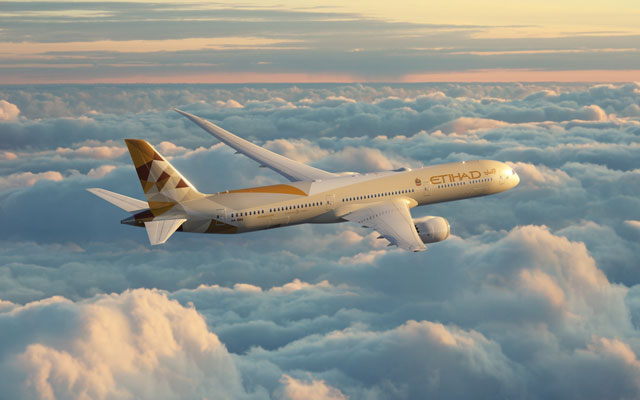
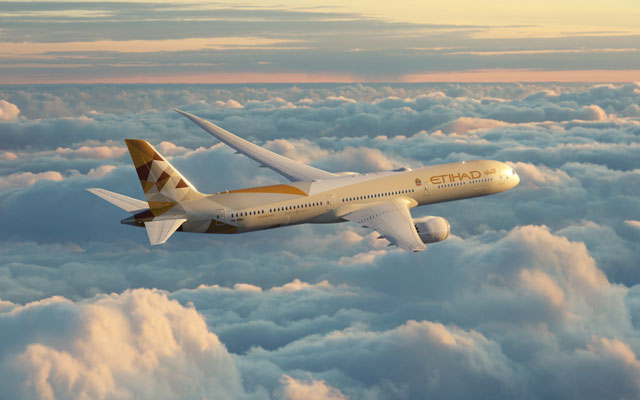
Etihad now flies to Medan, Indonesia
Etihad Airways will begin flights to Medan, the gateway to Northern Sumatra, starting October 2 this year.
The airline will operate flights between Kualanamu International Airport in Medan and Zayed International Airport in Abu Dhabi three times a week, using one of its new A321LR aircraft.
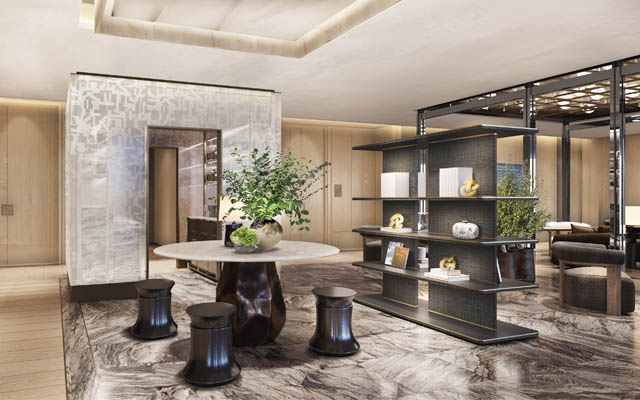
Korean Air to upgrade airport lounges, introduces premium economy
Korean Air is upgrading its airport lounges and introducing Premium Economy cabins as part of its service enhancements. The airline will expand and renovate its lounges at Incheon International Airport Terminal 2 to accommodate increased passenger traffic following the airport’s Phase 4 expansion and the relocation of Asiana Airlines.
Four lounges will open in phases from August 2025, including an expanded Prestige Class Lounge in the east wing and Miler Club Lounge. Renovations to the First Class and Prestige Class Lounges in the west wing will be completed by April 2026.
Once all upgrades are finished, Korean Air will operate six lounges, increasing space and seating capacity. The First Class Lounge will be redesigned with features inspired by luxury hotel lounges.
Food and beverage services will include live kitchens, on-site bartenders and baristas, dedicated bakeries, and a signature noodle bar offering freshly prepared dishes.
Korean Air will also renovate its lounges at Los Angeles and New York JFK airports and update its mobile app to provide real-time information on lounge details.
Additionally, 11 Boeing 777-300ER aircraft will be retrofitted to include Premium Economy seating, replacing First Class cabins. The first retrofitted aircraft will enter service in late 2025, with further upgrades continuing through 2026.
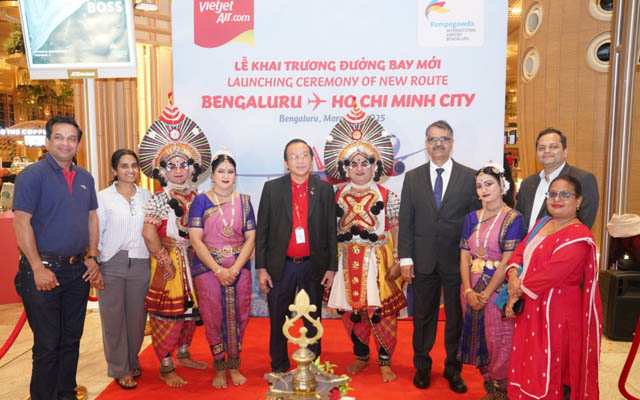
Vietjet strengthens global reach from Ho Chi Minh City hub
Vietjet has launched four new international routes – two connecting Ho Chi Minh City to Hyderabad and Bengaluru in India, and two linking Ho Chi Minh City to Nagoya and Fukuoka in Japan.
The Hyderabad and Bengaluru services are already in operation, while the Nagoya and Fukuoka routes will start on April 24 and April 25, respectively.
These additions expand Vietjet’s international network to 10 new services in two months, strengthening ties between Vietnam, India, and Japan.
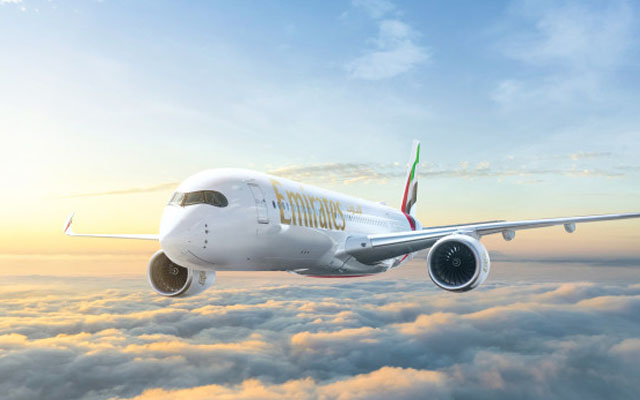
Emirates adds seven more destinations to A350 route network
Emirates has unveiled seven new cities to be added to its A350 network, as the airline’s latest aircraft begin scheduled service.
This expansion will extend the A350’s reach to short and medium-haul destinations in the Middle East/GCC and Europe, while also marking the aircraft’s debut in Africa and South-east Asia.
Emirates will operate the A350 to Tunis six times weekly from June 1, Amman daily from June 1, and Istanbul daily from July 1. The A350 will debut in Saudi Arabia on Dammam services from July 1, in South-east Asia to Ho Chi Minh City from August 1, and to Baghdad three times weekly from August 3. The A350 will debut in Oslo from September 1, with more A350 destinations, including longhaul routes, to be announced in the coming months as new aircraft join Emirates’ fleet.
Emirates will expand A350 services to Bahrain and Kuwait, with Bahrain receiving a third daily A350 flight from June 1 and Kuwait adding a second A350 flight from October 1. Bologna will also get its first A350 on June 1, ahead of schedule.
The A350 offers three cabin classes: 32 Business Class lie-flat seats, 21 Premium Economy seats, and 259 Economy Class seats.

IHG Hotels & Resorts and Strategic Alliance have introduced the world’s first and largest luxury hotel brand to one of Australia’s most celebrated wine regions with the signing of InterContinental Barossa Resort & Spa.
Scheduled to open in 2028, the 150-room property will be set amid the rolling hills and lush vineyards of the Barossa, where each guestroom will boast views of the vineyards and landscape.

When complete, the InterContinental Barossa Resort & Spa will feature a 130-seat signature restaurant, lounge bar, outdoor garden terrace and the signature Club InterContinental. Other amenities will include a pool, day spa, fitness centre, as well as conference and meeting spaces. The resort will also offer scenic walking trails and easy access to a variety of outdoor activities in the region.
The Barossa, with its rich history and renowned natural beauty, is one of Australia’s most popular tourist destinations. The InterContinental Barossa Resort & Spa’s prime location in the heart of the Barossa will make it the perfect luxury retreat for visitors looking to immerse themselves in the region’s wineries and vineyards.
Matt Tripolone, IHG Hotels & Resorts managing director, Australasia & Pacific, said: “For the first time, the Barossa will boast a globally branded luxury hotel that will serve as an indelible beacon for guests seeking an unparalleled level of luxury and sophistication… InterContinental Barossa Resort & Spa will be the perfect destination for wine lovers, gastronomes, and luxury escapists.”
David Cook, director of Strategic Alliance, added: “We look forward to our continued positive engagement with IHG and the Barossa, as our team works closely with them in unlocking this opportunity and bringing this project to fruition.”

As part of its expansion, Fairmont Hotels & Resorts, a brand under Accor, has unveiled five new properties, each reflecting a strong connection to local culture.
The new hotels are set to open in India, Japan, Vietnam, and Thailand.

India will see two openings, including Fairmont Mumbai, opening in April 2025, with 446 rooms and suites located near the international airport. The hotel will feature a Grand Ballroom for over 2,000 guests, five restaurants, a wellness suite, and an outdoor pool.
Fairmont Udaipur Palace, opening in July 2025, will be set in the Aravalli Hills of Rajasthan. Spanning 7.28 hectares, the property will feature 327 rooms, over 12,077m2 of event space, and multiple dining options offering Mediterranean, Italian, Asian, and global cuisines.
Fairmont Tokyo, opening on July 1, 2025, will be located in the south tower of the Blue Front Shibaura Project, featuring 217 rooms and suites with views of Tokyo Bay and the city skyline. The hotel is 13 minutes from Haneda Airport and near major train stations. It will offer a spa, fitness centre, indoor infinity pool, five restaurants, two bars, outdoor terraces, and event spaces, including the Fairmont Grand Ballroom, which can host up to 1,200 guests.
Fairmont Hanoi, opening in November 2025, will be the first Fairmont in Vietnam. Located near Hoan Kiem Lake and the Old Quarter, the hotel will feature 241 rooms, six dining and bar venues, a rooftop restaurant, spa, fitness centre, bathhouse, and two swimming pools.
Finally, Fairmont Bangkok Sukhumvit, opening in Thailand in November 2025, will offer 419 rooms and a range of facilities, including speciality restaurants, a rooftop bar, wellness and spa centres, and meeting rooms. The property will be located near Bangkok’s Central Business District and major transport hubs.

A survey conducted by the Indonesian Hotel and Restaurant Association (IHRA) and Horwath HTL, involving 726 respondents from 717 hotels in 30 provinces, show as many as 88 per cent contemplating mass layoffs to stay afloat. This highlights the devastating impact of the government’s budget cuts, particularly on cities reliant on business events.
The survey revealed that 58 per cent of hotel businesses anticipate potential loan defaults while 48 per cent project unavoidable permanent hotel closures should the situation remains unchecked. Fifty-six per cent of respondents say a 10 to 30 per cent loss in total revenue year-on-year is likely.

The financial strain caused by rising operational costs amid reduced government travel and events will force businesses to consider drastic measures.
Additionally, 78 per cent of surveyed businesses project missed tax revenue targets for the government while 71 per cent anticipate supply chain disruptions that would in turn impact SMEs that rely on the tourism industry. Eighty-three per cent of respondents are also concerned that a slowdown in the tourism sector would severely damage local economies.
The survey stated: “As we move into 2025, there are no signs of the government taking action to address fundamental issues.”
Over 50 per cent of respondents expect a challenging year as a result.
Haryadi Sukamdari, chairman, Indonesia Tourism Industry Board, urged the government to revoke the policy.
“(The initial) government plan was to cut 50 per cent of budget, but we are now facing a total cut. (We deem) it crucial for the government to stick to the original budget cut quickly,” he said during a media conference.
Hariyadi expressed concern that the government’s delayed response could erode public trust and severely impact hotel, aviation, and potentially all related businesses.
The government’s activity cuts are already being felt by daily workers in hotels as a result of job losses, he said.
Hotel industry players urge the government to implement concrete solutions, including tax relief, tourism promotion, staff training, financial assistance, and simplified regulations, particularly visa-free policies to attract foreign tourists, to arrest industry losses.
Bayu Sutanto, secretary general of the Indonesia National Air Carrier Association, said the impact has extended to the aviation industry. Indonesian airlines have lost between 12 and 15 per cent of business due to restrictions on official travel.
Bayu said both full-service and budget airlines are being impacted by loss of traffic due to decreasing buying power, but warned that airlines with a larger government clientele, like Garuda Indonesia, could see more severe effects.

Dida, a tech-driven global travel distribution company, has appointed Florian Blois as its director of strategic partnerships.
In this role, Blois will lead global partnerships, focusing on DMOs, international hotel chains, airlines, as well as tour and activity providers to drive business growth through strategic collaborations and innovative marketing initiatives.
 Reporting directly to Dida’s CMO, Gareth Matthews, Blois will work to develop and execute personalised marketing and sales strategies that further elevate Dida’s partners across its global platforms and distribution channels.
Before joining Dida, he was the senior regional manager – destination development & marketing at HBX Group (formerly Hotelbeds) where he managed global partnerships and led strategic marketing campaigns for DMOs across EMEA and Asia-Pacific.


W Maldives, the Maldives
W Maldives has completed its transformation, with newly redesigned rooms, suites, restaurants and cocktail concepts, and the brand’s signature WET Deck.
Reimagining its 77 overwater and beach villas, new additions like the Supreme and Oasis Overwater Two-Bedroom Villas, featuring spacious living areas and private pools, are ideal for larger groups. The two new Oasis Two-Bedroom Beach Villas feature water slides connecting the second floor to private pools.
Guests at W Maldives can enjoy the resort’s dining venues, spa, and water activities like snorkelling and diving. The resort is also home to one of the largest biogas plants in the Maldives, alongside a fruit and vegetable garden.
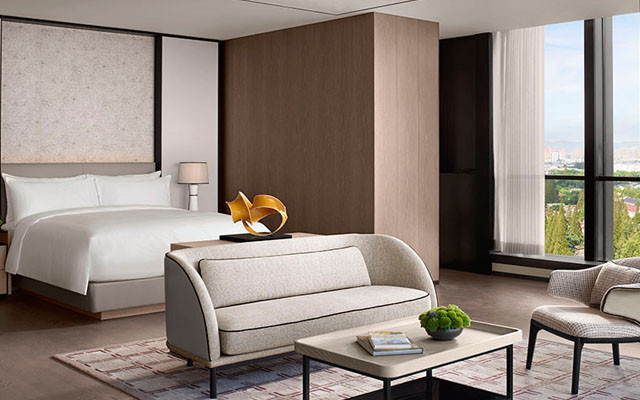
The Ritz-Carlton, Suzhou, China
Located in the heart of the city, The Ritz-Carlton, Suzhou offers travellers seamless access to the rich history and dynamic charm of Suzhou, with nearby attractions such as the Lingering Garden, Xiyuan Temple, and Shantang Street.
The hotel has 190 guestrooms and suites, inspired by Suzhou architecture. The Ritz-Carlton Suite spans 306m² with views of Gusu and Suzhou’s gardens. Club Level guests enjoy access to the Ritz-Carlton Club, offering cultural experiences like embroidery sessions, tea masterclasses, and fan workshops.
The hotel offers four restaurants and bars, the Ritz Kids programme, fitness centre, swimming pool, and four event spaces including a 508m² grand ballroom.
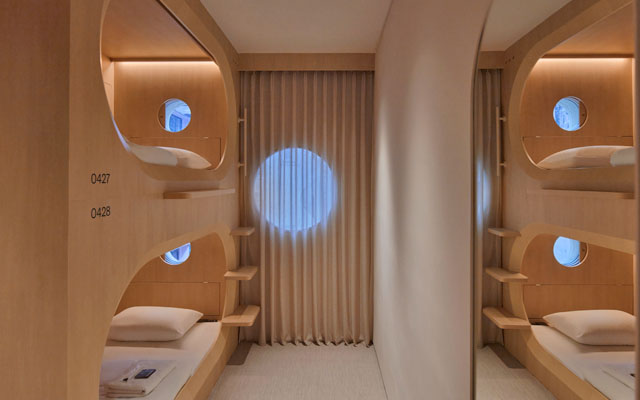
Kinn Habitat, Singapore
Kinn Habitat, Kinn’s flagship hotel, offers a blend of capsule accommodation and private rooms, with 120 capsules across 15 dormitories, including mixed, female-only, and male-only options, as well as Cosy Rooms.
The hotel provides convenient amenities like personal lockers, black-out blinds, power outlets, and a folding desk with a mirror.
Shared spaces, curated activities, and partnerships encourage guests to connect with the local scene. The Marketplace on Level 5 features local artists and artisans, along with workshops on creativity and sustainability. Guests can also enjoy specially crafted coffee at brwd / Kinn on Level 1.
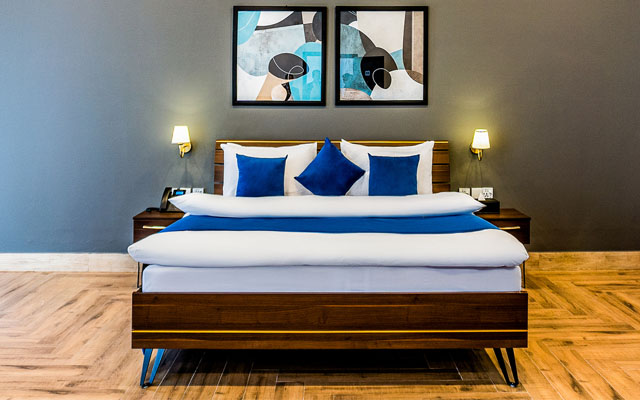
Best Western DHA Hanna Mall Quetta, Pakistan
Best Western DHA Hanna Mall Quetta forms part of a major new mixed-use development in Quetta, the capital and largest city in the province of Balochistan.
With a choice of 25 rooms and suites, this contemporary hotel also features facilities for business and leisure, including an all-day dining restaurant, lobby lounge, fitness centre, yoga studio, and business centre.
Guests also enjoy the convenience of direct access to the Hanna Mall retail complex.
The hotel is situated on the outskirts of the city, and easily accessible via National Highway 25. It is 10km from Quetta International Airport, which offers direct connections to and from major cities including Dubai, Jeddah, Karachi and Lahore.

The Tourism Authority of Thailand (TAT) is hosting the 43rd Thailand Tourism Festival 2025 from March 26 to 30 at the Queen Sirikit National Convention Centre in Bangkok.
This year’s festival features tourism products and services under the theme 5 Must-Do Experiences in Thailand, with a focus on Carbon Neutral Tourism, in alignment with the Amazing Thailand Grand Tourism & Sport Year 2025.

TAT governor Thapanee Kiatphaibool stated that the festival is part of this year’s Grand Festivities, aimed at inspiring travel and promoting domestic tourism. TAT anticipates around 130,000 attendees and a reach of 45 million impressions over the five-day event.
She also highlighted TAT’s commitment to sustainability with a Zero Waste to Landfills initiative at the festival, aiming to keep unsorted waste below 10 per cent through 14 waste-sorting points.
To minimise impact, visitors are encouraged to use public transport, including the train, bus, or taxi. The Amazing Thailand app provides a 3D venue map, AR navigation, event schedules, and personalised alerts.
The festival features nine main activity zones, including five regional villages and four themed highlights, offering an immersive experience of Thailand’s culture and travel. Visitors can explore iconic landmarks, photo spots, local cuisine, creative travel showcases, performances, and hands-on workshops.
Zone 1, Amazing Thailand, celebrates TAT’s 65th anniversary with a TeamLab-style exhibition, eco-friendly shopping, and sustainability workshops. Visitors can access travel info, redeem souvenirs, and enjoy live entertainment.
Zone 2, Eastern Village, showcases the region’s diversity with attractions like Butterfly Kingdom, the “Nong Moo Deng” pygmy hippo, and Bang Pu’s seagull-viewing point, alongside over 50 food stalls, DIY crafts, live music, and performances. Zone 3, Central Village, offers vintage photo ops at Hua Lamphong Railway Station and Mrigadayavan Palace, local dishes at the “Million Market” walking street, and street food with 1970s-inspired music.
Zone 4, Northern Village, features a Modern Lanna atmosphere with 3D animations, Songkran celebrations, local dishes, drinks, and spa treatments, while Zone 5, Southern Village, features the pink dolphin mascot, Surin Circle, Yaring Palace, and batik-inspired arches along with sampling of southern dishes, DIY activities, and traditional massages.
Zone 6, Northeastern Village, features Isan traditions with a seven-metre incense tree, rice garlands, and Phi Ta Khon masks. Enjoy regional dishes, art therapy workshops, and luk thung music and performances.
Zone 7, TAT Partners and Travel Mall, features key TAT partners such as DASTA, EGAT, and the Ministry of Culture, alongside travel deals from eight tourism bodies. Zone 8, Main Stage, features a mix of music, cultural performances, and fan meetings, along with the Miss Thailand Tourism Festival pageant, fashion shows, lucky draws, and celebrity appearances.
Lastly, Zone 9, Sustainable Tourism Goals, highlights Thailand’s commitment to sustainability with a sculpture of a Bryde’s whale made from over 90kg of plastic waste. The zone includes the Green Playground, featuring low-carbon destination mapping, and TAT Eco Park, promoting sustainable travel.
The festival is open to the public from 10.00 to 21.00 daily. Admission is free.

Malaysia Aviation Group (MAG) recently announced the acquisition of 30 new aircraft from Boeing as part of its fleet modernisation strategy.
The order includes 18 Boeing 737-8 and 12 Boeing 737-10 aircraft, powered by CFM International LEAP-1B engines, with options for 30 more 737 aircraft.

This move reinforces MAG strengthening its role in enhancing regional connectivity across key markets. The introduction of the Boeing 737-10 will also be a significant milestone, as it will be the first narrow body aircraft in the fleet to feature lie-flat Business Class seats, enhancing the premium travel experience on regional routes.
MAG’s group managing director, Izham Ismail, stated that the delivery of the new aircraft will begin in 2029.
With these new additions, MAG will gradually phase out the older generation Boeing 737-800 aircraft operated by Malaysia Airlines, targeting a modernised narrow body fleet of 55 Boeing 737-8 and Boeing 737-10 aircraft by 2030.
Izham shared: “The Boeing 737 has been a cornerstone of our fleet since 1969, with the introduction of the first 737-100 during the Malaysia-Singapore Airlines era.
“It has since played a vital role in supporting the growth of our national airline. The selection of the 737-8 and 737-10 reflects a careful evaluation of our long-term growth strategy, ensuring we have the right aircraft to meet evolving market demands. These next-generation aircraft offer greater fuel efficiency, extended range, and enhanced passenger comfort. By balancing operational needs with an elevated travel experience, we are strengthening our commitment to delivering a seamless and enjoyable journey for our passengers.”
These new orders are on top of existing orders for 25 Boeing 737-8 aircraft through a long-term lease with Air Lease Corporation, with 11 already delivered and the rest scheduled for delivery by 2027.
To mark this milestone, a commemorative ceremony was held in Putrajaya on March 21, attended by Malaysian prime minister Anwar Ibrahim.
MAG currently operates a fleet of 113 aircraft system-wide, including 42 Boeing 737-800s under Malaysia Airlines and five under Firefly.