TTG Asia
Asia/Singapore Monday, 13th April 2026
Page 2465

AirAsia India gets new CEO in Mittu Chandilya

0

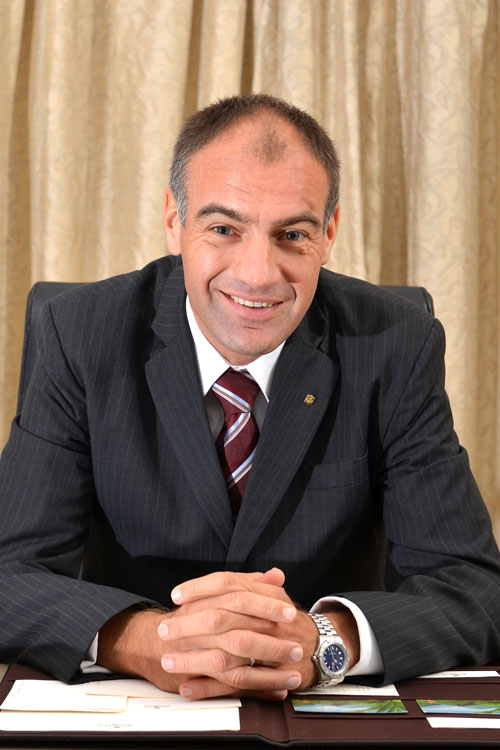
MITTU Chandilya has been named CEO of AirAsia India, effective June 1, 2013.

The Chennai native brings with him leadership experience gleaned from a range of roles, from working at an entrepreneurial start-up to top leadership roles within MNCs and high-impact management consulting experience.

Chandilya was last principal and head of services practice in Asia-Pacific at Egon Zehnder, focusing on airlines and aviation in the travel and hospitality segment.

Shun Tak to launch hotel brand, management

0

SHUN TAK Holdings, a household name in Hong Kong and Macau, is planning to establish its own hotel brand and management.

It is understood the brand would appeal to outbound Chinese tourists worldwide.

When asked why Shun Tak was keen to run hotels, managing director Pansy Ho told TTG Asia e-Daily: “If we are going to continue to build and invest in Macau or outside – and we all hear how Asia-Pacific, especially China, is going to grow – eventually there will be a market for it.”

“We figure we probably will not be able to build as quickly as we can in providing the know-how in managing hotels through our accumulated experience of over 50 years in servicing huge numbers of Chinese customers. We have that database and understanding of Chinese customers, so it is probably a good time to start the service,” said Ho, in an interview on the sidelines of PATA Annual Summit in Bangkok last month.

Ho added: “We’re setting up (management services) now. We have not gone down to the last details; we are beginning to amass a professional team of people.

“We will make an announcement soon and maybe (management operations will be up and running) within a year.”

Shun Tak’s core businesses are transportation, property, hospitality and investments, with a strong presence in Macau where it owns or has stakes in, among others, TurboJet, Macau International Airport, Air Macau, Macau Tower and One Central Macau, a mixed-use development that includes the Mandarin Oriental, Macau.

The group also controls 100 per cent interest in the Cotai project and is the sole developer of the site. It is building a Jumeirah hotel there and is exploring “the possibility of building two or three hotels in that same complex,” said Ho.

The company has started to expand into China. Last month, it acquired a project in Beijing Dong Zhi Men district comprising office and hospitality components. It also has participation in Beijing’s Tongzhou Integrated Development Phase 2.

–      Read how Ho envisions Macau’s future, TTG Asia, March 31, 2013

UK offers same-day ‘super priority’ business visa in India

0

THE UK has debuted same-day visa application services at its high commissions in India, with plans to make the facility available in a handful of other countries in the near future.

Now in operation at the UK embassies in New Delhi, Mumbai and soon, Chennai, the same-day visa costs 600 pounds (US$912) more than that of a regular visa.

Applicants who complete an online application by 09.30 and receive approval can collect their visas by 17.30 the same day in New Delhi and 18.30 in Mumbai.

The UK government revealed that the service would also be available to travellers applying for a six-month or two-year multiple-entry visitor visa (excluding student visas) and who have previously travelled to the UK, US, Australia, New Zealand, Canada or a Schengen country within the last five years.

Employees of companies that are members of the Business Express Programme who are travelling for business, may also apply.

Said Mark Harper, the UK’s immigration minister: “Using the ‘super priority’ visa service does not imply or guarantee in any way that your visa application will be successful. All applicants must meet the requirements of UK immigration rules.”

The UK’s biggest visa operation is located in India, processing about 400,000 applications each year and issuing 70,000 business visas annually in the last five years.

However, Rakesh Lamba, managing director, Prakriti Holidays, said: “Most regular business visitors to the UK already hold a medium-term multiple-entry visa. What purpose will a same-day visa issuance at an enormous cost serve? This will have marginal impact, as only a few people (who need to travel urgently) will use it.”

The same-day visa service will soon be offered in China, Brazil, Turkey and South Africa.

Declining yen holds promise for Japan inbound tourism

0

JAPAN’S weakening currency may be the saviour of its once-faltering inbound tourism, as trade players at the inaugural Japan-ASEAN Travel Mart last week cited the yen as a major factor for the sector’s strong recovery.

Susan Ong, manager, Japan National Tourism Organization Singapore Office, which also oversees the NTO’s activities in Malaysia, Indonesia and India, shared: “According to agent feedback, two years on (after the March 11 Tohoku earthquake), there is a lot of pent up demand from people who have been planning to go to Japan, and who are now doing so due to the weakening yen.”

She also mentioned that a representative from a major travel agency in Singapore had reported a 40 per cent increase in travel demand for Japan thanks to the currency’s exchange rate.

Utumporn Suonchai, general manager of Bangkok-based Am Tourist Club, said: “There are a lot of Thai people visiting Japan now because of (the favourable exchange rate) and the number of (destination) promotions Japan has done. People are not afraid of radiation anymore. The increase has been about 100 per cent compared to (the same period in) 2012.”

She said it was hard to estimate how Thai outbound to Japan would fare in 2013, but hoped for a 30 per cent increase by the end of the year.

Japan’s inbound arrivals continue to display strong recovery, with total inbound arrivals spiking 34.6 per cent last year against 2011 to reach 8.4 million.

The country posted 2.3 million arrivals for the first quarter of 2013, or an 18 per cent increase over the same period in 2012.

Garuda’s Bandung-Bali flights take off

0

GARUDA Indonesia began Bandung-Denpasar flights on May 18 in a bid to facilitate traffic between the two cities and connect Bandung with other Garuda destinations such as Australia, Japan and South Korea.

Garuda Indonesia’s vice president corporate communications, Pujobroto, said: “As Denpasar is one of Garuda’s hubs for flights to Australia, Japan and South Korea, travellers from Bandung can connect to Melbourne, Sydney, Perth, Tokyo and Osaka, or to Indonesian destinations like Lombok, Kupang, Makassar and Timika.”

The new route is operated with a Boeing 737-800 aircraft with 156 seats comprising 12 executive and 144 economy class seats.

The flight leaves Bandung at 12.25, arriving in Bali at 15.05, while the return flight departs Bali at 11.00 to land in Bandung at 11.40.

Meanwhile, Batik Air, the full-service airline of Lion Air Group that launched on May 3, has introduced twice-daily services between Jakarta-Bali on May 20. The service is the carrier’s sixth route from Jakarta after Manado, Balikpapan, Ambon, Pekanbaru and Jogjakarta.

Firefly, Malindo square off on domestic routes

0

FIREFLY will face stiff competition from Malindo Air when the latter commences twice-daily turbo-propeller operations to Penang, Johor Bahru and Kota Bharu out of Subang Skypark Terminal from June 3.

Malindo Air took delivery of its first ATR72-600 aircraft this morning with another three aircraft to be delivered next month, and a further two in September.

By December 2013, the carrier will have a total of 12 aircraft (Boeing 737-900ER) operating out of Kuala Lumpur International Airport (KLIA) or klia2 – if the new terminal is operational by then – and six ATR72-600 turbo-propeller aircraft, flying out of Subang.

Malindo has started selling tickets for its services to Penang, Johor Bahru and Kota Bharu, with all-in, one-way fares from RM69 (US$23).

Expecting competition from the new airline, Firefly launched its Everyday Low Fares campaign last Monday, to run for an indefinite period. However, Firely’s promotional fares appear higher than Malindo Air’s, with a one-way fare from Subang to Johor Bahru priced from RM79, Penang at RM123.95, and Kota Bharu at RM139.

Malindo CEO, Chandran Rama Muthy, said the ATR flights would initially connect Subang with secondary destinations within Peninsular Malaysia and certain points in Sumatra.

He said: “The turbo-prop operations will act as a feeder service to the jet operations, currently operating out of KLIA. We are talking to Malaysia Airports Holdings to provide public land transportation to link Subang and KLIA for the convenience of travellers.

“We are also revising upwards the (travel consultant) commission structure, which will be from three per cent of the base fare, for both jet and turbo-prop operations.”

Luxury Tours Malaysia manager, Ganneesh Ramaa, said Malindo’s new turbo-propeller services would add capacity and provide healthy competition for Firefly.

He said: “The three secondary routes – Penang, Kota Bharu and Johor Bahru – ­­are also business routes. Flying to Subang city airport will provide convenience to business travellers as it is close to Kuala Lumpur and surrounding areas. They will save on transport as compared to landing at KLIA.”

SIA, SilkAir seal codeshare pact with Shenzhen Airlines

0

SINGAPORE Airlines (SIA) and its subsidiary SilkAir have signed a codesharing agreement with Shenzhen Airlines, giving passengers a choice of two flights on the route between Shenzhen and Singapore.

According to the agreement, SIA and SilkAir will both add their codes to Shenzhen Airlines-operated flights, while Shenzhen Airlines will tag SilkAir services on the route with its code.

Shenzhen Airlines and SilkAir both run daily services linking Shenzhen and Singapore, with Singapore Airlines already currently codesharing on the latter.

Tickets for the codeshare services are open for booking.

Archipelago debuts fifth Jakarta Favehotel

0

ARCHIPELAGO International has begun welcoming guests at its fifth Favehotel, Favehotel Kelapa Gading, in the Indonesian capital.

The mid-sized select-service hotel is situated on Jalan Gading Indah Raya in Kelapa Gading, North Jakarta. It is located just behind Kelapa Gading Mall and a short distance from the Mall of Indonesia.

Favehotel Kelapa Gading offers 121 guestrooms and facilities such as LCD TV sets with 60 local and international channels, free high-speed Internet access, three meeting rooms and a café.

Said Norbert Vas, vice president of sales & marketing, Archipelago International: “We intend to add at least another 10 Favehotels to Jakarta’s existing five. Kelapa Gading complements Favehotel’s current locations in Wahid Hasyim, Kemang, Pasar Baru and Pluit, but we will soon open in Melawai, Sunter, Cideng, Tanah Abang, Grogol, Menteng, Glodok, Cililitan, Zainul Arifin and Kebayoran.”

Archipelago International earlier announced intentions to open 41 hotels by the end of 2013, to bring its total portfolio to more than 100 properties (TTG Asia e-Daily, February 14, 2013).

All-in-one playgrounds

0

They may not have casinos, but these destinations are drawing tourists with their unique experiences 

may17-story1-nlagiibay

Lagoi Bay
Following its launch in 2007, the 1,300-hectare Lagoi Bay in Bintan will be opening key facilities from the second half of this year, which include beach and lakeside resorts, a mall and first-of-its-kind recreational activities. The entire development is scheduled to be completed by 2015.

Geared to take off in October will be the Air Adventures Flying Club Bintan, an ultra light aircraft ride centre and flying school that claims to be South-east Asia’s first seaplane facility offering an open cockpit seaplane experience to seasoned pilots or novices.

Adventrees, a new canopy adventure trail in the forest surrounding Lake Lagoi will also be ready by October for teambuilding activities involving ropeways, as will an off-road rally car circuit.

On the accommodations front, The Sanchaya will debut 19 luxury villas and nine suites in November, adding to Lagoi Bay’s five resorts that offer 1,400 rooms. Early next year, Alila Villas Bintan and Swiss-Belhotel Lagoi Bay, Bintan will further plump up the inventory with over 250 new rooms. Room rates are estimated to range from S$80 (US$65) for beach cabanas to over S$4,000 for four-bedroom pool villas.

A 45-minute ferry ride from Tanah Merah ferry terminal, travel consultants said Lagoi Bay had potential to draw FIT travellers as well as meetings and incentive groups.

Alicia Seah, CTC Travel senior vice president of marketing & public relations, said: “We foresee these developments will primarily attract high-end travellers who seek a getaway from the hustle and bustle in Singapore.”

However, Luxury Tours & Travel director, Michael Lee, said the development needed more publicity.

While Singaporeans currently top Bintan’s arrivals, Chia Tek Yew, executive director, strategy & marketing, BRI, expects the domestic market to grow once the Bintan Resorts International Airport becomes fully operational by 2015. It will be in Busung, Kuala Lobam, a 30-minute drive south-west of Lagoi Bay. – Lee Pei Qi


may17-story1-laguna-lang-co

Laguna Lang Co
Vietnam’s Laguna Lang Co held its grand opening in April, with the first of its hotels now ready to receive guests. More accommodation options and facilities will be added to the vast 280 hectare site over the coming years, with the IR eventually set to emulate the scale of Laguna Phuket.

Like its Thai sister, Lang Co is targeted at a broad spectrum of high-end travellers. Banyan Tree offers luxury with its spacious private pool villas, while Angsana’s inventory ranges from the more modest deluxe rooms to rooftop pool suites. Rates start from US$280++ at Angsana and US$735++ at Banyan Tree.

MICE business is integral to the business plan, with top-end meeting facilities, a huge ballroom and the capacity to cater to major events outdoors.

Weddings are also part of the mix. “We are the only hotel with a dedicated chapel on site,” said Khiet Le, marketing and communications manager, Laguna Lang Co.

Other facilities include the world-class Nick Faldo-designed golf course and two spas.

Sitting amid UNESCO World Heritage sites – Hoi An’s ancient town, the Cham ruins of My Son and the imperial city of Hue – the resort provides day-trip access to all three. That said, the location also means Laguna Lang Co is somewhat out on a limb. It is best reached via Danang International Airport, a 40-minute drive away.

“At present almost all our customers request hotels or resorts in the centre of Danang city, but Laguna Lang Co is an attractive and exciting new development that we will consider in the future,” said Vietravel’s director of marketing, Nguyen Minh Man.

Khiem Vu, general manager of Indochina Travelland, believes that the combination of the Laguna brand, the beauty of Lang Co bay and its location between Ho Chi Minh City and Hanoi, will make it a success. He said: “We have already made a couple of early bookings for this property, and we predict strong local demand as more and more Vietnamese travel in the luxury segment.”

Meanwhile, Buffalo Tours has yet to work with Laguna in Vietnam, but they are close partners in Thailand. Explained head of international business development, Ed Pettitt: “We know the quality and consistency of the product, but we have not sent clients as it has only been recently completed and we need to be able to guarantee everything is in order first.”  – David Lloyd Buglar


may17-story1-funtasy-island

Funtasy Island
Situated between Singapore and Batam, Funtasy Island on Riau Islands is envisioned to be the world’s largest eco theme park with residential, commercial and tourism components, which will be rolled out in batches from mid-2014.

At 328 hectares, the island itself is two-thirds the size of Sentosa, with 70 per cent of its total area preserved as a nature sanctuary.

In the first phase is a five-star deluxe resort development run by Meritus Hotels & Resorts, comprising a 200-room condotel, 230-suite hotel and 413 villas. Eco-themed activities such as aquaculture tours and nature trails will also be available, as well as a beach club that will offer a slew of sea sports from diving to parasailing.

To be revealed later in 2015, one of the highlights will be a heart-shaped islet, which will have a 1,000-pax banquet hall and a wedding chapel. There are six islets in total.

Funtasy Island Development director, Michael Yong, said at least one million visitors are expected to arrive annually once the island is fully completed in 10 years’ time.

He said: “We are targeting Singaporeans and international visitors who come through Singapore.” Located 16km off the coast of Singapore, Funtasy Island will be accessible via a 20-minute ferry ride from the HarbourFront ferry terminal.

Stella Chow, manager advertising and marketing division, outbound tour department, Hong Thai Travel, said: “There is potential to attract Singaporeans due to its eco park concept, which will appeal to those who are used to the concrete landscape. The Love Island is also an attractive alternative venue for a romantic getaway.

“However the infrastructure within the resorts, such as getting around the resorts and the ease of travelling from the ferry terminal to the resorts has to be well put together to ensure convenience.”

Star Holiday Mart managing director, Dennis Law, added: “This new attraction will sell with the right products, but Singapore already has many fun and adventurous products so not many may want to travel to (Riau) since it will involve extra costs.”  – Lee Pei Qi


may17-story1-desaru-coast

Desaru Coast
Adding to Johor’s growing bag of tourism products is Destination Resorts and Hotels’ (DRH) Desaru Coast, a 17km beachfront stretch at the south-eastern tip that will comprise hotels and residences, water theme parks, golf courses, a retail village and a convention centre, among other offerings. With 1,600 hectares to be developed over three phases, the first is targeted for completion in 2015.

Lau Yin May, senior vice president, programme management & corporate communications, DRH, said: “There will be a number of world-class brand names such as the Aman Country Club and Aman Villas, situated along pristine beachfront; Sheraton Desaru Resort, also with direct beach frontage; and Datai Desaru, nestled on a hilltop. Plantation Hotel will be a four-star hotel integrated with the two theme parks.”

At Ocean Quest and Ocean Splash, guests will be able to interact with marine animals and play at the salt water wave pool respectively, while The Els Club Malaysia will feature two championship golf courses – a 27-hole course designed by Ernie Els and an 18-hole course designed by Vijay Singh – as well as exclusive villas.

There are several tourist attractions within close proximity to Desaru Coast, including a fruit farm and an ostrich farm. Further out, a scenic one hour drive will take guests to Puteri Harbour, where families can spend a day at The Little Red Cube, a lifestyle retail complex that is also home to an indoor theme park. Legoland Malaysia is a five-minute drive away.

From Kuala Lumpur, Desaru Coast is a four-hour drive using the North-South Highway or a 45-minute flight to Senai International Airport, followed by a 45-minute drive. From Singapore, it is a 30-minute ferry ride from Changi Ferry Terminal to Tanjung Belungkor Ferry Terminal in Kota Tinggi, followed by a half hour’s drive. By land, it is a one-and-a-half-hour drive from the Second Link or Causeway.

Raaj Navaratnaa, general manager of New Asia Holiday Tours & Travel, said: “We will twin Desaru packages with Singapore as both destinations have something different to offer families on holiday. Desaru has theme parks and ecotourism products, whereas Singapore is known for its shopping and entertainment.”

World Avenues executive director, Ally Bhoonee, added: “Due to its close proximity to Singapore, it will make a perfect pre- and post-tour option for MICE events held in Singapore.”  – S Puvaneswary


may17-story1-grand-kawanua-international-city

Grand Kawanua International City
Growing air access into Manado, North Sulawesi will provide a lift for the Grand Kawanua International City (GKIC), which will see hotels, hospitals and a water park rising on its 300 hectares over the next few years.

Developed by Jakarta-based AKR Group, GKIC is already home to the 176-room Novotel Manado Golf Resort & Convention Center and the 6,500m2 Grand Kawanua Convention Center that can host up to 4,000 people. There are also residential properties and public facilities such as tennis courts and a swimming pool.

A number of projects are scheduled for completion this year, including the conversion of the 15-hole golf course to an 18-hole one, as well as the Citiwalk Shopping Mall and a wedding chapel.

Earlier this year, the six-country Regional Secretariat of Coral Triangle Initiative on Coral Reefs, Fisheries and Food Security also set up base here, with ensuing marine conservation activities expected to drive more visitors to the destination. Other recent additions include an art gallery with US$3 million worth of Indonesian art and painting collections, and Siloam Hospital.

AKR managing director, Widijanto, said some 10,000 more rooms were needed over the next few years, highlighting a 100-hectare site that is open for hotel development. Currently, Novotel Manado’s rates are between Rp400,000 (US$42) and Rp800,000.

He said: “Lion Air is opening Manado as a hub for its regional routes to Hong Kong, China, Japan and Singapore, in line with the arrival of new aircraft. This will add to existing direct services from Manado to Singapore and Davao, as well as the route network within Indonesia.”

Incito Travel managing director, Ng Sebastian, said while GKIC had succeeded in positioning itself as a MICE destination, more promotions had to be done to highlight the leisure attractions in order to target domestic and regional markets.

Mapanget Mega Wisata Tours and Travel managing director, Reenaldo Wangkar, added: “We can develop golf packages to Manado when the 18-hole golf course is ready. The water park may also add facilities for the leisure market as well as the corporate market for teambuilding or gatherings.”

Meanwhile, the North Sulawesi and Manado City Government are developing infrastructure such as a ring road connecting Manado with surrounding areas like Bitung and Tondano, to be ready in two years. – Mimi Hudoyo

Life of the party

0

Who does not love a good theme party? But throwing one is not a piece of cake anymore for hotels. Raini Hamdi plays party pooper and asks, is the life of the ballroom theme party over?

may17-patry

An explosion of F&B concepts in Asian cities from Singapore to Shanghai and resorts from Bali to Penang is giving planners more choices on where to take groups for a theme dinner.

The life of the ballroom theme party may be dimming – for who wants to be cooped up within four walls and a fake setting, when there are so many venues and leisure attractions outside hotels that are natural themes in themselves and bring guests closer to the destination?

A check with hotels however shows the party is not over yet for them, for there are good reasons still why the hotel venue is a practical choice for groups (see page 12, Hotels vs offsite venues). But it is not exactly rock-and-roll for hotels to secure and pull together memorable theme parties.

Old formulas do not work anymore when clients are changing faster than hotels can change props, so hotels have to think up new theme party ideas or rewire tried-and-tested ones. Hotels also have had to literally rewire ceilings for fibre-optic lighting which can create moods that impress today’s younger, IT-savvy clients; tear down four walls to make way for concept meeting spaces (such as Grand Hyatt Erawan Bangkok’s The Campus), or build new spaces (such as Ayana Resort & Spa, Bali, already with seven restaurants and a multitude of outdoor venues, yet, to cater for bigger productions and numbers of participant, opened a 20,000m2 designer frangipani garden which has its own entrance).

If they do not have the grounds to build new spaces, hotels find themselves scouring for unique venues outside their property to secure a booking. Resorts World Genting, for example, uses the nearby Chin Swee Caves Temple and the Awana Longhouse, situated amid a million-year-old rainforest.

As well, the rise of third-party event organisers reduces the scope of and, consequently, revenue from theme parties for hotels. Clients increasingly prefer to use a third-party event organiser to handle the theme, decor, entertainment, light-and-sound, etc, according to Christine Divinagracia, assistant director of events, Dusit Thani Manila.

“Sometimes, we get leads from local and overseas organisers to bring events to the hotel. Some organisers come up with their own packages to sell to their clients,” she said. “We work well with them in ensuring the event is successful.”

Pullman Kuching’s general manager, Eric Tan, said most companies holding theme parties at the hotel engage their own event organiser but this makes it easier for the hotel, as it deals only with the organiser.

Who buys theme parties?
Overall, the theme parties market, far from tapering off, is becoming more alive than ever. Corporates may have smaller budgets, or even lesser time for them in an effort to show some restraint post-GFC, but “social” theme parties are on the rise.

It seems everybody wants to theme everything. Whereas the traditional theme party as the industry knows it originates from the Western incentive, now even the birthday party for the husband or wife, weddings, prom balls, corporate Christmas parties and small meetings want to be themed, several hoteliers interviewed said.

Also contributing to the good health of the market is a blurring of theme parties and teambuilding.

Janine Watton, director of sales and marketing for Four Points Sukhumvit 15, Bangkok, said TV reality shows contribute to the popularity of “interactive” theme parties.

“Most parties now have games and interactive elements such as live cooking stations, so guests can see chefs in action,” Watton said. In response, one of the hotel’s first two theme party ideas, launched recently, is an ExecutiveChef dinner, inspired by the reality show MasterChef. Guests compete in a cooking challenge, creating their own dish to impress judges, before sitting back to relax and enjoy the rest of the evening with free-flow of beer, wine and soft drinks.

Jenifer Dwyer-Slee, director of sales-business events, Accor, also noted that “clients today like to simulate TV (reality shows), so we are getting plenty of requests to do theme parties and team activities themed around My Kitchen Rules and MasterChef.

A rise in new Asian MICE markets such as China and India produces yet another stream of parties, with hotels tweaking the F&B selection and themes to cater to their needs.

Said Philippe Le Bourhis, general manager of Pullman Jakarta: “The growth of Indian and Chinese groups is impressive, even though the budgets can vary significantly based on the type of clients.

“New paradigms in food requirements are explored as some groups have their own cooks or need separate kitchens and culturally, Indian weddings require many specific details that surprise hotel teams. New language skills are also needed (when dealing with markets such as China), although most (of its) upscale clients would speak English.”

Andre A Gomez, general manager, Hilton Phuket Arcadia Resort & Spa, agrees. “Chinese and Indian incentive groups have different budgets, depending on the group. We need to be aware of their cultural requirements and our culinary teams must develop greater skills in catering to their cuisines.

“With emerging markets such as India, where most of the disposable income is with the younger age group, events require style but also need to be relaxed and innovative in food, theming and service.”

Paul Yiu, director of sales & marketing of The Westin Denarau Island Resort & Spa, Fiji, said theme parties that are “old news” to the more mature markets are new to these customers.

“Because of the evolving customer base, we are not putting to bed any of our events/themes at this time. Clients from further abroad will find the Fijian Culture dinner as entertaining as our (more mature) Australian clients did the first time they experienced it. The change is in how we present the ideas to the markets based on our understanding of what works for their needs. We just need to keep the older ideas refreshed, not axed.”

Popular venues
But the advent of the smart and sophisticated traveller is reshaping how theme parties are booked, where they are held and how they are organised.

And yes, the ballroom theme party has seen a drop due to more experienced travellers, with offsite venues or more unique spaces on property grounds being preferred today, hoteliers admitted.

Rex Loh, director of sales & marketing, Ritz-Carlton Hotel Millenia Singapore, said: “We are seeing an increase in requests for offsite catering. This can be attributed to (the emergence of) more event venues such as Gardens by the Bay.

“But theme parties still tend to be popular with the society set for gala dinners, charities and even weddings, or for luxury product launches. Although the number of theme parties (in hotels) have decreased, offsite catering has grown even more and this trend looks set to continue.”

Grand Hyatt Erawan Bangkok said its clients prefer to have parties at historical venues such as the 400-year-old Wat Chaiwatthanaram, a UNESCO World Heritage Site, by the Chao Phraya River in Ayutthaya, or in Suan Pakkad Palace, Phya Thai Palace and the National Museum. The hotel provides offsite services to these events. Its own event venues such as The Residence and The Campus are also preferred as they are unique themes in themselves.

DMCs such as Dave Chang, managing director of Asia MICE Planner in Phuket, said: “We have definitely seen more demand for offsite theme parties too. For corporate groups staying at a resort for meetings that last several days, an offsite party is a good way to break the monotony.”

Four Points’ Watton observed: “People definitely know what they want more now than ever. In the past, people would look to hotels and venues for ideas, now they come with examples of what they would like to do and a budget. Unique venues which offer flexibility are the most popular – people are moving away from ballrooms and traditional spaces as they want something different, something to wow their guests.”

One reason why MICE organisers and delegates have become more sophisticated is because many of them have travelled extensively; thus, their expectations are higher, noted Andrew Leong, Resorts World Genting sales & marketing manager.

“Theme parties, as a result, have evolved to become more in-depth. The changes started taking place three to four years ago. It is no longer just about the décor or entertainment, but the total experience. Participants want to be more involved with activities, rather than just watch a show, then say goodbye. Off-the-rack theme parties don’t sell anymore,” said Leong.

Added Wendy Teo, director of sales-MICE, Fairmont Singapore and Swissotel The Stamford: “Participants are definitely more well-travelled and IT-savvy these days. By being well-travelled and IT-savvy, they get inspiration or ideas from places they have travelled to. They also have easy access to web tools for research and comparison. Their levels of expectations are naturally higher as a result.”

Teo said the accessibility and availability of different types of venues – i.e., beachside resorts, luxury hotels, etc – pose increased competition to city hotels which have limited land space.

“Hence, we need to be creative and multi-faceted in space utilisation to maximise the area we have. We also try to offer new and interesting packages to our guests who are also attending trainings/seminars at Raffles City Convention Centre. An example would be including Singapore Grand Prix race tickets as part of the stay/meeting package during the race period.”

“Although the number of theme parties (in hotels) have decreased, offsite catering has grown even more and this trend is sent to continue.”
Rex Loh, Director of sales & marketing, Ritz-Carlton Hotel Millenia Singapore

Bigger needs, not budget
The dilemma however is, while clients want more sophisticated theme parties, budgets are not growing in tandem with higher expectations. Moving a theme party outdoors to a unique venue means higher costs as it involves moving furniture, IT equipment, props and settings, Resorts World’s Leong pointed out.

Organisers may want more than a single singer performance, but that well-choreographed entertainment for the whole evening, again, costs more.

Yet, post-GFC, the “no-expense spared” phrase is now “rarely heard”, said Amanda Thompson, executive assistant manager-sales & marketing, The Langham Melbourne.

“Event organisers are more careful with company funds and are no longer the final decision-makers when securing a venue. They often need to seek approval from senior management and provide a strong case why a five-star hotel is the right fit for their event. They want value for money, good service and for the event to reflect the quality of their own business, but at the same time they do not want to be seen as spending unnecessarily.

“Clients are looking for more value when booking a gala dinner/themed event. Some of the value adds might include alternate serve menus, upgrade in beverage package or additional complimentary half-an-hour of beverage service, table centrepieces, gift vouchers for a door prize and partnering with suppliers to cost effectively provide elements of their event,” said Thompson.

Westin Denarau’s Yui too saw “a huge focus from certain corporate markets to avoid conspicuous spending in case of public backlash”.

Yui said: “Budgets may be tighter, but clients still expect a wow factor. This means hotels have to get creative with offerings that keep costs down but give more perceived value to the customer. Partnerships with our external suppliers are a good way to assist the customer with this. Selling the package rather than just the hotel and banquet is more the strategy now since the overall budget is the main concern for the client; the costs for the programme are not in a silo and therefore hotel sales needs to work harder to win the business.”

Farizal Jaafar, group director of marketing, Sunway Hotels & Resorts, Kuala Lumpur, said she noticed group sizes have become smaller over the last two to three years. “A typical size now is 100 to 300 people whereas the average theme party size was between 500 and 700 delegates before.

“It could be that companies have increased their qualifying criteria, thus fewer delegates qualify, or costs have escalated so companies reduce their numbers, or willing to spend more but with fewer people,” Farizal said.

But Ayana Bali’s general manager, Edward Linsley, said the hotel’s guests are not “so cost-conscious as they are value-conscious”.

“We don’t find that our clients have lower budgets or are trying to cut costs, in fact the opposite. Our group budgets rise every year as a result of bigger groups in terms of both production and number of participants. They do not want to cut costs so much as they want to get more value for their money, in terms of a memorable, world-class experience that will leave a lasting impression on participants. They want unique experiences and activities, such as a group spa session for 40-50 people in the Aquatonic Seawater Therapy Pool or a perfume-making class where everyone creates their own signature fragrance to take home,” said Linsley.

Agreeing, Sunway’s Farizal said: “Companies look for quality in terms of flawless execution and they do not mind paying for it.”

Popular themes
As to what themes are selling well, Linsley said anything that is “different” sells. The hotel has even hosted a theme based on the Survivor TV reality show and dared participants to eat cockroaches and wash them down with Bintang beer.

“Pop culture inspires many events, with people wanting to remake a Hollywood movie or reality show into their own unique event. In the past, we have hosted themed events based on the movies The Avengers and Pirates of the Caribbean. Due to elaborate productions, a lot of the budget goes into decoration. Pirates, for example, involves creating a life-sized pirate ship as the backdrop for the gala dinner, and this requires close management to ensure such events do not exceed the budget. We work closely with event organisers to ensure this.

“Theme party ideas that always work for incentive groups in general are Balinese cultural nights, such as our Langit Theater experience which consists of a Balinese buffet dinner and Kecak dance performance.”

Resorts World’s Leong agreed with views that local themes, far from being outdated, still sell to foreign visitors. “Certain theme party ideas, like the kampung (village) night or the rainforest theme party, may be old ideas for locals, but they still appeal to foreign markets. Local groups usually choose movie themes such as Men in Black and colour themes, like all black or all white.

“However, a trend we are seeing is organisers wanting to custom-make their theme parties. Most of the time the organiser will sit down with us and tell us the delegates’ likes and dislikes, the objectives they wish to achieve, and we will tailor-make a theme party to their liking.”

Westin Denarau’s Yui also observed that guests want an experience and not just a pretty venue. So concepts that incorporate the local culture with a level of participation by the customers have become increasingly popular.

“As budgets decrease, we have to find other innovative ways to sell to the customer, such as leveraging on the stunning sunsets that can be seen from our property as well as our lush garden settings that can be used to create an ‘otherworld’ ambience for their events,” he said.

“Fiji is fortunate enough to have beautiful landscapes that can be monopolised for events if the client has little in the way of budget to spend on lighting and décor.”

Said Hilton Phuket’s Gomez: “The common requests previously were all about table centrepieces. We have now added equipment in our newly-refurbished ballroom such as state-of-the-art audio-visual system and a ceiling fully-fitted with fibre-optic lighting to provide a venue that can create moods and feeling to suit any occasion and to better theme our events instead of the standard enhancements.

“Easy travel today sees people across all cultures and different time zones attend any given event. As a result, any single event needs to be tailored to suit as many people as possible with considerations of food, culture and religion.”

Behind the scenes, the effort to put up a great theme party has become greater than ever.

But, as they say: the show must go on.


Hot and not
may17-patry2
Left, local themes still in fashion. Above, group spa party at Ayana Resort and Spa, Bali

HOT: Interactive theme parties tailored after reality TV shows
The Westin Denarau Island Resort and Spa, Fiji, for example, tailors a theme after the Iron Chef series, where competitors pitch their cooking skills against each other. The competition portion of the event does not take too much time and is a way to get the group interacting. Once completed, the group enjoys a gourmet lunch or dinner together.

“This event addresses clients’ requirements in terms of tighter budgets, food focus and interaction. It is executed solely by the hotel associates and our resources on property. This keeps costs low,” said general manager Paul Yui.

Edward Linsley, general manager of Ayana Resort & Spa, Bali, said to find out what’s a hot theme party, just ask, what’s on at the movies? “Perhaps we (the hotel) will see something along the lines of Star Wars, or maybe even Ted,” he said.

HOT: Traditional themes, with a surprising or new twist
Said Mark Shrives, director of sales and marketing, Hansar Bangkok: “We organised a nostalgic Thai style party for a local publishing house, where guests come dressed up in bright, colourful costumes to enjoy a street-like atmosphere with carts offering somtum and accompanied by Isan singing. It was tacky but fun.”

Christine Divinagracia, assistant director events of Dusit Thani Manila, also noted that Filipiniana is still in demand, including the Barrio Fiesta theme, “but clients appreciate a modern twist, stylish details and personal touch”.

She said: “Last year, we hired style consultant Henry Pascual to help us conceptualise a Filipiniana theme but with modern elements; so not just using native baskets and local cloths for decoration, but combining them with other elements like glass, metal and candelabra.

“It also addresses the challenge of really transforming a function room or the ballroom into a glamourous venue to bring out that wow factor that everybody is looking for.”

Shangri-La’s Mactan Resort & Spa, Cebu, Philippines is revamping its local theme party and coffee breaks to make them more contemporary and experiential, said Agnes Pacis, director of sales & marketing. “We plan to make the decorations more colourful and source more options for entertainment, not just do the regular cultural show. Local souvenirs are also to be sourced out.”

HOT: Nostalgia theme parties
A theme that is no longer in trend today may become popular a couple of years from now. Wendy Teo, director of sales-MICE of Fairmont Singapore and Swissotel The Stamford, gave the example of Shanghai Tang, which she noted is becoming popular again.

“This theme has timeless appeal and unique quality, where classy old world charm of the East is perfectly intertwined with Western influence. Guests of such parties, local or international, can easily relate to the theme and have convenient access to the era’s fashion and hairstyles, enabling them to soak in the essence of the event easily.

“The venue as well may be transformed completely with exotic backdrops of grand old Shanghai complemented with cheongsam-clad service staff, antique furnishings and enhanced by classical music of an era gone by,” she said.

Agreeing, The Langham Melbourne’s executive assistant manager-sales & marketing, Amanda Thompson, said: “With nostalgia parties you will always see a revival of the good ones, perhaps presented in a different way.”

NOT HOT: Wine and celebrity chef parties, described as “so over and boring” by Hansar’s Shrives. “Such events only repeat what has been done. Hence, we are looking at collaboration and partnerships with external suppliers to bring interesting concepts to Hansar Bangkok. For example, a focus on more international cuisine by importing beers from the US and barbeque parties on the Rooftop Sky Terrace.

NOT HOT: Pirates and Hawaiian. Not popular anymore and have been done a lot of times in different locations, said a few sources.

NOT HOT: Black & white and formal bow tie theme parties. “Organisers want parties to be filled with fun, not the traditional dinner and dance where guests of multinational companies put on their formal suit like they do every day. With the current theme parties, all attendees have the opportunity to create their own costumes, thereby creating more excitement,” said Eric Tan, general manager, Pullman Kuching.

The days of gaming tables are a thing of the past, believes The Langham Melbourne’s executive assistant manager-sales & marketing, Amanda Thompson.

Additional reporting from Karen Yue, Xinyi Liang-Pholsena, S Puvaneswary and Rosa Ocampo