TTG Asia
Asia/Singapore Wednesday, 22nd April 2026
Page 2462

Arrival of Mariner of the Seas to boost RC’s Asian game

0

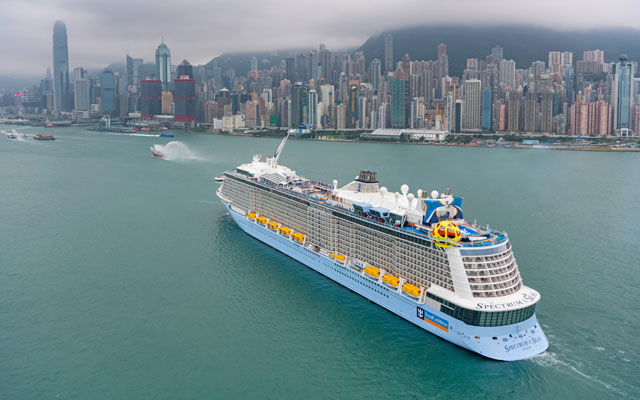
SINGAPORE welcomed the largest ship to homeport in Asia over the weekend, when Royal Caribbean International’s (RCI) Mariner of the Seas made its maiden call at the Marina Bay Cruise Centre on Saturday.

This marked the start of the 3,807-pax Mariner of the Seas’ Asian season in Singapore with three cruises of three to 10 nights to Malaysia, Vietnam, Hong Kong, Japan, South Korea and Shanghai.

The ship also replaces the 2,076-pax Legend of the Seas, which completed her Asian deployment in April (TTG Asia e-Daily, August 14, 2012).

Jennifer Yap, managing director, RCI (Singapore), said: “There is tremendous potential in the Asia market because the penetration rate for Asia is the lowest compared to Europe and North America.”

“If you see the Asian market as a whole, it is still in its infancy because a large majority (of Asians) have yet to board a cruise ship before. So by establishing greater presence in Asia, we aim to attract all these passengers onboard.”

Asians comprise 10 per cent of the cruise line’s passengers, with about 200,000 customers a year, with China and Singapore being the strongest regional source markets.

Mariner of the Seas offers a variety of Asian cuisine and visual entertainment programmes like acrobatic performances.

Unique onboard amenities and programmes include the 900-seat ice-skating rink, a full-sized sports court, in-line skating track, rock-climbing wall, mini-golf course, three-tier theatre, themed bars and lounges as well as a mezzanine split level nightclub. The DreamWorks parade stars characters from popular cartoons Shrek, Madagascar and Kung Fu Panda, with whom cruisers can interact.

From November 2013 to March 2014, Mariner of the Seas will return again to Singapore to offer a series of South-east Asian cruises.

PAL axes India route

0

PHILIPPINE Airlines (PAL) will cancel its thrice-weekly Manila-Delhi service via Bangkok on June 15, but travel consultants do not expect any negative impact on the growing traffic between the two countries.

A PAL source who sought anonymity confirmed the “indefinite suspension” of the flight. While the Manila-Bangkok leg of the flight will be retained, the Bangkok-New Delhi leg would be dropped for commercial reasons.

Meanwhile, an India-based travel consultant confirmed that PAL will close its Delhi office next month. “(PAL) is not making money on the (Manila-Bangkok-Delhi) services. New flights should be marketed but PAL wasn’t doing enough of that.”

Glen Augustin, Team India head, market development group, Department of Tourism (DoT), said the cancellation would affect the NTO’s plans to facilitate a 300-pax Outbound Tour Operators Association of India convention in Manila this September.

However, Philippine travel consultants were less negative. “I don’t think (the consequences of cancelling Delhi flights) will really be negative. For one thing, PAL’s rates are high. The market is price-driven yet the airfare is high,” pointed out Kristine Shroff, marketing director, Shroff International Travel Care.

Travel consultants said airlines such as Singapore Airlines and Cathay Pacific would likely fill the vacuum left by PAL as they already offer better connections on the route. Cebu Pacific in March applied with the Philippine Civil Aeronautics Board to be recognised as the official carrier to India.

However, DoT’s marketing office in India noted that other carriers operating India-Philippine routes had raised prices after news of PAL’s move broke.

Shroff said tourist traffic between India and the Philippines had been “good” during the last three years due to greater awareness in India about the Philippines through DoT’s promotional efforts.

“The market is ready and matured enough to consider the Philippines,” she added.

DoT statistics show that arrivals from India grew 22 per cent in 1Q2013 to 13,510, from 11,065 during the same period in 2012.

Additional reporting by Marianne Carandang

Malindo dangles cash incentive for travel consultants

0

MALINDO Air has launched a two-month long incentive programme in the hopes of growing its 700-strong base of travel consultants by threefold.

Between June 1 and July 31, travel consultants who issue tickets for FITs via the airline’s B2B system will receive a cash reward. Consultants will earn RM8 (US$2.60) per passenger for meeting monthly sales targets of 100-250 passengers per segment, RM10 per passenger for 251-500 passengers, RM12 per passenger for more than 501 passengers.

Consultants also stand to earn RM50 per passenger per segment for business class tickets.

Commissions will be calculated at the end of June and July, and the incentive paid out by the 15th of the following month.

Malindo Air CEO, Chandran Rama Muthy, said: “We are a (consultant) friendly airline and we wish to reward (those) who help us fly with high loads…Our services between Kuala Lumpur and Kota Kinabalu, Kuching registered average loads of 80 per cent.

“The scheme is timely as we are about to launch new turboprop services out of Subang Skypark (TTG Asia e-Daily, May 20, 2013) to Johor Bahru, Kota Bharu and Penang on Monday (June 3) and commence new jet services from Kuala Lumpur International Airport to Sibu (June 11), Miri (June 14) and Tawau (June 26)” (TTG Asia e-Daily, May 13, 2013) .

Marriott Foundation invests in Chinese hospitality education

0

THE J Willard and Alice S Marriott Foundation has pledged RMB40.5 million (US$6.5 million) to expand existing hospitality curricula and programmes for universities and vocational schools in China.

Known as the Marriott China Hospitality Education Initiative (CHEI), Marriott Foundation hopes the scheme will prepare Chinese youth for careers in China’s tourism and travel industry, many of whom come from hard-pressed rural areas.

CHEI is now in the midst of identifying 10-12 pilot schools for the upcoming aademic year and aims to benefit some 20,000 students annually across 50 schools in five years.

San Diego State University has been nominated as CHEI’s academic advisor, and has identified opportunities that CHEI will pursue, including: professional development opportunities like internships, work experiences, site tours and interacting with industry insiders; industry-specific conversational English studies; faculty development such as exchanges with US universities and internships at hotels in China; development of content to augment existing curricula; and an annual teaching conference gathering leaders in hospitality education to share best practices.

“We are customising the programme based on input from the industry and the impressive vocational schools and universities in China, and we hope to be part of a community of hospitality educators,” said Carl H Wilson, director of San Diego State University’s school of hospitality and tourism management.

Marriott International has also come on board as CHEI’s industry advisor, and will provide input on curriculum relevance, data to measure programme outcomes, internship opportunities for students and also host faculty internships at partner schools.

The hotel group in April launched the Marriott Institute of Hospitality Education in partnership with Anhui Zhong-Ao Institute of Technology in China, offering a three-year diploma programme initially centred on hotel management (TTG Asia e-Daily, April 25, 2013).

Garuda steps up connections from Medan

0

GARUDA Indonesia is strengthening connections at its Medan hub, having launched a new flight and increased the frequency of two others.

On June 1, Garuda started twice-daily Medan-Penang services and doubled flights to twice-daily to Palembang and Padang. These routes are served with Garuda’s new fleet of Bombardier CRJ1000 NextGen with a capacity of 96 seats, comprising of 12 executive class and 84 economy class seats.

Garuda Indonesia vice president Asia region, Nicodemus Lampe, said: “The new (Medan-Penang) service will provide convenience for travellers from Penang visiting Medan and the surrounding areas, and the other way around.”

During the launch, Penang chief minister, Lim Guan Eng, said: “Traffic between Medan and Penang is high. Besides travelling for business and leisure, many Medan people study or go for medical treatment in Penang.

“The new route will certainly foster the growth of business and trade in the area, especially because of Medan’s strategic location and (role as a) gateway to Sumatra and Western Indonesia region.”

Garuda opened Medan as its fourth hub after Jakarta, Denpasar and Makassar on May 3.

The airline has deployed five aircraft in Medan and currently serves Batam, Padang and Palembang from there.

Garuda’s only other Malaysia flight is its twice-daily Jakarta-Kuala Lumpur service.

Air China inaugurates Chengdu-Frankfurt flights

0

AIR China launched direct flights from Chengdu to Frankfurt last month, allowing passengers easy connection to destinations within the Star Alliance network.

On May 19, the airline kickstarted thrice-weekly services on the route, operating flights on Tuesdays, Fridays and Sundays via the Airbus A330-200.

Frankfurt-bound flights take off at 01.30 and arrive at 06.10 the same day, while return flights leave Frankfurt at 14.00 and touch down in Chengdu at 05.40 the next day.

Frankfurt is home to Star Alliance’s headquarters and Air China’s Europe headquarters.

Andaz Shanghai names Robert Hamer GM

0

andaz-shanghai-general-manager-robert-hamer

ROBERT Hamer has been appointed the general manager of Andaz Shanghai.

Australian-born Hamer brings with him over 25 years of experience with Hyatt Hotels and Resorts to the role, and was last general manager at Hyatt Regency Hong Kong, Sha Tin.

He started his career at the Hyatt Regency Sanctuary Cove and has worked in many cities in the Asia-Pacific, including Singapore, Melbourne, Tokyo, Bangkok and Fukuoka.

Uzbekistan fam trip open for application

0

ELITE Tours International, a Tashkent-based travel agency, is organising fam trips around Uzbekistan to introduce travel consultants to the country’s tourism offerings.

Known as Mega Info Tour, the tours are put together under the supervision of and in collaboration with the government of Uzbekistan. Participation is limited to one pax per company.

Cities covered during the tour include Tashkent, Samarkand, Bukhara and Khiva. The tour will provide international and domestic flights on Uzbekistan Airways not inclusive of airport charges, accommodation, English-speaking guides, full board, air-conditioned transportation, train tickets and entrance fees for all attractions mentioned in the itinerary.

The tour will run four times a year: March 15-30, June 15-20, August 1-15 and November 1-15. Applications should be sent no less than two months before the start of the tour.

For more information contact inbound@elitetours.uz

Bridging and leveraging

0

Like her father, Stanley Ho, Pansy Ho is a force behind Macau tourism’s destiny – although she insists she does not call the shots. Raini Hamdi talks to Ho at last month’s PATA Annual Summit and discovers a tireless lady who believes in a bigger, greater Macau and is helping to build bridges towards it

pansy-hocropped
Pansy Ho, managing director, Shun Tak Holdings, Hong Kong

What’s something that people might say about Macau that makes you go, ‘hey, that’s not Macau’?
Lately there hasn’t been too much of that. But from time to time there still is a misconception about the past of Macau, which of course is connected to us, especially before the return of sovereignty (to China) when Macau had not much to lean on and my father (Stanley Ho) had been instrumental in building up its economic fabric. A lot of people had the misconception that in those days the casinos were operating in an illicit manner with a lot of triad infiltration, which simply was not the case.

Do you feel a sense of responsibility?
I don’t feel a sense of responsibility so to speak, but I definitely want to demonstrate and prove that Macau has its own capabilities, that we have something to be proud of.

Where’s Macau at right now?
We now have a good cross-spectrum of products – hotels, transportation means, etc – so visitors have a lot of choices in the basic amenities.

We have in a short time been able to train up a strong and skilled labour force. In the usual travel and hospitality market, you might have the skills and expertise but not on a 24-hour basis, whereas in Macau, down to even F&B and retail, people can cope with that kind of hours. In retail, for example, the best operational hours are not during the day as most gaming customers shop well into the evening, up to midnight. So we have this kind of specialised skills set.

Since the deregulation of casinos, people have also learnt that in tourism, there are different segments and are beginning to come up with innovative concepts and ideas. This will give Macau a strong competitive edge over the other developing markets, which means we can really be at the forefront.

Even us at MGM: last year, we brought in the butterfly pavilion, not just a conservatory but the whole works including an incubation room and so on. The installation was a major success and this year we will repeat that with an aquarium. So it does not always have to be a new building or hardware, but creative events and software.

Nowadays, whether you are a hotel or transport provider, your customer is becoming more sophisticated. The aspirational, emotive travel is not just for culturally-rich destinations. Even Macau has to cater to this and craft experiences for different types of customers.

Is Macau’s customer mix now diversified?
Frankly, no. But we are moving from a strong dependency on high rollers, which is pure gaming. They are such keen gamblers they want to utilise all their time basically on gambling; they might not even go to the restaurants. Now, the migration is starting to the mass gaming floor. That’s also still gaming, but they tend to spend time and money on entertainment, shopping and F&B. We saw a significant growth especially in the first quarter, while the high-roller market is slowly stabilising.

Will the  geographical market mix also start to diversify?
(South) Korea is a success story and we wish to work on more (source markets), such as South-east Asia. We invest in the airport and airline (Air Macau) so I do understand we need to build traffic both ways. Only then will there be equitable mutual interest.

This is where I feel Macau can be that little hub for the smaller, rising airlines from Asian countries to immediately land and work their way into China. It has actually become more difficult for these airlines to do so, as the scene is dominated by the major carriers. So if they desperately want to reach China, what better way than through Macau? We are right there, we are efficient, we still have the capacity and we are trained. If that happens, we can have more foreign arrivals to Macau.

How’s Air Macau (of which she is executive director) doing?
It has turned around and did quite well last year. There is still not enough international routes as it has to focus first on its financial well-being, but it has added quite a number of domestic routes within China, which is also important. That’s one way to build the airline’s credibility. The world is getting to be collaborative so eventually, with that domestic network, we might not have to grow the airline organically but reach out and collaborate with other airlines, so we become the feeder for them to go into China.

In Macau, your company owns or has stakes in all corners – TurboJet, the airport, Air Macau, Macau Tower, One Central (mixed-use residential, serviced apartments and the Mandarin Oriental, Macau) and the Cotai Strip, to name a few. Surely you call the shots?
I don’t! But since I have the outreach and exposure, I can make the best use of my knowledge and insights to try and explain or, like at this forum (PATA Annual Summit), take back the ideas from a few people who have expressed interest to the government. Or we ourselves could collaborate and invest with these partners. Our group is now heavily invested in all spectrums of tourism, so it is in our interest to continue to make the right investments which can contribute to Macau.

It’s not about who is calling the shots as nobody can do everything singlehandedly. It is good when the private and public concerns have common objectives and goals, because both of us simply want to build up Macau’s capabilities and attractiveness and contribute towards repositioning Macau for a sustainable future.

How do you think Macau will look like in 10 years?
We are blessed that there is vision and forward planning by the government to further enhance the connectivity of and integrate the Pearl River Delta, which includes Hong Kong, Macau, Zhuhai, Shenzhen, even reaching out to other parts of the Guangdong province. There would be a comprehensive transport network through bridges, highways and ports. Altogether we are talking about the creation of a mega metropolis with a 100 million population base. That’s a major consumer market and productivity area of China. So we will have a strong capability to attract a lot of visitors from within China and outside.

In 10 years, we will become linked to Hong Kong and the neighbouring Chinese cities and be an even bigger attraction. We need to make sure this works. It is a great concept but there are challenges.

Such as?
To start, there’s still the invisible border – actually not invisible, there is a border. So even with all these road networks and so on, we are still three separate autonomous territories. In the long run, we need to ensure that although everyone needs to uphold and maintain their autonomy in governing their own security, there is a form of practical assimilation and everyone shares and contributes, not compete, so that the infrastructure that has been put in place is not wasted.

What’s an area of investment you’re focusing on?
Linking up everything, so that in future, with this massive transport infrastructure being put in place – roads, bridges, airport and our ferry operation – if you cannot come through by land to Macau, well, land in Shenzhen then use our ferries to shuttle to Macau/Hong Kong or vice versa. Now is the time when we can scale this network to the next level.

Lately, we have started to venture outside Hong Kong and Macau into China (Beijing real estate), but in a selective and specific manner. We’re not a multi-billion market capitalisation company, so we can’t afford to go all over the places, rather, we select cautiously.

You’re building the Jumeirah in Cotai too.
Yes, and we are talking about the possibility of building two or three hotels in that same complex. There is also a good chance we ourselves will start to run our own hotels (TTG Asia e-Daily, May 20, 2013).

As in your own hotel management?
Yes, managing and branding. We’re setting it up now. We have not gone down to the last details; we are beginning to amass
a professional team of people. We would make an announcement soon and may
be (it will be up and running) within a year.

You sit on so many key boards, e.g. as vice chairman of the Macau International Airport board and vice president of the Macao Chamber of Commerce, and are active with tourism associations and forums. What drives you?
People are fascinated with Macau, but are not really embracing it. What I would really like to do is to bring together organisations and people with good ideas in a consistent way, so that this will further the role Macau can play as a bridge for foreign enterprises which want to leapfrog into China.

How do you manage everything?
(Laughs) That’s why I am always busy, always in a rush. It is a good problem to have. Obviously 24 hours are not quite enough, so you have to use your resources in the most effective manner. You don’t do one thing at a time; you try to leverage some of the connections, opportunities, etc, to accomplish more.

This article was first published in TTG Asia, May 31 – June 6, 2013 issue, on page 8. To read more, please view our digital edition or click here to subscribe.

Gulf carriers soar on plane ambitions

0

The fast-growing Middle Eastern airlines continue to flex their fleet muscle, positioning themselves for a bigger slice of the global aviation market

qatar_a350xwb_hr
Courtesy of Airbus

Having carved for themselves a hub operation in the Middle East, the trio of Gulf carriers – Emirates, Qatar Airways and Etihad Airways – has since turned the tables on the once-fabled Kangaroo Route, leaving in their wake Asia-Pacific airlines which were the dominant carriers on the Australia-Europe routes. And when they are done with offering travellers from Australia and Asia a one-stop service to just almost anywhere in Europe, these airlines began to offer similar one-stop services to destinations in Africa and North and South America.

Only the Pacific Ocean routes seem to have eluded the Middle Eastern carriers but with partnerships and mergers flying in every direction, this might just be realised, as in the recently forged Emirates-Qantas alliance. Meanwhile, other Middle Eastern carriers such as the once-multinational Gulf Air (now exclusively owned by Bahrain), Royal Jordanian Airlines and Oman Air have found it difficult to challenge the dominant trio.

In the last few years, however, a new challenger in the form of Turkish Airlines has emerged. Away from the limelight shone on the three Gulf carriers, Turkish Airlines quietly grew its footprint from 10.4 million passengers in 2002 to 38.5 million passengers in 2012. Revenue grew even faster from US$2 billion in 2002 to US$8.1 billion in 2012.

Leveraging on its Istanbul base as a bridge between Europe and Asia, Turkish Airlines’ strength, according to CEO Temel Kotil, lies in its ability to service Europe and much of Africa with narrowbodies, enabling greater frequencies and capacity-matching to achieve high load factors that triumph its Gulf rivals with their widebody jets. The airline will add Sydney to its network by 2014.

Apart from heavy investment in airport infrastructure by the governments in the UAE and Qatar, the Turkish government has outlined plans to build one of the world’s largest airports in Istanbul with an annual throughput of 150 million passengers. Construction is expected to take only four years and costs around US$8.7 billion.

In its financial year of 2012-2013, Emirates grew its fleet by 34 widebody aircraft and its profit by a spectacular 52 per cent, even as most international airlines are struggling with shrinking profits, load factors and yield.

By any measure, Emirates, Qatar Airways, Etihad Airways and Turkish Airlines have been spectacularly successful and have also proven to be highly competitive as they continue to sniff out interesting city-pairs that could be hubbed through their homebases. All four carriers have also undertaken extensive investments in marketing campaigns and sporting events sponsorship.

The three dominant Middle Eastern carriers have invested heavily in fleet expansion since their inception. In various instances, Emirates and Qatar Airways have been instrumental in pushing the manufacturers to boost the aircraft’s performance and capabilities, resulting in workhorses that perfectly suited their needs. But neither was it a zero-sum game as other airlines also benefitted immensely. Today, many of the world’s most heavily travelled air routes are served by twin-engine aircraft and the Boeing 747 – dubbed Queen of the Skies – which is beginning to retire in greater numbers.

In the past decade, Airbus and Boeing have centred much of their attention on the Middle Eastern carriers as Emirates, Qatar Airways and Etihad have inked record-smashing deals for top-of-the-line airliners year after year. And it is certain that the major Gulf carriers will continue to hog the limelight when orders are announced at major air shows, including the Paris Air Show next month.

B777-300ER: Boeing’s wonder machine
The Boeing 777-300ER – Boeing’s answer to the Airbus A340-600 – appears to be a front runner in the fleet of the Middle Eastern airlines, but not necessarily bearing the honour of being the carriers’ flagship aircraft. One of the most economical and versatile twin-engine aircraft to operate profitably on both longhaul and medium-haul routes, the B777-300ERs are used by the Middle Eastern carriers on nonstop services to destinations as far-flung as Australia, New Zealand and Brazil, and also on relatively shorter routes to the Indian subcontinent.

Equally versatile is the aircraft’s seating configuration. Emirates’ B777-300ERs have four variants ranging between the high-density, 442-seat configuration and the low-density, 360-seat configuration, and the airline has opted for the high-density configuration by putting 10 seats in each row in the economy class, while many carriers opt for just nine seats in each row. The B777-300ER comes in two variants for Etihad (330 and 440 seats) and Qatar Airways (335 and 380 seats), while Turkish Airlines has also ordered a fleet of B777-300ERs configured with 340 seats in three classes.

Even as the B777-300ER continues to gain big orders worldwide, Boeing is reported to be offering the B777X in two variants with improved performance. Qatar Airways is expected to order up to 50 of this variant, and Emirates too has confirmed that it is looking at “a healthy number” of these, noting that by the time the B777X is available, it will have 175 B777ERs to replace. The number ordered will depend on the replacement cycle, the Airbus A350-1000s as well as the availability of more Airbus A380s. The B777-9X, one of the two B777Xs that Boeing is reportedly offering, is nicely slotted between the A350-1000 and the A380 in capacity.

boeing-777

A380: a new queen in the making
Airbus envisaged the A380 as the high-capacity workhorse suited to operate between the world’s major hubs, particularly in highly slot-constrained airports such as London-Heathrow and Tokyo-Narita. Singapore Airlines was the first to operate the A380 in October 2007, and with glowing media reports and passenger reviews highlighting the A380s’ stability and ultra-quiet cabins soon after, the A380 quickly became a household name among the travelling public.

Early A380 operators reported higher demand for the superjumbo flights over other aircraft types on the same routes. Many travellers also began to differentiate airlines as those who “have” or “have not” gotten A380s in their fleet.

For those who are already operating the A380 or awaiting delivery of theirs, the superjumbo is the company’s flagship aircraft. Emirates deploys its A380s mostly on longhaul destinations such as Sydney, Singapore, Bangkok, Hong Kong, Kuala Lumpur, London, Los Angeles and Johannesburg and also on shorter services to key European destinations and Saudi Arabia. Emirates, however, has been prevented from operating the A380 into markets such as India and most recently Austria. The cavernous two-deck interior has given airlines tremendous flexibility in customising their premium class cabins. Emirates remains the only airline in the world to install showers and shisha rooms on board its A380s – exclusively for its first class passengers.

Both Qatar Airways and Etihad have 10 A380s on order but have not divulged their configuration plans and cabin facilities. Airbus has just begun production of Qatar Airways’ first A380. Turkish Airlines has also expressed interest in acquiring large-capacity aircraft in the same class as the A380 and Boeing 747-8 Intercontinental but no decision has been announced yet.

airbus-a380

Boeing 787 Dreamliner: a nightmarish start
Designed as a replacement for the Boeing 767s and Airbus A310s, the Boeing 787 Dreamliner is a medium-capacity aircraft with the ability to operate on longhaul routes. Boeing had strongly marketed the B787 as an aircraft that could bypass major hubs – Japan Airlines (JAL) has utilised this aircraft in this respect to open up new routes such as Tokyo to Boston and San Jose.

The Dreamliner – already seriously delayed by the time of its first delivery to All Nippon Airways (ANA) – failed to live up to its promise and turned out to be a nightmare for the first batch of recipient airlines (Qatar Airways, ANA, JAL, United Airlines, LAN Airlines and LOT Polish Airlines). Two separate fires in the ion-lithium battery compartment resulted in the worldwide grounding of all B787s in January 2013.

The four-month grounding was lifted after a fix was finally approved in May 2013 and airlines were quick to return their Dreamliners into the sky. Qatar Airways resumed services of the B787-8s on May 20 to serve Dubai, London-Heathrow, Munich and Frankfurt. The B787 is expected to be deployed on its trans-Atlantic routes in 2014.
As more airlines take delivery of their B787s in the next couple of years and barring any further groundings, passengers may forget the initial hiccups and instead focus on the aircraft’s large electro-chromic windows, higher cabin humidity and pressure – factors that mitigate the effects of jetlag – and roomier and quieter cabin. Besides the strong passenger appeal, airlines will also benefit from the B787s’ highly fuel-efficient engines and maintenance savings resulting from the aircraft’s composite structure.
Boeing offers two variants of the Dreamliner: the B787-8 and the higher-capacity B787-9. Although only two of the four carriers reviewed have ordered this aircraft, it is expected that further orders will materialise, especially if Boeing rolls out a higher-capacity and longer-range model that various Middle Eastern carriers have sought.

dreamliner

A350: Airbus’ next venture
A strong competitor to both the B777-300ER and B787 Dreamliner, the Airbus A350 is highly suited for medium- and thin longhaul routes where demand is insufficient to support the use of the B747-8 Intercontinentals and A380s.

At press time, the first A350 painted with the Airbus’ corporate livery has just been unveiled in Toulouse, and will be put through exhaustive tests before starting its maiden flight this summer. A total of three variants have been planned: the A350-900 will be the first to be introduced, followed by the shorter A350-800. The longest, A350-1000, together with the -900 variant, find greater favour among the Gulf carriers. While Turkish Airlines has committed to a renewal of its narrowbody fleet, it has yet to announce its choice of future widebody aircraft and the race is on for Airbus to push for its A350s to be chosen.

Interestingly, Qatar Airways and Etihad have opted to order both the B787 and A350, carefully choosing the variants in both types to minimise capacity and performance overlaps. Given that recent new aircraft types such as the A380 and B787 have faced lengthy delays and performance hiccups, it is perhaps an insurance on the carriers’ part against the non-performance of either the B787 or A350. The A350s will be deployed mainly on longhaul routes to Asia-Pacific, capital and secondary cities in Europe, Africa and other cities in the Middle East where demand is high.

airbus-a350

A340: the workhorse of yesteryear
When the competition heated up between the four-engine A340 and the twin-engine B777, Airbus and carriers such as Virgin Atlantic Airways were quick to claim that four engines were more reliable than two. Virgin Atlantic even painted the slogan “4 Engines for Longhaul” on its A340 fleet.

The A340 was produced in four variants – the A340-200, the slightly bigger A340-300, the even larger A340-500 and the longest-range A340-600. None of the Middle Eastern carriers ordered the -200 variant and only Emirates and Turkish Airlines operated the -300 variant. The A340-500 is considered a niche aircraft due to its ultra-long range capability and, as such, were often deployed on services to faraway destinations in North and South America and Australia. Where demand is high on these routes, the A340-600s’ high capacity was put to good use.

While the A340s were considered very quiet and well-suited for longhaul routes by virtue of having four engines, the General Electric GE90 engines that power the B777-300ERs were gaining a reputation for reliability and fuel economy – the latter especially attractive to airline bean counters amid skyrocketing fuel prices. Engine maintenance is a significant cost component and with four engines to maintain, the A340s quickly found the numbers stacked against it. As the A340-600s competed directly against the B777-300ERs, it was no surprise that both Emirates and Qatar Airways utilised every available avenue to cancel all and part of their orders respectively.

All these notwithstanding, the various variants of the A340s were extremely popular with passengers though, most notably for the low cabin ambient noise. Emirates’ small fleet of A340-300s are mostly deployed to European destinations such as St Petersburg, Munich, Milan, Dusseldorf and Glasgow, while Turkish Airlines continues to operate its A340-300s to Asia-Pacific, Europe and North America.

Qatar Airways’ A340-600s are operated to European cities such as Frankfurt, Paris, London and Zurich as well as to farther destinations such as Hong Kong. Etihad’s A340-600s too service many European cities but are also despatched to longhaul destinations such as New York, Sydney and Melbourne.
Ultimately, economics triumphed all else and the A340s were maintained on the current fleet of the Gulf carriers in limited numbers. Production of the A340 was halted as orders evaporated.

airbus-a340

This article was first published in TTG Asia, May 31 – June 6, 2013 issue, on page 10. To read more, please view our digital edition or click here to subscribe.