TTG Asia
Asia/Singapore Wednesday, 20th May 2026
Page 2460

Same-day booking apps make waves in hospitality industry

0

THE recent surge of last-minute booking apps in an increasingly competitive online marketplace has triggered a wave of interest among the Asian travel trade, who debated over the potential and challenges of same-day apps during the No Vacancy Southeast Asia 2013 conference in Bangkok.

Increased mobile usage and Asian travellers’ inclination towards last-minute vacations spells potential for mobile-dedicated solutions, according to Tomas Laboutka, CEO and co-founder of HotelQuickly, a same-day, mobile-only booking app (TTG Asia e-Daily, May 3, 2013).

Laboutka remarked: “HotelQuickly would enable hotels to optimise occupancy real-time and RevPar while protecting their branding and fostering loyalty among customers.

“Unlike travel flash sites which train travellers to wait for a certain brand to offer hugely discounted rates, we rotate the inventory in real time every day, so users won’t know which specific brand will be available on a particular day.”

However, same-day booking apps drew mixed reviews from hospitality industry members that TTG Asia e-Daily spoke to.

“Last-minute apps are unlikely to work with the big chains due to the higher commission rates of 20-25 per cent versus 15 per cent for OTAs,” said Shade Shah, revenue and yield manager of Park Regis Singapore. “Unlike boutique hotels, our brand awareness is already there, so we don’t really need such apps (to boost branding).”

On the other hand, a hospitality industry leader who declined to be named, said: “The OTA scene is very competitive and mature now as many hotels are already participating there. Our hotel is now playing it wide, tapping new channels such as Agoda, Groupon, HotelQuickly, social media, etc, to utilise all partnerships since we always play rate parity.”

When asked if last-minute booking apps are revolutionising the travel landscape, Agoda CEO, Robert Rosenstein, replied: “We view them as competitors, but it’s up to consumers. We also work closely with hotels. We could also sell rooms at huge discounts, but do hotels want that?”

HRS targets Asia’s corporate travellers through Singapore office

0

EUROPEAN hotel portal Hotel Reservation Service (HRS) has announced the opening of a regional sales office in Singapore.

Aimed at servicing business and private travellers, HRS runs a portfolio of more than 250,000 hotels across 180 countries and offers online hotel booking and travel management solutions.

HRS services are available on multiple platforms, from desktop to mobile, and are free for corporate clients. Reservations are made direct and come with immediate confirmation. The HRS solution is also set up to comply with the client corporation’s travel policies and provides detailed reporting.

Furthermore, HRS is looking to expand its distribution model by strategically integrating with GDSs.

“Asia-Pacific is a high growth area and an important region for HRS to offer corporate travellers more choices and better service. We want to help companies here maximise profitability by cutting corporate travel costs through an efficient travel management system,” said HRS CEO, Tobias Ragge.

“Asia is experiencing strong economic growth and an unprecedented rise in the consumption of travel services. With the world’s biggest, youngest and most tech-friendly consumer group working and living in this region, it is a promising market to be in,” said HRS commercial director of Asia-Pacific, Christian Lukey.

Philippines to offer India group visas

0

TO ENCOURAGE more group travel out of India into the Philippines, the local government is working on a new policy granting group visas to segments such as MICE and family travellers.

“We are working closely with the office of consular affairs of the Department of Foreign Affairs to encourage them to come out with a policy on group visas, which includes incentive groups, conference groups and family groups. They are considering this and will come up with a new policy soon,” said Glen Agustin, team India head, market development group, Department of Tourism.

Should such a scheme come to pass, groups with bona fide and accredited tour operators will be given a group visa. This erases the need for individual visas and travellers will not be required to show money.

“For FITs, they (will still be) required to apply (for individual visas), pay the necessary processing fees and fulfil all requirements, including show money,” he added.

“However, since the market development group seeks to reduce barriers to entry for tourists, we are exerting all efforts to encourage our partner government agencies to ease the granting of visas to legitimate tourists,” Agustin explained.

He said the Philippines is “moving forward” when it comes to attracting arrivals from India, for instance, the country began allowing Indian nationals who had visa-free entry to AJACS SUK countries (Australia, Japan, Canada, Singapore, the US and UK) to enter the Philippines without a visa for 14 days, extendable to 21 days.

Nepal scales up tourism offerings for Chinese visitors

0

DESPITE seeing a two per cent slide in overall tourist arrivals in 1Q2013, Nepal has registered blistering 36 per cent growth in Chinese visitorship as the country steps up efforts to woo this market.

Chinese arrivals numbered 14,700 this quarter and 85,832 in 2012. Of the latter, 53,373 came by air and the rest by road. The average length of stay for Chinese tourists is 10 days, as per Nepal government statistics.

Buddhist pilgrimages and adventure activities such as trekking, paragliding and rafting are the main draws for Chinese visitors.

Nepal’s travel trade credited the rise in Chinese arrivals to increased promotions and participation at Chinese tradeshows over the last two years, which looks set to continue in the future.

Said Sushil Ghimire, secretary, Ministry of Culture, Tourism and Civil Aviation, in a media statement: “Since China is our second largest market for tourism (the first being India), we believe the time has come to shift our focus towards China as a large source market, from here on.”

Nepal is mulling the set up of visa facilitation services in several Chinese cities to smoothen the process.

Meanwhile, Bikram Pandey, vice president, Nepal Association of Tour Operators, said: “Inbound travel companies are gearing up for the increase in Chinese tourists by training tour guides with Chinese language skills. New tour packages are being designed specifically for visitors from China.”

Hari Sarmah, CEO, Nepal Association of Tour and Travel Agents, said: “As the Chinese are serious shoppers and entertainment seekers, we are trying to build more of such products to attract them.”

On the other side of the fence, the Chinese government has asked Nepal to revise the bilateral air service agreement between the two countries as the travel demand outstrips the seat capacity allocated to Chinese carriers. Three Chinese carriers – Air China, China Southern Airlines and China Eastern Airlines ­– currently run services to Nepal.

Garuda Indonesia brings back Singapore-Surabaya route

0

GARUDA Indonesia is reintroducing a service linking Singapore to Surabaya, while increasing the frequencies of its flights out of the city-state to Bali and Jakarta.

Beginning July 19, Garuda will run four-times-weekly flights from Singapore to Surabaya. From Singapore, flights depart at 20.45 and reach at 22.20, while Singapore-bound flights leave Surabaya at 08.45 to touch down in the city at 12.15.

The airline will also increase the frequency of flights to Bali with the launch of a new four- times-weekly service on July 19. A ninth daily flight to Jakarta will be launched on August 18.

“South-east Asia is an important region and Singapore in particular is a key growth market for Garuda Indonesia. We are constantly looking to improve our flight offerings to provide Singapore travellers better connectivity to Indonesia,” said Nicodemus Lampe, vice president, area Asia, Garuda Indonesia.

Garuda’s expanded flight options from Singapore to Indonesia follow similar moves by airlines such as Singapore Airlines (TTG Asia e-Daily, May 8, 2013) and AirAsia (TTG Asia e-Daily, June 4, 2013).

Garuda Indonesia is running a sale on flights to Surabaya from now until August 8. Valid for travel from July 19 to August 9, return economy tickets are priced from S$265 (US$210).

Malindo Air announces three new domestic services

0

MALINDO Air has set August 1 as the launch date for three new domestic operations from Subang – a twice-daily Alor Setar service and daily runs to Kuala Terengganu and Langkawi.

The routes will be run with the airline’s new ATR72-600 aircraft.

Chandran Rama Muthy, CEO of Malindo Air, said the launch of the new routes would provide the public with more travel options during the upcoming school holidays in August, which also coincide with Hari Raya celebrations.

Currently, Malindo Air’s turbo-prop operations connect Subang with Penang, Kota Bharu and Johor Bahru.

Chandran said: “Malindo Air’s emergence at Subang Skypark Terminal has been warmly received by the public. Our flights to Kota Bharu have been flying with more than 90 per cent capacity most of the time. Following such encouraging response since the launch of our Subang operations, we have decided to implement the new routes from Subang to Alor Setar, Kuala Terengganu and Langkawi.”

Earlier this month, Firefly announced it would add a Johor Bahru-Pekanbaru service and pad up its flight schedule with extra frequencies for the Hari Raya season (TTG Asia e-Daily, June 11, 2013).

Stefano Ruzza named GM of Conrad Koh Samui

0

stefano-ruzza-named-gm-of-conrad-koh-samui
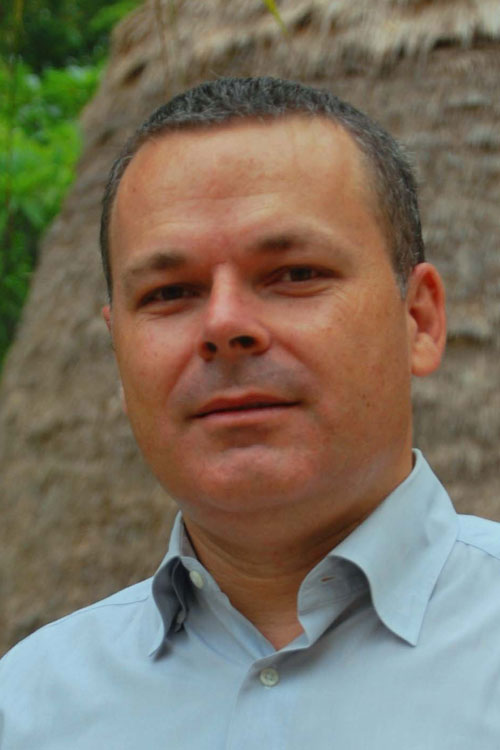
Stefano Ruzza

STEFANO Ruzza has been appointed general manager of Conrad Koh Samui, where he will oversee the resort’s management, operations and lead the hotel’s sales and management team.

The Italian-Swiss hotelier brings more than 16 years of experience to his new post, with at least 14 spent within Asia in countries such as India, Malaysia, Thailand, the Philippines, Sri Lanka, South Korea, Singapore and Vietnam.

Ruzza was last general manager at Hilton Namhae Golf & Spa Resort in South Korea, and director of operations at Hilton Colombo before that.

Steering SWISS

0

He joined SWISS as CEO in July 2009 and has been navigating the company through strong headwinds. For inspiration to build a hardy future for SWISS, Hohmeister tells Raini Hamdi he looks to everywhere but the airline industry

harry-hohmeister-swi003077a

SWISS posted a CHF24 million (US$26 million) operating loss in the first quarter. Why?
Yes. Three reasons. One, increased fuel prices and we did not have the hedging we had in 2011. Second, the Swiss franc is a strong currency not just against the US dollar, yen, British pound, etc, but the euro too, so we’re sitting in a high-cost island compared to the rest of Europe and are 20 per cent more expensive than other European carriers just through the currency strength. Third, while central Europe is quite strong, all around us is getting weaker and weaker. We also depend on this traffic and therefore are affected by the structural problem Europe has.

You’ve been implementing future-oriented initiatives as part of SCORE, Lufthansa Group’s Change for Success programme, to strengthen SWISS long-term. Is this helping?
Yes, we have 128 projects – we have more projects than people (laughs) – and by this year, I expect we will already see a turnaround, and by 2015, we will be back on track.

It is not about cost-cutting but about investing in new aircraft and technology, and redesigning processes, especially in areas such as distribution, efficiency management and productivity.

We have to reinvent ourselves because the European industry is in a structural change and if we don’t follow this change, we will not survive. Many airlines already went bankrupt in Europe or had to shrink dramatically. Therefore we have to rebuild ourselves somehow structurally, while guarding our position as a premium airline. So we really have to rethink everything, consider doing things differently or not doing them anymore.

Why aren’t there strikes at SWISS, as there have been at Lufthansa?
Lufthansa is a different company.

But it owns you.
But that does not mean it is the same company. We are a medium-sized airline. We operate close to 100 aircraft, not like Lufthansa with 400 aircraft, Air France with 300 or British Airways with 200 aircraft. These are huge machines and there, process management is important. For SWISS, people management is more important than process management because of the size of our company. So I know many of our captains, co-pilots, flight attendants, etc. And when I am at the shopping centres, for sure I would meet 10 to 15 people (laughs) who would come up to me and say, ‘oh, I have to tell you something’. So it’s very hands-on. This also makes us different in that we can be faster at decision making and implementation.

How do you motivate your staff?
It’s not easy to ask people to work more, but I think we are realistic people. We look around and we see that our competitors are no longer the former state-owned companies but state-supported ones such as Emirates, Etihad Airways, etc, which have lots of money and can undertake many opportunities.

As well, I think our employees are motivated by our commitment. The latest example is the management (board members) forgoing five per cent of their salary (from July 1 to end-2015).

Our people also understand that a restructure takes time; we’re just in the middle of it. But they are seeing a lot of ideas and innovative plans for the future, which is good.

In securing a sustainable future for SWISS, which airline do you benchmark with?
For me it is simple – forget benchmarks; we have to find our own way. An airline is a commodity business; without its own profile, it is not a special product. So we develop our own new first class, new check-in procedures, new pricing concept, etc. Of course we look at what our competitors are doing, but we don’t copy what they do.

In fact, we look outside the airline industry, for example, to the banking sector, to see what we can adapt, or to a country like Japan. We have brought the kaizen (Japanese word for change) attitude into SWISS. We sent a team to Japan for training, then we reviewed how it could be implemented effectively for us.

I’ve always said, we have to learn from other industries, not ours. It’s also more fun. Why should I benchmark with an industry that is in itself bankrupt? In every aspect – financing, balance sheet, cost management, system management – don’t benchmark with airlines, it does not make sense.

What could you possibly learn from banking these days.
(Laughs) Yes, lately, I’m not sure if we could learn a few management lessons from them, or they from us.

But when you see an ATM dispensing cash – that’s a technology we airlines now use for check-in, borrowed from the banking sector. In the future, I believe we don’t need the check-in machines at the airport anymore; with the SWISS app, you can check in with your iPhone or Blackberry. Banks are now copying that from us; in Switzerland, UBS, for example.

So what initiative are you proudest of to date?
Our social media approach is one. In Switzerland, we are the company with the highest social media penetration. And we have only one person behind it, not a huge team! I’m also proud of our customer service, not just through the call centres but our personal care centre which looks after our top 10,000 customers. Our people follow the itineraries of these customers – if he is stuck somewhere, they will help him immediately and automatically; he does not even have to call. Other airlines only have, say, different access times only for their valued customers. I think we’re innovative with our customer service concept and with contact management through social media.

What’s your strategy for Asia?
We’re close to the end of our current strategy in Asia and now we must start to think of the next phase. We’ve been growing to Asia in the last few years, opening up New Delhi in 2007, Shanghai in 2008, Beijing in 2012 and now Singapore (direct daily Zurich-Singapore service took off in May, see TTG Asia e-Daily, May 14, 2013). That’s one new destination between Asia and Switzerland every year or every second year, which is quite aggressive.

Now we need to lean back and think of the next steps. The Asian markets we have entered – Singapore, Beijing, etc – are quite huge for us; everything afterwards will be smaller, which will not fit well with our fleet strategy (SWISS has ordered a fleet of B777-300ERs which will be delivered by 2016 or 2017). The aircraft will bring 50 per cent more seats than the A340-300, so in the future we will have bigger planes, smaller markets.

So what to do? We don’t know yet. Anyhow, there is no pressure now to open a new Asian connection as SWISS is well covered with eight Asian destinations. I believe Asia will grow further, so new opportunities will arise in the next three to four years.

What are your flying habits like on SWISS?
When I enter the aircraft, I say hello to the maitre’d cabin, then I knock on the left-hand door to the cockpit to say hello and sometimes they invite me to stay. Sometimes, we discuss fleet management and pilot salaries in the cockpit. If I’m travelling longhaul, I’ll go to the galley and talk to the crew.

Harbour Plaza Hotels and Resorts picks group DOSM

0

nancy-kwan-harbour-plaza-hotels-and-resorts-picks-group-dosm
Nancy Kwan

SEASONED hotelier with extensive experience in sales & marketing, Nancy Kwan has joined Harbour Plaza Hotels & Resorts as group director of sales and marketing.

Harbour Plaza Hotels and Resorts is jointly owned by Hutchison Whampoa and Cheung Kong Holdings, and managed as part of the Hutchison Property division. Hutchison Whampoa and Cheung Kong Holdings are part of the Li Ka-shing group of companies.

The company currently operates manages nine hotels in Hong Kong, namely Harbour Grand Hong Kong, Harbour Grand Kowloon, Harbour Plaza 8 Degrees, Harbour Plaza Metropolis, Harbour Plaza North Point, Harbour Plaza Resort City, The Kowloon Hotel, Rambler Garden Hotel and Rambler Oasis Hotel, as well as Harbour Plaza Chongqing in mainland China.

What does it take to make it?

0

SHATEC, the hotel and tourism school of the Singapore Hotel Association, turns 30 years old on July 2. The pioneer in hospitality training and education has produced many leaders who now helm the industry in the region and beyond. Here are five of them and their tips on how to make it to the top*

* Excerpts from SHATEC’s commemorative book, written by Raini Hamdi, which will be presented during SHATEC’s 30th anniversary dinner at Shangri-La Hotel, Singapore on July 2, 2013

arthurkiongArthur Kiong
CEO
Far East Hospitality, Singapore

How did you find your job calling and what does it take to rise to the top?
I never started out wanting to be in the hotel business. It’s an industry I stumbled into – the opportunity was there and I was available. I think life is very much like that even though I am quite the meticulous planner. However, as the adage goes: Man proposes but God disposes.

Many people say, “follow your dreams, do what you love”. I learnt to love what I do and as a result lived my dream.

What’s your mantra?
In everything, give thanks.

What’s your advice to young graduates?
Nobody owns your career but you. You must know your strengths and limitations. Work on your strengths and manage your limitations.

In the first few years, work for strong brands. It will teach you systems and expose you to good practices.
Architect your resume but be careful not to job hop, you need to stay a minimum of two years in a company to build credibility and capability.

Take on the challenging assignments. Work overseas. Volunteer to do the hard stuff that others are intimidated by.

Always look for the strengths in others and make their weaknesses irrelevant.

While climbing the ladder to career success, never kiss up and kick down. Relationships are important and what goes around, comes around.

Always perform a level up. Do more than you are paid and you will end up being paid more than what you do.

Success is proportionate to your ability to conceptualise, your conviction to persuade and your courage to execute. Master all 3Cs.

Always question the status quo and challenge yourself to find a better way to achieve the desired outcome.

Never make money your primary motivator. Find a better reason.


nicholas-limNicholas Lim
President-Asia
The Travel Corporation, Singapore

How did you find your job calling and what does it take to rise to the top?
I was just 12 years old and worked as a door boy at a local five-star hotel over Christmas as the management felt it was nice to have young boys greeting guests during the festive season.

That vacation job kickstarted my passion for the industry. Once I tried to be an engineer, but it was dreadful. So I decided to jumpstart my career in the industry and studied at SHATEC. And when I returned to the industry, it felt good and right.

What’s your mantra?
Your people (team), brand and bottomline matter. Everything else is secondary.

What’s your advice to young graduates?
You must constantly have the desire to excel and grow. Leave your Facebook and Twitter at home, read business publications and expand your mind. You are hired based on what you can contribute to the organisation, not how popular or how many ‘likes’ or ‘friends’ you have.


kellvinKellvin Ong
Project director,
South Beach Hotel & Club, Singapore

How did you find your job calling and what does it take to rise to the top?
After spending six years with the Republic of Singapore Navy, I was looking to pursue a new career and came across a Hyatt advertisement. When they asked me what position I was looking for, I immediately replied front office manager! I didn’t know what it took to be one.

They offered me a position of front desk clerk.

After working for nearly a year, the hotel sponsored me to join SHATEC as its pioneer batch, in NTC-2 in Front Office course. The course gave me better insights into what the industry had to offer. I worked my way up from entry level to tour coordinator, sales manager, regional sales manager, conventions & incentives sales manager, director of sales, director of marketing, financial controller, EAM – F&B and Rooms, VP – Development and finally general manager with various chains.

What’s your mantra?
“When given lemons, make lemonade. Life is all about challenges; it’s what you make them out to be.”

What’s your advice to young graduates?
Don’t be afraid to get your hands dirty.


nikheel-advani

Nikheel Advani
COO and principal
Grace Bay Resorts, Turks & Caicos Islands

How did you find your job calling and what does it take to rise to the top?
I was planning to be an engineer and at the age of 16 my father had a heart-to-heart conversation with me about the “value of money”, “how he was rich and I was not” and “I had to go out and earn my living”. He was generous though; he said I could stay at home and he would pay for any education that I qualified for anywhere in the world.

While I was studying engineering, I did private catering for European embassies and worked at luxury hotels as a banquet waiter, bartender and dishwasher in the stewarding departments. It was an amazing experience and I just loved it – serving Chinese banquet dinners, taking care of VIPs at the embassies, mixing cocktails at weddings and dishwashing till the wee hours of the morning with a diverse team. A year went by and I sat down with my folks and told them that I loved this work more than engineering and I wanted to pursue a professional career in this industry. They were both supportive and in July 1989, I joined the F&B programme at SHATEC. It changed my life and gave me the solid foundation to build upon and made me the leader I am today.

This foundation, hard work and great mentors were the secrets of my success.

What’s your mantra?
1.  Always have a vision – if you don’t know where you are going you are not going to get there;

2.  Work hard and work smart – you need both to get to the top;

3.  Always take time to praise your team members who give it their best shot – you will be surprised at the quantum leap in performance.

What’s your advice to young graduates?
Always have great mentors throughout your whole career. There are leaders who take a personal interest in your growth and provide guidance and wisdom through their years of experience. Here is what one of my mentors told me: In your 20s, it is all about experience. Volunteer and be proactive in getting any additional experience in the business that you can, even if it doesn’t pay well.

In your 30s, it is all about position. Grow within your department and be exposed to as many positions within the business in an upward accent within the organisation until you reach the top.

In your 40s, it is all about making money and achieving results through your team members.

In your 50s, it is time to give back to the community, to the industry, to your country and leave a legacy! So far this advice has been invaluable to my success!


justinquekJustin Quek
Director
QBS Dining Concepts and principal chef
Sky on 57, Marina Bay Sands, Singapore


How did you find your job calling and what does it take to rise to the top?

My travels and curiosity about the world shaped my culinary path.

I grew up in the Queen’s Street/Bugis area, tending to my parent’s fruit stall and developing a love for and familiarity with local food. At the age of 20, I joined the merchant marine as a steward. I remembered being fascinated by how simple ingredients could be turned into gourmet meals. This fascination eventually became a passion and I started teaching myself to make everything I could think of – breads, pastries, classic dishes, etc, from the different countries we docked at.

After this little adventure, I enrolled at SHATEC and trained at Mandarin Oriental, Singapore and The Oriental Bangkok (now Mandarin Oriental, Bangkok). A cooking tour of France followed and I found myself working in famed kitchens like Roland Mazere’s Le Centenaire and at Jean Bardet in the Loire Valley, among others.

I ended off my year in France by training in England at the Roux brothers’ restaurants, Le Gavroche in London and Waterside Inn in Berkshire. This was when I also picked up the French language.

It was my insatiable hunger to learn new things and explore the unknown that finally led me back to Singapore to carve out the path to where I am now. In 1994, I co-founded Les Amis, a French restaurant, with my good friend Ignatius Chan, and stayed there for nearly a decade before opening my own restaurants in Taipei and Shanghai. Life has been good to me, especially since I’ve had little formal schooling after leaving school at the age of 16.

What’s your mantra?
Always work hard and never give up. Learn from the best and never take for granted any advice given to you. Better yourself through your mistakes.

What’s your advice to young graduates?
In addition to the good foundation you have built, you need to be open to criticism – this is how you learn the most. If you learn from the mistakes you make, it will make you a better person. Finally, go out and try other chefs’ cuisines. Learn from them because if you don’t, you won’t be able to improve and you won’t have a point of comparison between your cuisine and theirs.