

TTG Asia
Asia/Singapore Wednesday, 22nd April 2026
Page 2455

Build, design, own

0

What happens when architects and designers cross over design and construction, and  become owners of the hotels themselves?

soo-k-chanrgb
Soo K Chan,
award-winning architect and principal, SCDA Architects, Singapore, and owner, Alila Villas Soori, Bali

What made you want to own hotels?
I wanted to be able to design a hotel holistically and have a part in crafting the guest experience. I also enjoy hospitality, as it encompasses lifestyle aspects.

In designing Alila Villas Soori, what were your main considerations?
The design had to have a strong sense of place, be sustainable environmentally and socially, and consistent in its language – from the architecture, landscape, interiors and down to the details.

alila-villas-soori-avs-three-bedroom-pool-villa_cmyk
Alila Villas Soori, Bali

What are the pros and cons of designing a hotel you own than one that is commissioned?
With your own hotel, it is more intense as you are fully responsible for the product. The level of engagement is different as you are involved in the management and financial aspects of the project.

Pros: Quicker decision-making, more design control, more consistent design language.

Cons: You have to oversee the budget and financial aspects of the project.

What’s your view on hotel design and how should it evolve?
There needs to be a new typology for hotel design, as the large chains are creating too many sub-brands and it is becoming harder to create a differentiation.

The green agenda and the luxury idea also need to be repositioned.

Is it hard to innovate the villa product?
It is getting to a point where the villa product has become archetypical. For example, one expects a private pool and an outdoor shower if it is in the tropics. But it has become formulaic as more and more large chain hotel brands and city hotel brands roll out villa products.

What do hoteliers need to understand about architects, and vice versa?
Architects need to understand hotel operations, including back-of-the-house and sales and marketing of the product.

They also need to understand the brand ethos of different operators and to have stayed at many hotels to get a clearer understanding of hospitality.

Ideally, they need to be able to design the interiors as well.

Hoteliers need to give experienced architects some room to rethink the guest experience rather than merely coming up with standard hotel operating manuals – they should have a strong design director that can articulate the brand design direction.

How has owning Alila Villas Soori changed your perspectives of hotels?
I understand better how a brand can push its brand ethos even though the benefits are more for the brand than the owner. That there are features that are necessary while others that can be scaled back without compromising the experience.

That as brands proliferate, many of the brand’s design managers are fairly junior architects with hotel experience.

What’s your pick of the dream places in Asia to build a hotel?
Bali, Bhutan and the Maldives because of their strong and distinctive locale and culture.

Will you own and build more hotels?
I would not discount that. I’m currently developing Soori High Line in New York, a serviced condominium with some F&B (www.soorihighlineny.com).

(Alila Villas Soori is the first hotel which Chan owns. The hotel is managed by Alila and the name Soori combines his first name, Soo, and his wife’s Javanese name, Sri.)

melaniehall
Melanie Hall,
designer and owner, Luna2 Private Hotel and Luna2 Studios, Bali

What made you want to own hotels?
I have always had a passion for design, and was very much inspired by my father, Alan Chambers, who was an architect in the 50s and 60s. He instilled in me a love of modernist architecture and interiors. I am afflicted with his eye for design and love of high-end travel. Additionally, I worked in fashion for many years, lastly as head of creative for cK Calvin Klein for South-east Asia. To me, fashion, food, architecture, interiors are all co-dependent, so entering the hotel business is a natural progression.

Tell me about your hotels.
Several years ago, while living in Jakarta, I identified a niche for jetsetters seeking more privacy and a higher level of personal service than perhaps a more regular five-star hotel. This led me to create Luna2 Private Hotel in Seminyak in 2007, which offers the super-star service of an exclusive hotel with the intimacy of a private home. This exclusive-use five-bedroom property comes with a complement of 25 staff.

Luna2 Studios is our second property, located directly adjacent to Luna2 Private Hotel. Launched in April, this intimate yet vibrant ‘studiotel’ has 14 open-plan studios.

From these starting points, Luna2 will expand first regionally, then globally. On the drawing board, with land purchased and concept design underway, are properties in Phuket, Niseko and Lombok.

In addition, we are shortly launching the Luna2 Club, our invitation-only private members club (the first in Bali) for a niche group of like-minded lunatics!

luna2-private-hotel_cmyk
Luna2 Private Hotel, Bali

In designing Luna2, what were your main considerations?
The Luna2 collection blends nostalgia, the great modernism of the past, with futurism (innovation, gadgets, high-tech stuff) and touches of fun that make you giggle. Life is not to be taken too seriously after all!

Bali is a true melting pot of creativity, with many of the villas and hotels incorporating the ubiquitous “modern-Bali” approach to design. My own passion and creative vision perhaps contrast the Bali norm. I refer to my design style as ‘funked-up modernism’.

What are the pros and cons of designing a hotel you own than one that is commissioned?
I get to do it my way and my own vision. I make my own mistakes, and learn from them for the next project. The pride and gratification you get from building your very own hotel from scratch is incredible.

The downsides are: it’s a massive uphill battle; it’s hugely costly and you lose sleep in the process. But I wouldn’t change a thing – it’s onwards and upwards from here.

My husband is the financial wizard and believes he is backing a good horse!

What’s your view on hotel design and how should it evolve?
Many design-savvy entrepreneurs are ‘giving it a go’, it seems. Larger chains are rolling out more properties, but can be quite conformist. I hope to start seeing more privately-owned hotel groups which remain true to their vision.

Hotels need to raise the bar in design, personal service and intimacy. Well-heeled world travellers expect more from their experience and, most of all, they need personal attention, in a more intimate environment, with like-minded clientele. Age is no longer as relevant. Attitude is the determining factor.

What do hoteliers need to understand about architects, and vice versa?
Many architects want to produce a world-beating design to gain acclaim, but that may not be the most practical solution for the hotelier. The two of them must sing from the same hymn sheet throughout the design process.

joergdesigner
Joerg Drechsel,
designer and owner, The Malabar House, Fort Cochin, Kerala

What made you want to own hotels?
I love the idea of creating a seamless product including architecture, interiors, design, graphics and the way a place functions. It is more than just business; it is a passion to create guest experiences, which inspire all senses.

In designing The Malabar House, what were your main considerations?
The Malabar House has to tell you where you are. The building, interiors and art tell the story of Fort Cochin with 500 years of culture and history. The food makes you taste where you are, the garden puts you in the tropics and the service reflects the hospitality of the host community.

What are the pros and cons of designing a hotel you own than one that is commissioned?
You realise your own vision when designing something you own. A commissioned work is based on a brief, and, if successful, is a re-interpretation of your vision.

The pro is a consistent design language, from the layout to the smallest detail; the con is that you are on your own and might miss out on a productive and creative development dialogue.

What’s your view of boutique hotels and how should they evolve?
The concept of the boutique hotel has developed global stereotypes; its design language becomes more and more identical and exchangeable. We do need a dialogue with the local culture, its art and craft traditions; and we must be climate sensitive. This process acts as a filter. The positive result reflects the rich fabric of cultural diversity in a contemporary setting.

Is it hard to innovate heritage hotels?
It is a balancing act. How to preserve, where to modernise? How to insert modern amenities and comforts without killing the ambience and feel of the place? How to communicate the layers of history? You have to tell a story as a tactile experience, yet avoid gimmicks, which are out of fashion in a few years down the line.

What is your pick of the dream places in Asia to build a hotel?
What intrigues me is to create hotel without walls and fences, an infrastructure which is interwoven in the life and living of the local community, where the guest experiences merge with the life of the host community. We worked on this concept in a mountain village in Oman; unfortunately it did not happen. Working in a regional context I would love to do the same in a beach-facing village in Kerala.

What do hoteliers need to understand about architects, and vice versa?
I think the root issue is not different from any other relationship between an architect and owner. The architect can depict his design and visualise the structure before it becomes a reality. The owner has a perception created with the help of 3D presentations or models. He wants changes once the building materialises and becomes real. The architect has to have the flexibility to enter into a dialogue and do modifications. It is a learning process: form follows function or function follows form? Ideally it becomes a perfect function in a perfect form.

What do you like about building hotels?
A guest comes to a hotel with all he needs in his bag except his social network. We have to tell him our story about the place, create a platform of social interaction with staff and others; it is a wonderful challenge to create a setting for genuine hospitality.

Will you own and build more hotels?
Yes, we are planning a museum hotel on a peninsula in a lake in South Kerala. The Malabar House was our first hotel, also the first Relais & Chateaux in India. We also own Purity at Lake Vembanad, which is undergoing an extension and will re-open in August as an Ayurveda-focused resort.

eugeneyeh
Eugene Yeh,
designer and owner, Cabochon Hotel, Bangkok

What made you want to own hotels?
My interior design background and my passion for travel.

In designing Cabochon Hotel, what were your main considerations?|
A building could be just a building, but a building with a story or theme is more interesting especially if it’s a boutique hotel. Thus, when I was designing Cabochon, the story has been considered all the way from concept, architecture, interior and decor.

What are the pros and cons of  designing a hotel you own than one that is commissioned?
When designing for clients, I actually care more about their requests, budgets, etc, but when it’s for myself, you know, I’m freer about everything!

What’s your view of hotel design and how should it evolve?
Creating some character for your hotel has become more important than ever.

Is it hard to innovate the boutique hotel product?
Not really, but you must have the right idea of what a boutique hotel is.

What’s your pick of the dream places to build a hotel in Asia?
Bangkok.

What do hoteliers need to understand about architects, and vice versa?
If I may say so, I don’t think hoteliers need too much architectural knowledge – they need the right architect, right interior designer and right management team.

Will you own and build more hotels?
Yes, if I have the chance. The first hotel I owned – and where I also did the concept, architecture, interior and decor – was The Eugenia, but as an interior designer, I’ve also designed many hotels such as the Taipei World Trade Center Members’ Club and the standard rooms for Regent Taipei.

Region cheers Japan’s visa policy liberalisation

0

TOURISM stakeholders in South-east Asia were given a reason to smile this week as Japan announced it would be loosening visa requirements for inbound travellers from the region.

According to Nikkei.com and a statement from the embassy of Japan in Thailand, citizens of Thailand and Malaysia will soon see visa waivers for certain lengths of stay. Tourists from Vietnam and the Philippines will be eligible for multiple-entry visas and Indonesians will have their visa validity periods extended.

A release by the Japanese embassy in Thailand said final preparations were being made in order for the new rules to take effect by this summer.

Welcoming the relaxed visa regulations, Suthipong Pheunphiphop, president of Thai Travel Agents Association, said: “This will surely push up Thai outbound numbers to Japan, especially since Japan is already a popular destination for Thais, and Japan National Tourism Organization (JNTO) is one of the strongest destination marketing offices in Thailand.

“Around 260,000 Thais visited Japan last year and it’s guaranteed that figures will surpass 300,000 this year. But with the visa exemption, I expect the number of Thai visitors to Japan this year will grow further to hit 400,000.”

Gwen Teng, senior manager, tour, Apple Vacations & Conventions said more young FIT travellers would now be encouraged to visit Japan, as AirAsia X runs direct flights from Kuala Lumpur to Haneda and Kansai airports.

She described the current visa submission process as being tedious, with applicants required to present their latest bank statement, proof of employment or proof of relationship when travelling with family.

Cooper Huang, CEO, Malaysian Harmony Tours & Travel, said he expected a 100 per cent growth in travel to Japan for this year. In anticipation of increased interest to Japan, the company plans to organise charter flights and tours to Japan for this year-end school holiday period.

JNTO statistics show that 130,300 Malaysians visited Japan in 2012 and 32,000 did so in 1Q2013.

Motonari Adachi, executive director, JNTO Singapore, commented that the visa exemption would grow tourist arrivals to Japan, adding that it “serve(s) as a good opportunity for JNTO to draw more visitors to Japan, so look out for upcoming major promotional campaigns”.

Japan intends to double visitorship from the region (TTG Asia e-Daily, November 20, 2012) and recently held the inaugural Japan-ASEAN Travel Mart (TTG Asia e-Daily, May 15, 2013).

Additional reporting by Xinyi Liang-Pholsena

Oneworld rolls out travel consultant training programme

0

AIRLINE alliance Oneworld has debuted a training academy to teach travel consultants about the key aspects of alliance products.

Oneworld Academy purports to offer a range of e-learning tools and while currently only available in English, will come with more language options in future such as simplified Chinese, German, Japanese and Spanish.

The first module, which can be completed in under 30 minutes, will educate travel consultants about Oneworld’s stable of consumer fare products, with a focus on its Explorer round-the-world fares.

It will also cover the command entries required to book Oneworld’s fares through six of the most widely used GDS systems, and how to build and price a round-the-world itinerary.

The module will be renewed later to include Oneworld’s other special products such as the Global Explorer, Circle Fares and Visit Passes.

Travel consultants who complete the module can download and print out a certificate declaring themselves a “Oneworld Explorer round-the-world specialist”.

The new programme is available at travelagent.oneworld.com.

Thailand loses bid to host World Expo 2020

0

THAILAND’S MICE and tourism industries were left bruised after the country’s bid to host World Expo 2020 was rejected due to a lack of government support.

No one has accepted responsibility for the failure, with the opposition Democrat party blaming the government, which in turn has pointed the finger at the Thailand Convention and Exhibition Bureau (TCEB) for dropping the ball.

The Paris-based Bureau of International Expositions (BIE), which oversees the world fair, told TTG Asia the reason why it rejected Ayutthaya as a potential host for the 2020 event was clear.

“The government did not reiterate its support for the bid,” said a BIE spokesman. “Without support for the bid there is no point in going ahead.”

TCEB declined several opportunities to comment on the matter. However, Sumate Sudasna, president of the Thailand Incentives and Conventions Association, who also sits on TCEB’s board, said the rejection would damage the country’s international standing.

“It’s a loss of credibility, of confidence (in Thailand),” he said, adding the decision could weaken Thailand’s chances of hosting other world-class events of a similar scale. “If we have the chance to do things (bid for major international events) in the future, whoever is putting the bid together will have to be more committed.”

Thailand’s foreign minister and deputy prime minister, Surapong Tovichakchaikul, was quoted in the Bangkok Post as saying that TCEB was to blame for BIE’s decision, as the bureau had been unprepared and lacked information about proper bidding procedures.

Dresden urges tourists to return

0

THE German city of Dresden is ready to welcome the return of tourists, as the waters of the river Elbe recede and the city repeals its highest state of alert.

“We are greatly relieved that the high water was largely kept away from the city, thanks in no small measure to our excellent and extensive flood defences,” said Bettina Bunge, managing director, Dresden Marketing GmbH.

“These spared the old town of Dresden and the cultural treasures of the city from the worst of the flooding.”

Business continues as usual for the city’s hotels and guesthouses, and scheduled events and performances will proceed as previously planned. Museums in Pillnitz Palace have reopened, which means all the city’s cultural attractions can now be visited.

“For the Dresden hotels and guesthouses, including those in the historic centre, it is business as usual, and we look forward to welcoming visitors…To anyone who asks how they can help, we say: Come to Dresden, visit our beautiful city and attend some of the major cultural activities and events that are due to take place in the coming weeks. There is no reason to cancel any trips you may have planned,” said Marco Bensen, chairman of the board at DEHOGA Dresden and managing director, INNSIDE by Meliá Dresden.

However, it is currently not advisable to visit Meissen, Pirna and Bad Schandau on foot. A small number of hotels and bars/restaurants along the river bank remain temporarily closed. The Saxon Steamship Company fleet and the Elbe ferries will only resume service when the waters of the Elbe fall further.

Panorama raises funds for expansion

0

PANORAMA Leisure Group (PLG) will pump 63 per cent of net proceeds from its upcoming bond issuance to finance the expansion of its travel agency arm, Panorama Tours Indonesia.

PLG is due to issue Rp500 billion (US$50.5 million) worth in bonds in two phases, with the first comprising Rp350 billion with a five-year maturity. Details of the second phase, worth Rp150 billion, will be announced soon.

Funds injected into Panorama Tours Indonesia will be utilised as working capital for operational and marketing expansion, as well as to refinance bank loans. The remaining 28 per cent of proceeds will go to Panorama Property to fund hotel expansion and the rest to Panorama Multimedia.

Speaking to the media yesterday, PLG president director, Budi Tirtawisata, said: “Looking at market conditions and the world’s confidence in Indonesian tourism, we are gaining the momentum to expand our businesses further.”

Quoting data from the Indonesia Board of Statistics, Budi said Indonesia booked year-on-year economic growth of six per cent in Q1 despite the global crisis. Tourism was the fifth highest revenue generating industry in 2012, and is expected to grow this year in tandem with the country’s projections for arrivals for 2013.

Indonesia’s Ministry of Tourism and Creative Economy has set targets of nine million international arrivals and 250 million domestic arrivals for this year.

Budi added: “By 2025, the government is optimistic that domestic travel will reach 400 million movements and international arrivals, 20 million.

“The key to achieving these big numbers is the availability of infrastructure, accessibility and facilities. Increasing demand requires additional supplies and distribution channels. We see opportunities for Panorama to participate here.”

According to him, Panorama would penetrate new markets and improve its services, develop e-commerce further and open hotels in primary and secondary destinations.

“MICE has become a basic business need. Therefore, we are planning to expand our MICE business pillar here,” he said.

Cinnamon Air spices up Sri Lankan aviation

0

SRI Lanka’s newest domestic airline, Cinnamon Air, will kickstart operations end-June with daily scheduled flights to the southern and central parts of the country.

The airline will launch daily flights from Bandaranaike International Airport (BIA) to Koggala and Dickwella using an eight-seater Cessna 208 Amphibious aircraft. From July, it will also commence daily scheduled flights from BIA to Kandy via Colombo.

Services to Sigiriya, Batticaloa and Trincomalee will start after the delivery of a eight-seater Cessna 208B Grand Caravan aircraft.

Cinnamon Air is owned and operated by Saffron Aviation, a joint venture between John Keells Holdings and two other local companies.

Mahen Kariyawasan, president, Sri Lanka Association of Inbound Tour Operators, welcomed the development, saying it would sharply cut travel time to outlying areas and help the top-end market tremendously.

“It would be a boost (in facilitating travel from) emerging markets such as South Korea, where the target is to reach 15,000 arrivals this year, from 7,000 previously. South Koreans spend just three to four days here (unlike the 12-14 day tours by Western tourists) and faster transportation like this is essential,” he said.

At present, three operators run domestic services: Expo Air, which has been operating daily flights to northern Jaffna; Simplify, which operates helicopter charters; and Cinnamon Air.

“Departure and arrival times of Cinnamon Air’s flights from and to BIA will be synchronised as closely as possible with the arrival and departure times of SriLankan Airlines and most major international carriers serving Colombo,” the airline said in a media statement.

Dusit rolls out summer specials

0

DUSIT International has unveiled its Hot Summer Specials for leisure travellers.

Available at any Dusit hotel, guests who book the Dusit Best Available Rate will receive 35 per cent of his or her total accommodation expenditure in credits, which can be used within the hotel on dining or spa treatments.

Guests can also upgrade to a suite for a minimum price of US$50 as part of the deal. Furthermore, Dusit is now offering a 35 per cent discount off any massage treatments at in-house spas.

The promotion is available on stays between June 15 and September 30, 2013, with no minimum length of stay required.

Changi Motorsports Hub dreams crash and burn

0

PLANS for Singapore’s very own motorsports hub ground to a halt yesterday, after the Singapore Sports Council (SSC) announced it would not be holding another round of tender for the 41-hectare site.

The national sports body recently concluded a Request for Information exercise for the motorsports hub project, which saw seven proposals being submitted by six consortia.

However, SSC CEO, Lim Teck Yin, said: “The SSC has decided not to proceed with the re-tender as potential investors had indicated significant combined conditions for the project to be commercially viable, which we cannot accede to.”

These “conditions” include flexibility of lease terms and land use, and tax subsidies or concessions from the government.

“After careful consideration and in consultation with other government agencies, we have decided not to proceed with the re-tender,” Lim said.

In 2010, Japanese-led consortium SG Changi won a S$36 million (US$28.6 milion) bid to construct the Changi Motorsports Hub but ran into financial difficulties and delays a year later, according to local broadsheet The Straits Times.

Consequently, SSC terminated its contract with the consortium in 2012.

Nevertheless, travellers with a passion for motorsports can still get their fix near home – a RM3.5 billion (US$1.1 billion) motorsports hub is scheduled to launch its first phase by 2016 in Johor’s Iskandar region (TTG Asia e-Daily, December 5, 2012).

Converted Kai Tak Cruise Terminal makes debut

0

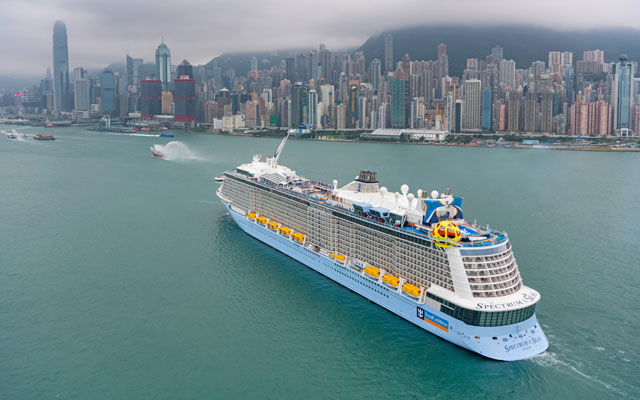
HONG Kong’s Kai Tak Cruise Terminal welcomed its first cruise ship, Royal Caribbean International’s Mariner of the Seas, yesterday evening as the facility officially opened for the first time.

The terminal boasts two berths capable of accommodating cruise ships of up to 220,000 gross tonnes, with the first already completed and the second to be ready in 2014.

Converted from the former Kai Tak Airport, the new facility also consists of a terminal building for customs and immigration, flexible waiting halls that can be used for exhibitions and meetings, and commercial space, as well as a 23,000m2 public roof garden to be named Kai Tak Cruise Terminal Park.

The terminal building and park will open to the public in 3Q2013.

According to Hong Kong Tourism Board estimates, the launch of the new terminal will bring about some HK$1.5 billion (US$193.2 million) to HK$2.6 billion yearly in economic benefits and generate between 5,300 to 8,900 jobs by 2023.

Speaking at a media site inspection last week, Hong Kong secretary for commerce and economic development, Gregory So, said that Kai Tak Cruise Terminal was key to developing Hong Kong as a regional cruise hub in Asia and strengthening the SAR’s position in tourism.

“The (cruise terminal) is an important tourism infrastructure project, and is the first completed project within the Kai Tak Development. Together with the two existing berths at Ocean Terminal, the completion of Kai Tak Cruise Terminal will greatly enhance the berthing capacity for cruise ships in Hong Kong, thereby enhancing our competitiveness and attractiveness,” he said.



