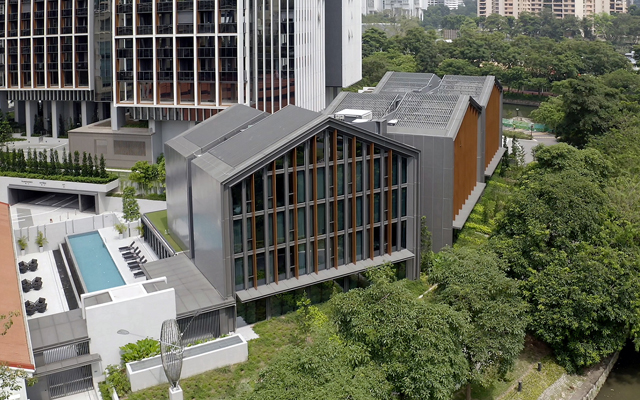
Serviced apartments are scaling down in size as discerning travellers increasingly seek intimate accommodation. TTG Asia gives a low-down on what chains and independents are offering in the region

Village Hotels & Residences
Operator Far East Hospitality
Brand background Launched in 2009, the Village Hotels & Residences brand underwent a major revamp in June this year with a sharpened brand proposition as part of the group’s holistic plan to rejuvenate the guest experience.
Brand promise “The brand promises Singapore-inspired hospitality for guests who seek comfort without excess. Guests can choose from a wide range of apartment types at reasonable price points at convenient locations in Singapore’s cultural and ethnic enclaves,” said Raphael Saw, COO, Far East Hospitality.
The homegrown brand is a “differentiator” by infusing personal touches such as a regularly updated Walking Guide, masala tea tasting and cooking demonstrations, with the recent Far East Heritage Festival as an example of engaging guests through local activities, Saw added.
Current network There are four residences under the Village Hotels & Residences portfolio: Village Residence West Coast (51 keys), Village Residence Robertson Quay (71 keys), Village Residence Clarke Quay (127 keys) and Village Residence Hougang (78 keys).
Future expansion No new Village properties are planned in the pipeline, but refurbishment projects currently underway will be completed by 2013.
Average length of stay One to three months for singles, six months to two years for expatriate families, and one to two weeks for families on vacation.
Average rate From S$2,800 (US$2,197) per week for a one-bedroom apartment to $13,100 per month for a three-bedroom apartment. – Lee Pei Qi

Fraser Place
Operator Frasers Hospitality
Brand background Frasers Hospitality’s current portfolio, including those in the pipeline, stands at more than 14,000 apartments across 83 properties in 45 key gateway cities worldwide. In addition to Fraser Place, the company has several brands under its portfolio, including Fraser Suites, Fraser Residence, Modena by Fraser and Capri by Fraser.
Brand promise Designed as chic and contemporary properties with a more boutique slant, each Fraser Place property enjoys a prime location in the city with close proximity to shopping, dining and entertainment. Residences under this brand endeavour to maintain a healthy work-life balance for guests with facilities such as lounges stocked with a range of beverages, a recreation hub with game consoles and space for a host of activities.
According to Tonya Khong, Frasers Hospitality’s area general manager of Asia Pacific, what sets the operator apart is the “Fraser Difference” across all its brands, which sees its staff going the extra mile to help travellers integrate and settle into their new country of residence through a variety of social and recreational activities.
Current network In Singapore, Fraser Place Fusionopolis has 50 one-bedroom work-loft serviced residences ranging between 46m2 and 99m2. Elsewhere in Asia-Pacific, the 89-unit Fraser Place Manila offers one-, two-, three- and four-bedroom units in Salcedo Village in Makati’s CBD, while the Fraser Place Melbourne offers 112 serviced apartments across three categories.
Future expansion The 85-apartment Fraser Place Gurgaon is due to open in December 2013.
Average length of stay Between one and six months at Frasers’ serviced residences in Singapore.
Average rate Rates at Fraser Place Fusionopolis start from S$7,000 (US$5,513) per month. – Lee Pei Qi

Ovolo
Operator Ovolo Hotels
Brand background Ovolo was founded in 2002 by Girish Jhunjhnuwala as an upscale serviced apartment brand with modern interior design, cutting-edge en-suite technology and all-inclusive services as the brand’s cornerstone features.
Brand promise “Our mission has always been to match modern traveller expectations with effortless living experiences, by creating tech-driven interiors and providing everything guests need, from Wi-Fi and breakfast to minibar and happy hour drinks, as complimentary. Additionally, our highly flexible leasing and check-out policies allow (guests) to adjust (their) schedules with us on the fly,” said Jhunjhnuwala.
Current network Ovolo currently owns and operates four hotels and two serviced apartment properties – 222 Hollywood Road at Sheung Wan and 111 High Street at Sai Ying Pun – in Hong Kong, as well as a hotel in Melbourne.
Future expansion “We are actively looking for opportunities to grow the Ovolo brand outside of Hong Kong”, said Jhunjhnuwala. The group’s portfolio is expected to grow to eight properties and nearly 500 rooms by 2013. Besides Brisbane and Sydney, the group is also considering Singapore and the UK as future Ovolo destinations.
Average length of stay Three months.
Average rate HK$40,000 (US$5,158) per month for 222 Hollywood Road; HK$38,000 per month for 111 High Street. – Prudence Lui
Lodgewood by L’hotel
Operator L’hotel Management Company
Brand background L’hotel introduced the new boutique hotel cum serviced apartment brand, Lodgewood by L’hotel, in response to the rising demand for boutique hotels in Asia-Pacific.
Brand promise As a hotel cum serviced apartment, Lodgewood by L’hotel properties will focus on delivering efficient and homey services to its guests with contemporary facilities such as freshly brewed coffee served 24/7, a complimentary ‘grab & go’ breakfast corner, a self-service coin laundry as well as complimentary Wi-Fi throughout the property.
The property also boasts strong green credentials, with LED lighting installed in the rooms and a touch screen eConcierge in the lobby to provide updated information on shopping, dining and places of interest in the city.
Current network The 87-room Lodgewood by L’hotel Mongkok Hong Kong, which soft opened in April 2013, marks the group’s first property.
Future expansion The 92-room Lodgewood by L’hotel Wanchai Hong Kong is due to open by 2014. The group is also keen to explore the China market.
Average length of stay Around two days.
Average rate HK$1,000 per night. – Prudence Lui
Oaks Hotels & Resorts
Operator Minor Hotel Group, the hospitality division of Minor International
Brand background Created in the early 1990s, Oaks Hotels & Resorts is one of Australia’s largest hospitality players specialising in serviced apartment management. In March 2011, Minor International acquired a majority stake in Oaks, marking the Thailand-based company’s foray into the Pacific.
Brand promise Oaks specialises in affordable and comfortable service apartments and hotels to provide premium-quality, extended-stay accommodation to suit all budgets. Its centrally located properties in capital cities’ CBDs and resort locations will suit corporate or leisure guests seeking fully furnished, self-contained apartments for longer periods.
Current network The brand added a number of properties to its portfolio in 2012, including the 115-key Oaks Bangkok Sathorn in Thailand – the first of its planned expansion into Asia – and most recently the 54-key Oaks Liwa Executive Suites in Abu Dhabi, expanding its total inventory to 42 properties in Australia, New Zealand, the UAE and Thailand.
Future expansion The 122-key Oaks Sanya will debut in China in late 2013, in addition to three more Oaks-branded properties in Queensland, Australia.
Average length of stay Three nights for Oaks Bangkok Sathorn.
Average rate 1,725 baht (US$54) for Oaks Bangkok Sathorn. – Greg Lowe
Aston @
Operator Archipelago International
Brand background Archipelago International pioneered the condotel concept in Indonesia, and now operates seven condotels under the Aston Hotel & Residence brand as serviced apartment hotels.
Brand promise Designed for discerning travellers who want to spend quality lounging time in stimulating surroundings, Aston properties are equipped with free Wi-Fi, while rooms feature improved lighting, hook-ups for mobile phones and computers, as well as wider beds with cosy duvets and ergonomic headboards to make it easier for guests to read or watch TV.
Current network Aston @ Kuningan Suites is the only non-condotel boutique serviced residence in Archipelago’s portfolio of more than 60 hotels throughout Indonesia, Malaysia and the Philippines.
Aston @ Kuningan Suites sits in the heart of Jakarta’s Golden Triangle between Jalan Jend. Sudirman and Rasuna Said roads, with 100 newly renovated two- and three-bedroom serviced apartments, an Italian restaurant, a wine boutique, a fitness centre and a rooftop swimming pool.
Future expansion Archipelago International has plans to expand the Aston @ brand to suitable high-end, independent serviced residences in Jakarta, Surabaya, Bali and Malaysia, according to Archipelago’s vice president of sales & marketing, Nobert Vas.
Average length of stay 16 nights.
Average rate US$135 per night. – Mimi Hudoyo

The Forest by Wangz
Operator Wangz
Brand background Wangz was first established 15 years ago when the owners started a premium serviced office, Wangz Business Centre, before diversifying the brand with the launch of Wangz Hotel, a 41-room boutique hotel in Tiong Bahru, in December 2009. The Forest by Wangz, a 38-apartment boutique serviced residence, was opened in Novena in December 2011.
Brand promise Positioned as boutique establishments, guests’ experiences are the main emphasis for the Wangz brand with the team’s personalised service and attention to details. From the unique architecture and contemporary interiors that define both properties, the overall design merges the comforts of home with the luxuries and functionalities of a high-end hotel to attract both corporate and leisure travellers.
Current network There are two properties under the Wangz brand: Wangz Hotel and The Forest by Wangz.
Future expansion The owners have recently started a hospitality management company and are currently talking to some hotel owners to manage their properties under the Wangz brand, according to Wangz’s director, Wang Tjang Yuin. There are also plans to develop new properties in the region where there is potential for hospitality growth.
Average length of stay Two months.
Average rate The best available rate for a studio apartment starts from S$275+ per night (minimum of seven nights required). – Lee Pei Qi

Astoria Plaza
Operator Astoria Hotels and Resorts
Brand background Astoria Hotels and Resorts (AHR), founded in 2010, has taken over the management of Astoria Plaza in Ortigas Center, Pasig City since last year. The property first opened its doors in 2001.
Brand promise AHR seeks to offer guests a private-retreat experience at its properties in established city locations. Astoria Plaza is known for having some of the largest suites in the Philippines.
Current network The flagship Astoria Plaza is currently the only serviced residence under the Astoria brand. The 120-unit property offers one-bedroom suites measuring between 60m2 and 72m2, while two-bedroom suites range between 101m2 and 132m2.
Future expansion No other serviced residences are in the pipeline although AHR has just rolled out 32 new rooms at Astoria Boracay to bump up the resort’s inventory to 71 keys. Astoria Bohol will commence its Phase 2 development by 2014 to add 40 more rooms to its present eight-villa inventory. Astoria Palawan will debut on Honda Bay in 2014.
Average length of stay Three to five nights.
Average rate 5,900 pesos (US$135) at Astoria Plaza. – Rosa Ocampo

The Picasso Boutique Serviced Residences
Operator Hospitality International, Inc. (HII)
Brand background Founded in 1998 by president Luis Monserrat, HII specialises in the management and operation of residential condominiums, hotels and hotel residences.
Brand promise No two properties under HII are the same, and each serviced residence is a brand in itself with a unique identity. For example, The Picasso Boutique Serviced Residences, which was launched in December 2010, takes design inspiration from the art of Pablo Picasso, while the upcoming Y2 Residence Hotel revolves around a yin-yang concept with black-and-white suite interiors.
Current network HII’s serviced residences include the 72-key Joya Lofts and Towers and the 136-key Picasso Boutique Serviced Residences in Makati, as well as the 124-key Parque España Residence Hotel in Alabang, and the 216-key Exchange Regency Residence Hotel in Ortigas, Pasig City.
Future expansion Opening by this year-end is The Y2 Residence Hotel with 172 rooms in Makati, the KL Mosaic Serviced Residences (room count unconfirmed at press time) in Legaspi Village and the Azumi Boutique Hotel with 187 rooms at the Madrigal Business Park in Alabang.
Average length of stay N.A.
Average rate 4,389 pesos per night for a Malaga Studio at The Picasso Boutique Serviced Residences. – Rosa Ocampo
Fahrenheit Suites Kuala Lumpur
Operator Nusansuria Development
Brand background Launched in April 2011 on Jalan Bukit Bintang, the property boasts 90 spacious and contemporarily designed suites.
Brand promise Fahrenheit Suites offers affordable city living with its central location on Jalan Bukit Bintang, boasting close proximity to entertainment and shopping hotspots as well as easy accessibility to public transportation options such as monorail, taxis and buses.
Current network Only this property.
Future expansion “(Expansion) is a possibility provided we find a suitable property to manage in Malaysia,” said Victor Lee, director of Fahrenheit Suites Bukit Bintang.
Average length of stay Three nights.
Average rate RM360 (US$110) per night – S Puvaneswary
The Maple Suite
Operator MapleLee Property
Brand background Opened in 1997 to meet the rising demand for serviced residences in Kuala Lumpur, the 90-unit property comprises one- and two-bedroom aparments, and three-bedroom penthouses. Each unit features a fully equipped kitchenette and a washing machine. Facilities include a swimming pool, a gym, squash courts, a business centre and meeting facilities.
Brand promise Located on Changkat Raja Chulan Road next to Kuala Lumpur Tower, The Maple Suite sits in the heart of the city’s business district with easy access to shopping centres and restaurants. Providing good service is central to the The Maple Suite brand too.
Current network Only The Maple Suite in Kuala Lumpur
Future expansion None
Average length of stay Three to four days for short stays; a month for long stays.
Average rate From RM880++
– S Puvaneswary



 on Las Vegas, and is business back fully?