TTG Asia
Asia/Singapore Friday, 30th January 2026
Page 2451

Qantas brandishes Singapore Lounge at Changi Airport

0

QANTAS yesterday unveiled its A$9 million (US$9.4 million) new Singapore Lounge at Singapore Changi Airport’s Terminal One.

Simon Hickey, CEO, Qantas International, said: “This multi-million dollar investment is part of our broader commitment to improve the experience we offer on services to and from Asia, including our Airbus A330 upgrades to begin next year.”

“It also complements our new Asia schedule, which promotes Singapore as a hub for the region. We now offer more dedicated capacity, better frequencies and improved connections from Singapore to other destinations across Asia.”

The Singapore Lounge seats 460 guests, has 20 showers, 80-inch television screens throughout and technology pods located across the various zones. The lounge is open to Qantas business class customers, as well as Platinum One, Platinum and Gold Frequent Flyer members, Qantas Club members and eligible Oneworld customers.

Following the formation of an alliance with Emirates, Qantas restructured its Asian network, recently implemented on March 31, to bring better access to Hong Kong and Singapore, with a dedicated capacity increase of around 10 per cent and 40 per cent respectively (TTG Asia e-Daily, February 5, 2013).

During the opening of the lounge, Hickey also said the first of 14 Dreamliners ordered for its Jetstar subsidiary is now expected to be delivered “sometime after August” due to battery problems.

The Dreamliners were grounded globally on January 16 due to a series of overheating problems with the aircraft’s battery system (TTG Asia e-Daily, January 17, 2013).

But Hickey said the problems with the Dreamliner batteries were part of “teething issues with any new aircraft that has ever been available to put in the air”.

New player Tribe launches Lee Kuan Yew tour

0

tribe

A Tribe tour group at the steps to the National Gallery

A NEW travel company in Singapore, Tribe, has launched a tour that aims to offer participants glimpses of the personal life of the nation’s founding father, Lee Kuan Yew.

The 3.5-hour tour, About Mr Lee, was introduced last month as Singaporeans marked one year of the leader’s passing. It is offered in English and Mandarin and tries to impart insights on how the leader was as a friend, son, father and husband, his likes and dislikes and his values, gleaned through extensive research.

While much of it is the public domain, the Tribe team also tapped on sources who shared personal accounts of having travelled with Lee and his wife abroad, as well as on “so many people (who) stepped forward and offered to help for no reason other than to be a part of the research”, said Jason Loe, co-founder of Tribe.

The tour kicks off at Civilian War Memorial, then through Koon Seng Road for a taste of Lee’s Peranakan roots. Participants will also discover stories of his family home in Oxley Rise followed by a walk through Tanjong Pagar and The Arts House (the Old Parliament House). The tour ends at the former City Hall (now National Gallery) steps in front of the Padang.

The response has been “very positive” since the tour was launched, said Loe, who had expected the lesser-known aspects of Lee’s personal life to be of great interest to many, whether locals or tourists, young or old.

“We are seeing a good mix of people. Our youngest thus far is a seven-year-old and oldest is 82 years old. We have seen a broad spectrum of nationalities so far, but predominantly a local crowd. But that is a direct result of the wonderful coverage we have been getting locally. With the spreading of the word regionally and internationally now, we expect to see increased interest from abroad,” said Loe.

Tribe sells tours directly online but is also keen to work with inbound tour operators or outbound overseas operators.

Tribe was registered as a private limited company in late 2013 and it spent 2014 putting together tours, building relationships with locals, writing and putting together the website. It was licensed as a travel agency in January this year. Asked how Tribe aimed to be different, Loe said: “Well for starters, we want to focus on the quality of inbound tours. So we looked at local experiences with fresh eyes.”

“Tribe is a community of locals providing authentic experiences that brings out the true flavour of a place. The tours are about you being a local for a day, making, rolling, tasting, feeling, smelling, asking and experiencing. Each experience is deeply researched to give you rich story lines that you will take with you to your next destination. At Tribe, we go back to the basics of ‘why we travel?’. We hope to ignite a sense of adventure and discovery to give you memories for a lifetime,” he said.

Sun shines on resorts

0

Resorts are said to be more popular these days for MICE because people want more playtime even when they meet. Raini Hamdi looks at the ‘bleasure’ phenomenon, a blurring of lines between business with pleasure or leisure, which is forcing meeting organisers and venue providers to look at work-life balance seriously
2013_apr_12-resorts1
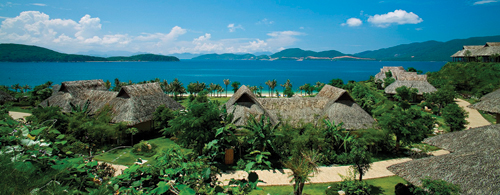
Best Western Resort & Residences

The quest for work-life balance among today’s road warriors has crept into the meetings sector, where providing wellness to delegates has become a serious thinking point of meeting planners and venue providers instead of an after-thought.

Research by at least three chains shows that ‘bleisure’ or ‘bleasure’ – a mixing or blurring of business with leisure or pleasure – is a real phenomenon.

Hilton HHonors’ survey, for instance, shows one in three UK employees invite partners and families along on business trips, and a high percentage of employers (45 per cent) are sympathetic and supportive of their staff creating their own bleasure stays.

Even Chinese travellers today are “not shy” to mix business with pleasure, a Wyndham Hotel Group survey shows. More than two-thirds of Chinese travellers (67 per cent) say they bring a spouse or a family member along on business trips and 59 per cent extend business trips to include leisure time.

InterContinental Hotels Group (IHG) in South-east Asia notes a 50 per cent rise in bleasure bookings among meeting delegates, who add on a leisure stay pre- or post-meeting.

Not only that, it claims that the bleasure phenomenon is also changing the way people meet: resorts are becoming a more popular destination for business travel and meetings; less time is being spent cooped up in the boardroom (reduced to an average of a day, with as many as two or three days spent in break-out sessions); and more time is being spent on programmes that include working with social and environmental charities.

In fact, IHG said around 25 per cent of enquiries now required at least a half-day be set aside for delegates to enjoy the spa or local excursions.

As a result of these findings, IHG is promoting blue-sky thinking and self-improvement meetings, according to Mark Flower, director of commercial, IHG South-east Asia.

Changing supply

Hotels and venues are rewiring to meet bleasure aspirations, with new properties having a better go at this.

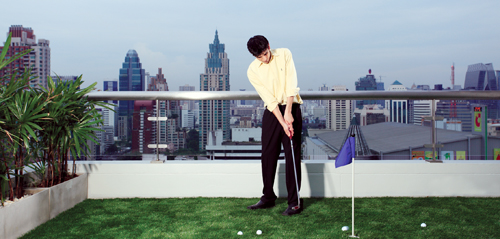
The Crowne Plaza Phuket Panwa Beach Resort, for example, has a meeting room with its very own golf putting green.

The best spaces are also going to meetings, no longer in the basement like before. An example is The Summit, a meeting room at the top of a mountain offered by InterContinental Danang Sun Peninsula Resort.

The design of meeting rooms too is being redefined. The new Pullman Bangkok Silom Hotel G, for instance, has a meeting space called The Gallery, done in a New York-style art gallery. Apart from its conceptual decor and minimalist furnishing, the room offers plenty of daylight and is peppered with iPads for delegates.

“Clients want more flexibility, reactivity, multi-tasking, connectivity, which impacts the interior design and even the service,” said Xavier Louyot, Pullman’s vice president global marketing.

Integrated resorts (IRs) such as Marina Bay Sands (MBS) Singapore see themselves as inherent venues for bleasure, due to the multitude of pleasure options available – spa, entertainment, art, F&B, theatre, casino, etc. And while delegates can enjoy these at leisure, the IRs come up with ideas for groups, such as the Dine Around at MBS, which leverages on the property’s six celebrity chef restaurants. Delegates start with cocktails and canapés at the first restaurant, then move on to subsequent restaurants for starters, mains, desserts and digestifs.

“This allows clients to have a leisurely culinary adventure that they may not normally get to enjoy on their own time,” said John Mims, senior vice president, worldwide sales and resort marketing Asia, Las Vegas Sands Corp.

“Expectations of business travel have changed. More and more, pleasure is a priority than ever before and they expect a higher level of comfort and service while on business. Being seasoned travellers, they also expect to be surprised by new and innovative offerings that they have not come across before in other destinations – comparing, contrasting and making mental notes of what they like,” he said.


Have meetings gone soft?

But does bleasure put meetings in danger of becoming soft, pandering to a desire for more play-time?

Corporate chieftains such as David Levitt, president talent development of Ogilvy & Mather Worldwide, who organised O&M’s Asia-Pacific conference in Kyoto last year, said the success of a meeting still lies fundamentally in how well it has been thought through by the company.

“A lot of meetings follow a formula that is outdated and predictable. Because they lack a real set of tangible, aspirational meeting objectives, some well-thought out theatricality and sufficient investment in the areas that matter, disappointment can set in early.

“There is usually too much input/talking at, top-down, death by powerpoint and long-winded status updates, combined with a lack of real participation (not to be confused with insufficiently planned and thought through break-out sessions). Most meetings also suffer from over-packed, crammed agendas that would benefit from being ruthlessly pruned and focused. And finally, not enough imagination applied to breaks, meals and fun – this is not about cost, it’s about imagination.

“We have learnt the hard way that meetings need to be given a serious amount of careful thought well in advance – not simply because of the cost but to define what their purpose, motivational benefits and value are, and how to be able to sustain the momentum and commitments afterwards. All our significant face-to-face meetings receive a great deal of work in the planning stages.”

That said, Levitt agrees that his meetings are not all work and no play. “There needs to be reward in several forms,” he said. Asked if hotels were pushing the work-life balance too far, he said: “We ourselves are mindful of trying to get this right. I suspect some try to do so more than others, especially if it is a resort location which, by the way, is a pointless location selection by meeting planners if all they intend to do is keep their participants in a windowless meeting room with no time to enjoy the location except for a token dinner by the pool or on the beach.

“We have learnt to seriously think more about the locations we choose, why and how to ensure they are relevant to the meeting’s goals and objectives and the wishes of participants.”

Resorts more popular
2013_apr_12-resprts2
Centara Grand & Bangkok Convention Centre at CentralWorld

Meetings in resorts or in resort-like venues are more attractive to participants as they offer various opportunities for pleasure, from swimming to sports to relaxing spas, agrees Monette Iturralde-Hamlin, president and founder, TeamAsia Manila. It is also easier on the organiser as these venues are already set up for pleasure, she added.

“Our experience is that executives are more likely to join business meetings or conventions if there are opportunities for relaxation such as golf or if they can bring their families or partners for some family time before or after the meeting. And, as golf aficionados know, business is conducted on the golf course and important deals closed. Since networking or developing relationships are an important consideration in meetings, providing opportunities for networking in a relaxed atmosphere allows participants to get to know each other better,” she said. – Rosa Ocampo


All meet, no play makes Jack dull

Corporate end-users agree bleasure brings out the best in Jack. They tell TTGmice reporters why and how bleasure changes the way they choose event venues

“Meetings with more pleasure elements are more effective, especially for conferences that run longer than three days. This is an opportunity for busy people to bring their families along. Spouse and children can enjoy themselves in the resort while the delegate attends meetings. There is still quality family time spent, especially at breakfast and dinner. Should the delegate come alone, (he could take the) chance to relax, de-stress and reflect.

“This is why I especially like beach and jungle resorts. If it is a city hotel, it must have flavours of a resort.

“We add the pleasure elements after, not during, meetings, so there’s no concern about having too much (fun). We add spa and massage treatments, or go out to a venue that has good music and a dance floor. Malaysia is still lacking in this area. Bangkok and Singapore have better options.”

Lulie Melling
Congress general, 15th International Peat Congress 2016 in Sarawak, and Tropical Peat Research Laboratory Unit Director, Sarawak Chief Minister’s Office


“Amway hosts incentive trips combining business and pleasure with an aim to foster team spirit and trust.

“In past incentive trips, participants jogged together in scenic Hangzhou, played basketball on a Mediterranean cruise, and so on. This year, there will be incentive trips to Hawaii and Taiwan, combining business sessions and pleasure.

“In addition to business updates and outlook, speakers with weight and appeal add essence to the meeting. Break-out sessions and panel discussions are important, but so are pleasure elements that make participants feel unique and recognised. We have to have the right (content) for meetings and also set aside adequate time for pleasure.”

Louisa Chan
General manager, Amway Hong Kong


“Meetings are definitely more effective when some fun is injected in them.

“Medical meetings are generally informative and educational, so relaxing locations and venues with a different atmosphere or unusual decor will help to lighten the mood. Some hotels also offer all-day coffee breaks, which are welcomed by delegates as they don’t have to stick to fixed coffee break timings.

“However, the quality of service is most important to doctors and medical practitioners, not pleasure elements.”

Rivadee Rattanaruangchote
Office administrator with a medical company in Thailand (company name withheld)


Asia’s economic stars – China, India

0

Here are our picks of cities across the region that are emerging as bright spots for corporate travellers  

2013_apr_12-stars

[ CHINA ]
By Hong Xu

CHENGDU

WHY IT’S BOOMING Chengdu, the capital city of Sichuan province, is also the logistics and commercial centre of western China. As of end-2011, 207 of the world’s top 500 enterprises have established branches in Chengdu, mainly in the advanced manufacturing and high-end services like electronics, automobile, new energy and finance.

Though a rising star among China’s emerging cities, certain aspects of Chengdu still need to be improved, said Ding Jianmin, assistant general manager, Shanghai CITS International Travel Service. “A business city needs to be fast-paced and efficient, but Chengdu is not like that. It’s also not attractive enough for talent yet.”

ACCESS/ACCOMMODATION Shuangliu International Airport is the largest aviation hub in central and western China, connected to more than 70 domestic cities and over 20 cities worldwide such as London, Sydney, New Delhi, Los Angeles and Jakarta. Chengdu has extensive rail links, with scheduled trains from Beijing, Shanghai, Guangzhou, Xi’an, Lhasa and Urumqi.

Chengdu boasts international hotel brands such as Crowne Plaza, Sofitel, Shangri-La and InterContinental, with recent debuts like the 208-room Chengdu Tianyi Grand Garden Hotel and the 185-room Fantasia of Lumberg Chengdu Hotel.

According to figures from China National Tourism Administration (CNTA), Chengdu had 127 hotels in 1H2012, with an ARR of about RMB425 (US$68) and an average occupancy rate of 67.6 per cent.

Among the newer MICE venues in the city are the 55,000m2 Chengdu International Convention and Exhibition Centre and the 150,000m2 New International Convention & Exposition Centre Chengdu Century City.

LIFESTYLE ASPECTS Chengdu’s long-spanning history has yielded such cultural sites as the Thatched Cottage of Du Fu, Wuhou Memorial Temple and Wenshu Monastery. Natural beauty abounds in surrounding areas such as the Jiuzhaigou Scenic Area and Huanglong Valley. It is also home to the giant pandas.


SUZHOU

WHY IT’S BOOMING Suzhou is a major city located in Jiangsu Province in eastern China, with Shanghai to the east and Zhejiang Province to the south. It is home to the Suzhou Industrial Park, the largest cooperative project between the Chinese and Singaporean governments.

ACCESS/ACCOMMODATION From Suzhou Railway Station, it takes only 25 minutes to Shanghai on the high-speed G trains and less than two hours to Nanjing.

Air traffic to Suzhou still comes primarily through Shanghai’s Hongqiao and Pudong international airports – both are linked to Suzhou via the G trains – connecting the city to major cities worldwide.

Suzhou boasts star-rated brands like Shangri-La, Pan Pacific, Kempinski, Garden Hotel and Regalia Resort and Spa. According to CNTA, there were 131 hotels in Suzhou in 1Q2012, with an average room rate of RMB368 and average occupancy rate of 52.6 per cent.

Suzhou International Expo Center and Suzhou International Convention and Exhibition Centre are some of the city’s prominent MICE venues.

Said Ella Zhou, manager, department of exhibitions, Shanghai Spring International Travel Service: “Suzhou is already well-known among businessmen, and as a result, people are probably more interested in other emerging cities. Meanwhile, commodity and business costs are relatively high in Suzhou.”

LIFESTYLE ASPECTS Suzhou’s 2,500-year history  can be seen in its unique architecture and streets. It is also famous for its classical gardens, with several such as the Humble Administrator’s Garden and the Lingering Garden added to the UNESCO World Heritage list.

“Chennai is sought after for business due to its infrastructure and pool of skilled manpower.” 
C Nagendra Prasad
Chairman
Travelexpress

[ INDIA ]
By Shekhar Niyogi 

CHENNAI

WHY IT’S BOOMING The fourth largest city in India, Chennai has grown exponentially in the last few years with new investments in the automobile, healthcare, banking, IT, electronics and petrochemicals sectors. This port city is also a major hub for exports and imports, and its entertainment industry is the second largest in India after Mumbai. The recent creation of the Chennai-Bangalore Industrial Corridor will further add to its business potential.

ACCESS/ACCOMMODATION All Indian carriers fly to the newly refurbished Chennai airport, which is also connected by international carriers like British Airways, Singapore Airlines, Malaysia Airlines, Thai Airways International (THAI), Emirates and Qatar Airways. AirAsia India, the new joint-venture airline by Malaysia’s AirAsia and Tata Group, will commence operation in 4Q2013 from its Chennai hub. The upcoming metro rail will also be commissioned in 2014.

Based on HVS’ 2012 Trends and Opportunities report, Chennai is expected to grow 154 per cent from 4,904 branded rooms in 2011 to 7,547 rooms in 2016. In 2012, hotel occupancy in the city was 66.7 per cent and ARR was Rs5,551. More than 1,000 five-star rooms entered the market last year with the opening of the 600-key ITC Grand Chola, 326-key Leela Palace and 201-key Park Hyatt.

ITC Grand Chola features the 2,465m2 Rajendra ballroom, 12 meeting rooms and an upcoming auditorium, while Leela Palace offers the 1,080m2 Grand Ballroom and 570m2Royal Ballroom, two meeting rooms and seven boardrooms.

Padmini Narayanan, managing director, Akshaya India Tours, said: “We are witnessing a quantum leap in inbound business travel and MICE demand to the city. The new airport terminal and meeting facilities are generating even more demand.”

Vijay Shrikent, general manager, Vivanta by Taj, Connemara, said: “In 2013, we expect occupancy levels to rise despite the addition of more than 1,000 keys. Inbound travel demand is very strong and growing.”

LIFESTYLE ASPECTS Each December, the month-long Margazhi festival showcases Chennai’s classical dance and music, alongside performances from international and domestic artists.


AHMEDABAD 

WHY IT’S BOOMING With a population of over 5.5 million, Ahmedabad in Gujarat is a rapidly growing city with economic growth that has surpassed other Indian cities in the last five years. The apex of a three-city industrial cluster – the other two being Surat and Vadodara – Ahmedabad’s major sectors are textile, automotive, pharmaceutical, diamond processing and chemical industries. Business travellers from Japan, South Korea, France, Germany, Italy, Israel, China and Russia are arriving by the droves in Ahmedabad.

“The region is expected to embark on a growth trajectory with landmark projects such as the Delhi Mumbai Industrial Corridor and Gujarat International Financial Tec-City,” said Himadri Mayank, senior manager, Jones Lang LaSalle India.

ACCESS/ACCOMMODATION Indian carriers link Ahmedabad to major cities in the country, while international carriers such as Emirates, Etihad Airways, Flydubai, Qatar Airways, Saudia, Singapore Airlines and THAI have direct flights to the city. THAI Smile has just launched twice-weekly services from Bangkok since March 31. The city is also connected by an extensive rail and road network.

The 176-room Aloft Ahmedabad, SG Road is opening on April 15, while the 116-room Radisson Blu Hotel, Ahmedabad and the 173-room Holiday Inn Express have launched in January 2013. The 178-room Hyatt Ahmedabad was just rebranded from Ista in March.

According to a HVS hospitality study, Ahmedabad’s total room inventory stood at 1,975 rooms in 2012, having seen a compounded growth of 31 per cent from 519 rooms in 2006-2007. Another 2,550 rooms will be added to the city by 2017, of which half will be in four- and five-star categories.

In 2012, Ahmedabad’s average occupancy rose 10.1 per cent year-on-year to 59.8 per cent. The ARR was Rs4,057 (US$75), down 5.3 per cent from Rs4,285 in 2011, while RevPAR grew 4.3 per cent year-on-year to Rs2,426.

The 13.8 hectare Mahatma Mandir Convention & Exhibition Centre has a 5,000-pax main hall, several breakout rooms and a large exhibition space, with the capacity to accommodate 15,000 pax at any time. MICE spaces are also available in hotels like Le Méridien, Courtyard by Marriott, Taj Gateway, Pride and Hyatt.

LIFESTYLE ASPECTS Nestled in Ahmedabad’s outer fringes, Ame Gujarati offers a unique venue for corporate meetings or dinners for up to 300 pax. Each of the eight air-conditioned all-glass huts with tented roofs can seat 24 guests. The cuisine served is vegetarian Gujarati, with a 20-course buffet spread.

TCEB, THAI targets Singapore with new MICE programme

0

MEETING planners in Singapore will benefit from a new incentive scheme jointly developed by the Thailand Convention & Exhibition Bureau (TCEB) and Thai Airways (THAI).

Unveiled at a launch party in Singapore yesterday evening, the new OptiMICE Pass offers a host of perks to meeting groups that fly out of Singapore to Thailand.

The Silver package for groups with 10 to 30 delegates offers fast track clearance, Thai souvenirs, special airfares, one complimentary air ticket, advance group check-in and pre-assigned group seating.

Groups with 31 to 99 delegates can enjoy the Gold package which comes with all the benefits offered by the Silver package, as well as two complimentary air tickets, a special on-board announcement, additional 10kg baggage allowance and a cultural welcome performance.

The Platinum package, available to groups with at least 100 delegates, will dish out all the perks above, as well as four complimentary air tickets and BTS Skypass.

Kittiphong Sansomboon, general manager of Thai Airways Singapore Office, told TTGmice e-Weekly that the OptiMICE Pass was developed to offer greater value and convenience to meeting planners in Singapore.

“Meeting planners will shop around before determining the destination, and they will ask the convention bureau and airlines for offers and support. We (TCEB and THAI) figured we could simplify the process by offering combined support right from the start,” said Kittiphong.

“We chose to debut this programme – the first collaboration of this nature between TCEB and THAI – in Singapore because of the large pool of small and medium-size enterprises here, and this community will be a strong source of meetings. Moreover, Singapore is a market with very strong purchasing power,” he added.

Noting that Singapore is Thailand’s fifth largest MICE source market, generating 35,783 visitors in 2012, Vichaya Soonthornsaratoon, director of meetings industry department, TCEB, said: “We hope to further stimulate growth through OptiMICE Pass and encourage even more corporates in Singapore to take their events to Thailand.”

Although some OptiMICE Pass perks, such as souvenirs and cultural welcome performances, are also provided by TCEB’s regular MICE support programme, Vichaya said “unique tweaks” were made for the new deal.

“For instance, the souvenirs will be different. Also, OptiMICE Pass makes cultural welcome performances available to groups with at least 31 pax, whereas a minimum of 100 pax is required under TCEB’s support programme. It is a good deal for Singapore meeting planners,” she explained.

To qualify for the OptiMICE Pass, bookings must be made between April 1 and July 31 for travel by October 31 this year. TCEB and THAI may extend the validity period should the programme prove successful.

Dorsett diversifies to US and Europe through Diamond Resorts partnership

0

DORSETT Hospitality International has entered into an affiliation programme with US-based vacation ownership company Diamond Resorts International that will provide the former with brand exposure and the latter, hotel inventory.

Under the agreement, Dorsett rooms will be promoted to Diamond’s membership network across North America and Europe where the hotel company does not have any sales or marketing representation, explained Philip Schaetz, senior vice president of sales & marketing, Dorsett Hospitality International.

The Dorsett brand will be promoted in all of Diamond’s marketing collateral and online presence, and its rooms can be booked via Diamond’s website and call centres.

Members of Diamond’s network will be able to use their Diamond points to redeem rooms at Dorsett hotels.

In return, Dorsett will highlight Diamond’s resorts to FIT guests through the Dorsett sales network in Asia.

Winnie Chiu, Dorsett’s president and executive director, said: “With Diamond’s 260 vacation destinations in 28 countries, it enables us to increase our outreach and brand presence in North America and Europe.

“Though Dorsett enjoys an average occupancy rate of 95 per cent in Hong Kong with the Chinese market accounting for 40 per cent of business, we hope the new partnership will diversify our market source in the future.”

New TAT strategy to push travellers beyond Bangkok

0

TOURISM Authority of Thailand (TAT) will launch its Bangkok and Beyond strategy in June, with hopes to extend the duration and expenditure of tourists by promoting destinationswithin a few hours’ drive of the capital.

Sansern Ngaorungsri, TAT deputy governor for international marketing Asia and South Pacific, said: “The Bangkok and Beyond strategy aims to leverage the number of tourists who come to Bangkok and find the city too congested or crowded. We want to encourage them to extend their stay by travelling around Bangkok.

“A major part of our strategy is to reach 22 million tourist arrivals this year, but the focus is on extending stays and expenditure.”

Five tour routes will be promoted at Thailand Travel Mart Plus 2013: Nakhon Nayok-Korat, Ayutthaya-Ang Thong-Suphan Buri, Nakhon Pathom-Kanchanaburi, Amphawa-Hua Hin and Chanthaburi-Koh Chang.

The chosen destinations are easily accessible from the capital and boast attractions ranging from nature activities to beach tourism, but have received little promotional support from TAT thus far.

The NTO will collaborate with Campervan Thailand, a motorhome rental service, to target tourists from Australia and New Zealand who prefer self-drives.

“We’ll start by promoting the first (Bangkok and Beyond) route from Bangkok to Nakhon Nayok,” Sansern said. “Australia and New Zealand will be the first two countries we market this to, and we are inviting travel consultants to come over to review the products in June.”

Ayutthaya is a well-known historical site but of little interest to tourists from China, Thailand’s top source market. “We’re promoting other activities there, such as elephant riding, which is popular with the Chinese,” he revealed.

He added that Khao Yai was strong for nature tourism, while Hua Hin provided a higher-end, family-friendly alternative to the increasingly overcrowded Pattaya.

GTA adds 20 Jin Jiang properties in Shanghai

0

GTA and Jin Jiang International Hotels yesterday signed a partnership agreement to incorporate 20 Jin Jiang properties throughout Shanghai across three-, four- and five-star categories into the former’s databases.

The margin agreement contract with GTA will allow Jin Jiang’s hotels to promote their best available rates to businesses selling accommodation to holidaymakers and corporate travellers internationally.

Included in the new partnership are the five-star Jin Jiang Hotel, the four-star Park Hotel in People’s Square and a selection of three-star properties for FITs.

Martin Jones, vice president for sourcing Asia-Pacific, GTA, said: “As demand for fully independent travel to and within Asia increases, travel sellers will surely welcome this new partnership and our ever-expanding portfolio of hotels throughout China and beyond.”

Cinn Tan, senior vice president, marketing & sales, Jin Jiang International Hotel Management Company, said: “As China attracts greater interest from home and overseas, a deeper relationship with GTA will further encourage even more international visitors to Shanghai, in addition to showcasing our strong portfolio of Jin Jiang hotels in China.”

Malaysian LCCs churn out general election offers

0

LOCAL low-cost carriers are taking advantage of the recent announcement of the Malaysian general election date of May 5 to increase their loads, rolling out varied offers to entice travellers.

Malindo Air, which currently flies only between East and West Malaysia, has offered one-way fares between Kuala Lumpur and Kuching from RM78 (US$26), and from Kuala Lumpur to Kota Kinabalu from RM108, for travel up to July 13.

AirAsia, on the other hand, has offered all-in fares starting at RM29 one-way for domestic flights within Peninsular Malaysia and from RM59 one-way for flights between East and West Malaysia, valid for travel from May 2 to August 31.

Regionally, AirAsia is offering all-in, one-way fares from RM55 departing Indonesian cities such as Medan, Padang, Balikpapan, Palembang and Pekanbaru; and from RM120 for all-in, one-way trips out of Singapore to Kuala Lumpur, Penang, Kota Kinabalu, Kuching and Miri. From other South-east Asian destinations, air tickets begin at RM124 one-way for the same travel period.

Longhaul affiliate AirAsia X is granting qualified registered voters access to its Fly Home to Vote campaign and promotional fares. Passengers are required to submit their identity card details to the airline, which will then check it against the election commission registry to ensure voting eligibility.

Those who qualify can book flights starting at A$199 (US$209) from its points in Australia, 12,000 yen (US$121) from Japan, RMB600 (US$97) from China, 129,000 won (US$114) from South Korea and NT$3,290 (US$110) from Taiwan to Kuala Lumpur.

Promotional fares are valid for travel between April 22 and May 5 for inbound passengers, and from May 5-19 for passengers returning after the elections.

Korean Air seals codeshare pact with MAI, buys Czech Airlines

0

KOREAN Air has inked a partnership and codeshare MoU with Myanmar Airways International (MAI) to promote bilateral cooperation in all areas including passenger traffic, safety, inflight services, flight operations and maintenance.

The agreement will see MAI place its 8M code on Korean Air’s daily flight between Seoul and Yangon (TTG Asia e-Daily, September 19, 2012). Korean Air plans to expand the codeshare agreement on flights operated by MAI. Myanmar’s flag carrier currently operates seven international routes.

Separately, Korean Air also announced that it has formally acquired 44 per cent of Czech Airlines, having made a bid in early March (TTG Asia e-Daily, March 5, 2013). It is now the latter’s second largest shareholder.

Yang Ho Cho, chairman and CEO of the Hanjin Group and Korean Air, said: “We have known Czech Airlines for a number of years, during which we have both been part of the SkyTeam alliance.”

The move also makes Korean Air the first South Korean airline to acquire a stake in a foreign airline, offering its passengers a wider variety of European routes via Prague.

According to a press release issued by the airline, the carrier will expand its network through Prague airport by increasing the number of codeshare flights and reworking connection schedules with Czech Airlines. Twice-weekly direct flights linking Prague and Incheon are also on the cards.