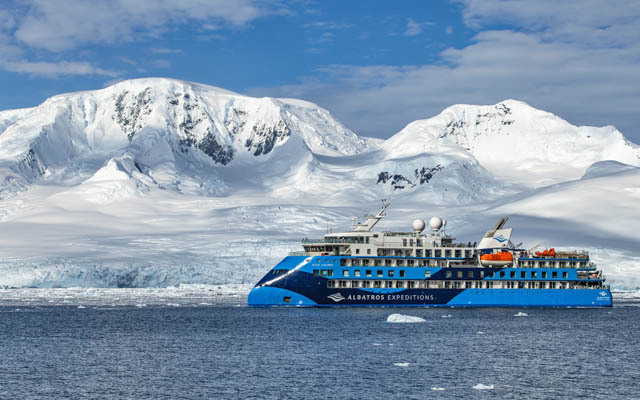
Muslim explorers to the Antarctica will soon be able to take comfort in the knowledge that their meals will come from a fully Halal-certified kitchen – made possible by Albatros Expeditions’ Halal project, which is said to be the first of its kind in the polar industry.
Albatros Expeditions’ Halal-certified kitchen will come into operation in 2026.
Albatros Expeditions is building a welcoming environment for Muslim guests
The initiative is spearheaded by the company’s South-east Asia business development manager Rashidah Lim, an industry veteran and the polar industry’s only female Muslim expedition leader. She is supported by her colleagues in marketing, business development, and product divisions.
Jens Rasmussen, COO and board member of the Albatros Travel Group, described the launch of the first Halal-certified cruise to Antarctica as “an exciting milestone” for the company.
While travellers with other religious identities are welcome onboard, the Muslim-friendly environment means no pork or alcohol will be served. Guests are also not allowed to bring outside F&B onto the cruise ship.
Apart from Halal-certified dining, accreditation by CrescentRating, there will also be ladies-only hours in the onboard sauna every day.
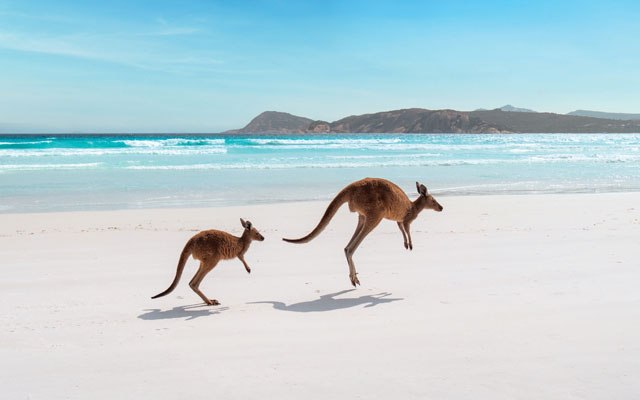
Tucked away to the south-east of Perth, Esperance is one of Australia’s best-kept secrets. Its pristine beaches are poster-perfect with crystal-clear turquoise waters and sand so white, it squeaks when you shuffle your feet.
There are also no crowds for most of the year, almost guaranteeing a private beach experience worthy of social media envy. The coastal scenery is dramatic, with aerial views revealing mesmerising geometric salt lakes in various hues. There are also plenty of opportunities for fishing, diving, hiking, and surfing.
Lucky Bay in Cape Le Grand National Park, located south-east of Esperance, is known for its bright white sands and turquoise waters
Despite its remote location, Esperance doesn’t compromise on the quality of culinary experiences with artisanal local craft beer, gin distilleries, excellent pub food, and Asian-influenced eateries on the rise.
Getting to Esperance requires an extra flight from Perth or an eight-hour drive, but the journey is well worth it for what visitors will discover.
“We’re a brand new tourism community and there’s a lot of home-grown initiative that’s quite unique. Tourism is also definitely needed here because farming is seasonal work,” said Anne O’Neill, owner of Yirri Grove olive oil farm which recently added dining and accommodation spaces. Her farm represents the entrepreneurial spirit found behind many producers and hospitality owners in the area.
Tourism is a growing economic driver in Esperance, complementing agriculture, the primary industry. It is microscopic of the wider West Australian (WA) tourism story, where the goal is to spread incoming tourist numbers beyond Perth and Margaret River into its more regional destinations with best-kept-secret statuses.
“It’s a new market for Asian visitors and appeals to the adventurous clientele,”said Tom Upson, director of markets and aviation, Tourism Western Australia (TWA).
“Consumers seeking adventure and exclusivity in their beach experiences will love Esperance. It’s perfect for a self-drive itinerary, forming a neat triangle from Perth down to Esperance, then following the magnificent coastline up through Albany and to Margaret River. We market it as the Great South West Edge journey.”
The South West Edge journey lies within Australia’s Golden Outback, one of five WA tourism regions. The others are Australia’s North West, Australia’s Coral Coast, Australia’s South West, and Destination Perth.
The offerings across these regions are as diverse as its locations – from camel rides on Cable Beach to exploring Karijini National Park’s stunning waterfalls, to swimming with whale sharks in Exmouth.
The state’s visitor economy hit a record A$16.8 billion (US$11.19 billion) in 2023, and has set itself a target of A$25 billion by 2033 under its global Walking On A Dream campaign, which currently features more than 20 sub-campaigns.
This includes a strategic plan to lure high-yield tourists from the Asian market with a barefoot luxury appeal, with the final leg of the campaign to launch in China on June 13.
The current Drive the Dream campaign, featuring TWA ambassador and Perth-born Formula One star Daniel Ricciardo, will also be introduced to the Indian market in the new financial year with a twist, headlining a West Australian cricket ambassador in the lead-up to the Test series in India.
“It’s a very focused strategy. We understand the travel constraints from Asia where there aren’t as many holidays. It’s the high-value traveller that probably has a little bit more time and leave, and also that discretionary money to pay for an extended trip,” Upson told TTG Asia.
TWA will also soon shift some of its focus to Broome, helped by a new seasonal direct flight from Singapore via Jetstar Asia from June 25.
Promoted as a perfect alternative during summer months when the weather in Perth can be uncomfortably hot, Broome offers iconic outback experiences not available anywhere else in WA.
These include pearl farm stays, witnessing the Staircase to the Moon phenomenon, and exploring distinctive Indigenous galleries featuring art from remote communities.
“The European market is already very strong in that area but with the new flight, we hope to attract more visitors from Singapore, our second-largest market. Then in the following year, we can encourage even more adventure with travel to the Ningaloo Reef in Exmouth, which is hands-down one of our most impressive areas,” said Upson.
To that end, TWA is reviving campaigns with travel agencies like Chan Brothers and Dynasty that have been dormant since Covid-19, promoting drives and farm stays.
The UK, Singapore, and China are identified as tier one markets, with more tourism growth potential seen from Asia than Western markets for proximity and time zone reasons.
The resort will be located an hour away from UNESCO World Heritage Site, Komodo National Park, home to the Komodo dragons
Indonesia’s Komodo National Park will implement periodic closures to protect its fragile ecosystem and ensure long-term sustainability, with these conservation cool-offs expected to start mid-2025.
The exact format of the closure has yet to be decided, stated officials.
Komodo National Park will manage visitor flows to allow quiet periods of recovery for the ecosystem
Frans Teguh, CEO of Labuan Bajo Flores Authority Board, emphasised the need for the park to regenerate for sustainability, and the goal of the periodic closures is to minimise disruptions to both conservation efforts and the tourism industry.
Frans said efforts would be made to “manage the flow of tourists”.
Several factors have contributed to the decision for the periodic closures. Intense tourism activity has put significant pressure on the park’s natural resources, which need time for recovery.
Additionally, the government aims to diversify tourism within the region. It is promoting other attractions on Flores Island and creating economic opportunities for more local communities. Infrastructure and amenities in Labuan Bajo and Flores have been developing over the last few years, all to disperse travellers beyond the national park. Currently under development is the Parapuar Labuan Bajo, a 400-hectare green space that will comprise zones for culture, recreation, wildlife, and adventure.
Nia Niscaya, a senior advisor at the Ministry of Tourism and Creative Economy, acknowledged the challenges posed by the periodic closure, and stressed the importance of public education and communication to ensure understanding and support for the decision.
Nia said the initiative now would pave the way for something better in the future.
She is optimistic that the decision to close Komodo National Park periodically can maintain a healthier Komodo ecosystem in the future.
“This step is part of sustainable, inclusive, and quality development,” she remarked.
The northern Indian state of Uttar Pradesh is looking to collaborate with governments across South Asia and South-east Asia to attract Foreign Direct Investment (FDI) towards the development of tourism infrastructure at its Buddhist sites.
Its lures are land banks at destinations including Kushinagar, Sarnath, Shravasti, Kapilvastu, Sankisa, and Kaushambi, which will be used to develop monasteries and accommodation units. At press time, the Uttar Pradesh government has already allocated two acres of land in Varanasi to the Bhutan government for the construction of temples and guesthouses.
Uttar Pradesh government has allocated two acres of land in Varanasi to the Bhutan government for the construction of temples and guesthouses
To bring attention to its initiatives, the state government recently organised the Bodhi Yatra conclave in New Delhi, showcasing its various Buddhist pilgrimage destinations. It was attended by envoys and representatives from various countries including Singapore, Thailand, Myanmar, Vietnam, Bhutan and Sri Lanka.
Mukesh Meshram, principal secretary of the department of tourism and culture, government of Uttar Pradesh, said: “Our goal is to strengthen spiritual and cultural connections with South Asian and South-east Asian countries. We invite these countries to invest in the hospitality and tourism sectors at our Buddhist sites.”
Industry stakeholders told TTG Asia that Uttar Pradesh, home also to the iconic Taj Mahal, needed to diversify its product offerings. They agreed that promoting Buddhist sites was a step in the right direction.
Sarbendra Sarkar, founder and managing director, Cygnett Hotels & Resorts, said: “Promoting Uttar Pradesh’s Buddhist sites in South-east Asia and South Asian markets will significantly boost international tourism and diversify the state’s tourism appeal. The development of country-specific monasteries and accommodation units at key Buddhist sites will create a sense of familiarity and comfort for international visitors, enhancing their overall experience and encouraging longer stays.”
Earlier this year, the tourism department of Uttar Pradesh hosted an event in Bangkok to promote Buddhist tourism.
Local tour operators would like to see more being done to attract Asian travellers.
Sushil Kumar Singh, managing director of Varanasi based Jatak Travels, suggested the establishment of a dedicated Buddhist tourism promotion committee to exclusively promote Buddhist tourism in overseas markets.
“Apart from government participation, the committee should include representatives from the private sector, such as hotels and inbound tour operators,” said Singh.
Sarkar also underlined the urgency to bring more “modern amenities and facilities” into Buddhist sites, so as to make them “more accessible and appealing to a global audience”.
Shanghai Pudong International Airport, recognised as one of the busiest international hub in China, will install SITA’s common-use self-service bag drops (SBD) and kiosks for foreign airlines and their passengers to speed up passenger processing.
Half of the airport’s total passenger traffic is made up of international travellers, and numbers are set to rise as more international routes reopen post-pandemic. As such, there is a pressing need for faster and easier operations at the airport.
SITA’s advanced passenger processing technology will allow Shanghai Pudong International Airport to speed up the boarding process
The contract will see the deployment of 52 kiosks and 14 SBDs across the airport, allowing international passengers to independently check in early before counters open.
Coming up next, SITA will work with Shanghai Pudong airport to enhance end-to-end self-services through a low-touch, safe environment, which is also in line with the airport’s digital transformation strategy.
Sumesh Patel, president, SITA APAC, said: “As air travel booms globally, and airports see a massive surge in travellers, there is an increased need for technology that can speed up the boarding process, reducing delays and traffic for passengers.”
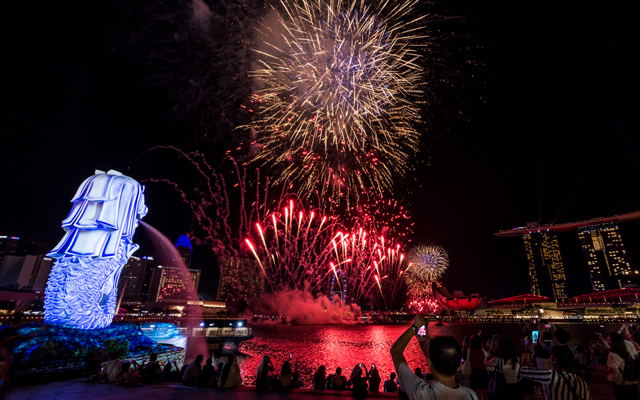
Race promoter Singapore GP has unveiled a stunning entertainment line-up for the Formula 1 Singapore Airlines Singapore Grand Prix 2024 this September, with big names such as OneRepublic, Kylie Minogue, Lenny Kravitz, Disclosure (DJ), The Corrs, Kool & the Gang, Tones & I, and BabyMonster set to fire up trackside action.
Visitors to the races can expect over 100 hours of entertainment across 12 stages.
Intense action will be found across Formula 1 Singapore Airlines Singapore Grand Prix 2024 event sites as mega stars lend their presence to the entertainment line-up
These global big names will take to the stage across the three-day races. OneRepublic will perform on September 20 at Zone 4 Padang Stage, while The Corrs will take over Zone 1 Wharf Stage on September 21.
The entertainment line-up also features other international acts such as Dean Lewis (Australia), MOS (Japan), Rangga Jones (Indonesia), and The Astronauts (Singapore),
The full entertainment schedule is available on the event website.
Additional tickets have been released with single-day walkabout tickets now available.
The Formula 1 Singapore Airlines Singapore Grand Prix 2024 will take place from September 20 to 22.
Accor has come together with Kylian Mbappé, French professional footballer and catalyst for youth empowerment, to take the latter’s Inspired by KM community support activities further through its extensive hospitality network.
The partnership is a long-term commitment that will see Accor provide accommodation support and logistical assistance to Inspired by KM activities.
Kylian Mbappé’s Inspired by KM community support activities will be supported by Accor’s vast business network
At the same time, Mbappé will leverage Accor’s expansive reach through awareness activations across the company’s group channels, notably via its ALL-Accor Live Limitless loyalty and distribution platform.
The strategic collaboration will enrich ALL-Accor Live Limitless’s appeal, harnessing Mbappé’s notable influence to attract members and guests while staying true to Accor’s core values.
Mbappé, president of Inspired by KM, said: “Together, we can make a meaningful difference and foster opportunities for a promising future. Our partnership embodies sharing and transmission, making us ambassadors for the younger generation worldwide.”
Sébastien Bazin, chairman & CEO, Accor, underlined the “transformative power of hospitality to create positive change”.
“Our partnership with Kylian Mbappé aligns perfectly with our commitment to making a difference in the communities we serve,” said Bazin.
Guests staying at The Hari Hong Kong this summer can enjoy two new offerings that delve into the Wan Chai district: the Live Like a Local summer package and the Neighbourhood Guide Audio Tour.
The Live Like a Local summer package features a one-night stay, daily breakfast for two, complimentary access to The Hari Neighbourhood Guide Audio Tour, custom gallery tours arranged by PHD Group, a welcome amenity pack, and early check-in at 14.00 and late check-out until 14.00 (subject to availability).
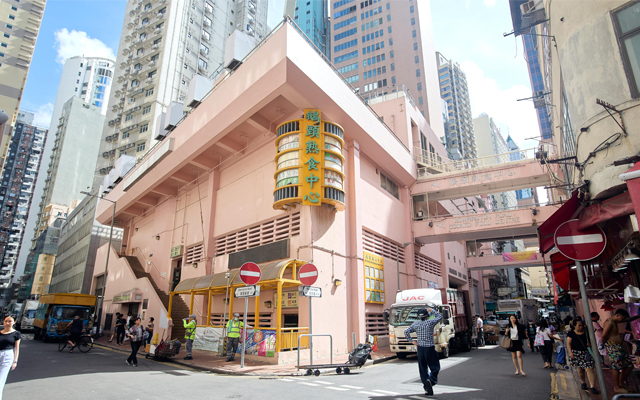
Guests are invited to visit Bowrington Road Cooked Food Centre
The audio tour offers guests a chance to venture off the beaten path to see a more authentic side of Wan Chai. Expect stops at Foo Tak Building, Villain Hitting, Causeway Bay Typhoon Shelter, and a local cooked food centre, among many others. All stop are within a two- to 10-minute walk from the hotel, ensuring an effortless and enjoyable adventure.
Langham Hospitality Group has named Jack Xiao as its new senior vice president – operations, China.
Based at the Shanghai office, Xiao will oversee the group’s mainland China portfolio of hotels and resorts while also supervising the functional teams for the market, including sales, revenue, F&B, HR, finance, marketing, and design and technical services.
He brings a wealth of experience to the role having worked with Accor, Wanda Hotels & Resorts, Starwood Hotels & Resorts and Yongle Huazhu.
Collinson International, the owner and operator of Priority Pass and LoungeKey, has released its latest global research report, The Value of Sports and Music Tourism, that explores the travel and spending habits of sports and music event travellers.
With sports and music tourism booming and event travellers having high aspirations, the report highlights a huge opportunity for businesses to tap into this growing segment of travellers.
Sports and music tourism is seeing huge growth in recent years
The new research revealed that sports fans are the biggest spenders globally in comparison to those travelling for music events; 57% of Asia-Pacific’s sports enthusiasts are spending more than US$500 per trip, per person.
Sports and music tourism is seeing huge growth. In 2023, sports tourism was valued at US$564.7 billion and is expected to almost double in value to US$1.33 trillion by 2032.1 Similarly, music tourism is expected to see huge growth, forecasted to reach US$13.8 billion by 2032.
This is being driven by three main components: events, exposure, and experience.
With more sports and music events, fans have more choice of destinations, while the internationalisation of new and existing sports leagues through TV and streaming has encouraged fans to travel, and music fans are finding it more cost-effective to see an artist abroad. As for experience, after years of Covid-19 travel restrictions, live fans are back and wanting new, enhanced experiences.
In Asia-Pacific, of those that travel to an event by plane, more than four-fifths (85%) have travelled for sports and 74% for music in the past three years or plan to do so in the coming 12 months. Of these travellers, over half (53%) travel more than once a year with 19% attending three or more events annually.
Spending habits
Sports fans are the biggest spenders globally, with 57% from Asia-Pacific exceeding US$500 per trip. Notably, 12% of respondents in Asia-Pacific spend more than US$2,000 per trip. Globally, the 25-34 age group spends the most overall, with a third (33%) exceeding US$1,000 for sports and 31% for music events.
The typical spend for event travellers globally at airports is US$100 (44%) but this varies considerably with those travelling for basketball (30%), Formula 1 (32%) and the Olympics (31%) prepared to spend US$200 or more. As for those travelling for music, 25% are prepared to spend US$200 or above.
About 82% of Asia-Pacific sports and music fans have travelled to a new city or country to watch their favourite team or artist and of those, 28% said they have returned to these new cities/countries – with a further 31% planning to return. This presents huge economic growth opportunities for local businesses within these destinations, particularly where repeat business can be identified ahead of time.
Elevated airport experiences
Those travelling to see their favourite sports team or artist are looking for more premium travel experiences, which means they are more likely to take advantage of airport experiences.
More than half (52%) of Asia-Pacific sports and music fans have used airport experiences when travelling for an event, which includes visiting an airport lounge (34%), gaming lounges (15%), sleep pods (16%) and spas (13%).
The top reasons Asia-Pacific fans visit an airport lounge is to relax and unwind before or after watching their favourite team/artist (58% for sports and enjoying at the airport.
Around 65% of Asia-Pacific event travellers participate in customer engagement and loyalty programmes. Many have joined customer engagement and loyalty programmes that offer points/miles (46%) or discounts on flights (50%), tickets (39%) and accommodation (38%). Over a third (39%) of Asia-Pacific event travellers would choose a payment card that offered exclusive travel benefits such as access to airport lounges, travel insurance (42%), and an event package (42%) that includes flights, accommodation, transfers and tickets.
Airport lounge access is a popular travel benefit through payment cards, particularly for travellers from India (43%), Hong Kong, the UAE, Australia (all 41%), Singapore (40%) Germany (34%), the UK (33%) and Brazil (32%).
Christopher Evans, CEO of Collinson International, owner and operator of Priority Pass, shared: “Fans are by definition synonymous with loyalty. This new research shows the high value they place on travel benefits. Great news for the travel industry and for those businesses targeting frequent travellers providing the opportunity to capitalise on the rise of event tourism by offering the travel benefits fans crave. In return, they will see the advantage of being top-of-mind and wallet with these frequent travellers, boosting engagement, building loyalty, and driving additional cross-border spend.”
“Sports and music events fuel wanderlust, taking travellers to every corner of the globe. As the appetite for sports and music tourism grows across Asia-Pacific, significant opportunities for businesses are opening up,” noted Todd Handcock, global chief commercial officer and Asia Pacific president, Collinson International.
Handcock continued: “This is particularly true for the travel sector, with Asia-Pacific travellers being some of the highest spenders globally; as well as financial services organisations, with the latter witnessing significant shifts driven by technological advancements, evolving consumer expectations, and disruptive competitors. Brands who can unlock the power and influence of sports and music-related rewards will position themselves well to benefit from higher customer engagement and retention.”








 He brings a wealth of experience to the role having worked with Accor, Wanda Hotels & Resorts, Starwood Hotels & Resorts and Yongle Huazhu.







Indonesia’s Komodo National Park will implement periodic closures to protect its fragile ecosystem and ensure long-term sustainability, with these conservation cool-offs expected to start mid-2025.
The exact format of the closure has yet to be decided, stated officials.
Frans Teguh, CEO of Labuan Bajo Flores Authority Board, emphasised the need for the park to regenerate for sustainability, and the goal of the periodic closures is to minimise disruptions to both conservation efforts and the tourism industry.
Frans said efforts would be made to “manage the flow of tourists”.
Several factors have contributed to the decision for the periodic closures. Intense tourism activity has put significant pressure on the park’s natural resources, which need time for recovery.
Additionally, the government aims to diversify tourism within the region. It is promoting other attractions on Flores Island and creating economic opportunities for more local communities. Infrastructure and amenities in Labuan Bajo and Flores have been developing over the last few years, all to disperse travellers beyond the national park. Currently under development is the Parapuar Labuan Bajo, a 400-hectare green space that will comprise zones for culture, recreation, wildlife, and adventure.
Nia Niscaya, a senior advisor at the Ministry of Tourism and Creative Economy, acknowledged the challenges posed by the periodic closure, and stressed the importance of public education and communication to ensure understanding and support for the decision.
Nia said the initiative now would pave the way for something better in the future.
She is optimistic that the decision to close Komodo National Park periodically can maintain a healthier Komodo ecosystem in the future.
“This step is part of sustainable, inclusive, and quality development,” she remarked.