More Japanese travellers will make overseas trips during the country’s extended holiday period this spring, aided by the ongoing recovery of international flights, increased incomes among some segments, and campaigns to stimulate demand, according to research by Japan’s largest travel agent.
Based on its survey of 1,846 people, JTB Corporation estimates 550,000 people will travel abroad between April 25 and May 7, also known as Golden Week, equating to a 10 per cent rise year-on-year.
JTB Corporation’s Japan outbound survey finds South Korea most in demand for the Golden Week holidays; Cheonggyecheon in Seoul pictured
Total spending on outbound trips could reach 147.4 billion yen (US$1.03 billion), up 9.6 per cent over the same period in 2024, but the average spend is predicted to remain about the same, at 268,000 yen.
The largest ratio of respondents (15.9 per cent) plan to spend between 100,000 and 150,000 yen on travel expenses.
Destinations chosen by respondents are South Korea (25.7 per cent), Taiwan (14.2 per cent), South-east Asia (10.6 per cent), Hawaii (9.7 per cent), and Europe (9.7 per cent). Within Europe, Italy, Spain, Portugal and France are the most popular countries.
The survey also found travellers are seeking longer trips than in previous years. Almost one third of those surveyed said their trip would span four days/ three nights, followed by five days/four nights (13.3 per cent), three days/two nights (14.2 per cent), and six days/five nights (14.2 per cent).
Domestic travel, however, is expected to drop 7.2 per cent from 2024 to reach 22.9 million, largely due to rising prices and cost-saving intentions among households, fuelled by economic uncertainty globally, as well as a desire to avoid crowded places, according to JTB.
One year on since the Japanese speed rail arrived in Fukui prefecture, the latter has been building on its growing tourism ecosystem with new subsidies and tours for international visitors.
The Hokuriku Shinkansen was extended 125km along the Sea of Japan coast from Kanazawa, Ishikawa prefecture to Tsuruga, Fukui prefecture in March 2024, improving travel access and shortening travel time from Tokyo to about three hours.
The Fukui Prefectural Dinosaur Museum is one of the key highlights in the area
Since the line opened, visitors to Fukui have increased by about one million year-on-year, with overnight stays by international tourists reaching 90,000, up 37.2 per cent year-on-year, according to the prefectural government.
The Fukui Prefectural Dinosaur Museum, one of the prefecture’s top attractions, reported a 26 per cent increase in visitors from March 2024 to February 2025.
Still, with growth in overnight stays by inbound tourists below the national average, the prefectural government aims to do more. This fiscal year (April 2025 to March 2026), a 5,000 yen (USD 34.81) subsidy will be awarded to travellers who fly from Seoul, Taipei or Hong Kong to Komatsu in neighbouring Ishikawa prefecture, and spend the night in Fukui.
The prefecture is also developing night events featuring food and traditional performing arts, and partnering with West Japan Railway Co. to develop tours catering to inbound visitors attending Expo 2025 in Osaka, which will be held from April 13 to October 13, 2025.
Fukui prefecture is expected to get another surge in tourism when the Hokuriku Shinkansen is extended from Tsuruga to Shin-Osaka Station, although the timeline for this project has not yet been set.
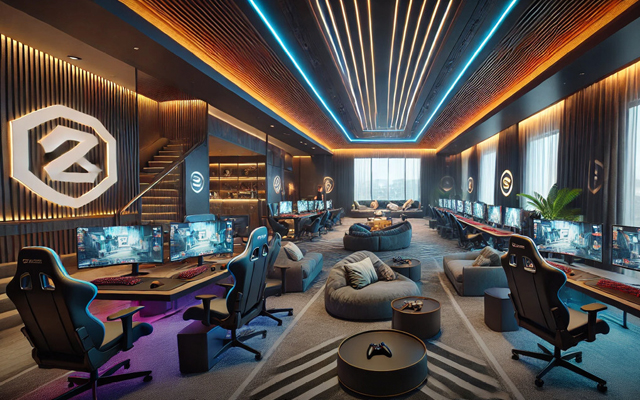
Radisson Hotel Group has unveiled Esports Ready by Radisson Hotels, a new programme to offer esports teams, players and organisers carefully curated services and amenities designed to keep them focused, motivated, and prepared to perform at their best.
Developed in partnership with Spacefwd, a leader in esports and gaming expertise, the Esports Ready by Radisson Hotels programme includes features such as seamless connectivity through 500/500 Mbps symmetric internet with 100 per cent uptime, cabled connections, and backup lines for flawless gameplay and broadcasts; flexible services to match the demanding schedules of esports athletes; team-centric spaces like accessible private gaming rooms, lounges, and secure storage; and exclusive perks like 15 per cent discount on Best Available Rates and flexible cancellation.
The Esports Ready by Radisson Hotels programme caters to specific needs of esports travellers
Radisson Hotel Group expects the programme to place it in the lead in the race for the growing esports industry. Reports indicate that the global esports market is rapidly expanding, with projections expecting the market to surge to US$13.7 billion by 2032 globally, and particularly in the Asia-Pacific and Middle East & Africa regions.
The groups has already lined up over 100 esports-ready properties, including Radisson Blu Plaza Hotel, Delhi Airport and Radisson Blu Plaza Hotel, Bangkok in Asia.
Angela Graun, vice president sales operations, Radisson Hotel Group, said: “The high-stakes world of esports means every second counts, and every detail matters. Radisson Hotel Group understands the unique challenges the industry faces when it comes to demanding travel schedules, unpredictable practice times, the need for seamless and reliable connectivity and secure, functional spaces to strategise and unwind.
“With Esports Ready by Radisson Hotels, we can help overcome these hurdles impacting performance and event success. Thanks to our diverse global portfolio of thoughtfully designed properties, Radisson Hotel Group can cater to the specific needs of esports travellers and create seamless experiences that facilitate esports success.”
TEG Sport and the Singapore Tourism Board (STB) have signed a five-year partnership to bring the Singapore Festival of Football (SFOF) back on ground, with regular top-flight European football fixtures scheduled to play in Singapore in alternate years – 2025, 2027 and 2029.
This year’s SFOF will feature 19-time Serie A champions AC Milan, English Premier League giants Arsenal FC and newly-crowned Carabao Cup champions Newcastle United FC. Arsenal FC will play their first match against AC Milan on July 23 and host an open training session two days later before playing Newcastle United FC on July 27.
Singapore Festival of Football returns in 2025 with Arsenal FC, AC Milan and Newcastle United FC playing high-powered matches in July
Both fixtures as well as the open training session will be held at the National Stadium at the Singapore Sports Hub.
Timothy Ho, managing director, TEG Asia, said: “The nation’s location, efficiency and passion for European football make it a natural spot for teams to conduct their preseason training and connect with their fans in South-east Asia.
“This is not the first time we’ve brought European football clubs to Singapore and this partnership will allow us to continue allowing fans here to enjoy world-class football on a regular basis.”
Melissa Ow, chief executive, STB, expects the partnership to add to Singapore’s “vibrant calendar and also reinforces Singapore’s appeal as a must-visit destination”.
AC Milan honorary vice president Franco Baresi said: “We are thrilled to be part of the Singapore Festival of Football this summer and to play our first-ever match in Singapore. It will be a special moment for the Club and for all our fans in this part of the world – a historic first that promises to be unmissable for anyone who loves the Rossoneri colours. AC Milan boasts a rich history and a truly international vision – from Milan to the hearts of our supporters all around the globe – and we can’t wait to bring our spirit to the National Stadium and feel the energy and passion of our fans in Singapore.”
Arsenal managing director, Richard Garlick recalled enjoyable trips to Singapore for the team back in 2015 and 2018. “Our trip (this year) will give us the opportunity to connect with our supporters in this beautiful region, with the matches against AC Milan and Newcastle United promising to produce two exciting games, providing the squad with high quality preparation ahead of the new season.”
Newcastle United’s sporting director, Paul Mitchell, added that the team’s participation in SFOF will provide “elite facilities and opposition as we look to optimise performance ahead of a Premier League season”.
The inaugural SFOF in 2023 welcomed over 130,000 fans to the National Stadium where English clubs Liverpool FC, Tottenham Hotspur and Leicester City FC as well as German powerhouse Bayern Munich played three top-class matches over a week.
Tickets go on sale to the general public on April 25, 12.00.
Fans are encouraged to sign up for the waitlist on Ticketek Singapore by April 21 to gain access to exclusive pre-sale and other promotional activities.
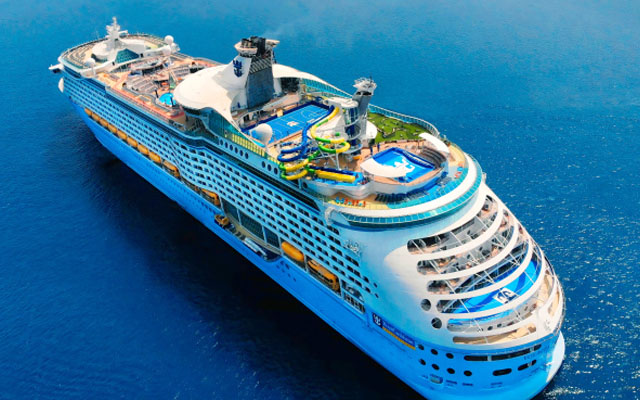
Princess Cruises will set Discovery Princess off on a special six-day voyage from Singapore on October 28 this year, calling at three Malaysian destinations before returning to the Lion City.
The six-day sailing on Princess Cruises’s newest ship will take guests to Port Klang (Kuala Lumpur), Penang and Langkawi, giving cruisers in the region an opportunity to experience exceptional dining, entertainment and wellness experiences on board.
Discovery Princess is the newest ship in Princess Cruises’s fleet
This will be Discovery Princess’s only voyage in South-east Asia before the ship sails onwards to Australia to start her homeporting season in Sydney from November 2025 to April 2026.
Discovery Princess can accommodate up to 3,660 guests and over 1,300 crew. It has over 1,800 staterooms including more than 1,400 with balconies, spread over 19 decks.
A highlight onboard is the Princess 360 Experience, which is only offered on Discovery Princess and Enchanted Princess. This seven-course event pairs destination-evoking dishes, wine, and champagne with a unique multi-sensory, multi-media experience. The menu is not available for public view to maintain “surprise and delight”.
Pawan Chahar has been appointed as the general manager of Jim Corbett Marriott Resort & Spa, where he will be responsible for spearheading the resort’s launch, managing operations, guest engagement and relationships.
A seasoned hotelier, Chahar brings extensive experience in luxury hotels and residences, having held key roles at top hotels like The Oberoi New Delhi and The Ritz-Carlton, Bangalore. He also holds certifications in Residential and Hotel Leadership.
Prior to joining Jim Corbett Marriott Resort & Spa, he was the pre-opening leader of Marriott’s first managed residence in South Asia, Three Sixty West – The Ritz-Carlton Residences, Mumbai.
What sparked your interest in the sand dunes?
About 40 years ago, I came to visit a friend in Tottori and we went to see the sand dunes. It’s an image I will never forget. Since then, the idea of building a hotel there has always been in the back of my mind. When I joined this company in 2018, I had an opportunity to work with a developer who was looking for some sites in Tottori. I found a site near the sand dunes that was owned by the city, joined the bid and secured the land. However, Covid hit so plans got delayed, but we’re ready to break ground in January 2026 and hopefully open the 108-room property by the end of 2028.
What are your expectations for the hotel?
The hotel will be in a one-and-only location – the only five-star property where every room offers a view of the sand dunes. No other hotel can be built in the area because the sand dunes are on the western edge of San’inkaigan National Park. In the first year of operations, we expect 70 per cent of our guests to be Japanese, with 30 per cent coming from international markets. In the second, third and fourth years, we think that the numbers will be 50/50 as the city will appeal to a lot of people from overseas.
There are a lot of attractions in addition to the sand dunes. With no lights at night, the sky is filled with millions of stars, which makes for a spectacular sight. The hotel will feature a star-gazing platform on the bridge connecting its two sections, providing daytime views of the sand dunes.
You’re involved in raising awareness of the location, aren’t you?
We’re working on a collaboration with the UK for World Sand Dunes Day, an international awareness day to highlight the importance of sand dunes and their ecosystems. I want to build recognition for Tottori’s sand dunes through this international event.
And you’re also promoting the city. Why is that?
Most people don’t know what Tottori has to offer. It’s our job as hoteliers to promote it, to show the city to Japan and the world. Foreign tourists to Japan don’t really know places outside Tokyo, Kyoto, Osaka and so on. The real Japan is outside of those areas. Also, Tottori has the smallest population of all prefectures in Japan so a lot of major brands don’t pay attention to it. Tottori needs help from hoteliers and other industries to get on the map, grow, and compete with other places.
What excites you about Tottori?
Aside from the sand dunes, Tottori has a lot of things to offer, like the Uradome Coast, where you can take a glass-bottomed boat to see rock formations, and Misasa Onsen, home to one of the most radioactive springs in the world, which has healing powers. Other interesting sites include Nageiredo Hall, clinging to the cliffside of Mount Mitoku, and Kurayoshi, home to old wooden houses converted into restaurants. And there’s the food. Both shabu-shabu (hotpot) and wagyu started in Tottori. The ocean offers Matsuba crab from September to March and squid in the summer, while the area is also famous for its pears, sake, and whiskey.
How will you showcase Tottori at the hotel?
We will create experiences and events for guests in areas such as food, culture, and more. We’ll do classes to make local crafts such as washi paper and Tottori’s renowned black and green lacquerware that we can fire and send to guests in Japan or overseas.
We’ll also have tours to places like Misasa Onsen, Kurayoshi, Nageiredo Hall and the port of Sakaiminato, where they pull up seafood every morning. These are the kinds of things we need to do to make the prefecture stand out. We’ll organise these tours with local ground transportation companies and probably buy or lease a fleet of high-end cars and even pick guests up from the airport.
What challenges do you face?
Human resources. However, younger people in the area, as well as those who may have left Tottori, might be interested in working at a luxury hotel in their hometown. We are also considering training some of our staff from our hotel company in Indonesia in Japanese, and bringing them over to work for three to five years as a reward. We’ve got our sister company too, with 22 hotels all over Japan, so some of their staff might join us. But it will be challenging, particularly when it comes to the English language aspect.
Another challenge is making it easier for international customers to visit. Tottori is only a one-hour flight from Tokyo, but there are no direct flights from Osaka – just a 2.5-hour train ride. We may suggest that international visitors fly into Tokyo, spend a few days in Tottori, then travel by train to Matsue to explore Matsue Castle and the Adachi Museum of Art, followed by a visit to Izumo Taisha Shrine. From there, they can head to Hiroshima or Okayama before departing Japan from Kansai International Airport.
We look forward to welcoming all travellers to the hotel.
Hong Kong Disneyland Resort will mark its 20th year in operations with a full year of celebrations that will feature new attractions, characters in specially-designed anniversary costumes, anniversary collectibles, limited edition performances and parades – and it is opening its party, from June 2025 to May 2026, to the world.
In a press meeting in Singapore on April 10, Michael Moriarty, president and managing director of Hong Kong Disneyland Management, said the hotels and theme park complex recorded 7.7 million visitors in 2024, and he hopes to welcome “everyone” throughout the celebratory year.
Hong Kong Disneyland kicks off year-long 20th anniversary celebration this June
“Hong Kong is within a five-hour flight time from so many places in Asia, making Hong Kong Disneyland Resort accessible to almost half of the world’s population. We would like everyone to join us in our celebrations,” said Moriarty, adding that different Asian countries have different vacation periods and school holidays, which helps to spread crowds throughout the months.
He added that The Most Magical Party of All, as its year-long celebration is named, will offer an opportunity for Hong Kong Disneyland Resort “to capture Disney aspirers” – Disney fans who have yet to visit a Disneyland park.
“When we look around the (Asia) region, we see millions of people who are Disney+ subscribers, who watch Disney movies, or have a relationship with Disney by buying Disney merchandise online or in stores. They are connected with the brand, but have yet to visit a Disneyland resort. We call them Disney aspirers, and we want to create a strong reason for them to visit now,” he said.
That motivation will come in the form of special 20th anniversary arrangements and programming. All characters will be “debuting their costumes just for the anniversary in a large fashion show”, and the resort will be decked out in “magic inspired” decorations. Merchandise and F&B will also adopt a celebratory tone.
Visitors can expect brand new songs and special “Disney spectaculars” live events.
Mickey and Friends, Duffy and Friends, and Disney princesses will put on an anniversary-only castle stage show. The largest-ever Friendtastic Parade will also make its debut, featuring 11 party floats – including one designed just for Hong Kong with petals of the city’s official flower, the Bauhinia Blakeana – and 11 groups of Disney friends.
When the sun prepares to set, the Momentous spectacular will come to life with an anniversary edition, taking park visitors from day to night with enchanting drone choreography.
The celebrations extend beyond the theme park and into the resort’s three hotels that are equipped with 1,750 guestrooms.
Corporate groups looking at a park buyout during the year-long celebrations can take the opportunity to weave anniversary elements into their programme.
According to Moriarty, the resort has attracted “several large buyouts” for 7,000 to 15,000 people post-lockdown, and corporate clients recognise Hong Kong Disneyland Resort’s bleisure appeal.
Moriarty’s stop in Singapore to meet with travel trade partners and the media was part of a wider Asia road show covering Indonesia, the Philippines, Taiwan and China.
He told TTG Asia that traditional trade agencies and online travel agencies remain crucial partners in Hong Kong Disneyland Resort’s distribution strategy.
“Traditional travel trades and online travel agencies are not all fighting for the same customer, and they know best what their customer wants and how they would like to travel and experience Hong Kong Disneyland Resort. They work with us to come up with the right product mix, perhaps more food coupons for this customer segment and merchandise discount for the other,” said Moriarty.
Moriarty and team are particularly keen on communicating The Most Magical Party of All to the Singapore travel audience, as the market is one of the resort’s top five international markets.
“There is such a huge Disney fandom here in Singapore. In fact, in December 2024, one out of every three seats on a plane coming from Singapore to Hong Kong is occupied by someone going to visit Hong Kong Disneyland Resort,” he shared, adding that Singapore visitors give a 95 per cent satisfaction rating after their visit.
Hilton has signed two new hotels in the Philippines, continuing its expansion of focused service properties in South-east Asia. Hilton Garden Inn Manila Quezon City and Hilton Garden Inn Cebu Mactan mark the debut of the Hilton Garden Inn brand in the Philippines, making it Hilton’s third brand in the country and expanding its portfolio from three to five properties.
These additions follow recent signings of Hilton Garden Inn Hoi’An Tra Que Village, Hilton Garden Inn Kota Kinabalu, and Hilton Garden Inn Bali Nusa Dua, as the brand strengthens its position in South-east Asia to meet growing demand for affordable, upscale accommodation.
Hilton Garden Inn Manila Quezon City is Hilton Garden Inn’s first property in the Philippines’ capital
Hilton also plans to more than triple its focused service portfolio in the region, increasing Hilton Garden Inn and other mid-market properties from 12 to 40 in the coming years. The company currently operates 102 properties in South-east Asia and aims to expand its portfolio by more than 50 per cent in the near future.
Hilton Garden Inn Manila Quezon City, located in Quezon City’s Central Business District, is Hilton Garden Inn’s first property in the capital. The hotel is part of a mixed-use complex, offering guests access to various amenities and attractions. It features 210 guestrooms and suites, an all-day dining restaurant, over 450m² of meeting and event space, an outdoor pool, and a fitness centre. The hotel’s location provides easy access to the Metro Manila Mass Transit System and nearby attractions, including the Smart Araneta Coliseum.
Hilton Garden Inn Cebu Mactan features 151 rooms in a mixed-use complex with retail and entertainment options. The hotel offers rooms starting at 26m², a fitness centre, outdoor pool, all-day dining, and event venues. Located 25 minutes from the airport, the property caters to business, leisure, and transit travellers, with easy access to Cebu’s Hilton Port and nearby islands and beaches.
Both hotels will be part of Hilton Honors, Hilton’s loyalty programme across over 8,400 properties globally. Members who book directly through Hilton channels enjoy benefits such as flexible payment options, exclusive discounts, and free standard Wi-Fi.
Maria Ariizumi, vice president, development, South East Asia, Hilton, said: “The Philippines is a strong focus for Hilton, as we see the massive long term tourism potential for the country. As markets across the Philippines continues to develop, Hilton Garden Inn is the perfect product for owners and travellers – offering just the right level of comfort and service. Anchored by Metro Manila and Cebu, we are thrilled to launch Hilton Garden Inn in the country with our new owners, and we see this as just the beginning of our exciting focused service growth story in the market.”
Fiji Airways, the flag carrier of Fiji and the South Pacific, has joined the oneworld alliance as a full member as of April 1.
Customers now have access to a range of oneworld benefits, including entry to nearly 700 airport lounges worldwide, priority check-in and boarding, and the ability to earn and redeem miles and Tier Points across the alliance. This also includes access to newly opened oneworld-branded lounges at Amsterdam Schiphol and Seoul Incheon airports.
Fiji Airways joins the oneworld alliance
Fiji Airways, based at Nadi International Airport, serves 25 destinations across 14 countries and territories worldwide, including oneworld hubs in Hong Kong, Tokyo, Sydney, and its newest global destination, Dallas-Fort Worth, enhancing its connectivity within the oneworld network.
As part of its oneworld integration, Fiji Link also joins as an affiliate airline, further expanding the alliance’s reach with domestic services across Fiji and regional connections to Tonga, Samoa, Tuvalu, and Vanuatu.
Additionally, Fiji Airways has also adopted the American Airlines AAdvantage travel rewards programme as its frequent flyer programme, allowing its most frequent travellers to enjoy all the benefits of the oneworld alliance as AAdvantage members.
“The introduction of Fiji Airways marks an important strategic step for our alliance as we connect even more people, places and experiences than ever before,” said Nat Pieper, CEO of oneworld. “Fiji Airways customers will benefit from oneworld’s global reach of more than 900 destinations, priority services and premium lounge access, and we’re thrilled to welcome them to the oneworld family.”
Andre Viljoen, managing director and CEO of Fiji Airways, added: “As a full member, we are excited to offer our customers even greater benefits and seamless connectivity across the extensive oneworld network. We look forward to welcoming more oneworld customers onboard to experience the beauty of Fiji and the exceptional service of Fiji Airways.”






 Prior to joining Jim Corbett Marriott Resort & Spa, he was the pre-opening leader of Marriott’s first managed residence in South Asia, Three Sixty West – The Ritz-Carlton Residences, Mumbai.
 What sparked your interest in the sand dunes?