Onyx Hospitality Group (Onyx) and eSIM marketplace Airalo have joined forces to enhance travel connectivity for Onyx Rewards members.
This strategic partnership integrates Airalo’s eSIM technology with Onyxs’s loyalty programme, providing members with seamless access to Airalo’s extensive global network of eSIMs.
Onyx Rewards members can now stay connected while travelling when purchasing eSIMs from Airalo
Onyx Rewards members can enjoy discounts when purchasing eSIMs from the Airalo website and app, allowing them to stay connected abroad, without worrying about roaming charges or physical SIM cards.
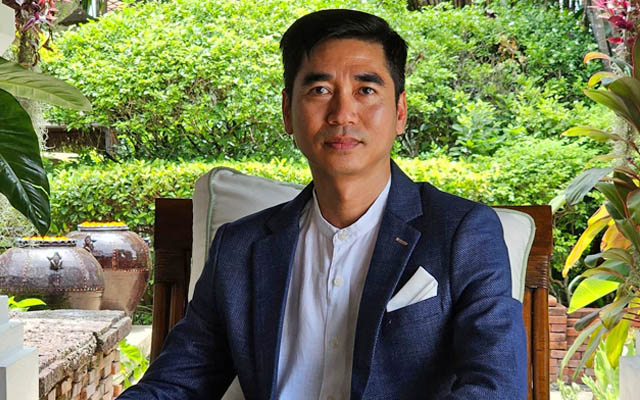
Pornthip Paothong, vice president of commercial marketing from Onyx, said: “Airalo’s eSIM technology will empower our members to stay connected effortlessly, enhancing their overall travel experience.”
A study by MMGY TCI Research has found that destinations hosting leisure and business events have been able to boost their presence in social conversations and drive positive engagement within communities.
In a PATA-led webinar last week on the topic of Event-driven Tourism: impact and opportunities, Olivier Henry-Biabaud, managing director and partner, MMGY TCI Research, shared that social conversations surrounding Asia-Pacific destinations doubled throughout the period of July 2023 to July 2024 when events tourism was taken into consideration.
Cultural themes occur the most in social conversations related to festivals and events in Asia-Pacific; Yi Peng Lantern Festival in Chiang Mai, Thailand, pictured
In tracking Asia-Pacific events that triggered positive sentiments and engagement, the study named Yi Peng Lantern Festival in Chiang Mai, Thailand; the Lunar New Year in several countries in the region; Bali Arts Festival in Indonesia; and Formula 1 races in Abu Dhabi and Singapore; among others as those that were most impactful.
The study also found that culture (45 per cent) topped the list of topics associated with events and festivals in the region, with tradition and folklore (30 per cent), arts and handicraft (29 per cent), and food/culinary (24 per cent) following on next.
Henry-Biabaud remarked that festivals and their topics could help raise awareness of a destination that might not be a primary tourism choice among travellers. Destination marketers should leverage niche festivals and events to speak to and connect with specific communities.
Further underscoring the value of festivals and events, Henry-Biabaud said such activities ranked second on a list of top-rated destination experiences. Outdoor and nature takes the lead with a 9.3 out of 10 visitor sentiment score; festivals and events was second with a score of nine. Street food, and museums and galleries ranked third and fourth respectively.
He emphasised that events and festivals could be a way to connect locals with the visitor community, and demonstrate a warm welcome to visitors, especially as tourism phobia grows in some parts of the world.
He added: “We tend to forget that big events are an amazing opportunity for visitors to blend with local people. Many of these events are usually made for locals in the first place, allowing them to share their passion with the world and meet other people from all over the world.”
Fellow webinar presenter, Benoit Badufle, managing director of Singapore-based Horus Development & Consulting, which is engaged to market destinations like Monaco and Brisbane in this region, further elaborated on the influential power of events and festivals.
Citing Monaco as an example, Badufle said the destination set out to attract the rich and famous by curating unique and prestigious events, many of which were first in the world or in Europe when launched. The Rose Ball, for one, debuted in Monaco in 1920 as one of the first global philanthropic events supported by the wealthy; it endures to this day.
Many of Monaco’s events are now a regular feature on the calendar. “They are very famous locally and internationally, and attract people from all around Europe and the world every year,” said Badufle. “They are a vector of soft power.”
He explained that events curated at the Grimaldi Forum congress centre are exported overseas, contributing to Monaco’s reputation as an intelligent destination. Famous artists performing in Monaco also help to bring positive attention to the country.
Citing yet another example of the power of association, Badufle said the annual Ernst and Young World Entrepreneur of the Year awards ceremony in Monaco has built an impression of the destination being “a stage for entrepreneurship”.
Badufle told TTG Asia that festivals and events are also a useful way to shift arrivals into the quieter travel seasons, and many in Monaco are scheduled during the shoulder and low season.
While festivals and events have the power to cast destinations in a positive light, Henry-Biabaud emphasised that destination marketers must also ensure that other supporting aspects, such as hotel accommodation, transport services, tours and attractions, are well managed to deliver an easy planning and travel experience for visitors.
Agoda has revealed a 137% year-over-year increase in international accommodation searches from China for the upcoming Golden Week, which takes place from October 1 to 7.
Agoda’s accommodation search data also showed a shift in Chinese travellers’ preferences for Golden Week. Last year, the top five outbound destinations were Tokyo (Japan), Seoul (South Korea), Osaka and Kyoto (Japan), and Bangkok (Thailand), respectively.
South Korea’s Seoul tops as the most sought after destination by Chinese travellers
This year, Seoul has emerged as the number one destination, leapfrogging Tokyo. Bali is a new entry in the top five and takes third place. Bangkok and Osaka continue to be among the most searched destinations and complete the ranking in fourth and fifth, respectively.
Golden Weeks are celebrated twice a year in China, around Lunar New Year and China’s National Day. It is a prime travel period for Chinese families looking to take advantage of the week-long break.
Andrew Smith, senior vice president, supply at Agoda commented: “The increase in outbound travel searches for China’s Golden Week suggests a growing confidence among Chinese citizens to explore international travel. It’s great to see destinations close to China’s east coast like Seoul and Osaka featured in the rank, as well as holiday favourites Bangkok and Bali further south.”
The Ascott has announced 28 new signings year-to-date in South-east Asia, adding over 3,400 units across its various brands in key destinations.
Accounting for more than half of Ascott’s global signings year-to-date, they will augment Ascott’s portfolio in South-east Asia to over 360 properties – both operational and in the pipeline – across 86 cities in nine countries: Cambodia, Indonesia, Laos, Malaysia, Myanmar, Philippines, Singapore, Thailand and Vietnam.
Penang will welcome its first lyf property, lyf Georgetown Penang, pictured
The new signings will also mark Ascott’s entry into new cities such as Purwakarta in Indonesia and Kulim in Malaysia.
Seven of Ascott’s newly signed properties in the region are under Oakwood, with openings in Cambodia as well as across several Indonesian cities, with properties like Oakwood Serpong, Oakwood Yogyakarta, Oakwood Merdeka Bandung, Oakwood Palm Hill Semarang and Oakwood Slipi Jakarta. The seventh addition, an Oakwood Premier property in Singapore, will mark the first Oakwood Premier branded property in South-east Asia since the brand’s refresh earlier this year.
The new signings also feature four Somerset properties, three Citadines properties, and two new properties for The Unlimited Collection in Penang, Malaysia. The lyf brand will add two new properties in Singapore – lyf Bugis Singapore, which opened in August 2024, and lyf Chinatown Singapore, currently under development.
Meanwhile, the growth of Ascott’s regional brands in South-east Asia is led by Harris with two signings, and one each for Preference and Fox. In 4Q2024, Ascott expects to open the first Harris property outside of Indonesia, Harris Hotel Sunshine Penang, in Penang; the state will also welcome its first lyf property, the 144-unit lyf Georgetown Penang.
Ascott also launched its Ascott Privilege Signatures programme earlier this year, which is an integral part of Ascott Star Rewards’ brand promise to ‘Stay Rewarded’. The programme caters to the growing demand for experiential travel by offering unique, ‘money-can’t-buy’ experiences, such as the inaugural event in London in July featuring an afternoon of fine dining at Le Gavroche alongside VIP access to the Wimbledon finals, and the upcoming Ascott Privilege Signatures events include exclusive experiences with Chelsea Football Club, following Ascott’s recent appointment as the club’s Official Global Hotels Partner.
Serena Lim, chief growth officer for Ascott, shared: “Ascott’s flex-hybrid hotel-in-residence model… (has) shown remarkable resilience during and after the pandemic, establishing itself as the preferred choice in the lodging industry.
“By employing a ‘glocal’ approach, we effectively broaden our reach with Ascott’s global brands while also delving deeper into the local destinations through our regional offerings. This strategy enables us to capture not only inbound travel to South-east Asia but also intraregional and domestic travel, further enhancing Ascott’s market performance.”
“Our diverse new offerings, which include beach resorts, boutique heritage hotels, full-service city hotels and premium serviced residences, will cater to a wide range of guest preferences,” added Wong Kar Ling, chief strategy officer and managing director of Southeast Asia for Ascott.
The Travel Corporation (TTC) has appointed Melissa DaSilva as interim chief executive officer of TTC Tour Brands.
DaSilva, who most recently served as president of TTC Tour Brands North America and brings over three decades of travel industry expertise to her new role, succeeds Gavin Tollman who will exit the business when the company sale closes later this year.
In her interim position, DaSilva will oversee TTC Tour Brands’ portfolio of six brands, which includes Trafalgar, Insight Vacations, and Contiki.
Gigi Cheung has been appointed as managing director of global marketing, products and partnerships of Plaza Premium Group.
She brings over 24 years of experience in business development, partnerships, sales and consumer experience, and will take the lead in developing and implementing strategies to establish the company’s global marketing standards in her new role.
She was most recently the vice president for the launch of K11 MUSEA in Hong Kong as a cultural destination, and prior to that, she had a nine-year tenure at New World Development.
Japan is working to have at least one luxury resort hotel in each of its 35 national parks by fiscal 2031 in a bid to make national parks more attractive to affluent inbound visitors, a core market in the country’s latest tourism plans.
The country’s national parks, which extend from the northernmost tip of Hokkaido to the southernmost islands of Okinawa, are already home to some high-end properties thanks to both public and private sector efforts, including The Ritz-Carlton, Nikko, which opened in Nikko National Park in 2020.
Towada-Hachimantai National Park, pictured, is one of four national parks that is part of the current pilot
Still, the environment ministry wants to ensure every national park can accommodate affluent visitors, not only to increase the number of visitors but also their length of stay and level of engagement with nature.
“We aim to implement projects to increase the attractiveness of national parks using private-sector resources,” said environment minister Shintaro Ito of the plan, adding that the government’s goal is “world-class national parks based on the understanding of local communities and the idea of environmental conservation”.
As part of efforts, the environment ministry is running a pilot project to attract luxury hotels in four national parks including Towada-Hachimantai National Park, which stretches across Aomori, Akita and Iwate prefectures in northern Honshu, and Chubusangaku National Park, which covers Gifu, Nagano and Toyama prefectures in central Honshu.
National Parks have long been part of the government’s tourism growth plan, first a pillar in its Tourism Vision To Support Tomorrow’s Japan, launched in 2008, and now a core element of policies to increase the number of inbound visitors to 60 million annually by 2030.
Agoda has joined forces with the Tourism Promotions Board (TPB) Philippines to showcase the Philippines as a prime tourist destination while driving increased inbound tourism.
The collaboration, effective immediately, will run until December 15, 2024 with travel periods until March 31, 2025.
Palawan in the Philippines has secured the fifth position for Best Island in Asia
In promoting the vast cultural and natural beauty of the Philippines, both organisations will feature exclusive discounts and co-branded marketing campaigns aimed at attracting international travellers to both well-known and lesser-known cities across the Philippines. Campaign details will be prominently displayed on Agoda’s website and mobile app, as well as on the Travel Philippines mobile app.
“We are excited to partner once again with TPB through the latest programme as a significant step to leverage our digital expertise as well as our global network to showcase the myriad destinations and vibrant culture of the Philippines to a global audience,” said Agoda CEO Omri Morgenshtern.
TPB COO Maria Margarita Montemayor Nograles shared: “This partnership allows us to utilise cutting-edge digital marketing strategies and valuable insights to promote our unique destinations and create memorable experiences for our tourists.”
NTUC LearningHub has unveiled its Sustainability for Business Resilience Report 2024, which investigates sustainability as a business imperative, the current state of sustainability efforts in organisations, and the critical role of training and certifications.
Based on survey involving over 150 business leaders and 350 full-time working professionals, the report also highlights the in-demand job roles and skills that inform and shape individuals’ career progression while strengthening the business’ resilience.
NTUC LearningHub’s latest report shows that business leaders agree sustainability training for staff is important
The report showed that while sustainability is a growing business priority, only six per cent of business leaders report that their organisation has completed at least one round of sustainability implementation. This is in comparison to 14 per cent from an earlier sustainability report by NTUC LearningHub in 2022.
Nevertheless, a positive outlook remains as 72 per cent of business leaders share that their organisation will begin its sustainability journey within the next five years or more, marking a six per cent increase from the 2022 report.
The report also revealed that while employees perceive possessing the knowledge and skills necessary to understand and implement sustainability initiatives at the workplace, more than four in five business leaders say that there is a gap in expertise and skill sets around sustainability in their organisation. These include skills like climate change sustainability, environmental management system framework or policy, risk management, sustainability risk and impact assessment, and Environmental and Social Governance.
While nearly a third of business leaders report having sent their employees for sustainability-related training in the past year, only 11 per cent employees report attending sustainability-related training and 46 per cent are unaware of the available programmes in the market.
When sending employees for training, business leaders grapple with employees being too busy with work to attend training, difficulty in identifying industry-recognised courses and relevant external training providers or centres, insufficient budget for training programmes, and resistance to change among employees.
Meanwhile, employees have listed challenges such as being too busy with work, training programmes not being fully funded by their company, having no one to cover their work while they are away for training, uncertainty about their skills gaps, and limited in-house training programmes offered by their organisation.
Although nearly four in five business leaders agree that their organisation has clearly communicated how employees can contribute towards the organisation’s sustainability goals, both groups have differing views on the top motivators for sustainability initiatives implementation.
Employees report the top three motivators to be cost savings, complying with rules and regulations, and responding to market demand. On the other hand, business leaders cite responding to market demand as the primary driver, followed by achieving cost savings, and managing risks.
Moreover, 33 per cent of employees lack the confidence in their organisation’s ability to effectively implement sustainability initiatives, citing unclear sustainability goals, insufficient budget allocated to sustainability initiatives, and lack of sustainability training programmes as primary reasons.
Tay Ee Learn, chief sector skills officer, NTUC LearningHub, shared: “The findings suggest a possible disconnect between business leaders and employees… transparent communication is key, but organisations must first develop a clear sustainability roadmap with defined goals to ensure everyone is aligned.
“This involves prioritising workforce training and development to prepare employees for new and refreshed green roles. Investing in the development of their human capital will go a long way to reassure the workforce that they are valued, allowing both organisations and workers to remain competitive in a dynamic landscape.”
The Sustainability for Business Resilience Report 2024 can be viewed here.
Contiki has announced a special departure of their brand-new trip France in a Week that gives travellers the chance to live out their French fantasies, inspired by Netflix’s series Emily in Paris.
The Inspired by Emily departure is a seven-day trip where fans can experience all things French, like visiting Paris’ most famous locations, creating their own signature scent at a perfumery, touring a château and a champagne house, going behind the scenes of a cabaret set that was used in the show, and more.
Fans of the Emily in Paris series can now visit the show’s iconic spots and filming locations with Contiki
Additionally, travellers will take a tour of some filming locations in Paris and also visit the Palace of Versailles & Loire Valley after stopping at a classic Parisian pâtisserie for a pain au chocolat.
The limited-edition departure is in response to the growing trend of set-jetting, where travellers are flocking to locations popularised by movies, television and even games.
Keeping up with popular trends, Contiki also introduced the Taylor your Contiki campaign for fans who were travelling to see Taylor Swift’s Eras Tour in Europe.
The brand also launched a Paris to Rome by Train trip, which lets Emily-inspired travellers take their exploration one step further and visit Rome, taking them to Europe’s most romantic spots, including Venice, Milan & Lausanne, on comfy trains in just nine days.
“Understanding the latest youth travel trends and offering our travellers the right product to experience them is very important to us. So, when there was an opportunity to do a spin on one of our newest trips and make it exciting, we just knew we had to do something and give our travellers the chance to step into Emily’s shoes and live their main character moment in France,” shared Contiki CEO Adam Armstrong.
“It’s an exciting opportunity for anyone who wants to see more of France, and this special departure is such a great way to experience it as more and more people want to visit the show’s iconic spots and filming locations. This trip covers that, and so many more experiences that are quintessential to the show. It’s going to be a blast for Emily fans,” added Nick Lim, CEO (Asia), The Travel Corporation.
A study by MMGY TCI Research has found that destinations hosting leisure and business events have been able to boost their presence in social conversations and drive positive engagement within communities.
In a PATA-led webinar last week on the topic of Event-driven Tourism: impact and opportunities, Olivier Henry-Biabaud, managing director and partner, MMGY TCI Research, shared that social conversations surrounding Asia-Pacific destinations doubled throughout the period of July 2023 to July 2024 when events tourism was taken into consideration.
In tracking Asia-Pacific events that triggered positive sentiments and engagement, the study named Yi Peng Lantern Festival in Chiang Mai, Thailand; the Lunar New Year in several countries in the region; Bali Arts Festival in Indonesia; and Formula 1 races in Abu Dhabi and Singapore; among others as those that were most impactful.
The study also found that culture (45 per cent) topped the list of topics associated with events and festivals in the region, with tradition and folklore (30 per cent), arts and handicraft (29 per cent), and food/culinary (24 per cent) following on next.
Henry-Biabaud remarked that festivals and their topics could help raise awareness of a destination that might not be a primary tourism choice among travellers. Destination marketers should leverage niche festivals and events to speak to and connect with specific communities.
Further underscoring the value of festivals and events, Henry-Biabaud said such activities ranked second on a list of top-rated destination experiences. Outdoor and nature takes the lead with a 9.3 out of 10 visitor sentiment score; festivals and events was second with a score of nine. Street food, and museums and galleries ranked third and fourth respectively.
He emphasised that events and festivals could be a way to connect locals with the visitor community, and demonstrate a warm welcome to visitors, especially as tourism phobia grows in some parts of the world.
He added: “We tend to forget that big events are an amazing opportunity for visitors to blend with local people. Many of these events are usually made for locals in the first place, allowing them to share their passion with the world and meet other people from all over the world.”
Fellow webinar presenter, Benoit Badufle, managing director of Singapore-based Horus Development & Consulting, which is engaged to market destinations like Monaco and Brisbane in this region, further elaborated on the influential power of events and festivals.
Citing Monaco as an example, Badufle said the destination set out to attract the rich and famous by curating unique and prestigious events, many of which were first in the world or in Europe when launched. The Rose Ball, for one, debuted in Monaco in 1920 as one of the first global philanthropic events supported by the wealthy; it endures to this day.
Many of Monaco’s events are now a regular feature on the calendar. “They are very famous locally and internationally, and attract people from all around Europe and the world every year,” said Badufle. “They are a vector of soft power.”
He explained that events curated at the Grimaldi Forum congress centre are exported overseas, contributing to Monaco’s reputation as an intelligent destination. Famous artists performing in Monaco also help to bring positive attention to the country.
Citing yet another example of the power of association, Badufle said the annual Ernst and Young World Entrepreneur of the Year awards ceremony in Monaco has built an impression of the destination being “a stage for entrepreneurship”.
Badufle told TTG Asia that festivals and events are also a useful way to shift arrivals into the quieter travel seasons, and many in Monaco are scheduled during the shoulder and low season.
While festivals and events have the power to cast destinations in a positive light, Henry-Biabaud emphasised that destination marketers must also ensure that other supporting aspects, such as hotel accommodation, transport services, tours and attractions, are well managed to deliver an easy planning and travel experience for visitors.