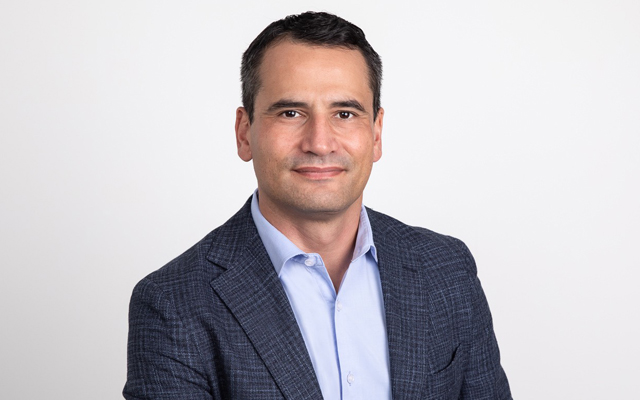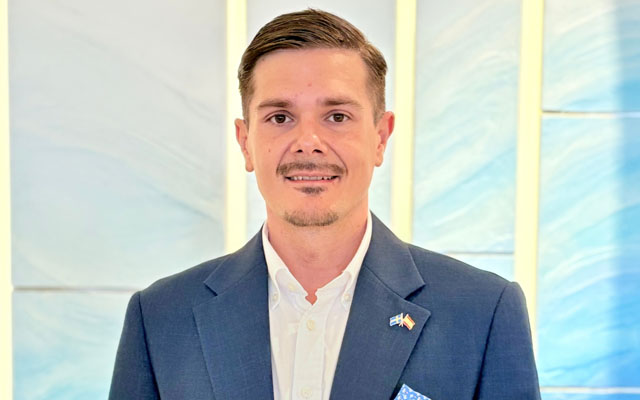
Carlton City Hotel Singapore has appointed Douglas Glen as general manager, marking his return to the property after previously leading the team through the pandemic period.
Glen brings over three decades of hospitality experience to his current role, and will oversee all operational and financial aspects of the 386-key business hotel, driving strategic growth while maintaining the property’s high standards of service and guest experience.
He previously held senior positions at The Regent Hotel Group in Hua Hin, The Royal Cliff Hotels Group in Pattaya, The Steigenberger Riverside Bangkok, The Landmark Bangkok, and The Landmark London.
Luxury travel is evolving, with high-net-worth travellers trading opulence for access to remote landscapes, authentic cultural experiences, and personalised journeys.
Hannah Pearson from the Adventure Travel Trade Association highlighted a US$1.16 trillion global market for adventure travel, noting a shift from passive sightseeing to purposeful, intimate experiences that connect visitors with nature, people, and place.
Panelists at ITB Asia 2025 highlighted a shift in luxury travel from opulence to immersive, high-value experiences in remote and culturally rich destinations; photo by Stephanie Zheng
“Luxury used to be opulence and being pampered,” said Willie Wibamanto, sales manager at Flywire, during a panel on luxury adventure travel at ITB Asia 2025. “These days, luxury means more access, reaching places we never dreamed of.”
Bhutan exemplifies this trend, positioning itself as a low-volume, high-value destination. By welcoming only those willing to pay a premium, the Himalayan kingdom preserves its environment, maintains traditions, and ensures tourism benefits local communities. Visitors can trek sacred valleys, explore centuries-old monasteries, and connect with artisans and monks without the distractions of mass tourism.
Joe Zou from HX Expeditions noted how their small hybrid vessels combine “comfort, science and sustainability” to bring guests face-to-face with penguins in Antarctica or glaciers in Greenland. “You want access to those places, and I guess luxury is taking (that access) to the next level,” he said.
Wayne Kum from the Japan National Tourism Organization added that travellers are spending more time in fewer locations to “immerse themselves in local culture and well-being”, signalling a shift from quantity to quality.
For a new generation of high-value travellers, ultimate luxury lies in intimacy: private onsens after limited-access mountain hikes, or stepping foot where few have gone before. The appeal is fewer people, richer experiences, and deeper connections.
HotelMinder, a hospitality industry resource offering a free knowledge platform and technology marketplace for global hoteliers, has launched Lobby, the industry’s first network connecting hoteliers with vetted hospitality experts.
Lobby aims to provide actionable, affordable solutions to operational challenges and is free to join for both experts and hoteliers. Services operate on a commission-based model.
Lobby offers hoteliers free access to vetted hospitality specialists to tackle operational challenges and boost performance
Currently in beta, Lobby gives hoteliers access to specialists across functions including revenue management, operations, distribution, tech stack consultation, marketing and automation, and hotel management consulting. Lobby’s global experts bring hundreds of years of combined experience supporting properties of all sizes.
With the launch of OpenAI-integrated Booking.com and Expedia apps, which the OTAs are using to maintain control over the marketplace, it is increasingly important for hoteliers to adopt innovative operational strategies to protect direct bookings and retain market share.
Founded in 2013, HotelMinder initially sought to make advanced operational technology accessible to smaller, independent properties, helping them compete effectively regardless of budget. 12 years later, the company has launched Lobby to provide additional support and resources to hoteliers worldwide.
Benjamin Verot, founder of HotelMinder, shared that up to now, there had been no global network of consultants where hoteliers could source trusted support for their business, and that Lobby had been created to address that gap in the marketplace.
He said: “As more hotels implement sophisticated technology to support their operations, technology is no longer enough to make a property stand out from the crowd online.
“Today, savvy hoteliers are developing out-of-the-box operational strategies – supported by the knowledge and actionable insights of specialised industry experts – to increase their operational efficiency, maximise their bookings, and retain profitability over the long-term.”
Scenic Group is expanding its Discovery Yacht fleet with the addition of Scenic Ikon, scheduled to begin sailing in April 2028. The new vessel marks the next phase of the company’s ultra-luxury expedition operations, designed to navigate both polar and warm water destinations.
Scenic Ikon will accommodate up to 270 guests in 135 verandah suites, each measuring between 34m² and 250m² across five decks. The ship will meet Polar Code 6 standards with an Ice Class 1A Super hull and include two Airbus H130-T2 helicopters, a custom Triton AVA submersible, Zodiacs, and luxury tenders.
Scenic Ikon sets sail in April 2028 with polar and tropical itineraries
Construction milestones include a steel-cutting ceremony in February 2025 attended by Croatian prime minister Andrej Plenković and a keel-laying in May 2025. Delivery is scheduled for the end of 2027, followed by testing and entry into service.
The inaugural voyage will depart from Venice in April 2028 and has sold out, with strong demand for subsequent departures. The maiden season, running through March 2029, will cover 110 ports in 21 countries and 26 new destinations, including the Mediterranean, Aegean, Egypt, Cape Verde Islands, Dakar, Antarctica, the Falkland Islands and the Chilean fjords.
On board, guests will find 15 dining venues, lounges and leisure spaces designed around Scenic’s all-inclusive model. The two-level Senses Rejuvenation Spa, spanning 1,700m², will offer spa therapies, hydrotherapy and fitness experiences. Each voyage will include excursions, events and entertainment.
Scenic Ikon’s helicopter programme will feature landings at golf courses, restaurants and historic sites, as well as access to remote wilderness regions. The submersible, Scenic Neptune III, will allow guests to explore underwater environments in destinations such as Antarctica.
“(Scenic Ikon) is the result of more than three years of passion, innovation and development by our team, and we are delighted to share the Discovery Yacht with our valued guests, travel advisors and partners. Every element of Scenic Ikon’s design has been optimised to deliver unrivalled experiences across diverse destinations and environments, from its primary base the Mediterranean to the wilds of Antarctica,” said Glen Moroney, founder and chairman of Scenic Group.
Swire Hotels has introduced Upper House, a global brand that unites its House Collective properties and marks a new phase of international growth.
The move also includes the launch of the brand’s first branded residences project, Upper House Residences, in Bangkok in 2030.
Swire Hotels brings its House Collective portfolio under the global Upper House brand, marking a strategic shift toward international consistency; Upper House Shenzhen to open in 2027, pictured
Following the success of Upper House Hong Kong, ranked among the top five in the World’s 50 Best Hotels for two consecutive years and recognised in the inaugural global Michelin Keys selection, all existing Houses in Hong Kong (Two Keys), Chengdu (One Key) and Shanghai (One Key) will be renamed Upper House. Future openings in Shenzhen, Xi’an, Tokyo and Bangkok will also carry the Upper House name, strengthening brand consistency across international markets.
The rebrand brings together the group’s portfolio under one name while maintaining the brand’s Houses not Hotels philosophy. Each property reflects its local culture through guest experience, dining and service.
Upper House Residences Bangkok, opening in 2030, will extend the brand’s hospitality approach to residential living. The project will offer homeowners integrated amenities, services and property management under the Upper House brand.
Upcoming openings include Shenzhen in 2027, Xi’an in 2028, Tokyo in 2029, and Bangkok in 2030 with the launch of Upper House Residences.
Dean Winter, managing director of Swire Hotels, said: “The rebrand heralds a new chapter for Upper House as a single, iconic brand. Guided by the same passion, precision, and incredible people who shaped our vision of hospitality over almost two decades, the Upper House experience remains unexpected and personal, where genuine hospitality, thoughtful design and unscripted service create something truly memorable.”
Amsterdam-based hospitality technology company Ireckonu is targeting growth in the Asia-Pacific region, building on opportunities identified since opening its Singapore office in December 2024.
With the mission to empower hotels with reliable insights and streamlined software, the company offers a three-part platform: a middleware layer that connects all systems in a hotel ecosystem; an AI- and machine learning-powered customer data layer that merges the profiles of each guest across hotel facilities; and a marketing automation layer that can be used for customised marketing or to power other marketing tools in the hotel’s system.
Sam Samsudi highlights Ireckonu’s plan to help hotels in Asia-Pacific capture market share through personalised guest experiences and improved data visibility; photo by Kathryn Wortley
Asia-Pacific’s huge population, increasingly mobile travellers and growing number of hotels make it a hugely attractive location for growth, according to Ireckonu.
“We foresee at least double digital growth in the next three years,” said Sam Samsudi, director of Asia-Pacific, Ireckonu.
The region’s younger generations and high-value customers, in particular, expect to receive tailored communications from hotel brands based on their previously recorded preferences, stays or experiences, so trying to reach them using fragmented, non-consolidated data means “brands are missing out”, he noted.
Samsudi aims to help hotels differentiate themselves and capture a greater share of the market from OTAs by providing them with better visibility of their data.
By using Ireckonu, brands will be equipped to offer a personalised experience, he explained, emphasising the need for them “to engage customers at the right time with the right messaging”.
Prince Hotel Da Nang, Vietnam
Prince Hotel Da Nang, formerly Sel de Mer Hotel Suites, features 164 rooms and suites with private balconies overlooking Danang city or My Khe Beach.
Facilities include multiple dining options, a rooftop bar with panoramic views, an infinity pool, a gym, and a spa with treatments inspired by Japanese techniques.
The hotel is located near My Khe Beach and provides easy access to the Son Tra Peninsula, Dragon Bridge, Marble Mountain, Hoi An Ancient Town, and the Golden Bridge.
Mett Singapore
Mett Singapore, Singapore
Mett Singapore, the brand’s flagship property in Asia Pacific, features 84 suites and rooms ranging from 35m² to 160m², overlooking Fort Canning Park or the city skyline.
Facilities include two outdoor pools, padel and pickleball courts, gym, fitness classes, a grand ballroom for 800 guests, and the upcoming Madison House members’ club with The Longevity Suite wellness centre.
The hotel offers multiple dining venues, including Italian, Korean, and contemporary concepts. Located within Fort Canning Park, guests have easy access to museums, live events, outdoor activities, and Singapore’s central city attractions.
Kahanda Kanda
Kahanda Kanda, Sri Lanka
Kahanda Kanda has added five luxury pool villas and opened the KK Spa, offering private plunge pools and views over Lake Koggala and surrounding jungle.
Villas are designed for couples, honeymooners, and families, with access to guided jungle walks and the Cinnamon Experience exploring Sri Lanka’s spice heritage.
The treetop spa features treatments using local ingredients, including massages, steam sessions, Dead Sea mud wraps, and consultations with a Hela Vedakama healer, complemented by wellness retreats with yoga, meditation, and mindful dining.
Caption by Hyatt Central Sydney
Caption by Hyatt Central Sydney, Australia
Caption by Hyatt Central Sydney offers 174 rooms from Standard to Premium with city and neighbourhood views. Facilities include a social hub combining café, bar, co-working space, and event venue, alongside curated programming and locally influenced dining.
Located in Haymarket, the hotel is steps from Central Station, the Light Rail, Capitol Theatre, and Chinatown, providing easy access to Sydney’s cultural and commercial attractions.
Expedia Group is focusing on Asia-Pacific and AI as the next drivers of global growth. The company sees the region as a commercial hub, fuelled by rising intra-regional travel, a growing middle class, and untapped online potential, while AI underpins efforts to deliver faster, smarter, and more personalised travel experiences.
Speaking at Explore Local Bangkok, senior executives described Asia-Pacific as both a commercial powerhouse and a trendsetter in travel.
From left: Thai TV star Tayme Thapthimthong chats with Expedia’s Amanda Maltos about set-jetting during the Explore Local Bangkok event on October 2, 2025; photo by Expedia Group
“We talked a lot about how the future of travel is being shaped right here in Asia-Pacific – it’s hard to find somewhere in this region where it’s not an opportunity. Whether it’s Japan moving, China now moving, ASEAN moving, or India moving, there’s growth everywhere,” said Michael Dykes, vice president, hotel market partnerships, APAC at Expedia Group. He added that the global OTA market remains “largely under-penetrated” and that Expedia, Booking.com and Trip.com account for about 15 per cent of it.
Greg Schulze, chief commercial officer at Expedia Group, said the company aims to expand the overall industry rather than compete solely for margins. “This business is a growing pie. Of course, we’re all a handful of companies trying to gain a bigger share. But if we do this well, we’re in an industry that provides experiences we should all want to see grow,” he stated.
Dykes highlighted the impact of Asia’s rising middle class on travel demand. “In the past, travel was a luxury only a few could chase. Now we see something different. India is, or soon will be, one of the world’s largest economies with one of the fastest-growing middle classes. These aren’t markets where consumers only chase the lowest price. Travel is becoming more aspirational, inspired by social media – and it’s about finding the best experience for the best value.”
Packaged products combining air, hotel and experiences are Expedia’s fastest-growing B2C segment in the region, while distribution rates for B2B partners are also scaling as smaller agencies and white-label partners leverage Expedia’s technology.
Schulze noted the company’s long-term confidence rests on its ability to lead through technology revolutions.
“During my 25 years in the travel industry, 20 years of which are with Expedia – I’ve seen three distinct eras of travel and technology. We started by putting information in consumers’ hands, then came the mobile revolution. Now we’re in a new era where information and computing are so powerful that we can do so much more, so much faster, right at our fingertip. Expedia Group has been a leader through each of those phases, and I’m incredibly confident we will be in this next exciting AI phase. This isn’t happening to us; we’re creating the future of travel.”
Expedia has integrated more than 350 AI models and recently unveiled four new tools: Smart Trip AI, a conversational planner; the Merchandising API for machine-learning-driven campaigns; the Typeahead API for seamless bookings; and the Lodging Sponsored Listings API, allowing B2B partners to monetise traffic.
Jennifer Andre, global vice president of Expedia Group Advertising, said first-party travel data gives the company a strategic advantage as the internet moves away from third-party cookies. “A lot of advertisers are shifting their dollars toward commerce and retail media networks because first-party data allows them to track real actions and outcomes, without relying on third-party cookies or invasive tracking. That’s where Expedia is very well positioned.”
She added that collaborations with Netflix and Amazon Prime are enabling instant travel inspiration.
“People want instant gratification – they say, ‘I’ve seen it, and I want to go there’. Our collaborations with Netflix and Amazon Prime are making that possible.”
Expedia and Netflix launched a global advertising partnership in early 2024, embedding travel inspiration in Netflix’s ad-supported tier, including localised campaigns in Japan. In May 2025, Expedia introduced Trip Matching, an AI tool turning Instagram Reels into bookable trips, currently in beta in the US.
Sentosa Development Corporation (SDC) has introduced a new brand direction, Discover your element in ours, building on the island’s tagline Where Discovery Never Ends.
The refreshed campaign encourages visitors to reconnect with themselves through Sentosa’s five natural elements – sun, sand, sea, nature, and biodiversity – across its 500-hectare island setting.
Sentosa invites visitors to rediscover balance through its natural elements of sun, sand, sea, nature, and biodiversity; photo by Sentosa Development Corporation
The campaign draws on neuroscience-backed insights into nature’s restorative impact on emotional and mental well-being. Each of Sentosa’s natural elements serves as a sensory pathway for visitors to regain balance through grounding, flow, energy, and connection.
The initiative reflects growing public focus on well-being and work-life balance, aligning with national efforts to promote time outdoors. The brand’s evolution will be expressed through new creative materials, including a brand film and sensory-led visuals, shifting Sentosa’s storytelling towards emotional reconnection and reinforcing its identity as an evolving island destination.
“This is not wellness tourism in the sense of spa treatments and yoga retreats,” said Chris Pok, divisional director, marketing and guest experience at SDC. “It’s about making restoration part of everyday life, and being in nature, which is almost a fundamental human need. Sentosa offers a space for regular micro-restorations that sustain our guests, long after they leave.
“Here at Sentosa, the experience begins once our guests step foot on the island, where they can experience a physical and mental reset, and feel alive as they immerse themselves in our natural elements.”
Ascott has signed seven new properties in Vienna and Seville through franchise and management agreements, adding nearly 1,100 units and expanding its European portfolio to 64 properties with about 8,500 units across 26 cities in 10 countries.
Globally, Ascott now manages more than 1,000 properties with over 175,000 units.
The additions strengthen Ascott’s European portfolio and mark its first beachside resort project in Europe
The signings were made during the official opening of lyf Gambetta Paris, Ascott’s first lyf property in France and third in Europe. The lyf brand now has eight properties in the region, either open or in development.
Five of the new properties are in Vienna, deepening Ascott’s partnership with VIE Trust Real Estate Group and adding 750 units across multiple brands, including a second lyf property due to open by end-2026. These additions bring Ascott’s Vienna portfolio to nine properties with nearly 1,400 units.
In Seville, Ascott will partner with Forty Management to manage two properties – a 250-unit lyf and a 120-unit Somerset – within the 12.5-hectare Lagoon City Seville mixed-use development. Scheduled to open at the end of 2028, the project marks Ascott’s first beachside resort in Europe and expands its Spanish portfolio to three properties with more than 500 units.
Kevin Goh, CEO of Ascott, shared: “Europe is a cornerstone of Ascott’s global growth strategy, offering a resilient, high-yield market underpinned by strong tourism fundamentals and fragmented supply, where a significant portion of quality assets remain unbranded.”
“The momentum across our European portfolio reflects a disciplined expansion strategy focused on destinations where quality accommodation meets authentic demand,” added Lee Ngor Houai, COO, Europe, Middle East, Africa, South Asia and China, Ascott.