The space between economy and luxury is hotting up as a string of new mid/upscale hotel brands hits the region and jostles to be the most relevant to value-minded Asians. By Raini Hamdi
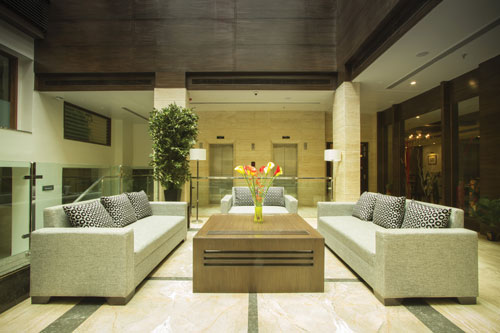
Brand name LEISURE INN
By StayWell Hospitality Group, Australia
Positioning 3.5 star
Competitive set Includes brands like Country Inns & Suites by Carlson
Rate US$48-US$80 in the Indian market
Why it is needed There is a growing middle class in the country that is looking for quality world-class budget accommodation. We believe that even corporate travellers would prefer to stay in a product like ours that offers all the services at a competitive price.
Our product is fresh and young with a focus on F&B. The existing hotels in this segment in India don’t concentrate on F&B. We will be having speciality restaurants in all of our Leisure Inn properties in India.
How it reinvents mid/upscale We emphasise on location, extensive facilities, well-appointed rooms and international standard services, which properties operating in this bracket don’t offer.
In our properties a guest will get facilities like 24-hour service, multiple restaurants, coffee shop and banquet space, which are generally expected in a four or five star property. Even though we have international expertise, we focus on local experience. So in our properties, local people are hired to run the hotel, as they understand the needs of that particular market.
How many in operation One in Jaipur, Rajasthan
Expansion plans The group is looking to open Leisure Inn properties in cities like Hyderabad, Greater Noida, Raipur, Chennai, New Delhi, Thane and Bengaluru in 2014.
Internationally, it is looking to come up with properties in China, Abu Dhabi, Qatar and the UK. The group has a target of more than 100 hotels within the next three years across Australia, South-east Asia, India, China and Europe.
Rohit Vig
Managing director, StayWell Hospitality, India

Brand name OASIA HOTELS & RESIDENCES
By Far East Hospitality, Singapore
Positioning 4.5 star
Competitive set In Singapore, Sheraton Towers and Royal Plaza on Scotts
Rate From S$200 (US$158)++
Why it is needed Oasia is our differentiated offer to business travellers who desire comfort without excess, aesthetics without ostentation, attention without pretension, relevance with elegance. We take into consideration business travellers’ focus on their work and ensure every component of our service and design complements their mission. Rooms at 25m2are modestly sized and designed to optimise comfort whether they choose to work or rest. The hotel’s unique club lounge that extends into a lap pool also provides another option for them to unwind after a hectic day.
How it reinvents mid/upscale We bring first-class experience to this segment but still maintain exceptionally reasonable prices for our guests. The high standards of guest experience that we provide are possible because we constantly reinvent the benchmarks that are typically associated with hotels under this category. We believe in adopting efficient designs and deployment of manpower, and this allows our guests to enjoy benefits that rival those of luxury hotels. This includes Oasia’s central location, comfortable rooms, well-equipped gym, unique club lounge and easy access to other facilities in a mall connected to the hotel.
How many in operation One in Singapore
Expansion plans Three planned
 Arthur Kiong
CEO,
Far East Hospitality Management, Singapore

Brand name Brand name OZO
By Onyx Hospitality Group, Thailand
Positioning 3.5 star
Competitive set Includes Ibis, Ramada Encore, Park Inn, Marriott Courtyard, Centra Hotels and Resorts
Rate The lead-in rate for Ozo Wesley Hong Kong is HK$1,300 (US$170). In Ozo Samui, launching early this year, it will be from 3,000 baht (US$91)
Why it is needed Guests are becoming more savvy and are looking for quality services, connectivity and comfort at a reasonable price. We recognise that this segment is becoming increasingly popular, especially as both business and leisure travellers are looking to reduce costs and maximise their value for money. Ozo is a refreshing alternative to other select service brands. There is no compromise on the quality of product, from the comfortable bed, to bathroom amenities, technology and connectivity.
How it reinvents mid/upscale Ozo aims to surprise guests with the room product and service culture. Staff are trained to offer useful and intuitive assistance on the local area; in fact, each has his own specialist subject. Ozo understands that today’s traveller is short on time, so the rooms are cleverly designed, making sure no time is wasted looking for switches or trying to figure out the shower. Even checking in is fast and paperless via a tablet.
How many in operation The first Ozo in Hong Kong opened in May 2013
Expansion plans Six under development, two due to open this quarter in Colombo and Koh Samui. They will be joined by Ozo hotels in Pattaya, Kandy, Galle and Penang soon after.
 Duncan Webb
Chief commercial officer,
Onyx Hospitality Group, Thailand

Brand name PARK INN BY RADISSON
By Carlson Rezidor Hotel Group, US
Positioning 3.5 star
Competitive set International midscale brands
Rate US$80-US$120
Why it is needed The emergence of the middle class in India, China, the Philippines and Indonesia, together with the increase in infrastructure investment, will spur not only domestic travel but an increase in travel within Asia-Pacific. India’s rapidly growing middle class is expected to have 583 million people by 2025. The Chinese government’s investment of RMB10.7 trillion (US$1.8 trillion) in infrastructure over the last five years will fuel domestic travel. This increase in travel will result in a growing requirement for midscale hotels in key locations, especially in tier II cities that can meet the demands of these new savvy travellers. These travellers seek consistently clean, friendly and affordable accommodation when they travel for business or leisure.
How it reinvents mid/upscale Designed for the Gen Y traveller, the Park Inn by Radisson is a friendly, fresh, vibrant and uncomplicated midscale brand with a 26-year track record of delivering a quality guest experience. Newly launched in Asia-Pacific, the new generation Park Inn by Radisson focuses on providing the modern essentials of a great hotel stay that resonates with today’s business and leisure travellers.
Park Inn by Radisson delivers a great night’s sleep in a flexible and connected room. The hotel’s lively, colourful design will appeal to Gen Y traveller while its ‘Adding Colours to Life’ philosophy enables the brand to deliver a quality experience that takes into account local cultures and preferences. Its restaurant and bar as well as meetings and leisure facilities are deliberately geared at the traveller of tomorrow. Guests enjoy free Internet access.
How many in operation 128 globally, four in Asia-Pacific
Expansion plans Globally there are 67 hotels in the pipeline, seven scheduled to open in Asia- Pacific.
 Simon Barlow
President Asia-Pacific,
Carlson Rezidor Hotel Group, Singapore

Brand name PENTAHOTELS
By Rosewood Hotel Group, Hong Kong
Positioning NA
Competitive set Aloft, Hotel Indigo, and Ace Hotel internationally
Rate In Hong Kong, over US$100; in Shanghai, US$75-US$100
Why it is needed Pentahotels guests are road warriors, local digital nomads and independent-minded travellers who are looking for affordable yet stylish accommodation, with add-ons like free Wi-Fi, plus a cool communal space where they can relax during downtime.
Pentahotels’ mix of fun with functionality, comfort with creativity and style with simplicity, has established its appeal in Europe and is set to take off in Asia among travellers with the same mind set and needs. It’s a ‘neighbourhood lifestyle’ approach, with a cool, hip vibe.
How it reinvents mid/upscale Pentahotels pushes the design envelope in a direction that’s not typically taken in Asia. The signature Pentalounge – an upbeat combination reception, lobby, bar and café – is a new ‘third place’, an extension of one’s lifestyle and a gathering place for both guests and neighbours. The hotel eliminates unnecessary frills in favour of fuss-free efficiency and uncomplicated comfort, while New York loft-style guestrooms, contemporary rustic décor, quirky, local cultural references, and fun and friendly service create a singular hospitality experience.
How many in operation 18 (three in Greater China – Hong Kong, Beijing, Shanghai; 11 in Germany, one in Austria, two in the UK and one in the Czech Republic
Expansion plans Pentahotels will open in urban centres and tourism hubs in China and key Asian gateways, in locations ranging from downtown areas, airport and railway complexes, to resort and beachfront locations. Projects already announced include three hotels in China (Shenyang, Guiyang and Luohe), four hotels in the UK and five hotels in Belgium, with a target of 80 Pentahotels in operation or under development by 2020.
 Sonia Cheng
CEO,
Rosewood Hotel Group, Hong Kong

Brand name SEDA
By Ayala Land Hotels and Resorts, Philippines
Positioning Just above four star
Competitive set Undisclosed
Rate Examples, Seda Fort Bonifacio Global City, from 6,000 pesos (US$135)+++; Seda Abreeza in Davao City, from 4,200 pesos +++
Why it is needed There is a tremendous opportunity in the country’s flourishing foreign and domestic tourism industry. Our Seda hotel line is well-positioned to capture more than its fair share across various regions with our superior product and strategic location within Ayala Land’s mixed developments.
How it reinvents mid/upscale Seda offers a new concept in hospitality: urban lifestyle hotel. It offers a fluid hospitality experience with modern accommodation, state-of-the-art technology and exceptional service – all supporting the excellent value-for-money proposition.
Seda is Filipino for ‘silk’, a distinct fabric that represents the brand’s commitment to providing a seamless accommodation experience.
As each Seda hotel is easily accessible to an Ayala mall and office spaces, it offers the convenience and security of a high-energy, central location, combined with warm, efficient service and global best practices. It is designed as an ideal environment where relaxation, play and work can mix.
With Ayala Land as developer and operator of the brand, Seda can respond to market needs faster and exercise more flexibility in giving its clients better value.
How many in operation Three, in Metro Manila, Cagayan de Oro City and Davao City. Seda Nuvali Laguna will open in the first quarter
Expansion plans In development are Seda Vertis, Quezon City and Seda Circuit, Makati, both targeted to open within the next two to three years. Further expansion is in the works as Seda hotels are intended to be an integral part of Ayala Land’s mixed-use development projects in key cities of the Philippines.
 Andrea Mastellone
Group general manager
Seda Hotels, Philippines
Additional reporting from Mimi Hudoyo, Rohit Kaul and Rosa Ocampo
This article was first published in TTG Asia, January 17, 2014 on page 11. To read more, please view our digital edition or click here to subscribe.