In ‘Travel companies all in a spin’, Raini Hamdi looked at how travel companies must make strategic realignments to ensure their business model is an enduring one. This week, a look at the single biggest area where hotel companies must pivot

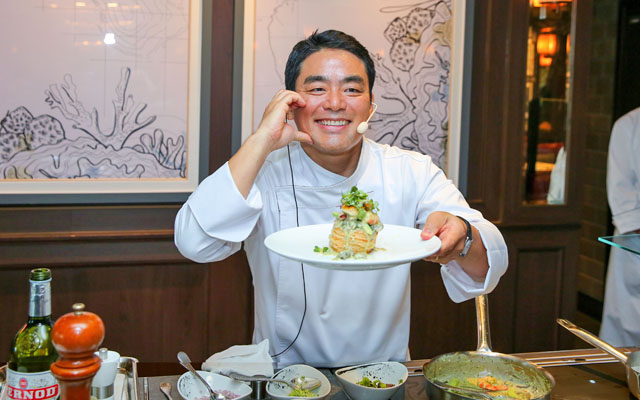
How to get more willing, able bodies and service with a smile such as demonstrated by Mandarin Oriental Bangkok staff above?
Hotels need to pivot the way they attract and retain talent, with every hotel CEO interviewed singling out human capital as their biggest challenge.
Staying the course or just “tweaking” will be disastrous. In all, travel & tourism in Asia will face a shortfall of eight million jobs in the next 10 years, with the crunch expected to be most acute at managerial levels (source: Singapore Tourism Board’s Asia Travel Leaders Summit 2012 summary). The supply of hotel managers in 2021, for instance, would not even be able to meet half the expected demand.
“My first concern is the fight for talent, particularly at the management level. The rapid growth of the industry makes talent search by hotel operators, both local and international, competitive. In turn, this puts a lot of pressure on training standards – in fact we could find ourselves with managers who have rushed through training to fill the gap which the industry’s expansion has created,” said Marc Steinmeyer, founder and president-director of Tauzia Hotel Management.
Added Chanin Donavanik, CEO, Dusit Thani International: “The growth of the Asian travel industry, including hotels, is raising demand for good people at all levels, and it will not be easy for companies to develop and retain them.”
Marc Dardenne, CEO, Patina Hotels & Resorts, said: “We are not the first career choice in young people’s minds due to the long hours, work on weekends and relatively low pay.” He said Patina is working with several local universities to launch a “mini” hospitality MBA or executive leadership programme designed to equip young professionals with the skills to become successful and better leaders.
A Strategic Human Capital Working Group, under the auspices of the Asia Travel Leaders Summit, an anchor event of TravelRave, has been formed. Chaired by Tauzia’s Steinmeyer, its objectives are to detect the needs and challenges of human capital in order to meet the long-term growth of Asia’s travel and tourism industry; to change the perception of human resource in Asia; and to raise the level of importance accorded to human capital, said Steinmeyer.
Pan Pacific Hotels Group (PPHG)’s president and CEO, Patrick Imbardelli, believes the industry as a whole can do a lot more in working together to sell a positive image of jobs and roles in hospitality.
“As an industry we collaborate on many fronts; we work with the tourism authority, convention bureau, schools, but we are fragmented on addressing the talent crunch – even worse we rob from each other. We do not go out together to enhance the perception of the industry, while other industries have addressed their talent shortage by showcasing merits/benefits in talent campaigns – just look at the teaching profession, airforce, navy, police, wealth management, etc, in Singapore.
“Therefore we need to be committed in raising the profile of hospitality jobs in a concerted way, perhaps with the government taking the lead, to get high commitment and high participation.”
A shortage of talent also inevitably comes with a pressing need to raise productivity. Associate dean of Nanyang Executive Education, Nanyang Technological University Singapore, Nilanjan Sen, said: “As the global hospitality climate evolves, there will be more companies which are interested in developing their workforce and adopting good HR practices. Hospitality organisations will need to have strong HR strategies to encourage professionals to work towards a long-term career in the industry.
“Process innovation also needs to happen in order to increase productivity. The higher productivity will justify higher compensations, which in turn will attract more professionals. Hotels would also need to anticipate consumers’ needs correctly and manage their expectation. There is a lot of room for process improvements and effectively managing a diverse workforce in Asian markets.”
Examples of hotel groups that are pivoting are starting to emerge. Imbardelli, for example, said PPHG’s new hotel in Singapore, Parkroyal on Pickering, was designed “for efficiency”, with both productivity and guest needs in mind.
“Instead of the traditional ‘here’s the all-day dining, here’s the speciality restaurant, that’s the bar there’, there is just one large F&B area and every staff can do everything from hosting the guest to serving, clearing tables, serving drinks, cashiering, etc. We just did more training and defined the profile of the staff we wanted, i.e. open-minded and energetic.
“What this does is shorten the learning and make the climb-up less laborious than before. Traditionally, we kind of tell the employee: ‘Joe, you are going to do this for six months, get it right, then we evaluate, next we want you to do this. This is not what Gen Yers want.”
More open
There is also more open dialogue on career paths between staff and the hotel. As well, there is more open-mindedness and “sensitivity” to Gen Yers’ desire to experience different things.
Imbardelli said: “I remember working in a hotel and someone in the reception wanted to cross the lobby to F&B. Wow, that was a really big thing – you had to go see your superior, manager, personnel,” Imbardelli recalled.
“Baby boomers wait for their boss to come to them and say you’re doing a good job, so this is where you’ll be next. Gen Yers won’t wait, they come to you and ask: ‘What’s next? I’ve been doing Front Office for seven months. After this, I want to go to F&B. I do this for four months, then maybe I’ll go and work in a resort’.
“He could well end up as hotel owner of the future.”
Banyan Tree Hotels and Resorts’ CEO, Abid Butt, who was with Host Hotels US before joining Banyan Tree as CEO last year, observed the industry in Asia would be changing its hierarchies a lot more now.
Said Butt: “Markets like North America or Europe have had to consolidate the hierarchies and achieve greater productivity for no other reason than necessity: labour cost is a huge issue. They’ve had no choice but to start earlier and are ahead in multi-skilling and broad-banded jobs.
“We have to catch up. It is going to happen because that’s what the Gen Yers want and it also makes us more productive.
“From a guest’s perspective, it’s fantastic, he deals only with one person who practically does everything for him – checks him in, takes him to the room, makes restaurant reservations, etc.
“Our resort hosts already do this. In the (newly opened) Banyan Tree Shanghai On The Bund, we have taken that to the next level, where the role is so cross-functional a guest truly will be with just one individual from pre-arrival to post-departure.”

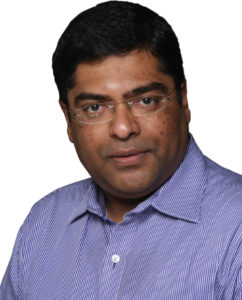
Clockwise from left: Chanin Donavanik, Nilanjen Sen, Patrick Imbardelli, Marc Dardenne and Marc Steinmeyer – all singling out human capital as the biggest challenge and calling for a concerted campaign to change the industry’s image, embark on process innovation and increase productivity
‘There is leadership in Asia’s travel & tourism’
Asian-based CEOs interviewed brushed off notions that a faster-moving world of constant changes, which forces them to fight current battles, also makes them inward-looking in order to secure company survival and profitability. This might cause them to be apathetic about contributing to the betterment of Asia’s travel & tourism, whose meteoric growth has already led to major problems such as manpower shortage (see main article) and sustainability.
Looming fires to watch out for, global strategist and best-selling author Parag Khanna told TTG Asia, are: “Economic volatility, which might become an issue as the US Fed tapering comes into effect next year. Weak currencies may be good for exports, but will impact investment and spending.
“Human capital is a major issue. The training capacity and quality for the hospitality sector needs to be greatly improved.
“Technology is generally aiding the industry because of transparency and competition, which is good for quality. However, there is definitely a looming challenge with price as technology takes on ever more functions.”
Travel and hospitality leaders interviewed said it is the CEO’s role to rise to current challenges but also to contribute to the leadership of the industry.
Said Chanin Donavanik, CEO, Dusit Thani International: “Every industry has its challenges and every company leader has to contend with multiple priorities competing for attention simultaneously. It’s the leader’s job to think creatively and manage the challenges both inside and outside the organisation as best as possible, and to have a capable and experienced team in place in order to help achieve this.
“I believe that Asian CEOs can contribute to the development of the travel and tourism industry by being even more outspoken and taking on even more visible leadership roles. With Asia being the fastest-growing region, and with many Asian CEOs actually being owners or company founders, they have more confidence today than ever before, with more breadth and depth in their talent and experience, which can only serve the industry’s development going forward.”
Patrick Imbardelli, president/CEO of Pan Pacific Hotels Group, agreed: “There are always going to be current fires but the reality is that as a business leader you need to balance your efforts on today, learning from yesterday, planning for tomorrow and executing for tomorrow. As business goes through different cycles, the mix changes, but unless there is a major global issue that causes you to absolutely focus on today, you need to always keep an eye on tomorrow because that’s where shareholders, customers and internal stakeholders expect you to build towards to grow and prosper.
“CEOs need to have a macro view of not just their specific sector in their specific geography but in areas of building talent, sustainable development and growing the business in every aspect of tourism. The work we did with Parkroyal on Pickering, for example, specifically in sustainability and green design, was a trial. What we learnt from it will continue to be rolled out.”
‘Good leaders spot trends, use technology’
Zubin Karkaria, CEO of VFS Global Group, a division of Kuoni Travel Holding, said leaders today need to be trend spotters, have clarity of vision and drive their organisations towards that vision. Karkaria himself created the outsourced visa services industry in 2011. Today, more than 50 countries, including those with high volumes of visas issued, outsource the whole visa application process – not just an additional step in the process – to companies such as VFS Global, which has a 50 per cent share of the market.
But asked if his business model is being challenged as governments – hankering for tourist dollars and also facing mounting lobby by the industry to ease or eliminate visas entirely – begin to relax rules or simplify the application process, he said: “We do not anticipate a significant reduction in the number of visas due to the easing of visa regulations, at least in the short to medium term. The reduction resulting from visa waiver agreements implemented by some countries will be compensated by organic growth in the market with more countries looking to outsource visa application services.
“For the medium to long term there are several associated opportunities which are likely to come up. Biometrics and identity management, passport services, citizen services are some of the most promising opportunities we are working on. Overall outlook is quite positive.”
Patrick Imbardelli, president/CEO of Pan Pacific Hotels Group, also does not feel the hotel business model is being challenged, other than by the advent of OTAs.
“For us, it is more about harnessing the technology to enhance guest satisfaction, consumer engagement and operational efficiency. In the hospitality industry we must stay focused on the outcome because the worst thing that can happen is a technological solution running around trying to find a problem. On a related note, the advent of OTAs may have forced us to invest more in technology on our proprietary websites to attract and engage our customers more effectively on our own platforms,” he said.
VFS’ Karkaria summed up: “Leaders need to adopt technology and changes, not fight it.”
This article was first published in TTG Asia, November 29 – December 12, 2013 issue, on page 4. To read more, please view our digital edition or click here to subscribe.