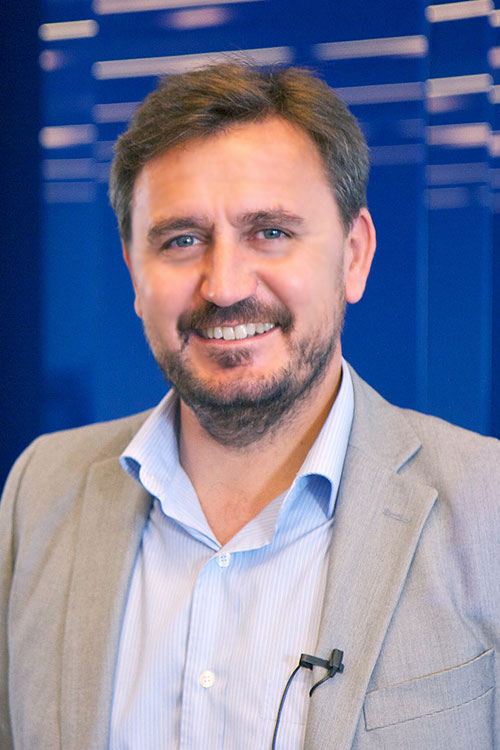
From a three-man operation in Vietnam to a 700-strong Asia-focused DMC today, Exotissimo Travel Group is now making inroads into East Asia. Hamish Keith, COO and co-owner of Exotissimo tells Xinyi Liang-Pholsena why working culture is everything
 Exotissimo just celebrated its 20th anniversary this year, a long way from its three-person outfit in Vietnam in 1993. How different is the company from its early days?
Well, basically everything has changed. We have close to 700 staff today and more than 100,000 clients a year. So the changes, from an owner’s perspective, are you’re no longer hands-on anymore; you have to have other hands. But in many ways, we try to keep the small-company mentality and spirit as much as possible by providing hands-on, high service levels and contact with the customers – that has always been part of us.
Is authenticity still possible in the current travel landscape?
It’s more challenging but more important than ever. That’s still our core purpose – to provide genuinely unique experiences in Asia and to deliver travel experiences that clients cannot find online. We’re still in a unique position to be able to do that and we still manage to achieve that on a daily basis.
We challenge our staff to always put something unique into every proposal, and we challenge our product managers to put together experiences that you will not be able to find somewhere else.
Do you see more competition from OTAs and niche specialists?
In terms of products, we see a lot of competition from smaller players who have some very creative ideas, but it’s more difficult for them to reach the markets. We are in a unique position in that we are able to generate products that are as good, if not better, than smaller players.
We’ve got two big advantages. The first is scale, so we can deliver the product at a better price to our clients. The second is our market position, so we can get to the client faster and we can deliver the right product at the right place directly to the market quicker than anyone else. If small players can’t deliver at the right price and directly contact the key players in the marketplace then they are not going to get much traction for their products.
At the top end, the discerning travellers are not booking experiences online. For people who fly longhaul and travel across four or five different destinations, they are not going to deal (with OTAs) or even an Asian operator. They are going to deal with a travel company from their own market that they can trust. These companies need to get the right products in the destinations, and that’s where we come in and that’s what we do – we have the right connections. We see the place of the DMC as still very, very important.
Whenever there is complexity in the (travel planning) process, the requirement for someone to put it together is going to be higher. And when that complexity is in the higher price bracket, you are talking to people who don’t have much time and need somebody to put it together.
What other challenges are there?
The market wants everything faster, cheaper and there’s more competition, so it gets more and more difficult to be able to demonstrate value, (offer) good (products) and get people to pay for it. Someone else is going to copy (the idea) and do it cheaper, but it has always been the way, and that keeps us moving.
If you don’t deliver a working culture that’s able to manage around that, you’re not going to make it. It’s not easy to build that culture, and the great thing about Exotissimo is we’ve built a very strong culture based around people, values and with a genuine desire to do things properly. It takes a long time to do that, and that you can’t copy. You can copy our products, website and buy our people, but the culture we’ve developed – you can’t copy that; it’s impossible.
And that’s what keeps us successful ultimately, which enables us to move fast enough and have the creativity for ideas, find new markets and set up new destinations. We keep trying to move forward.
China and Japan were recently added to Exotissimo’s portfolio. How different is operating in these East Asian countries as compared with South-east Asia?
Operationally, it’s the same. In many ways, they are not so different. The clients are the same, the products and destinations are obviously different, but the way we approach the destination – and all destinations – is pretty much the same.
We start with the products, making sure we have the best proposition available. We have a very good team in China and we believe that we can see (the country) in different, more creative ways. We believe we can bring something fresh and new to China as a destination. So we start with a product then match it with our clients and eventually build the business. We are in a good position in that we have a very strong, loyal client base, so when we open a new destination, we can immediately introduce them to the new destination.
China is in some ways a more mainstream destination, more of a coach tour destination, so we’re trying to find ways to make it a more tailor-made travel destination to see it in new ways. China has changed so much and is changing so fast. The way you’d look at China would be more similar to a big country like America – very good roads, very good trains, easy to get around, etc – so you can now put together the products by train, road and even self-drive.
So in some ways, China is a much easier destination than South-east Asia, but it’s more daunting for some people because of language issues, misconceptions and misunderstandings. If you put it together right, you can do anything in China. You can adapt a package to appeal to somebody who usually goes to the US; you can package it for somebody who is looking for something very cultural.
Now that you’ve broken ground in China, do you intend to tap the burgeoning Chinese outbound market?
Sure, inevitably it will be important for us to be working in that market. But at the moment, no, we don’t have a China department in place. We’re still working with English-speaking Chinese clients, which are already many. We’re focused and working on the top end of the MICE market.
We have small specialist (travel consultants) in Beijing who work with us, but mainly with the expats or high-end Chinese clients, and we already see enough opportunities in that space. The Chinese are getting more sophisticated, travelling to more places, and they will continue to demand new destinations and bring new waves of travel.
Which Exotissimo destination do you see the most potential in?
China has very huge potential because we are very small in China and there’s enormous growth for us. It’s a big opportunity, big investment and big commitment. It is a destination you can see in many different ways.
We see the opportunity to open up the west of China, for example, to take people off Beijing, the Great Wall, Shanghai, Yangtze River cruise, Xi’an…We’re taking people out to Chengdu and seeing Chengdu as more than pandas; it’s a culturally vibrant city in itself. And onto the west of China – we think those are areas of huge interest.
How about closer to home, say Myanmar?
Myanmar’s tourism has exploded in the last two years. It is where everybody wants to go at the moment, so now we have to wait for the capacity to catch up a little bit before being able to deal with the demand.
But there’s enormous potential in Myanmar as we haven’t even started to see any development in the beaches. So once Myanmar starts to build some infrastructure, huge parts of Myanmar are going to become accessible for travellers. At the moment we see 90-95 per cent of all visitors going to the main four or five destinations but nobody is going off the beaten path, to the further states or to the south.
Inevitably as everything settles down and infrastructure like hotels starts to come, I’m sure in 10 years’ time Myanmar will be right up there with Thailand as a destination because it has got all the attractions.
Where do you foresee Thailand’s tourism development going?
Thailand is interesting. When we started in Thailand, a lot of clients said to us: “You’ve done very well in Indochina but if you want to be able to do that in Thailand, it’s a different destination. Thailand’s a mainstream destination; it’s beach, not cultural and touring.”
Our business in Thailand has always been cultural and touring, and that’s what we’ve been doing very successfully – to reintroduce Thailand as a touring, cultural and sophisticated destination. If you know Thailand, it has a lot more to offer – wonderful culture, mountains, scenery beyond the beaches – and we’ve been able to continuously put that into the market.
People who have previously not sold Thailand very well are selling Thailand much, much better because we’ve helped in some ways with the destination (and in part due to) good hotels coming online upcountry. Places like Chiang Mai and Chiang Rai have very good hotels, so we’ve been able to utilise that. But of course we weren’t helped very much by the continued internal problems in Thailand.
We’re going to have a record year in Thailand. Last year was a record, but this year will be much better, assuming we have no problems. We’ve been finding ways to market Thailand beyond the beaches, not as a commoditised product but a complex touring destination. And that’s what we’ll do in China and any new destinations we open up in.
How is overall business doing?
At the moment we are growing year-on-year at over 30 per cent, and we forecast to achieve (this growth) again this year.
France is still our biggest source market but the UK now is very close. As a region, Europe is still our top market.
Is the luxury segment picking up again?
The luxury segment is making a good comeback; the North American market is going very well. We also recently opened a sales office in Latin America with a full-time staff in Rio de Janeiro covering Brazil, Argentina, Mexico, Chile, Peru and Columbia. We’re seeing good growth from those markets – it’s a very interesting area for us.
How do you see Exotissimo growing in the next five years?
We would continue doing what we’re doing; maybe we’ll have more destinations. We started in Vietnam and now we have eight destinations. In the last four years, we added Indonesia, Japan and China, so we’ll be seeing some new ones coming in the next five years for sure, but we can’t say which ones (chuckles). There won’t be any openings this year.
What about next year?
Maybe. Being in China and Japan, we’re already beyond South-east Asia, so we’re seeing ourselves as Asia specialists. And Asia is a big continent.
We see ourselves as an Asia DMC; we’re still passionate and excited about Asia, and there’s huge room to grow in Asia. And of course now we start to see more intra-Asia travel with the Chinese markets and Asian travellers. The Asian travel market is becoming more interested in the type of products we offer.
You’ve been in the travel industry for many years. What keeps you motivated?
I still love and enjoy every part of the business. I’m still passionate about destinations and finding new places to visit. It’s hugely rewarding opening up new destinations over the last three years. The last trip to China was an eye-opener for me. I was able to find a whole new country that is fascinating, interesting and needed to be travelled in, so now I’m planning my next trip to Yunnan. I want to cycle in Yunnan, which I haven’t done and have been wanting to do for a few years.
As an avid cyclist, how similar is biking to running a DMC?
There are many similarities – you get exactly what you put in. If you put in the work, you will get the rewards.
I cycle because I love it. I love being out in the countryside, so for me it’s the best way to experience yourself, nature and the country you’re in. And working in a DMC, you get to do that as well. You’re able to experience more than just sitting in an office; you’re able to experience the country and the culture, which becomes part of what you’re doing, your everyday business experience. There’s a richness to both of those things.