

TTG Asia
Asia/Singapore Saturday, 27th December 2025
Page 2338

Jordan sets eyes on South-east Asia, refutes safety concerns

0

AGAINST the backdrop of ongoing political unrest in the Middle East, Jordan is looking to stand out as a “100-per-cent safe destination”.

Present for the first time at IT&CMA, Rasha Hamshawi, business tourism officer, Jordan Tourism Board (JTB), said: “We want people to look at just Jordan and not let what is happening in the other (Middle Eastern) countries affect their judgement.

“It will be a pity if they miss out on visiting the fascinating city, which boasts the famous Dead Sea and Petra, one of the seven wonders of the world.”

Hamshawi said the Hilton-managed King Hussein Bin Talal Convention Centre, which can seat 2,000 delegates, is one of the pulling factors for MICE groups as it can host meetings on the Dead Sea with its shore location.

While Hamshawi was unable to provide figures on MICE visitor arrivals, she said it had “definitely dropped” in recent years hence the new marketing focus on the Asian market.

According to Moawia Qtaish, product manager of Jordan-based Bridge Travel, inbound arrivals recorded a dramatic year-on-year 80 per cent slump as a result of the political unrest in the Middle East.

Qtaish said: “We want people to know that Jordan is still friends with everybody and it is important for travellers to know that Jordan is perfectly safe.

“We decided to reach out to Asia as part of our strategy to attract new markets, and meetings and incentives are a good place to start with because we can offer exactly what Asian event planners need.

Being a compact environment, Jordan is useful for business travellers because they can work and play easily in the same compound. We have well-established five-star hotels that are situated next to unbeatable historical sights.”

He said his company is targeting Singapore, Malaysia, Thailand and India in particular, as these markets are the sources of well-heeled, experienced travellers.

Read more in the IT&CMA and CTW Asia-Pacific Show Daily

Myanmar faces challenges in attracting incentives

0

LONGHAUL incentive buyers are becoming more interested in taking groups to Myanmar, especially with clients who want new experiences in the region, but issues such as access, visas and hotel capacity remain significant barriers for some.

Joost de Meyer, CEO of US-based First Incentive Travel, told TTG Asia e-Daily: “I definitely want to organise an incentive to Myanmar – not next year, but certainly in the next few years. There is a lot of buzz about this country in the US because it is not as overrun (by tourists) as other destinations in that (region).”

Beyond easing the burden of travel for visitors, the government should also organise familiarisation trips and join associations such as SITE and MPI, he said.

The previously closeted South-east Asian nation has opened up significantly in the past two years. Arrivals surged from around 800,000 in 2011 to more than one million last year, with the figure set to rise by 50 per cent by year-end.

This boom in arrivals was in part helped by improved air access, said Mark De Belie, owner of Act-Wise in Belgium, who took his first two incentive groups to Myanmar last year.

“Previously we had to go through three flights from Belgium to reach Myanmar, but today we can reach Myanmar with two flights,” he said. “However, the destination is still going through transformation so it may not be ready for large groups. If we need 2,000 rooms, Myanmar does not have enough capacity.”

Hotels are also struggling to cope with the influx of tourists, making the arrangement of incentives more difficult than in the past, said Eric Moris, managing director of Belgium-based Business Pass, who has been taking groups to the country for nine years.

“It’s becoming more difficult,” he said. “The country is more open but…things are developing (and) hotels are not following (the positive growth trend); they are not delivering.”

Meanwhile, Ashwani Gupta, managing partner of Dove Travels in India, said Myanmar will not attract Indian incentive groups until it simplifies the visa application process and does more to actively promote the destination within the trade.

Additional reporting by Lee Pei Qi

Read more in the IT&CMA and CTW Asia-Pacific Show Daily
New Zealand ups Asian pursuit at IT&CMA debut

0

HAVING previously targeted its attention on the leisure sector, Tourism New Zealand is rolling out dedicated efforts to woo more MICE business from South-east Asia.

A new three-year marketing plan was unveiled in June, with a worldwide budget of NZ$34 million (US$28.2 million) earmarked for the next four years, representing close to an 80 per cent increase in funds from a low base, according to Mischa Mannix-Opie, regional manager South & South East Asia of Tourism New Zealand, which is participating in IT&CMA for the first time this year.

In the pipeline are stronger marketing efforts for Indonesia and India, which have been identified as emerging markets for the destination.

“India will see a quadrupling of budget and increase of human resources (from two to four staff) while Indonesia – which used to be managed out of Singapore – will see a new office with three staff opening in Jakarta later this month,” commented Mannix-Opie.

“We will look at conventions and incentives from Singapore, and incentives from Malaysia, Thailand and India, where we had been more reactive than proactively going out with a plan to attract business partners and develop a quality base of leads,” she added.

At the same time, the NTO is keen to attract more business events from Asia-Pacific to New Zealand; the coming months will see the addition of a new role in Singapore and two roles in China to cultivate New Zealand’s visibility in the regional corporate world, with ongoing support from the regional offices.

Earlier this month, Tourism New Zealand launched a business events-specific campaign, 100% Pure New Zealand – Beyond Convention, alongside a newly revamped website (www.businessevents.newzealand.com) to showcase the country’s strengths as an incentive as well as conference destination.

Read more in the IT&CMA and CTW Asia-Pacific Show Daily

Abacus highlights five major corporate travel trends

0

ABACUS today unveiled the results of a new study detailing trends in the business travel scene, namely: tighter corporate travel policies, growing preference for LCCs, polarised CBT adoption rates, increasing use of mobile devices for travel and rising concern of secondary expenses.

Abacus’ Five Major Trends in Corporate Travel Practices in Asia Pacific surveyed a representative cross-section of corporate travel organisations across the region on their business practices.

According to the study, companies are clamping down on travel spend with 97 per cent of companies increasing corporate travel policy enforcement and 73 per cent reducing the number of business trips. Cost cutting is also achieved through policies that force travellers to stay in lower star-level lodging (47 per cent) or fly economy rather than business class (60 per cent).

In a further step, companies are opting to fly their travellers on LCCs (TTG Asia e-Daily, October 1, 2013). Some 77 per cent of companies polled said the lowest fare rates were the biggest draw in using LCCs, followed by flight times (40 per cent) and data capture (40 per cent).

While corporate booking tools have been widely implemented in companies at 73 per cent, adoption rates show users were divided into two distinct groups – those who self-book and those who delegate travel management.

Abacus International CEO, Robert Bailey, commented: “(Agencies) may in some cases want to reposition corporate booking tools as serving more the personal assistants (who handle travel arrangements), with mobile apps appealing to the travellers. Adoption is never uniform.”

Furthermore, despite 83 per cent of TMCs agreeing that smartphones would have a moderate to significant impact on their business, only 33 per cent have a mobile web or native application for mobile devices.

Lastly, secondary expenses that account for between 10 and 14 per cent of trip expenses on average in the Asia-Pacific are a growing concern for companies. Presently 30 per cent of travel agencies now provide electronic expense management systems to corporate clients to capture payments.

GLH’s luxury brand Clermont to establish Singapore, KL properties

0

THE largest owner-operator hotel company in London, GLH, yesterday debuted new luxury hotel and private residences brand Clermont, which will see hotels opening in London, Singapore and Kuala Lumpur.

Clermont London will open next year following the rebranding of The Royal Horseguards, a five-star property situated on the north bank of the River Thames between Trafalgar Square and the Houses of Parliament.

Clermont Singapore will be located within the 290m Tanjong Pagar Centre, a mixed-use development, and open in 2016. There will also be a residential component offering 200 luxury apartments under the Clermont Residence brand as well as four private amenity decks for residents’ exclusive use.

In Malaysia, Clermont Kuala Lumpur will take its place within Damansara City, part of a mixed development project that also encompasses two office towers, luxury residential towers and a lifestyle mall. It is scheduled to open in 2016.

Like its Singapore counterpart, Clermont will offer 370 residential apartments in Kuala Lumpur. Residents can enjoy an Olympic-length pool, aqua gymnasium, function rooms and private dining rooms.

Said Mike DeNoma, CEO of GLH: “Clermont is a vibrant entrant to the global luxury hotel market and we are thrilled to announce today iconic new hotels and residences in a number of globally significant locations.

“The GLH ambition is to open hotels in all of the top 30 global cities, and today’s announcement reinforces the scale of this ambition.”

London-based GLH is a global hotel subsidiary of Singapore-listed GuocoLeisure Group.

Maldivian tourism threatened by imminent protests

0

TOURISM and hospitality workers in the Maldives have been urged to protest against a Supreme Court ruling, a move that could disrupt operations at resorts. Several countries such as the UK, Canada and Australia have also issued travel warnings for the islands.

Mauroof Zakir, secretary general of the Tourism Employees Association of Maldives (TEAM), told TTG Asia e-Daily that the association had asked its members to protest against the court order to indefinitely suspend the second round of presidential polls.

Zakir said: “The workers will only protest during off-duty hours and not disrupt operations.”

However, he conceded that “if the situation worsens, the protests could (eventually) affect resorts”. The Maldives’ tourism industry is made up of 25,000 workers, half of which are foreigners.

Calls on tourism workers to strike were first fielded by main opposition candidate and former president, Mohamed Nasheed, which has caused concern among the present government.

Minister of tourism, arts and culture, Ahmed Adeeb, said: “(The protests) will affect the entire industry. Politics should not be brought into tourism. Tourism workers, I believe, won’t abide by the call but if they do there will be a big backlash (in the industry).”

But United Nations World Tourism Organization secretary-general, Taleb Rifai, said travellers across the world today are acutely aware of political, social and economic issues and that they are part of life.

He was present at the World Tourism Day celebration held at Kurumba Maldives resort last Friday, and said the global tourism body had “insisted on having the event here at a time when the people of the Maldives are deciding their future”.

Japan a hot draw for Thai, Malaysian incentives

0

Japan’s recent visa waiver for Thai and Malaysian nationals has raised the country’s allure as an incentive destination, according to planners in Thailand and Malaysia.

Japan has risen to become the “best-selling incentive destination” this year at Go Holiday Tour Thailand, whose bookings from January to October have reached 1,600 pax, compared with 1,000 for the same period last year, said sales executive, Adtaporn Theppreechasakul.

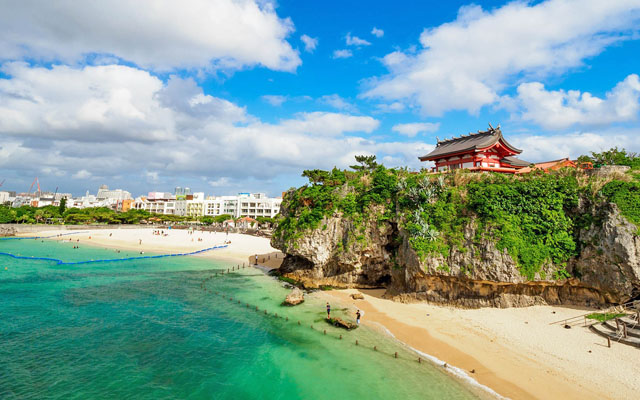
Likewise, another Thai outbound operator, Bonus Travel, has recorded a “doubling” of incentives to Japan so far this year, according to its sales manager, Arthit Kiatbenchaphong, who added that footprints are spreading beyond Tokyo and Nagoya, with Sapporo, Okinawa and Fukuoka gaining popularity.

Over in Malaysia, the depreciation of the yen against the ringgit has also helped to boost outbound incentives to Japan.

Desmond Lee, group managing director of Malaysia’s Apple Vacations & Conventions, said the company has been seeing larger incentive bookings for Japan and bigger budgets for land components.

BMC Travel Malaysia’s managing director, Billy Leong, expects Japan-bound incentives to grow 50 per cent year-on-year for 2H2013, mainly to Tokyo and Osaka.

Many corporate clients are also shifting from Europe to Japan for this last quarter as the euro strengthened against the ringgit by 12 per cent over a four-month period from May, said Leong.

Cooper Huang, chief executive director of Malaysian Harmony Tours & Travel, said his company has been receiving enquiries mainly for Tokyo and Osaka for 2H2014, although Hokkaido is gaining popularity.

Meanwhile, the strong travel demand from Thailand to Japan is outpacing air capacity between the two countries.

Always Vacation Thailand’s Jiraporn Jearsilanuwat senior executive for sales and marketing urges carriers to raise flight frequencies and launch new destinations in Japan to spread footfalls beyond Tokyo and Osaka.

Arthit said: “We are advising our MICE clients to travel during non-peak periods (to avoid competing with FIT and group tours).”

Read more in the IT&CMA and CTW Asia-Pacific Show Daily

Additional reporting by S Puvaneswary

Airfares skyrocket for Indian travellers

0

BOTH international and domestic airfares have spiked over the last three weeks due to rising fuel costs and the depreciation of the rupee.

Sharat Dhall, president of Yatra.com, commented: “There are multiple factors at play in this significant increase in airfares, ranging 15-25 per cent, across sectors.

“The effect of the depreciating rupee, the hike in aviation turbine fuel prices and significant pre-bookings via promotions have all led to a sudden rise in airfares this time.”

Prices on popular routes such as Bangkok, Singapore, Dubai and Colombo have seen a marked increase of 40 per cent on average for Indian carriers serving these destinations.

Manoj Saraf, managing director of Gainwell Travel & Leisure, commented: “Coupled with the low exchange value of the Indian rupee, which renders all prices quoted in US dollars more expensive, an average hike of 18 per cent in overseas sector fares was seen in the last six weeks.

“Thus the overall (financial) burden of an overseas trip has become unbearable for many travellers and forced them to either cancel or shorten the duration of their trips.”

Expensive fares to foreign destinations have triggered a spike in domestic fares as well, especially ahead of the high season before the Deepavali holidays. According to NDTV Profit reports, IndiGo, SpiceJet and Jet Airways have raised fares by about 25 per cent, following a 6.9 per cent rise fuel prices.

High fares have obliterated the distinction between full-service carriers and LCCs, with fares for the Kolkata-Mumbai sector priced similarly for IndiGo and Jet Airways.

Airlines are also allowing drastic price differences between tickets bought one to six days and seven to 13 days in advance.

Anil Punjabi, chairman-east, Travel Agents Federation of India, remarked: “The 30-day advance fares should have been kept intact as that would have avoided the sudden fall in flight bookings. Airfares need to be rationally priced for long-term sustainability.”

More corporates flying LCCs

0

Companies’ continued quest to keep travel costs down has resulted in a greater adoption of budget flights among business travellers.

A Carlson Wagonlit Travel (CWT) report this year indicated that business travellers would increasingly use LCCs in 2013, with 34 per cent of travel managers in Asia-Pacific looking to budget airlines to optimise savings.

Nandan Bhatia, head of Britannia Industries India, said: “According to our company’s policy, we have to book (seats with) the lowest possible fare, so we have to look at LCCs.”

Abhimanya Chettri, manager of Robert Bosch Engineering and Business Solutions India, said: “We have been using LCCs because their prices can be 30 to 40 per cent lower (than full-service airlines).”

Fred Seow, vice president for marketing of Asiatravel, said: “Sometimes the total difference in fares can be quite significant and LCCs today also ply the same routes as legacy carriers. Meetings and incentives today are held by organisations of all sizes, types and budgets.”

Nonetheless, the CWT report highlighted that companies need to consider numerous factors, such as less frequent flight schedules, flights operating from secondary airports, as well as the costs and risks related to bookings outside of GDSs.

Akbar A Shareef, managing director and chief executive of Rakaposhui Tours Pakistan, cited seat availability as his reason for not using LCCs, while Sunil Shekhar Gupta, regional procurement manager of Freescale Semiconductor India, said his company would not use LCCs to fly its VIPs as it does not “look good”.

LCCs’ availability largely outside the GDS platforms is not an issue for Chettri: “We will usually book directly with LCCs, and since we are buying in bulk with them, there are terms and conditions we can negotiate as well.”

An Abacus survey this year has revealed similar findings, with almost three-quarters of respondents seeing more clients adopt budget airlines to tighten corporate travel spend, mostly due to policies governing the choice of lowest fare (77 per cent), but also for alternative flight times (40 per cent) and data capture (40 per cent).

To ease the booking process for clients, Abacus is working with LCCs to make all their fares available on its platform.

Meanwhile, AirAsia will be launching a travel programme for business travellers later this week, according to its spokesperson.

Read more in the IT&CMA and CTW Asia-Pacific Show Daily

AirAsia X spurs more demand for Sri Lanka

0

OUTBOUND tour operators from Malaysia are predicting stronger meeting and incentive demand for Sri Lanka following AirAsia X’s commencement of four-weekly services between Kuala Lumpur and Colombo on September 28 (TTG Asia e-Daily, September 25, 2013).

With AirAsia X’s new service, the Kuala Lumpur-Colombo sector now has an additional 1,508 seats weekly. The route is also serviced by Malaysia Airlines’ 10-weekly flights and SriLankan Airlines’ 14-weekly services.

Grandlotus Travel Agencies managing director, K Thangavelu, said AirAsia X’s affordable airfares, as compared to the rates offered by the other full-service carriers serving the route, would make it easier for his company to promote Sri Lanka to meeting and incentive planners.

He believes that the lower fares may also encourage companies to send larger groups for business events, which now see an average of 50 delegates in attendance.

Small and medium-sized enterprises with smaller event budgets and seeking medium-haul destinations for incentives will also be attracted by AirAsia X’s Colombo services, according to RA Jits Travel & Tours managing director, Harminderjit Singh.

He added that Sri Lanka’s supply of “good beachfront hotels and varied attractions from nature activities to shopping and hill resorts” would provide the additional impetus for Malaysian clients to choose the destination.

Besides better air access, business event planners would also benefit from “the slew of five- and four-star hotels that are being constructed in Colombo and other tourist destinations including Negombo, Batticaloa, Trincomalee and Nuwara Eliya over the next few years”, opined Johnson Francis, executive director of Oscar Holidays.

Adam Kamal, managing director of Tina Travel & Agencies, said Sri Lanka’s favourable visa policy, which offers visa-free entry to Malaysians who stay less than two nights, provides yet another advantage for his clients who are looking to host brief meetings overseas.

Sri Lanka might emerge a more attractive option than India as a result, as travel visas are required by the latter, Kamal added.



