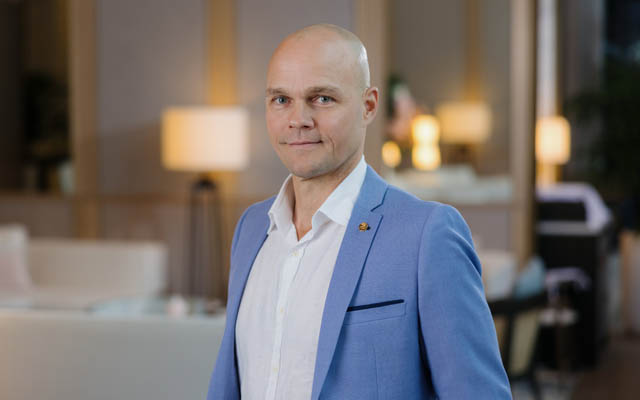
The Langham, Gold Coast has appointed Arpad Romandy as general manager.
Romandy brings with him over 30 years of extensive hospitality experience, where his career includes roles with IHG (InterContinental Hotels Group) across England, Spain, and the US, as well as Shangri-La Sydney. He was most recently general manager of InterContinental Hayman Island Resort.
In his new role, Romandy will oversee all facets of hotel operations, including finance, sales and marketing, and human resources. He will report to Jeffrey van Vorsselen, regional vice president, operations.
Collinson International has appointed Marco Pera as chief technology and data officer and Fabio De Grazia as chief product officer.
Pera transitioned from his role as senior vice president for data, platforms, and technology, one he has held since joining Collinson International in July 2023. A seasoned technology and data executive with over twenty-four years of experience, he will manage and evolve the company’s platform ecosystem and advance how data and intelligence are used.
From left: Marco Pera and Fabio De Grazia
De Grazia joins after eight years at Visa where he was vice president and head of product and solutions for the MENA region, spearheading the modernisation of product offerings, achieving significant revenue growth and operational efficiency. In his new role, De Grazia will define and create experiences which will help sculpt the future travel experience.
In celebration of the 50th anniversary of Malaysia-China diplomatic relations, both countries have introduced visa-free travel policies for their citizens.
Malaysians enjoy visa-free entry to China until the end of 2025, while Chinese travellers to Malaysia benefit similarly until the end of 2026.
Mutual visa-free travel policies between Malaysia and China have seen more Malaysian travellers visiting Guilin in China, pictured
These initiatives have sparked a significant surge in bilateral tourism.
Sandy Ren, senior sales manager at Guilin-headquartered Tang Dynasty Tours, highlighted the positive impact of these policies on her inbound business.
“With the continuation of the visa-free policies and direct air accessibility from Kuala Lumpur to Guilin, we see further opportunities to collaborate with Malaysian outbound agents to expand the incentive and leisure travel markets,” she said.
Ren also shared that direct flights from Kuala Lumpur to Guilin have encouraged Malaysian incentive groups to spend five to six days in Guilin and to regard the Chinese city as a mono destination.
Additionally, Malaysian travellers have the option to transit through Guangzhou and experience the bullet train to Guilin – a popular choice among families and incentive groups looking to combine two destinations in one trip.
Adam Kamal, director of Suka Travel & Tours, reported that demand for Muslim tour packages from Malaysia to China has soared, surpassing sales for other popular options like Taiwan and South Korea. Demand comes from both FITs and groups.
Muslim customers are keen to venture beyond Tier 1 Chinese cities, drawn by the availability of Muslim-friendly restaurants and the convenience of carrying halal packed food from Malaysia.
“In the past, selling tours to China was challenging due to the complicated visa application process, which required securing an appointment with the Chinese Embassy, with no approval guaranteed,” explained Adam.
While visa is no longer an issue, Adam finds airline seats a challenge today. Due to seat shortages, he is limiting group sizes to between 20 and 25 pax.
Due to the lack of direct flights from Chinese cities to Langkawi, the Malaysian island has to rely on direct flights from Kuala Lumpur and Penang.
Mohammed Al Maidama, director of sales and marketing, Parkroyal Langkawi Resort, told TTG Asia: “On average, Chinese visitors to our resort stay for three or four nights. If we had direct flights, the average length of stay would be longer.”
For 2025, he is projecting a 10 to 15 per cent increase in guests from China.
Travel and tourism players eager to attract more Chinese travellers should pay attention to the uniqueness of different provinces of China, where holiday periods are different from and supplementary to national dates.
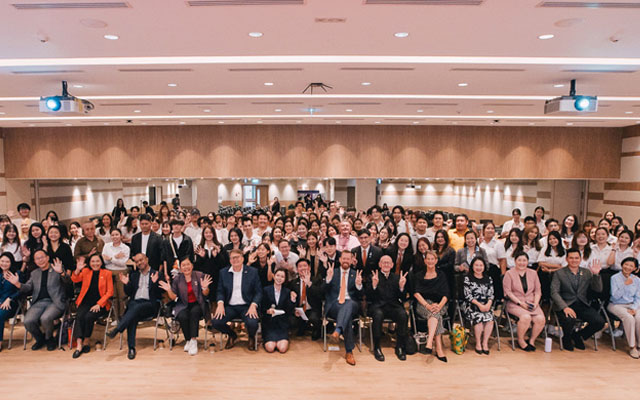
Speaking at the PATA Knowledge Forum on the topic of Navigating the New Era of Chinese Tourism, Michael Zhou, president of Guilin Tang Dynasty Tour, said targeting Chinese travellers outside of the major national public holiday periods would allow travel and tourism businesses and destinations to build demand during traditional low seasons.
Michael Zhou speaking on the topic of Navigating the New Era of Chinese Tourism at the PATA Knowledge Forum
Zhou explained that the vastness of China and the different cultures of each region mean people celebrate different festivals throughout the year. In Guangxi, a southern region of China, people celebrate the Sanyuesan Festival on the third day of the third month on the Lunar calendar.
“People often take four or five days of leave then,” he said. “We need to think about how we can promote travel in March or November (when Chinese outbound traffic is typically slower).”
Zhou added that travel and tourism businesses and destination marketers should also study the seasons of different parts of China.
Northern China, for example, has bitterly cold and long winters, which drive locals to escape to warmer destinations for holidays. Tropical Thailand is often a popular choice, observed Zhou, adding that suitable products and programmes should be developed for the Chinese northerners long before winter arrives.
He added: “Many people living deep in the mainland have never seen (beaches) before. For them, opportunities to stroll down the seashore, enjoy the sea breeze, and dig into seafood can probably be the best time of their life.”
He also urged travel and tourism players to take their promotions deeper into the Chinese market, beyond the usual first-tier cities. Xi’an, Chengdu and Chongqing, for example, have millions of residents with the ability and keenness to take a holiday in South-east Asian destinations.
He encouraged the use of local social media, such as Xiaohongshu or Douyin, for promotions, as these platforms are popular among the young.
The Indian government has approved Singapore Airlines’ proposed foreign direct investment into the enlarged Air India Group, as part of the ongoing merger of Air India and Vistara.
The approval, along with other governmental and regulatory approvals received to-date, marks a significant development towards the completion of the merger.
Singapore Airlines will hold a 25.1 per cent stake in the enlarged Air India Group by end-2024
Singapore Airlines and its partner Tata Sons aim to finalise the merger by the end of 2024. Upon completion, Singapore Airlines will hold a 25.1 per cent stake in the enlarged Air India Group.
The merger will reinforce Singapore Airlines’ multi-hub strategy, and underscore its long-standing commitment to India through a direct stake in the expanding aviation market.
The quest for authentic destination experiences is holding on strong, and many tourism suppliers say they can offer that to their customers. How does the Silversea product development team ensure that programmes offered onboard and on shore are truly real and unique?
You are right, it is such an easy thing for companies to say that they deliver unique experiences. It is more than just talk at Silversea; we have made authentic experiences part of our mission and vision.
The Silversea vision statement says, nothing stands between you and the authentic beauty of the world. Every single one of us, whether onboard or onshore, go to work daily with that vision statement in mind. It is the foundation of everything that we do.
At the same time, we have a company, a management, and a group that really celebrates the development of such programmes. We are given resources to do research and development.
One of the big differences between Silversea and some of our other expedition competitors is the fact that all of my expedition shore-side management team members have worked on expedition ships. When we design expedition programmes, we do it with practical knowledge and experience. That makes a big difference.
Let me give you an example. We were in Europe early August when the product development team and I locked ourselves in the conference room for five days, 14 to 15 hours a day, to go through our 2026/2027 itineraries. We brought all our knowledge and our research that we’ve been doing for the last few months, to fine-tune the itineraries and make sure we were carving out the most unique programmes.
From there, we went out and attached an education and activity profile to each itinerary, and then developed programmes that would enrich the experience for our guests and allow us to deliver on our destination experience promise.
Thanks for the product development insight. How long does the planning process typically take?
It varies. On average, we work about two years out.
When we created our first-ever fully immersive expedition experience along the South African coast, we had to develop programmes that didn’t exist and work with local communities to ensure a positive relationship. That relationship is of critical importance to us. We also had to deal with regional and national regulatory authorities.
Back then, South Africa did not allow many of the activities that we wanted to do, such as using Zodiac boats to transport guests from shore to ship and vice versa. So, through risk assessments, collaborative studies, and meetings with the government, local operators, and local community, we eventually were able to develop the programme. That took us almost four years.
For our 2026/2027 itineraries, we worked about a year on them. We will launch them in the next few months.
Many expedition experiences are rooted in nature. Has climate change and greater environmental sensitivities impacted your programmes?
This is something that Silversea has been aware of for a very long time. In fact, the entire cruise and expedition industry believes in environmentally sustainable travel.
All operators in the very fragile environments of Antarctica and the Arctic function belong to the International Association of Antarctica Tour Operators (IAATO) and the Association of Arctic Expedition Cruise Operators (AECO). IAATO governs tourism within Antarctica while AECO governs tourism in the Arctic.
Both IAATO and AECO showcase the industry’s desire to operate in a responsible and sustainable manner.
We make the rules that are then validated by regulatory authorities around the world. We enforce these rules on our members, making sure that we operate within the parameters that we have all agreed on, such as distance between the guests and wildlife, the training that the staff needs to go through, and so on and so forth.
Does Silversea use its expeditions to educate travellers about the impact of human activity on climate and the environment?
We believe that we have to create ambassadors for anywhere in the world that we travel to, be it the Galápagos Islands, Antarctica, the Arctic, and the Kimberley. It’s not just for the preservation of the environment, but also for the preservation of cultures.
For instance, in the Kimberley, we have onboard anthropologists and archaeologists to talk about the history of the region.
Through our programmes, we educate our guests on how to respect and behave in interesting and fragile environments. With that knowledge and understanding, our guests become ambassadors for these regions.
Antarctica is governed by a treaty that is coming up for ratification in 2040. Governments will have to vote to decide whether or not they keep the structure of governance. Without travellers who have been to Antarctica and who now talk about the unique and fragile environment to raise awareness, we will probably see governments taking a very different stance on the preservation of Antarctica.
In the Galápagos Islands, we work with local NGOs and have our very own Silversea Fund to safeguard the well-being of the Galápagos Islands for future generations. We work on culture, people and on providing education to the local children.
I believe in teaching children about the world through travel. Do your expeditions see little ones onboard?
Yes, we do have multi-generational travel on our expeditions. My son, who is nine now, has been on expeditions to the Galápagos Islands, Africa, and Antarctica. What a wonderful way to educate our youths about the environment, different cultures, and the world through ways that they would never be able to get in school.
I can see the difference in my son compared to other nine-year-olds. He is respectful to the environment, to people, and to different cultures.
I really encourage people to travel with their children, whether it’s on an expedition or to anywhere in the world, because travelling does broaden our horizons in ways that no theoretical education can.
Starting from December 5, Peach Aviation will commence daily flights between Osaka Kansai Airport and Singapore Changi Airport.
This is the second medium-haul international route by the low-cost carrier after Bangkok.
Peach Aviation will start daily flights between Osaka and Singapore from December 5
“We are very pleased that Peach will be the only Japanese airline to operate the Singapore-Osaka route. With a more spaced-out, cutting-edge Airbus A321LR aircraft, we will take you to Osaka in comfort and offer you an exciting experience in the booming Kansai region, which is set to host the Expo 2025 Osaka, Kansai,” said Satoru Endo, chief corporate planning officer of Peach Aviation.
Speaking at the official launch event in Singapore, Endo said that the Singapore route had been something the airline had wanted to launch for many years, and that “we’d like to take you to the parts of Japan you don’t yet know”.
From Osaka, Peach is further connected to 13 other destinations in Japan, including Nagoya, Tokyo, Sapporo, Fukuoka, Naha (Okinawa), and more.
In Singapore, EU Holidays has been selected as the global sales agent for Peach Aviation.
The flights will be operated by Airbus A321LR planes, which have a 20 per cent improvement in fuel efficiency compared to the previous A320ceo model. It is the first time these planes will enter into service in Japan.
The 218-seater A321LR plane has a wider seat pitch of 81cm, compared to the previous model at 76cm. Each seat also comes equipped with its own USB charging port.
Peach currently operates 27 domestic routes and 13 international routes with a fleet of 36 aircraft. Endo has shared that the airline may launch flights to other parts of South-east Asia in the future.
Ticket sales start from S$164.20 (US$126) for one-way and are inclusive of airport fees and other charges for departures from Singapore.
Travel and tourism students attending the PATA Youth Symposium 2024 have revealed both enthusiasm and concern about future careers in tourism and hospitality, with many torn by the lure of opportunities to expand their horizons and fear of job instability.
During a roundtable discussion on interest in a travel and tourism career, a student from Bangkok University expressed fascination with the chance to meet people from different cultures. On the other hand, others, like Min, a student studying tourism, business, and events at Mae Fah Luang University, cited concerns about job stability and competition.
Travel and tourism students at the PATA Youth Symposium 2024 on August 27
Students said stiff competition for positions by skilled workers from abroad has made it challenging for locals to find opportunities. At the same time, desired salaries are harder to come by.
A recurring concern expressed at the discussion was the impact of the pandemic. A Bangkok University student noted: “We saw how the pandemic caused massive layoffs, and that makes me worried about the future.”
Cultural perceptions and societal expectations also dampen enthusiasm. Lee from a Singapore university shared: “When I told people I wanted to be a flight attendant, they said I could do something better because the hospitality industry is seen as an easy option. However, I believe it requires specific knowledge, skills and maturation,” she expressed.
When asked about the most pressing topic they would like to address with industry professionals, students’ responses converged on the theme of work-life balance and development opportunities.
Natalia, a student in exhibition and event management from Silpakorn University, said: “It’s tough to find the right job because even when opportunities come up, you start questioning if the position is a good fit. Is it worth it? Will I be able to grow in this role?”
Students emphasised the need for the industry to offer more stable and fulfilling career paths as well as a desire for the industry to adapt to changing customer preferences and cultural dynamics.
Radisson Hotel Group has signed Park Inn by Radisson Melbourne Carlton, which marks its upper-midscale brand’s debut in Australia, and the group’s third hotel in Australia.
Park Inn by Radisson Melbourne Carlton is set to open its doors in 4Q2024, and is situated in the suburb of Parkville.
Park Inn by Radisson Melbourne Carlton will open 4Q2024
Following the conversion of an existing hotel, it will undergo a complete renovation and redesign to align with Park Inn by Radisson’s international standards.
Park Inn by Radisson Melbourne Carlton will feature 89 guestrooms, an all-day dining restaurant, a casual grab & go café, gym, pool, and two meeting rooms.
The hotel is just three-kilometres from Melbourne’s CBD, and places guests on the doorstep of Australia’s top biotech and neuroscience R&D facilities, and Monash University, which is known for its Pharmaceutical Studies faculty. It is also situated close to Royal Park and Royal Melbourne Zoo, and opposite Princes Park, the home of Carlton Football Club, the leading AFL team, and 20km away from Tullamarine Airport.
A representative of Star Capital Group, parent of Frater Capital Group, said: “The contemporary Park Inn by Radisson, Melbourne Carlton, is the ideal market introduction to this upper-midscale brand. We have plans to continue to expand our hotel portfolio in Australasia and we eagerly anticipate further opportunities for collaboration with Radisson.”
Victor Kondarios, director, development, Australasia, RHG, added: “We are excited for this opportunity to introduce Park Inn by Radisson to Australia. Frater Capital Group is a strong company looking to grow its hotel portfolio. We are delighted to enter into this relationship with them, which includes a full range of support services such as revenue management, sales and marketing. We look forward to developing more hotels together in the future as we continue to expand across Australia.”
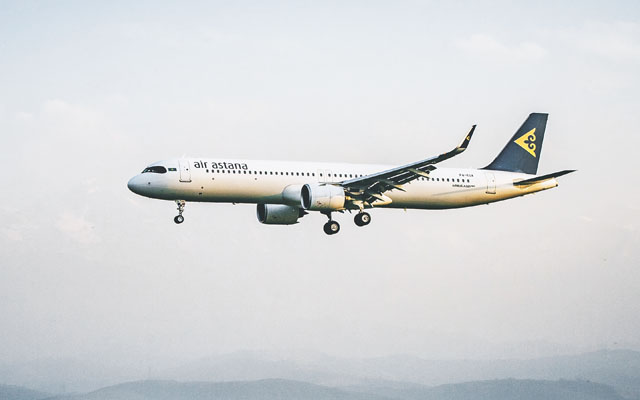
Air Astana launches Astana-Phuket service
Air Astana will commence direct scheduled flights from Astana to Phuket October 26.
The new service will operate three times a week on Mondays, Wednesdays, and Saturdays, with return flights on Tuesdays, Thursdays, and Sundays.
The airline has an existing Almaty to Phuket service, which currently flies five times a week – this service will fly daily from October 26.
All Phuket flights will be operated by Airbus A321LR aircraft configured with 16 business class seats and 150 economy class seats.
Hong Kong Airlines
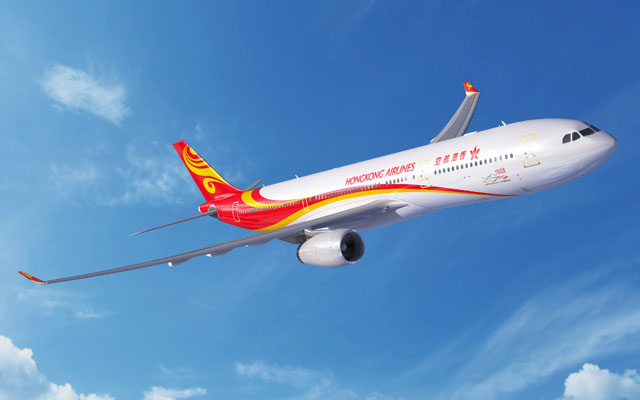
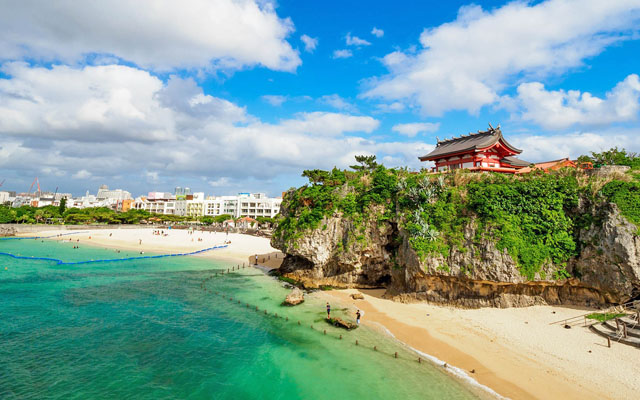
Hong Kong Airlines to resume direct Hong Kong-Gold Coast service
Hong Kong Airlines will restart its non-stop flights between Hong Kong and Gold Coast from January 17 next year.
Operating seasonally from January 17 to February 15, 2025, the four-times a week service will run for five weeks over the Chinese Lunar New Year period, offering approximately 6,000 seats on A330 wide-body aircraft.
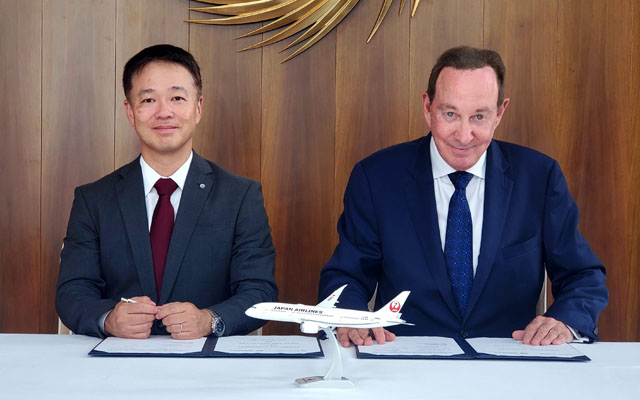
From left: Japan Airlines’ Atsuyuki Agawa and Air Astana Group’s Peter Foster
Japan Airlines, Air Astana ink codeshare agreement
Japan Airlines and Air Astana have signed a codeshare agreement, allowing both airlines to place their respective codes on a new Almaty to Tokyo service scheduled to be launched in spring of 2026.
This agreement enhances connectivity between Kazakhstan and Japan for both business and leisure travellers, as well as more widely fostering greater movement of people between the two countries.
More details about routes and schedules will be announced following the integration of both airlines’ scheduling and ticketing systems.


 In his new role, Romandy will oversee all facets of hotel operations, including finance, sales and marketing, and human resources. He will report to Jeffrey van Vorsselen, regional vice president, operations.


 The quest for authentic destination experiences is holding on strong, and many tourism suppliers say they can offer that to their customers. How does the Silversea product development team ensure that programmes offered onboard and on shore are truly real and unique?










In celebration of the 50th anniversary of Malaysia-China diplomatic relations, both countries have introduced visa-free travel policies for their citizens.
Malaysians enjoy visa-free entry to China until the end of 2025, while Chinese travellers to Malaysia benefit similarly until the end of 2026.
These initiatives have sparked a significant surge in bilateral tourism.
Sandy Ren, senior sales manager at Guilin-headquartered Tang Dynasty Tours, highlighted the positive impact of these policies on her inbound business.
“With the continuation of the visa-free policies and direct air accessibility from Kuala Lumpur to Guilin, we see further opportunities to collaborate with Malaysian outbound agents to expand the incentive and leisure travel markets,” she said.
Ren also shared that direct flights from Kuala Lumpur to Guilin have encouraged Malaysian incentive groups to spend five to six days in Guilin and to regard the Chinese city as a mono destination.
Additionally, Malaysian travellers have the option to transit through Guangzhou and experience the bullet train to Guilin – a popular choice among families and incentive groups looking to combine two destinations in one trip.
Adam Kamal, director of Suka Travel & Tours, reported that demand for Muslim tour packages from Malaysia to China has soared, surpassing sales for other popular options like Taiwan and South Korea. Demand comes from both FITs and groups.
Muslim customers are keen to venture beyond Tier 1 Chinese cities, drawn by the availability of Muslim-friendly restaurants and the convenience of carrying halal packed food from Malaysia.
“In the past, selling tours to China was challenging due to the complicated visa application process, which required securing an appointment with the Chinese Embassy, with no approval guaranteed,” explained Adam.
While visa is no longer an issue, Adam finds airline seats a challenge today. Due to seat shortages, he is limiting group sizes to between 20 and 25 pax.
Due to the lack of direct flights from Chinese cities to Langkawi, the Malaysian island has to rely on direct flights from Kuala Lumpur and Penang.
Mohammed Al Maidama, director of sales and marketing, Parkroyal Langkawi Resort, told TTG Asia: “On average, Chinese visitors to our resort stay for three or four nights. If we had direct flights, the average length of stay would be longer.”
For 2025, he is projecting a 10 to 15 per cent increase in guests from China.