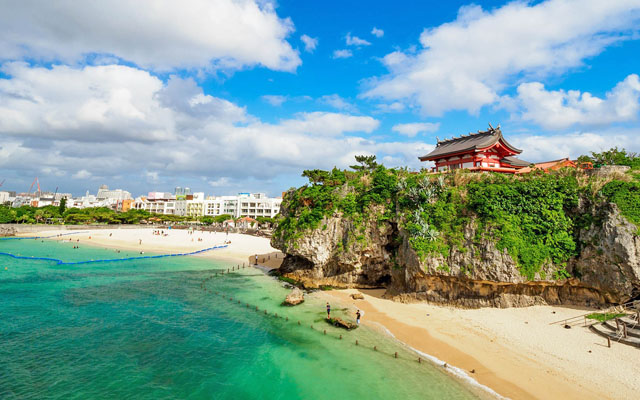
INDIAN tourist arrivals to the Philippines registered good growth of 12.5 per cent last year, the highest growth among all South Asian source markets despite the lack of direct flights to Manila from any Indian gateway city.
A total of 52,206 Indians visited the destination, compared with 46,395 in 2012, as per data released by Department of Tourism, Philippines (DoT).
Philippines Airlines withdrew its thrice-weekly service from New Delhi to Manila via Bangkok in 3Q2013. No announcements have been made so far of any carrier being awarded the flying rights on a route to India, although trade sources reported interest from Cebu Pacific.
Jet Airways’ request for a day-time landing slot in Manila airport was turned down last year.
DoT welcomed a total of 4.7 million international visitors in 2013, surpassing the 4.3 million recorded in 2012 with growth of 9.56 per cent.
Arjun Shroff, managing director, Manila-based Shroff International Travel Care, said: “The Indian market is now very aware of the beauty of Philippines as a leisure destination and we are bullish on the growth prospects from this market.
“We have seen steady 25 per cent growth year-on-year for the last three years. DoT is very pro-active in their promotional effort in the Indian market. The introduction of a direct flight will see exponential growth as Indian tourists are looking for new destinations in Asia beyond South-east Asia.”
Glen Augustin, DoT chief tourism operations officer for market development, said: “India our focus. The results of our effort are very evident. We expect very high growth from this market with increasing awareness about the destination.”
Ankur Khanna, managing director, New Delhi-based Tristar Travel Services, said: “Philippines is still a niche destination but is quickly moving into mainstream for Indian leisure travellers. Tourists who have already experienced Thailand, Malaysia and Indonesia are now craving for Boracay, Palawan and Cebu, and of course the shopping in Manila.
“We have managed to work out economical flight itineraries with minimal transit time with AirAsia, Malaysia Airlines, Thai Airways and Cathay Pacific. Philippines will be a very popular, long-stay destination shortly.”
THE search for Malaysia Airlines’ (MAS) flight MH370 bound for Beijing enters into its third day today, with the search widening from the waters off Vietnam to include the Straits of Malacca.
The authorities are looking at the possibility of the aircraft deviating from its course to Beijing and making a turn back.
At least 80 aircraft and ships from Malaysia, Singapore, Thailand, Indonesia, the Philippines, Vietnam, China, Australia and the US have been deployed to the South China Sea and the Straits of Malacca for the search and rescue operation.
Flight MH370, operated on the B777-200 aircraft, departed Kuala Lumpur at 00.41 on March 8 carrying 227 passengers and 12 crew members, and was expected to land in Beijing at 06.30 the same day.
Subang Air Traffic Control reported that it lost contact at 02.40 (local Malaysia time). The plane has since been missing and has not sent any distress signal.
At a press conference yesterday, Malaysian prime minister Najib Razak said all air travel security procedures at Malaysia airports will be reviewed and further enhanced, if deemed necessary, after the discovery that two passengers on the plane had travelled with stolen passports belonging to an Italian and an Austrian.
It was also learnt that the two passengers had bought their tickets from China Southern Airlines and the ticket numbers were contiguous, which meant that the tickets were issued together. It is still not known how the two had obtained visas to travel to China.
At press time, solid connection between the stolen passports and the missing plane has not been established.
In a media statement today, MAS said its primary focus is to care for the families, providing them with timely information, travel facilities, accommodation, meals, and medical and emotional support. The costs for these will all be borne by the airline.
The airline has provided initial financial assistance to all families over and above their basic needs. At least one well-trained caregiver is assigned to each family.
The airline is also working closely with the Chinese government to expedite the issuance of passports for the families as well as with the immigration of Malaysia for their visas into Malaysia.
When the aircraft is located, a Response Coordination Centre will be activated within the vicinity to support the needs of the families
SRILANKAN Airlines will become a full member of oneworld with effect from May 1, the first carrier from the Indian subcontinent to become part of any global airline alliance.
The national carrier of Sri Lanka received clearance to board oneworld after successfully completing a thorough review of its readiness conducted by Cathay Pacific Airways, which is sponsoring its entry into the alliance, with the oneworld central team.
Its addition will bring two new destinations on to oneworld’s network – Sri Lanka’s new Hambantota International and India’s Tiruchirapalli.
With the alliance, members of SriLankan’s FlySmiLes loyalty programme will have their frequent flyer privileges extended to whenever they fly with any oneworld member airline.
FlySmiLes Platinum cardholders will have Emerald status in the oneworld programme. FlySmiLes Gold will be equivalent to oneworld Sapphire and FlySmiLes Classic will be oneworld Ruby.
CONSTRAINED by issues of sustainability and carrying capacity in the face of a rising tide of arrivals, Langkawi will sharpen its focus on the lucrative premium travel segment to attract more tourists.
Visitor arrivals to Langkawi climbed 12 per cent last year to reach 3.4 million tourists, surpassing the three million target initially set for 2015 in the destination’s 2011 tourism masterplan, according to Khalid Ramli, CEO of Langkawi Development Authority (LADA).
“We are hence revising our 2015 target to four million arrivals,” he said. “However, tourism receipts are still below our aim of RM3.8 billion (US$1.2 billion), so this will be a critical year for us to reach targets.”
The chief executive remarked: “We need to look at high net worth tourists because (this segment) will give higher revenue with a smaller number.”
“We don’t want amusement parks on Langkawi…We are focusing on iconic projects, not mega developments.”
In line with this stance, Langkawi’s property pipeline consists of several luxury hotels such as St Regis and Ritz Carlton, which will boost the destination’s room supply from the current 9,000 to 15,000 by 2017.
In addition, a host of new tourism products including an inclinator to bring visitors up to the Langkawi Sky Bridge (reopening by this year-end), an eco-theme park at the Oriental Village, Premium Outlets and World Cab Museum are to be launched in the Malaysian destination.
LADA is also leveraging Langkawi’s natural appeal to attract more sports and eco-related events, with high-profile events like the IFMA Muaythai World Championship and Ironman making their debuts this year.
Meanwhile, LADA is currently in talks with airlines and relevant authorities to welcome direct flights from the Middle East, China, South Korea and India, revealed Khalid.
THAILAND’S domestic turmoil has impinged on Bangkok Airways’ performance, but has not hindered the independent carrier from keeping up its network and fleet expansion ambitions.
Puttipong Prasarttong-Osoth, president, said: “We have been seeing minor effects as most of our passengers typically take our flights to connect to Thailand’s tourist destinations once they arrive in Bangkok. We see an overall decrease, not in any particular sector.”
The carrier’s initial public offering (IPO) launch, originally slated for 2013, has been postponed – no doubt affected by the political troubles. Puttipong is hopeful the filing process can be completed within this year.
The IPO cash haul will “mark a new history” and further propel the airline’s growth, although the CEO declined to elaborate what Bangkok Airways’ priorities are.
The carrier will keep its focus on domestic expansion for the time being, he said. Services from Bangkok to Udon Thani were launched last November, to be followed by Chiang Rai on March 28, widening its domestic network to nine cities.
“We are looking at another domestic destination later this year, possibly in southern Thailand,” he shared.
Frequency of popular routes such as Chiang Mai will be hiked from six daily flights to seven, Phnom Penh from four daily flights to five and the Maldives from five weekly flights to daily.
At the recent Singapore Airshow, Bangkok Airways placed an order for six ATR72-600s worth some US$200 million.
These new jets will spell the beginning of the carrier’s fleet renewal process, and replace the ATR-72 turboprops currently deployed on routes such as Koh Samui, Trat and Luang Prabang.
The first ATR72-600 is expected to arrive later this year, four in 2015 and the final jet in 2016. The six new aircraft will add to Bangkok Airways’ existing 10 Airbus A319s and seven A320s.
IT is still billed as the most important travel tradeshow but rising costs of participation at ITB Berlin are forcing exhibitors to look twice at ROI.
Asian sellers interviewed said ITB is costly even for buyers in light of accommodation costs, and this may impact their numbers and quality in turn.
“ITB is the most expensive event we attend. It still works but actually each year we see fewer buyers from markets outside Germany. If it becomes a German market event, we would reconsider our investment, downsizing to the market than the large corporate stand plus tables in the various tourism authority stands we take up now,” said Chris Bailey, Centara Hotels & Resorts’ senior vice president sales and marketing.
Judy Lum, Tour East Group vice president-sales & marketing, said the cost of a corporate stand has risen 40-50 per cent in 10 years, given a hike of five to eight per cent a year. This excludes cost of furniture, F&B and electrical fixtures, which has also increased exponentially. Cost of participating within the NTO stand, meanwhile, has risen more than 100 per cent as the NTO no longer subsidises the fee. “Worse, the participation cost, which is the bulk paid to the NTO, is not tax deductible,” said Lum.
“For Tour East, we are seriously assessing the ROI on roadshows versus ROI on tradeshows. In fact, we have cut down on tradeshows since 2012 and are following the footsteps of some hotel chains by investing on roadshows.”
World of Accor Expo, for instance, travels to 12 cities across Asia-Pacific. Last year, 200 Accor hotel or regional sales executives met with over 5,000 clients, a “powerful and targeted strategy” said Graham Wilson, senior vice president sales & marketing.
Wilson said the chain offsets its ITB expense by having a global sales meeting prior to ITB. It also hosts a VIP client event to thank its most valued customers.
Richard Brouwer, CEO of Diethelm Travel Group, said: “Over the years, the number of quality buyers has dropped, which is due indeed to costs. Many buyers now also prefer to meet their suppliers on their home turf, where more detailed meetings can take place and more of their team members can be involved,” he said.
But David Ruetz, head of ITB Berlin, said the show has kept its costs down, with booth price at 170 euros (US$235) per m2 today after inflationary rises of four to five per cent per year. Berlin has more than 130,000 hotel rooms, which ensures reasonable rates.
Over the past 10 years, the number of international buyers has actually risen, now accounting for a third of all buyers compared with 25 per cent before. “If you look at ROI, it should be how much money did I spend per lead? No question, we have the record for the best price/value equation,” he said.
And the best judge is a waiting line to exhibit at ITB in the Asian and Middle East halls. “Thailand and Malaysia are among Asian countries looking to expand while Mongolia, being official partner next year, will naturally need more space,” he said.
TOURISM players in Dubai and the Maldives have to contend with new tourism taxes and the operational headaches they bring.
Dubai is introducing Tourism Dirham, a new hospitality fee ranging between seven (US$1.90) and 20 dirhams on hotel stays from March 31, while the Maldives resumed the bed tax of US$8 per bed per night from January.
Majestic Hotel Tower Dubai director of sales, Stella Giasta, said: “Tourism Dirham won’t have a problem on demand, but it will raise a lot of operational issues as rates are negotiated a year ago or sometimes even more.”
As the tax is levied according to the number of bedrooms, Giasta foresees some groups or families staying in accommodation with multiple rooms burdened by the higher fees. Further confusion may arise over a two-month exemption period, in which guests who have paid in full by February 23 and stays completed by May 31 will be exempted, she shared.
Likewise, the Maldives’ changing taxes – the bed tax will be removed in November 2014 when the tourism GST is raised from eight to 12 per cent – also bring with them operational challenges for suppliers.
Tropical Collections Maldives’ director – business development, Aminath Shadiya, said: “Our reservation system and software programmes have to be changed within a short period of time to reflect the different taxes.
“I’m not against the tax, but more time should have been given for us to prepare,” Shadiya commented, adding that tour operators who have included prices in their catalogues will face more difficulties in explaining the rate differences to clients.
In a destination already pegged with high operational expenses, Dusit Thani Maldives’ director of sales and marketing, Thanos Lionsatos, expects the taxes to “affect bottom line”.
“We need to think creatively if we are to pass (the tax burden) onto the consumer…We need to deliver a far more superior product with additions and modifications so that any possible rate increases are justified,” he opined.
David Kevan, partner, Chic Locations UK, agreed: “The Maldives’ average selling price is a good 15 per cent higher than other destinations (offered by Chic Locations). It’s still an important destination for us, given the value of the bookings, but I don’t see it as a growth destination, (due) to the high price which does limit its attraction.”
Likewise, Hamzah Rahmat, director of Beststar Travel Centre Malaysia is concerned that Dubai’s tax policy will “add to the total cost of the travel package”, particularly as the ringgit-dirham exchange rate has not been favourable to Malaysian visitors to the destination.
He remarked: “Business travel will not be impacted…Leisure travellers will consider the total package price and if the costs go up too much, they will opt for other destinations.”
But Giata believed taxation “is an efficient way to bring in revenue”. “It’s a circle – everyone will benefit at the end of the day. The destination quality will improve, more tourists will visit and hotels will get more business.”
SINGAPORE Tourism Board (STB) has released its first TravelRave report recapping highlights from the annual travel trade festival held last year, underscoring talent, technology and the Asian millennial traveller as key areas needing address.
Travel and tourism leaders at TravelRave 2013 identified high turnovers, skill mismatches and employees unprepared for leadership roles as some of the challenges companies faced in the industry.
To attract, retain and develop high-quality talent at all levels in Asia, two working groups were formed out of the Asia Travel Leaders Summit.
The Executive Development Programme arose from the discussions, led by Marc Dardenne, CEO Patina Hotel and Resorts, in collaboration with Shatec and DePaul University. It will be inaugurated this month for mid-to-senior level hospitality executives. It comprises four modules over a period of eight months and covers topics such as leadership, finance and revenue management, among others.
Additionally, a joint study by STB, Visa and McKinsey & Company delved into the profile of Asian millennial travellers, revealed that over the next decade, this most educated and connected generation (born between 1981 and 1995) will enter their peak earning and spending years, presenting significant business opportunities for the travel industry.
As Asian economic powerhouses continue their growth trajectory, the Asian millennials’ expenditure on international travel is expected to increase by 1.6 times to US$340 billion by 2020.
With regards to technology’s continuing impact on the industry and the opportunities it would bring, according to The Constantly Connected Traveller, a Google study presented at TravelRave 2013, more than four-fifths of Asian travellers use the Internet to plan their hotel stays, using an average of four different sources of information.
The report also highlighted research presented by PhoCusWright, which projects that the Asia-Pacific travel market would maintain its growth of international tourist arrivals through 2015 to reach US$407.3 billion, with China accounting for a third of that. Travel Link Daily also noted the potential of the market, as only three per cent of China’s population is passport-holders.
TravelRave 2014 will take place in Singapore from October 27-31, 2014. It will see the return of anchor events such as the Asia Travel Leaders Summit, ITB Asia, Web In Travel, Aviation Outlook Asia, TravelRave Leaders Gala and Singapore Experience Awards.
THE Indonesian government has imposed new tariffs on parks and hunting grounds under the portfolio of the Ministry of Forestry, and the move is expected to result in an almost eight-fold increase in entry fees for foreign tourists.
The new regulation divides national parks, forest and natural parks tariffs into three rayon groups.
The entry fee for foreign tourists to the parks of Rayon 1 is 250,000 rupiah (US$22) per entry per day, 200,000 rupiah for Rayon 2, and 150,000 rupiah for Rayon 3. Tariffs for domestic tourists are 10 per cent of the above.
Monthly dues are also applied to the parks, payable to the national treasury for services in the parks, like tourism information, guides, transportation, travel, F&B and souvenirs.
Most of the natural tourism destinations popular with international tourists to Indonesia belong in Rayon 1. Some of the national Parks in Rayon 1 are Bromo-Tengger-Semeru, Komodo, Rinjani, Bali Barat, and Tanjung Putting, while natural parks in Rayon 1 are Mount Tangkuban Perahu, Mount Papandayan, Batimurung and Ijen Crater, among others.
The first national park announcing the new entry fee to apply as of May 1 is the management of Bromo-Tengger-Semeru National (TNBTS) in East Java.
The national media quoted TNBTS head, Ayu Dewi Utari, as saying the entry fee for domestic travellers would increase from 10,000 to 37,500 rupiah on weekdays and 67,500 rupiah on weekends and public holidays.
The entry fee for international tourists will increase from 72,500 to 267,500 rupiah on weekdays and 640,000 rupiah on public holidays.
The new ruling has shocked the travel industry, not only in East Java where Mount Bromo is the icon, but those doing Indonesia round trips.
“This (increase in Bromo’s entry fee) is really shocking …we are in the middle of a season (where package prices are already in place), and May is the beginning of the summer peak season. Contracts are fixed up to March 2015.”
He explained he is not anti-price hike as long as it is reasonable and timely: “If the government wants to increase (the fee) that high, it should plan and implement in stages.”
Yusak Anshori, chairman, Indonesia Tourism Council, East Java Chapter, pointed out: “With such an increase, what new and improved facilities does the management offer in Bromo? The government just doesn’t understand the politics of tourism. This will kill not only the industry but also the local people who live from Bromo tourism.”
Ada Travel Indonesia, Malang managing director, Supomo, revealed: “The Care for Bromo Society, which includes tourism-related associations and the groupings of Bromo Tengger societies, met yesterday and in principle, everyone rejects the regulation, and we are planning on movements of rejections, but have yet to decide on the format.”
Ayu Mandiri Tours and Travel Jogjakarta managing director, Aji Sutomo, said: “It is a big challenge for overland tour operators like us. Bromo is the icon of East Java, if we take that out of the programme, what else is there to offer (as the main draw to the destination)?”
Marintur Indonesia executive director, Ismail Ali, opined: “If it is only applied to Bromo, we can take it off the package and offer it as optional tour. But if all national parks’ entry fees are up so high, I think it will be back to square one, where everyone will only go to Bali again.”
Indonesia has seen the trend of international tourists travelling around Indonesia, beyond Bali, in the last few years.
From health-conscious wanderers to those travelling with little tots, tours are being created to meet needs of all kinds
Tourism Authority of Thailand
Eat your way through Asia
Having found success in offering foodie experiences to visitors to Malaysia, Discovery Travel & Cuisine is now in the midst of developing outbound culinary tours to Laos, Cambodia, the Philippines, South Korea, Japan and China.
“The strategy to tweak our inbound travel business with food and culinary experiences has worked profitably for us, recording an increase in demand and sales from year to year,” said director Lee Choon Loong, who claims the tour and travel company is the first and only licensed one in Malaysia to have ‘Travel & Cuisine’ as part of the company name.
“We are applying for an outbound licence to market outbound culinary tours targeted at the youths in the 18-35 age group, who are more adventurous and Internet savvy. This provides us with the opportunity to tap social media,” he said.
“We are currently developing our website with enticing images of food and compelling stories about food culture, culinary styles and gourmet destinations with the help of national tourism offices in Thailand, Laos, Cambodia and the Philippines.”
On why the above countries were chosen, Lee explained: “We prefer to develop culinary tours around destinations which are rich in culture and food resources but somehow lacking in built attractions. Food culture then becomes the unique selling point of the destination.”
Clients will get to discover local produce and learn how to savour exotic food like raw prawns with pepper-calamansi sauce on the banks of the Mekong River in Laos or enjoy stir-fried flower crabs with Kampot pepper, which originated from a local fishing village in Cambodia.
He added: “Food is not fun without the right company, and we only develop customised tour programmes for like-minded travellers with the same interest and passion for food culture. – S Puvaneswary
Chan Brothers Travel
Kids can have fun, too
Introduced last year, the Little Tots Can Fly programme by Chan Brothers Travel Singapore incorporates child-friendly itineraries for families with children as young as two years old.
Currently available for itineraries in Hong Kong, Taiwan, South Korea and Japan, these programmes are designed around fulfilling the requirements of toddlers from two to six years old. Arrangements include more conducive daytime flights, later morning calls, extended meal duration at kid-friendly restaurants, a more relaxed pace of travel and family photography sessions by professionals.
Jane Chang, marketing and communications manager, said: “This series helps to plug the market gap for parents of young toddlers who wish to travel but have their own set of unique travel requirements. Response for this series is encouraging and we are expecting significant growth this year.” – Paige Lee Pei Qi
In tip-top shape
Panorama Tours Indonesia launched medical tourism packages in 2013, with Malaysia as its initial destination.
Hellen Xu, managing director of travel management, said: “Medical Check Up is a new product we launched last year and the result so far is so-so. This year we are planning to promote it well as we believe the market is there; we just need to tap it. Our target market is A- and B-class clients above 35 years old.”
Starting with basic check-up programmes, Panorama works with hotels and hospitals in Kuala Lumpur and Penang.
A three-day package in Kuala Lumpur starts at US$289 and US$285 for Penang. This excludes airfare but includes two-night accommodation, a medical check-up at Gleneagles Hospital and airport transfers.
The medical check-up in Kuala Lumpur includes a physical examination, ECG, lung function test, chest X-ray, blood and urine test, as well as review of reports. In Penang the package includes physical examination, visual acuity test, chest X-ray, ECG, body fat measurement and a laboratory test.
Asked if more extensive medical packages would be offered, Xu said that these are available on request, but could be developed into ready-made products should the market grows.
“Indonesians usually look for references from friends when it comes to treatments – which doctor, which hospital – and they go to travel agencies for hotel and transport arrangements, and sometimes optional tours,” she said. – Mimi Hudoyo
Make the most of weekends
Long weekend holidays are usually planned late and the runway within which all bookings need to be firmed up are excruciatingly short. Most of such requests come from clients who are well travelled and usually decide on the spur of the moment, or are unaware if they will be available on a specific date and so cannot plan ahead.
In response, Thomas Cook India launched 48H holiday packages a year ago, where the entire trip from ticketing and hotel bookings to ground transportation and excursions can be booked and delivered to the client within 48 hours of receiving the request.
“Many clients used to ask for domestic destinations as they thought that we had too little time to offer outbound holidays within such a short time frame,” said Madhav Pai, COO of leisure travel (outbound).
A range of destinations are offered, including Ireland, Jordan, Ecuador, Cyprus, Mexico, Seychelles, Thailand, Indonesia, Turkey, Hong Kong and Macau.
Ankur Khanna, managing director, India-based Tristar Holidays, said: “It is easy to create and confirm these packages if the destination offers visa on arrival to Indians.” He added that the price of these holidays could be 10-20 per cent more than usual as the bookings are last minute, but this did not faze any of his clients. – Shekhar Niyogi
Connecting agencies to customers
Attempts have been made to bridge the divide between one-on-one travel consultation and the lack of customisation available on online portals.
Hello Travel in India, for example, analyses the requirements of online travellers and finds travel agencies whose expertise will match their requests. Clients then get multiple itineraries and personalised suggestions from travel consultants.
Such websites allow companies to enrol with them, then purchase leads and execute itineraries. These leads are paid for on a unitary basis and the contract may be for a set duration.
However, according to trade players, any such model leaves gaps in credibility and durability of such contacts.
Anil Guptaa, managing director, Anjali Tours & Travels India, said: “This sort of market intelligence does not give me the connections I need. Moreover, it is possible that the same leads may go to my competitors too, diluting my sales effort.”
Other companies like Internet Moguls are trying to close this chasm in a more holistic manner by offering turnkey solutions. It has created a website that will enable B2B as well as B2C interface, management of social media to get more responses, execution of the marketing plan and realistic projections of outcomes.
If the travel consultant signs up for a three-year contract, Internet Moguls works for zero retainer and charges a 15 per cent commission on incremental business beyond US$1 million based on a performance guarantee of its marketing plan.
Avijit Arya of Internet Moguls said: “Long-lasting connection with consumers is not a simple task. We advise, plan and guide our clients to end solutions that result in a much larger client base for them, helping their clients perform and stay with them if they are satisfied with the service.” –Shekhar Niyogi