TTG Asia
Asia/Singapore Monday, 5th January 2026
Page 2243

Gino Tan named GM for Parkroyal on Pickering

0

hm170314_ginotan_parkroyalonpickering
Gino Tan

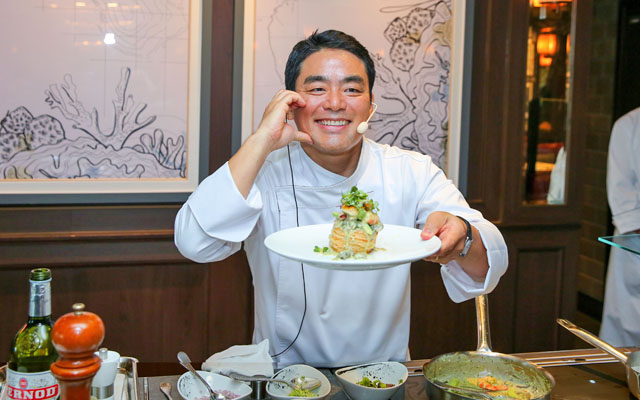
PAN Pacific Hotels Group has appointed Gino Tan as general manager of Parkroyal on Pickering Singapore.

The Singaporean brings with him 20 years’ experience to his new role and was last general manager of the Millennium Hotel London Mayfair in the UK.

Tan spent the first 15 years of his hospitality career in sales & marketing positions with Omni Marco Polo Hotel, Merchant Court Hotel and Raffles Hotel in Singapore, as well as Swissôtel Beijing and Raffles Hotel Beijing in China.

Peninsula Hotel Yangon to open in former railway headquarters

0

THE Hongkong and Shanghai Hotels (HSH) and Myanmar’s Yoma Strategic Holdings signed a shareholders agreement on March 10 to convert the former Burma Railways headquarters building into Peninsula Hotel Yangon.

Yoma had, in November 2012, announced it would redevelop the company’s 4.1-hectare plot housing FMI Centre, Grand Mee Ya Hta Residence and a heritage-listed building into a mixed-use project at the heart of Yangon’s central business district, at a cost of about US$350 million.

“The former Myanmar Railways headquarters is an iconic building in Myanmar,” said Serge Pun, chairman of Yoma, adding its redevelopment will “bring to Yangon a new luxury experience”.

Clement Kwok, managing director and CEO of HSH, said the company sees good potential in Myanmar as a luxury travel and tourism destination.

Separately, Yoma is also partnering Mitsubishi Corporation and Mitsubishi Estate for a business hotel, serviced apartments, high-end condominium, and retail and office space as part of the entire project.

Roxaco, Vanguard join hands to build Go Hotels in Philippines

0

PHILIPPINE property developer Roxaco Land Corp and Singapore-based Vanguard Hotels have formed a 50-50 joint venture that will invest in building a minimum of five Go Hotels.

Go Hotels is the limited-service hotel brand of the Robinsons Group of Companies affiliated with Cebu Pacific.

Roxaco senior vice president, Santiago R Elizalde, said: “Go Hotels is an established brand. The relationship and cross-marketing possibilities with Cebu Pacific was also a major factor in our decision.”

Elizalde said: “Vanguard has an agreement in place with Robinsons Land to construct 20 hotels so we will have the option to continue opening hotels if the business performs as expected.”

He said the joint venture is now focusing on Metro Manila but is also exploring provincial locations.

“Right now, we have a property located near the Ninoy Aquino International Airport (currently under construction) and we are looking to close the purchase of another in North EDSA. We are looking at approximately 180 to 200 keys per hotel.

“Robinsons Land will continue to construct Go Hotels as well but its priority will be to locate the hotels within their mall properties throughout the country.”

Singapore courts Indonesians, highlights new products

0

THE Singapore Tourism Board (STB) is casting a wider net to capture more Indonesian travellers, noting that tourism receipts have taken a hit from the depreciation of the rupiah last year.

The NTO has planned a series of marketing and promotional activities in the country for this year, with a “strategy to build a longer term proposition for Singapore as a choice of lifestyle destination”, according to Kenneth Lim, STB’s regional director for ASEAN (I) & Oceania.

Indonesia continued to rank first in arrivals to Singapore last year, with the January-September figure totalling 2.3 million, nine per cent higher than in 2012.

However, in terms of tourism receipts, Indonesia dropped three per cent to S$2.3 billion (US$1.8 billion) and its position as the number one contributor to the country was taken over by China.

Lim said: “As we all know, in all industries, China is growing very rapidly. Also, in the last six months or so, the rupiah had depreciated quite a lot against the Singapore dollar because of the US dollar, and this clearly affected travellers’ spending in the country.”

Michele Wooi, STB’s Indonesia area director, said: “Our focus will continue to be on the leisure market, encouraging travellers to try new things.

“We will also promote BT-MICE and experiential learning.”

Some of the “new things” are sports tourism with the opening of Singapore Sports Hub and the first WTA Championship in October, River Safari’s Amazon Boat Quest, Shark Encounter and Sea Trek at Marine Life Park, as well as cruising.

“We are not only promoting events but also Singapore’s precincts, where travellers can stroll along in their free time,” she said.

Wooi added that STB would explore new markets outside Jakarta this year, as accessibility improves.

While Jakarta, Surabaya and Medan continue to deliver the most numbers for Indonesia, Jogjakarta appeared, for the first time, in the fourth place as the city received additional services from SilkAir and Tigerair last year.

Malaysia dismisses speculations on missing MH370

0

EVEN as the search and rescue operation of the missing Malaysia Airlines’ (MAS) flight MH370 enters its seventh day today, there is still no sign of where the aircraft might possibly be.

Malaysia’s acting transport minister, Hishammuddin Hussein, dismissed several news reports yesterday, saying that stories suggesting the aircraft might have continued flying for some time after losing contact were inaccurate.

“The last transmission from the aircraft was at 01.07 (on March 8), which indicated that everything was normal.”

He said: “As far as Rolls-Royce and Boeing (which have been helping with the investigation) are concerned, those reports are inaccurate.

“Whenever there are new details, these must be corroborated. On the Chinese satellite imagery, a Malaysian Maritime Enforcement Agency surveillance plane was despatched yesterday morning to investigate potential debris shown on Chinese satellite images.

“We deployed our assets but found nothing. We contacted the Chinese embassy who notified us that the images were released by mistake and did not show any debris from MH370.”

On reports that the aircraft might have passed over the Straits of Malacca, Hishammuddin said extra ships and aircraft have been dispatched to search the area over the Straits of Malacca, but main efforts have always been on the South China Sea.

He also dismissed the idea that the aircraft could have been hijacked by terrorists.

He added that the search has intensified for the missing aircraft and refuted claims that Malaysia had slowed down efforts.

“We have extended the search area because it is our duty to follow every lead and we owe it to the families. Trust me when I say we will not give up.”

Reduced credit term causes India’s smaller agencies to default

0

SMALL- and medium-sized travel companies in India are defaulting on their payments to airlines since most carriers have reduced the credit period from 15 to seven days with effect from January 1.

Aerojet Travels, for example, has defaulted on Rs50 million (US$814,750) in payment to airlines last month.

Rakesh Lamba, managing director, Prakriti Holidays, said: “Small companies like us have to abide by IATA norms in terms of bank guarantees and also pay weekly to airlines on all sales while we receive payments from our clients much later, often between two to six weeks. How much cash can we keep to stay afloat, while income from sale of tickets is marginal?”

Under the current system, ticket issuers give bank and insurance guarantees to the airlines, upon which they are allotted limits for issuance of tickets.

Most travel companies issue the bulk of the tickets for corporate companies, which typically demand longer credit terms in a competitive market. As a result, most small- and medium-sized companies borrow heavily to make the payments on time.

While agreeing the short credit term will hurt travel consultants, Iqbal Mulla, president, Travel Agents Association of India, pointed out: “Airlines believe they can manage ticket sales only through a handful of big travel companies, but putting all your eggs in one basket can be risky.”

According to IATA, the weekly settlement is critical in minimising the risk exposure of airlines.

Transacting B2B online

0

More tour operators are awakening to the potential of having their own booking engines, while early movers are working on upgrades

14mar_3a

Destination Asia, Thailand
Victoria Sertic, group business development director

Background Established in 1996, Destination Asia Group is a Bangkok-based DMC with 11 operating offices across Asia, including Thailand, Vietnam, China, Japan, Hong Kong, Cambodia, Indonesia, Myanmar, Singapore, Malaysia and Laos.In April 2013, Destination Asia launched eDA, a new multi-country B2B online booking engine. Early this year in January, the Destination Asia Events website was also created as a one-stop resource tool for events planners. A third platform, Cruise Asia, is due to launch in early March 2014.

Content With hotel fact sheets and touring itineraries available, users can book rooms, tours and transfers around the clock, and confirm a reservation instantaneously. The system also enables users to make additions and changes to itineraries. For clients working offline, these rates will be mirrored online.

Both offline and online rates aim to be the same, but the technology of online systems enables clients to find out special offers easier and quicker.

How it works Clients can request a login or contact the international sales office located in their country. eDA is fully secure and protected by a personal password. There is also a dedicated online support team located in Bangkok handling only eDA bookings, product loading and allocation maintenance.

Clients can complete multi-country bookings within a single PNR, and all paid in one currency to Destination Asia’s central bank with one transaction and invoice. The engine also boasts XML capability.

Future eDA has been very well received, but we have ambitious targets for usage in our emerging markets. Our new websites are merely a tool designed to support our clients and attract new opportunities in markets we are focusing on growing.

Destination Asia will also be launching within 1H2014 a tactical booking engine to support offline partners, but details will only be revealed at a later stage. – Xinyi Liang-Pholsena

14mar_3b

Luxury Tours Malaysia
Ganneesh Ramaa, manager

Background Luxury Tours Malaysia was registered as an inbound tour operator in June 2011. Our target market was initially South Asia, but this was later expanded to Europe and Asia-Pacific.We are developing a B2B booking engine in order to reduce manual work and speed up the process of converting enquiries into confirmed bookings. This will also help the company stay lean on staffing. The site is in the final testing process and, at press time, is scheduled to go live by the first week of March.

The cost of the booking engine is RM1 million (US$299,267) and it is being developed by a Singapore-based company, Designersoft.

Content Inbound tour packages, hotel rooms, transportation and entrance to attractions based in Malaysia.

The system will allow prices to be segmented based on markets. Generally, Asian markets will get more competitive prices because suppliers, especially hoteliers, offer cheaper rates to Asians compared with Europeans. However, for land content, such as ground transportation and entrance to attractions, the same price is offered across the board.

How it works Existing partners will be given complimentary access with a user ID and password. New clients will be vetted first to ensure they are genuine buyers before access is permitted.

Currently, most of the business is done with overseas wholesalers. With this, we will be able to reach out to overseas retailers who can make online bookings and receive instant confirmation.

Future We hope all our overseas business partners will use the system by next year. We will also look into establishing a B2C portal in the near future. – S Puvaneswary

14mar_3c

Tradewinds Tours & Travel, Singapore
Chua Kian Hwa, general manager

Background As the travel arm of the Singapore Airlines (SIA) Group, we manage the Singapore Stopover Holiday and SIA/SilkAir Holidays programmes for our parent airlines.For over two years now, we have offered our SIA & SilkAir stations and overseas agencies the use of a B2B booking platform we call Tour Management System (TMS). It has helped us to expand our distributional reach not just geographically but across a 24/7 timescale. This will be upgraded in April with assistance from software developer 11Infotech.

Content We will be able to offer more unique content because the system allows for an increase in connections to suppliers. It will also be speedier, giving us quicker access to content and allowing us to provide instant confirmation wherever possible.

The new TMS will draw content from a wide range of sources, including our own contracted suppliers and via online wholesalers providing diverse products such as hotels, transfers, car rentals, tours, attractions, etc., through XML connections.

How it works Access to our B2B system is given to our appointed agents and overseas stations. Each of them will be given a master account from which they can self-administer and appoint local users of the system.

Stations and agencies are currently able to book hotel accommodation, transfers, tours and other services directly online without having to send requests to our reservations department.

Future The system cutover has been smooth so far. We are tracking the number of bookings and have a sales target, but figures are confidential. We certainly hope to grow our online bookings with the new system. – Paige Lee Pei Qi

14mar_3d

Travel Designer Group, India
Jaal Shah, founder and group managing director

Background Travel Designer Group was founded in Ahmedabad in 1999 as an outbound tour operator offering shorthaul destinations. In 2001, we started our first outbound consolidation business offering the Middle East and South-east Asia as core destinations. RezLive.com was launched in 2008, becoming the first non-air B2B global reservation system. Aside from offering hotels, sightseeing tours and transfers in over 900 locations, apartments were also added last year, allowing travel consultants to make bookings up to one year in advance. We now have offices in over 11 countries.

Content RezLive.com is dynamically connected with leading hotels chains, which allows seamless connections to their global CRS. Besides providing access to the direct inventories of multiple suppliers, our own contracting also comes with price comparison filters, offering users best possible rates with instant confirmation.

How it works Travel consultants can register for free on the RezLive website. We also distribute inventory over XML/API connectivity, which means travel websites and corporate booking tools can sell our products with their own branding.

Multiple-currency options and payment channels help us to reach out to every segment and scale of travel companies.

Future We grew 50 per cent year-on-year in 2013. Our airline tool is in the final stage of launching in 2Q2014, which will make RezLive.com a complete B2B system offering air, hotel and ground services. We also intend to launch a 24/7 call centre and online support system.

We plan to increase our global footprint by expanding in Egypt, Morocco and Turkey shortly. – Shekhar Niyogi

Additional reporting from S Puvaneswary, Paige Lee Pei Qi and Shekhar Niyogi

This article was first published in TTG Asia, March 14, 2014 on page 15. To read more, please view our digital edition or click here to subscribe.

No airs about her

0

Down-to-earth ‘Maan’ is possibly Asia’s only female CEO, president and shareholder of an airline. But she’s also an activist, journalist, TV host and environmentalist

mar14_2main
Marianne Hontiveros, CEO and president, AirAsia Philippines

What made you join the airline?

I was doing a personal favour for a friend, AirAsia group CEO Tony Fernandes, who wanted to enter the Philippines. (He was managing director of Warner Music Malaysia while Maan was Warner Philippines’ managing director). I helped negotiate for AirAsia Group to fly from Malaysia to Clark International Airport.

Philippine partners Antonio Cojuangco and Mikee Romero were very busy running their business empires so they were looking for additional partner. And they kind of decided that I was it.

How did you prepare for what is traditionally a man’s field?

I did my homework. I read and studied civil aviation regulations, among other things.

I am not afraid to ask questions and to admit I don’t know. I talk to experts. You would be surprised that people are so eager to teach you and share their knowledge.

Aviation is an exciting industry. I learn as fast as I could. It’s not rocket science. The important thing, aside from the business basics, is safety – of passengers, staff, pilots, aircraft…you cannot have shortcuts where safety is concerned.

Is gender an issue in airline business?

I don’t really think so. Every one who is willing to learn and study hard can do it. And if you’ve got good mentors, you can learn…People have to see that you really are dedicated and committed.

How different is the music industry from aviation? 

When Tony said he would build an airline, I laughed at him. What do you know about running an airline? He said: “Nothing yet but I can plan and study. If you can sell CDs, you can also sell airline seats.”

There are many parallels between music and AirAsia. For example, promoting our routes is like promoting an artiste – the same basics of marketing, of getting your costs rights, of getting the product on time and selling it off early.

Safety is very important, which makes aviation different from the music industry. In the music industry, the most that you can be accused of is sappy songs.

And in a LCC, you have to manage cost up to the last centavo without sacrificing quality.

How do your varied experiences influence your vision for the airline?

At the end of the day, we are building on Tony’s dreams that everyone can fly. I believe in Tony’s dream. Air travel has become affordable to overseas Filipino workers and their families.

We need to have corporate social responsibility (CSR) programmes. AirAsia Foundation was formed a year ago, and supports projects in education and social entrepreneurship. It has five board members from all over ASEAN.

The environment is also very close to my heart. Airlines burn a lot of fuel and we are conscious of that. We have to watch our footprints, and we try to lessen our carbon emissions and offset (them) by doing a lot of tree planting. We intend to monitor coral reefs so we have a Reef Check team, which (has participants) from Indonesia, Malaysia, Thailand and the Philippines. This also facilitates teambuilding. The first team will finish their training this year.

You’re flying to Tacloban this morning (Ed’s note: This interview was conducted in December.) Is this part of CSR?

We’re visiting our 25 staff there who are living in tents after super typhoon Haiyan destroyed their homes. We are bringing them food and organising temporary housing for them.

We’re also running humanitarian flights to areas affected by Haiyan and beyond that, carrying relief workers and displaced people from the affected areas, and stranded tourists.

AirAsia launched To Philippines with Love to help the Haiyan victims. We’re hoping to hit US$1 million with the help of employees and passengers (Ed’s note: This target was met.) We’re also setting up a counterpart fund to rebuild schools, houses, hospitals, etc.

We’re committed to providing assistance whenever calamities hit. Whenever it happens in Asia, AirAsia tries to respond and provide free cargo space to support the communities.

AirAsia Group pioneered low-cost travel in Asia. But in the Philippines, Cebu Pacific is dominant. How do you intend to compete?

We must be transparent in our fares. We started the peso base fare and made sure that it clearly stated what the add-on costs were. Because at the end of the day, your passengers are smart and if you lose their confidence, they won’t come back.

This whole idea of low cost and cost optimisation is being cascaded to all employees. Our pilots have very good practices in their SOP to ensure that fuel burns is managed to be low…But always, safety is of paramount importance.

We’re on our way to having a paperless cockpit, subject to the approval of the Civil Aviation Authority of the Philippines. But we will be providing our pilots with tablets and laptops instead of the heavy cockpit manuals. It’s not only cost management practice but also your commitment to the environment. That’s where all the airlines are headed.

What you have is a table and chair in a corner, not an enclosed office.

We have a very flat organisation. We are not concerned with layers and titles. We have a very participative management organisation that bears fruits.

Everybody plays an important role. Our management meetings are huge and not just the top-level management but anybody belongs. People are kept informed and empowered, so they take accountability for their work. We have a very open management style and this is seen even in the office set-up – one open space, no layers.

Service to the people seems to be a big part of your corporate credo. 

I am so passionate about it. Somehow you are put there, in a position, by God or by the universe, and you are able to utilise that for the good of the people.

This article was first published in TTG Asia, March 14, 2014 on page 9. To read more, please view our digital edition or click here to subscribe.

A fair future?

0

Will consumer travel fairs – an important source of cashflow and a key marketing tool for travel agencies – come undone by competition from online portals?

mar14_main
The crowd at ASTINDO Travel Fair in Indonesia

A declining footfall at the two main consumer travel fairs in Singapore, Travel and Holiday, over the past three years has thrown a question mark on the future of fairs.

Attendance at Travel 2013 and Holiday 2013, both organised by the National Association of Travel Agents Singapore (NATAS), saw their deepest drops in the last three years of 15 per cent and five per cent respectively. Sales volumes at each show also declined by about S$10 million (US$7.9 million) in 2013, compared with 2012.

Tudor Coman, CEO of Flocations, a Singapore-based meta-search for travel packages, charged that the NATAS fairs are “no longer effective” and are not giving the ROI they used to. And while large players such as Chan Brothers and Dynasty Travel can still afford to participate, the  small- and medium-sized agencies “just don’t see the value” and are finding new channels to acquire customers, he said.

He asked: “Why would a consumer go through the headache of a travel fair when he can search the same deals online?”

Coman may have vested interest in expounding the view that fairs are doomed, but he may also have a point. Flocations showcases some 9,000 package deals from Singapore agencies, many of the firms SMEs, and Coman claimed the site gets the same traffic as a NATAS fair every day. This traffic neither needs to go to the exhibition centre for the show nor pay its entrance fees.

Vikram Malhi, Expedia’s general manager, South-east Asia, India and Greater China, Expedia echoed the sentiment: “With online travel agents, consumers have access to deals year-round instead of having to wait twice a year for travel fairs.”

A regional director of an established outbound travel brand which targets a slightly more upmarket clientele said sales from travel fairs in Singapore are down, although the company’s overall sales are up. As a result, the firm is evaluating whether it is worth participating. Over in Indonesia, however, the source noted that sales at fairs are thriving (see box below), but in Malaysia, its GSA makes more sales at the office than at the main fair organised by the Malaysian Association of Tour & Travel Agents (MATTA).

That however is just one agency’s experience. Going by visitorship and booth numbers it provides, the twice-yearly MATTA Fair in Kuala Lumpur is still hugely popular. But the leading, eponymous  Virtual Travel Fair (VTF) organised by Smart Online Travel Assistant (SOTA) and co-hosted by The Star Online, the digital unit of Star Publications, is making inroads into the market, thanks to growing awareness of the fair, consumer adoption of online technology and the introduction of mobile application for Android operating systems last year.

Like the MATTA Fair, VTF, which debuted in April 2011, runs twice-yearly, but unlike MATTA, SOTA does not charge members – hotels, licensed agencies and attractions – a fee to trade their deals during the fair to consumers, predominantly Malaysians but also Filipinos, Indonesians, Hong Kong residents and Middle Easterners, according to SOTA’s chief marketing officer, Joanna Liao. VTFs in the past ran from six to 14 days. The first, in April 2011, saw 6,108 unique visitors; by the fourth VTF in September 2012, this rose to 63,381 visitors, and 70,113 in March 2013, SOTA claimed.

This is closing in on MATTA Fair’s 100,000 visitors in March 2013, although VTF’s seller participation is paltry at 70 agencies and 153 hotels, compared with MATTA Fair’s 1,094 booths in March 2013.

Aside from being open 24/7 and hassle-free – going to Putra World Trade Centre for the MATTA Fair can be a nightmare because of heavy traffic – consumers are also offered gimmicks such as a Lowest Price Guarantee, online contests and e-auctions.

Nazarin Chik Abu Hassan, development manager, Honey Vacation Travel and Tours, said sales  from MATTA Fair currently is much bigger, around RM500,000 (US$152,625) to RM1 million, than  VTF’s RM50,000 to RM100,000. Consumers at MATTA Fair tend to buy full-board packages to medium and longhaul destinations, while VTF customers tend to be younger and have tighter budgets.

“Thus, we sell Europe, South Korea and Japan at MATTA Fair, and mainly domestic and regional tour packages at VTF.

“In future, we believe online fairs will catch on in Malaysia.’

Michael Low, assistant manager business development, AF Travel, also believed online travel fairs will gain momentum in the future. But now, “MATTA Fair brings in better sales, and a spectrum of shoppers from budget to high-end”, he said.

mar14_faces
Coman (above) asserts fairs are dying. Tan and Chan said – rubbish.

Not alarming

Consequently, the alarm bells aren’t ringing at either NATAS or MATTA.

National Association of Travel Agents Singapore (NATAS) COO, Anita Tan, said visitorship alone is not an accurate measure of a fair’s success. She said: “The travel fair dates may clash with the festive season or other consumer events that are happening during that period; an economic downturn may also cause consumers to be more prudent with their expenditure.

“Looking at sales volumes and visitor numbers, the average expenditure per visitor has grown over the years. This means that NATAS fairs are in fact attracting a growing number genuine buyers, and that consumers are spending more on their holidays to longhaul destinations.”

In a rebuttal to online players’ views that fairs are losing ground, Tan said:  “They are assuming that our fairs are nothing more than deals and discounts. In fact travel consultants are on site to offer a great deal more services such as helping customers buy travel insurance and making recommendations on how to customise various aspects of a travel package.”

Hamzah Rahmat, president of MATTA, said MATTA Fair is like a carnival, where families enjoy performances and not just browse offerings and make purchases. At press time in February, there was a waiting list of 77 booths for the fair this month (March) due to space constraints. “For the September fair, we taking four halls at Putra World Trade Centre, instead of three as in the March fair,” said Hamzah.

MATTA is also looking to give participation priority to its members over non-members such as airlines and foreign national tourism organisations.

Anthony Chan, group managing director, Chan Brothers Travel, Singapore said: “While an online medium is handy for offering basic travel products such as flight, accommodation or vehicle rental, more complex travel products require detailed and lengthy elaboration from dedicated face-to-face personnel.

“Many customers also still want the more personal touch, reassurance of physical customer service staff, payment security and support in an emergency or after-sales service.”

Besides, the divide between online and offline is gray. “Up to 40 per cent of transactions at our retail offices and travel fairs are generated from online enquiries, eventually being closed over-the-counter due to complexity of the products,” he said.

Sheryl Lim, regional director of Asia, Insight Vacations, said travel fairs and roadshows account for 15-20 per cent of the company’s revenue and provide an avenue to create branding and to connect face-to-face with their target audience.

For consumers, it’s “a great platform” to discover various travel offerings and ideas for the next vacation, all under one roof, particularly for those who prefer a personal touch, are less tech-savvy and are time-short.

“A travel consultant is not just a middleman. He offers his expertise in managing complex itineraries and assists with visa submissions, change of travel plans, refunds, cancellations and rebooking,” she reminded.

Agreeing, Richard Yip, director of tour sales and product development, S Travel, said: “The NATAS fair may have lost some ground in terms of the number of visitors but it remains the number one choice for consumers who want to seek the best deals all under one roof. Travel fairs are essential for us as they help us to enhance our company’s branding, showcase our travel products to all consumers and, so far, we have managed to canvass a good portion of our annual revenue through them.”

Nevertheless, to ensure travel fairs continue to have a firm foothold, more value-add must be provided for the visitors.

Insight Vacations’ Lim said: “Travel fairs can be more than a place just for travel bargains; it can be a showcase of new destinations and new travel concepts. For instance, travel experts can be invited to the fairs to share their experiences and expertise.”

S Travel’s Yip added: “Prices (at travel fairs) must also be more transparent, showing customers the cancellation fees and service charges they incur.”

(Ed’s Note: This article was written before the NATAS Travel 2014. At press time, figures for the fair were not available.)

mar14_table

Source: National Association of Travel Agents Singapore

Fairs thrive in Indonesia

Indonesia has seen a growing number of fairs in the last five to seven years, organised by a consortium of tour companies, airlines or travel associations.

Shows such as Indonesia Travel and Holiday Fair (ITHF), ASTINDO Travel Fair, Garuda Indonesia Travel Fair and ASITA (Association of the Indonesian Tours and Travel Agencies) Travel Fair came up in Jakarta in the last few years, some of them held annually, others twice-yearly.

In the early days, outbound travel fairs were designed to grab a bigger piece of the high season pie, but Indonesia’s economic instability in the late 1990s and early 2000s had inspired tour companies and airlines to come up with cheap low-season packages to attract travellers. This worked so well that now “there is a market for every season”, said RajaMICE CEO, Panca Sarungu.

Rising disposable incomes and the entry of financial institutions that allow travellers to pay by instalment with their credit cards further boost the business.

ASTINDO Travel Fair last year attracted 63,000 visitors with a total transaction of Rp73 billion (US$5.3 million) over three days. Of the total sales, 70 per cent was outbound. This year, the fair’s organising committee chairman Anto Haditono targets 65,000 visitors and Rp85 billion in sales.

Garuda’s fair last year attracted some 60,000 visitors with a total transaction of Rp60 billion.

Panorama Group’s managing director, Rama Tirtawisata, said: “Travel fairs change travel behaviours. In the past travellers determine holiday dates and look for available packages, now they plan their holidays (especially short breaks) based on the best deals, which are usually found in travel fairs. In fact, they may not even plan to travel but the deal is so good they buy the package and work on a leave.”

Bernard Akili, vice president marketing and product development, Smailing Tour, said: “Indonesians love deals, so promotional packages, instalment payments with zero interest from banks, plus cashback offers during the show really work.

“On top of that, BCA Bank now offers a zero interest instalment (plan) on overseas shopping to its credit card holders.” About 70 per cent of Smailing’s total sales last year were for the low season period.

Panorama Group’s own travel fair, World of Panorama, which primarily targets year-end holidays, last year contributed a third of group tour business for December last year, said Panorama Tours managing director of Leisure Travel Management, Meity Monica Lukito.

Travel fairs now do not only take place in Jakarta but in other big cities around the country, thanks to the growing middle-class society and improved accessibility to these places.

ITHF has branched out to cities such as Bandung and Makassar; Garuda’s fair is now held in nine cities including Sumatra, Java, Bali and Nusa Tenggara; and ASTINDO’s fair this year will be held in Jakarta and Surabaya.

ASITA Travel Fair, launched in Jakarta in 2012, was held in four cities last year. This year, it will be held in nine cities including Pekanbaru, Palembang, Semarang and Balikpapan. The events are organised by RajaMICE.

Said RajaMICE’s Sarungu: “People with buying power are no longer centralised in cities like Jakarta and Surabaya. More people in the various regions now can travel, thanks to improved accessibility in the country.”

Additional reporting from Paige Lee, Mimi Hudoyo and S Puvaneswary

This article was first published in TTG Asia, March 14, 2014 on page 1 to 3. To read more, please view our digital edition or click here to subscribe.

Patrick Teng joins Aonia Singapore

0

SINGPOARE-BASED PCO, Aonia, has appointed Patrick Teng as director of meetings & incentives.

Bringing with him more than 10 years of experience in the industry, Teng’s responsibilities include business development, events management and strategic planning.

Prior to joining Aonia, Teng was vice president of a Singapore-based MNC insurance company, where he played the role of a strategic business developer, corporate events designer and overseer of personnel performance.