TTG Asia
Asia/Singapore Friday, 10th April 2026
Page 2243

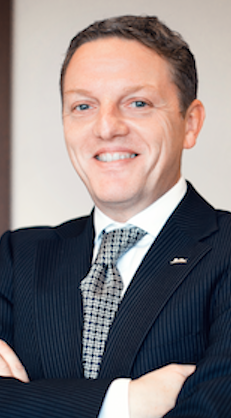
Thomas Hagemann named VP for Carlson Rezidor Hotel Group

0

hm160614_thomashagemann_carlsonrezidorhotelgroup
Thomas Hagemann

CARLSON Rezidor Hotel Group has appointed Thomas Hagemann to the newly created position of vice president, future openings and special projects.

Based in Singapore, Hagemann is responsible for the hotel group’s new hotel openings in the Asia-Pacific region.

He brings to his new role extensive experience in opening new hotels, and was most recently the district director responsible for five hotels in Sochi, and general manager for Radisson Blu Resort and Congress Centre, Sochi, the host hotel of the Winter Olympics Games.

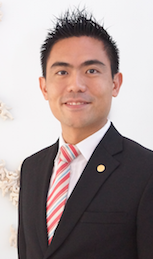
Capri by Fraser, Changi City/Singapore gets new GM

0

hm160614_vernonlee_frasershospitality
Vernon Lee

FRASERS Hospitality has appointed Vernon Lee as the new general manager of Capri by Fraser, Changi City/Singapore, to oversee the management and operations of the hotel residence.

He was most recently hotel manager of Village Hotel Albert Court Singapore, under Far East Hospitality.

Lee began his career in the travel industry at Singapore Airlines, where he was station manager across several key cities including Frankfurt, Zurich, Cairo, New York, Houston and Singapore.

Visit Malaysia Year starts 2014 well

0

ARRIVALS to Malaysia are on the rise with 10 per cent year-on-year growth recorded for 1Q2014 at 7.1 million, over 6.5 million for the same period last year.

According to statistics from the Immigration Department of Malaysia, Singapore remains Malaysia’s largest source market by a large margin with 3.5 million arrivals in Q1.

In contrast, Malaysia’s second-largest source market, Indonesia, sent 676,328 arrivals. China takes third (520,466), followed by Thailand (333,131), Brunei (296,119), India (172,899), Australia (156,662), Japan (149,859), the Philippines (144,932), and the UK (125,814).

Malaysia’s growth comes in the face of the disappearance of Malaysia Airlines’ flight MH370, which led to a suspension of Visit Malaysia Year promotions in China (TTG Asia e-Daily, March 28, 2014).

Unsurprisingly, South-east Asian countries accounted for 72.1 per cent or 5.1 million arrivals. Vietnam took tops for the highest growth of 30.1 per cent.

On the medium-haul front, South Korea saw the highest growth rate with 37.1 per cent. Medium-haul markets provided 20.1 per cent of arrivals or 1.4 million tourists.

Longhaul markets sent 0.5 million tourists or 7.9 per cent of total arrivals. The number of arrivals from Russia grew the fastest at a rate of 25.3 per cent.

Cebu Pacific carves out routes to Sydney, Kuwait

0

CEBU Pacific Air (CEB) will tap the Filipino expatriate market with the introduction of its routes to Kuwait and Sydney that will begin this September.

Beginning September 2, CEB will operate the only direct service between Manila and Kuwait thrice a week.

On September 9, the LCC will commence four-times-weekly services from Manila to Sydney. Airbus A330-300 aircraft will be deployed on both routes.

“Our trademark low fares will allow our kababayans abroad, the global Filipinos, to visit home more often, as we had done in other destinations before, and at the same time attract Australian tourists into our shores,” said CEB president and CEO, Lance Gokongwei.

The airline is running an introductory offer from today until June 19 to mark the launch of these routes, for travel until December 31 this year.

Fares from Manila to Sydney start from 4,999 pesos (US$114), including fare, fuel surcharge and other fees but excluding the Philippine Travel Tax. Meanwhile, tickets to Kuwait start from one peso, exclusive of all other charges.

Visit www.cebupacificair.com for more information.

Starwood pads Malaysia portfolio with 2 new hotels

0

STARWOOD Hotels & Resorts Worldwide is set to launch the Four Points by Sheraton Puchong and Le Méridien Putrajaya by 2015, having signed a management agreement with IOI Properties Group for both.

“Malaysia’s strong economic growth and healthy tourism arrivals present us with a very exciting growth opportunity,” said Matthew Fry, senior vice president, acquisition & development, Asia-Pacific, Starwood Hotels & Resorts.

“Starwood’s development in the fast-growing districts of Puchong and Putrajaya will enable us to cater to Malaysia’s growing middle class and the increased number of business and leisure travellers in the market.”

Four Points by Sheraton Puchong, scheduled to open in 4Q2014, is located within Puchong in Selangor. Situated in the town’s new business district, the hotel is 32km from Kuala Lumpur International Airport and a 20-minute drive to the Kuala Lumpur city centre.

The 249-key hotel will feature 1,100m2 of meeting space, a swimming pool, two F&B venues including the signature The Eatery, a fitness centre, free Wi-Fi, free bottled water and free coffee, among others.

Le Méridien Putrajaya is slated for a 2015 opening and will provide 350 guestrooms, two restaurant concepts, a fitness centre, spa facilities, a swimming pool and over 1,630m2 in events space.

It allows guests easy access to the city’s commercial and retail areas, including the IOI City Mall that will open later in 2014.

India sheds ‘unsafe’ image with PR campaign, security measures

0

INDIA’S Ministry of Tourism is convening a high-level meeting and rolling out an international PR campaign to dispel the country’s negative image as a female-traveller-unfriendly destination and restore confidence among foreign tourists.

First in this two-prong strategy is a meeting that will gather the country’s tourism ministers and private sector delegates to discuss measures to improve the safety of foreign tourists. According to a ministry source, the meeting will take place within the next two months.

The ministry is joining hands with public-private partnership body, Experience India Society, to revamp India’s international image through a PR campaign that will be launched in the UK, Germany, Japan and the US for starters.

Speaking at a meeting with the Indian Association of Tour Operators (IATO) last week, tourism minister Shripad Yesso Naik said: “I am aware that the tourism industry in India is concerned about the safety and security of tourists, especially women. It is one of our topmost priorities to address this concern. We will soon work out a PR strategy to create a positive image of the country.”

The campaign blueprint will be finalised today and TTG Asia e-Daily understands that it will include fam trips for media and single female travellers, and advertising, among others.

However, Rajan Sehgal, managing director, Arrivals Air Services, felt more remains to be done. “A mere PR plan won’t help the cause. We need to have all hotels having women-only floors, and to sensitise our taxi drivers and tour guides towards respecting women travellers. Apart from male security personnel, we also need female security personnel so that female travellers feel comfortable.”

Sarab Jit Singh, senior vice president, IATO, emphasised the importance of timing, saying: “Half-baked and half-hearted approaches will not yield any result…It is important that the PR plan is approved on time and that there are no delays.”

Spanish travel advisory spooks outbound Thailand reservations

0

BOOKINGS to Thailand are being cancelled in droves because of Spain’s unwarranted travel advisory that should be dropped, says the Spanish Confederation of Travel Agencies (CEAV).

CEAV president Rafael Gallego said that the security situation at most Thai resorts is normal and called the travel advisory, which was issued in May following the coup, “exaggerated”.

He also urged Spanish authorities to revise the document “to avoid a situation of generalised concern among travellers, which is seriously prejudicial to the travel consultants sector”.

Major tour operator to Asia La Cuarta Isla, part of the Barcelo Group, said the warning is affecting not just current bookings but also reservations for the peak month of August and later in the year.

Product manager Natalia Sanchez said: “Cancellations are coming in all the time. We reckon it’s between 30 and 35 per cent so far.

“All the travel consultants are saying the same thing – that it is because of the travel advisory.”

She added: “Thailand is our number one destination in Asia and for the Spanish market as a whole. But now people are switching to countries like Vietnam and Indonesia instead, and also to the Caribbean.”

UPDATE (June 17, 2014) : Spain has since withdrawn its travel advisory against Thailand but warns its citizens to remain careful while travelling there

GHM trumps in The Setai Miami court case against Lehman Brothers

0

GHM has been cleared of claims of mismanagement at The Setai Miami by property owner Lehman Brothers after two years or arbitration proceedings in Florida.

The ICC International Court of Arbitration last week ruled that the allegations brought against GHM were groundless and ordered damages to be paid to the hotel company for improper termination of the hotel management agreement.

In March 2012, Lehman Brothers forcefully took over The Setai Miami with claims that GHM was mismanaging the property.

However, Lehman’s own expert during the trial admitted that GHM had “achieved RevPAR levels 76 per cent higher than the competitive set”.

In its findings, the Tribunal rebuked Lehman for seeking excuses for termination of the agreement. Lehman is expected to make full compensation to GHM within 30 days of the ruling.

GHM president, Hans R Jenni, said in a media statement: “Needless to say, we are very pleased with the Tribunal’s conclusion, along with the complete and total legal victory. More importantly, it vindicates GHM of the wrongful accusations and upholds our reputation as a hotel management company of the highest repute and calibre.”

Recouping losses

0

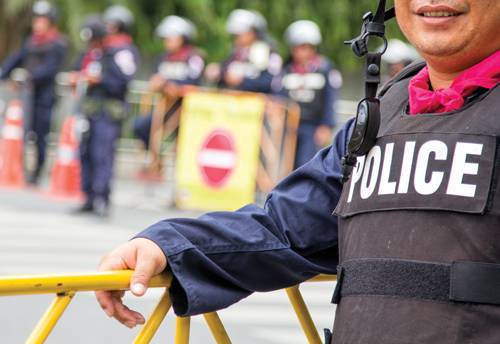
Will military intervention end Thailand’s political impasse and bring normalcy to the country or will it put a spanner in the works to revive tourism?

13-june

Thai army chief general Prayuth Chan-ocha’s seizure of power in a coup d’état on May 22 dealt another blow to the country’s tourism trade, which was already reeling from six months of street protests.

The general said he staged Thailand’s latest coup  to restore peace and order to the kingdom. Whether his bid will be successful in the long term remains to be seen, but the imposition of martial law brought an immediate end to the almost daily, and often deadly, clashes between pro- and anti-government groups.

Curfew curbs unrest, arrivals

Military rule and the curfew are clearly having chilling effects on the tourism industry, which accounts for about 6.5 per cent of the Thai economy and employs more than four million people.

Kubilay Atac, general manager of Pegas Touristik Thailand, one of the country’s largest inbound operators specialising in the Russian market, said the coup was having a “huge” negative impact on arrivals.

“The problem is nationwide, but Bangkok and Pattaya are the worse affected,” he said. “We’re receiving hundreds of calls a day concerning safety from overseas agencies and clients.”

Almost half of the MICE groups due to arrive in Thailand in the immediate term have cancelled, said Pornthip Hirunkate, managing director of Destination Asia Thailand and vice president of the Tourism Council of Thailand. FIT and group series are faring better, but cancellations still run at 20 per cent.

“We’ve talked with a lot of other people in the trade, and they’re experiencing the same impact,” said Pornthip.

Other travel specialists said while they had not had too many cancellations, advance bookings for this year’s peak season were down significantly. Many believe the best thing the local industry can do is to provide accurate updates to their clients about the ground situation and that Thailand remains open for business despite the constitutional and political crisis.
Hans van den Born, managing director of Diethelm Travel Thailand, said that during a recent regional company meeting in Bangkok, staff and executives hit the capital’s streets to interview tourists for their reactions on the current situation, most of which were positive. They are now showing the video clips to clients.

Chotechuang Soorangura, associate managing director of NS Travel & Tours, said his company had also used Facetime and Skype on their connected devices to show international clients a live feed of daily life in Bangkok.

While communicating with clients is key, many in the trade feel there is little more they can do at the moment and do not think promotions or heavy room discounts will help win back tourists, as Tobias Fischer, business development manager at Go Vacation Thailand explained.

“Until there’s some sort of end in sight to the current situation there’s no point in investing much in (hotel) promotions,” he said. “Tourists need to feel confident about coming to Thailand again.”

At press time, the nighttime curfew has been lifted in 10 destinations namely Phuket, Koh Samui, Pattaya, Hua Hin, Cha-am, Krabi, Phang Nga, Hat Yai, Koh Chang and Koh Phangan.
Most visitors to Thailand will not be affected by military rule. Key attractions, infrastructure and transport systems are operating normally. The curfew from 00.00 to 04.00, which remains in Bangkok and other parts of the country, is the issue that impinges most on the visitor experience.

People arriving or departing the country are permitted to travel during the curfew, but they are advised to keep their passports, air tickets and related information on hand in case they are stopped by the military. It is also a legal requirement to carry an official photo ID or a passport at all times when in Thailand. Spot checks are more likely given the current situation, and failure to produce the necessary documents can result in arrest. Meanwhile, passengers unable to secure transport from Suvarnabhumi Airport during curfew hours can use the CIP Lounges on the third floor.

Travellers are also urged to read the fine print of their insurance policies relating to claims directly related to a coup, said Michele Anne Minjoot, vice president and head of communications at ACE Travel Insurance.

“Thailand remains open for business and anybody traveling there should heed their local country’s travel advisory,” she said. “We have not imposed any additional policy restrictions or increased our premiums due to the coup d’état.”

But the fact remains that coups, curfews and martial law scare away tourists and business travellers, as do travel advisories which have been issued by more than 50 countries. As a result, Tourism Authority of Thailand (TAT) has shaved 2.6 million arrivals and 96 billion baht (US$2.9 billion) from its 2014 target.

Domestic crisis, regional impact
While neighbouring countries have not been immune to the crisis in Thailand, its overall impact is more ambiguous.

George Ehrlich-Adam, general manager, Exotissimo Vietnam, said: “We have had two groups that requested a change to Vietnam due to issues in Thailand, but we do not see any particular spike otherwise with shifted bookings. Our numbers are slightly up compared with last year, and as we are in the low season there is less of an immediate effect.”

Paul Stevens, vice president of operations for Accor Thailand, Vietnam, Cambodia, Laos, Myanmar and the Philippines, said: “It is hard to say whether or not the developments in Thailand have had an impact on the tourist traffic into neighbouring countries.

“However, while business in Thailand has been lower than expected, our hotels in Vietnam had a strong first quarter this year with almost 25 per cent increase in the number of guests.”

In Cambodia, Christian de Boer, general manager of Shinta Mani Resort in Siem Reap, saw an initial downturn in business post-coup, but this was swiftly followed by a last-minute surge in bookings a few days later from travellers diverting to Cambodia from Thailand.

But Steve Lidgey, general manager of Phnom Penh-based A Touch of Asia, remarked: “Business is definitely down in Cambodia against last year where the Western markets are concerned, and we expect fewer last-minute bookings. However, the Asian market, which is about 80 per cent of our business, remains strong.”

Likewise, Nick Reth, operations director and owner of Phnom Penh-based Apsara Tours, expects some negative impact as close to half of his clients, especially those from Europe and the US, visit Cambodia in combination with Thailand or Vietnam. “However, only a small number of groups have cancelled their trips due to the unrest,” he commented.

Over in Laos, “there has been a slowdown in terms of confirmation speed from clients interested in tours combining Laos and Thailand”, said Laurent Granier, co-founder and general manager, Laos Mood Travel. “Enquiries keep coming in, but people are cautious with the news and developments in Thailand – making them hesitant to pay deposits. Suvarnabhumi Airport is still a major gateway to Laos and clients will ask about the situation there.”

Country in limbo

In the bigger picture, Thailand is probably now as politically divided as it ever has been. With elections not expected to be held for at least a year-and-a-half and an increasingly vocal anti-coup movement staging small peaceful rallies, the potential for further unrest remains a distinct possibility.

That said, many trade players believe the country will weather the current political storm. Speaking the day after martial law was declared on May 19, Moevenpick’s COO Middle East and Asia, Andreas Mattmüller, said: “Thailand is like a cat, it always manages to land on its feet.”

The problem is, statistically speaking, if you drop a cat out of a tree enough times it will eventually break its back. With some 20 coups under Thailand’s belt since 1932, will this putsch be the one that tips the balance?

USEFUL INFORMATION
• Tourism Authority of Thailand Call Centre 1672
• Tourist Police Call Centre 1155
• AOT (Suvarnabhumi Airport) Call Centre 1722
• Regular official news www.tatnews.org
• Useful local blog with tourism and incident updates www.richardbarrow.com/@RichardBarrow (Twitter)

Additional reporting by David Andrews

An open letter to the ambassadors of nations represented in Thailand and the international media

0

In the wake of recent political developments in Thailand, I feel compelled to write to address what I believe to be gross misinterpretations of the current situation in Thailand by certain Western nations and elements of the international media. As a naturalised Thai citizen born in America – and who have lived in Thailand for over 51 years without forgetting my Western roots – I feel that I have a unique perspective on recent events and the reactions to them.

I am distressed by the interpretations made of both the coup that recently took place in Thailand and the situation that led to it. Put succinctly, many of the Western nations and international media have gotten it wrong. From where we sit in Thailand today, it is not an issue of which political party was right and which was wrong. All Thais will pull together to work within a system that is acceptable and sustainable to the Thai majority. Vilifying one party or politician will not lead to constructive reconciliation moving forward.

A coup d’état is not a positive event by any means. I do not believe that the Thai military considered it to be positive, but rather a necessary step that was taken reluctantly. I cannot think of one Western country that has in recent memory experienced the social and political gridlock that Thailand suffered through for the past six months, resulting in government and political paralysis against a background of increasing violence and needless loss of lives. As the situation escalated, it became painfully clear that there would be no resolution as neither side of the political divide offered any reasonable compromise or demonstrated any inclination to compromise. The military showed great restraint as it stood by watching the situation deteriorate, allowing ample time and opportunity for the politicians to resolve the crisis. The price for that period was paid for by the Thai people, in blood, stress and economic sacrifice and only when it was clear that that there was no other reasonable solution did the Thai military step in.

It is easy for people far away to have characterised events in Thailand as a clash between ‘pro’ and ‘anti’ democracy protestors. This is not correct. There are very few people on either side of the political debate who oppose the idea of a functional democratic system for Thailand. I believe the Thai military, the majority of political parties in Thailand and the Thai people all want democracy, and a stable and functioning democracy that represents the will of the Thai majority.

I believe the current environment provides the platform for an effective ‘reboot’ of Thai democracy that will meet the needs and aspirations of the Thai people. Thailand is a relatively young democracy and as every Western democracy has gone through periods of great change and reform, this is precisely what Thailand is experiencing as part of the maturation of its political system. Recent developments are an important step towards the establishment of a strong and stable political structure that will underpin Thailand’s success going forward.

However, Thailand is not only facing political challenges, but also the compounding effects of exaggerated media reports which paint a distorted and unrealistic picture of the situation. While such reporting may sell newspapers and draw TV audiences, it is fear-mongering which promotes a misunderstanding of the situation — this in turn influences government travel warnings worldwide and has a disastrous effect on tourism. There are no concerns whatsoever for personal safety within Bangkok’s large expatriate community or the millions of tourists still enjoying their holidays in Thailand, yet this is not mentioned in the international media reports or travel warnings. Life goes on very much as usual in Thailand but this is far from the impression that one gets when watching the international news channels.

Hospitality has a huge impact on the Thai economy, generating millions of jobs and billions of dollars in revenue for a country that is known throughout the world for its charm, safety and hospitality. However, 62 countries have issued travel advisories for Thailand, 18 of which contain a red alert advising citizens to defer all travel to Thailand, according to the Foreign Affairs Ministry. These travel warnings are baffling to those of us who understand Thailand and fly in the face of the fact that Thailand continues to peacefully welcome millions of travellers from all over the world. It is the responsibility of all parties, and the media in particular, to present the situation accurately and in proper context to promote understanding, rather than misunderstanding, of the situation. All parties involved need to think hard about the detrimental effect that their words and actions are having on the people of Thailand.

Today’s travellers are savvier than they have ever been and with many countries around the world facing economic challenges, political difficulties and natural disasters, our globetrotting community understands how to take these factors into account when making their travel plans. Increasingly, travellers are relying on first-hand advice from people at ground zero who understand that this is simply part of the international travel landscape. If the media continues to promote sensationalistic and simplistic viewpoints of the situation in Thailand, they not only do a disservice to the viewing public but also run a very real risk of making themselves irrelevant.

Thailand remains a peaceful and welcoming country, with unique natural and cultural attractions for travellers to experience and is very much open for business — this is the reality and this is the message that is NOT being sent by most major international media outlets and embassies.

Despite my deep concerns regarding the media’s portrayal of the current situation in Thailand, I have great respect and appreciation for the positive role that the media can play in promoting understanding of countries and cultures. I am hopeful that all parties concerned, the media and foreign missions to Thailand included, can pull together for the greater good of the Thailand that we know and love. I urge the media to exercise its persuasive power with principle and integrity, to promote an honest and clear understanding of the current situation. I urge foreign governments to reassess the severity of their travel warnings and to revise and update prior statements to reflect the reality that Thailand is completely safe for travel. I applaud those nations and media outlets already portraying news of the coup and the security situation in Thailand in a balanced manner — your integrity is appreciated.

We all agree that the tourism industry is critical to the growth of Thailand and its economy, and it should not become a casualty of misunderstanding, misrepresentation and hyperbole. Thailand very much remains open for business and is as safe, friendly and welcoming for tourists as it has always been.

I know that my letter is only one voice, but without voices there can be no conversation. I hope that my thoughts will at least cause some reflection, and generate informed dialogue, on the realities of Thailand today.

Your sincerely,
William E Heinecke
CEO and chairman
Minor International

By William E Heinecke, CEO and chairman, Minor International