Intra-ASEAN travel remains crucial for most countries in the 10-member alliance, but it’s not growing as fast as visitors from other regions for some. TTG Asia reporters give a snapshot
» SINGAPORE by Paige Lee Pei Qi
 Singapore’s steady stream of new attractions has helped to keep its destination appeal fresh for ASEAN visitors.
Based on the latest statistics from the Singapore Tourism Board (STB), the city-state welcomed 4.5 million visitors from ASEAN countries from January to September 2013, a growth of 6.6 per cent year-on-year. Some 5.7 million visitors from ASEAN countries visited Singapore in 2012, increasing 6.8 per cent from 5.4 million in 2011.
From January-September 2013, the top three ASEAN source countries were Indonesia with nearly 2.3 million arrivals (+9.3 per cent), Malaysia with 909,975 arrivals (+3.6 per cent) and the Philippines with 506,307 arrivals (+3.9 per cent) respectively.
Said Leong Yue Kheong, STB’s assistant chief executive, international group: “Due to close proximity and ease of access, many ASEAN travellers are familiar with Singapore and a significant portion of visitors from the region are repeat visitors, seeking new and refreshed experiences.”
Looking forward to adding new attractions like the Singapore Sports Hub into his outbound tour packages, Manfred Kurz, managing director of Diethelm Travel Malaysia, said: “This (sports hub) will definitely make a positive impact on creating awareness for Singapore and because it caters for a larger crowd, it will help to boost hotel accommodation and the entertainment industry in Singapore.
“However, it also depends on the attraction of the events – crowd-pulling events like tennis or football will do well,” he opined.
Agreeing, Dennis Law, managing director of Star Holiday Mart, said: “New attractions like the sports hub will help make Singapore become a world-class sporting city as well.” He, too, felt high-profile sporting events would put Singapore in good stead to draw travellers from ASEAN and around the world.
Highlighting the upcoming Women’s Tennis Association Championships, STB’s Leong believes that such new events have “kept up the momentum of Singapore as an ever-evolving destination” for new and repeat visitors alike.
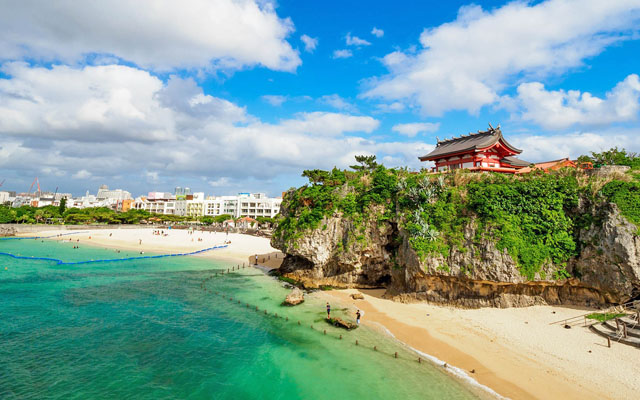
As for existing attractions, Min Liu, director of sales & destination marketing of Lex Travel, said the Marine Life Park (pictured on left), Universal Studios Singapore and Marina Bay Sands are “must-see hotspots”.
“(Travellers) especially want to see these new places that other parts of Asia do not have and they want to experience the latest things,” said Liu, whose bulk of ASEAN tourists come from Indonesia.
Leong added: “The ASEAN Economic Community (AEC) 2015 calls for a well-connected ASEAN region, where Singapore’s strong regional air connectivity will complement the AEC, and potentially boost intra-region travel within ASEAN.”
Numbers that matter
4.5 million visitor arrivals from ASEAN
38 per cent of total arrivals were from ASEAN
6.6 per cent year-on-year growth for ASEAN arrivals
2.3 million was the number of arrivals from Indonesia, Singapore’s top source country
Note: Above statistics apply to the January-September 2013 period
» MALAYSIA by S Puvaneswary
 ASEAN arrivals to Malaysia have dipped slightly in recent years, but the decline is “not significant” as regional inbound figures still make up more than 70 per cent of total international arrivals to Malaysia, said Syed Yahya Syed Othman, ASEAN director of Tourism Malaysia.
Intra-ASEAN travel contributed 76.8 per cent of total arrivals to Malaysia in 2010, 76.4 per cent in 2011, 75.1 per cent in 2012 and 74.3 per cent in 2013. The top three arrival markets from ASEAN last year was led by Singapore, followed by Indonesia and Brunei respectively.
Comparing last year’s arrival figures with 2012, ASEAN countries that posted year-on-year growth were Cambodia (+28.6 per cent), the Philippines (+9.5 per cent) and Vietnam (+11.7 per cent), while Thailand (-8.4 per cent), Brunei (-1.5 per cent) and Laos (-7 per cent) saw year-on-year declines.
Increasing air connectivity within South-east Asia and beyond, the rise of LCCs and growing disposable incomes of regional travellers were cited by Syed Yahya as likely reasons for the slight declines in share of ASEAN arrivals to Malaysia.
Furthermore, he said ASEAN outbound travellers are more compelled to visit other Asia-Pacific destinations like Japan, which has eased visa regulations for Malaysian and Thai visitors. South Korea and Hong Kong have also been aggressive in their marketing campaigns to woo Muslim travellers.
On the other hand, more direct air links from medium and longhaul destinations have led to growth in inbound traffic from destinations outside ASEAN to Malaysia. Last year saw the introduction of Malaysian services from airlines such as Air France, Turkish Airlines and Regent Airways, while Malaysia Airlines started its Kuala Lumpur-Dubai flights in August 2013 and Malindo Airlines also commenced flights from Mumbai and New Delhi early this year.
Hamzah Rahmat, president, Malaysia Association of Tour & Travel Agents, pointed out that improvements in air connectivity had resulted in increased arrivals from China and India, both of which were also on Malaysia’s top 10 arrival source markets.
The number of Chinese and Indian travellers visiting Malaysia compared with their population bases is still insignificant though, said Hamzah, hence there is still potential to tap both markets further to draw more big spenders.
While ASEAN travellers stay for comparatively shorter periods than medium and longhaul travellers, shorthaul visitors are as important as they tend to make more frequent visits, said Hamzah.
Numbers that matter
19.1 million visitor arrivals from ASEAN
74.3 per cent of total arrivals were from ASEAN
8.4 per cent year-on-year decline in arrivals from Thailand
28.6 per cent year-on-year growth in arrivals from Cambodia
Note: Above statistics apply to full-year 2013
» MYANMAR by Mimi Hudoyo
 An influx of direct air connections in the last two years has paved the way for higher arrivals from South-east Asia to Myanmar.
Based on arrival figures at Yangon International Airport – through which the majority of foreigners enter Myanmar from – Thailand, Singapore and Malaysia were the top ASEAN source markets for Myanmar in 2013, accounting for 192,796 arrivals to the country. The top source countries to Myanmar last year were Thailand (116,128), followed by Japan (66,772), South Korea (54,599) and China (54,325) respectively.
Overall figures for the ASEAN market were not available at press time, but Asian arrivals numbered 550,178, or 68.5 per cent of the total 900,161 international arrivals via the Yangon gateway last year. West Europe contributed 148,528 arrivals (18.5 per cent) and North America contributed 57,873 arrivals (7.2 per cent).
“We are looking at balanced growth (between ASEAN and other countries) as the regional market potential is big,” said Htay Aung, Myanmar’s union minister of Hotel & Tourism, who expects to achieve this as accessibility with neighbouring countries opens up.
Accessibility remains a “key issue” for ASEAN countries without land borders with Myanmar, commented Aung Myat Kyaw, chairman of Union of Myanmar Travel Association.
“The Philippines, for example, is quite far from us. There is no direct flight so it will take more time to attract travellers from this market, while there is a growing market from Singapore and Malaysia (which have direct links),” he said.
Travellers from Thailand and Laos mostly come on pilgrimage tours, while South Koreans and Japanese usually visit the country for leisure, business and MICE, Aung Myat Kyaw added.
Numbers that matter
900,161 international arrivals through Yangon International Airport
68.5 per cent of arrivals were Asian
116,128 arrivals from Thailand, Myanmar’s top source market
14.5 per cent of arrivals were from Thailand
Note: Above statistics apply to full-year 2013
» THAILAND by Xinyi Liang-Pholsena
 ASEAN visitors to Thailand are on the rise, although its share in overall arrivals has declined over the last few years.
Thailand welcomed close to 7.4 million visitor arrivals from ASEAN countries in 2013, up 27.7 per cent from 2012, according to statistics from the Thai Ministry of Tourism and Sports.
Malaysia topped the ASEAN list with close to three million arrivals (+17.3 per cent), followed by Laos with 1.1 million arrivals (+13.3 per cent) and Singapore with 936,477 arrivals (+12.7 per cent) respectively. The remaining six countries too posted double-digit growth last year.
Despite growing destination competition across Asia, Tourism Authority of Thailand (TAT) governor Thawatchai Arunyik opined that attracting ASEAN visitors to Thailand is “becoming easier” due to improved connectivity from LCCs linking major cities in the region.
TAT will focus its strategy on increasing revenue from first-time travellers, especially from secondary cities in Asian markets. In particular, the Asian Highway will be “one of the major factors in promoting intra-ASEAN connectivity” as the AEC takes effect in 2015, Thawatchai posited.
Likewise, inbound tour operators remain confident that Thailand will stay a firm favourite among regional visitors.
“We have seen very good performance from ASEAN over the last few years. Last year we recorded about 20 per cent growth and expect a similar performance this year, although that depends on the situation in Bangkok,” said Wacharaporn Phiewkaow, managing director of Discovery Holidays.
“Myanmar, in particular, has risen since last year. We are seeing a lot of incentive and seminar requests from Myanmar, whereas it’s regular group tours from the Philippines and Indonesia,” she shared.
The Bangkok-based firm will sharpen its attention on Indonesia, the Philippines and Myanmar this year by attending more road shows and travel fairs in these emerging markets, especially as visitors from mature sources like Singapore and Malaysia tend to be FITs with increasingly less reliance on travel agencies, Wacharaporn shared.
On the other hand, Loo Eng Wah, managing director of Phuket-based Pristina Tours, still sees potential in Malaysia. He said: “It used to be Malaysian Chinese visiting Thailand, but now we’re seeing more Muslims from Malaysia too although the ratio is still low compared with the Chinese.
“(Malaysian Muslims) mainly go to Hat Yai, but more are also visiting Bangkok,” he revealed. “We are also pushing Chiang Rai and Chiang Mai, which have sizable Muslim communities. But Malaysia currently lacks direct flights to these northern Thai cities.”
Numbers that matter
7.4 million visitor arrivals from ASEAN
27.7 per cent year-on-year growth in ASEAN arrivals
28 per cent of arrivals were from ASEAN
3 million was the number of arrivals from Malaysia, Thailand’s top ASEAN source market
Note: Above statistics apply to full-year 2013
» VIETNAM by Xinyi Liang-Pholsena
 Steady growth posted by regional markets to Vietnam has been eclipsed by the sharp surges in visitor arrivals from China and Russia in recent years.
Based on statistics from the Vietnam National Administration of Tourism, Cambodia topped the regional charts in 2013 with 342,347 arrivals (+3.1 per cent), followed by Malaysia with 339,510 arrivals (+13.5 per cent), Thailand with 268,968 arrivals (+19.1 per cent) and Singapore with 195,760 arrivals (-0.2 per cent) respectively.
Despite the slight overall dip in figures from Singapore, Robert Tan, owner of Lac Hong Voyages, said it is still “a growing market, especially the younger segment as they usually book free and easy packages for the weekend, visiting the cities of Hanoi or Ho Chi Minh City and staying in three-star hotels”. The rise of LCCs in South-east Asia has helped to attract younger travellers from the region to Vietnam, he added.
Industry players also singled out Vietnam Airlines’ Ho Chi Minh City-Jakarta service launched in December 2012 as a significant driver of the emerging Muslim segment, leading to a 15.7 per cent year-on-year hike in visitor arrivals from Indonesia to 70,390 in 2013.
For Peter Pham Tien Dung, director of GoldenTour & Convention, the Muslim market has grown by 10 per cent last year. “Muslim FITs from Malaysia in particular are growing fast, rising 30 per cent last year,” he added.
“The halal market from Indonesia and Malaysia has grown 25 per cent last year compared with 2012,” said Pham Ha, founder and CEO of Luxury Travel Vietnam, which revamped its halal travel website late last year. “We expect an increase of 30 per cent growth in 2014.”
Although travellers from such longhaul markets as the Nordic and Middle East tend to be longer-staying and higher-yield, tour operators do not profess a preference for any market. GoldenTour’s Pham said: “The ASEAN markets helped to keep business going in 2010 when the financial crisis hit the longhaul markets. Furthermore, Asian markets will still visit Vietnam during the low-season months between April and August, helping us to have business all year round.”
However, Lac Hong’s Tan sees a need to increase the length of stay of ASEAN visitors. He said: “Tour operators should encourage shorthaul markets to stay longer by rolling out more creative programmes. For example, we try to promote multi-destination travel by combining visits to Dalat or central areas like Hue and Hoi An with a city itinerary.”
Numbers that matter
7.6 million international visitor arrivals
342,347 arrivals from Cambodia, Vietnam’s top ASEAN source market
15.7 per cent growth in arrivals from Indonesia
0.2 per cent decline in arrivals from Singapore
Note: Above statistics apply to full-year 2013
» INDONESIA by Mimi Hudoyo
Improving air access in ASEAN has led to the emergence of new regional markets like Thailand and the Philippines for Indonesia.
“ASEAN has always been the top (region) for Indonesia with neighbouring Singapore and Malaysia at the top of the list,” said Nia Niscaya, director of international promotions at the Ministry of Tourism and Creative Economy. “In the last couple of years we have also seen significant growth of arrivals from the Philippines and Thailand.”
Arrivals from Singapore reached close to 1.4 million in 2013, up 8.5 per cent from some 1.3 million in 2012. Malaysia ranked second with over 1.2 million arrivals, 9.3 per cent higher than 1.1 million in 2012.
The Philippines last year contributed 129,223 arrivals to Indonesia, a 13.7 per cent increase from 113,635 in 2012. Also chalking up double-digit growth was Thailand, hiking 13.7 per cent to 101,390 visitors last year from 89,142 in 2012.
In 2013, ASEAN accounted for approximately 35 per cent of 8.8 million international arrivals and 58 per cent of 4.9 million Asian arrivals to the country.
Meanwhile, once longhaul-focused inbound tour operators such as Pacto, Bhara Tours, Panorama Destination and Aneka Kartika Tours & Travel Services have been diversifying their markets to Asia and particularly ASEAN.
Adjie Wahjono, operations manager, Aneka Kartika Tours & Travel Surabaya, said: “The regional market is too big to ignore, which was why we have been after (ASEAN travellers) in last few years. Singapore and Malaysia continue to grow, but with the opening of flights from other ASEAN countries to Indonesia, markets like the Philippines, Vietnam and Thailand are also up.
“Last year the composition of our markets was 70 per cent Europe and 30 per cent South-east Asia, this year we are looking at 60:40,” he added.
Thanks to Indonesia’s huge middle class and LCC connections to second-tier cities, Indonesian outbound travel consultants also said that ASEAN countries, especially Singapore and Malaysia, will continue to be the most popular outbound destinations, particularly for first-time travellers and weekend vacationers.
Outbound operators have also seen growing demand for midhaul
destinations such as South Korea and Japan, whose NTOs have been more aggressive in engaging with Indonesian travel companies than their counterparts from Singapore and Malaysia.
Panorama Tours vice president leisure operations, Rery Sankyo, said: “For example, we have received up to six Japan fam trips for different prefectures in a year, (which) improve our knowledge of the destination and in turn enable us to introduce new products to clients.”
Numbers that matter
8.8 million international visitor arrivals
35 per cent of arrivals were from ASEAN
1.4 million arrivals from Singapore, Indonesia’s top source market
13.7 per cent growth in arrivals from both Thailand and the Philippines
Note: Above statistics apply to full-year 2013
» PHILIPPINES by Paige Lee Pei Qi
 Singapore consistently fuels the bulk of ASEAN visitor arrivals to the Philippines, comprising 40 per cent of regional inbound traffic with 100,334 arrivals from January through July 2013.
Clifford Neo, managing director of Dynasty Travel Singapore, sees the allure of Philippine destinations for Singaporean travellers, particularly Manila, Boracay, Cebu, Davao, Palawan and Bohol. He said: “The Philippines appeals especially to nature and beach lovers aged between 25 and 40.”
In the second spot after Singapore in the ASEAN arrival chart is Malaysia, which sent 82,893 visitors between January and July 2013. In the third and fourth spots are, respectively, Thailand and Indonesia.
Although total ASEAN arrivals reached 242,698 during the first seven months of 2013, the region accounted for just a 8.7 per cent market share, a sharp contrast from the East Asian market – including South Korea, China, Hong Kong, Japan, Macau and Taiwan – that chalked almost 50 per cent of international arrival figures during the same period.
Meanwhile, the Philippine trade is eager to woo back regional travellers, especially in the aftermath of the twin disasters that struck the country last year.
Said Philippines-based Annset Holidays president, Serafina Joven, whose top ASEAN-performing countries include Singapore and Malaysia: “The Philippines is more than ready to welcome back travellers and the perception that tourist attractions are affected by the disasters is not true.”
“Very confident” of the destination making a comeback, Philippine Department of Tourism (DoT) assistant secretary for tourism development planning, Rolando Canizal, said the NTO is targeting 6.8 million international visitor arrivals this year, up from 4.2 million in 2013. In 2012, Philippines welcomed 4.3 million international visitors.
Earlier in January, the DoT declared 2015 as Visit Philippines Year to coincide with the Asia Pacific Economic Cooperation Leaders Summit next year. The country will also host the ASEAN Tourism Forum in 2016.
Numbers that matter
242,698 visitor arrivals from ASEAN
8.7 per cent of arrivals were from ASEAN
49.2 per cent of visitor arrivals were from East Asia
100,334 visitor arrivals from Singapore, the Philippines’ top ASEAN source market
Note: Above statistics apply to full-year 2013Note: Above statistics apply to the January-July 2013 period
» CAMBODIA by S Puvaneswary
ASEAN is muscling up to become a major source market for international arrivals to Cambodia.
The market share of ASEAN arrivals to Cambodia climbed from 38.2 per cent in 2011 to 42.2 per cent in 2012, further increasing to 44.1 per cent from January to November 2013, based on latest statistics available from Tourism Cambodia at press time. Of the 3.8 million foreign arrivals to Cambodia during the first 11 months of 2013, ASEAN tourists accounted for nearly 1.7 million.
Among the ASEAN source countries, Laos registered the biggest surge in arrivals during the January-November 2013 period with year-on-year growth of 67.2 per cent (376,226 arrivals), followed by Indonesia at 25.9 per cent (25,395 arrivals) and the Philippines at 22.8 per cent (108,801 arrivals).
The average length of stay of ASEAN visitors to Cambodia varies from three to four days, compared with four to five days for China, South Korea and Japan, and seven to eight days for longhaul markets like Europe, the US and the Middle East, according to Lor Thoura, deputy director marketing and promotion department, Ministry of Tourism. All the above markets are equally important to Cambodia, he pointed out.
Om Pharin, managing director of Charming Cambodia Tours, agreed: “During the financial crisis in Europe, we survived because of the strong Asian market. This year, Europeans are starting to travel again, but the currencies of some ASEAN economies such as baht, rupiah and ringgit have depreciated and this will affect the disposable income of regional travellers.”
Thoura observed that there are more groups than FITs for ASEAN travellers to Cambodia, and most inbound tour operators do not sell Cambodia as a mono destination but combine it with neighbouring countries such as Thailand, Vietnam and Laos.
Numbers that matter
1.7 million visitor arrivals from ASEAN
44.1 per cent of visitor arrivals were from ASEAN
781,849 arrivals from Vietnam, Cambodia’s biggest source market
67.2 per cent year-on-year growth in arrivals from Laos, which registered the biggest surge in arrivals
Note: Above statistics apply to the January-November 2013 period
A 90-minute game-changer on track
All eyes are now cast upon the upcoming high-speed rail (HSR) link, which is expected to whiz passengers between Kuala Lumpur and Singapore in just 90 minutes.
The HSR, set for completion in 2020, will dramatically cut the journey time between the two cities. It currently takes up to eight hours by train, five hours by bus, and 45 minutes by flight excluding airport check-in and transfers.
Colin Stewart, director and global rail leader at international engineering consultancy Arup, expects this new link will “benefit both cities tremendously”.
“Think about the increased capacity on the train which can seat 1,000 passengers at any one time,” he said. “If you have one train running every three minutes, that would mean approximately 18,000 passengers every hour.”
Stewart also expects the HSR will be a preferred travel option over air in future. He commented: “For a train, you just have to turn up at the station 10 to 15 minutes earlier, but if you are flying you have to reach (the airport) up to two hours in advance for all those security measures.
“The trains will be able to bring passengers into the heart of the cities and they can save additional time transporting from the respective airports. Not only will this appeal to business travellers who are pressed for time, it will also appeal to leisure travellers who may only have a weekend or even just a day to spare – but of course the train fares must be on par with flight fares,” he added.
While modern HSR systems can operate up to 400km per hour, the optimal speed for the 330km Kuala Lumpur-Singapore route is 250km per hour, taking into consideration the terrain and geography between the two destinations, according to Stewart.
Drawing parallels between the Kuala Lumpur-Singapore link and the 142km Guangzhou-Shenzhen-Hong Kong Express Rail Link (XRL) – Arup is handling the preliminary design for the XRL’s Hong Kong tunnel section – Stewart said: “Both projects are looking to connect two densely populated countries together and the key consideration of such projects is that the design must be of a consistent, single standard design despite different countries.”
The HSR system design for such inter-country connections must also take into account the immigration clearance entry and exit points, which can be more complicated, he added.
The tender process for this project is expected to begin in 2H2014, and Stewart is “hopeful” of Arup winning given its extensive experience with similar HSR projects worldwide.
By Paige Lee Pei Qi