TTG Asia
Asia/Singapore Sunday, 5th April 2026
Page 222

Hot prospects in the Philippines

0
Mount Pinatubo in Clark

The Philippines’ tourism industry is flourishing, fuelled by robust visitor spending, and a productive public-private sector partnership in development and marketing.

The country boasts one of the highest per capita spending rates in the Asia-Pacific region, and attracts tourists who stay longer than in neighbouring destinations.

Balabac Island in Palawan

Tourists in the Philippines spend US$1,591 on average, and stay in the country for 11.9 nights on average, compared to 11.6 nights in Indonesia and nine nights in Thailand.

“We are not competing on the basis of volume, but rather on quality and value for money,” said Vir Maguigad, director, office of tourism standards and regulation at the Department of Tourism (DoT).

Tourism is a major economic driver in the Philippines, contributing 8.6 per cent to the country’s GDP in the previous year and generating substantial employment opportunities.

While foreign arrivals are expected to recover only in 2026, tourism receipts from January to June 2024 stood at 282.2 billion pesos (US$14.7 billion), exceeding 245 billion pesos recorded during the same period in 2019.

Moreover, tourism receipts reached a new high of 482.5 billion pesos last year, surpassing the previous record of 482.2 billion pesos set in 2019, according to DoT data.

The strong partnership between the public and private sectors in marketing and promoting the Philippines through travel shows and exhibitions is another positive indicator of the country’s tourism growth.

For example, the government aims to attract more business events to the Philippines, acknowledging the substantial spending power of business delegates who often spend five to six times more than leisure travellers, shared Margarita Nograles, chief operating officer of Tourism Promotions Board, DoT’s marketing arm.

This has led to the launch of the new initiative, MICE Philippines: We take your business to heart, in positioning the Philippines as a leading business destination in Asia.

Meanwhile, the private sector, through the Philippine MICE Academy, is actively elevating business events standards by providing training to stakeholders across the country.

Apart from that, local travel and tourism industry associations are also working towards developing and promoting new destinations to alleviate tourism congestion in popular areas.

For instance, Philippine Tour Operators Association’s president, Arjun Shroff, is advocating for new destinations such as Capiz, Balabac, Pag-Asa Island, and Tawi-Tawi.

Mount Pinatubo in Clark

Shroff, who is also managing director of Shroff International Travel Care, observed that ecotourism, gastronomy, and experiential tours are gaining popularity among tourists.

Tourism secretary Christina Frasco further highlighted the Philippines’ commitment to infrastructure development. By expanding road networks, constructing new airports, and modernising Manila’s Ninoy Aquino International Airport, the country has made significant strides in attracting tourists and delegates.

The country is also experiencing a boom in hotel and venue development, extending beyond Metro Manila to other destinations like Clark, Cebu, and Davao, shared Frasco.

Capella Hotel Group expands with four new luxury properties in 2025

0

Capella Hotel Group has unveiled plans for four new properties opening in 2025 anchored by partnerships with architects and designers for Capella Taipei in 1Q2025, Capella at Galaxy Macau and Patina Osaka in 2Q2025, as well as Capella Kyoto, set to open 4Q2025.

Capella Taipei is an 86-room urban retreat offering a modern mansion experience along Taipei’s Dunhua North Road, while Capella at Galaxy Macau will feature 93 keys that celebrates the city’s cultural heritage and tropical landscapes.

Capella Kyoto, opening in 4Q2025 in the Miyagawa-chō district, is a design collaboration with Kengo Kuma & Associates and Brewin Design Office

The 221-key Patina Osaka draws inspiration from Japan’s City of Water, and Capella Kyoto houses 89 rooms, which blend traditional Zen aesthetics with modern luxury.

Looking ahead, Capella aims to double its portfolio by 2030, with future projects including properties in Seoul, Riyadh, and Tianjin. The group is also innovating in digital payment solutions, including cryptocurrency acceptance at select properties.

“Our expansion strategy reflects three key principles: selecting destinations with rich cultural narratives, partnering with world-renowned architects who understand our vision of cultural authenticity, and maintaining an intimate scale across most properties to ensure highly personalised service,” said Cristiano Rinaldi, president of Capella Hotel Group.

“With these openings, we’re expanding from eight properties to 12 by the end of 2025, with plans to double our portfolio by 2030. Future projects include a branded residential development in Seoul and hotels in Riyadh, Saudi Arabia and Tianjin, China.”

New Great Barrier Reef boat launches in Cairns

0

Pure Snorkelling in Cairns has launched a new purpose-built A$1.5 million (US$945,000) vessel, offering visitors with limited time the chance to experience the Great Barrier Reef on a half-day snorkelling tour to a site not visited in nearly five years.

A joint venture between two Cairns family-owned reef operators who together have more than 60 years’ combined experience showcasing the Great Barrier Reef, Pure Snorkelling’s primary destination will be Briggs Reef, 24 nautical miles south-east of Cairns, where Pure Snorkelling has an exclusive permit allowing guests to experience the site’s extraordinary coral cover.

Visitors can go for a half-day snorkelling tour at the Great Barrier Reef with Pure Snorkelling’s new vessel

There are also 14 other reef sites to choose from including Sudbury Cay, Thetford, Moore, Upolo, Oyster, Breaking and Pretty Patches, which will be used if weather conditions are more favourable in those locations.

The 12-metre aluminium boat features a Z bow designed for passenger comfort, redirecting waves away from the vessel as they hit. The vessel can carry up to 48 passengers, but passenger numbers have been capped at 40 to ensure comfort.

Wide-opening side doors have been designed for easy loading of research equipment, while the front loader enables the boat to beach, allowing passengers to walk directly from the vessel to the shore. Additionally, ladders at the rear provide convenient access to and from the water.

Other features on the vessel include two toilets, two 40-inch TVs, bar, three steering stations, a fully accessible top deck for lounging and sunbathing, and more.

For more information, visit Pure Snorkelling.

Aviation roundup: Air Canada, Saudia and more

0
Air Canada

Air Canada to fly direct to Manila
Air Canada now operates non-stop flights between Vancouver International Airport and Manila Ninoy Aquino International Airport.

As the only Canadian carrier serving the Philippines, Air Canada’s new route will operate four times weekly starting April 2, 2025, using the airline’s flagship Boeing 787 Dreamliner.

The new service will be Air Canada’s 12th transpacific route from Vancouver, joining destinations like Japan, South Korea, China, Hong Kong SAR, Thailand, Singapore, Australia, and New Zealand.

With this new service, next summer Air Canada will offer over 180 weekly flights between Canada and the Pacific.

Saudia

Saudia launches non-stop flights from Phuket to Jeddah, Riyadh
Saudi Arabia flag carrier, Saudia, has inaugurated its direct flights between Phuket and Jeddah, and Riyadh, enhancing connectivity between Thailand and Saudi Arabia.

The new Phuket-Jeddah and Phuket-Riyadh services will operate three times a week.

Shanghai Airlines

Malaysia welcomes Shanghai Airlines’ Changchun-Kuala Lumpur service
Malaysia welcomed 150 passengers on Flight FM813, arriving at Kuala Lumpur International Airport on December 13 from Changchun, the capital of Jilin province in Northeast China, with a stopover in Yuncheng, Shanxi province.

Shanghai Airlines, a wholly-owned subsidiary of China Eastern Airlines, currently operates daily flights to Kuala Lumpur and Kota Kinabalu, and thrice-weekly flights to Penang. The new service via Yuncheng will run every Wednesday, Friday, and Sunday using a Boeing 737-800.

This new route offers passengers from Jilin and Shanxi provinces a more convenient travel option to Malaysia.

New hotels: 25hours Hotel Jakarta The Oddbird, voco Seoul Myeongdong and more

0
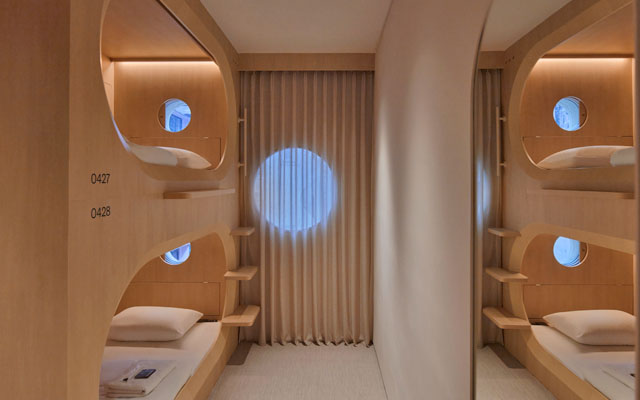
25hours Hotel Jakarta The Oddbird

25hours Hotel Jakarta The Oddbird, Indonesia
The 38-storey 25hours Hotel Jakarta The Oddbird offers 210 rooms and 135 residences right in the heart of Jakarta’s Sudirman CBD in District 8, atop the iconic ASHTA Mall.

Guests enjoy perks such as a Schindelhauer bike to explore the city, a free minibar, and a canvas or Freitag bag for use during their stay.

Aside from the spa and F&B offerings, the hotel also offers flexible meeting spaces in 10 Creative Lounges across the ninth and 53rd floors, as well as a 530m² ballroom with an outdoor deck.

voco Seoul Myeongdong

voco Seoul Myeongdong, South Korea
Infused with Korean influences, voco Seoul Myeongdong offers guests easy access to the Myeongdong district, with nearby attractions including Gyeongbokgung Palace, Namsan Tower, Namdaemun Market, and luxury department stores.

The hotel’s 576 guestrooms and suites offer views of Seoul’s cityscape or the Namsan Tower, and features amenities such as a fitness centre, indoor swimming pool, children’s pool, all-day dining restaurant, four meeting rooms, and a function hall that holds up to 220 guests.

Meliá Vinpearl Phu Quoc

Meliá Vinpearl Phu Quoc, Vietnam
Meliá Vinpearl Phu Quoc has introduced The Level Villas, a new luxury villa category where guests are treated to a range of exclusive privileges, services and facilities, including their own private beach.

The Level Villas were transformed from 95 of the property’s three-bedroom villas, where 56 of the villas are beachfront, while the remaining 39 villas offer sea and lake views. All feature their own private pool.

Guests get access to The Level Clubhouse which offers breakfast as well as an à la carte menu featuring a fusion of local dishes. There is also a dedicated concierge to curate personalised outings and arrange a private check-in and check-out.

The Level guests are granted privileges on all F&B across the resort, and enjoy a complimentary YHI Spa Water Ritual during their stay.

Capella Singapore

Capella Singapore, Singapore
Capella Singapore on Singapore’s Sentosa Island has refreshed its Capella Manor and Colonial Manors, featuring custom furnishings, curated artwork, and spaces designed for both intimacy and grandeur.

Each manor is a standalone two-storey bungalow, resembling a private residence, with three ensuite bedrooms, separate living, dining, and study areas, plus a private terrace and pool.

Guests receive personalised service from a Manor Culturist, who creates tailored experiences, including poolside picnics, babysitting, and dim sum masterclasses with the culinary team.

In addition to bespoke turndown amenities, a fridge stocked with champagne, premium wines, refreshments, and in-manor breakfast, guests can immerse themselves in Singapore’s history and culture through heritage tours and local culinary experiences.

Radisson Hotel Group signs dual deals for Phuket resorts

0

Radisson Hotel Group has teamed up with JWP Group to debut Radisson Blu and Radisson branded resorts in Phuket’s Layan Beach in 1Q2025 and 4Q2026 respectively.

The launch of Radisson Blu Resort, Layan Phuket and Radisson Resort Layan Phuket will introduce 812 rooms and suites to this tropical paradise at the northern end of Bangtao Bay. Located near Sirinat National Park, both properties are surrounded by attractions and just 30 minutes from Phuket International Airport.

The two new Radisson resorts will add 812 rooms and suites to Phuket, Thailand

The 312-key Radisson Blu Resort, Layan Phuket will make its debut by 1Q2025. It will offer a choice of 281 guestrooms and 31 two- or three-bedroom suites. Facilities will include two restaurants, three bars (including a swim-up pool bar), spa, fitness centre, kids’ club, and a  meeting room. Situated adjacent to Radisson Resort Layan Phuket, this resort will also be just seven minutes’ walk from the soft sands of Layan Beach.

Set to open by 4Q2026, Radisson Resort Layan Phuket is adjacent to Radisson Blu Resort, Layan Phuket and a seven minutes’ walk from the beach. The resort will feature 500 rooms and suites, including two- and three-bedroom options. Amenities include two restaurants, a gym, retail outlet, two outdoor pools (including a kids’ pool), and a pool bar.

“This partnership reflects our shared vision for the development of high-quality hotels, and we look forward to seeing Radisson’s outstanding resorts become iconic destinations in Layan Beach and across Phuket.” said Wang Jing, chairman, JWP Group.

“With its warm, year-round climate, breathtaking natural beauty and world-class infrastructure, it is no surprise that international travellers are flocking to this island paradise. By introducing two more outstanding hotels, comprising 812 keys under two of our industry-leading brands – upscale Radisson and upper-upscale Radisson Blu – we will be contributing to the bright and sustainable future of Phuket’s tourism industry,” added Ramzy Fenianos, chief development officer, Asia Pacific, Radisson Hotel Group.

Cygnett Hotels & Resorts introduces new Anamore luxury brand

0

Cygnett Hotels & Resorts has launched its new five-star brand, Anamore, which will be recognised for its elegance, service, and facilities. The luxury brand aims to establish a strong presence in both urban and resort destinations, featuring innovative and sustainable designs that balance modernity with heritage, as well as offering lifestyle wellness amenities.

Anamore Resort & Wellness in Pushkar, set to open at the end of 2025, will span nearly eight hectares with Moroccan-inspired architecture. The resort will comprise 250 rooms, approximately 1,858m² of banquet space, expansive lawns, and a variety of F&B outlets. It will include a wellness centre, gaming zones, and a kids’ club, with easy access by air, rail, and road.

Anamore Resort & Wellness, Srinagar in Uttarakhand will feature 80 anchored yacht villas with a private pool

Opening in late 2026, Anamore Resort & Wellness in Karjat, Maharashtra, will include 100 guestrooms and 26 four-bedroom villas. The resort will highlight Venetian-inspired water channels, a golf driving range, and alfresco dining. Sustainability will be central, with a focus on solar energy, water conservation, and local gardens.

Located in Maharashtra, Anamore, Murud will overlook the historic Murud-Janjira Fort, with 180 rooms, including 30 sky villas with triple-height ceilings. Boasting Arabian-inspired architecture and sustainable design, the resort facilities comprise a rooftop infinity pool, seafood dining, and a wellness spa with ocean views.

Anamore Resort & Wellness in Srinagar, Uttarakhand, will feature 80 anchored yacht villas, each with a private pool, terrace garden, and views of the Alaknanda River. The resort will offer panoramic views, a 558m² banquet facility, a lawn, a specialty restaurant, and a helipad.

Anamore, Khalapur, situated about 80 km from Mumbai in Maharashtra’s Raigad district, will include 200 rooms and 300 service apartments, complete with pools, outdoor spaces, and smart home technology. The property will offer all-day dining, a specialty restaurant, a café, meeting spaces, and wellness facilities, blending modern design with sustainability, such as solar energy, green roofs, and water management systems.

“Anamore is not just about opulence; it’s about creating sustainable, immersive destinations that offer both premium luxury and cultural resonance. Our vision with Anamore is clear – we want to redefine the future of luxury travel in India differently,” said Cygnett Hotels & Resorts founder and managing director, Sarbendra Sarkar.

“By integrating eco-conscious practices, wellness, and cutting-edge design, we aim to make a lasting impact on the way people experience high-end premium hospitality in India.”

Royal Caribbean doubles Hong Kong homeport sailings in 2025

0

Royal Caribbean International is set to double its Hong Kong homeport sailings next year with an extended season featuring 10 round-trip sailings, with the Quantum Ultra Class Spectrum of the Seas and her sister ship Ovation of the Seas offering a range of itineraries.

Spectrum of the Seas will depart from Hong Kong five times in December 2024 and will have 10 additional homeport sailings in 2025. These cruises will span four, five, nine, and 11 nights, visiting scenic destinations in Japan, Taiwan, and Vietnam.

From left: Spectrum of the Seas’ Flemming B. Nielsen, HKTB’s Dane Cheng, Hong Kong SAR’s Angelina Cheung and Michael Wong, Royal Caribbean International’s Benjamin Bouldin and Kevin Fung, and Spectrum of the Seas’ Joni Gevriye

Additionally, Spectrum of the Seas will offer an exclusive 11-night immersive journey through Japan, beginning on November 23, 2025, with stops in Fukuoka, Sakaiminato, Kanazawa, Maizuru, and Sasebo. There will also be special two-night weekend cruises aboard Spectrum of the Seas.

Meanwhile, Ovation of the Seas will feature several Hong Kong departures in 2025, including the popular Easter Monday sailing.

The return of Spectrum of the Seas to Hong Kong on December 6 is expected to boost local cruise demand and bring over 20,000 international visitors through homeport sailings in the next two months. The increase in homeport sailings will generate significant economic benefits across various sectors, including provisioning, bunkering, hotels, retail, dining, and transportation. Royal Caribbean’s strategy is also encouraging other cruise lines to focus on Hong Kong, supporting the city’s goal of becoming Asia’s leading cruise hub.

Benjamin Bouldin, president of Royal Caribbean International, China, expressed confidence in the strategic choice of Hong Kong as a pivotal homeport: “Hong Kong offers a myriad of experiences, from being a renowned shopping and culinary paradise, to being home to world-class cultural heritage conservations and international mega events throughout the year. Moreover, Hong Kong’s advantageous geographical location, coupled with its visa-free access to citizens of some 170 countries and regions, positions the city as the prospective Asian cruise hub.”

Dane Cheng, executive director, Hong Kong Tourism Board (HKTB), added: “We’re very pleased to welcome the return of two Royal Caribbean International ships to Hong Kong as homeports, and the doubling of Hong Kong homeport sailings. This not only reflects the cruise line’s confidence towards the future of Hong Kong’s tourism industry, but also helps attract more international travellers to Hong Kong with the diversified cruise itineraries.”

Asia-Pacific’s welcome

0

Tourists are returning to Asia-Pacific at an accelerated pace, with latest data showing that the recovery trajectory is also outpacing other global regions. In fact, projections suggest that Asia-Pacific is growing nearly twice as fast as its competitors in the final quarter of 2024. This signals a healthy momentum for the region as it regains its share of international visitors.

PATA’s forecast for the year suggests an 80 to 90 per cent recovery in visitor arrivals between a mild (best case), medium and severe scenario, up from 73.8 per cent in 2023. By 2025, arrivals could reach 611.08 million, surpassing 2019 levels.“Our mid-year forecast report published for 2024 to 2026 reinforces the strong gains we’re seeing in the Asia-Pacific region,” said Noor Ahmad Hamid, CEO at PATA.

“This upward trend is expected to continue, with 761.84 million international visitor arrivals projected for 2026. We hope this robust growth will be experienced by all destinations within the Asia-Pacific region, solidifying its position as a global powerhouse in the tourism industry,” he said.

Optimism around the region’s recovery is echoed in ForwardKeys’ research, which recorded a 33 per cent surge in international arrivals from January to August 2024, compared to the same period in 2023.

Its data for 4Q2024 is impressive for the region, pointing to a 19 per cent growth in international arrivals over the same period last year, compared to 10 per cent for Europe and five per cent for the Americas.

“While the region still lags behind pre-pandemic levels, the current pace of year-on-year growth signals continued recovery and highlights the pent-up demand for travel within this region in the coming year,” said Oliver Ponti, director of intelligence & marketing, ForwardKeys.

This growing demand is especially evident in key destinations like Japan, Thailand, China, Singapore, and Vietnam. Japan, in particular, has witnessed a 44 per cent rise in arrivals, with its weakened yen making it a big draw for tourists and shoppers alike.

Separately, a Mastercard Travel Trends report in May also revealed Japan was the number one destination worldwide, with a record-breaking three million international visitors arriving in March 2024. By July, UN Tourism reported that this figure had climbed to 3.3 million.

“Thailand and Singapore have also gained popularity, especially among Chinese travellers, due to visa-free policies,” Ponti told TTG Asia. “Similarly, China’s phased introduction of visa-free entry for citizens of 19 countries has contributed to its surge in arrivals.”

He added that increased seat capacity and relaxed visa regulations across the region have made international travel more accessible.

ForwardKeys also reported that Thailand saw a 23 per cent rise in international visitors, while China’s visa-easing policies led to a significant 135 per cent jump in arrivals. Singapore and Vietnam also posted solid gains, with inbound travel growing by 16 per cent and 21 per cent, respectively.

Despite the region’s impressive recovery, several headwinds remain. Noor told TTG Asia that given current conditions, the medium scenario for recovery is the most likely path by 2026.

“Factors such as pent-up demand for travel, the reopening of China, and the resilience of markets like India and South-east Asia support the (medium) outlook. However, ongoing geopolitical tensions, fluctuating economic conditions, and the need to rebuild air capacity could affect the pace of recovery. To navigate these uncertainties, destinations must prioritise market diversification and take pre-emptive actions to avoid the disruptions,” he said.

Noor also pointed to three key trends likely to influence future travel patterns in the region. First, the increasing use of AI in streamlining booking processes, mobile payments, and delivering more personalised travel experiences.

Second, the rise of intra-regional and multi-generational travel, including three generations travelling together, replacing group tours and FITs.

Third, shifting source markets are creating new opportunities for destinations.

“This is where while China remains the dominant outbound market, emerging markets like India, South-east Asia, and the Middle East & North Africa regions are driving a new wave of middle- and high-income travellers.

“These markets present significant opportunities for destinations seeking to diversify their visitor base,” he said.

WTTC projects that while Asia-Pacific’s tourism sector is expected to grow by 24.5 per cent year-on-year, this figure remains 15.3 per cent below pre-pandemic levels.

Nevertheless, the WTTC highlights that by 2034, the region’s GDP contribution is expected to reach US$5.83 trillion, a 12.5 per cent increase from 2024, further underscoring Asia-Pacific’s long-term potential as a leading force in global tourism.

Star Alliance Chief Executive Board elects new chairperson

0

Michael Rousseau, president and CEO of Air Canada, has been named the new chairperson of the Star Alliance Chief Executive Board. He succeeds Scott Kirby, CEO of United, who held the post since December 2020.

From left: Theo Panagiotoulias and Michael Rousseau

In his new role, Rousseau will lead the two annual board meetings and serve as the spokesperson for the board, guiding the strategic direction of 25 global member airlines.