Aviation roundup: Vietjet, Air Astana and more

Vietjet expands Vietnam-India connectivity
Vietjet will expand its presence in India with direct flights connecting Danang with Ahmedabad.
This service will commence on October 23 with two round-trip flights per week, flying every Wednesday and Saturday.
Vietjet currently operates eight routes with 60 flights per week from New Delhi, Mumbai, Kochi, and Ahmedabad to Hanoi, Ho Chi Minh City, and Danang.

Air Astana to commence new winter services to Dubai, Abu Dhabi
Air Astana will be introducing three new services – from Atyrau in western Kazakhstan to Dubai on October 26, from Astana to Abu Dhabi on October 30, and from Almaty to Abu Dhabi on December 12.
Each of the services will be operated twice a week using Airbus A321neo and Airbus A321LR aircraft.
These new winter season services to the Middle East will add to the existing 20 services a week from Almaty and Astana to Dubai and six services a week from Almaty and Shymkent to Saudi Arabia.

China Southern Airlines launches direct Guangzhou-Adelaide flights
China Southern Airlines will once again link Adelaide in Australia with Guangzhou province on China’s southern coast from December 12, with three flights a week on Wednesdays, Fridays and Sundays.
The China airline previously ran the route from December 2016, but shelved it in March 2020 due to the Covid-19 pandemic.
The services will be operated on Boeing Dreamliner 787-8s and together provide an extra 798 seats to the Middle Kingdom each week.

Jetstar to connect Gold Coast with two New Zealand cities
Queensland Airports and Qantas Group have partnered to connect the city of Gold Coast to New Zealand, with Jetstar to operate services from Gold Coast Airport to Hamilton and Dunedin three times each week from June 2025.
The two new routes build on Gold Coast Airport’s existing New Zealand connections to Auckland, Wellington, Queenstown and Christchurch.
Tourism Expo Japan kicks off to a great start
Tourism Expo Japan 2024 commenced on September 26, welcoming representatives from 80 countries and regions to Tokyo to the country’s largest showcase for domestic and international travel.
Organised by the Japan Travel and Tourism Association (JTTA) Japan Association of Travel Agents (JATA) and Japan National Tourism Organization (JNTO), the country’s annual flagship travel event is expected to attract 180,000 visitors through September 29 as well as tourism professionals for business meetings and seminars.

Masanobu Komoda, chairman and CEO of JTTA, opened the event with optimism.
“Japan’s inbound tourism recovery has been remarkable,” he said, adding his hope that growth of the travel industry continues with Osaka’s hosting of Expo 2025.
Prime minister Fumio Kishida said Japan is on course this year to welcome 35 million overseas tourists who are expected to spend eight trillion yen (US$55.3 billion), setting new records for the country’s inbound tourism.
“Tourism is a pillar of Japan’s growth strategy and a game-changer for regional revitalisation,” he stated.
However, there is a need to tackle overtourism and ensure responsible growth of the industry, he explained, noting the government’s aim “to create sustainable tourist destinations and communities that are good for living, good for visiting and good for hosting”.
Atsumi Gamo, president of JNTO, said event organisers would be doing their part to promote less-well-known destinations by hosting 50 buyers on familiarisation trips in Tohoku and Hokkaido after the expo. Participants will experience rafting, cycling and making traditional crafts as part of their adventure tours.
Another theme in 2024 is boosting outbound travel, which has recovered to only 60 per cent of pre-pandemic levels. With 40 per cent of the 1,384 companies and organisations represented at the expo this year from overseas, expectations are high for full recovery soon, said Komoda.
More than 4,000 students were provided with free tickets to this year’s event to help inspire greater interest in overseas travel among young people, added Hiroyuki Takahashi, chairman of JATA.
Connecting old and new
When the city of Ayutthaya fell in 1767, the reigning monarch who was to become King Rama I, transposed the city layout of Ayutthaya to the riverside of the Chao Phraya in Rattanakosin, Bangkok, which is why the ancient city ruins – one of Thailand’s first UNESCO World Heritage sites – are oddly reminiscent of Bangkok’s old town.
However, Ayutthaya is not just a relic of the past.

One of the key factors contributing to Ayutthaya’s resurgence is its role in contemporary pop culture. The city has frequently served as the backdrop for Thai historical dramas on popular local TV channels. Notably, soap opera Buppaesanniwat (Love Destiny) has reignited interest in Ayutthaya.
Key locations like Wat Chaiwatthanaram have become must-visit sites for fans eager to immerse themselves in the show’s historical setting, with numerous cafés and shops popping up around it. Mayura’s House café nearby even offers Thai costume- and Thai temple-themed ice pops.
In Bangkok, Ayutthaya and the ancient time period is celebrated through creative initiatives such as Hotel Indigo Bangkok Wireless Road, which allows guests to borrow Thai apparel for their trips to Ayutthaya as part of their Borrowed By Hotel Indigo programme, or Sense Of Thai near the Grand Palace in Bangkok, popular for daily rental of costumes for such trips.
This trend has become so popular that visitors who arrive in Ayutthaya without a costume can rent one from local shops for just a few hundred Thai baht. Numerous street shops across from Wat Chaiwatthanaram offer visitors a chance to dress up for an Ayutthaya-era photoshoot.
Global pop icon Lisa Manobal of South Korean girl group Blackpink has also played a significant role in boosting Ayutthaya’s allure. Her recent family visit to the city in summer 2023, where she shared photos of herself in traditional Thai attire at a temple ruin, sparked a wave of interest among her international fan base, introducing Ayutthaya to a new generation of travellers.
Ayutthaya’s culinary scene – already famed among foodies and families in the domestic market for long-weekend trips – has also gained significant recognition, particularly since the province was integrated into the Michelin Guide Thailand in 2022. A wonderful addition is Suriyan Chandra restaurant, located in a 130-year-old rice mill, which helps travellers relive the days of the city’s river commerce with dining cruises on restored teakwood rice barges.
Furthermore, the addition of Centara Ayutthaya – the first hotel by an international hospitality group in Ayutthaya – has made a significant impact. The hotel, now the tallest and largest in the city, features the city’s first rooftop bar, offering 360-degree views of the historical city and its surrounding rice fields stretching as far as the eye can see – a view previously unseen by visitors.

It is connected to the Central Ayutthaya mall, which boasts the Plern Nakhon indoor market on the ground floor, where numerous local eats are sold.
“The design of Centara Ayutthaya blends modernity with tradition, incorporating Ayutthaya-coloured brick motifs in the tile floors and carpets, and Thai-style wooden windows in the rooms,” noted Chen Thipvarodom, general manager of the hotel.
“But it’s not just about the design. We’ve also worked to highlight Ayutthaya’s rich culinary heritage in our food and beverage offerings.”
Chen continued: “The success of Centara Ayutthaya is part of a broader strategy by the Centara Group to replicate this hotel-mall pairing model in Eastern provinces – a model we’ve already successfully executed in places like Udon Thani. This approach caters to a diverse range of travellers – from locals and families enjoying long weekends, to executives from the Eastern Economic Corridor who require long-stay accommodation,” he shared.
As Thailand continues to promote secondary destinations, Ayutthaya’s strategic location near the Thai capital city is becoming increasingly significant.
“We have tours to Ayutthaya, and, increasingly, we use Ayutthaya as the first station on our trips heading north,” shared Stephan Roemer, CEO of DTH Travel Thailand.
Kim Martin Rasmussen, Thailand general manager for Exo Travel, highlighted Ayutthaya’s low-carbon and sustainable draws with rail-themed travel and cycling activities.
“For the longhaul traveller market, Ayutthaya is often included as an overnight stay on the way from Bangkok and further up north to Ayutthaya; visits tend to be more classic and often done by bike to get around the ruins. For shorthaul travellers, Ayutthaya is seen as a day-trip option with lots of Instagrammable cafés,” he told TTG Asia.
Roemer felt that Ayutthaya was still not unsuitable for groups due to “limited” high-end options.
Travel trends analyst Gary Bowerman opined: “A key challenge for Ayutthaya is in changing perceptions as well as infrastructure. It is widely perceived as a day-trip or coach-trip destination for tourists visiting Bangkok.
“In addition to creating unique, value-added experiences for high-yield travellers that distinguish their Ayutthaya trip – especially in the evenings when the coaches have departed and early mornings before they arrive – there is also the challenge of marketing Ayutthaya as a destination rather than a site of archaeological ruins that people want to cross off their bucket list.”
Tourism consultant Jens Thraenhart concluded: “Ayutthaya has the potential to entice both high-yield travellers and mass tourists. The key is to develop the infrastructure for high-yield travellers to have authentic experiences that will lead to higher spend in local businesses, such as local boutique hotels, quality handicrafts (rather than cheap products made in China), and great local restaurants that celebrate authentic culinary culture.”
TTG Travel Awards’ 33rd edition celebrates 106 travel winners
This year’s TTG Travel Awards honoured 106 travel and tourism entities across Asia-Pacific, of which 86 were award recipients, and 20 were inducted into the TTG Travel Hall of Fame.
Coinciding with TTG Asia Media’s 50th anniversary, the evening also celebrated the milestone with an anniversary cake-cutting ceremony.

The 33rd edition featured an expansion in categories, with new titles introduced in the Hotel – Individual Properties and BT-MICE segments to recognise more winners from Thailand and across the Asia-Pacific region.
The winners of the Outstanding Achievement Awards category – the only non-voting segment of the awards – were personally handpicked by TTG’s editorial team for their contributions to the industry. Thailand was recognised as the Destination of the Year; Hong Kong Tourism Board received the Best Travel Marketing Effort award; and The Travel Corporation was named the Most Sustainable Travel Company.
Several awardees continued their streak of success with notable wins this year: Pan Pacific Hotels Group (Best Regional Hotel Chain), Centara Grand & Bangkok Convention Centre at CentralWorld (Best Meetings & Conventions Hotel) and Dao By Dorsett AMTD Singapore (Best Serviced Residence – Property Level).
Veterans such as Scoot (Best Low-Cost Carrier) and Frasers Hospitality (Best Serviced Residence Operator) also celebrated consecutive wins.
The gala event was held at Centara Grand at CentralWorld in Bangkok, Thailand, and coincided with IT&CM Asia and CTW Asia-Pacific double-bill event.
NH Bangkok Sukhumvit Boulevard appoints new GM
Naowarat Arunkong has been named as the general manager of the upcoming NH Bangkok Sukhumvit Boulevard, the first NH Hotels & Resorts property in Bangkok.
Her expertise in hotel pre-opening, rebranding and repositioning will be instrumental in successfully transitioning Boulevard Hotel Bangkok to NH Bangkok Sukhumvit Boulevard.
Having been with Minor Hotels since 1999, she most recently served as cluster general manager for Anantara Hua Hin Resort and Avani+ Hua Hin Resort.
UN Tourism calls to reshape tourism by accelerating climate action
With tourism on track to return to pre-pandemic levels by the end of the year, UN Tourism secretary-general Zurab Pololikashvili has highlighted the importance of looking beyond recovery and instead to focus on making tourism a force for positive change in a way that benefits both the environment and local communities.
Speaking at the recent G20 Tourism Ministers’ meeting in Belém, Brazil, Pololikashvili’s message emphasised empowering local communities, taking meaningful action on climate issues, and adopting sustainable economic practices that prioritise nature and circularity.

Global tourism has been steadily recovering from the Covid-19 pandemic, with data showing that international tourist arrivals in the 1H2023 have reached 80 per cent of 2019 levels. Some regions, particularly the Middle East and Europe, are even surpassing these figures. However, areas like Asia and the Pacific are seeing a more gradual return due to ongoing travel limitations. This recovery reinforces tourism’s crucial role in driving global economic growth, creating jobs, and fostering development in regions that rely heavily on the industry.
“Tourism thrives on the stability of the climate, biodiversity, and the sustainable use of natural resources,” Pololikashvili remarked. “Without urgent climate action, the future of tourism, along with the communities and ecosystems that rely on it, is at risk.”
Pololikashvili also stressed that tourism’s true potential lies in its ability to not only generate employment but also bring diverse cultures together. However, for tourism to evolve into a more sustainable and inclusive sector, new approaches are needed. This includes innovative governance that centres local communities and environmental preservation in decision-making, as well as stronger collaboration between governments and various stakeholders.
This appeal marks a critical juncture for the global tourism industry with a clear message: to ensure its long-term success and resilience, the sector must place climate action and community empowerment at its core.
Meliá Hotels International adds new resort to its Vietnam portfolio
Meliá Hotels International has inked an agreement with BB Group Hospitality to launch Meliá Hue Kobi Onsen Resort, its second hotel in the city following Meliá Vinpearl Hue.
Currently known as Kobi Onsen Resort Hue, the property will undergo a rebranding process over the next 12 months, emerging as Meliá Hue Kobi Onsen Resort next year.

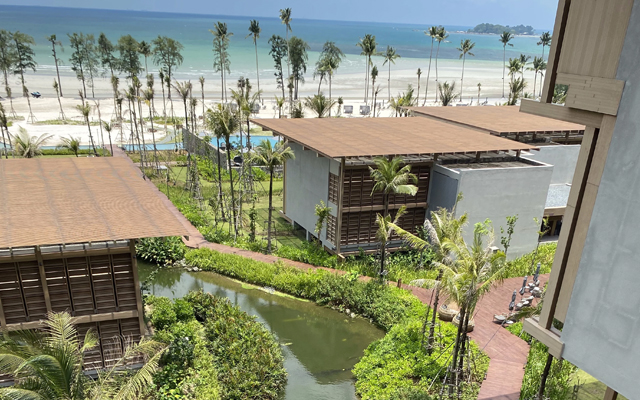
The 155-key hot spring resort is located on the outskirts of Vietnam’s former capital, close enough to explore the Imperial City but far enough away to reap the benefits of the property’s serene and healing setting.
Tapping into the natural mineral-rich hot springs of My An, the main draw of this resort is its broad range of curative waters, along with wellness facilities and treatments that draw inspiration from the region.
The resort features a range of well-being facilities, including a steam bath, soda bath, dry sauna, Himalayan salt sauna, and a traditional onsen with indoor and outdoor hot spring baths separated by gender. Wellness treatments integrate oriental medicine and massage practices once used by the royal family in Hue, as well as herbal treatments used by the Red Yao people, who are renowned for their healing herbal baths.
Onsite are dining venues, Japanese-style gardens, the largest koi pond in Hue, an outdoor swimming pool, fitness centre, and golf simulator.
The property is a 30-minute drive from Phu Bai International Airport and less than 15-minutes from the UNESCO-designated Complex of Hue Monuments.
“Through properties like Kobi Onsen Resort Hue, we are helping raise awareness of the importance of living a balanced life while also showing our passion for caring for all our guests’ well-being on a holistic level,” said Ignacio Martin, management director for Meliá Hotels International in the APAC region.
Trip.com Group highlights travel shifts by Chinese tourists for upcoming Golden Week
For the upcoming Golden Week holiday in October, Trip.com Group’s latest data has revealed notable travel flows for China travellers since the last major travel period of 2024, with more Chinese tourists keen to explore lesser-known destinations.
Trip.com Group is witnessing hotel bookings peak in arrivals on October 1 – the day the holiday commences – with an average length of stays over seven days, as workers can enjoy a 10-day break by taking just two days off. Total booking growth for stays has also grown year-on-year.

Travel costs to the top outbound destinations (Japan, Thailand, South Korea, Malaysia, Vietnam, Singapore, the Philippines, Australia, the UK, and the USA) have all seen a significant drop in average air ticket prices.
For accommodation, more travellers are seeking high-quality, mid-tier lodging types; in Europe, however, year-on-year growth of five-star hotel bookings was almost three times higher than in Asia-Pacific.
Longhaul destinations on the rise
A significant shift towards longhaul destinations can be seen this year, with Australia, the US, New Zealand, the UK, France, and Spain topping the list of most sought-after longhaul destinations by Chinese travellers.
Longhaul flights have also seen an increase compared to pre-pandemic levels in 2019.
European destinations like the UK, Spain, Germany, and Italy are seeing significantly longer stays, surpassing 10 to 14 days. In Europe, more than 30% choose multi-destination itineraries, reflecting a growing trend to maximise longhaul travel. Meanwhile, in Asia-Pacific, nearly 80% of Chinese travellers opt for single-destination trips.
Additionally, travellers plan further in advance, with visa applications submitted an average of 68 days before the holiday – 29 days earlier than last year. The top countries for National Day visa applications include Japan, South Korea, Australia, the US, Vietnam, New Zealand, the UK, France, and Spain.
The growth rate of inbound tourism has also been encouraging, with an increase in bookings. Nine out of 10 of the top outbound destinations were also the top inbound source markets, highlighting the two-way nature between outbound and inbound tourism for China.
Lesser-known destinations spark travel flows in Europe and Asia
With overtourism as one of the challenges for key destinations around the world, Chinese travellers have increasingly been drawn to quieter, off-the-beaten-path locations this Golden Week, particularly in the Asia-Pacific and Europe regions.
Japanese cities off the main circuit of Tokyo-Osaka-Kyoto, like Yokohama, Takayama and Ito, showed three-digit booking growth, underscoring this trend. Additionally, nature and wellness tourism saw a rise, with Phu Quoc Islands in Vietnam and the hot spring town of Higashiizu in Japan becoming popular for their scenic landscapes and wellness experiences.
European destinations such as Granada and Seville also captured significant attention, with a 260% and 144% rise in bookings, respectively, reflecting a desire for greater cultural and historical immersion beyond key capitals.
Concerts and live entertainment fuel tourism charge
Live entertainment is playing a pivotal role in travel trends this season, with key concerts and events in the Asia-Pacific region happening during the October holiday. Moreover, over 75% of tourists visiting the this region are millennials, who have shown strong interest in events and concerts.
Around the holiday period, popular K-pop artists such as Taemin and Taeyang will captivate audiences in Hong Kong, alongside international acts such as John Legend and Ne-Yo. In Bangkok, girl group Aespa is a draw, while in South Korea, Busan’s Festival Shiwol blends entertainment, culture, and business in a massive event expected to draw 450,000 visitors.
In Singapore, hotels within three kilometres of concert venues have experienced a 214% increase in unique views compared to those farther away, as tourists seek proximity to venues such as Singapore Indoor Stadium, Gateway Theatre, and Capitol Theatre, where major concerts are scheduled.
Snowflake enhances customer experiences with AI Data Cloud
Snowflake has launched the AI Data Cloud for travel and hospitality, uniting its data platform, artificial intelligence (AI) capabilities, and industry-specific solutions to deliver data insights for the industry.
As the travel and hospitality industry transitions from recovery to stable growth, businesses face new challenges and opportunities. In offering a unified platform that streamlines AI and machine learning development, Snowflake empowers airlines, hotels, cruise lines, and travel technology providers to harness their data’s full potential, improve operations, and power five-star customer experiences across the sector.

The AI Data Cloud for travel and hospitality addresses key industry trends and use cases, including dynamic pricing and sustainability tracking, developer efficiencies, reputation management, and performance advertising to help organisations across the industry both streamline operations and unlock new business value.
With Snowflake’s AI Data Cloud for travel and hospitality, businesses can build and optimise outcomes like hyper-personalised marketing, improved customer experience, loyalty and co-branded experiences, reliable and efficient operations, and maximised revenue management.
Snowflake’s ecosystem also facilitates seamless data enrichment via Snowflake Marketplace, allowing businesses to easily integrate and analyse third-party data sources such as weather patterns, economic indicators, and global events alongside their own data, enabling more comprehensive and better-informed decision-making in industries where external factors significantly impact operations and customer behaviour.
Whitnee Hawthorne, global head of travel and hospitality at Snowflake, commented: “Our AI Data Cloud for travel and hospitality provides the tools and capabilities needed to not only keep pace with evolving customer expectations, but also to drive innovation and operational excellence in this dynamic and competitive sector.”
Some of the largest travel and hospitality businesses around the world are already using Snowflake’s AI Data Cloud for travel and hospitality to democratise data access and drive collaboration.
“By creating a unified data foundation on Snowflake, we’re improving our ability to make data driven decisions and automate aspects of our business” said Raymond Boyle, vice president, data analytics and strategic insights, Hyatt. “From guest preferences to functional decision management, Snowflake empowers us to advance care and further enhance the guest experience.”
Rahul Todkar, head of data and AI at Tripadvisor, shared: “Snowflake has revolutionised how we collaborate with other brands in the ecosystem, allowing secure data sharing that benefits both our business and the broader travel industry. This comprehensive approach has not only streamlined our operations but also opened new avenues for growth and partnership.”


InterContinental Khao Yai Resort has partnered with Bangkok-based Siam Scenic, which offers private charter and sightseeing flights across Thailand, to introduce a new luxury private charter Luxury Country Retreat Package from Bangkok to Khao Yai in Thailand.
Guests will travel in style with flights aboard the VIP-configured Cessna Caravan EX, offering up to six guests the comfort of private air travel at an accessible cost, while enjoying aerial views of Ayutthaya and Khao Yai landscapes.
InterContinental Khao Yai Resort offers 19 suites that were restored and upcycled from abandoned heritage train carriages from the 19th century. The resort is located in a lush tropical landscape with over 30,000 trees and five lakes, complete with walking trails, a koi pond and resident swans, with facilities like F&B options, spa, kids’ club, and more.
Priced from 188,000 baht (US$5,717), the Luxury Country Retreat Package is perfect for up to six guests, and includes accommodation in three one-bedroom Heritage Railcar Suites for two nights (with daily breakfast), private round trip charter flight from Klong 11 Private Airfield in Bangkok to Khao Yai Private Airfield (40 minutes each way), and round trip road transfers to and from all airports.
Valid for stays until September 30, 2025.
For more information, visit InterContinental Khao Yai Resort or Siam Scenic.