TTG Asia
Asia/Singapore Sunday, 28th December 2025
Page 2172

Glh eschews ‘dinosaur’ four-star product with limited service Every

0

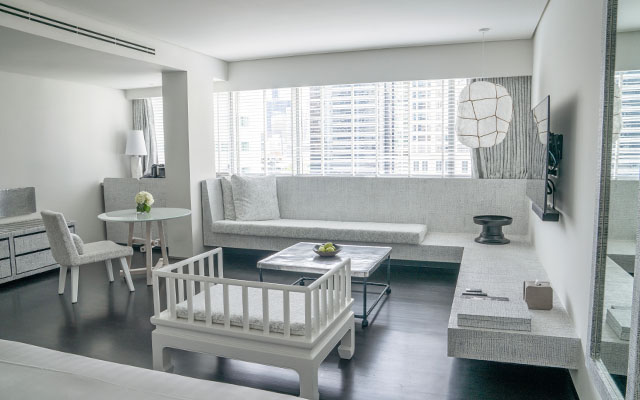
LONDON-BASED hotel group Glh has unveiled a new brand of four-star hotels that does away with extra, unnecessary amenities.

Glh, a subsidiary of Singapore-listed GuocoLeisure Group, will open the first Every brand hotel, Every Piccadilly, in November. It will be followed by openings in Hyde Park, Leicester Square and Bloomsbury.

Mike DeNoma, chief executive of Glh, said: “The four-star full-feature hotel product is a dinosaur for many cities around the world. We estimate half of all four-star hotels outside gateway cities have too many restaurants and barely used meeting facilities.

“The four-star sector continues to bury its long neck in the sand, in the face of changing customer needs. Every is our direct response to owners and developers burdened with legacy buildings, who are keen for a new four-star option that responds to the changing market”.

The Every brand was conceptualised through research, which showed four-star hotels beyond gateway cities had meeting and event spaces running at occupancies as low as 30 per cent even while room occupancies were double that.

Every therefore focuses on a four-star bedroom product to maximise yield to owners of new-builds and potential conversion properties. Like all other Glh property, Every hotels will come with fast and free Wi-Fi for guests throughout the hotel.

Ian Gamse, director at Otus & Co, specialist hospitality finance and strategy advisors, said: “The big old four-star hotels were designed to meet a demand that scarcely exists outside gateways cities. However much customers say that they like hotels with lots of restaurants, ballrooms, meeting spaces, spas, swimming pools and whatever – they hardly use those facilities. It’s so much wasted space. Property owners know this and are exasperated.

“So there’s clearly room for a brand that offers bedrooms with the same upmarket comfort and quality, but without needing the excessive investment and overheads that accompany extensive non-rooms facilities. It’s good for the customer, the hotel owner and the brand identity. And that’s the gap that we see Every filling.”

Asian travellers most influenced by social media for beach holidays

0

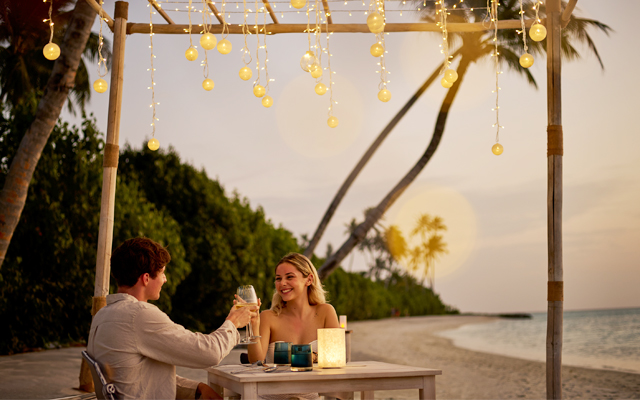
SOCIAL media plays a crucial role in determining where Asian travellers go for a dose of sun and sand – more so than their Western counterparts – according to Expedia’s 2014 Flip Flop Report, which also reveals that users in this region are more active in sharing photos/videos while on vacation.

The report found that 60 per cent of Asian respondents felt social media platforms were ‘very/somewhat influential’ when choosing a beach holiday destination, compared to 39 per cent and 24 per cent for their North American and European counterparts respectively.

Other influencing factors include last-minute packages. Thais (67 per cent), South Korean (65 per cent) and Japanese (64 per cent) were most likely to be influenced by bargain deals.

Vikram Malhi, general manager for Expedia in Asia, commented: “Asian travellers are not just booking their travel on their devices, they are also sharing their travel experiences and researching on mobile more readily than their Western counterparts.”

“Mobile is a huge area of investment for Expedia, and the findings reinforce our aim to offer travellers a complete experience, from pre-booking to post-vacation, across devices.”

Expedia’s Flip Flop Report also documents how the devices are used on beach holidays.

Internationally, Indian travellers posted the most photos/videos while on vacation with 50 snaps per week, followed by Singaporeans with 37 and Americans with 35.

Furthermore, Asian travellers post photos for ‘nefarious’ reasons – to make their friends envious.

Overall respondents said they posted pictures to share their vacation experiences with friends (58 per cent), inspire friends with beautiful images (53 per cent), while only 18 per cent intended to make their friends jealous.

On the Asian side, an average of 29 per cent of respondents were baiting the green-eyed monster, with Hong Kong users being the most guilty (39 per cent), followed by Thailand (36 per cent).

Asian travellers were also fond of selfies. Some 53 per cent of Thai beachgoers, 40 per cent of respondents from India, 38 per cent of South Koreans and 35 per cent of Singaporeans said they would share selfies.

In contrast, the global average of respondents who said they would post selfies stands at 30 per cent.

The survey was conducted online from March 11 to April 2, and examines the behaviour and attitudes towards beach vacations among 11,165 respondents across 24 countries throughout the Asia-Pacific, North America and South America.

Look out for TTG Asia’s 08.08 issue

0

TTG Asia’s 40th anniversary special edition will be released on August 8, inviting readers to journey through 40 years of Asian travel and tourism via a bumper 72-page publication packed with content that looks not only at the industry’s rich history and tradition, but also what lies ahead for it.

Highlights include incisive views from a string of industry leaders on a range of topics spanning the world of travel. Among them, Adam Goldstein, president and COO of Royal Caribbean Cruises, shares his thoughts on the shape of future cruise ships, while Brett Tollman, CEO of The Travel Corporation, discusses the future of traditional distribution.

Find out also what Starwood Hotels & Resorts’ president and CEO, Frits van Paasschen, thinks about the future of hotel management, or what the greatest integrated resort innovation has been in the eyes of Ho Kwon Ping, Banyan Tree Holdings’ chairman.

Read too the ‘Game changer’ sections where TTG Asia’s regional network of reporters has curated the products, airlines and airports that changed the travel game for destinations in Asia.

Another special section is ‘Under 40’ featuring the rising stars of the industry, many of them sons and daughters of entrepreneurs in the trade who are carrying the torch and brimming with new ideas on how travel should be sold and delivered.

The 40tude special edition is conceptualised by past and present TTG Asia editors, senior editor Raini Hamdi and deputy group editor Gracia Chiang, with the aim of saluting the industry’s development over the decades and celebrating its present and future leaders.

Airlines respond to growing business class demand on Indian routes

0

INTERNATIONAL airlines are adding more business class seats on flights to India to meet the summer surge in demand.

Emirates will deploy Airbus A380 aircraft this August on Indian routes where the aircraft has not already been introduced, raising the number of business class seats from 52 to 76.

In June, Lufthansa started using Boeing 747-800 aircraft on the Mumbai-Frankfurt sector for 80 business class seats instead of 66; in May, Singapore Airlines (SIA) also began operating flights to Mumbai and New Delhi with the A380 (TTG Asia e-Daily, April 7, 2014).

David Lau, general manager India, SIA, noted that flights could be “a little full”, especially on weekends, even though SIA now offers 60 seats instead of 38. The carrier will configure its upper deck for all business class seating in future.

Aneel Guptaa, managing director, Anjali Tours Mumbai, said: “Business travel to Dubai has picked up by at least 20 per cent in the last few months…The increase in business class seats was essential as corporate clients demand confirmed seats on business class all the way through.”

Meanwhile Sanjeev Mehra, managing director, Aaryan Leisure & Holidays Kolkata, is witnessing a 15 to 20 per cent rise in demand for business travel but said Etihad Airways’ new routes to Kolkata would ensure sufficient capacity.

Singapore identifies first marine park

0

VISITORS to Singapore can soon expect a new attraction in the form of a marine park in southern Sisters’ Islands.

In a speech at the launch of the Festival of Biodiversity 2014 on Saturday, minister of state for national development, Desmond Lee, revealed that the new park will span about 40ha, around Sisters’ Islands and along the western reefs of St John’s Island and Pulau Tekukor.

The National Parks Board (NParks) is working with marine nature groups on guided intertidal walks and dive trips featuring a variety of coral, fish and other marine life.

For a start, from next month, guided walks will be organised at Big Sister’s Island, one of two Sisters’ Islands.

NParks will also put in place basic facilities for outreach and education activities on St John’s island, such as storyboards and classrooms for conducting workshops, talks and camps.

Lee also revealed that nurseries will be established to conserve marine organisms such as giant clams and corals and reintroduce them into Singapore’s waters.

The park will be used, too, for research on tropical marine ecosystems to further NParks’ understanding on marine environment conservation.

The Straits Times quoted National Biodiversity Centre director Lena Chan as saying that there are plans for downloadable trail guides, explanatory signs and live streaming of the islands’ wildlife.

The centre’s coastal and marine deputy director, Karenne Tun, was also quoted as saying that NParks will be doing a feasibility study to fully map the islands, take a census of reef life and work out how many visitors can be allowed without harming wildlife.

Fresh escalation of violence in Sabah

0

IN THE fourth incident of its kind since April, Sabah waters last Saturday saw another kidnap case that resulted in the death of a policeman and another abducted.

The Star/Asia News Network and Agence France-Presse reported that the shootout on top diving hotspot Mabul island, at about 23.00, involved six to eight masked gunmen believed to be from the Philippines’ Sulu islands.

The men are thought to have rowed into the area, climbed up the jetty of Mabul Water Bungalows Resort, and shot randomly at the restaurant, reception office and jetty office.

Home minister Ahmad Zahid Hamidi told news agency Bernama the ambush was motivated by revenge and anger at the tightened control of Sabah waters by the Eastern Sabah Security Command (TTG Asia e-Daily, June 10, 2014).

The Malaysian security forces are hunting for the gunmen in the area.

Philippines unveils ‘power branding’ strategy

0

THE Philippine Department of Tourism (DoT) has rolled out the next phase of the It’s More Fun in the Philippines campaign, with new print and TV ads to strengthen awareness of key destinations.

Last weekend, DoT unveiled three new commercials for Davao, Manila and Cebu, adding to the Boracay commercial launched earlier this year, tagging the destination as Asia’s 24/7 island.

Manila is branded The Capital of Fun; Cebu, World Class Diving Sites and Sounds; and Davao, Explore. Relax. Repeat, highlighting adventure, nature and relaxation.

Chicoy Enerio III, Philippines Tourism Promotions Board COO, said: “It’s what we call power branding – for different destinations that are already strong in the marketplace.

“The next batch of destinations to be promoted are either part of the APEC Summit venues for next year, like Iloilo, or up and coming destinations like Legazpi and the Albay region.”

The media campaign is scheduled to run until December for both travel trade and consumer promotions, including roadshows, missions and fairs.

DoT assistant secretary for market development, Benito Benzoin Jr revealed the rollout has been done very gradually and in secret, and the travel trade would soon be “let in” on the strategy, “because the competition has been watching us very closely”.

On the overall campaign so far, Marjorie Aquino, inbound sales and marketing manager, Blue Horizon Travel and Tours, said: “It did create a buzz, but it wasn’t that strong and we can push it some more.

“Other markets are not yet that knowledgeable about what we have to offer, and which destinations. We have to educate them one by one.”

Air France begins daily Jakarta service via Singapore

0

AIR France last week launched a daily service between Paris-Charles de Gaulle and Jakarta via Singapore.

Deploying a Boeing 777-300, with 303 seats in four classes, the service is operated at night for both outbound and inbound flights, and adds to KLM’s daily service from Amsterdam-Schiphol via Kuala Lumpur to Jakarta.

Patrick Roux, executive vice president Asia-Pacific, Air France-KLM, said: “In total, the two airlines offer 14 weekly flights between Europe and Jakarta, thus responding to Indonesian and European customers’ demand.”

Longhaul travellers can make a connection on KLM’s daily Singapore-Bali flight, while travellers from Singapore can travel on Air France between Singapore and Jakarta.

The daily service will make it convenient for business travellers in particular, while also serving the market for short trips between Singapore and Jakarta, Bali or Surabaya, he added.

Roux also revealed that from end-September, Singapore and Jakarta would be the first destinations to welcome the airline’s new luxury La Première suite.

Following the launch, Air France and Garuda Indonesia have signed a codeshare agreement for flights between Singapore-Surabaya and Amsterdam-Nantes.

Between June 17 and August 30, Air France passengers can also enjoy additional frequencies to Singapore. For the 2014 summer season, the airline is adding three services between Paris-Charles de Gaulle and Singapore, using Boeing 777-200, offering a total of 10 weekly flights.

Air France-KLM now offers eight destinations in the region with more than 90 departures weekly from Amsterdam-Schiphol and Paris-Charles de Gaulle. Some of the flights are operated by Malaysia Airlines, Vietnam Airlines and China Airlines.

Singapore tightens location policy for hotels, hostels

0

SINGAPORE’S Urban Redevelopment Authority (URA) new measures to prevent the proliferation of hotels, boarding houses and backpackers’ hostels in areas not intended for hotel use might affect those looking to convert existing shophouses in historic areas such as Chinatown and Little India.

Effective July 7, the move seeks to ensure such developments “do not dominate and displace other commercial activities” in commercial areas where they are generally found, as stated in URA’s circular last week.

They are also generally disallowed within or at the fringe of residential estates so as to protect the amenity of nearby residents.

URA said within the Central Area, proposals for such developments, including change of use proposals on sites that are not zoned for hotel use, will generally not be allowed within certain areas inside the Outram, Rochor, Downtown Core and Singapore River Planning areas.

Proposals in other parts of the Central Area will be evaluated individually, taking into consideration the planning intention for the locality and the potential traffic impact.

Outside the Central Area, all such proposals will generally not be allowed.

Meanwhile, for existing approved hotels and boarding houses on sites zoned for hotel use, any proposed intensification of the Gross Floor Area (GFA) will continue to be subject to evaluation.

Expansion of existing approved boarding house and backpackers’ hostel uses that are on temporary permission will be considered individually, up to the total GFA of the existing building that it occupies. Further renewal of the permission will only be allowed if they have not caused any adverse traffic impact and disamenity to the surrounding users.

The Business Times reported that the affected areas include a big chunk of Chinatown and Little India shophouses.

The local broadsheet also quoted Mary Sai, executive director, Knight Frank as saying: “We interpret these locations straightaway as shophouses because these streets are dominated by shophouses.

“While demand for shophouses may be dampened by the new rules, on the other hand, owners of shophouses already approved for hotel use will find their assets rise in value over time because of difficulty in getting hotel sites.”

URA will review this policy in two years’ time.

MSC launches paediatric telemedicine service

0

MSC Cruises is claiming a world first with a round-the-clock telemedicine service for children onboard its ships.

Offered in conjunction with Italy’s Instituto Giannina Gaslini, it will allow its ship’s doctors to call up support from specialists working at the Genoa-based paediatrics institute at whatever time of day.

An MSC spokesperson said: “It is initially available on the company’s Sinfonia, with the remaining 11 ships in the fleet scheduled to be ready by September 1.”

Paolo Petralia, director general of the Institute, said the system will allow the ship’s doctors to confirm diagnoses and treatments via satellite transmissions of images and data.

The fully computerised system designed by US-based Carestream is meant to allow doctors to work very quickly, from the request for a consultancy to getting answers.

At the launch in Genoa last week, MSC’s CEO Gianni Onorato, said: “It’s very important to take care of the health and security of our passengers onboard, especially the youngest ones who can need different types of aid and treatment from other age groups.”

The telemedicine service will be available in whatever part of the world the company’s ships are operating, adding to the onboard teleradiography and general consulting services the company already offers.