TTG Asia
Asia/Singapore Thursday, 25th December 2025
Page 2131

Regent Bali rebrands under Fairmont flag

0

FAIRMONT Hotels & Resorts has been appointed to manage an all-suite beachfront resort in Bali, which will shed its current name as the Regent Bali and operate as the Fairmont Sanur Beach Bali.

The rebranding of the resort, owned by Pancaran Kreasi Adiprima, will be effective from December this year and marks Fairmont’s first resort in Indonesia.

Fairmont Sanur Beach Bali is located along a 200m stretch of beach on Sanur in southern Bali, 25 minutes away from Ngurah Rai International Airport.

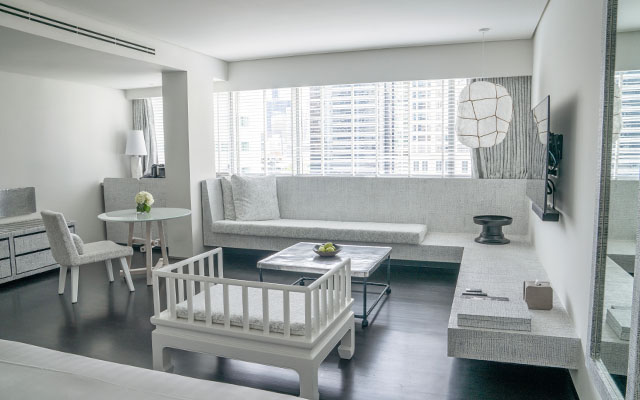
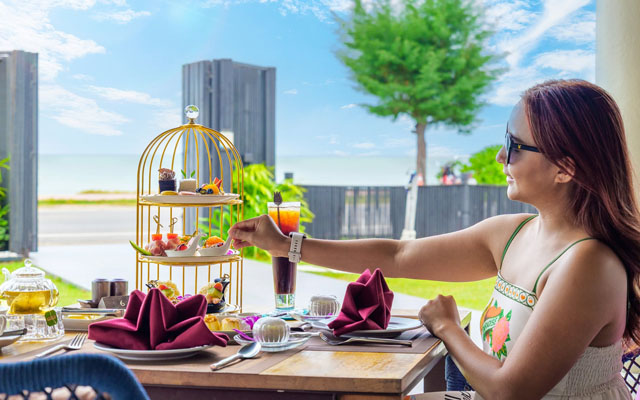
Guests can choose between one-, two-, and three-bedroom layouts of the 94 suites and 26 pool villas. F&B options available on-site include two restaurants, a lobby lounge with views of the resort and ocean, a 55m infinity pool, a fitness centre, an expansive spa, and a kids’ club.

“Fairmont Sanur Beach Bali is our first resort to open in Indonesia and it promises to be a slice of paradise on an island that is already highly acclaimed for its picturesque ambiance and dazzling beaches,” said Jennifer Fox, president, FRHI International and Fairmont Brand.

“Bali remains one of South-east Asia’s leading tourist destinations and we are very pleased that our portfolio in this part of the world continues to grow at a steady and strategic pace. This announcement follows recently signed agreements to open new hotels in Kuala Lumpur and across China – Nanning, Suzhou and Zhengzhou – and we are targeting additional expansion in top cities and resort locations throughout Asia in the future.”

The company is slated to open the Fairmont Jakarta in early 2015 and the Fairmont Bali in 2016.

Best Western adds midscale property in Luzon

0

OPENING in the second quarter of 2015 on Luzon Island, Best Western Bendix Hotel is Best Western International’s latest property to join its Philippine portfolio.

The hotel management company signed an agreement with Hilcres Consolidated Corporation to operate the 60-key hotel, which is located in Angeles City, the tourism and economic hub of Luzon.

“Angeles City is growing fast and we are delighted to be able to move into this exciting region,” said Glenn de Souza, Best Western International’s vice president of international operations for Asia & Middle East.

“Our existing properties in Manila, Makati City, Cebu, and Boracay have been extremely popular with domestic and international visitors alike. And I am confident that Best Western Bendix Hotel, with its comfortable rooms, excellent connectivity, and modern amenities, will be equally well-received.”

Guests can expect large bathrooms with separate shower units, flat-screen TVs, and free Wi-Fi.

Best Western currently operates six hotels in four destinations in the Philippines – Boracay, Cebu City, Makati City, and Manila. By the end of 2016, the company plans to expand this collection to 14 hotels, adding more than 750 modern rooms to its nation-wide inventory.

Thailand gets second Ozo hotel in Pattaya

0

THE BOUTIQUE Group of Companies has developed an Ozo hotel in the seaside town of Pattaya, now open to guests.

Ozo Pattaya is located within walking distance of the city’s attractions and beaches, and the 164 guestrooms are available in the categories of Sleep Rooms, Dream Rooms, and Ozo Suites. Each offers modern amenities such as multimedia connectivity panels with HDMI, USB, and audio ports, as well as free Wi-Fi throughout.

The hotel lobby, Spot, offers guests information on the local activities and attractions, while F&B options come in the form of the all-day dining restaurant Eat and grab-and-go service Eat2Go.

Guests can also unwind at the rooftop swimming pool or head to the gym.

To mark its opening, Ozo Pattaya is offering a special introductory rate of 1,100 baht (US$34) per night for stays between September 15 and December 24, 2014.

The deal is subject to availability, and terms and conditions. Rates do not include breakfast, service charges, and local taxes.

Visit www.ozohotels.com/Pattaya.

Beijing throws the spotlight on bespoke tours

0

BEIJING is promoting customised tours around the Chinese capital to attract international tourism industry players, based on its observations of market trends.

Using the China Incentive, Business Travel & Meeting 2014 exhibition as a platform, Beijing Commission of Tourism is showcasing customised tours that are built on themes such as traditional Chinese medicine and health-oriented tours, competitions and races, and local festivals and celebrations, all drawn from a collective 16 districts and prefectures.

The commission’s deputy chairperson, Wang Yue, said Beijing has an edge in offering customised tours. First, the historic city is endowed with diverse resources and the government is paying attention to how these resources are converted into tourism products.

Systems and infrastructures are also in place to support tourism, while policy commitment, including US$30 million in grants, have aided the development of Beijing’s MICE industry.

Wang Yue remarked that some 200 million tourists visited Beijing annually in recent years, including five million international inbound tourists. Preliminary statistics suggest that some 91 per cent of visitors enquire about Beijing via the Internet.

The commission has also demoted the ratings of more than 100 hotels that failed to meet standards in the last three years in a bid to encourage hotels to keep up and remain competitive against international branded hotels.

Article by Nadia Chung. Translated by Ong Yanchun from the original TTG China e-Daily, September 22, 2014 article.

Asiatravel rolls out mobile travel agency on wheels

0

asiatravel-rolls-out-mobile-travel-agency-on-wheels
Interior view of Asiatravel’s Roadundee – Credit: Asiatravel

IN A bid to capture a “harder-to-reach” audience, Asiatravel will be launching a travel agency on wheels called Roadundee – a mobile office contained in a coach – to literally bring services directly to customers in November.

Calling it the first of its kind in Asia, Fred Seow, vice president for marketing of Asiatravel, said: “This pilot mobile vehicle will help us get directly into the heartlands and straight to suburban travellers who are likely to be the next big travel segment due to their better exposure, rising disposable income, and quest for new travel experiences.”

The mobile office, converted from a 40-seater coach, will have at least three staff stationed in the vehicle and will be able to contain at least 15 customers at any one time.

Seow said: “It is not about the quantity of customers we are looking at, but more about the quality of service we want to deliver to them.

“The mobility of this service will allow us to offer our services and provide customers specialised consultation and customised itineraries that they cannot get online.”

Each Roadundee will be equipped with computerised systems offering worldwide products available and instant confirmation for bookings to provide optimal convenience.

Asiatravel intends to launch Roadundee in Singapore together with major partners from the tourism boards, airlines, hotels, and car and cruise companies. Depending on the arrangement with Asiatravel’s partners, how long the Roadundee will be stationed at one particular spot may vary.

While this pilot project consists of just one vehicle now, Seow said Asiatravel intends to have three Roadundees on the road in Singapore and bring them to neighbouring countries like Thailand, the Philippines, Indonesia and Vietnam next year.

“We want to get in touch with the secondary audience in the outskirts of these big countries who may not have the benefit of accessibility and engagement with travel professionals like those in the cities,” Seow explained.

Warman’s war chest

0

Who can best cater to the new generation with a lifestyle brand? Leave it to a luxury hotel company, says Robert Warman, the new CEO of Langham Hospitality Group. He tells Raini Hamdi why he’s upbeat about a repositioned Eaton

26-september-robert-warman_med-res-02I hear you have a war chest of US$1.5 billion and that you intend to take the company from 22 hotels now to 100 hotels in five years, then 500 in 10 years!
We’re taking a dual approach: third-party management contracts and strategic real estate. We think we will acquire a decent number of hotels, but what the total amounts to is always hard to say.

We would love to be in Singapore and our parent, Great Eagle Holdings, would also very much like to invest in hospitality real estate in Singapore, which has been a strong market and will continue to be so in the long term although there’s a tiny bit  of a slowdown now.

We reported in 2012 Langham was in talks for a hotel in Singapore but nothing’s happened. What are the issues?
Finding land, the right location –  in our business we talk to many people and it takes time for the right deal to materialise.

We’re also interested to expand in Europe and North America, where we’re currently in negotiation for three and two hotels, respectively.

And like we did with our Langham brand, we will also support the launch of our brand, Eaton, with our own capital.

But Eaton’s been launched.
We’re repositioning Eaton to become a lifestyle brand. Our existing Eaton hotels will undergo renovations to match that concept. We’ll announce the DNA of the new Eaton soon and by then I believe we’ll also be able to announce at least five new-generation Eaton hotels, either renovated or new-builds, four of them city hotels and one resort, in international destinations. We believe we’ll have 25 to 30 Eaton hotels in five years.

What is your idea of a lifestyle brand?
It’s a brand targeted at those born after 1985 (Millennials or Gen Y’ers). What’s unique about these customers is they grew up in fairly well-to-do-families, are well-educated, have a lot of disposable income because they don’t bog themselves down with commitments and are used to travelling, staying at five-star or luxury hotels, going to good restaurants, so they know what good service and good F&B are.

They want this same lifestyle but in a different environment. Don’t fool yourself that they want less service – some hotels actually believe they don’t want you to say hello to them! They do, but it does not have to be formal. They still expect people to be friendly; they still have expectations on how long they should wait in line for service, etc.
It’s like when when they buy blue jeans, they still want good design, good product and friendly service. The jeans will cost more than a suit pants and sometimes it’s got holes in them and you can’t wash them (laughs).

So the hotel itself needs to be designed differently. When I wake up in a hotel, I make a cup of coffee or expect the hotel to have the ability to deliver coffee in 15 minutes. I take my hardcopy newspapers and spend an hour reading before I leave for my meeting. So my room needs to have a coffee machine, chair and couch.They wake up, roll out of bed, go to the lobby to grab a cup of coffee and a Danish, read all the pertinent news that have been sent to them on their hand-held devices, do work and relate to people just like them in the lobby. So hotels require different areas of importance for this group.

We’re the only luxury hotel company that is launching a lifestyle brand. There are small companies that do it, but we have the infrastructure that can support that growth. Other bigger chains have a lifestyle brand but they are not luxury hotel companies. We think our understanding of service and the customer will make a difference.

Are hotel companies imagining the need for a lifestyle brand?
Let’s face it, there are two major influences hitting the world, one, the Chinese traveller – you can’t ignore the one billion that have not travelled yet (Langham is launching a China brand, TTG Asia, August 22, 2014) – and the other is the younger generation travellers and the reason is they can afford the product and demand it. On top of that, the companies they work for – the Googles and the Alibabas – are just like them and will move their corporate and meetings business out of the traditional hotels to where their employees are staying.

What does the name Eaton mean?
It means what we create (it to be).

Was the DNA decided before you joined Langham in March?
There were discussions. Part of my joining is to help the company expand internationally. Ultimately, we would like to be a hotel company that has multiple brands globally and be recognised as being among the best in each of the segments.

By now you would have Eaton’s brand specifications. Do share.
The room size will be small, say, on average 30m2 as, as discussed, these customers do not use the room, don’t need that couch, chair, table. In the luxury market (Warman was 18 years with Ritz-Carlton Hotel Company), we build big rooms and leave a large part of them empty! I think at some point in time people will stop building big rooms, even in the luxury segment.

Yet, the lobby area will be much bigger with a community/social hub area, a technology area, a little bakery where they can grab coffee/Danish if they need a snack, a bar and a restaurant. As mentioned, we don’t see this person as economy.

And in the right location, based on space, we’ll also do meeting rooms because, again, we think the companies that employ this generation of people are going to look to hold their meetings where their people are comfortable to be in.

It was the same phenomenon with the luxury market years ago when the senior executives wanted to stay in luxury hotels and corporates then started migrating their meetings to these properties. What fuelled the growth of luxury hotels was the fact there were more markets for them, not just high net worth individuals going on holidays but the corporate market, then the corporate meetings market.

With Eaton, we also don’t believe it’s a one-design-fits-all. Whereas the luxury customer wants some sense of place, this person wants to understand the neighbourhood of where they are staying.

Isn’t that the same?
No, the luxury customer wants to get a glimpse of who a Singaporean is when he goes to a luxury hotel. This new customer wants to stay in the neighbourhood and live that environment – go to the bars and restaurants locals go – they want to hang out with it.

So if everyone is looking at a lifestyle brand, 26-september-robert-warman_med-res-04how do you win?
By delivering more consistently what this traveller wants. And that has to do with design, service, F&B and the environment. For the luxury market and the lifestyle market, it’s the same: who can deliver more consistently than the next guy wins.

Langham has 22 hotels now and you’re talking of leapfrogging that to 100, then 500. What’s changed?
Our parent decided that hospitality management and real estate in the hotel business are a good long-term investment.

A lot of owners think likewise. Doesn’t this explosion of hotels, brands and models worry you?
A lesson I learnt from a previous boss was that a recession and additional competition are pretty much the same thing.

In a recession, people don’t stop to go out and eat. They do cut back on how many times they go out. The question is, do they cut you or someone else out? If they don’t cut you out, you don’t have a recession. Same thing with more hotels or brands opening up. What scares me is not another hotel opening next door, it is, when a guest walks out, does he want to come back to me? It’s really down to the question: do I do it better than my competition? And I can’t look at what’s done in the past. I have to stay relevant by understanding what the new customer expectations are. Plus, the market is growing all the time – we spoke about the one billion Chinese that have not travelled and there are many other such markets. Thirty years ago, people said luxury was dead. At the time Ritz-Carlton probably had five hotels and Four Seasons 10 hotels. Now they have 100 hotels collectively, despite the entry of other luxury brands.

This article was first published in TTG Asia, September 26, 2014 issue, on page 12. To read more, please view our digital edition or click here to subscribe

Ho Chi Minh City welcomes new luxe hotel

0

THE Reverie Saigon is set to debut in Ho Chi Minh City come December 15, adding another luxury property to the city’s expanding hospitality sector.

Situated within a 39-storey, mixed-use development, the 286-key hotel will boast room interiors that feature furnishings and craftsmanship by Italian design houses such as Provasi, Colombo Stile, Visionnaire and Giorgetti. Facilities include an outdoor pool with views of the Saigon River and city skyline, a spa and fitness centre, a Chinese restaurant, and a fleet of Bentleys and Rolls-Royces.

“Vietnam has gained more exposure as an increasingly attractive tourism destination for international travellers over the past three years,” said The Reverie Saigon’s general manager, Herbet Laubichler-Pichler.

“Needless to say, we’re expecting a high percentage of guests from the immediate region of South-east Asia as inbound travel from neighbouring countries such as Singapore and Indonesia has noticeably increased year-on-year. There’s been a steady increase from China, Hong Kong and Japan, and we’ve also seen growth from US and European markets so we’ve got our eye on those markets as well.”

To encourage the trade to understand what the new hotel offers, he added: “We’re offering attractive industry rates to allow (consultants) to experience The Reverie Saigon firsthand. Competitive commissions and swift commission payments are also part of our ongoing strategy.”

Earlier this month, Hanoi welcomed the opening of the five-star Lotte Hotel Hanoi that is also the tallest hotel in Vietnam.

Greece tops Singapore’s travel wishlist, Egypt welcomes Insight Vacations back

0

SINGAPOREAN travellers cannot resist the charms of Europe and less traditional destinations on the continent are gaining popularity for travel in 2015, according to a survey by Trafalgar. Egypt is also set to make a comeback when Insight Vacations restarts tours there in January.

In Trafalgar’s poll, the travel company asked Singaporeans where they intend to go next year. Greece, which saw a major resurgence in 2014, took top spot. It was followed by Switzerland, the UK, Turkey, France, Italy, the Czech Republic, Spain, Croatia, and Hungary.

Nicholas Lim, president of Trafalgar Asia, commented: “With these insightful results where the usual European destinations and cities continue to appeal to Singaporeans, such as London and Paris, we are also seeing new interesting trends where, for example, Turkey has become one of Singaporeans’ destinations of choice.”

The survey also showed that 44 per cent of Singaporeans plan holidays three months in advance, with 34 per cent planning half a year ahead. Singaporeans also value cultural interactions as their ideal enriching experience while on holiday.

Holidays are growing longer as well, with 33 per cent taking 10 to 12 days to travel, an increase from last year, though 34 per cent take a week off at a time.

Singapore travellers are going farther abroad. Destinations such as the US and South America have gained favour with Singaporeans – 51 per cent of Singaporeans expressed desire in visiting Rio de Janeiro, while 40 per cent are keen on going to New York.

Another longhaul destination that is returning to the travel radar is Egypt. Insight Vacations cancelled all tours to Egypt in 2013 after the destination was rocked by violence and political instability, but will resume tours there in January next year.

Robin Yap, president of The Travel Corporation, which is the parent company of both Insight Vacations and Trafalgar, said: “Guest safety is our number one priority, and we will continue to maintain extensive consultation and constant dialogue with our teams on the ground.”

Four new itineraries will be launched from January 8 including the nine-day Wonders of Egypt, 12-day Splendours of Egypt, 11-day Jewels of the Nile, and 12-day Wonders of Egypt and Jordan Experience.

India prepares VoA for US visitors

0

THE Ministry of Home Affairs is arranging to offer US tourists visas on arrival (VoA) and an official announcement is likely to be made during prime minister Narendra Modi’s US visit on September 26.

Sources inside the Ministry of Tourism also told TTG Asia e-Daily that the new facility, valid for 30 days, will be offered to US citizens who do not have a residence or occupation in India, whose sole objective of visiting is either leisure or visiting friends and relatives.

Prashant Narayan, COO and head, leisure travel, inbound business, Thomas Cook India, said: “Currently, the US contributes to around 12 per cent of inbound traffic to the country…this facility is certainly expected to add great impetus to US arrival figures, leading to an impressive uptick in inbound traffic.

“Such initiatives are vital towards building critical mass momentum and infusing much-needed demand into the under-leveraged inbound sector.”

Ranjan Kumar Mishra, managing director of Eastern Voyage Odisha, commented: “The US is the number one source market for inbound tourism to India and it should have been on the list of countries that are offered VoA earlier.”

India began introducing VoAs for five countries in 2010, and currently offers it to 11 nations.

UK plans refund for 25,000 Chinese tourists

0

THE UK is introducing new measures to promote tourism from China in the next 12 months, including new visa measures and a promotion campaign.

According to VisitBritain, the government announced that from 2015 to 2017, some 25,000 Chinese tourists who have booked tours to Britain will receive a refund for visa fees.

Industry players said tour operators applying for group visas through the Approved Destination Status, as well as six-month multiple-entry visas applicants, are eligible for visa rebates on the condition that specific destinations are incorporated into their itineraries, or tours to Britain commence within a stipulated time frame.

Under British legislation, each travel agency will receive government assistance not exceeding 150,000 pounds (US$245,771) per year, or the fees for some 1,800 visas.

More details will be released subsequently.

Shanghai Airline Tours’ outbound travel European centre manager, Gu Chao, commented that the refund might be initially implemented with the most reputable tour companies and agencies with larger tour groups. Industry players further noted refunds must be set at a minimum of 50 per cent to be attractive.

Meanwhile, following VisitBritain’s hospitality campaign launched early this year encouraging Chinese travellers to come, the NTO is also rolling out a large-scale marketing campaign in China this November.

VisitBritain’s strategy and communications director, Patricia Yates, said 196,000 Chinese travellers visited Britain in 2013, a 10 per cent increase from 2012.

Expenditure last year totalled 492 million pounds, up 64 per cent over 2012. Moreover, Chinese tourists to the UK spend four times more than the average foreign tourist.

VisitBritain aims to attract 650,000 Chinese tourists annually by 2020 and generate 1.1 billion pounds in tourism dollars.

Article by Jessie Liu. Translated by Ong Yanchun from the original TTG China e-Daily, September 17, 2014 article.